Our Members in Action at NCIA’s 2018 Cannabis Industry Lobby Days
by NCIA Editorial Staff
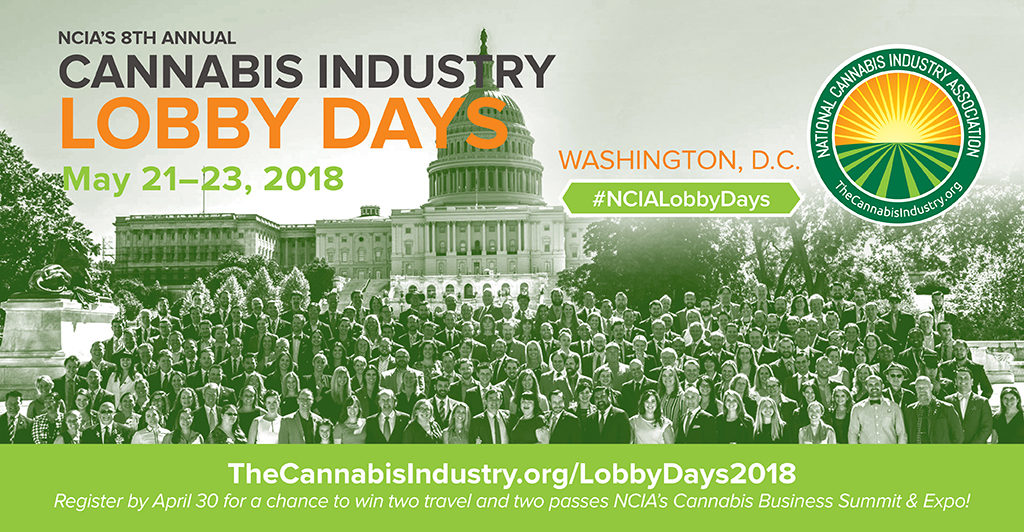
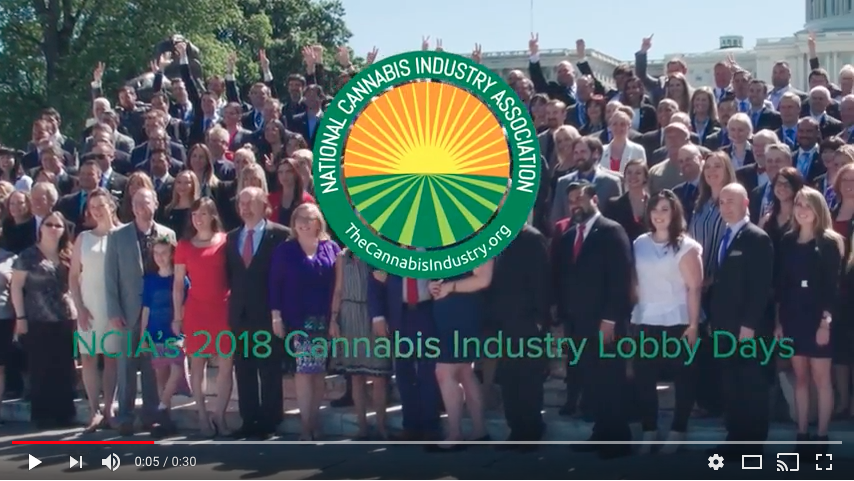
The cannabis industry has seen exponential growth in the mainstream support for regulated cannabis markets from both sides of the political aisle. This progress is a direct result of the relationships NCIA has built on Capitol Hill, as well as the personal stories told by our members each year at our annual Lobby Days events in Washington, D.C. NCIA’s 8th Annual Cannabis Industry Lobby Days, hosted May 21-23, was the industry’s most impactful fly-in yet, as our members made more inroads to Congress at a time when the nation has reached a tipping point in the fight to protect legal cannabis.
“So many more people keep coming to Lobby Days which is amazing to see,” said Karson Humiston, founder of Vangst. She’s one of Forbes’ 30 under 30 and the only female in cannabis to make the list. She’s focused on telling members of Congress about the potential for job creation and the economic impact of a fully recognized cannabis industry. “We are talking about jobs as much as possible in order to educate members of Congress about the economic stimulation regulated cannabis is bringing to the states and the need for federal legalization,” she said.
NCIA announced the release of its 2018 State Cannabis Progress Report during this year’s Lobby Days. The publication outlines a myriad of economic and social benefits already being realized by states with successful cannabis programs, including job creation, tax revenue, and reductions in crime and teen use.
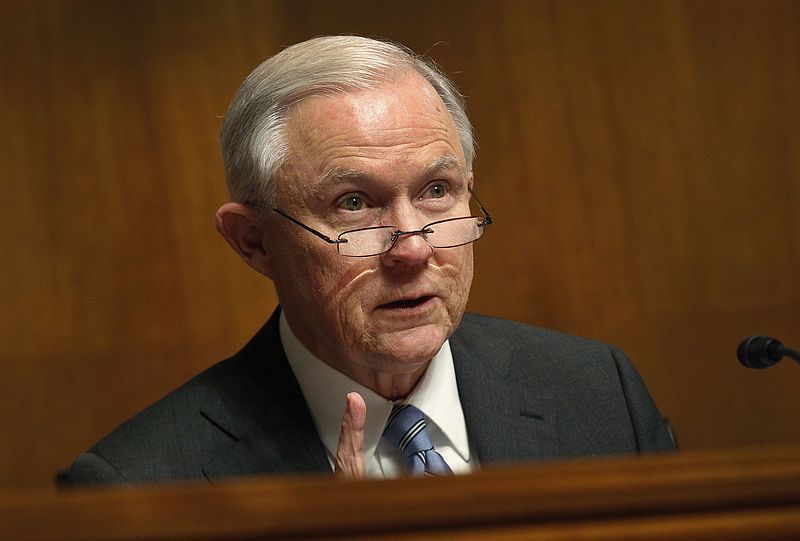
So far 2018 is shaping up to be much different from the past seven years, largely because of Republican backlash against Attorney General Jeff Sessions attempting to ramp up federal interference in state cannabis programs by rescinding the Cole Memo. Historically, the GOP has been less publicly supportive of reforming cannabis laws, although there has been a strong current of support among certain segments of the party. Now, they listen and many have even joined us in support of banking and tax reforms needed for our industry to reach its full potential, in addition to their traditional support of federalism issues related to cannabis. Advocates, patients, and NCIA member-businesses all over the United States are keeping this positive momentum going.
At the Lobby Days welcome reception on the evening of Monday, May 21, NCIA Executive Director Aaron Smith said he was delighted with the turnout. “There are so many new faces, so many old friends, and Lobby Days veterans,” he told the audience of cannabis professionals, who had just arrived in Washington prior to the two full days of meetings with congressional offices. “Starting tomorrow, we will descend upon Capitol Hill to show lawmakers what a responsible, politically engaged cannabis industry looks like.” He called Lobby Days one of the cannabis industry’s most important events of the year.
NCIA member and founder of Washington, D.C.’s National Cannabis Festival and the National Cannabis Policy Summit, Caroline Phillips, said that she was proud to see so many members coming to her backyard to demonstrate their unity. “This is a really wonderful opportunity to share with members of Congress the diverse and innovative ideas of the cannabis industry and to show off the professionalism, creativity, and care that the people in the industry put into their work, “she added. “I think a lot of members on the Hill are starting to understand the cannabis industry is a lot more than just stereotypes, and for them to have one-on-one interactions with some of the best professionals in our industry is extraordinarily valuable.”
New to Lobby Days was Attorney Blake Mensing. He was eager to join the crowd of professionals to advocate for the fair treatment of cannabis businesses. “I think that this is the eighth year that this is happening really shows that the industry is coming out of the shadows and the momentum has built to the point that there’s a small probability that things are going back to the way they were [prior to the reform victories of the last decade].” Mensing founded The Mensing Group after he left his job as a Municipal Attorney in Massachusetts to start a cannabis-only practice. “It’s the first time I’ve ever had fun being a lawyer,” he remarked before heading into Senator Orrin Hatch’s (R-UT) office.
Professional football player Mike James also joined NCIA this year to advocate on behalf of his fellow athletes who would prefer to treat their health issues with medical marijuana instead of opiates. The active NFL running back has played for the Tampa Bay Buccaneers and the Detroit Lions during his career, which has wreaked havoc on his body, leaving him with chronic pain that he used to treat with opioids. “Within the NFL, I’m trying to go through their process and change policy. That way, hopefully, they can be an example for society,” he said. Currently a free agent, he’s the first and only active player with a medical marijuana card.
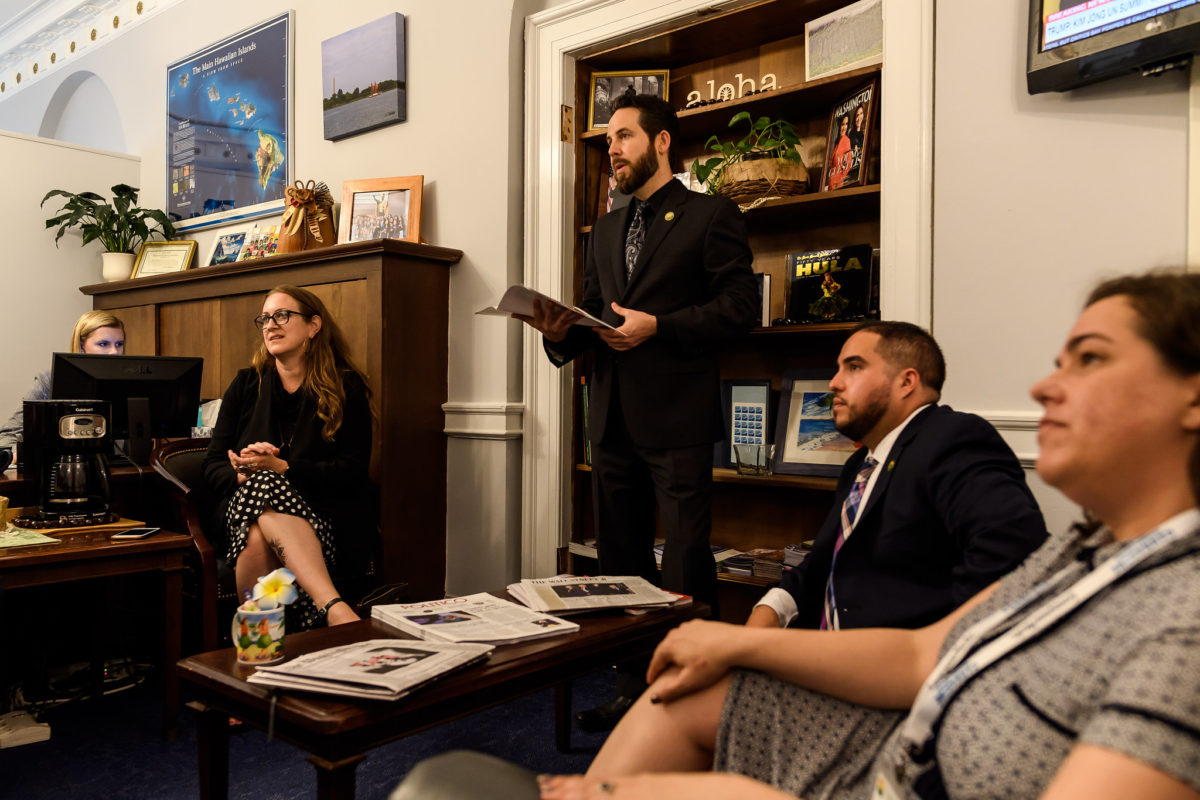
From the need to expand medical access to cannabis, to tax and banking reform, to addressing the injustice of racially disproportionate marijuana enforcement, NCIA hit the Halls of Congress to educate members of Congress and their staffs on what’s happening in their own backyards and the successes of regulating cannabis.
For example, when it comes to tax reform, Heather Sullivan of 3C Consulting said the cash-flow is only one of the issues they have to worry about from the 280E tax burden. “It’s a tough decision come tax season,” she said. “Do you set aside those tax rates so you don’t have that money to use for other things for your business, or do you play the game and run the risk that you’re not going to get audited?” Many cannabis businesses face similar issues, which can effectively ruin a company over time.
There were many Congressional offices that were receptive to the efforts and positions of NCIA members during Lobby Days. Heather took a meeting with Sen. Bernie Sanders’ (I-VT) office, for example, and after leaving the meeting she felt that it went wonderfully, stating, “Senator Sanders is a proponent for the safe and regulated use of cannabis whether in the medical side or the adult use side, so it was a meeting that for us was an opportunity to tell Bernie and his staff how much we appreciate the hard work that he’s done, ask him what we can do as an industry to help them continue the progress that they’ve already made and learn more about where his focus is.” Sullivan is well-versed in the issues facing cannabis businesses today and knows many other officials are still in need of convincing.
In spite of heavy opposition from Attorney General Jeff Sessions, as well as House leadership, the cannabis industry saw a huge victory when protections for medical marijuana were included in this years’ fiscal budget. Now, with the help of our members who flew in to speak about their personal issues and experiences, we can all look forward to an even more progress and a better outlook for the U.S. cannabis industry.
VIDEO: Spring Policy Update From Aaron Smith
Watch this important policy update from NCIA’s Aaron Smith to learn more about the recent policy news and pro-cannabis legislation recently announced by several prominent members of Congress. Despite heavy opposition from Attorney General Jeff Sessions, the cannabis industry has stronger support than ever. Get the scoop in this video update.
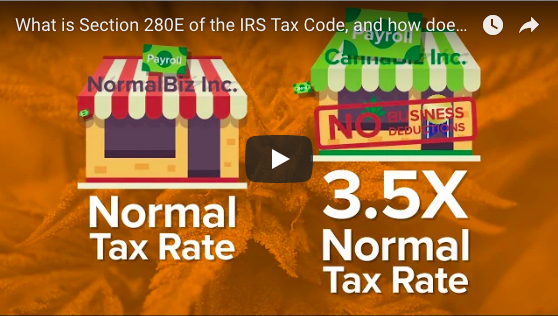
VIDEO: How Section 280E of the IRS Tax Code Burdens the Cannabis Industry
As tax season officially concludes, many cannabis businesses are feeling the burden of Section 280E, which can have the effect of taxing direct-to-plant businesses at a rate up to 3.5 times higher than other businesses. This unfair provision in the federal tax code affects the entire industry’s growth potential.
Watch this video below to learn more about Section 280E. Find out more about the solution: The Small Business Tax Equity Act which would allow for the fair and equal treatment of cannabis businesses.
The Small Business Tax Equity Act: Supporting a Just Cause at NCIA Lobby Days
by NCIA Editorial Staff
The American cannabis industry should be proud of generating thousands of jobs and billions of dollars in tax revenue for America- but can you imagine how much more we could do without the 280E tax burden?
While it’s an exciting time to be in the cannabis industry, our businesses are struggling under crippling federal taxation. It’s all due to Section 280E of the IRS tax code. A provision originally set out to penalize bad actors in criminal market. Unfortunately for our industry, the federal government has yet to remove the plant from its list of scheduled drugs and continues to deny cannabis as a fully legal product with medical benefits. In sum, if your business touches the plant then you’re in danger of losing your profits under Section 280E of the IRS tax code. It’s a critical time for us to come together and demand change for the industry at the federal level so our business owners can do what they do best; grow their business and give back to the community.
Despite the 280E difficulties, Portland’s MindRite dispensary was voted the most charitable cannabis store by DOPE magazine. Owners Shea and Jaime Conley said they would give even more if their business was taxed like any other industry.
MindRite can’t write off their tens of thousands of dollars in charitable donations because 280E hinders it. “It’s coming out of our profits but its just something we do and has never been up for debate because we believe it’s the business owner’s responsibility to make the community around them better, said Shea. The Conley’s also said they would jump through even more hoops and regulations because it’s a privilege to be able to work in an industry they are so passionate about. But the fact remains, “if 280E wasn’t over our heads,” he said, “we would’ve expanded our business by now.” Without 280E they would reinvest the money they paid the government. “We could have two more dispensaries open,” said Shea.
As tax professional Jim Marty of Bridge Westexplained, businesses can normally retain profits from usual business deductions such as; employee salaries, utilities, facility rent, payments to contractors, and health insurance premiums. For those in the green space, anything outside of the cost of goods sold is not deductible. In efforts to level the playing field, Jim works with clients and lobbyists at the state level to allow for deductions. “We’ve testified in front of committees,” he said, “and some state tax rates are lower than the federal.” In prior interviews with CNBC and FOX Business, his advice is to understand your business plan because 280E creates an impossible situation for legitimate cannabis businesses.
State tax rates may be lower than federal in states like Colorado and Oregon, however, it’s not enough to offset the penalty they pay at the federal level. “We are aware of every dollar that goes out and comes in, it’s a must if you want longevity for your business,” said Shea. The dispensary deals with razor-sharp profit margins in anticipation of paying their penalty to the IRS every April.
It’s frustrating for business owners and employees. Mitch Woolheiser of Northern Lights Cannabis said his business growth is stunted as a direct result of the issue. “I can’t give my employees raises. I can’t put money back into my business. Instead, I’ve been hoarding cash in anticipation of what the IRS is going to take,” he said. In total, cannabis businesses are paying taxes on gross income which often amounts to paying rates that are 70% or higher. Comparatively, the corporate tax rate established by The Tax Cuts and Jobs Act of 2017 is only 21%.
That’s why we are once again taking to the steps of Congress in May for our 8th annual Lobby Days in Washington D.C. While in D.C., Jim said he hopes to meet with President Donald Trump. He said if the executive branch has authority to reschedule marijuana, he’d ask President Trump to categorize cannabis as a Schedule 3 substance or unschedule it completely because it would ensure that section 280E would no longer apply.
We also encourage everyone in support of a healthy, prosperous cannabis industry to talk to their Senators and Representatives about The Small Business Tax Equity Act. The amendment would exempt compliant cannabis businesses from the 280E provision which we believe would inevitably lead to in an influx of employment opportunities with more competitive salaries.
Why it’s Critical For Cannabis Business Owners to Advocate for Policy Reform
by Rachelle Lynn Gordon, NCIA Editorial Contributor
Cannabis legalization reform has been in the works for years and will certainly continue for years to come due to the plant’s Schedule I status. In addition to the activists and organizations who have paved the way for marijuana legalization for decades, such as NORML, Marijuana Policy Project, and Students for Sensible Drug Policy (SSDP), cannabis business owners are now at the forefront of what will most certainly be a multi-billion dollar industry within a short matter of time. But why is it important for these cultivators, dispensary owners, and investors to be directly involved with legalization advocacy?
“Advocacy is critical at this stage, where there is still so much progress to be made at the state and federal levels,” says David Murét, Co-founder & COO of Viridian Staffing. “While I believe that national legalization is now a foregone conclusion, the form in which it takes and who it will end up benefiting is still an open question.”
At this point in time, 30 states and the District of Columbia have legalized medical and/or adult-use cannabis, each one with their own set of rules and regulations. As more and more states begin to come online and design their own programs, lawmakers will look to states where cannabis is already legal in order to learn from both successes and mistakes. At the federal level however, things are far more complicated.
While marijuana remains an illegal drug in the eyes of the federal government, certain protections are in place for businesses that are operating in compliance with their own states’ regulations. Several members of Congress representing these states have been pushing for even further protections and/or straight legalization, in spite of current Attorney General Jeff Sessions’ staunch anti-cannabis stance. In January, Sessions rescinded the Cole Memo, which had previously stated that federal funds shall not be directed towards enforcing federal cannabis policy within states that have passed for those operating in compliance with the items stated in the memo. However, this doesn’t mean that state prosecutors have to go after compliant businesses
Fortunately, the move was a moot point. A rider bill in the federal budget proposal, which is essentially a must-pass in order to prevent a government shutdown, maintained the protections that the Rohrabacher-Farr amendment (now Rohrabacher-Blumenauer amendment), which prevents the DOJ from going after state-legal medical cannabis. A bipartisan group of 62 members of Congress sent a letter to House appropriations leaders calling for action.
“We respectfully request that you include language barring the Department of Justice from prosecuting those who comply with their state’s medical marijuana laws,” the lawmakers, led by Reps. Dana Rohrabacher (R-CA) and Earl Blumenauer (D-OR), wrote. “We believe such a policy is not only consistent with the wishes of a bipartisan majority of the members of the House, but also with the wishes of the American people.” These protections are now included through September 30th.
David Sutton, President & COO of NanoSphere Health Sciences, agrees that time is of the essence in order to create new legislation that will positively impact the industry in years to come.
“Cannabis business owners and professionals have to participate in advocacy,” he argues. “No matter how many states adopt some form of cannabis legalization, the industry still needs change at the federal level. Without a federal shift in cannabis policy, operators in the industry will remain hampered and handcuffed from growth.”
Many canna-business owners are not only involved with pro-legalization policy efforts with the industry’s future in mind, but also the end consumers. High-profile cases of medical marijuana patients becoming ill due to flower containing mold and instances of widespread pathogen prescences from certain cultivators have increased efforts to prevent these products from getting to market.
“We have a responsibility to ensure this business grows in the right way,” explains Brett Johnson, Founder & CEO of Spectrum-Gro. “We have to be the adults in the room. I am always advocating for the end users – we need to guarantee safe and consistent products that are free from harsh chemicals and other pathogens. If the current leaders in this industry do not advocate for the future, there could be negative results across the board – from cultivation to the consumer.”
There are many ways business owners and professionals within the cannabis space to get involved with advocacy. NCIA Lobby Days brings hundreds of industry professionals and thought leaders to Washington, D.C. in order to tell their stories to lawmakers and push for cannabis reform. In addition, working with local organizations within their own states and jurisdictions is a wonderful way for entrepreneurs to spread awareness and potentially help build legislation in their communities.
“If we want to see how big the industry could be and how many lives can be changed for the better, you cannot simply rely on just hope, everyone needs to act,” adds Sutton. “Change comes from the masses and the masses need each and every owner and professional to participate in industry advocacy.”
Rachelle Lynn Gordon is a Minneapolis-based writer and reporter and graduate of Hamline University. She has contributed to publications such as Cannabis Now Magazine and High Times.
News Alert! Omnibus Update: Medical cannabis businesses protected through September 30
by Michelle Rutter, NCIA Government Relations Manager
After years of continuing resolutions and many rounds of negotiations, Congress reached a budget deal and passed a new omnibus spending package that funds the government through the remainder of FY2018, which ends on September 30.
This new spending bill does include the Leahy amendment (formerly the Rohrabacher-Farr amendment), which prohibits the Department of Justice from using tax dollars to enforce federal law against state-legal medical cannabis patients and businesses. Following the rescission of the Cole Memo in January by Attorney General Jeff Sessions, NCIA and our allies in Washington, DC pushed even harder to ensure that this language, which has been included in federal appropriations bills since 2014, was included in the spending package for the remainder of FY2018. In addition to language protecting state-legal medical cannabis programs, the omnibus bill unfortunately also included a provision that continues to block Washington, DC from taxing and regulating adult-use cannabis, despite the fact that voters approved the legalization measure nearly four years ago.
In normal budget cycles, Congress passes a fiscal year budget that goes from October 1 until September 30. But in these extraordinarily partisan times, Congress has been unable to agree on an annual budget and has patched together short-term funding bills called Continuing Resolutions (CR’s), which maintains current funding levels. Since just last September, there have been five such short-term CR’s. All of these CR’s have included the Rohrabacher-Farr (now Rohrabacher-Blumenauer in the House and the Leahy amendment in the Senate) amendment which protects medical cannabis businesses, programs, and patients in states where it’s legal. The last of these continuing resolutions is set to expire on Friday, March 23rd. The new omnibus spending bill will continue to fund the government through the remainder of FY2018, which ends on September 30, 2018.
The congressional appropriations process for FY2019 is already underway. While we have achieved a victory in extending medical cannabis protections, there’s much more work to be done. NCIA is lobbying not only to continue the medical cannabis protections, but to also expand protections to protect all legal cannabis businesses from federal interference, including adult-use businesses operating in the eight states with such programs. We are also working to pass a cannabis banking amendment, as well as an amendment that would protect veterans who choose to participate in state-legal cannabis programs. In addition to all of these appropriations amendments, NCIA is still working to pass legislation that would solve the cannabis banking problem, amend IRC Section 280E, and, ultimately, end cannabis prohibition.
VIDEO: Aaron Smith invites you to #NCIALobbyDays this May 21-23
Over the last several years the cannabis industry has experienced unparalleled economic growth. But, as business owners in the industry, we know first hand that this success also comes with persistent challenges. As long as we still experience the crippling effects of federal policies like 280E and unfair banking regulations, our success is merely potential.
This is why it is essential that cannabis business owners are also industry advocates. With the challenges posed by the current administration and the uncertain federal policies governing our industry, it is critical that we make our voices heard on Capitol Hill.
Join 300+ cannabis industry professionals at NCIA’s 8th Annual Cannabis Industry Lobby Days on May 21-23 in Washington, D.C. to advocate for our industry and forge a unified front with the industry’s most politically engaged leaders. Register before April 30 for a chance to win tickets and travel for two to #CannaBizSummit July 25-27.
Watch this video to hear more from NCIA’s Co-founder and Executive Director Aaron Smith.
For more information about NCIA’s 8th Annual Cannabis Industry Lobby Days,
by Michael Correia, NCIA Director of Government Relations
Following a brief shutdown in the wee hours of Friday morning, Congress came to yet another short-term budget deal to continue funding the federal government until March 23, 2018.
In normal budget cycles, Congress passes a fiscal year budget that goes from October 1 until September 30. But in these extraordinarily partisan times, Congress has been unable to agree on an annual budget and has patched together short-term funding bills called Continuing Resolutions (CR’s), which maintains current funding levels. Since just last September, there have been five such short-term CR’s. These short-term funding bills have not only hampered basic government functions, but have also affected military readiness and has even led to a federal government shutdown, which has lowered the public’s already dismal opinion of Congress.
After much negotiation between House and Senate leaders, it appears that the parameters of a two-year budget solution have been agreed to. The new budget deal is both bipartisan and bicameral (which has become a rarity in Washington, D.C.) and addresses many controversial issues that have hindered previous negotiations. This new budget deal increases funding levels for the military, provides billions in disaster relief, addresses infrastructure, education, child care, and attempts to combat the opioid epidemic.
But, in typical Congressional fashion, the details still have yet to be finalized. The Congressional Leaders have agreed to work with the leaders of the appropriations committees to ensure that all budget priorities are met.
So, what does this mean for your business and what does this mean for medical cannabis protections?
Since 2014, the federal budget has included language that protects medical cannabis operators from Department of Justice prosecution. These protections will be maintained in this short-term funding bill, so medical cannabis programs and businesses are protected until at least March 23, 2018. However, it is imperative that Congress maintains these protections (and even expand protections for adult-use) in the longer budget that is being negotiated between now and March 23. NCIA will continue our Congressional lobbying efforts and work with our partners and other advocates to continue these protections.
Our team in Washington, D.C., works everyday to make the industry’s voice heard, but nothing matches the power of a personal story personally told. Remember to join us for NCIA’s 8th Annual Cannabis Industry Lobby Days this year on May 21-23 in Washington, D.C.
VIDEO: Save The Date For NCIA’s 8th Annual Lobby Days!
JUST ANNOUNCED! On May 21-23, 2018, NCIA Members will descend on Capitol Hill in Washington, D.C. for the 8th year in a row.
WHAT IS LOBBY DAYS? Every year, the National Cannabis Industry Association hosts the annual Cannabis Industry Lobby Days in Washington, D.C. This year, Lobby Days will bring over 300 cannabis industry professionals together to make their voices heard in the halls of Congress.
WHY ARE LOBBY DAYS IMPORTANT? With victories in eight states across the country during the 2016 presidential election, as well as the challenges posed by the new administration, fixing federal policies is more critical than ever. This year, we will continue to emphasize the importance of protecting legal cannabis businesses and patients, reforming section 280E of the federal tax code, and solutions to the banking crisis, all of which are critical to respecting state marijuana laws. Our team in Washington, D.C., works everyday to make the industry’s voice heard, but nothing matches the power of a personal story personally told.
Watch this short video to see highlights from last year’s 7th Annual Cannabis Industry Lobby Days, and to learn more about why you should plan to join us this year as we create momentum for cannabis policy reform in the halls of Congress.
Last year represented the most robust growth phase for NCIA in our seven-year history. The increase in membership and revenues has allowed us to expand our presence in Washington, D.C., provide better benefits and service to our members, and produce the best events in the industry.
Organizational Highlights
NCIA membership rolls increased by 40% during 2017 and NCIA is beginning the year with 1,530 dues-paying members.
Increased revenues allowed increase our budget for lobbying and public affairs on behalf of the cannabis industry by over 60%.
NCIA launched its Policy Council which has led the development of four policy white papers and has generated additional funding for our work in Washington, D.C.
NCIA worked with the Governors of the first four states to regulate marijuana to generate a sign-on letter urging the administration not to interfere with their states’ cannabis programs.
As we enter into our 8th year as your national industry association, we’re grateful to our more than 1,500 member businesses across the country who make our work possible. This year, it is more important than ever to unify as an industry and make our voices heard in the halls of Congress. Start planning now to join us in Washington, D.C., on May 21-23, 2018 for our 8th Annual Cannabis Industry Lobby Days. Let’s stand together and show our nation’s decision-makers what a legitimate, responsible cannabis industry looks like. See you in D.C.!
Department of Justice Rescinds Cole Memo: Here’s what to expect
This morning, Attorney General Jeff Sessions announced the Department of Justice’s move to rescind the “Cole Memo” and two additional memos related to marijuana enforcement policy. These memos, issued in 2013 and 2014, have helped to clarify the Department’s response to state-legal cannabis activity.
This is disturbing news for the cannabis industry and the majority of U.S. voters who support legal cannabis. However, the rescinding of this memo does not necessarily mean that any major change in enforcement policy is on the horizon. This has been, and still will be, a matter of prosecutorial discretion.
NCIA’s team in D.C. is working tirelessly to ensure that the administration and the Department of Justice uphold President Trump’s campaign promise to not interfere with state-legal cannabis programs by making sure they understand that regulated cannabis is successfully undercutting the criminal market, while funding important state programs.
At this time, it’s critical the cannabis industry unify to amplify that message so it’s crystal clear. It’s also imperative that Congress take action to align federal legislation with the majority of states, which now allow some form of legal cannabis.
One pressing issue before Congress is Senator Leahy’s appropriations amendment which would prevent the DOJ from using resources to undermine state medical cannabis laws. (The Senate’s version of the Rohrabacher-Blumenauer Amendment in the House.)
Please call your U.S. Senators today and urge them to include the Leahy Amendment in the upcoming Omnibus Appropriations Bill.
Talking points to help guide your call are included on our online action page.
To learn more about NCIA’s advocacy efforts or the NCIA-PAC, please contact NCIA Government Relations Manager, Michelle Rutter by emailing Michelle@thecannabisindustry.org.
And, of course, if your business is not yet a member of NCIA, please join today so that we have the resources we need to prevent any rollback of the progress we’ve made in recent years.
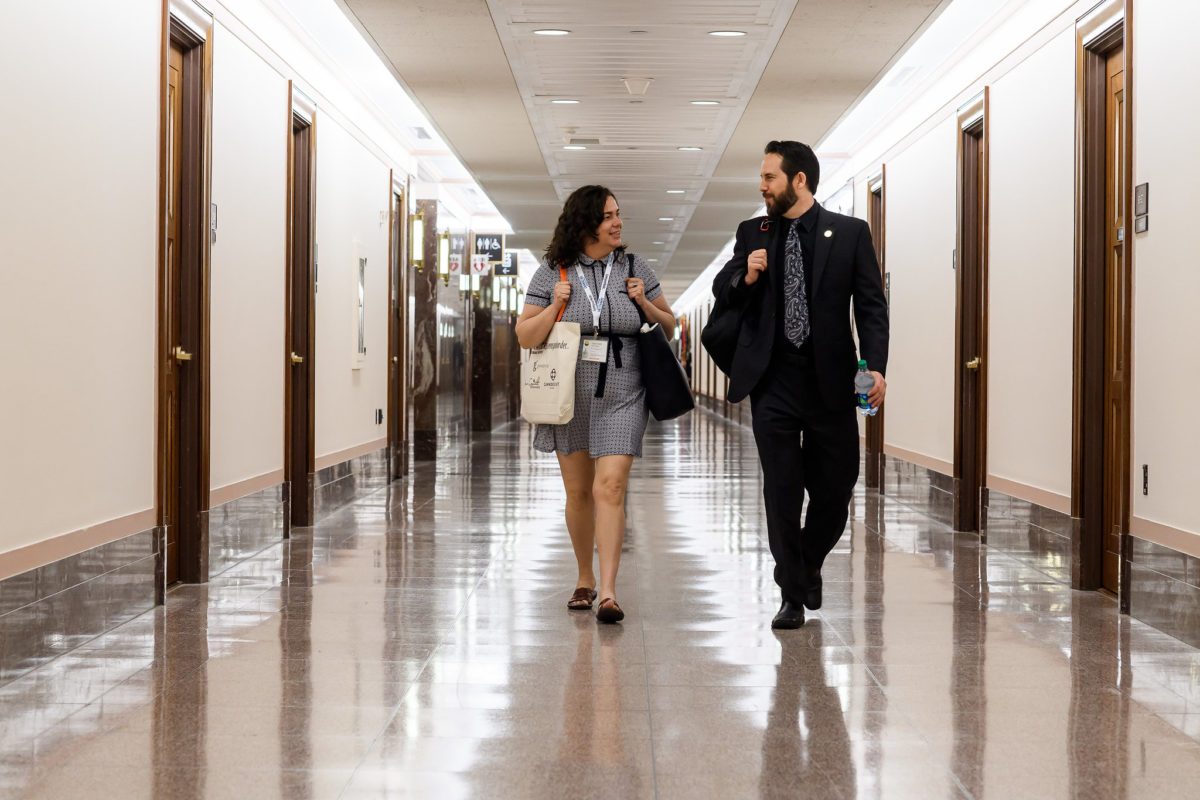
 “So many more people keep coming to Lobby Days which is amazing to see,” said Karson Humiston, founder of Vangst. She’s one of Forbes’ 30 under 30 and the only female in cannabis to make the list. She’s focused on telling members of Congress about the potential for job creation and the economic impact of a fully recognized cannabis industry. “We are talking about jobs as much as possible in order to educate members of Congress about the economic stimulation regulated cannabis is bringing to the states and the need for federal legalization,” she said.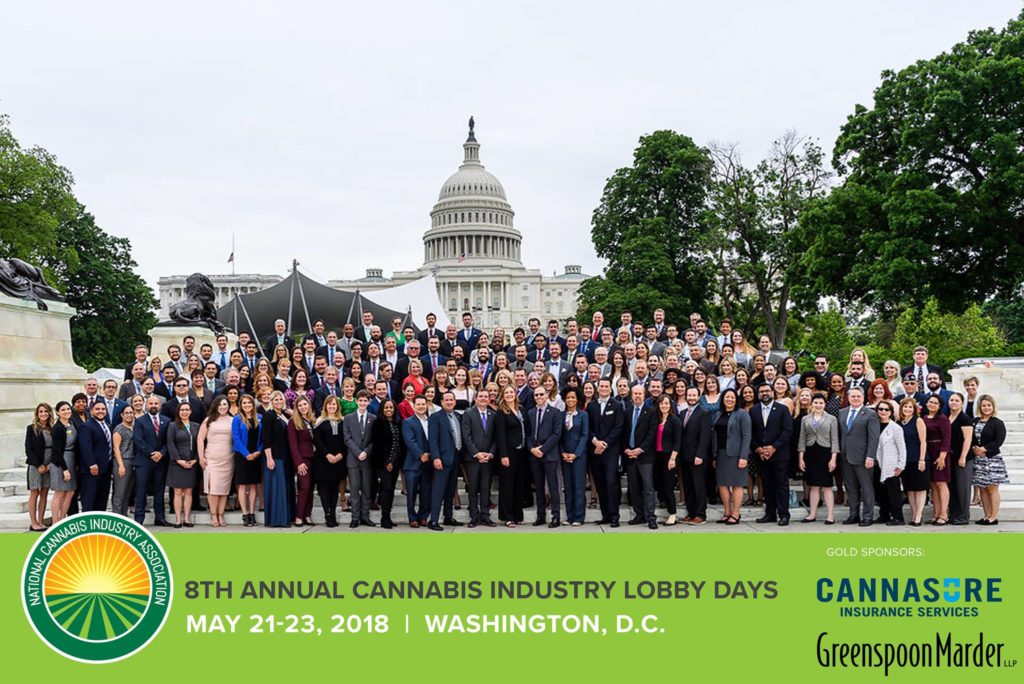
 There were many Congressional offices that were receptive to the efforts and positions of NCIA members during Lobby Days. Heather took a meeting with Sen. Bernie Sanders’ (I-VT) office, for example, and after leaving the meeting she felt that it went wonderfully, stating, “Senator Sanders is a proponent for the safe and regulated use of cannabis whether in the medical side or the adult use side, so it was a meeting that for us was an opportunity to tell Bernie and his staff how much we appreciate the hard work that he’s done, ask him what we can do as an industry to help them continue the progress that they’ve already made and learn more about where his focus is.” Sullivan is well-versed in the issues facing cannabis businesses today and knows many other officials are still in need of convincing.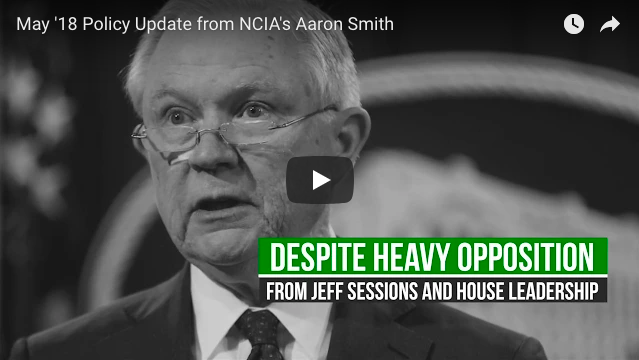

Follow NCIA
Newsletter
Facebook
Twitter
LinkedIn
Instagram
News & Resource Topics
–
This Just In
How THCa Vapes Are Changing Consumer
Announcing NCIA’s 2026-2028 Board of Directors