Summer Recess & Cannabis Progress: Cannabis News from the Capitol and Expectations for the August Break
by Michelle Rutter Friberg, NCIA’s Director of Government Relations
After NCIA’s 11th Annual Cannabis Industry Lobby Days concluded in May, cannabis news from Washington, D.C. has been relatively slow. Curious about what’s next before August recess begins? Keep reading to see what may happen ahead of the break and for a recap on where we’re at now.
SAFE Banking
Last month, just before NCIA’s Lobby Days, the Senate Banking, Housing, and Urban Affairs Committee held a hearing titled “Examining Cannabis Banking Challenges of Small Businesses and Workers”. Witnesses included the bill’s lead sponsors, Senators Jeff Merkley (D-OR) and Steve Daines (R-MT), as well as Ademola Oyefes (International Vice President and Director of Legislative and Political Action Department, United Food and Commercial Workers International Union [UFCW]), Michelle Sullivan (Chief Risk & Compliance Officer, Dama Financial), Dr. Kevin Sabet (President/CEO, Smart Approaches to Marijuana [Project SAM]); and Cat Packer (Vice Chair, Cannabis Regulators of Color Coalition).
My takeaways from the hearing: no new talking points from Project SAM, surprised by DAMA’s comments (they’ve since walked their testimony [which many saw as opposition to the bill] back), and most importantly of all: the real need for SAFE so that we can stop talking about access to financial services and start talking about legalizing and regulation cannabis in a smart and equitable way.
As for what’s next? Banking Committee Chairman Sen. Sherrod Brown (D-OH) recently shared that SAFE Banking would be scheduled for a markup after a few other bills received theirs. The good news? That process has begun. The bad news? Still no formal news on when SAFE’s markup will be. I’m expecting it to be after the Fourth of July break but before members leave D.C. for their annual, month-long August recess.
Appropriations
For years, advocates have looked to the appropriations process as a way in which to enact cannabis reform at the federal level.
In 2014, a provision that protected medical cannabis patients, programs, and businesses from federal interference (known as the “Rohrabacher-Farr” amendment) was included in the federal budget and became law. Since then, the provision has been included in appropriations bills and remains the law of the land.
NCIA has (and continues to) lobby on behalf of expanding this provision to include adult-use businesses and to also use the appropriations process to enact other reforms like allowing Washington, D.C. to commercialize adult-use cannabis sales.
House GOP negotiators heightened the stakes earlier this week when they announced they would mark up their FY2024 spending plans to levels lower than the budget caps set as part of a deal struck between President Biden and Speaker Kevin McCarthy (R-CA). This will undoubtedly make the already contentious budget-process even more volatile.
Maryland
On July 1, adult-use cannabis sales will begin in Maryland. Cannabis became legal for those over 21 in Virginia in 2021, while D.C. legalized cannabis for adults via Initiative 71 in 2014 (but have been unable to begin sales due to congressional interference). Legal sales in the District’s neighboring states means that members of Congress will surely be more exposed to the benefits of regulation.
So, while it’s been relatively quiet in D.C. in June, stay tuned in July for a possible first-ever Senate markup of SAFE Banking! As always, NCIA will continue to advocate on behalf of your business and keep you updated on the latest.
Bills in Congress, SAFE Banking, and House and Senate Committees
by Michelle Rutter Friberg, NCIA’s Deputy Director of Government Relations
While it got off to a slow start, the 118th Congress is finally in full swing. Let’s take a look at some of the latest cannabis and government relations news coming out of Washington, D.C.:
Bills are being introduced
When a new Congress begins, all legislation from the last session must be re-introduced and start from scratch again in the legislative process. Over the last few weeks, a couple of cannabis bills have been reintroduced: two from Congressman Greg Steube (R-FL) and one from Congressman Alex Mooney (R-WV).
Rep. Mooney was the first to introduce a cannabis bill for the 118th Congress when he released his Second Amendment Protection Act. Last Congress, a similar bill was filed by the late Rep. Don Young (R-AK) known as the Gun Rights And Marijuana (GRAM) Act. The full text of the new measure is not yet available so it’s unclear what exactly the bill contains, but advocates expect the bill to be similar to the version Mooney introduced in the 116th Congress. Interestingly, although federal law explicitly prohibits all Americans who consume or possess marijuana from purchasing or possessing a firearm, a judge in Oklahoma late last week declared that ban unconstitutional.
Congressman Steube’s two bills were the Veterans Cannabis Use for Safe Healing Act and the Marijuana 1-to-3 Act. The former prohibits the Department of Veterans Affairs (VA) from denying a veteran any VA benefit due to participation in a state-approved marijuana program. For veterans participating in these approved programs, the VA must ensure its healthcare providers both discuss marijuana use with such veterans and adjust treatment plans accordingly and record such use in the veterans’ medical records. The latter bill, the Marijuana 1 to 3 Act, has been introduced by Rep. Steube in past sessions and seeks to do exactly what the title says: reschedule cannabis to Schedule 3 – a reform that would not resolve the federal conflict with the vast majority of state laws with some form of legal cannabis
A SAFE Bet?
The cannabis industry may have been devastated when Congress failed to pass the SAFE Banking Act last Congress, but we’re not giving up yet! Congressional champions have every intention of reintroducing SAFE in both chambers, but don’t expect the bill to look identical to last session.
Last week, Senate Majority Leader Schumer held a closed-door meeting with a number of other Democratic Senators to discuss what’s next for the bill. Reportedly, the Senators discussed changing the text of the bill to reflect some of the “SAFE +” language that was negotiated at the end of 2022, including the HOPE Act. It’s currently unclear if the House’s version will be identical.
Committees Finally Seated
It took Congress longer than usual to seat committees this session – particularly in the House – but we now know which members will have jurisdiction over which issue areas. Our friends at Politico put together an extensive list, but some committees I’ll be keeping my eye on include the House Judiciary Committee, the Senate Banking Committee, and the Appropriations Committees in both chambers.
It’s the final episode of NCIA Today for the year 2022! NCIA Director of Communications Bethany Moore checks in with what’s going on across the country with the National Cannabis Industry Association’s membership, board, allies, and staff. Join us every other Thursday on Facebook for NCIA Today Live.
Reform Whiplash in Washington
Photo By CannabisCamera.com
By Michelle Rutter Friberg, NCIA’s Deputy Director of Government Relations
Last week, cannabis advocates were dealt another blow with the exclusion of the SAFE Banking Act (SAFE+) in the National Defense Authorization Act (NDAA). That being said, all hope is not lost—the government runs out of funding this Friday, 12/16, and members of Congress are working hard to craft an omnibus bill that may present another opportunity for SAFE+.
Earlier this year, the House of Representatives passed their version of the NDAA — which did include the language of the SAFE Banking Act. Since then, all eyes have been on the Senate, where negotiations over the inclusion of “SAFE+” to the NDAA have been the focus. There was much discussion over what exactly the “plus” in SAFE+ would include, but there was no doubt that theHOPE Act would be a part of that, and potentially theGRAM Act. As of a few weeks ago, NCIA and other advocates were feeling cautiously optimistic about the possibility of SAFE+ being passed via the NDAA.
That was until Senate Minority Leader Mitch McConnell (R-KY) took to the Senate floor last Tuesday to specifically call out SAFE+. He said:
“House and Senate Democrats are still obstructing efforts to close out the NDAA by trying to jam in unrelated items with no relationship whatsoever to defense. We’re talking about a grab bag of miscellaneous pet priorities — making our financial system more sympathetic to illegal drugs or the phony, partisan permitting reform and name-only language that’s already failed to pass the Senate earlier this year. If Democrats wanted these controversial items so badly, they had two years to move them across the floor. Heck, they could have scheduled those matters for votes this week. But no, we’re doing more mid-level nominations, while Democrats keep threatening to take our Armed Forces hostage over those extraneous matters.
Leader McConnell even gloated about the exclusion of SAFE+ later in the week, saying, “just as Republicans insisted, just as our service members deserve, this NDAA is not getting dragged down by unrelated liberal nonsense. Good smart policies were kept in and unrelated nonsense like easier financing for illegal drugs was kept out.”
While the NDAA is slated to pass the Senate and be signed into law over the coming days, NCIA is continuing to pursue all options for passing SAFE+, including the omnibus bill that Congress is negotiating (currently) behind closed doors.
In other political news, the runoff election between Sen. Raphael Warnock (D) and Hershel Walker (R) was held in Georgia last week, with Sen. Warnock winning. This meant that Democrats held a 51-49 majority over Republicans; that is until Sen. Kyrsten Sinema decided late last week to change her party affiliation from Democrat to Independent. Like the other two Independent Senators (Angus King [ME] and Bernie Sanders [VT]), she plans to caucus with the Democrats. Regardless, the announcement came as a surprise to many.
While the clock may be running out, NCIA won’t stop advocating for SAFE+ and other cannabis issues to be passed into law.
Biden’s Announcement, SAFE Banking, and the CAOA
Photo By CannabisCamera.com
By Michelle Rutter Friberg, NCIA’s Deputy Director of Government Relations
October has been a mixed bag in Washington, D.C. in terms of cannabis policy: there hasn’t been much news from Capitol Hill, but the Biden Administration shocked everyone when they made a big announcement earlier this month. As we draw nearer to the midterm elections in November (don’t forget to register!), let’s take a look at where things stand currently:
On Capitol Hill:
SAFE Banking Act
The SAFE Banking Act (S. 910) has been held up in the Senate for more than a year now. Many Senate Democrats (including Leader Schumer) have been pushing for changes to the bill to create a “SAFE +” bill that includes justice-focused provisions. As with all things in politics, a delicate balance must be kept in order to reach 60 votes in the hyper-partisan Senate.
The good news: Leader Schumer and other Democrats have been in negotiations with lead-Republican co-sponsor Sen. Steve Daines (R-MT) and others to determine what “SAFE +” could look like. Those discussions have been occurring for a few weeks now and will continue.
The bad news: those negotiations are taking time. As a result, you shouldn’t expect any legislative movement to occur until after the midterm elections.
There’s also the National Defense Authorization Act (NDAA) to consider. The House passed and sent the FY2023 NDAA to the Senate months ago and the large package did include the language of the SAFE Banking Act (as currently written). It’s unclear how the SAFE+ negotiations may impact cannabis banking’s chances in the NDAA: Leader Schumer could make sure the language is not in the NDAA if he feels confident about SAFE+’s chances.
CAOA
Unfortunately, there’s no substantive news regarding the Cannabis Administration and Opportunity Act (CAOA), or comprehensive reform broadly on Capitol Hill right now. While NCIA and others continue to push for descheduling and responsible regulations from Congress, the upcoming election and Senate timeline have taken precedent. It’s unlikely that CAOA will move this legislative session given the number of legislative days left in the year.
From the Administration:
Earlier this month, President Biden made an unprecedented announcement that his administration would begin the process for the pardoning of thousands of people with nonviolent marijuana use or possession convictions, and would begin the process of working with the Department of Health and Human Services to reclassify marijuana from a Schedule I drug in the Controlled Substances Act.
This announcement comes on the heels of NCIA’s successful 10th Annual Cannabis Industry Lobby Days held in mid-September, where 100 cannabis industry professionals, representing small and medium-sized businesses including social equity operators, met with more than 100 Congressional offices to discuss barriers faced by the industry stemming from marijuana prohibition.
It’s no coincidence that when NCIA members show up to D.C., big things happen! Make sure to stay informed as we head towards the lame duck session via our newsletter and social media platforms and don’t forget to register for NCIA’s upcoming 11th Annual Cannabis Industry Lobby Days in May 2023!
Video: NCIA Today – Thursday, August 25, 2022
NCIA Director of Communications Bethany Moore checks in with what’s going on across the country with the National Cannabis Industry Association’s membership, board, allies, and staff. This week Bethany is joined by NCIA CEO Aaron Smith to talk about the importance of having your voice heard on Capitol Hill at our upcoming 10th Annual Cannabis Industry Lobby Days on September 13-14. Join us every other Thursday on Facebook for NCIA Today Live.
This is your chance to unite with other NCIA members to advocate for the issues most important to small cannabis businesses – from SAFE Banking to federal de-scheduling – and to share your personal stories with national lawmakers who need to hear from Main Street Cannabis businesses.
Watch this video to hear from NCIA’s CEO and Co-founder, Aaron Smith, about why you should attend this most impactful and crucial event next month. Not yet a member? Join today and then make your plans to join us in D.C.
An Optimistic Congress Aims to Legislate a Bipartisan Cannabis Omnibus Package
By Sadaf Naushad, NCIA Intern
As the cannabis industry progresses nationwide, the public demands Congress to pass major cannabis reforms. After months of opposition met among Congress members, a breath of fresh air awaits cannabis advocates, lobbyists, and consumers.
Last Thursday, two crucial congressmen revealed objectives to establish an extensive package of incremental cannabis proposals.
While Senate Majority Leader Chuck Schumer (D-NY) expects to file the final version of the Cannabis Administration and Opportunity Act (CAOA) sometime this summer, lawmakers are using the draft language as a guide to propose an alternative backup bill in creating a cannabis “omnibus” package.
With the wide-ranging package garnering support across Democratic and Republican lawmakers, industry insiders have high hopes that both chambers could come together to endorse an effective, bipartisan bill by the end of this year.
Let’s discuss the potential inclusions within the bipartisan cannabis package.
Recently, a number of Congress members have discussed the possibility of creating a new cannabis bill that would comprise several incremental measures, including provisions focusing on banking, access to medical cannabis for veterans, research expansion, access to SBA programs, drug sentencing reformations, and more.
Lead sponsor of the Secure and Fair Enforcement (SAFE) Banking Act, Rep. Ed Perlmutter (D-CO) is hoping to incorporate protection for financial institutions operating with state-legal cannabis businesses in a potential package. According to Rep. Perlmutter, members also have interest in including Rep. Dave Joyce’s (R-OH) Harnessing Opportunities by Pursuing Expungement (HOPE) Act, a bill designed to expunge prior marijuana convictions. Additionally, lawmakers are deliberating over granting cannabis businesses access to SBA loans and services that are obtainable to every other industry, a reform initially advocated by Sen. Jacky Rosen (D-NV).
These four concerns –- veterans, research, expungements, and banking – constitute a small portion of the package’s considerations.
Congress will also potentially consider including a non-cannabis item as part of the wider deal, known as the EQUAL Act, which looks to alleviate racial disparities within the criminal justice system by eliminating the federal sentencing disparity between crack and powder cocaine.
Leader Schumer, however, faces the requirement of having a 60-vote threshold to pass legislation. Although the chamber comprises a slim majority of Democrats with the vast majority of GOP members opposing numerous past bills, the 60-vote requirement may be attainable. In contrast to Schumer’s CAOA, indications are that the incremental package has more broad bipartisan support.
Though members have not reached an official deal as these major reforms remain under deliberation, Congress members are not abandoning their efforts to push for a broader-based CAOA bill.
Currently in the bicameral conference committee remains the large-scale manufacturing bill, known as the America COMPETES Act. Leader Schumer has rejected attempts to integrate the SAFE Banking Act as currently written into the COMPETES Act, alleging that it may weaken the ability to approve a slightly larger cannabis reform package. Having passed the House six times, industry insiders feel certain that the Senate will authorize the SAFE Banking Act later this year.
Altogether, the above-mentioned legislation would come up short in federally descheduling cannabis; however, these provisions may acquire the support necessary to reach U.S. President Biden’s desk.
Video: NCIA Today – Thursday, March 24, 2022
NCIA Deputy Director of Communications Bethany Moore checks in with what’s going on across the country with the National Cannabis Industry Association’s membership, board, allies, and staff. Join us every other Thursday on Facebook for NCIA Today Live.
Omnibus Leaves Industry Hanging
by Michelle Rutter Friberg, NCIA’s Deputy Director of Government Relations
Photo By CannabisCamera.com
Since 2014, federal funding bills, or appropriations bills, have included provisions restricting the Department of Justice from using tax dollars to prosecute or penalize state-legal medical cannabis businesses and patients. Since then, NCIA and others have worked diligently to expand those protections and enact cannabis reform through the budget, with some efforts being more successful than others. Another issue making matters more complicated: the federal appropriations process requires this provision to be approved by congressional process annually, so introducing, lobbying on, and enacting these provisions has to reoccur every year.
Last week, Congress passed the most recent omnibus appropriations bill, which is increasingly used to group together the budgets of all departments in one year. Keep reading to find out what provisions related to cannabis were included (or weren’t!) and why it matters:
PROTECTIONS
If you’ve been in cannabis for a while, you might remember when medical cannabis protections were first enacted in 2014. Back then, the provision was known as the “Rohrabacher-Farr Amendment,” named for then-Reps. Dana Rohrabacher (R-CA) and Sam Farr (D-CA). This amendment forbids the Department of Justice (DOJ) from spending money to prevent the implementation of state-level medical cannabis programs, in addition to removing funding for federal medical cannabis raids, arrests, and prosecutions in states where medical cannabis is legal. To put it simply: the DoJ can’t use any of its money against state-legal, compliant medical cannabis businesses.
So, the omnibus had some good news and some bad news regarding protections for cannabis businesses from the Department of Justice. Good news? Those protections for medical cannabis businesses, patients, and programs remain in place. Bad news? Congressional leaders declined to expand those protections to include all cannabis businesses, despite the fact that the House has voted twice in the past to do so.
WASHINGTON, D.C.
For decades, Congress has used its power and jurisdiction over Washington, D.C. as a bargaining chip and test subject for various policies, and cannabis is no exception.
Washington, D.C. voted to legalize adult-use cannabis via Initiative 71 in 2014. However, because the Constitution gives Congress jurisdiction over the District of Columbia, Washingtonians have been, and continue to be, unable to implement the taxed and regulated sales of cannabis for adults. (That hasn’t stopped a flourishing gray market, but that’s a topic for another blog!)
One Congressman, in particular, has obstructed D.C’s cannabis market: Andy Harris, the lone Republican in the House from the state of Maryland. The “Harris Amendment,” which prevents legal sales from occurring in D.C., has been included in every appropriations bill since – again, despite the fact that House Democrats have voted to strip the language multiple times.
The inclusion and maintenance of this provision – especially while Democrats control both chambers of Congress – is simply unacceptable and inexcusable. To that end, NCIA recently signed on to a letter urging leadership to remove the language. It’s also critical to point out that Washington, D.C. is one of the places where disparate cannabis arrests occur at an alarming rate, making the need for reform even more dire.
EXPUNGEMENTS
A new appropriations amendment that NCIA supported was also included in the most recent omnibus. The language, championed by Cannabis Caucus Co-Chair Dave Joyce (R-OH), would allow JAG funding to be used for the cost of state and local cannabis expungements and record clearing. This is a small but incredible reform that we hope will be the first step in providing justice to individuals impacted by the War on Drugs.
VAPING
The omnibus also included report language related to cannabis. Report language is non-binding and essentially encourages an agency to do something. In this case, Congress is urging NIDA (the National Institute on Drug Abuse) to conduct interdisciplinary research on the relationship between the vaping of tobacco and marijuana, with an emphasis on risk perceptions, decision-making, and neuroscience.
Interestingly, the appropriations process for FY2023 is beginning to get underway already. NCIA will be working with appropriators and other allies in Washington, D.C. to maintain provisions that protect cannabis businesses and consumers while stripping those that deny opportunity and justice to others. Interested in learning more about appropriations, or working with our team on an amendment? Learn more about our Evergreen Roundtable and committees by visiting our website!
February Hodgepodge: An Update from D.C.
Photo By CannabisCamera.com
by Michelle Rutter Friberg, NCIA’s Deputy Director of Government Relations
It may only be February, but the NCIA government relations team has been busy at work this year advocating for you and your business! Just over the last month, the SAFE Banking Act passed the House for the sixth time, we held our first mini-virtual lobby days, and Majority Leader Schumer provided an updated timeline for the Cannabis Administration and Opportunity Act (CAOA). Keep reading to learn the latest:
SAFE Banking
Last week, Congressman Perlmutter (D-CO) followed through on his promise to attach SAFE Banking to any viable legislative package when he filed it as an amendment to the America COMPETES Act, which is a large manufacturing bill. Now, the bill is headed to a “conference committee” – a term for when House and Senate leadership, as well as committee chairs and other members of Congress get together to negotiate differences in the two chambers’ bills.
Congressman Perlmutter and the other lead offices of SAFE Banking are currently talking with leadership about the importance of enacting the provision, however, Leader Schumer and Senator Booker have been clear about their opposition to passing SAFE without broader equity provisions. During early February, keep your eyes on the news to see if SAFE Banking makes it into the final, enacted language!
Virtual Lobby Days
Due to NCIA’s Evergreen members’ investment in shaping policy for the cannabis industry, we have been able to take our Government Relations work virtual by hosting our first ever Mini-Lobby Days! As we continue to represent a value-driven, responsible industry, our main goal is to educate congressional offices on all aspects of cannabis policy reform, including social equity, banking, 280E, scientific data, and much more.
During the first week of February, NCIA’s Evergreen Roundtable members participated in more than 30 virtual congressional meetings, including time with Sen. Cory Booker (D-NJ), Sen. Jeff Merkley (D-OR), and Rep. Dave Joyce (R-OH). Members also met with relevant committee staff and communicated the importance of holding hearings and markups on cannabis policy issues, as well as enacting reform while Democrats hold the majority in both chambers.
Sound interesting? Get in touch with Maddy Grant (Madeline@TheCannabisIndustry.org) to learn more about becoming an Evergreen member today!
Latest on CAOA
Back in September, NCIA and other stakeholders submitted responses to the Cannabis Administration and Opportunity Act (CAOA) discussion draft, led by Leader Schumer (D-NY, and Sens. Booker (D-NJ) and Wyden (D-OR). Since then, the Senate’s focus has been primarily on passing President Biden’s Build Back Better Act, which has significantly slowed progress on the CAOA. While the bill hasn’t been formally introduced yet, the sponsoring offices have slowly continued to have conversations with committees of jurisdiction to tee things up behind the scenes.
In a recent press conference in New York, Leader Schumer announced plans to introduce the CAOA in April. Can anyone say 4/20?
This update just represents a small snapshot of all that NCIA’s government relations team has been working on in D.C. – make sure to keep an eye on the blog, find us on NCIA Connect, and follow us on our social media channels to learn the latest!
Honoring Our Veterans – Cannabis Research and Legislation
Photo By CannabisCamera.com
by Michelle Rutter Friberg, NCIA’s Deputy Director of Government Relations
Every November, Americans around the world honor our armed service members on Veterans Day. While the holiday first appeared after the conclusion of World War I in 1918 as Armistice Day, it was later renamed Veterans Day in 1954. This week, we’re remembering all the veterans in our lives (shoutout to my Dad, a Navy veteran!) and providing you with the latest update on cannabis and veterans legislation from D.C. Let’s take a look to see what’s been happening:
H.R. 2916: VA Medicinal Marijuana Research Act
Sponsored by Congressman Lou Correa (D-CA), this bill would require the Department of Veterans Affairs (VA) to conduct clinical trials of the effects of medical-grade cannabis on the health outcomes of covered veterans diagnosed with chronic pain and those diagnosed with post-traumatic stress disorder. Covered veterans are considered as those who are enrolled in the VA health care system. The trials must include a control group and an experimental group that are of similar sizes and structures and represent the demographics of the veteran population, and the data collected in the trials must be preserved to facilitate further research. Importantly, under this bill, participation in the clinical trials does not affect a covered veteran’s eligibility or entitlement to other VA benefits.
The bill had a hearing in October where Dr. David Carroll, Executive Director at the Office of Mental Health and Suicide Prevention at the Department of Veterans Affairs (VA) essentially testified that the VA does not support this bill. I’d also like to highlight the statement Rep. Correa submitted for the record, which you can find here.
Most recently, just last week, the House Veterans Affairs Committee held a markup on the bill, where it passed by a vote of 18-11. It was a party line vote with just one Republican, Rep. Mariannette Miller-Meeks, voting in favor. Now that the bill has passed out of committee, its next stop could be the House Floor – stay tuned!
NDAA, cannabis, and veterans
As you may know, there’s been much discussion around cannabis policy and the upcoming must-pass NDAA. While we’ve already expanded upon that concept as it relates to banking, more recently, there’s been developments surrounding the NDAA, cannabis, and veterans. Late last week, Sens. Brian Schatz (D-HI), Bernie Sanders (I-VT), Tim Kaine (D-VA), Jeff Merkley (D-OR), Ron Wyden (D-OR), Jacky Rosen (D-NV), Alex Padilla (D-CA) and Gary Peters (D-MI) filed Schatz’s Veterans Medical Marijuana Safe Harbor Act as an amendment to the larger package. This amendment would federally legalize medical marijuana for military veterans who comply with a state program where they live and allow physicians with the U.S. Department of Veterans Affairs (VA) to issue cannabis recommendations. Further, it would require VA to study the therapeutic potential of marijuana for pain and reducing opioid misuse. Under current federal policy, VA allows its physicians to talk about cannabis use with veterans, but they’re prohibited from issuing recommendations that would allow their patients to obtain medical marijuana from state-legal markets.
It’s unclear whether either of these provisions will be enacted into law, however, we applaud our congressional champions for never forgetting about those who have served. NCIA will continue to lobby in favor of legislation that will provide our veterans with relief. Do you have a veteran in your life you’re honoring this week? Hop over to NCIA Connect and let me know!
A Full Plate For Congress – Status Update for SAFE Banking, MORE Act, CAOA, and Veterans
Photo By CannabisCamera.com
by Michelle Rutter Friberg, NCIA’s Deputy Director of Government Relations
I’m not sure if you’ve seen the news, but Congress has had a lot on its plate recently: negotiations over infrastructure, the budget, the debt ceiling, reconciliation, not to mention the ongoing COVID-19 pandemic! And while the path to cannabis reform has been slightly overshadowed by some of these larger issues, for the time being, the NCIA team is continuing to work tirelessly and incessantly on your behalf to enact legislation that would help you and your business. Let’s take a look at some of the more recent developments from Washington, D.C:
SAFE Banking:
Last month, the House passed the language of the SAFE Banking Act for the fifth time via the must-pass National Defense Authorization Act (NDAA). NCIA and our allies on Capitol Hill are always trying to be creative and come up with new, different avenues to advance our policy priorities, and the NDAA was a great opportunity that we were able to take advantage of! NCIA will continue to work with members of the Senate Armed Services Committeeand other stakeholders to push for the SAFE Banking Act to be included in the final bill language. Stay tuned as the NDAA process unfolds throughout the remainder of autumn.
The MORE Act:
Also last month, the House Judiciary Committee passed the MORE Act out of committee by a vote of 26-15 but the bill still has a long journey ahead of it. It’s unlikely that committees like Ways and Means and Energy and Commerce will waive their jurisdiction again, and it’s critical to remember that the chamber actually became slightly more conservative following the 2020 election. Committee schedules are jam-packed right now, however, we continue to meet with those with jurisdiction over the MORE Act and encourage them to take up this important piece of legislation.
CAOA:
The discussion draft of the Cannabis Administration and Opportunity Act (CAOA) was unveiled back in July by Senate Majority Leader Schumer (D-NY), Finance Committee Chairman Ron Wyden (D-OR) and Sen. Cory Booker (D-NJ). In the following month, NCIA worked diligently with our Evergreen Roundtable, board, committees, social equity scholarship members, and others to provide detailed feedback on various topics as requested by the Senators. NCIA continues to be a resource for the Sponsoring Offices and committees of jurisdiction, however, official bill introduction likely won’t happen until early-2022.
Veterans:
Last week, the House Veterans Affairs Committee: Subcommittee on Health held a hearing on a number of bills; among them H.R. 2916, the VA Cannabis Research Act of 2021. While this bill is not a piece of NCIA priority legislation, we applaud the committee, longtime sponsor and ally Congressman Correa (D-CA), and their teams for discussing this important topic. Of note is testimony from Dr. David Carroll, Executive Director at the Office of Mental Health and Suicide Prevention at the Department of Veterans Affairs (VA). His testimony is only about a page long, but the gist is that the VA does not support this bill. I’d also like to highlight the statement Rep. Correa submitted for the record, which you can find here.
Even though Capitol Hill’s bandwidth is stretched, NCIA will continue our work in Washington, D.C. to get these (and other) cannabis provisions enacted into law. Have questions or thoughts? Find me over on NCIA Connect!
Take A Survey: U.S. Cannabis Industry Sentiment and Business Conditions
NCIA chief economist and his cannabis economics firm, Whitney Economics, are collaborating with NCIA to conduct a national survey of businesses and stakeholders in the U.S. cannabis industry. Below, please find a link to the Survey of U.S. Cannabis Industry Sentiment and Business Conditions. It examines the key issues facing the industry including what you are experiencing when doing business in the industry. The survey seeks to investigate what is working and what can be improved from the perspective of businesses and stakeholders in the cannabis industry.
The goal of the survey is to tabulate ancillary business and cannabis operator opinions on the state of the U.S. cannabis market. Responses are confidential and will be kept anonymous.
Your participation and insights will help policymakers understand the issues that face the industry from your perspective. The survey takes between 4–5 minutes to complete. Please complete the survey by Sunday, October 31.
The initial analysis will be made available to all participants later this fall.
If you have any questions regarding the survey, please contact Beau Whitney from Whitney Economics at Beau@whitneyeconomics.com
Thank you for supporting this survey.
House Floor Debates, Markups, and Beyond for SAFE Banking and MORE Act
Photo By CannabisCamera.com
By Michelle Rutter Friberg, NCIA’s Deputy Director of Government Relations
Usually, things are somewhat slow when it comes to cannabis policy reform in Washington, D.C., but the last week has been quite the whirlwind! In the span of one week, the SAFE Banking Act was included in (and passed via) the must-pass National Defense Authorization Act (NDAA) and the House Judiciary Committee marked up and subsequently passed the Marijuana Opportunity, Reinvestment, and Expungement (MORE) Act!
Last week, the House passed the language of the SAFE Banking Act for the fifth time via the must-pass NDAA. NCIA and our allies on Capitol Hill are always trying to be creative and come up with new, different avenues to advance our policy priorities, and the NDAA was a great opportunity that we were able to take advantage of! At first, there were some concerns that the language (proposed as an amendment to the larger package) would not be ruled germane, however, we were able to clear that hurdle in the House Rules Committee, allowing the provision to move forward for Floor debate and a vote.
The amendment was then debated for a short period of time on the House floor and for the first time ever, passed via voice vote! This is incredibly exciting and reinforces the strong, bipartisan support that this legislation has.
SAFE’s inclusion in the Senate’s version of the bill is a bit more uncertain. Currently, the Chair and Ranking Member of the Senate Armed Services Committee (which has jurisdiction over the NDAA) have circulated their draft of the package that differs in many ways from the House’s bill. Here at NCIA, we will be working with Senate allies to determine what’s next for the NDAA in that chamber and collaborating with other stakeholders to ensure that the SAFE Banking language is included and passed into law. I’ll be the first to admit that I am not (nor have I ever been) a defense lobbyist, however, I’m definitely getting a crash course now!
Then, less than 24 hours later, the House Judiciary Committee announced that they would be holding a markup on the Marijuana Opportunity, Reinvestment, and Expungement (MORE) Act. You’ll recall that the MORE Act was marked up in that committee in November 2019 (during the last Congress), and passed by a vote of 24-10. Then, after all of the other relevant committees waived their jurisdiction, the MORE Act was brought to the House Floor in December 2020 and passed 228-164.
While the MORE Act passed out of the Judiciary Committee this session by a vote of 26-15, the bill still has a long journey ahead of it. It’s unlikely that committees like Ways and Means and Energy and Commerce will waive their jurisdiction again, and it’s critical to remember that the chamber actually became slightly more conservative following the 2020 election. Additionally, there is no companion legislation in the Senate as of publication.
As always, NCIA will continue to work with our allies and stakeholders on and off Capitol Hill to get these policies enacted into law. Have questions? Find me on NCIA Connect. Want to become more involved with policy at NCIA? Learn more about our new Evergreen Roundtable here.
Video: NCIA Today – July 30, 2021
NCIA Deputy Director of Communications Bethany Moore checks in with what’s going on across the country with the National Cannabis Industry Association’s membership, board, allies, and staff. Join us every Friday here on Facebook for NCIA Today Live.
House Rules Committee Weighs In On Cannabis Appropriations Amendments
By Morgan Fox, NCIA’s Director of Media Relations
The process of approving the federal budget is moving full steam ahead, with the House Rules Committee considering several amendments related to cannabis to a series of funding bills this week. Amendments that pass this committee move on to a full vote on the House floor.
In terms of overall cannabis policy reform, the most prominent amendment is one that would prevent the Department of Justice from using funds to interfere with state adult-use and medical cannabis programs or target people and businesses that are in compliance with state cannabis laws. This amendment was offered by bipartisan congressional cannabis champions Reps. Earl Blumenauer (D-OR), Tom McClintock (R-CA), Eleanor Holmes Norton (D-DC) and Barbara Lee (D-CA). The amendment was ruled in order Wednesday and will proceed to a vote, possibly as soon as this week.
Even though the DOJ has generally been respecting state cannabis laws in recent years, passage of this amendment in the final federal budget would add the force of law to that policy for the next fiscal year, providing peace of mind for tens of thousands of regulated cannabis businesses and millions of consumers across the country. This would also add significant momentum to congressional efforts to remove cannabis from the schedule of controlled substances and regulate it at the federal level in separate stand-alone legislation.
Provisions to prevent the DOJ solely from targeting state-legal medical cannabis programs and providers have been approved by Congress every year since 2014. With public support for medical cannabis at roughly 90%, these protections have become mostly a non-issue in Congress and have been included in the original base language of the relevant House appropriations bills since 2019.
The amendment extending those protections to state adult-use programs was approved by the House in the budget votes in 2019 and 2020. Unfortunately, it did not receive the same support in the Senate and was not included in the final funding packages approved by the previous Congress.
An amendment that would remove the renewal of medical cannabis program protections from this legislation, flying in the face of long-supported policy and unnecessarily taking up lawmakers’ time, was also introduced by Rep. Doug LaMalfa (R-CA) and ruled in order.
Rep. LaMalfa, a staunch prohibitionist, has also introduced several amendments to appropriations bills to increase DEA funding for eradication efforts. He made headlines recently when his office released videos of him joining law enforcement in bulldozing outdoor cultivation sites in Siskiyou County, California while grandstanding for the camera and ripping off quotes from the film Apocalypse Now. These sites were located in primarily Hmong communities, a Southeast Asian ethnic diaspora that alleges that the county has prevented its members from obtaining cannabis licenses and prevented water shipments to their communities with serious harm to the quality of life there. LaMalfa’s behavior in these videos is particularly offensive given that many Hmong fled their homes to settle in the United States during and following the Vietnam War after facing persecution for supporting America in that conflict.
Unfortunately, some positive cannabis amendments were ruled out of order by the committee this week and will not be voted upon in this legislation. Delegate Norton offered a pair of provisions that would have prevented the Dept. of Housing and Urban Development from using funds to punish residents of federally assisted housing for state-legal cannabis use in adult-use and medical states, respectively. These reforms are incredibly important, as people living in federal housing can be and are frequently evicted from their homes if they or anyone in their household exercises their legal rights or uses the medicine that works best for them. This leaves many people with no place to legally use cannabis, leading to increased public consumption in low-income communities and continued racial disparities in arrests and citations.
On the positive side, an amendment from Rep. Kurt Schrader (D-OR) to highlight the need for the Food and Drug Administration to establish regulations for CBD products was also ruled in order and approved.
Last week, another bad amendment, introduced by Rep. Debbie Lesko (R-AZ), to remove language from the original legislation that would allow federal funding for universities that are conducting cannabis research was ruled in order but voted down in the House.
The House appropriations bills have a broad range of other cannabis provisions related to topics like banking reform, research, law enforcement funding and grant programs, federal employment guidelines, and allowing the District of Columbia to finally regulate cannabis after it was legalized by voters in 2014. We’ll get into these in more detail in the coming weeks as we get closer to a full vote in the House. Stay tuned!
Even With So Much Progress, We Must Remain Diligent
By Rachel Kurtz-McAlaine, NCIA’s Deputy Director of Public Policy
What a time to be in the cannabis industry! Federal legalization feels like it is finally on the horizon, especially with the big news that tomorrow will be a press conference to introduce a draft discussion bill that has been promised by Senate Majority Leader Chuck Schumer Senate Majority Leader Chuck Schumer (D-NY), Senate Finance Committee Chairman Ron Wyden (D-OR) and Sen. Cory Booker (D-NJ).
When I first started cannabis reform advocacy 25 years ago, cannabis legalization seemed unattainable in my lifetime, given the stigma we were, and still are, up against. But medical cannabis was just starting to pass and more of us were coming around to believing in the potential of the plant and being horrified at the war on drugs to the point that we devoted our lives to ending it. That includes the founders of this organization and many who went on to start businesses that are now members of NCIA.
Running a business in the cannabis industry can be a daily challenge, from banking to text messaging to supply chain issues, so it may be hard to notice the sea change happening with cannabis bills around the country. Four state legislatures legalized cannabis just within the first six months of this year, for a total of 18 states and Washington, D.C., that have legalized cannabis for adult use over 21 years of age. (You can check out our state policy map to learn more about the status of different states.)
Believe it or not, that sea change is happening in Congress, too, and we want to make sure we’re doing everything we can to inform you about what is happening and to hear you.
As Michelle wrote about previously in the Government Relations blog, Give Us MORE, the MORE Act of 2021 was reintroduced at the end of this Spring in the House of Representatives. Read Michelle’s excellent summary, but more importantly, read the bill! An almost identical version of the MORE Act passed the House last Fall, only to be held up by a GOP-led Senate, but showed the real momentum happening in Congress.
Despite the hold up in the Senate, there is some bipartisan support. A Republican bill was even introduced in the House, the “Common Sense Cannabis Reform For Veterans, Small Businesses, and Medical Professionals Act,” that would have similar legalization efforts to the MORE Act, such as descheduling cannabis from the Controlled Substances Act and punting on regulations to federal agencies, but would not have any of the provisions that address industry equity and retribution from the years of harm caused by cannabis prohibition.
Support for legalization is now so mainstream that even Amazon is now backing cannabis legalization, expressing support for the MORE Act, although it remains to be seen if they will continue supporting MORE or get behind Sen. Schumer’s bill.
The SAFE Banking Act of 2021 is still in play and remains a crucial bill given that it could have the highest likelihood of passing the soonest. It can be overlooked given the trajectory of descheduling bills, but NCIA’s Government Relations team remains committed to SAFE and continues lobbying for it because, even though we’re planning what descheduling looks like now, it could take a few years to get there. In the meantime, banking is in emergency status.
As federal descheduling appears on the horizon, I encourage you to read the bills, including the Schumer bill, and consider how they will affect you and your business. I’m not saying legislation will necessarily pass this year, but right now is when ideas are being discussed, amendments are being drawn up, decisions are being made.
Consider how much we need to do federally versus getting the states to standardize their regulations versus having a set of voluntary self-regulatory measures that shows we are a self-aware industry and want to be safe for our customers. Keep in mind that much of the alcohol industry is self-regulated, and why would we purposely advocate to regulate ourselves more than the alcohol industry when cannabis is demonstrably safer? I appreciate the thriving alcohol market, the innovation and craft, but I know we can do even better while minimizing harm and acknowledging the past harm, but we have to be diligent.
NCIA is proud and honored to be representing the broad spectrum of the industry, from multi-state operators, to small legacy farmers, to those that have been hurt by past prohibition and want to be part of this thriving industry – all of the industry. That means hearing from you, your concerns, your ideas, your insights. Please feel free to contact me at Rachel@TheCannabisIndustry.org.
I encourage you to read the bills, including Sen. Schumer’s draft discussion bill being released tomorrow, keep reading blog posts, watching webinars, checking out NCIA’s industry buzz, and stay informed because a new day is dawning, but it’s going to be a long day, so we better be prepared for it.
Video: NCIA Today – April 30, 2021
NCIA Deputy Director of Communications Bethany Moore checks in with what’s going on across the country with the National Cannabis Industry Association’s membership, board, allies, and staff. Join us every Friday here on Facebook for NCIA Today Live.
Victories and Challenges For Cannabis Policy Reform
By Morgan Fox, NCIA’s Director of Media Relations
On April 19, the House of Representatives approved legislation once again that would provide legal protections for financial service providers to work with cannabis businesses that are in compliance with state laws. The Secure and Fair Enforcement (SAFE) Banking Act, or H.R. 1996, was reintroduced in March by a bipartisan group of sponsors and had 177 total cosponsors by the time of the vote.
The legislation was approved by a vote of 321-101 and included 106 Republicans voting in favor of the measure, a small majority that represents a growing trend of increasing conservative support since the last time this bill was approved in the House in 2019. No Democrats voted against the bill. This is the fourth time that the House has approved the language of the SAFE Banking Act, initially as the first standalone cannabis policy reform bill ever passed by either chamber of Congress two years ago and two more times last year as part of pandemic relief packages that were not approved in the Senate.
In the time that elapsed between the last vote on the SAFE Banking Act and this one, a number of factors have added momentum and boosted the pressure on federal lawmakers to more seriously consider cannabis policy reform generally and bills like the SAFE Banking Act.
First, cannabis businesses were nearly unanimously declared essential in states with regulated markets during the pandemic, adding to the legitimacy of the industry in the eyes of many while providing uninterrupted healthcare, jobs, and tax revenue in a very challenging economic and public health environment. However, despite increased sales over the last year, the operational costs required to keep employees and customers safe have taken their toll, compounded by the added costs and other challenges associated with limited access to banking services or traditional loans.
These obstacles were felt even more keenly by cannabis businesses because they could not avail themselves of the federal stimulus packages approved by Congress, such as PPP or funds available through the Small Business Administration. Helping to ease the worsening financial burdens facing the cannabis industry during such a difficult time was a major reason for the inclusion of SAFE Banking language in the House-approved aid bills. Recently, standalone legislation has also been reintroduced by Small Business Committee Chair Nydia Velazquez to allow direct and indirect cannabis businesses to be able to access SBA-backed loans and other assistance programs.
Unfortunately, the inclusion of cannabis language in House stimulus packages was used as a political attack tool in the leadup to the election by some lawmakers, likely leading to a postponement of a House vote on the MORE Act, which would remove cannabis from the schedule of controlled substances and help repair the damage done by prohibition. Those attacks significantly died down in November, however, when five states approved adult-use or medical cannabis ballot initiatives by heavy margins, including the red states of Mississippi, Montana, and South Dakota. These victories paved the way for the historic passage of the MORE Act in the lower chamber in December. Three additional state legislatures have passed adult-use laws since then, including the first Southern state of Virginia.
This combination of political will, the feasibility of passing cannabis policy reform measures both comprehensive and incremental, and the introduction of eight new regulated cannabis markets in just a few short months has lawmakers of all stripes taking a much closer look at this issue than ever before. Even staunchly opposed legislators are being forced to reexamine their positions on bills that would directly benefit their constituents and businesses in their states, particularly in light of the urgent need for jobs and taxes as the pandemic response begins to pivot toward economic recovery. This is on top of record public support nationally for legalization. It is becoming increasingly clear to lawmakers that standing in the way of reform is a losing proposition.
With the passage of the SAFE Banking Act, it is likely that the House will move its attention to amending and approving the MORE Act for a second time, as well as considering several other pieces of cannabis-related legislation. The fate of the SAFE Banking Act now lies with the Senate. Senate Majority Leader Chuck Schumer said recently that he would prefer to wait for further consideration of that or other incremental reforms until after the introduction of his much-anticipated comprehensive descheduling bill in the coming weeks. We are confident that debate and progress on these bills is not mutually exclusive, and moving both pieces of legislation through the upper chamber simultaneously is both possible and likely, especially given the broad bipartisan support that the SAFE Banking Act enjoys.
Video: NCIA Today – March 19, 2021
NCIA Deputy Director of Communications Bethany Moore checks in with what’s going on across the country with the National Cannabis Industry Association’s membership, board, allies, and staff. Join us every Friday here on Facebook for NCIA Today Live.
Spring Update from Capitol Hill – SAFE Banking, the MORE Act, and Appropriations
Photo By CannabisCamera.com
by Michelle Rutter Friberg, NCIA’s Deputy Director of Government Relations
It’s hard to believe that somehow it’s March again, but all the while, the NCIA team in D.C. has been hard at work lobbying and advocating on behalf of you and your business. Things are really beginning to warm up and spring into action, so keep reading below for a quick update on where things are at with SAFE Banking, comprehensive reform, appropriations, and more!
SAFE Banking
Bill reintroductions in both chambers have been off to a slow start. Between a new session, most people still working remotely, a delayed organizing resolution in the Senate, and a somewhat contentious COVID relief package that’s finallypassed, members of Congress and their staff have been incrediblybusy. But, now that that’s all behind us, I’d suggest preparing for many cannabis bills to be introduced soon.
Specifically, you can expect the reintroduction of the SAFE Banking Act to happen in both the House of Representatives and the Senate within the next couple of weeks. When the bill was introduced in the House during the 116th Congress, it had over 100 cosponsors. In the Senate, it was introduced with more than 20 — that’s more than a fifth of the entire chamber! The bill later went on to be passed by the entire House of Representatives in September 2019 by a vote of 321-103.
You’ll remember that the SAFE Banking Act addresses urgent public safety concerns by allowing tightly regulated marijuana businesses the ability to access the banking system and make our communities safer. The bill also provides protections from money laundering laws for any proceeds derived from these state-legal marijuana businesses. The bill also includes the Financial Institution Customer Protection Act and protections for hemp and hemp-derived CBD-related businesses, which sometimes still struggle in accessing financial services despite the legalization of hemp in the 2018 Farm Bill.
Don’t expect any big changes, however — the bill this Congress includes minor technical changes to the safe harbor language, strengthened hemp provisions, and other technical updates.
Comprehensive Reform
While SAFE Banking’s timeline is clear, the same can’t completely be said for more comprehensive reform. When I say comprehensive reform, I’m talking specifically about bills that would remove marijuana from the Controlled Substances Act like the MORE Act and the upcoming Schumer-Booker-Wyden bill.
In the House, we are continuing to work with various committees and members to determine the best path forward for the MORE Act and what changes should be made. I wouldn’t be surprised if that bill gets reintroduced sometime this spring, but the process is truly still in flux, so I also wouldn’t be surprised if it was postponed awhile. This will be determined by the lead sponsors’ offices and also by the congressional calendar and how various bills/issues move through the legislative process.
In the Senate, we’re excited to be working with Leader Schumer (D-NY) and Sens. Booker (D-NJ) and Wyden (D-OR) on their new cannabis bill. That bill will draw heavily on provisions from the MORE Act, but will also include expanded language on taxation and smart regulations. Now that the COVID relief bill has passed into law, I think we can expect to see their bill be introduced sometime in the near future.
You’ll also remember that NCIA was one of two industry trade associations invited to the initial meeting with those Senators to discuss this new bill. We’re looking forward to their discussion draft and offering our thoughts.
Appropriations
It’s spring, which means it’s appropriations season here in D.C.! These bills are legislation that “appropriates,” or sets aside, federal funds to be divided between specific federal government departments, agencies, and programs. For a refresh on the history of appropriations, click here, or, if you’re interested in how these provisions relate to cannabis, click here.
While the appropriations amendment that protects medical cannabis businesses, patients, and programs has been in law since 2014, we’ve had difficulty expanding those provisions and passing new cannabis-related amendments due to the formerly-Republican controlled Senate. However, now that Democrats control both houses of Congress, we’re excited to go back to the drawing board and get creative with the appropriations process to help provide some certainty and relief to the cannabis industry.
We’ll be looking at amendments pertaining to adult-use cannabis programs, banking, veterans access, allowing Washington, D.C. to finally implement a functioning 21+ cannabis program — and that’s just scratching the surface!
All of this is to say: things are really springing into action in D.C.! Prepare for many cannabis bills to begin getting reintroduced, and remember that the appropriations process takes months, so stay tuned via our blog, newsletter, NCIA Connect, and the new NCIA Mobile App to remain in the loop and get involved!
An Important Announcement About NCIA’s Lobby Days
While the NCIA team was hoping to welcome all of our members to Washington, D.C. this spring for our 10th Annual Cannabis Industry Lobby Days, we have made the difficult yet necessary decision of postponing the event until further notice due to the COVID-19 pandemic.
This was not a decision made lightly, as our annual fly-in is an integral part of our government relations efforts on Capitol Hill. However, with congressional buildings being closed to the public, new virus variants, and continued community spread, we believe this is the smartest and safest decision for our members, elected officials, and their staff.
That being said, the NCIA government relations team continues to virtually lobby and “meet” with various stakeholders, coalitions, and congressional personnel to further cannabis policy reform every day, thanks to the financial support of our members. We are working hard to reintroduce priority bills, include the SAFE Banking Act in the next pandemic relief package, and are helping to craft new, exciting, progressive legislation that focuses on de-scheduling cannabis and creating a thriving, diverse, and equitable industry.
Stay tuned via our newsletter, website, and NCIA Connect to learn more about NCIA’s Lobby Days and what’s next. We can’t wait to host all of you back in our nation’s capital, but in the meantime, please stay safe and stay healthy!
The 117th Congress – What To Watch
Before we dive into what to watch this Congress, we’d like to acknowledge the totally unacceptable and disgusting violence that besieged the Capitol recently. You can read NCIA’s statement on the insurrectionhere.
by Michelle Rutter Friberg, NCIA’s Deputy Director of Government Relations
Photo By CannabisCamera.com
We’re barely halfway through January, and it already feels like so much has happened in 2021! We at NCIA anxiously watched along with the rest of the country to see who would be victorious in the Georgia Senate races and, subsequently, which party would control the U.S. Senate. Both of the Democrats, Rev. Raphael Warnock and Jon Ossoff defeated their Republican opponents and won their races —- ensuring that the Senate will be split 50-50 with Vice President-elect Harris being the tiebreaker.
The 117th Congress has barely begun, but after Inauguration Day on January 20th, things will really take off here in the nation’s capital. Keep reading to see my answers to FAQ’s for the new Congress:
Whatever happened to the SAFE Banking Act?
During the 116th Congress, the SAFE Banking Act (H.R. 1595/S. 1200) became the first cannabis-related bill to be passed by a chamber of Congress. In September of 2019, SAFE came to the House Floor under a suspension of the rules and passed by a whopping 321-103. While the bill had a hearing in the Senate Banking Committee back in the summer of 2019, it never received a markup or moved further than that. In addition to the bill itself, the SAFE Banking Act was also included in not one, but two COVID-19 relief packages passed by the House, colloquially known as HEROES I & II.
This session, the SAFE Banking Act will be back, and with even better chances to pass! The bill will be reintroduced in both the House and Senate in the next 1-2 months and we expect little to no changes to the text. Additionally, we’re also continuing to work with our Hill champions on this issue to see if we can get the language included in the next COVID-19 relief package — something that both President-elect Biden and Democratic leadership has said is pretty much priority number one.
In the meantime, keep an eye out for reintroduction and for how many cosponsors the bill has when it’s dropped — when the 116th Congress ended, SAFE had already passed the House as but also had 33 Senate cosponsors — that’s one-third of the entire chamber!
What’s next for the MORE Act and comprehensive cannabis reform? Is legalization on the horizon?
Cannabis policy ended the year on a high note (no pun intended!) when the Marijuana Opportunity, Reinvestment, and Expungement Act (H.R. 3884), commonly known as the MORE Act, passed out of the House of Representatives by a vote of 228-164.
As I mentioned earlier, all eyes were on the Georgia Senate races as we strategized over what could be possible for the 117th Congress depending on the outcome. With the results in, we now have a better idea about what’s possible with comprehensive reform, but there’s still a lot of unknowns. We know that the MORE Act will be reintroduced sometime in the coming months in both the House and Senate. In the Senate, the lead sponsor was Kamala Harris, who is now Vice President-elect, which means another Senator will have to pick up the torch. I can’t share with you who it’s going to be just yet, but trust me when I say they will be a wonderful lead and are a true champion for cannabis reform!
A reintroduced MORE Act will likely have a good number of edits and changes, but the underlying intent of the bill will be the same: to remove cannabis from the Controlled Substances Act and help repair the harms the war on drugs has done — specifically to communities of color.
We also know that comprehensive reform, in general, has a better chance of advancing given that Democrats now control the Senate. Sen. Schumer (D-NY) was quoted in October as saying if he’s reinstalled as Majority Leader he “will put this bill in play,” and “I think we’ll have a good chance to pass it”, talking about his own bill, the Marijuana Freedom and Opportunity Act (S. 1552).
All of that being said, legalization, or the passage of comprehensive reform is far from a done deal. Legislation requires 60 votes for passage in the Senate, and we have a lot of hard work to do to get to that level of support in the upper chamber. In the House, Democrats have an even slimmer majority now than during the 116th Congress, so we also have to make sure we don’t lose support there.
What about appropriations?
You’ve been involved in cannabis for a long time if you remember when the appropriations process was the only way to get Congress to talk about this issue. But now, with Democrats controlling both chambers, you may be hearing more about these amendments again.
Appropriations bills are legislation in Congress that “appropriates,” or sets aside, federal funds to be divided between specific federal government departments, agencies, and programs. Read more about this process and why it matters for cannabishere.
Over the last few years, the House has continued to pass marijuana-related amendments but were unable to get through the Senate due to Republican control and a “gentleman’s agreement” between the Chair and Ranking Member of the Senate Appropriations Committee. But now, all of that will change.
In the past, appropriations amendments have been introduced that touch on a multitude of issues: research, veterans, medical and adult-use cannabis, hemp, banking… the list goes on! In this session, expect to see cannabis-related amendments included in the final budget. Just remember that budget bills must be passed annually, so anything that comes into law this way must be renewed again next year!
What’s going to happen at the committee level?
If you’re following cannabis policy at the federal level, definitely keep your eyes on what’s happening in various congressional committees. Given who controls both chambers, all of the committees will now be chaired by Democrats, which means you’re going to see a lot of cannabis-related bills come up for hearings and markups. Some I’ll be keeping my eye on, including both chambers’ appropriations, financial services, tax, and judiciary committees.
The opportunities for reforming our outdated cannabis laws have never been brighter than they are right now as we begin the 117th Congress. Bills are going to begin dropping left and right — and that’s because there’s a ton of excitement, enthusiasm, and optimism about what we can accomplish over the next two years.
Want to learn more about what’s possible? Make sure your company is an active member of NCIA and register for our next members-only webinar with our government relations team on Wednesday, January 27, or, if you can’t make it, hop on over to NCIA Connect to chat with us and learn more about what we’re working on in D.C.!
Video: NCIA Today – Special Episode with NCIA’s Michael Correia On The Historic MORE Act House Vote
Join NCIA Deputy Director of Communications Bethany Moore and our Government Relations Director Mike Correia for a quick discussion about last week’s historic passage of the MORE Act.
On Friday, December 4, the House of Representatives made history by voting to approve H.R. 3884, the Marijuana Opportunity, Reinvestment, and Expungement (MORE) Act.
The MORE Act would remove marijuana from the federal Controlled Substances Act and work to repair the social and personal harms caused by federal marijuana enforcement. This is the first time since marijuana was made federally illegal that either chamber of Congress has held a floor vote on- or approved- a bill to make the substance legal again.
The final vote count of 228-164 fell mostly along party lines, with five Republicans crossing the aisle to support, and six Democrats voting to oppose.
This monumental victory shows just how far Congress has come over the years. Although this vote more closely aligns the House of Representatives with the majority of voters who overwhelmingly support cannabis legalization, the Senate is a different story.
What to Watch in the Lame Duck Session
by Madeline Grant, NCIA’s Government Relations Manager
Following the presidential election, we’ve entered the lame-duck session. This occurs after an election, but before new members are sworn in, and allows for time on the legislative calendar for Congress to pass additional legislation. Before Congress heads home for the holidays, a new administration takes office, and the 117th Congress returns, let’s take a look at what to keep an eye on during the lame-duck session.
Banking Access
The House of Representatives has approved the SAFE Banking Act in some form THREE times in just over a year. The text of the Secure and Fair Enforcement (SAFE) Banking Act has passed through two different COVID-19 relief packages on the House side: the HEROES Act, and the HEROES Act 2.0, and also passed as standalone legislation in September 2019. However, in the upper chamber, we’ve seen Senators criticize including marijuana components in coronavirus legislation, arguing that it is not germane to the issue at hand. Specifically, Senate Majority Leader McConnell (R-KY) took to the floor to complain that the House bill provides “special treatment to the marijuana industry,” stating that the legislation “mentions the word ‘cannabis’ more times than the words ‘job’ or ‘jobs.’” Regardless, it’s evident that SAFE banking has bipartisan support and could help mitigate the spread of the virus by ending the industry’s reliance on cash transactions.
Additionally, Senate Minority Leader Chuck Schumer (D-NY) introduced a coronavirus relief bill last month that contains the SAFE Banking Act. We’ve seen pushback from the Republican-controlled Senate and the Trump administration, however, Senator Schumer’s inclusion of cannabis provisions is a positive sign that Democrats will make an effort to continue to push for these provisions. As Congress and the Trump Administration continue to negotiate coronavirus relief legislation, we will continue to keep our eyes on banking. Also, a friendly reminder to call our representatives and senators and encourage them to support cannabis banking reform. If they are already a champion on our issues, thank them for their support.
The Marijuana Opportunity, Reinvestment and Expungement (MORE) Act
Regardless of all of the trials and tribulations that 2020 has brought, there is still great excitement and optimism around the MORE Act! House Majority Leader Steny Hoyer (D-MD) confirmed that marijuana legalization is still on the table before the presidential transition and will get a vote in December. Previously, Representative Hoyer announced this past summer that the chamber would vote on the MORE Act in September, but that plan was postponed following pushback from certain offices who were concerned about the optics of advancing cannabis reform before passing another coronavirus relief package.
The MORE Act is the most comprehensive cannabis legislation to date. The bill would: federally deschedule cannabis, completely removing it from the Controlled Substances Act, expunge the records of those with prior marijuana convictions and impose a federal give percent tax on sales, revenue from which would be reinvested in communities most impacted by the drug war. Additionally, the legislation would also create a pathway for resentencing for those incarcerated for marijuana offenses, as well as protect immigrants from being denied citizenship over cannabis and prevent federal agencies from denying public benefits or security clearances due to use. The fact that we have a potential vote on the MORE Act before the end of the 116th Congress is exciting news for the cannabis community. As we gear up to the end of the year, look out for updates on the MORE Act, and remember, please call your representative and senators and urge them to support this significant piece of cannabis legislation.
Success Through Hardship in the 116th Congress
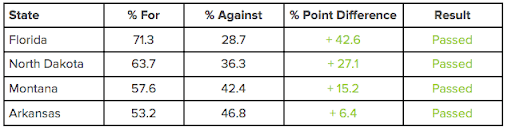
This year has been unlike any other year we’ve faced as a country. Since March, Congress has exhausted their legislative efforts to agree on coronavirus relief bills. With differences on both sides of the aisle and with the administration reaching any sort of legislative success seems near impossible. However, on a positive note we’ve seen our champions on Capitol Hill not give up on cannabis-related provisions. Although we are faced and halted by frustrations in the Republican-controlled Senate, we still see members of Congress working to include the much-needed cannabis reform our nation is calling for. Not to mention Election Day – Arizona, Montana, New Jersey, and South Dakota all passed measures making cannabis legal and regulated for adults, while Mississippi and South Dakota chose to legalize medical cannabis. Every success and victory in cannabis policies around the country creates more momentum for Congress to fix the out-dated cannabis laws. As we wrap up the 116th Congress, we will be left with more momentum than ever before to enter the 117th Congress to reach new legislative victories.
Looking Back On #10YearsOfNCIA: 2018-2019
Photo By CannabisCamera.com
by Michelle Rutter Friberg, NCIA’s Deputy Director of Government Relations
Over the last several weeks, I’ve been taking a retrospective look at the progress NCIA has made in the ten years since its inception. This is our last installment, detailing 2018-2019, and brings us up to 2020 (the year that shall not be spoken of). While this timeline is by no means a comprehensive look at everything that’s happened in cannabis policy during those years, here are some highlights:
January 2018
On January 4, 2018, then-Attorney General Jeff Sessions declared in a one-page memo that he had rescinded the Cole Memo, a similar memo related to cannabis activity on tribal land, and two other older memos. Sessions directed U.S. Attorneys to instead “follow the well-established principles that govern all federal prosecutions,” which require federal prosecutors to “weigh all relevant considerations, including federal law enforcement priorities set by the Attorney General, the seriousness of the crime, the deterrent effect of criminal prosecution, and the cumulative impact of particular crimes on the community.”
February 2018
This month was filled with the political fallout of the rescission of the Cole Memo. First, a letter was written by the U.S. Treasury Department’s assistant secretary for legislative affairs to Congress that said, “We are reviewing the [cannabis banking] guidance in light of the Attorney General’s announcement [to rescind the Cole Memo] and are consulting with law enforcement”. Then, following Sen. Gardner’s (R-CO) decision to block the Department of Justice’s nominees over the rescission of the Cole Memo in January, he released his holds on nominees for U.S. attorneys in a dozen federal districts and U.S. marshals in every district. Holds continue on the nominations of seven top Department of Justice nominees.
March 2018
In March, Attorney General Sessions spoke at an event where he acknowledged that the Department of Justice cannot use its limited resources to enforce cannabis prohibition against everyone who violates federal marijuana laws. He said, “We’re not going to be able, even if we desired, to take over state enforcement of routine cases that might occur.”
April 2018
The Trump administration officially began accepting online comments about whether marijuana should be rescheduled under international agreements. That same month, U.S. Senate Majority Leader Mitch McConnell (R-KY) filed a hemp legalization bill.
May 2018
The U.S. Small Business Administration (SBA) quietly issued a document saying that businesses that work with the marijuana industry aren’t eligible for federally backed loans. Fast forward to 2020, this document is largely what prohibited both direct and indirect marijuana businesses from receiving PPP money or federal assistance due to the COVID-19 pandemic.
June 2018
Senators Elizabeth Warren (D-MA) and Cory Gardner (R-CO), introduced the Strengthening the Tenth Amendment Through Entrusting States (STATES) Act. Shortly thereafter, President Trump was asked if he supports new Senate legislation to let states set their own marijuana laws without federal interference, to which he replied, “I really do. I support Senator Gardner. I know exactly what he’s doing. We’re looking at it. But I probably will end up supporting that, yes.” The STATES Act has never had a congressional hearing or moved in any way through the legislative process.
July 2018
In a slight change of tone, U.S. Attorney General Jeff Sessions said that “states have a right to set their own laws and will do so” but that “the American republic will not be better if there are marijuana sales on every street corner” and “we’ll [Department of Justice] enforce the federal law.”
August 2018
A group of the top financial regulatory officials from 13 states sent a letter urging congressional leaders to solve the marijuana industry’s banking access issues. The regulators wrote, “It is incumbent on Congress to resolve the conflict between state cannabis programs and federal statutes that effectively create unnecessary risk for banks seeking to operate in this space without the looming threat of civil actions, forfeiture of assets, reputational risk, and criminal penalties.”
September 2018
NCIA worked with Congressman Lou Correa (D-CA) to send a letter to the Department of Homeland Security Secretary Kirstjen Nielsen that urges the department to develop clear guidance concerning the entry into the United States of foreign nationals with authorized work visas who are associated with the cannabis industry.
October 2018
Well-known pollster Gallup found that sixty-six percent of Americans now support legalizing marijuana. Support has remained near that number to the present.
November 2018
This month, midterm elections were held, and a number of states voted on setting their own cannabis policies. Residents of Michigan and North Dakota both voted on adult-use measures, one passing and one failing, respectively. Additionally, Utah and Missouri both passed medical cannabis ballot initiatives. While the Senate remained in control of the GOP, the House of Representatives switched from a Republican majority to a Democratic majority.
December 2018
Congress passed the 2018 Farm Bill which included hemp legalization. The bill did not create a completely free system in which individuals or businesses can grow hemp whenever and wherever they want — there are numerous restrictions — and the programs are still being adjusted today.
January 2019
The 116th Congress was sworn in and quickly filed a number of cannabis-related bills, including:
H.R. 420: Regulate Marijuana Like Alcohol Act, H.R. 493: Sensible Enforcement of Cannabis Act, and H.R. 127: Compassionate Access, Research Expansion, and Respect States (CARERS) Act of 2019
February 2019
In February, the Subcommittee on Consumer Protection and Financial Institutions held its first-ever hearing on marijuana and financial services, entitled: Challenges and Solutions: Access to Banking Services for Cannabis-Related Businesses. Up for discussion was the Secure and Fair Enforcement (SAFE) Banking Act.
March 2019
Quickly following the subcommittee hearing, the House Financial Services Committee scheduled a full markup for the SAFE Banking Act. The bill passed out of committee with a bipartisan vote of 45-15.
April 2019
During a House appropriations subcommittee hearing, several lawmakers asked Treasury Secretary Steven Mnuchin about what could be done to provide state-legal cannabis businesses with access to financial institutions. Mnuchin replied, “Let me just say, I hope this is something that this committee can on a bipartisan basis work with since there are people on both sides of the aisle that share these concerns. I will just say I don’t believe this is a failure of the regulators. I want to defend the regulators on this issue.”
May 2019
NCIA hosted our 9th Annual Cannabis Industry Lobby Days, bringing hundreds of professionals to Washington, D.C. Over the course of 48 hours, attendees met with nearly 300 congressional offices to share their stories and experiences and dropped off informational materials to 200 offices that we did not schedule meetings with. In addition to these meetings, we had two briefings, held a PAC fundraiser, and hosted our first-ever VIP Day for members of our Leadership Circle.
June 2019
In June, the Senate Banking Committee held a hearing entitled “Challenged for Cannabis and Banking: Outside Perspectives.” NCIA was proud to have Sen. Jeff Merkley introduce for the record the testimonials of nearly 100 NCIA members during the hearing.
July 2019
The Subcommittee of the House Judiciary Committee held a hearing on ending cannabis prohibition in America. The hearing, entitled “Marijuana Laws in America: Racial Justice and the Need for Reform” will focus on the need to deschedule cannabis, the importance of equity, diversity, inclusivity in this burgeoning industry, and will also cover issues pertaining to cannabis and public health, law enforcement, and the failings of prohibition.
August 2019
When President Trump was asked at the end of August whether or not marijuana will be federally legalized during his administration, he said, “We’re going to see what’s going on. It’s a very big subject and right now we are allowing states to make that decision. A lot of states are making that decision, but we’re allowing states to make that decision.”
September 2019
For the first time in history, a standalone cannabis policy reform bill was brought before the House of Representatives for a vote and passed with an overwhelming bipartisan majority. The Secure and Fair Enforcement (SAFE) Banking Act of 2019, or H.R. 1595, was approved 321-103, including nearly half of voting Republicans, in a suspension vote.
October 2019
The U.S. Tax Court ruled this week that the tax code ban on business deductions by medical marijuana companies is constitutional. The case is Northern California Small Business Assistants Inc. v. Commissioner of Internal Revenue, docket number 26889-16.
November 2019
In a vote of 24-10, the House Judiciary Committee approved a bill that would effectively end marijuana prohibition. The Marijuana Opportunity Reinvestment and Expungement (MORE) Act of 2019, or H.R. 3884, was introduced by House Judiciary Committee Chairman Jerrold Nadler (D-NY) and has been moving through the legislative process steadily. The MORE Act is anticipated to be voted on by the full House of Representatives this month.
December 2019
The Federal Reserve released guidance allowing banks to work with the hemp industry. Financial institutions are no longer required to file suspicious activity reports on customers operating a hemp business.
It’s been a wild ride to look back at the last 10 years of NCIA, and we are looking forward to serving you and your business for another 10 more!
Looking Back On #10YearsOfNCIA: 2016-2017
Photo By CannabisCamera.com
by Michelle Rutter Friberg, NCIA’s Deputy Director of Government Relations
Over the last month, I’ve been taking a retrospective look at the progress NCIA has made in the ten years since its inception. While it’s been fun to look back at those early years, this week I’m excited to look at a time when cannabis policy was getting really active: 2016-2017! While this timeline is by no means a comprehensive look at everything that’s happened in cannabis policy during those years, here are some highlights:
January 2016
District judge dismisses lawsuit against the Fed, filed by the Fourth Corner Credit Union, says Congress must fix the cannabis banking problem. The same month, President Obama announces that cannabis reform is not on his agenda in 2016.
March 2016
The Supreme Court dismisses Kansas’ challenge to Colorado marijuana laws. The 6-2 vote meant the nation’s highest court would not rule on the interstate dispute, and Colorado’s legal cannabis market remains safe. “Since Colorado voters overwhelmingly passed legal recreational marijuana in 2012, we have worked diligently to put in place a regulatory framework — the first in the world — that allows this new industry to operate while protecting public health and safety,” then- Gov. John Hickenlooper (D) said following the decision. “With today’s Supreme Court ruling, the work we’ve completed so far remains intact.”
An AP poll shows that 61% of Americans support legalizing cannabis. The most recent Gallup poll on the issue, published in October 2019, shows that approval number has risen to 66%.
April 2016
U.S. Senate Caucus on International Narcotics Control holds a hearing titled “Is the Department of Justice Adequately Protecting the Public from the Impact of State Recreational Marijuana Legalization?”
May 2016
NCIA holds its 6th Annual Cannabis Industry Lobby Day in D.C., garnering over 150 attendees and participating in more than 200 scheduled meetings on Capitol Hill. That same month, the Tax Foundation reports a legal marijuana industry could mean up to $28 billion in federal, state, and local tax revenues.
June 2016
NCIA hosts our 3rd Annual Cannabis Business Summit in Oakland with 3,000+ attendees. That same month, the U.S. Senate Appropriations committee narrowly approved a marijuana banking amendment. Ultimately, the amendment did not make it into law. The amendment has not passed this specific Committee since, though we continue to try!
July 2016
Showing increased interest and momentum on this issue, the U.S. Senate Judiciary Committee holds a hearing on the potential benefits of medical marijuana. The same month, the Democratic Party included reclassifying cannabis in the party’s platform.
August 2016
This was an exciting month because we got to really see our efforts at work in the real world. Four years ago this month, the Ninth Circuit Court of Appeals ruled that due to the Rohrabacher-Farr amendment, the Department of Justice cannot use funds to enforce federal law against state-legal medical cannabis businesses.
September 2016
U.S. Attorney General Loretta Lynch says that marijuana is not a gateway drug, but that same month, FBI data showed that there is one cannabis arrest every 49 seconds in the U.S. The majority of those individuals are Black and brown and are arrested four to eight times more than their white counterparts.
October 2016
Members of Congress and the campaigns to legalize cannabis in various forms enter the final push. That month, a report also showed that Colorado’s marijuana industry had a $2.39 billion financial impact and created more than 18,000 jobs in the state.
November 2016
Five states (Arizona, California, Maine, Massachusetts, and Nevada) voted on ballot initiatives to legalize, tax, and regulate marijuana for adult use. Four of those initiatives passed, and three of them passed by more than seven percentage points.
Four states (Arkansas, Florida, Montana, and North Dakota) voted on ballot initiatives to create or expand legal medical marijuana programs. All four of those initiatives passed, with an average victory of 26.3 percentage points.
Of course, November 2016 is also when Republicans took control of both chambers of Congress and candidate Trump became president-elect Trump.
January 2017
NCIA establishes the Policy Council to serve as the industry’s “think tank” in D.C., developing and publishing policy papers to educate policymakers and other stakeholders on topics relevant to the cannabis industry. The same month, Sen. Jeff Sessions (R-AL) begins his confirmation hearing to become U.S. Attorney General. He is subsequently confirmed, bringing uncertainty to the cannabis space.
February 2017
White House press secretary Sean Spicer said that he expects states to see “greater enforcement” of the federal law against marijuana use, a move that would be at odds with a growing number of states’ decisions to legalize it. Spicer, taking questions from reporters at the daily briefing, differentiated between the administration’s positions on medical marijuana and recreational marijuana. Funnily enough, Spicer’s career lasted about as long as it takes me to smoke a joint.
The nation’s first-ever Congressional Cannabis Caucus is formed by Reps. Rohrabacher (R-CA) and Blumenauer (D-OR) with help from friends Reps. Polis (D-CO) and Young (R-AK). In the 116th Congress, Rohrbacher and Polis left Congress and were replaced by Barbara Lee, a Democrat from California, and David Joyce, a Republican from Ohio, as co-chairs.
May 2017
NCIA’s D.C. team grew from two (myself and Mike) to three, with the addition of Maddy Grant, who was our Government Relations Coordinator at the time. Since then, Maddy has become one of my best friends and was even one of my bridesmaids! If you know Maddy, you know she’s the best and NCIA is lucky to have her!
NCIA held its 7th Annual Cannabis Industry Lobby Days in Washington, D.C., where 250 industry professionals coalesced on Capitol Hill to attend over 300 scheduled meetings. Following that, there was a substantial increase in the number of cosponsors on cannabis-related bills compared to the previous Congressional session.
July 2017
The Senate Appropriations Committee voted on their equivalent of the Rohrabacher-Farr amendment, sponsored by the committee’s vice chairman, Patrick Leahy (D-VT). That amendment passed on a voice vote and was the first time ever that a cannabis-related amendment passed in such a manner. At the end of July, the Senate Appropriations Committee also adopted an amendment that would allow the Department of Veterans Affairs to recommend medical cannabis in states. That amendment passed by a vote of 24 to 7 – the most votes this measure has ever received in the Senate. The veterans’ measure did not end up becoming law.
September 2017
The House Rules Committee held a hearing to discuss amendments to the upcoming appropriations bill that will fund the federal government for the upcoming fiscal year and chose not to vote on the amendment that protects medical cannabis businesses, patients, and programs. Since the protections for medical cannabis businesses were included in the Senate’s version of the budget bill but are not included in the House’s versions, it came down to a conference committee to negotiate its inclusion, and ultimately, the provision remained in law.
December 2017
Senate Republicans passed their tax reform package into law. Sen. Cory Gardner (R-CO) introduced two amendments to the bill that targeted 280E, however, he withdrew both amendments before the final bill was voted on.
If you think reminiscing on all that was a lot, make sure you keep an eye on our blog and future issues of NCIA’s Cannabusiness Leader to learn more about 2018-2019 and the progress we’ve made more recently as we wrap up this series!
Video: NCIA Today – July Retrospective, D.C. Update, Cannabis Caucus Cyber Series Returns, and more!
In NCIA’s monthly video series, NCIA Today, host Bethany Moore shares a retrospective on the month of July, plus what to expect from NCIA’s digital events this fall. We also check in with NCIA’s Director of Government Relations, Michael Correia, to hear more about NCIA’s efforts to advance the cannabis industry’s legislative goals in D.C. during the COVID-19 pandemic.
NCIA members can join us at our second Cannabis Caucus CYBER series in the month of September.
Dates for NCIA’s rescheduled 2020 conference schedule has been announced… for 2021.
Mark your calendar for the NEW dates for NCIA’s Cannabis Business Summit and Expo, Midwest Cannabis Business Conference, and 10th Annual Cannabis Industry Lobby Days.
Plus, we announce a brand new virtual educational event taking place October 21-22, 2020!
Action Alert: Protect State Cannabis Programs
In the coming days, the House of Representatives will vote on protecting adult-use cannabis businesses, consumers, and state programs from the federal government and we need your help now.
The Blumenauer-Norton-Lee-McClintock amendment states that no funds from the Department of Justice may be used to prevent any adult-use cannabis states from implementing their own laws that authorize the use, distribution, possession, or cultivation of cannabis. While the amendment didn’t make it into the federal budget last year, the House did approve it in a 267-165 vote.
This year, we’re working to increase that vote margin in the House in order to send a strong message to the Senate and the White House.
You can help us send that message by calling your Representative and tell them to VOTE YES on the Blumenauer-Norton-Lee-McClintock amendment to the Commerce, Science, and Justice appropriations bill.
Find your Representative by clicking here and check our Congressional Scorecard to see where your Representative stands on our industry’s issues!
Since 2014, Congress has passed annual spending bills that have included a provision protecting medical cannabis businesses, patients, and programs from undue prosecution by the Department of Justice.
The bipartisan Blumenauer-Norton-Lee-McClintock amendment simply expands those protections to include all state marijuana programs, including the 11 states that have legalized cannabis for adults over the age of 21.
A similar amendment was approved by the House in last year’s appropriations process by a 267-165 vote.
Today, more than one in five Americans reside in a jurisdiction where the adult use of cannabis is legal under state law.
This amendment does not legalize marijuana at the federal level; it simply respects those states that have decided replace prohibition with a system of regulation.
We urge you to VOTE YES on the Blumenauer-Norton-Lee-McClintock amendment to the Commerce, Science, and Justice appropriations bill.
Our industry supports hundreds of thousands of jobs, tens of millions in tax revenue, and billions in economic activity – so please, call and help us protect what we have built together.
This site uses cookies. By using this site or closing this notice, you agree to the use of cookies and our privacy policy.


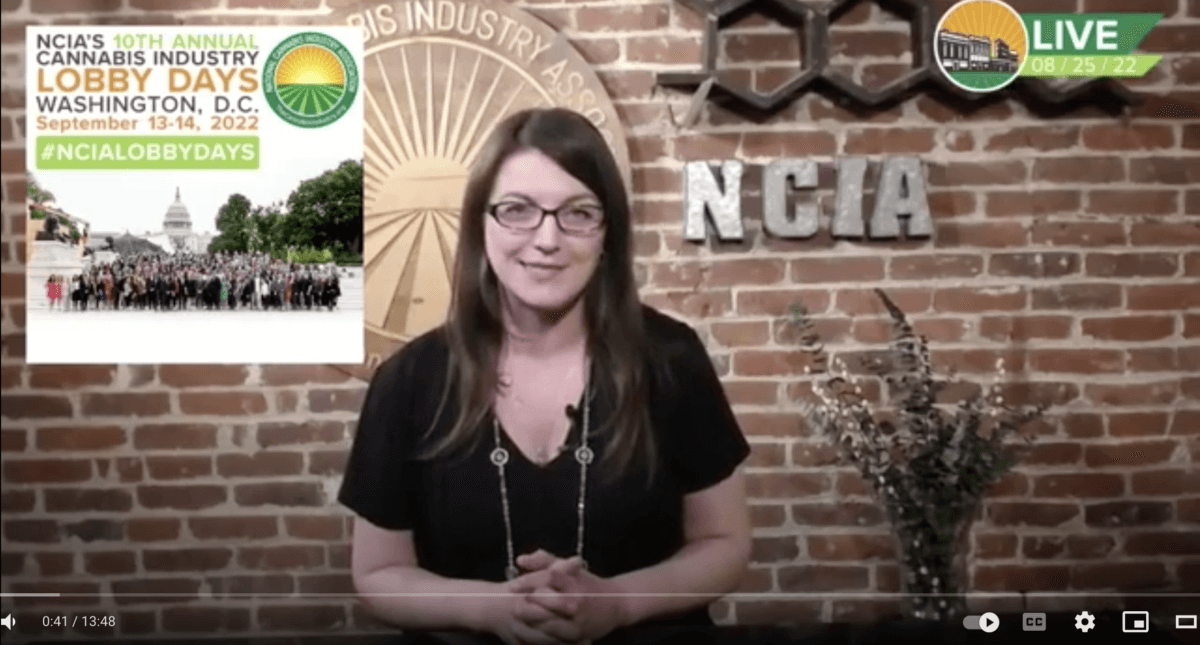
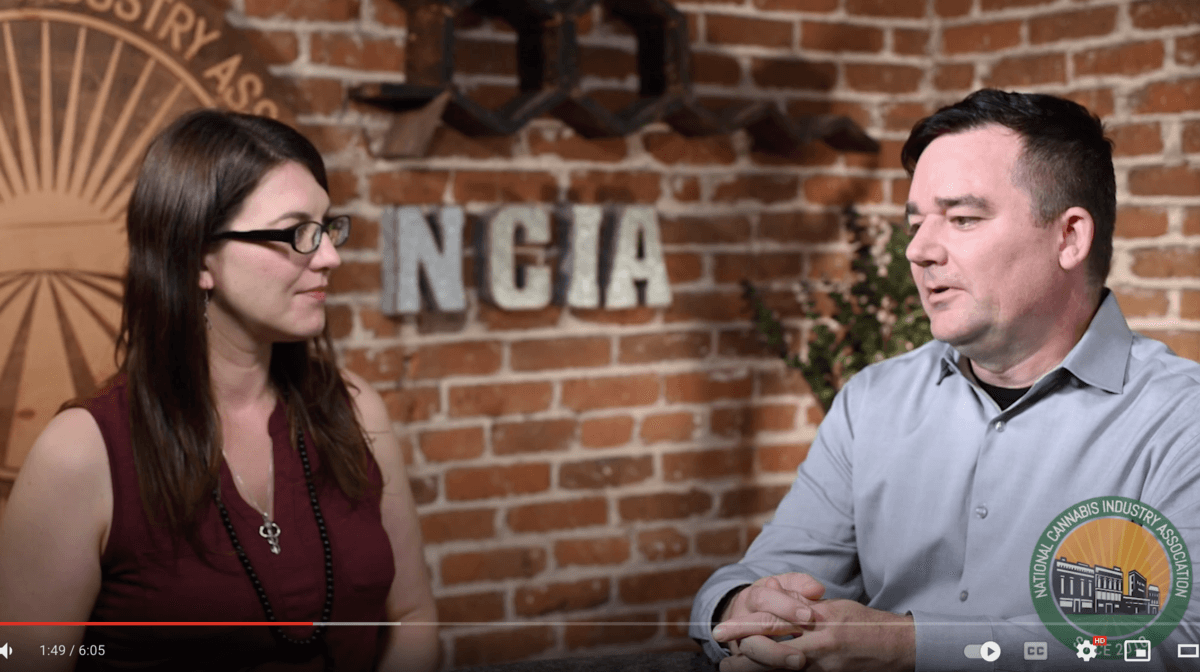
 By Sadaf Naushad



 By Morgan Fox, NCIA’s Director of Media Relations
 By Rachel Kurtz-McAlaine, NCIA’s Deputy Director of Public Policy
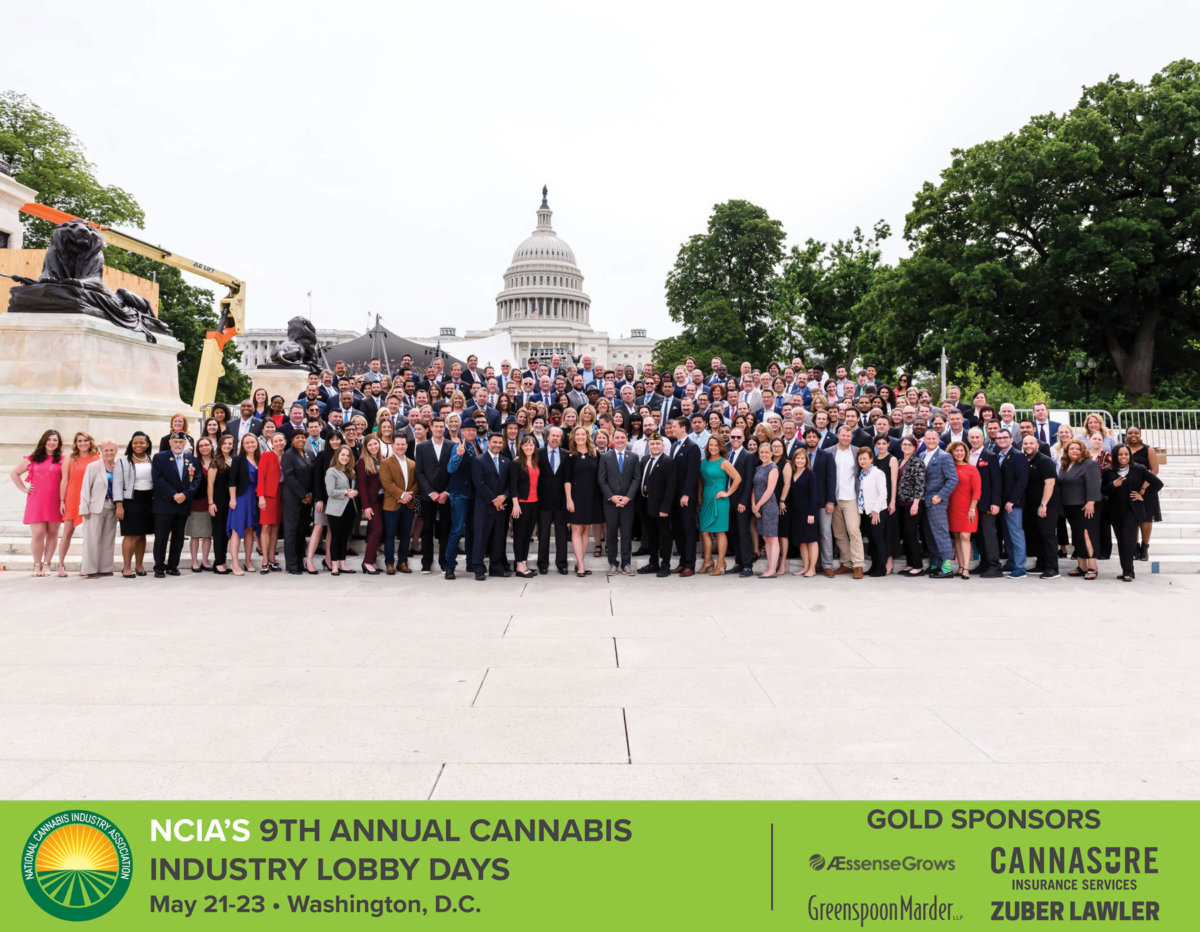
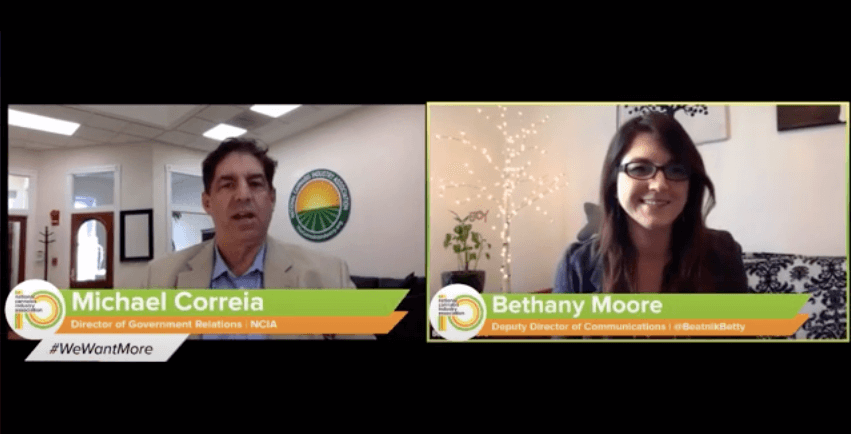
 Following the presidential election, we’ve entered the lame-duck session. This occurs after an election, but before new members are sworn in, and allows for time on the legislative calendar for Congress to pass additional legislation. Before Congress heads home for the holidays, a new administration takes office, and the 117th Congress returns, let’s take a look at what to keep an eye on during the lame-duck session.