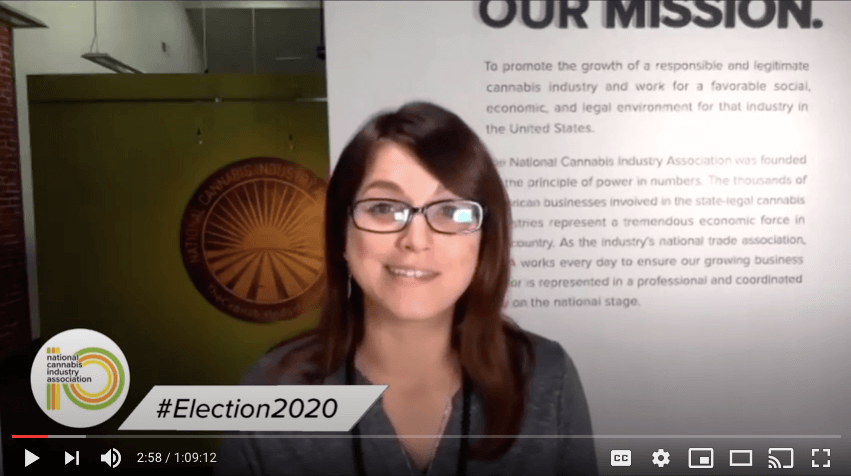
Did you miss the special live stream of NCIA Today this Election Day morning on Facebook? Get caught up to speed with this recording of the episode while we prepare to see results the results coming in as Americans cast their votes all across the country.
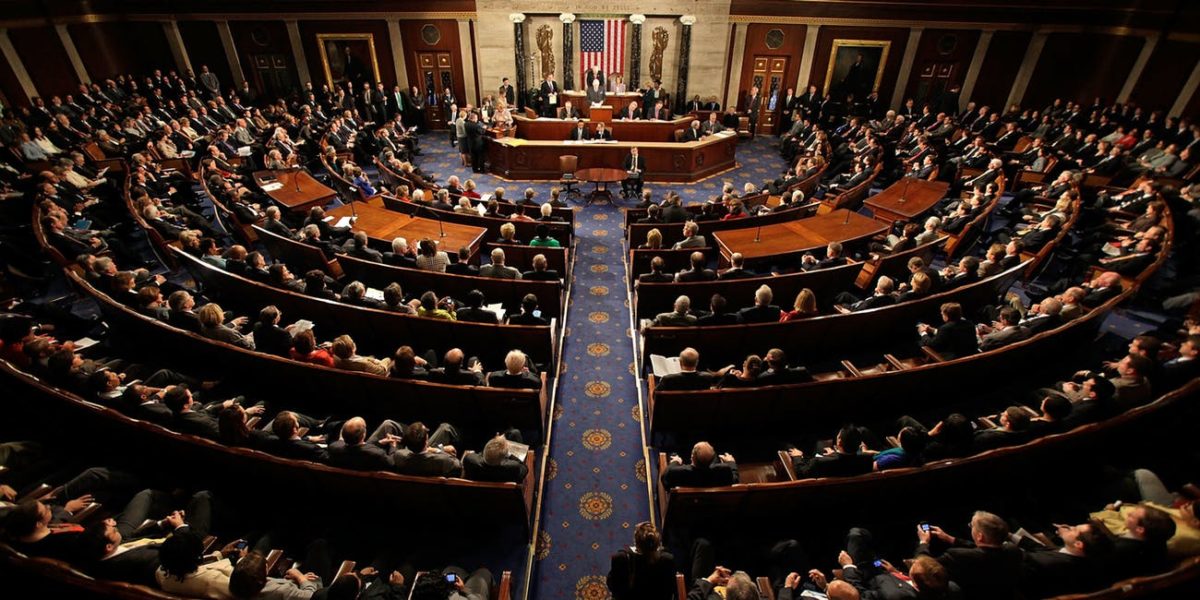
Cannabis is on the ballot in states across the country and a new Congress will be elected today, possibly the one that will end federal cannabis prohibition. Join NCIA staffers for an exclusive power hour of cannabis conversations with elected officials, Hill staffers, campaign directors, and more.
2020 Senate Races To Watch
by Michelle Rutter Friberg, NCIA’s Deputy Director of Government Relations
Photo By CannabisCamera.com
As you may have heard by now, Election Day is just around the corner! Let me take this opportunity to remind you to vote, to do so safely, and come up with an election plan! If you need help determining if you’re registered, or need more information about anything election-related, you can click here for some great resources.
Over the last two years, NCIA and the cannabis industry have had some success in Washington, D.C.: passing the SAFE Banking Act out of the House, passing the MORE Act out of committee (we expect a full House vote during the lame duck session!), and even getting the language of the SAFE Banking Act included in three proposed COVID-19 relief packages. But, the same challenge has remained: the upper chamber of Congress, the Senate.
This year, there are 35 Senate seats up for election, and the results will impact cannabis policy for years to come (remember, Senate terms last for six years). Let’s take a look at three races that could not only impact cannabis policy, but the makeup of the Senate as a whole.
Arizona
Incumbent: Sen. Martha McSally – Republican
Challenger: Mark Kelly – Democrat
The Details: Senator Martha McSally, Mark Kelly, and seventeen other write-in candidates are running in this year’s special election in Arizona. The winner will fill the rest of the 2017-2022 term that former Sen. John McCain (R) won in 2016. You may remember McSally’s name– that’s because back in the 2018 general election, McSally ran for Arizona’s other Senate seat and lost to Kyrsten Sinema (D) 47.6% to 50.0%. After the 2018 election, interim Sen. Jon Kyl (R) announced his resignation and Gov. Doug Ducey (R) announced McSally as Kyl’s replacement in December 2018. Easy to keep up with, right?!
On Cannabis: This year, Arizonans will vote on Proposition 207, which would legalize adult-use cannabis in the state. During a debate in October, the candidates were asked about the initiative. Mark Kelly responded, “I think I’m gonna vote yes. It has some provisions in there to decriminalize it and address some incarceration rates for marijuana offenses — I think that’s good. I think there’s a funding source there. So I’m probably gonna vote yes.” When asked if he’d support removing marijuana as a Schedule 1 narcotic were such federal legislation to come before him, Kelly replied, “Based on my vote here in Arizona, I would seriously consider removing it.”
Senator McSally, on the other hand, has been essentially silent and inactive on this issue since assuming office. Last month, when asked about the initiative, McSally said “I’ll let the Arizona voters decide that [Proposition 207].” During her time as a Congresswoman prior to being appointed to the Senate, McSally voted against several cannabis-related appropriations amendments. She has not co-sponsored any cannabis-related legislation in the Senate.
Colorado
Incumbent: Sen. Cory Gardner – Republican
Challenger: Former Governor of Colorado, John Hickenlooper – Democrat
The Details: This race is one of the most contested in the country– both the Democratic Senatorial Campaign Committee (DSCC) and the National Republican Senatorial Committee (NRSC) have added it to their election target lists. The previous three U.S. Senate elections in Colorado—2016, 2014, and 2010—were decided by margins of 5.7, 1.6, and 1.7 percentage points, respectively. Gardner was first elected in 2014 after defeating incumbent Mark Udall (D) 48.2-46.3%.
On Cannabis: Sen. Gardner has long been touted as one of the most pro-cannabis Republicans in the Senate. He has sponsored and co-sponsored a number of cannabis bills, including the STATES Act and the SAFE Banking Act. However, Sen. Gardner has been unable to convince his colleagues to bring SAFE Banking up for a committee vote, or even have a simple hearing on the STATES Act. That being said, if Republicans retain control of the Senate, but Gardner loses his seat, it may have adverse consequences for the cannabis industry.
During his time as governor, Hickenlooper actively opposed cannabis legalization, even going so far as to unsuccessfully campaign against the state’s marijuana legalization ballot referendum. He then went on to implement it after voters approved the measure. During his last year as governor, he also vetoed proposals to add autism as a medical marijuana qualifying condition, to increase flexibility for investments in the cannabis industry, and to allow dispensaries to operate tasting rooms. But Hickenlooper has come a long way since then– his campaign website states, “As U.S. Senator, I will fight to remove cannabis from classification as a Schedule I drug.” Plus, he even responded to an op-ed penned earlier this year by NCIA’s own Social Media Manager, Vince Chandler, tweeting, “Yes, I support decriminalizing & descheduling marijuana. Colorado set the gold standard, and I’m eager to work with you and Colorado’s cannabis industry and entrepreneurs to get this done in Washington.”
Montana
Incumbent: Sen. Steve Daines – Republican
Challenger: Former Governor of Montana, Steve Bullock – Democrat
The Details: Incumbent Sen. Daines was first elected in 2014 with 58% of the vote. Bullock was first elected Governor of Montana in 2012 with 49% of the vote to his opponent’s 47%. His margin increased in 2016 when he won 50% to 46%. That same year, Donald Trump (R) won Montana in the presidential election with 56% of the vote to Hillary Clinton’s (D) 36%.
Both the National Republican Senatorial Committee and the Senate Majority PAC, a Democratic PAC, have targeted the race. Prior to announcing his bid for Senate, Bullock joined the crowded Democratic presidential field before dropping out in 2019.
Implications: This year, there are two cannabis-related initiatives on the ballot in the Treasure State. Montana I-190, the Marijuana Legalization Initiative, is on the ballot and would legalize the possession and use of marijuana for adults over the age of 21, impose a 20% tax on marijuana sales, require the Department of Revenue to develop rules to regulate marijuana businesses, and allow for the resentencing or expungement of marijuana-related crimes. The second initiative, Montana CI-118, the Allow for a Legal Age for Marijuana Amendment, would amend the Montana Constitution to allow for the legislature or a citizen initiative to establish a minimum legal age for the possession, use, and purchase of marijuana, similar to the regulation of alcohol in the state constitution.
While neither Senate candidate has weighed in on the state’s cannabis initiatives, we do have some understanding of their views on the issue– Sen. Daines has consistently voted in favor of appropriations amendments related to hemp, medical cannabis, and banking. In 2015, he co-sponsored an industrial hemp bill. It’s important to note that all of these votes were more than three years ago. On the other hand, while running for president last year during July 2019, Bullock stated, “I think this [cannabis legalization] should be left up to the states. I think the federal government should get out of the way and this is a state-by-state decision.”
Now, remember to get out there and VOTE! Here at NCIA, we’ll be analyzing other initiatives, candidates, and what it all means for you and your business as we get closer to the election, and doing the same once we get the results!
It’s autumn, and that means where I live, the temperatures have dropped from an insufferable 110 to a pleasant 85 degrees. In other parts of the country, leaves are turning color, the nights have turned chilly, and change is in the air. And all of this has me wondering, what happened to the summer?
This was the summer that wasn’t. With the pandemic, activities were curtailed, vacations were canceled, and nothing seemed normal. Like many companies, we adjusted our workflow to morph into a combination of virtual and in-person, and we implemented new sanitary and social distancing protocols. Cannabis was deemed essential, so with a few adjustments, we were able to carry on business as usual. And this got me thinking about how much we have to be able to adapt in order to survive and thrive.
One of the things I most enjoy in life is giving back to others. I’ve had a fair amount of success in my career and have learned a thing or two, and now I love passing along that knowledge and helping the younger generation get a foothold and better navigate their own pathway through the world of business.
And of all the things I’ve learned throughout my career, the one that has helped the most, especially through this complex and challenging time, is the ability to be flexible.
No, I’m not taking up yoga, although that’s probably a good idea. I am referring to being flexible in business.
When we are young and the whole world is in front of us, we think that all things are possible. The road ahead is uncluttered with roadblocks and there are no speed limits.
As we mature, we realize that life will throw a few obstacles at you, and a key component to success is how well you are able to overcome these challenges and keep moving forward.
The one thing that is constant in business is change, and without flexibility, failure is almost certain.
Think of the American companies that could not adapt to changing circumstances: Retailers like Kmart, Sears, and many others, have not been able to compete in the new world of online commerce and are all but gone. But Walmart continues to refine its online strategy and recently reported that e-commerce sales are up 74%. Target, another retailer that understands how to change with a changing world, reports online sales revenue will jump 24 percent this quarter. These two companies have embraced flexibility.
Borders Books is another giant that couldn’t adapt to a changing marketplace. While consumers were switching to e-books, Borders kept building new brick and mortar stores and focused on growing its CD and DVD department – clearly out of step with the changing times.
Not so long ago, Blockbuster was the place to go to rent movies. The company could have become a leader in digital entertainment but only made a last-minute and unsuccessful attempt to transition to the new platform. Today, they are gone.
The fact is, there are countless examples of companies that have shuttered because they could not adapt to changing times.
In the cannabis industry, change comes at a rapid pace. Laws and regulations are in almost constant flux, and if you are not prepared to quickly pivot and change directions, you will be left behind.
From overly aggressive expansion to stockpiling potentially unsellable inventory to not keeping enough capital on hand to handle those “rainy days,” there is a myriad of problems that can seemingly come out of the blue and dramatically impact a cannabis company’s ability to function.
I’ve seen this with my own eyes, far too many times.
In today’s world, and especially in the cannabis industry, it is vital to look ahead and maintain flexibility. Because before you know it, it will be spring and the world will be different… once again.
Pamela Donner is COO of High Point Jewelry, and is an experienced C-level corporate executive, with an impressive history of growing companies, navigating successful business turnarounds, launching new products, and implementing structural organization changes to reduce costs and maximize profits.
She is currently COO of multiple companies in the legal cannabis and CBD industries, including
Gel Cap Concepts, LLC – a manufacturer of cannabinoid-infused products; the Uncle Herbs, Naked Vape, and Desert Azee brands; and High Point Jewelry – the world’s first luxury cannabis-inspired jewelry company. She is also a partner in a CBD retail store and is COO of a popular dispensary.
Donner was named the 12th Most Powerful Woman in the Cannabis Industry by Cannabis Business Executive Magazine, and was listed as one of America’s Finest Entrepreneurs by Business Management News.
Pam resides in Scottsdale, Arizona with her husband, Glenn Murray.
Member Blog: The Conservative Argument for Banking and 280E Reform
Why philanthropy can be the most effective weapon in the fight for banking and 280E reform
In a recent announcement by the IRS, they may allow deductions through Section 471, but it is still unclear this impact as of this writing is still unclear, so with that said, I am proposing this argument because of the impact needed TODAY to help in the economic recovery effort, given it is an election year, as well.
Before I begin, please do not construe my argument as a Republican argument for legalization. When I say conservative, I am speaking from a purely fundamental belief and values perspective, not a contemporary political ideology. There is hypocrisy on both sides and I recognize this fact.
Having a nonprofit background, most of my life has been spent hovering on the political lines, mostly policy, not parties. Liberals are traditionally more aligned with causes than conservatives, although conservatives have traditionally been more fiscally supportive of charitable causes. Why are conservatives more fiscally supportive of charitable causes? Conservative values.
The most undervalued weapon in the fight for legalization
In the fight for legalization, there appears to be a definite challenge from conservatives.
I came into this industry four years ago and noticed a disconnect between the arguments from the industry and the conservative response. Although support is growing from conservatives, most of the arguments being discussed for legalization seem to be falling on deaf ears.
Why is that? It is because the current arguments for legalization are being fed to conservatives in a language which they do not understand and are hearing as a direct challenge to their values.
The values and language of the right are fundamentally different from the left in most ways. One value which is, in my opinion, grossly undervalued by the industry is philanthropy.
Timing is everything
The health and economic ramifications of COVID-19 have caused us to look at the government and our nonprofit sector for help. The political discourse of our governments, from local to federal, unfortunately, is not helping to meet the needs of individuals or communities and thus someone has to step up. Something I haven’t heard many conversations about is our community-based nonprofits and how they are working to address the needs around COVID-19 and the economic challenges COVID-19 has manifested. Nonprofits, which are on the front line of meeting communities’ needs, from animals to veterans and every population in between, are fighting a battle from a deficit position.
The COVID-19 pandemic has cut into nonprofits’ resources while increasing demand for their services.
According to the Stanford Social Innovation Review’s “Giving With Impact Podcast,” our community nonprofits, especially 501(c)(3) nonprofits, are being “…asked to do more with less money and reduced staff while taking on an expanding client population, and all of this at the same time that revenues from services have dried up and donations from their traditional fundraising activities have declined. Some have had to lay off staff and cut salaries and others have had to cut programs.” This is according to Amir Pasic, the Eugene R. Tempel Dean at the Lilly Family School of Philanthropy at Indiana University and a professor of philanthropic studies. He also highlights that although disasters cause a spike in giving, which the pandemic did, in a recession, which seems to be a by-product of the political response to COVID-19, he states, “…we see the opposite effect… It took many years, several years, for individual giving, in particular, to recover. So in recessions giving does go down, simply because the resources that we have available go down, as well.”
Amir also states in the podcast that “…over 60% of nonprofits are anticipating significant decreases in terms of their fundraising ability. And I think many of them will be in crisis further, depending, in part, also, in terms of how federal help continues or does not continue going forward… So there is certainly a sense of crisis and pressure for many nonprofits because their services are increasingly… many of them in the human services, increasingly in need, and yet there is the sense that their sources of revenue are going to be under severe pressure at the same time.”
In the same podcast, Mary Jovanovich, Senior Manager for Relationship Management at Schwab Charitable, states that clients involved with their donor-advised fund are actually giving 50% more at this time. Looking at this in the most simplistic way, those who can give more are giving more, but giving is being done by fewer people and thus still creating a deficit.
Together we CANNA make a difference!
Of course, those companies and people who are doing extremely well are the usual suspects. But what about a flourishing industry? One which is new and growing, and has been growing through a pandemic? An industry that is doing better than most industries and has the reach and means to impact the communities which they serve and beyond? What would be holding them back from coming to the rescue of the communities they serve and ultimately helping the entire nation?
Well, not to put too fine a point on it, but taxes!
If you are a company with an effective tax rate of between 60 and 70%, you might need to hold on to your profit in order to make sure you and your employees survive in case something else is looming on the horizon. Say an election?
Imagine a time when the cannabis community comes together to elevate those nonprofits which are providing the most impact on our economic and social recovery. The world is watching and in awe of the support being provided to tens of thousands of deserving nonprofit 501c3’s and the Senate is watching as thousands of the nonprofits in their states are participating, which is a statement that they are willing to accept support from the cannabis industry. This is the way you sway minds and hearts.
The Conservative Argument for 280E Reform
Conservatives believe in free markets and thus less regulation, in the belief that the growth of companies and the economy will thrive and ultimately self-regulate as much as it can with limited governmental intervention. This needs to be applied to the cannabis industry as well. But not just for the reasons you may think. 280E reform needs to take place NOW so that philanthropy can be elevated and help address COVID-19 and economic recovery challenges.
The effective tax rate is high specifically due to the IRS code 280E, which does not allow cannabis companies to write off typical business expenses, things like marketing, depreciation on equipment, and other expenses including charitable donations to 501c3 nonprofits! Just imagine what could be done if a cannabis company, many of which are already giving without the tax advantage, was given a tax incentive to donate? Everyone understands the taxes imposed by the states and municipalities for the legal purchase drive the cost of cannabis up. So the margins are fairly thin when compared to that of other companies that do not have to abide by 280E. 280E is government regulation. Conservatives tend to be for free markets. If, as we all know, even my fundamentalist Christian friends know, that cannabis will be federally legal eventually, why not take this opportunity to deregulate this industry allowing it to assist in addressing community resource deficits at a time when it is needed most? This argument also addresses the fundamental hierarchy, which conservatives believe should be the path of assistance, self, family, church, community, local government, and finally state government, in that order.
I do not mention the federal government, because another value of conservatism is small government and that the federal government is there to protect the inalienable rights of humans as well as the right to property. Traditional conservatives believe in a helping hand, but only a temporary one as they understand many might not have all the support systems in place mentioned previously.
So the argument for 280E reform, in the context of nonprofits and helping with the health and economic crises stemming for COVID-19, addresses the conservative values of human rights, property rights, individual responsibility, free markets, lower taxes, and deregulation of businesses.
The Conservative Argument for Banking Reform
Now, imagine that 280E was reformed or no longer applicable to LEGAL cannabis companies. There is still a problem. Even if 280E was rescinded for the cannabis industry, banks may still not allow them the same banking services because it would in effect still be federally illegal. If this is the case, even if a company chose to donate to a willing charity, the charity would fall under these very same banking laws and thus might not be able to deposit funds from the cannabis industry into their bank accounts, running a risk that their accounts could still be closed for accepting money from a federally illegal activity. So truly, banking and 280E reform are not just a cannabis industry issue, but a nonprofit sector issue, which needs to be addressed sooner than later!
Now, we all know many charities will still not accept the funds offered from cannabis companies due to many factors, however, many of those most impacted by the pandemic and economic decline, such as those focused on food, housing, homelessness, veterans, mental health, senior citizens, and others, could benefit from receiving funds from cannabis companies as their own resources are diminishing. Therefore, the fight for our nation’s recovery needs to include banking and 280E reform for an industry which can make a difference for many!
Because TOGETHER WE CANNA MAKE A DIFFERENCE (If given the opportunity)!
Founder of Corporate Compassion, LLC and DBA CannaMakeADifference, Kevin J White is a social entrepreneur, nonprofit evangelist, volunteer activist, community engagement advocate, tennis player, golfer, BUCKEYE, and Avid shoe wearer.Kevin began his journey into social entrepreneurship after a 20+ year career in the nonprofit sector. Having started his career as a direct care counselor for at-risk children he advanced through the nonprofit sector, eventually moving to Colorado for a job with a major animal welfare nonprofit, overseeing 4 departments and over 100 staff and volunteers, eventually creating his own nonprofit 501(c)(3) public charity. With a strong background in nonprofit management and resource management, he began his cannabis journey through his Colorado-based, 501c3 nonprofit, having to identify the benefits and challenges of accepting support from the cannabis industry. He realized that there were some challenges for both sectors and decided to further his social entrepreneurship by consulting with cannabis companies looking to strengthen and develop their cause-marketing and philanthropic goals. This was the birth of CannaMakeADifference.
CannaMakeADifference is a strategic consulting company created to assist purpose-driven cannabis companies with meeting their cause-marketing and philanthropic goals. He has co-authored two white-papers, one for cannabis companies and one for nonprofits, highlighting the benefits and challenges of working with each other.
Kevin also hosts a podcast called Together We CANNA Make A Difference which highlights philanthropy in the industry and companies making a difference from the cannabis sector. You can download the podcast on most major podcast platforms including Google Podcasts and Apple Podcasts.
Member Blog: Creating a Diverse, Inclusive, and Sustainable Cannabis Industry
This year, a national outcry against police violence and the impact of COVID-19 on Black and brown communities initiated a reckoning with the legacies of oppression and injustice in the U.S. Along with recognizing our institutionalized and internalized racism, we have started to come to terms with our economic inequality now that the income gap is worse than it has been in 50 years and three families alone control more wealth than 50% of Americans.
As with the rest of the country, the cannabis industry is lived differently based on the intersectionalities of race, class, gender, orientation, (dis)ability, and veteran status. For example, already wealthy, white, male individuals have amassed fortunes in cannabis with roughly 74% of U.S. cannabis businesses owned by men and 81% by whites, according to a 2017 Marijuana Business Daily survey.
After most states designated cannabis “essential” during COVID-19, private individuals, family funds, and pension funds plowed $2.6 billion into corporate cannabis, and multi-state operators posted record sales in the hundreds of millions. Earlier in September, the second cannabis exchange-traded fund (ETF) was announced which involves an investment portfolio of multi-state operators, REITs, and CBD companies. In contrast, Black and brown communities face mass incarceration for that same plant whereby African Americans are four times more likely nationally to be arrested for cannabis offenses than whites, while in states such as Kentucky and Montana, almost 10 times more likely, cited by a 2020 ACLU report.
These economic barriers to entry entrench the lack of representation in cannabis. For most entrepreneurs, the main obstacle to starting a cannabis business is the lack of access to traditional banking. It takes at least $300,000 to open a cannabis retail store, and up to millions of dollars for other cannabis enterprises, according to the 2019 Marijuana Business Factbook. Without traditional banking, most professionals finance their businesses through family wealth or personal contacts – 84% of U.S. cannabis companies are self-funded by founders, and 22% capture additional funding through a Family and Friends Round, cited by that same report. In this system, minority entrepreneurs are at a disadvantage. U.S. median household net worth ranges from $171,000 for white families to $17,600 for African Americans, $20,700 for Latinx, and $64,800 for “Other,” based on a 2016 Federal Reserve Board survey.
In addition to funding challenges, cannabis entrepreneurs must navigate onerous state and local regulations to obtain and maintain licensing. Some states have launched Social Equity Programs to help communities historically targeted by the criminalization of cannabis to now participate in the profits of legalization. However, even Illinois’s Social Equity Program, which is considered the gold standard, awarded only 21 out of its total 75 retail social equity licenses, leaving unclaimed 54 licenses that could have transformed the applicants’ economic circumstances. The 21 finalists were taken from a total pool of 1,667 applicants, which equates to only 1.3%. Low success rates stifle market entry and ensure that corporate, multi-state operators continue to saturate the cannabis space.
Beyond media proclamations, we must actualize an inclusive cannabis industry that reflects and celebrates the rich diversity of our community and provides equal opportunities to all professionals throughout the growth cycles of the market. We must operationalize sustainable businesses that produce unionized jobs and foster generational wealth. To do so, we must not only promote our own professional aspirations, but we must champion our friends’ and colleagues’ pathways into and up the cannabis industry.
While federal legalization remains the ultimate goal, local policies that would articulate a diverse, inclusive, sustainable cannabis industry must include explicitly legalized access to banking and finance, an overhaul of law enforcement and the criminal justice system, and social equity programs that encourage market activity. Until then, we must collectivize our professional resources and knowledge to build a true business community that empowers each of us to achieve our cannabis ambitions.
Rebecca Lee Katz is an attorney at an international law firm and President of Pakaloh LLC, the free business resource for an inclusive cannabis, CBD, and hemp industry. Pakaloh offers three types of membership which are all free, and members may select as many as they choose. Membership is available to 1) “Individuals”, including new and established entrepreneurs and professionals, 2) “Providers of Products”, or plant-touching businesses, and 3) “Providers of Services”, including ancillary services.
A WOC-owned company, Pakaloh provides its members with a comprehensive suite of services, starting with free information and discounts at financial institutions like banks, lenders, and payment processors that work in cannabis. Pakaloh also features free Business Tutorials that cover a range of cannabis topics from accounting to agriculture. These are informative, introductory online videos submitted by members that allow them to reach an audience of potential clients who may need to hire their services. Additionally, members may post and search for job opportunities.
Partner companies also offer discounts for members to use on individual and bulk orders. Members network on the site by accessing directories and sending messages directly to each other. Lastly, Pakaloh curates information on professional and activist organizations and events. Pakaloh is pledged to every community, and comes from pakalolo, an embrace of generations of the founder’s family in Hawai’i. Pakaloh holds true that no matter your roots, each of us aspires toward something greater than ourselves, be it our family, our nation, our cannabis movement.
It’s Time to Spark the Vote! Calling On All Retailers to Mobilize Customers for the 2020 Election
Despite having been marginalized and underrepresented in the political process for as long as prohibition has been policy, cannabis consumers are quickly emerging as an incredibly diverse and effective voting bloc in American politics. The impact of the cannabis consumer vote on state and local elections is palpable in these unprecedented times. As a beneficiary of this constituency base, we as an industry need to appreciate not just what elections have done to enable our businesses to exist today, but, critically how by lifting the voices of our patrons we are ensuring our own sustainability tomorrow. In fact, the backbone of the cannabis industry is our consumer base. Without consumers, there would be no local reform and, in most cases, no legal state market.
Today, we have hundreds of licensed retail stores across the country, and our industry is finally in a place where we can mobilize our customers nationally for the 2020 election. As retailers, it is now absolutely essential that we ensure cannabis consumers are effectively engaged, which is why we, at Berkeley Patients Group, are proud to join the Spark the Vote Retail Partnership Program. We are calling on every retailer out there to join us.
Spark The Vote‘s Retail Partnership Program is a COVID-safe, cannabis consumer voter registration and mobilization drive. The goal is to leverage the growing number of public-facing cannabis retail networks, and allied businesses to promote the effort through in-store and online customer engagement. The campaign is bringing together hundreds of socially responsible operators from across the country that are committed to supporting public participation in the electoral process. This is an excellent opportunity for our industry to stand out as good corporate citizens by lifting the voices of the communities we serve, and by empowering our employees to support positive social change.
There is no fee to participate as an official retail partner, and his campaign was designed specifically to minimize any staff or operational disruption. The only requirement is to promote get out the vote by displaying a QR code sign (graphic is provided) in a high-traffic, high-visibility location in the store, and highlight content on social media when necessary (language templates are provided). The sign acts as a COVID-safe, contactless voter registration station where a customer can use their phone to scan the code and quickly find out about their registration status, early voting, and other resources on how to participate and promote the democratic process.
In the words of Thomas Jefferson, “We do not have government by the majority. We have government by the majority who participate.”
For more information on Spark the Vote, how your organization can participate in the Retailer Partnership Program, or other partnership opportunities, please contact ben@sparkthevote.org or go to www.sparkthevote.org.
[Sabrina Fendrick, Chief Public Affairs Officer, Berkeley Patients Group; Spark the Vote Advisory Board Member, contributed to this post.]
Video: NCIA Today – Federal Policy Update, Andrew Yang, And More!
Host Bethany Moore, NCIA’s Deputy Director of Communications and host of NCIA’s weekly podcast ‘NCIA’s Cannabis Industry Voice‘ brings you an in-depth look at what is happening across the country in federal cannabis policy reform and with NCIA.
From the top, Bethany breaks the big news that former presidential candidate Andrew Yang will be keynoting the Cannabis Business Summit this year. She continues and discusses the newly-launched NCIA Facebook Live series (and podcast) Cannabis Diversity Report.
We check in with NCIA Deputy Director of Government Relations Michelle Rutter Friberg, to hear some of the recent highlights from the nation’s capital about cannabis policy reform, cannabis, COVID-19, and more. Our resident political expert breaks down the ways that NCIA is looking to help our members improve their engagement and reach in the legislative process.
Membership Manager and DEI Coordinator Tahir Johnson joins the show to discuss the recent move by NCIA to endorse the Cannaclusive Accountability list, asking all cannabis companies to adhere to promises made in the wake of racial injustices and actively strive to build a more equitable, inclusive industry.
A Third Round of SAFE Banking, HEROES 2.0 Unveiled
by Michelle Rutter Friberg, NCIA’s Deputy Director of Government Relations
Photo By CannabisCamera.com
It may seem like a while since you got an update on the SAFE Banking Act, but I have some exciting news to share with you!
Yesterday, House Democrats unveiled “HEROES 2.0” which is their latest COVID-19 relief package. If you’ll recall, back in May, the House also passed the initial HEROES Act, which included the text of H.R. 1595, the SAFE Banking Act.
Since HEROES passed the House in May, NCIA has been hard at work (from home!) talking to House and Senate leadership, as well as other key Senate offices about the need to pass this legislation and solve the cannabis banking conundrum. Unfortunately, those talks have been stalled for months as congressional leadership and White House officials struggle to make a deal.
Eager to return home in October with a victory to show, many moderates on both sides of the aisle have been stressing the importance of passing another relief package. As the language was just unveiled late yesterday evening, it’s still unclear how the Senate will react to the bill, and of course, the bill still has to clear the House of Representatives.
You might remember that just days before the first HEROES Act was passed in May, NCIA led ten cannabis advocacy and industry organizations in sending a letter to congressional leadership urging lawmakers to include SAFE in the next pandemic relief package. If the new HEROES 2.0 passes the House, it will mark the third time that the full body has approved the SAFE Banking language.
The language included in both packages is identical to the House-approved version of the bill and would make it easier for financial institutions to work with cannabis businesses that are in compliance with state law, as well as help address serious public health and safety concerns caused by operating in predominantly cash-only environments. The bill would also assist with the financial and practical hardships that are facing cannabis entrepreneurs of color as a result of a lack of access to capital from traditional lending institutions.
Make sure you stay engaged and continue to tell your lawmakers that you are a cannabis voter and that these issues are important to you! Contact your Senators today and ask that they support SAFE Banking as a necessary piece of legislation that can help the tens of thousands of cannabis workers stay healthy by allowing our industry access to legitimate banking and end our cash-only operations.
Want to make sure you hear the latest about what’s happening in cannabis policy? Follow NCIA on social media and be sure to share important information and resources as we release them with your networks, because we’re going to need all of us in this together!
The most important thing anyone can do to make sure SAFE Banking and other important reforms are realized in Congress is to ensure that their cannabis business is a member of NCIA. If you are not yet a member, please support our work by joining today. If you already are a member, thank you for making our advocacy work possible.
Member Blog: Pivoting Your Cannabis Business During COVID-19
By Lindsey Griffith, Creative Content Specialist at ThrivePOP
Life has changed, and businesses are in panic mode. Consumer income suddenly becomes uncertain, and we begin to face our own economic vulnerability. Luckily for the cannabis industry, they were deemed as an “essential” business during the COVID-19 pandemic. And while this meant they were still excluded from federal funding, they were allowed to operate and service their consumers based upon differing state rules and regulations.
While some cannabis companies’ first instinct may be to cut costs to marketing, there are several reasons why that should not be the case. Not only does marketing need to continue for your cannabis business to stay thriving, but it also needs to be amped up. Here we’ll discuss some reasons why you should keep marketing efforts rolling and just how you can pivot your tactics during a pandemic.
Make The Most Of Your Time Online
On a normal day, the majority of the population is online. Now that many companies have transitioned their employees to work from home, or shut down altogether, even more people are spending time online. More people are on social media trying to interact with their clients and audience, and those that may have downtime are spending it on the web. COVID-19 brought sudden closing to in-person cannabis services across the globe and many businesses found themselves scrambling to get online. Social distancing practices suddenly transitioned daily activities to a completely digital life, so increasing your digital marketing efforts is a good way to continue to bring revenue to your business.
Now that your cannabis business may be limited to curbside, it is necessary to make your new purchasing process transparent online. Create a pickup process graphic for your website or pin directions to the top of your Facebook page. The easier you make it for your consumers to purchase your cannabinoids products during COVID-19, the better. Being online and consistently updating your content across the board is essential to keeping your cannabis business afloat.
Focus On eCommerce
During times like these, people are stuck inside – so naturally, everyone wants to shop online. By transitioning your cannabis sales to an online market, you will be able to maintain stability in uncertain times.eCommerce is a highly beneficial and successful way to keep your business active and making money during an economic crisis! It’s called retail therapy for a reason, right?
Luckily there are many resources to list your products online within the cannabis industry that expose you to a much larger audience than your website alone. Leaflymaximizes your cannabis or CBD business presence through targeted advertising on its website. It’s also equipped with an easy to use online ordering system that allows customers to easily order in advance for pickup at your location. Another resource often used as an eCommerce platform within the industry is Weedmaps. Equipped with a mobile application, Weedmapsalso makes it easy for consumers to easily search for cannabis brands and products near them. These are just a few of the resources available for you to legally list your products online.
While these external resources are extremely beneficial, all of these should work in conjunction with your own cannabis domain. Having your own domain and website for your business is essential to succeeding and staying on top of Google search results during COVID-19. Using search engine optimization and regularly adding new content to your website are just some of the ways to continually rank for related cannabis search terms. Don’t expect immediate results, however, as it often takes several weeks for Google to analyze and formally rank your website changes.
Build Your Email Marketing List
Now more than ever is a great time to build your client database. With the influx of people online and more time on their hands, it means that your offers can reach more people with the right marketing strategy. Setting up a marketing campaign with insider exclusives is an amazing way to keep people interested in your business and keep you at the forefront of their minds once things return to normal.
This can be done in the form of an email newsletter signup, social media contest, or even lead generation quizzes. Just make sure you’re following current web and social media contest rules and regulations. When creating these campaigns, consider what is valuable to your consumer, as this won’t be the same across all cannabis businesses. Do your consumers want to be educated? Are they interested in the latest products or strains in store? Does the majority of your business come from recreation or medicinal sales? Use what you know about your target audience to carefully curate exclusive offers that are unique to your brand.
Utilize All Of Social Media’s Tools
Adults are using social media up to 51% more than before the pandemic. Increasing your cannabis brand’s social media presence is key to staying in front of your audience during COVID-19. While you are currently not allowed to do any paid social media advertising (social media companies abide by federal law) there are many free tools available to grow your page organically. Making use of Instagram stories polls, questions, and countdowns are easy ways to give your audience a chance for them to interact with your page, therefore feeding into the algorithm.
Confused as to how that works? It’s actually pretty simple. Every time someone interacts with your Instagram story it signals to the algorithm that the user is engaged with your content. The more they interact, the more Instagram deems your content important to that user. Therefore, bumping you right to the top of their news feed!
Using micro-influencers on social media is also a very cost-effective way to market your cannabis business on social media. Their small circle of dedicated followers is more likely to convert into a customer for your business than a larger influencer account. Just make sure the partnership aligns and makes sense for both parties involved.
Reassessing Your Long-Term Strategy
How often do businesses get to press the reset button? If there is one silver lining during COVID-19, it’s the ability for businesses to adjust their marketing strategies. Now is the perfect time to develop a cannabis marketing plan that implements the standards of a “new” normal. When you do this you are able to reconsider your 4 P’s of marketing:
Product: Does my product serve my audience well during COVID-19? Place: Is my product or service easily accessible to my audience during COVID-19? Price: Can consumers afford my product or service during this economic crisis? Promotion: Will consumers respond to marketing tactics as they had before COVID-19?
Marketing can’t just be turned on and suddenly leads and conversions pour in. It’s a long road with twists and turns that lead you to your destination. Dropping marketing efforts turns that car around immediately, reversing all efforts to obtain leads and increase sales. This may be a difficult and confusing time in the cannabis industry, but remaining strong in your marketing strategy will keep your business stable and active during and after a crisis.
Moving forward, consider how your marketing campaigns can now enter your consumer’s psyche. Keep your campaigns focused on your cannabis brand and don’t look to gouge worried consumers. Let’s be ethical about all this, while also remembering how marketing and staying in front of your audience is important, pandemic or not. Eventually, things will return to normal, so being smart and socially conscious and putting your best marketing foot forward will carry your business through!
Lindsey Griffith is the Creative Content Specialist at ThrivePOP, a West Michigan based Digital Marketing Agency. As a copywriter, Lindsey has experience in creating and implementing content across several digital platforms including podcasts, webinars, blogs, and social media profiles. During her cannabis career, she has worked with several cannabis manufacturers on search engine optimization through blogging to drive traffic to their website and assist in organic social strategies to gain new followers. Lindsey received her Bachelor’s Degree in Marketing from Grand Valley State University and her work has been published across several cannabis industry platforms.
MORE Act Headed For Vote, SAFE Banking Still In Play
by Morgan Fox, NCIA’s Director of Media Relations
We asked, you answered, and your efforts are seeing results!
Over the past months, our Government Relations team in Washington, D.C. has been hard at work gathering support in Congress for the Marijuana Opportunity, Reinvestment, and Expungement (MORE) Act, and many of our members responded to the call to contact their lawmakers to urge them to support the legislation and bring it to a floor vote in the House. Well, our mutual work is paying off!
Last week, House Majority Whip James Clyburn (D-SC) announced that the MORE Act would be called for the vote! This was confirmed Monday as taking place during the week of September 21.
This legislation would remove cannabis from the Controlled Substances Act and do away with the continuing conflict between states with modern cannabis laws and the federal government. It would also expunge federal cannabis convictions, remove barriers to research, eliminate the current problems with the 280E tax code and lack of access to banking, promote more diverse participation in the cannabis industry, and establish funds to help undo the disparate harms caused by prohibition.
Make no mistake: this vote will be historic. This will be the first time that a bill to end cannabis prohibition has come up for a full vote in either chamber of Congress, and the results of the vote could determine the path of cannabis policy reform efforts for years to come.
This means we have just three weeks to drum up as much support as possible and show our elected officials where the vast majority of Americans stand on cannabis.
If your representatives are not among the 87 current cosponsors of the MORE Act, please contact them and urge them to join in showing their support for this momentous and necessary bill.
Meanwhile, our efforts to maintain momentum for cannabis banking reform have continued throughout the negotiations of the next pandemic relief bill. Despite a somewhat contentious public debate over the size and scope of the stimulus funds in general, hope is still alive for the SAFE Banking Act provision to be included in the final legislation if Congress can come to some agreements on the numerous other issues at stake.
What is not up for debate is that SAFE Banking is an absolutely necessary part of COVID-19 relief. This measure will improve public health and safety by enabling more social distancing and decreasing cannabis businesses’ reliance on cash transactions which can spread contagions and make them a target for crime. Most importantly, it will help thousands of small businesses – with hundreds of thousands of employees across the country – survive these difficult times while providing uninterrupted healthcare services. It doesn’t get more COVID-relevant than that.
While it is still uncertain when or how the House and Senate will arrive at a compromise for pandemic relief, we don’t have much time before the elections divert most of their attention.
Keep an eye out for updates on ways you can help get SAFE Banking passed this year.
We couldn’t do this work without the support and assistance of our valued members. If you are not yet a member, please support our work byjoining today. If you already are a member, thank you for making our advocacy work possible.
Video: NCIA Today – July Retrospective, D.C. Update, Cannabis Caucus Cyber Series Returns, and more!
In NCIA’s monthly video series, NCIA Today, host Bethany Moore shares a retrospective on the month of July, plus what to expect from NCIA’s digital events this fall. We also check in with NCIA’s Director of Government Relations, Michael Correia, to hear more about NCIA’s efforts to advance the cannabis industry’s legislative goals in D.C. during the COVID-19 pandemic.
NCIA members can join us at our second Cannabis Caucus CYBER series in the month of September.
Dates for NCIA’s rescheduled 2020 conference schedule has been announced… for 2021.
Mark your calendar for the NEW dates for NCIA’s Cannabis Business Summit and Expo, Midwest Cannabis Business Conference, and 10th Annual Cannabis Industry Lobby Days.
Plus, we announce a brand new virtual educational event taking place October 21-22, 2020!
SAFE Banking Not Included In Newest COVID-19 Relief Package
by Michelle Rutter Friberg, NCIA’s Deputy Director of Government Relations
Today, Senate Majority Leader Mitch McConnell (R-KY) and the GOP caucus unveiled the text of their long-awaited coronavirus relief package. The initial draft text of the bill did not include any cannabis provisions, namely, the SAFE Banking Act.
If you’ll recall, back in May, the House of Representatives passed the HEROES Act, which included the text of H.R. 2215, the SAFE Banking Act. The language included in the House-passed HEROES Act would make it easier for financial institutions to work with cannabis businesses that are in compliance with state law, as well as help address serious public health and safety concerns caused by operating in predominantly cash-only environments. After the House passed the bill, it remained in the Senate while the GOP-controlled chamber came up with their own version.
But, a lot can change in a few months. Since HEROES passed the House in May, NCIA has been hard at work (from home!) talking to House and Senate leadership, as well as other key Senate offices. The good news is that those conversations have been overwhelmingly positive and we feel incredibly hopeful that the discussion about SAFE Banking will continue to be a part of the conversation as negotiations progress.
Make sure you stay engaged and continue to tell your lawmakers that you are a cannabis voter and that these issues are important to you! Contact your Senators today and ask that they support SAFE Banking as a necessary piece of legislation that can help the tens of thousands of cannabis workers stay healthy by allowing our industry access to legitimate banking and end our cash-only operations.
Want to make sure you hear the latest about what’s happening in cannabis policy? Follow NCIA on social media and be sure to share important information and resources as we release them with your networks, because we’re going to need all of us in this together!
The most important thing anyone can do to make sure SAFE Banking and other important reforms are realized in Congress is to ensure that their cannabis business is a member of NCIA. If you are not yet a member, please support our work by joining today. If you already are a member, thank you for making our advocacy work possible.
This site uses cookies. By using this site or closing this notice, you agree to the use of cookies and our privacy policy.



 Pamela Donner is COO of



 Rebecca Lee Katz is an attorney at an international law firm and President of


 On a normal day, the majority of the population is online. Now that many companies have transitioned their employees to work from home, or shut down altogether, even more people are spending time online. More people are on
  Adults are using social media up to