And They’re Off! 118th Congress Begins with Eyes on the House
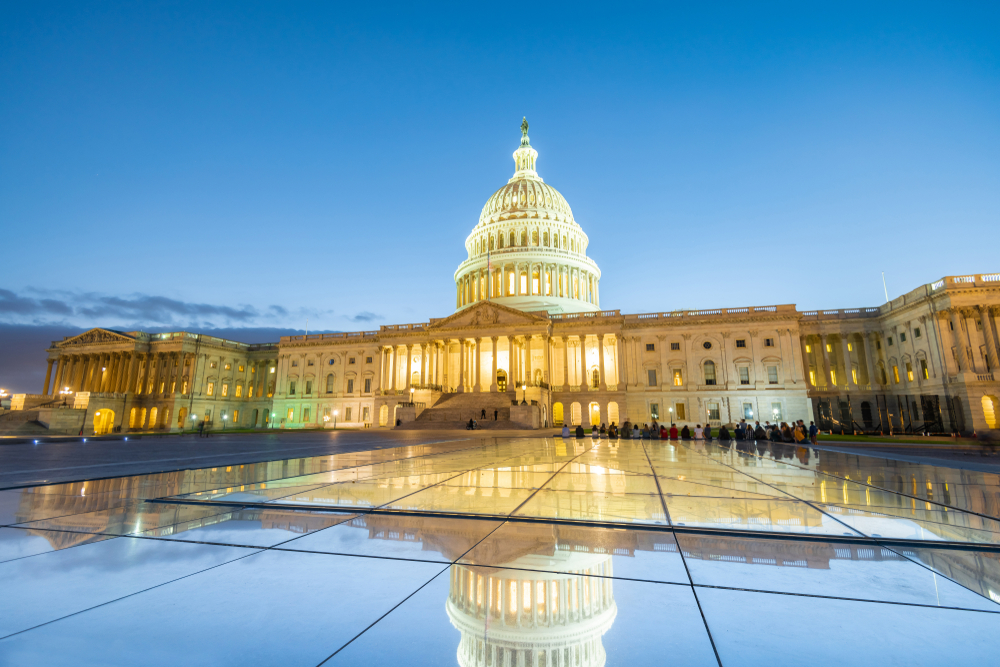
Photo By CannabisCamera.com
by Michelle Rutter Friberg, NCIA’s Deputy Director of Government Relations
After November’s midterms, a runoff Senate election in Georgia, and last week’s speakership drama, the 118th Congress has finally begun.
Last year was an historic year: from the enactment of the first federal standalone cannabis reform since the adoption of the Controlled Substances Act of 1971 to President Biden’s marijuana reform announcement in the fall. In addition, three states (Rhode Island, Maryland, and Missouri) took action to legalize adult-use marijuana and regulate cannabis. Nearly half of the U.S. population – more than 155 million people – now live in jurisdictions with some form of legalized adult-use marijuana.
At the federal level, members of Congress introduced a wealth of policies aimed to end the antiquated federal cannabis prohibition and address the harm caused by the discrepancies between state and federal laws and regulations. This tremendous bipartisan momentum for cannabis reform sets the stage for a productive 2023 and 118th Congress.
However, as you may have seen or heard on the news, the 118th Congress was off to a slow (to say the least) start as arguments over the Speaker of the House position escalated over the course of the week. After days of negotiations and a multitude of concessions, Rep. Kevin McCarthy (R-CA) eked out a victory in the wee hours of Saturday morning to become Speaker. The contentious and historic fight for the Speakership largely confirmed expectations for this Congress: With House Republicans’ narrow four-seat majority, governing is going to be difficult and messy. This will undoubtedly make cannabis reform a challenge, but one that NCIA is ready to rise to.
The House returned Monday for week two of the 118th Congress, while the Senate remains in recess through January 23, with a few pro forma sessions scheduled over the coming weeks. House Republicans will now move to finalize organizing for the new Congress: the Steering Committee have already begun meeting to determine chairmanships for a number of committees including Ways and Means and Small Business. Once these chairmanships are resolved, the Steering Committee will turn to populating committees with new members – most committees have several openings – and may begin to populate some this week. The exact numbers will be determined by the final ratios between Republicans and Democrats, but we’re expecting a mirror image of the ratios used in the 117th Congress.
All of these decisions will have a substantial impact on cannabis reform, as Leadership and committee chairs determine what legislation is considered. While Republicans’ slim majority in the House brings a number of challenges, it will also undoubtedly provide a number of opportunities for reform and negotiation.
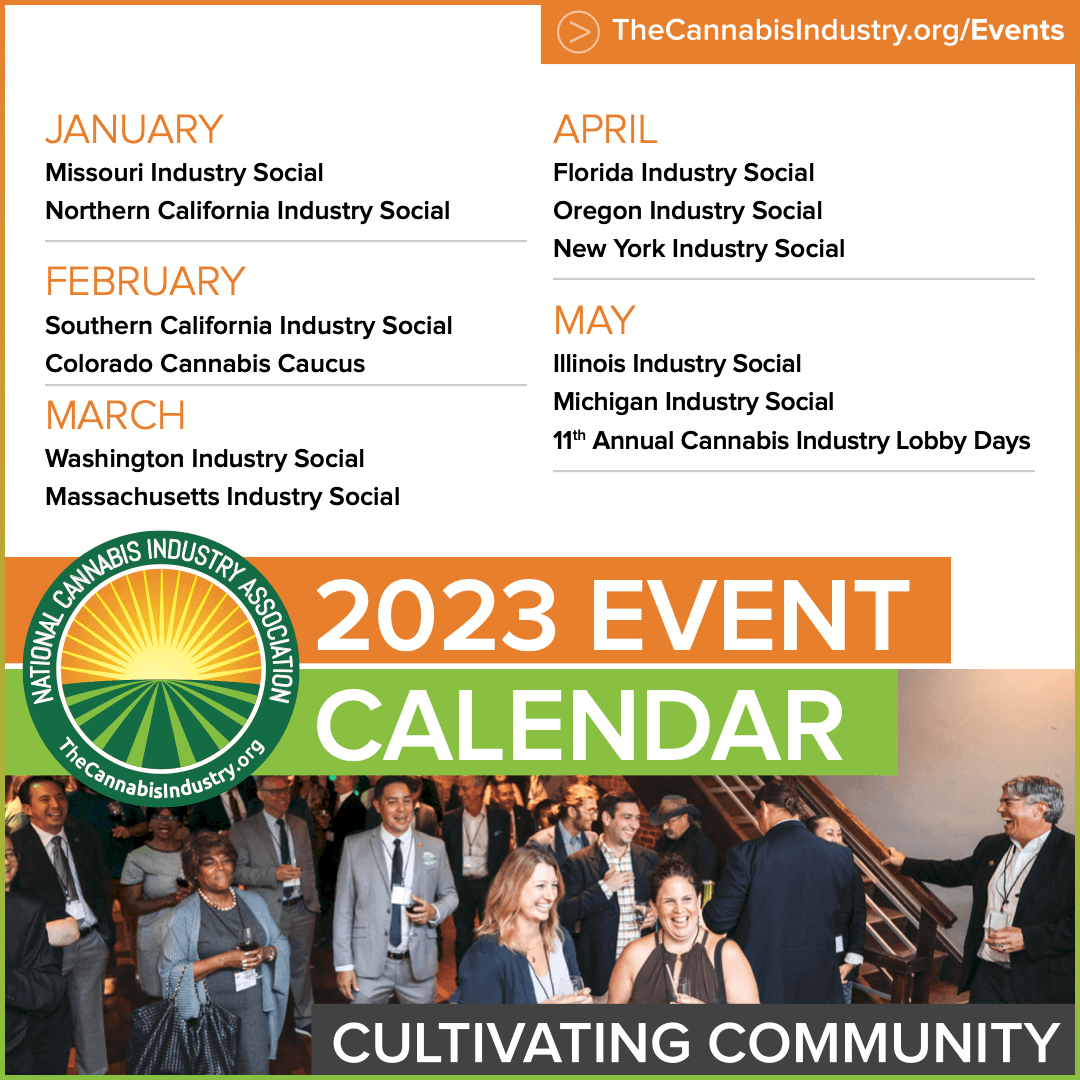
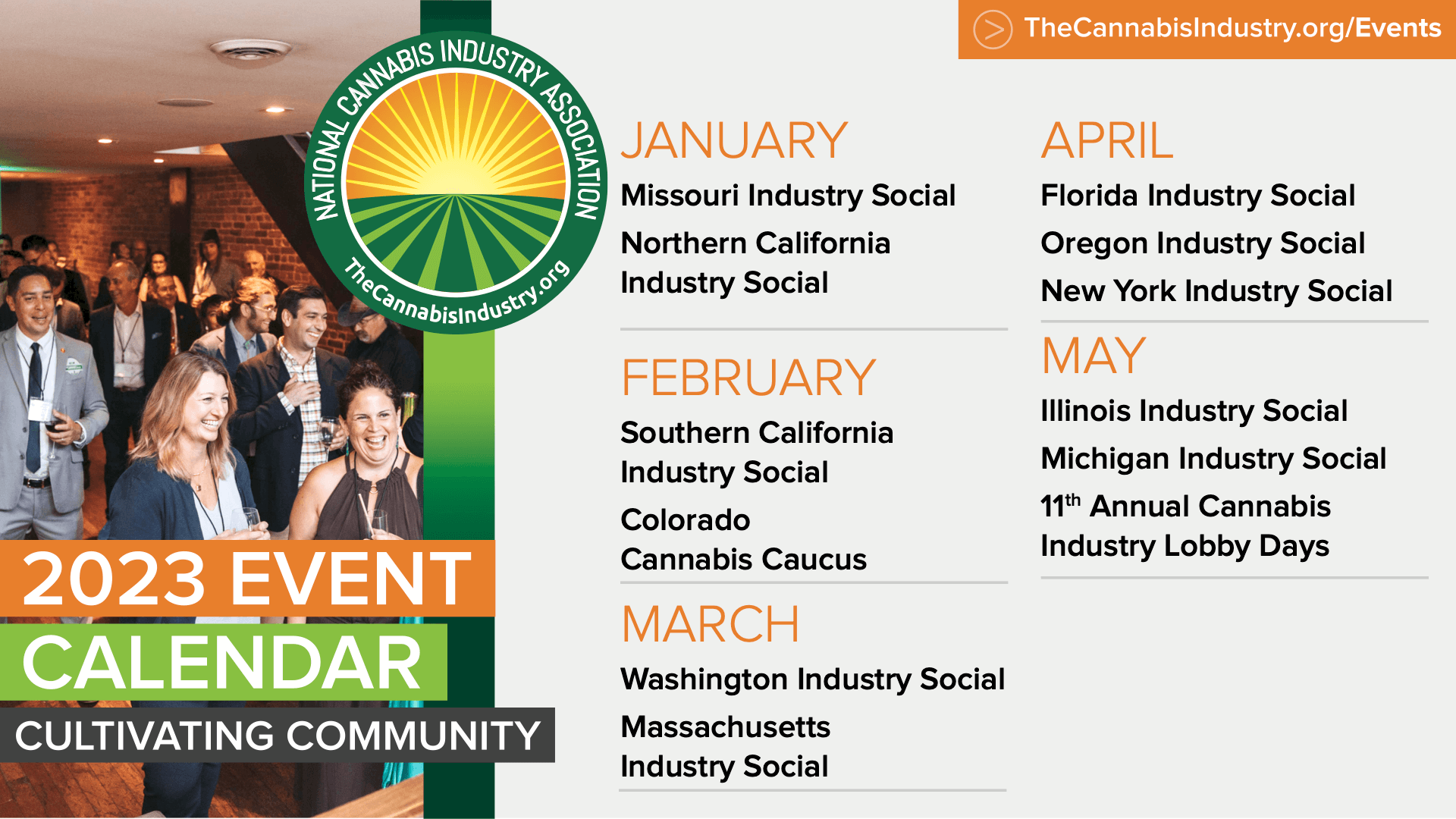
Cultivating Community in a City Near You: Announcing NCIA’s 2023 Event Calendar
It’s been a year of big change for NCIA. As we come to the end of 2022, we want to take a moment to send a message to our members and supporters about these changes, and most importantly, get excited for what’s next for the future of NCIA events.
The End of An Era
The events industry has faced unforeseen challenges these last couple of years, and NCIA was not isolated from these issues. Outside of needing to postpone our large tradeshows until late 2021, we also had to postpone a whole calendar of approximately 40+ events nationwide which was our primary way of connecting our community and meeting with our members face to face. Our team overcame these challenges by building our expansive digital presence and online events program to continue to provide education and exposure opportunities to our members, however this did still require a significant pivot in organizational strategy. Due to the residual hardships brought by the pandemic, we learned earlier this year that the Cannabis Business Summit & Expo was not going to be able to be produced on the scale or quality that we or our members had come to expect throughout the years. So, in tandem with our previous tradeshow co-producers, we made the difficult decision to dissolve our existing partnership and accepted an offer from them to acquire our tradeshow portfolio. For those who have been attending our tradeshows since 2014, we can’t thank you enough for your participation in those events and making them so impactful for the industry. There are too many good memories to revisit, and hope you take a moment to remember some of your personal highlights throughout the years as we look forward to coming together for new events in 2023.
Looking Ahead to 2023
For now, we will be taking a hiatus from the tradeshow space. This will allow our team to refocus our efforts into other impactful networking and educational opportunities. We’re excited to get back to our roots and focus our efforts on intentional and innovative gatherings that connect Main Street cannabis businesses with each other and with NCIA’s advocacy efforts.
We’ve listened to the feedback from our members, and know that in-person networking remains essential to building your business and growing your network. In these uncertain economic times, every dollar spent and any time away from your business impacts your bottom line. As the leading cannabis trade association representing small-business owners, we’re committed to making the investment to meet our members where they are, and to continue facilitating experiences where our members can make key connections with fellow business owners. Moving into 2023, we’re reinvigorating our events program starting with our regional Industry Social and Cannabis Caucus event series, leading into the cannabis industry’s biggest policy and advocacy event of the year: NCIA’s 11th Annual Cannabis Industry Lobby Days.
We invite you to move forward with us as we enter a new chapter in our history. Without further ado, we are excited to announce the lineup of events for the first half of 2023!
Join NCIA to Take Advantage of Complimentary Tickets
As always, NCIA members receive complimentary access to all of these events based on membership level. Looking to have an expanded presence at each event? Consider upgrading your membership today in order to include your entire team or prospective clients.
Huge thanks to the initial sponsors of these events which have made a significant investment in NCIA’s community building efforts moving into 2023! Learn more about each of these pioneering businesses helping drive our mission forward and reach out to schedule a meeting with their team surrounding the upcoming events.
Gold Sponsor
Silver Sponsor
Bronze Sponsor
Support These Events Through Sponsorship
Has your company had trouble breaking through the noise on a crowded expo floor this past year? Is your brand looking for quality B2B connections with market leaders? Want to play a larger role and align your business with NCIA’s community building and educational efforts?
Consider one of our affordable sponsorship packages, starting for as low as $500, which will allow you to reach thousands of leading cannabis businesses while supporting NCIA’s advocacy work on behalf of small cannabis businesses. Contact our team at sponsorship@thecannabisindustry.org to learn more.
We can’t thank our community enough for the continued support of NCIA and our events. We look forward to seeing you, in person, next year!
Midterm Election Wins, Losses, and the Lame Duck Session
Photo By CannabisCamera.com
by Michelle Rutter Friberg, NCIA’s Deputy Director of Government Relations
Last week, the long-anticipated 2022 midterm elections (finally) took place. In addition to the usual House and Senate elections, five states voted on cannabis ballot initiatives: Arkansas, Maryland, Missouri, North Dakota, and South Dakota – with only two of those passing successfully. Let’s take a look at what transpired and what it means for the lame duck session and possibly the 118th Congress:
Ballot Initiatives
Voters in Arkansas, Maryland, Missouri, North Dakota, and South Dakota were all faced with a similar question on election day: whether or not to legalize cannabis for adult use. Unfortunately, three of the five initiatives did not gather enough support to pass: Arkansas, North Dakota, and South Dakota.
The results for Maryland’s referendum came in early on election night with a decisive victory: more than 65% of voters cast their ballots in support. They were asked “Do you favor the legalization of the use of cannabis by an individual who is at least 21 years of age on or after July 1st, 2023, in the state of Maryland?” Now that the measure has been approved by voters, it will require the legislature to put forth a bill that will set basic regulations for the adult-use cannabis program.
Missouri voters also approved Amendment 3, which would legalize cannabis for adults 21 and over, as well as impose a six percent tax on recreational cannabis sales and use the revenue to facilitate automatic expungements for people with certain non-violent marijuana offenses on their records. The amendment garnered 53% of the vote.
This gives advocates an increase in the number of representatives and four more Senators from legal states, most notably those from Missouri, who are both avid conservatives and have not supported cannabis reform broadly in the past.
House of Representatives
Although Republicans are still projected to win the House, the margins are shaping up to be narrower than initially predicted. It takes 218 seats to win a majority in the chamber, and as of publication, Republicans hold 212 with a number of districts still yet to be called.
The change in party control means a change in leadership and shake-ups at the committee level. Minority Leader McCarthy is expected to run for Speaker of the House, while Minority Whip Steve Scalise has thrown his hat in the ring for Majority Leader – but there’s much uncertainty and infighting within the caucus.
Senate
Control of the Senate will remain in the hands of Democrats. Over the weekend, Nevada’s Senate race was called for incumbent Catherine Cortez Masto – making Georgia’s runoff election slightly less contentious.
A closely watched Senate race in Pennsylvania flipped in favor of Democrats: legalization advocate John Fetterman (D) defeated TV-personality and New Jersey resident Dr. Oz (R). We continue to closely monitor the races in Alaska and Arizona and what their outcomes may mean for cannabis reform.
Lame Duck Session
The likelihood of a split Congress means that the lame duck session happening between now and January will be jam-packed. In addition to must-pass legislation like the National Defense Authorization Act (NDAA) and a budget/omnibus bill of some type, Democrats will also be focused on other topics like judicial nominations, the debt ceiling, and hopefully the SAFE Banking Act.
Midterm Elections Looking Green
By Madeline Grant, NCIA’s Government Relations Manager
The midterm elections are quickly approaching with less than three weeks away. Not only will the elections determine the balance of power in Congress, but local elections and ballot measures are set to make a big impact across the country. As the midterm elections approach, another 20 million Americans could soon be living in a state where anyone at least 21 years old can legally possess marijuana. There are six states with recreational cannabis legalization initiatives or referendums on the ballot this November: Arkansas, Maryland, Missouri, North Dakota, Oklahoma, and South Dakota. Let’s take a closer look at each state:
Arkansas
Although the Arkansas Board of Election Commissioners rejected the ballot question in August, the state Supreme Court cleared the way for the question to make it to the poll. The Responsible Growth Arkansas campaign submitted about 193,000 signatures- more than double what’s required to qualify the constitutional amendment- in July. If the initiative, Issue 4/ the Marijuana Legalization Initiative, is approved by voters, it would allow adults 21 years and older to legally possess up to an ounce of cannabis. It would implement a 10 percent tax on sales and require the state’s Alcoholic Beverage Control Division to develop rules for businesses, according to Ballotpedia. The initiative does not allow for home cultivation, and it has no provisions to expunge cannabis-related criminal records. For more specifics on what the initiative would accomplish read HERE.
Maryland
When Marylanders head to the polls in November, they will be asked to approve or reject legislation that allows adults 21 and over to possess, use, or grow small amounts of cannabis. If passed, the referendum would open the door to creating a taxed and regulated recreational cannabis industry in the State. State lawmakers have been paving the way for future cannabis legalization when they passed two separate bills in April of this year. House bill 837, which is set to go into effect in July 2023, would allow anyone over the age of 21 to possess up to 1.5 ounces of cannabis, with anything between 1.5 and 2.5 ounces subject to a civil fine of $250 and anything above 2.5 ounces subject to a charge of possession and intent to distribute. The second bill, House Bill 1, established that the question of legalization would be put to voters via a referendum on the November ballot. It’s important to note that this bill does not establish the regulatory framework for the recreational market, and state lawmakers will need to return next session to build out a framework for the cannabis industry if the referendum passes in November. A recent Goucher poll found that 62 percent of residents- including about half of Republicans- support legalizing recreational cannabis, with just 34 percent opposed.
Missouri
After a long battle between the Legal Missouri 2022 and prohibitionists, an initiative to legalize cannabis in Missouri officially cleared for ballot placement this September. Joy Sweeny, who is affiliated with the Community Anti-Drug Coalitions of America (CADCA), filed a lawsuit, alleging that the legalization initiative violated the single-subject rule for ballot measures under the state Constitution and that the signatures were improperly certified, according to Marijuana Moment. Two lower courts dismissed the challenge, so Sweeney sought to bring it directly to Missouri’s Supreme Court, where they would not take the case. Missouri Amendment 3, Marijuana Legalization Initiative (2022) would legalize the purchase, possession, consumption, use, delivery, manufacturing, personal use for adults over the age of 21; allow individuals convicted of nonviolent cannabis-related offenses to petition to be released from incarceration and/or expungement; and exact a 6 percent tax on the sale of cannabis.
North Dakota
The campaign New Approach ND delivered 25,762 signatures to the secretary of state’s office in July 2022. A month later, Secretary of State Al Jaegar’s (R) office approved the measure, certifying that the campaign had submitted enough valid petitions to put the measure before voters, according to Marijuana Moment. The initiative would allow adults 21 and older to purchase and possess up to one ounce of cannabis and grow up to three plants for personal use. The legalization proposal will now be designated as “Measure 1” on the ballot this November.
Oklahoma
Oklahoma’s cannabis reform measure will not be on the November ballot but Governor Kevin Stitt (R-OK) issued an executive order on October 18 setting a special election to determine if legal sales of cannabis should be extended to anyone at least 21 years old or older. Oklahomans for Sensible Marijuana collected far more than 95,000 signatures required to make the November ballot. However, because the contractor hired by the Oklahoma Secretary of State’s office took 48 days to certify the signatures, there wasn’t time for the initiative to be placed on the November ballot. The group unsuccessfully sued the state in hopes of forcing the question. The court said, despite sufficient signatures to qualify for the ballot, the measure was held up by bureaucratic requirements, protest deadlines and a new signature-counting software. Nevertheless, Governor Stitt issued the executive order and Oklahomans for Sensible Marijuana Laws will have less than five months to make their case to voters for why legalization should be extended to anyone at least 21 years old. It’s important to note that when Oklahoma voters legalized medical cannabis in 2018 there was evident opposition from practically every elected official, health care group, law enforcement official, and business organization in the state.
South Dakota
Similar to North Dakota, in May 2022 the secretary of state’s office confirmed that South Dakotans for Better Marijuana Laws (SDBML) turned in a sufficient number of signatures to qualify a cannabis legalization measure for the November ballot.In the 2020 election SDBML’s success at the ballot was overruled by the state Supreme Court as a result of a legal challenge funded by Governor Kristi Noem’s (R) administration. The court ruled that the measure violated a single-subject rule for ballot initiatives. Ironically, Governor Noem made comments pledging to implement cannabis legalization if voters approve the ballot initiative at an event this past August. Some advocates believe she has no choice but to pivot her support now that she is up for reelection. With SDBML’s success this year, South Dakotans will vote on the ballot measure in November.
There is no denying that 2022 is a big year for cannabis policy reform. Although state campaigns have met challenges through the courts, state officials, governors, prohibitionists, law enforcement, and more; it is evident that there is no stopping the voice of the people. As the country gears up for the midterm elections, all of these states will continue to educate and campaign for the recreational passage of cannabis. The 2022 midterm elections come on the heels of President Biden’s announcement to pardon thousands of people convicted of marijuana possession under federal law and review whether marijuana should be in the same legal category as drugs like heroin and LSD. The timing of President Biden’s announcement illustrates an important fundamental change in America’s response to cannabis and the National Cannabis Industry Association is hard at work on Capitol Hill to continue educating Congress.
State-Level Insights: Momentum Builds Across Our Nation
By Sadaf Naushad, NCIA Intern
Although the action-packed April must come to an end, the fight for cannabis reform never stops! With U.S. Senators delaying the much-anticipated introduction of the Cannabis Administration and Opportunity Act (CAOA) last month, Congress has a lot of work to do.
In the meantime, a congressional bicameral bipartisan committee is considering the Secure and Fair Enforcement (SAFE) Banking Act as an amendment to the House’s U.S. Innovation and Competition (COMPETES) Act.
Now let’s focus on action occurring within the states. State-level updates help provide us with insights on cannabis reform progress at the federal level. As more state constituents vote in favor of cannabis initiatives, reformation support overall increases within the United States. Efforts to reform cannabis policies at the state level encourage members of Congress at the federal level to enact legislation.
Let’s take a look at this week’s state-level insights:
New York
As the legal cannabis market is set to launch later this year, New York lawmakers intend to ensure that a sufficient supply of marijauna exists. Last month, state regulators voted to allow conditional marijuana cultivation licenses to several hemp businesses. Regulators also established that adults with prior cannabis convictions, along with family members who have previously faced criminalization, would receive the first round of adult-use cannabis retailer licenses – ahead of present medical marijuana businesses. This week, lawmakers recently approved a second round of applications for recreational cannabis cultivators. Additionally, the Cannabis Control Board (CCB) passed amended regulations granting medical marijuana patients to grow their own plants for personal use.
Delaware
A Delaware House Committee approved a bill that would terminate 50 years of cannabis prohibition and criminalization. For the second time in history, Delaware’s District 24 Representative Ed Osienski (D) introduced House Bill 371, legislation legalizing cannabis possession and gifting. The legislation is attached to a companion measure that would build a regulatory framework for the market. Its two-piece model comes after the House defeated a prior measure in March that incorporated both components.
South Carolina
An eight-year attempt to legalize medical marijuana in a largely conservative state abruptly came to an end on the House floor Wednesday. South Carolina’s District 13 Representative and House Leader John McCravy (R) ruled that the Session 124 measure comprises an unconstitutional tax increase, thereby ceasing further consideration of the bill. According to Representative McCravy, since the bill contains a tax on medical cannabis, lawmakers should have introduced the bill in the House under the state constitution’s article for legislation that raises revenue. The bill’s sponsor, U.S. Senator Tom Davis (R), is rapidly seeking other ways to keep the issue active as the session concludes.
Missouri
In preparation for the 2022 midterm elections, a Missouri House Committee approved a GOP-led joint resolution seeking to place cannabis legalization on the November ballot. Missouri’s District 98 Representative Shamed Dogan (R) sponsored an amended version of the legislation, in which The Special Committee on Criminal Justice passed in a 7-2 vote. The amended bill eliminated provisions that would remove the state’s current separate medical marijuana program and set regulations regarding taxation in the legal market. Under the amended resolution, marijuana offenses would be removed from the Missouri criminal statute, permitting adults to possess, use and sell cannabis without facing penalties.
Washington
State officials Lieutenant Governor Denny Heck (D), Attorney General Bob Ferguson (D), Treasurer Mike Pellicciotti (D) and Governor Jay Inslee (D) sent a letter to congressional leaders, outlining the urgency of passing the Secure and Fair Enforcement (SAFE) Banking Act. With Washington being one of the first states to legalize cannabis, lawmakers remain frustrated at the industry’s lack of access to essential financial services stemming from federal prohibition.
New Jersey
Last month the state attorney general’s office released a controversial document detailing how New Jersey’s marijuana laws currently authorize police to use cannabis when not working. This week, New Jersey lawmakers introduced a string of bills designed to encourage employers to penalize workers from consuming cannabis off duty in compliance with state law. Punishable workers specifically include law enforcement officers and first responders. Now, three new bills exist that intend to enforce restrictions on such activity for particular employees. New Jersey’s 6th Legislative District Representative Louis Greenwald (D) aims to amend state statute to contain the following provisions: penalizing police for using cannabis, conducting random drug tests and the right to refuse job applicants due to lawful cannabis use. Although Representative Greenwald’s bill targets police officers, two other measures presently remain that would also impose employment-based restrictions on lawful marijuana use.
Ohio
The Coalition to Regulate Marijuana Like Alcohol (CTRMLA) filed a lawsuit to keep cannabis legalization on Ohio’s November 2022 ballot. In December 2021, CTRMLA turned in petition signatures to Ohio’s secretary of state’s office, but the office deemed the signatures insufficient. To advance the legislative review of their measure, CTRMLA turned in additional petitions on January 13, 2022. According to the state statute, however, a ballot petition must be submitted “no less than ten days prior to the commencement of any session of the general assembly.” The session commenced on January 19, falling outside of that ten-day certification window. As a result, CTRMLA contacted Franklin County Court of Common Pleas, requesting a ruling on a prospective challenge concerning the timing of the group’s initial signature submission to Ohio for the reform proposal.
Stay tuned for more updates on cannabis policy reform. If you are interested in learning more about NCIA’s government relations work and how to get involved please reach out to Madeline@thecannabisindustry.org.
Across the Country – State Cannabis News and Movement
by Madeline Grant, NCIA’s Government Relations Manager
As the deadline to submit feedback for the Cannabis Administration and Opportunity Act approached last week, our Government Relations team worked tirelessly to submit a detailed analysis and recommended improvements on behalf of the legal cannabis industry. The full comments and an executive summary can be downloadedhere.The Cannabis Administration and Opportunity Act (CAOA), submitted in July by Majority Leader Charles Schumer (D-NY) and Senators Cory Booker (D-NJ) and Ron Wyden (D-OR), would remove cannabis from the schedule of controlled substances, create a regulatory structure and federal guidelines for cannabis products and state-legal markets, and is intended to support restorative justice for the people and communities that have been disparately hurt by prohibition while ensuring fair opportunities in legal cannabis markets for small businesses and marginalized communities.
The introduction of the comprehensive draft language was a pivotal moment for the United States Senate and NCIA will continue to do whatever we can to ensure value-driven policies for the cannabis industry. Meanwhile, we continue to see movement at the state level as support for cannabis legalization efforts continues to grow. Here are some important updates happening at the state level.
California
California officials announced that they are soliciting proposals for a program aimed at helping small marijuana cultivators with environmental clean-up and restoration efforts. The California Department of Fish and Wildlife’s (CDFW) Cannabis Restoration Grant program will release applications this fall and remain open through spring 2023. The $6 million in potential funding, which comes from cannabis tax revenue, must go to government agencies, California nonprofits, or Native American tribes who would then work with cultivators on environmental efforts.
New York
The newly inaugurated governor of New York says she wants to “jumpstart” the implementation of cannabis legalization. Governor Kathy Hochul took a major step by making two key regulatory appointments to oversee the state’s cannabis market. Soon after they were quickly confirmed by the Senate during a special session. Former New York Assemblywoman Tremaine Wright (D) will serve as chair of the Cannabis Control Board, and former Drug Policy Alliance (DPA) staffer Christopher Alexander will be the executive director of the state’s Office of Cannabis Management.
Ohio
Ohio activists can begin collecting signatures for a 2022 ballot initiative to legalize marijuana in the state. The Coalition to Regulate Marijuana Like Alcohol (CTRMLA) launched its ballot effort last month. The new initiative is a statutory proposal and if supporters collect 132,887 valid signatures from registered voters, the legislature will then have four months to adopt the measure, reject it, or adopt an amended version. In the case of lawmakers not passing the proposal, an additional 132,887 signatures will be required to place the proposal before voters on the ballot in 2022.
Missouri
Another adult-use legalization proposal has been filed. Legal Missouri 2022 submitted the latest measure to the secretary of state’s office, and it will now go through a review period before potentially being certified.
New Mexico
The Cannabis Control Division announced applications are now open for businesses interested in legal cannabis producers licensed by the state of New Mexico. After an application is submitted, regulators will have 90 days to issue a determination.
Colorado
Colorado voters will decide on an initiative in November that would raise cannabis taxes to fund programs that are meant to reduce the education gap for low-income students. The secretary of state confirmed that the campaign behind the measure collected more than the required 124,632 valid signatures to make the ballot. The measure would give low and middle-income families a $1,500 stipend to have school-aged children participate in afterschool programs, tutoring, and summer learning programs.
As states continue to legalize medical and adult-use cannabis, be sure to check out our state policy map for updates. Our Government Relations team will continue to educate congressional offices as states move forward. It’s vital to have accurate information and resources for members and Congress and staffers on Capitol Hill. With advancements at the state level, we continue to relay the importance of cannabis legalization at the federal level. Please stay tuned for more updates from our Government Relations team.
Committee Blog: How NCIA’s Banking & Financial Services Committee Can Help You In 2020
As we begin the new year, the NCIA Banking and Financial Service Committee is joining the trend of starting something new for 2020. We are launching a blog series, the very words that you’re reading now, to help the cannabis industry when it comes to banking and payments. Here, you’ll find new content every month. Our goal is to give you actionable information based on current markets so that your business can grow and thrive throughout the year.
In Missouri, the state has issued 192 retail licenses, and 80 licenses for cultivation. To serve the industry, there are numerous banks and credit unions who are actively working with cannabis businesses to offer transparent banking options.
Utah will be issuing 14 retail licenses and 8 cultivation licenses, with businesses expected to start operating in March of this year. There is a financial institution in the state that is ready to bank the cannabis industry, helping your business with compliant financial services.
Finally, the committee has built relationships with additional financial institutions in California, giving even more options for cannabis businesses that need banking solutions. Whether your business is based in Missouri, Utah, California, or any other state with a legal cannabis market, NCIA’s Banking & Financial Services Committee can help provide information that may help you obtain banking services. Please get in touch with usif you need help, and we can make connections that could help.
Considering the changes to legislation in states across the country, as well as the impressive growth of the cannabis industry in recent years, we’d like to take this opportunity to welcome both newcomers and old-timers in this industry. Our community is vibrant and collaborative, with a focus on helping each other grow.
Unfortunately, there are always operators who try to work around the rules instead of following them. As a result, it’s important that we remind all our members about the dangers of breaking the laws or rules regarding cannabis banking and payments. We want to make sure that everyone knows the dangers that can be associated with the few transaction methods that are available to the industry.
Debit and credit card payments for cannabis are not allowed by the branded card networks. What does this mean? VISA and MasterCard do not want anyone paying, or receiving payment, for cannabis on their rails. While not technically illegal, circumventing their rules can lead to some dire consequences, including getting blacklisted and unable to get a merchant account in the future, even when cannabis becomes federally legal.
Instead of trying to work outside the system, focus on compliance and sustainability. How can you ensure that your business thrives for years to come? Build a solution that is legal now and will continue to operate legally as the federal laws expand. Work with banking and payment partners who understand your business and help it grow. Ensure that you only build partnerships with reliable, trustworthy institutions that improve your brand’s viability and performance.
As always, remember that NCIA’s Banking & Finance Committee is here to help you. Our goals are to educate and support operators in this industry across the country. If you’re worried that your banking or financial services solutions might not be fully trustworthy or compliant, don’t stay silent. Make full use of this committee by utilizing all our resources and connections to help your business thrive. Because when your business does well, the association continues to grow and improve, too.
In his role as Hypur’s Chief Revenue Officer, Tyler leverages his extensive experience in building brands, managing key relationships and strategic partnerships. Tyler has been at the forefront of Hypur’s expansion efforts for over five years and touches Financial Institutions, Government Officials, Regulatory Bodies and the State Legal Cannabis industry.
As a result, he possesses an intricate knowledge of the Banking and Regulatory climate, key industry influencers, industry dynamics, and market history. He has also become a key contact for media outlets, analytics companies, industry consultants and investment firms searching for reliable, accurate sources of industry information.
Tyler’s contacts and relationships in the US State Legal cannabis industry are unparalleled.
As a result of his influential value, he was selected to be Chairman of the National Cannabis Industry Association Banking and Financial Services Committee. He is also a member of the Forbes Business Development Council, frequently publishing articles about the banking and payment environment in the cannabis industry. Tyler founded and managed a large beverage company prior to joining the Hypur team and was a professional athlete in the New York Mets Organization.
Top Five Memorable Marijuana Moments In 2018
by Michelle Rutter, NCIA Government Relations Manager
As 2018 draws to a close, our Government Relations team in Washington, D.C. is feeling especially thankful this year – both for all of our members, and for all of the strides forward that cannabis policy made this year! Before 2019 begins, let’s take a look back on marijuana’s top five most memorable moments of 2018:
Cannabis wins big at the ballot box
There’s no doubt about it: America experienced a green wave on election night as voters all over the country cast their votes in favor of reforming cannabis laws and electing candidates that share those values. Voters in Michigan cast their votes for the legalization of adult-use cannabis, increasing momentum of our movement. At the same time, voters in Missouri and Utah were successful in legalizing medical cannabis, becoming the 32nd and 33rd states to do so, and despite significant hurdles. In addition to the ballot initiatives that were passed, Democrats took control of the House of Representatives, while Republicans maintained their control of the Senate. While this development surely means that cannabis policy will progress further than ever in the House in 2019, it also means that anything passed through that chamber will face significant hurdles in the more conservative Senate.
Shake-up at the Department of Justice and the rescission of the Cole Memo
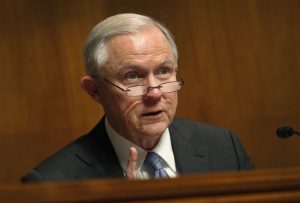
On January 4, then-Attorney General Jeff Sessions announced the Department of Justice’s decision to rescind the “Cole Memo” and two additional memos related to marijuana enforcement policy. These memos, issued in 2013 and 2014, helped to clarify the Department’s response to state-legal cannabis activity. The rescission of the memo has not resulted in any major change in enforcement policy, rather, this continues to be a matter of prosecutorial discretion. On November 6, the day after the midterm election, Jeff Sessions resigned as Attorney General at the President’s request.
Congressional banking and 280E bills gain record co-sponsorship
As the momentum for cannabis reform grows, so has the number of cosponsors on marijuana bills in Congress. Most notable is legislation that would provide safe harbor to financial institutions that choose to service the cannabis industry. At the end of the 114th Congress in 2016, the House’s Marijuana Businesses Access to Banking Act had 39 cosponsors, while the Senate version had just 10. As we finish the 115th Congress, the House’s SAFE Banking Act (H.R. 2215) has 95 cosponsors, while the Senate version (S. 1152) has 20. That’s nearly a quarter of the House of Representatives and a fifth of the entire Senate! Bills to reform IRC Section 280E have seen a similar spike. At the end of 2016, the House’s Small Business Tax Equity Act had a mere 18 cosponsors, while the Senate version had four. Today, the Small Business Tax Equity Act (H.R. 1810) has 46 cosponsors, while the Senate’s version (S. 777) has six.
Canada implements adult-use cannabis laws
In October, Canada’s laws making marijuana legal for adults went into effect and licensed retail stores opened throughout the country. This move made Canada the second country in the world, after Uruguay, to formally legalize the recreational use of the plant. Canada is the first G7 and G20 nation to do so. Federal prohibition has effectively locked American cannabis companies out of legitimate financial markets and, in doing so, has provided a significant advantage to publicly traded Canadian firms. Changes to federal law are needed to enable American small businesses to compete on the emerging multi-billion-dollar global cannabis market. Without legislative action, U.S. cannabis entrepreneurs will miss out on opportunities to develop innovative new products, attract global investment funding, and expand their reach to capitalize on expanding international business opportunities.
NCIA’s 8th Annual Cannabis Industry Lobby Days
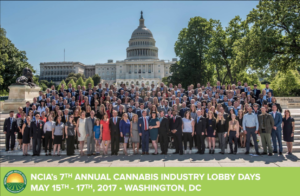
This year, 225 cannabis industry professionals descended on Washington, D.C. to lobby congressional offices on some of the issues they and their businesses are facing. In total, NCIA members met with nearly 300 offices on Capitol Hill! The cannabis industry has seen exponential growth in the mainstream support for regulated cannabis markets from both sides of the political aisle. This progress is a direct result of the uncountable number of personal stories told by our members each year at our annual Lobby Days events in Washington, D.C., so don’t forget to mark your calendars for May 21-23, 2019, so that you can join us for our largest event yet!
The 116th Congress will arrive in Washington, D.C. in January. With the change in leadership in the House of Representatives and the momentum at our backs, 2019 is shaping up to be one of the cannabis industry’s best years yet. Our Government Relations team looks forward to all of the opportunities we will be faced with in the new year, and we wish you a very happy holiday season!
NCIA’s 2018 Post-Election Webinar
Watch this webinar recorded on Thursday, November 8, for NCIA’s recap of the midterm elections and what they mean for cannabis policy reform nationally.
Hear from representatives of the statewide cannabis campaigns in Michigan, Missouri, North Dakota, and Utah to find out what went right, what went wrong, and what happens next for regulators, businesses, and consumers. NCIA and the Marijuana Policy Project discussed the next states to watch and key federal legislation to follow in 2019.
From The Ballot Box: Post-Midterm Election Analysis
by Michelle Rutter, NCIA Government Relations Manager
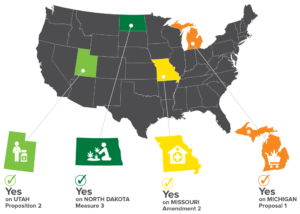
Last night, Americans all over the country let their voices be heard at the ballot box. Voters in Michigan cast their votes for the legalization of adult-use cannabis, increasing momentum of our movement. At the same time, voters in Missouri and Utah were successful in legalizing medical cannabis, becoming the 32nd and 33rd states to do so, and despite significant hurdles.
MICHIGAN
Appearing on the ballot as Proposal 1, this initiative passed by a whopping 55% and made Michigan the first state in the Midwest to legalize adult-use cannabis for those over the age of 21. The proposal outlined an excise sales tax of 10%, which will be levied on sales at retailers and micro-businesses, and then be allocated to local governments, K-12 education, and road and bridge maintenance. In the future, municipalities will be given the authority to to ban or limit cannabis businesses and establishments within their boundaries. Michigan’s prominent Midwest location, as well as the size of the projected adult-use market, make it a game-changing initiative to watch for cannabis reform. Michigan is the only adult-use state that also gave it’s electoral votes to President Trump in the 2016 election.
NORTH DAKOTA
In North Dakota, Measure 3, or the Marijuana Legalization and Automatic Expungement Initiative, appeared on the ballot and failed by only receiving 40% of the vote. This measure would have made cannabis legal in the state of North Dakota for people 21 years of age or older and, unlike other initiatives, also created an automatic expungement process for individuals with convictions for a controlled substance that has been legalized. Advocates and policy organizations were initially stunned when the campaign submitted enough signatures to appear on the ballot, and immediately recognized the importance of a staunchly, dependably conservative state choosing to legalize the adult-use of cannabis. Both of the candidates who ran for Senate in the state, Rep. Kevin Cramer (R) and Sen. Heidi Heitkamp (D) stated that they opposed the measure.
UTAH
In Utah, the Medical Marijuana Initiative (Proposition 2) appeared on the 2018 ballot and passed with 53% of the vote. This initiative legalized the medical use of marijuana for individuals with qualifying medical illnesses such as epilepsy, HIV, and and multiple sclerosis, among others. In October, the proponents and opponents of the measure, Mormon church leaders, and elected officials met to discuss the possibility of passing a medical cannabis law through the state legislature– regardless of the result for Proposition 2, which it was determined, would remain on the ballot. State lawmakers plan to hold a special session to work out details for how to make Utah the next medical cannabis state. Utah is a perfect example of a traditionally conservative state choosing to reform their cannabis laws to be more compassionate — Utah has given its electoral votes to Republican presidents in every election since 1968.
MISSOURI
In Missouri, three separate medical cannabis initiatives appeared on the ballot last night– including two proposed constitutional amendments and one statutory measure– with Amendment 2 triumphing with 65% of the vote. The other two medical cannabis initiatives failed. The winning Amendment 2, backed by New Approach Missouri, was favored by national advocacy groups such as NCIA, MPP, and NORML. The initiative legalized cannabis for medical purposes, creates a licensing system for cultivation, testing, and dispensing of medical cannabis and sets up a 4% tax on cannabis sales. State tax revenue garnered will be spent on healthcare services for veterans. Voters in Missouri also elected Josh Hawley (R) to replace sitting Sen. Claire McCaskill (D). Interestingly, Amendment 2 received over 300,000 more votes than Senator-elect Hawley — proving that cannabis is a winning issue across partisan lines.
OUTLOOK: 2019 AND THE 116TH CONGRESS
These stunning victories have implications in Washington, D.C. and set the stage for federal reform in the 116th Congress. In addition to the ballot initiatives that were passed last night, Democrats took control of the House of Representatives, while Republicans maintained their control of the Senate. While this development surely means that cannabis policy will progress further than ever in the House, it also means that anything passed through that chamber will face significant hurdles in the more conservative Senate.
HOUSE
This year’s midterm election was one of the most highly anticipated in modern American history.
Last night, the House of Representatives switched from a Republican majority to a Democratic majority: as of Wednesday morning, Democrats held 220 seats, while Republicans held 194.
Republican leadership in the House of Representatives over the last two years has blocked even popular reforms such as banking access from receiving hearings or votes. With a Democratic majority in the House of Representatives, cannabis legislation will likely move at an unprecedented rate. Because Democrats have traditionally been more friendly to cannabis reforms, there is the possibility that hearings will be held, bills will move through committees, and even possibly be voted on and passed on to the Senate.
Most, if not all, of last night’s House races will have implications for cannabis policy in the 116th Congress. Notable cannabis opponent and chairman of the powerful Rules Committee Pete Sessions was defeated in a stunning victory by Colin Allred, who has stated his clear support for medical cannabis. At the same time, cannabis advocates saw the loss of longtime cannabis champion Rep. Dana Rohrabacher (R-CA), marking the end of an era. While the loss of Rep. Rohrabacher will be felt by many, his challenger Harley Rouda has stated his unequivocal support for adult-use cannabis.
SENATE
As polls indicated prior to Election Day, Republicans maintained their control of the Senate, and in fact strengthened their majority. As of Wednesday morning, Republicans had gained two members in the Senate, holding a total of 51 seats, with three races still in play. While the Democrat-controlled House of Representatives may be able to move pro-cannabis amendments and legislation through that chamber, anything that moves on to the more conservative Senate will face significant hurdles.
One of the most closely watched Senate races in the country was in Nevada, where sitting Sen. Dean Heller (R) faced Rep. Jacky Rosen (D). While Sen. Heller has signaled his support for cannabis reform in the past, he currently does not co-sponsor any pro-cannabis legislation in the Senate. Rep. Rosen, however, is a co-sponsor of multiple bills in the House, including the SAFE Banking Act (H.R. 2215), the Small Business Tax Equity Act (H.R. 1810), and the STATES Act (H.R. 6043), among others. In addition, Rep. Rosen replied to an NCIA candidate survey and stated, “I was proud to support Nevada’s marijuana ballot initiative in 2016 and our state has already seen the positive impacts of this industry, including thousands of jobs and millions of dollars in tax revenue.”
With more on the line than ever before, political donations and investments in our industry are vital. NCIA’s political action committee (NCIA-PAC) is proud to have donated to 41 of the winning candidates on election night.
The 116th Congress will arrive in Washington, D.C. in January. With the change in leadership in the House of Representatives, cannabis policy and reforms will be able to advance in a way never seen before. At the same time, any pro-cannabis bills or amendments sent to the Senate will still face challenges, but as recent elections have proved, anything is possible.
Allied Association Blog: New Approach Missouri Initiative Update
The state of Missouri is about to have a medical cannabis program. In November, no less than 3 measures will be present on the ballot, plus 2 constitutional amendments, as well as a statutory measure. This is an unprecedented occurrence in the history of marijuana law reform.
The New Approach Missouri initiative will be listed first on the ballot. Missouri Cannabis Industry Association has long been a proponent of the grass-roots New Approach Missouri (NAM) campaign, which turned in more than double the number of signatures required to make the ballot. Many of those signatures were collected by the more than 400 amazing volunteers from all across the state.
Missouri is traditionally considered a conservative state, but the urban areas of St. Louis on the eastern side and Kansas City on the western side of the state, are both home to very progressive communities who have made their own strides in local marijuana law reform independent of the state. Kansas City has completely decriminalized up to 35 grams and St. Louis has reduced possession to a $25 fine, with plans in the works for a more aggressive legalization effort in 2019. The legislators of the state may not be ready for legalization, but the people definitely are and they will make their voices clear at the ballot box.
Currently there is only a ridiculously restrictive program which consists of a recommendation for CBD only (must be less than .03% THC), with the single qualifying condition of intractable epilepsy. In addition, the recommendation has to be written by a neurologist. The two licensed facilities, BeLeaf and Noah’s Arc, are each vertically integrated and share barely more than 100 patients between them.
The New Approach Missouri campaign is poised to deliver the framework for a robust and profitable cannabis industry for the estimated 200,000 – 300,000 patients expected by the end of year three. Minimum numbers of cultivation, extraction/infusion and dispensary licenses based on the population (currently 6,000,000 residents) will provide for expansion of the program over time, as the population increases. From the onset, the initiative provides for 60 cultivation, 86 extraction/infusion, and 192 dispensary licenses. The program will be regulated through the Department of Health and Senior Services. The initiative is largely modeled after Colorado, but with some modifications based on the lessons learned from experience.
Recently in San Jose at the NCIA Cannabis Business Summit and Expo, NCIA, MCIA and New Approach Missouri collaborated on a fundraising event sponsored by Simplifya and CannaRegs. Veteran’s advocate, Tom Mundell and Campaign Manager, John Payne from New Approach Missouri talked about what it will mean for Missourians to have access to legal medical cannabis, the status of the campaign and the industry outlook should New Approach win in November. NCIA Executive Director Aaron Smith urged attendees of the fundraising event to do what they could to help. In total, $17,500 in pledges were made to New Approach Missouri. The opportunity that will be available in Missouri if NAM wins is worth investing in.
In addition to fundraising for the legalization campaign, MCIA has set out to provide educational opportunities for midwesterners who are interested in the cannabis industry. It really made sense to bring these two ideas together. September 14th and 15th in Kansas City, Missouri, MCIA will be hosting its second business conference. The first one, held this past March featured NCIA Executive Director Aaron Smith as the keynote speaker and raised $25,000 for the New Approach Missouri campaign.
The September conference will feature world renowned cannabis physician and researcher Dr. Sue Sisley as the keynote speaker as well as Barry Grissom, former US Attorney for the district of Kansas and Michael Correia, NCIA Director of Government Relations. The night before the conference there will be a meet-and-greet, and there will be a fantastic networking event at the conclusion of the first day of the conference. There are also really great sponsorship opportunities that include booth space, marketing perks, and space on the MOCIA.org website. If you would like more information about what’s going on in Missouri or would like to inquire about participating in the September conference, contact karin@mocia.org.
Karin Spinks-Chester is the President of the Missouri Cannabis Industry Association and the Executive Director of Greater St. Louis NORML. She also serves as the Outreach Coordinator for New Approach Missouri. With a background in fundraising, community organization and volunteer management, Karin started working in marijuana law reform at the beginning of 2016 with New Approach Missouri. Immersing herself in the world of activism and learning everything she could about cannabis and the cannabis industry, Karin later combined that knowledge with her fundraising and organization skills to help MCIA develop meaningful educational opportunities for members and raise money to support state level law reform efforts. Missouri Cannabis Industry Association is an NCIA Allied Association.
This site uses cookies. By using this site or closing this notice, you agree to the use of cookies and our privacy policy.




 By Madeline Grant, NCIA’s Government Relations Manager
 By Sadaf Naushad, NCIA Intern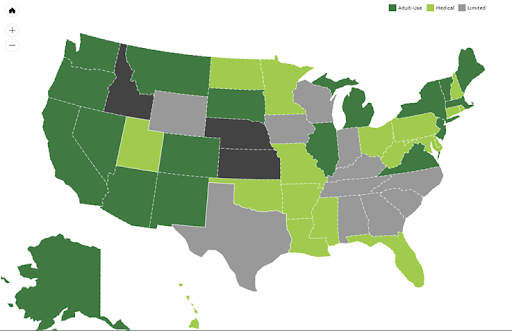

 In his role as
 MICHIGAN
 These stunning victories
 The state of Missouri is about to have a medical cannabis program. In November,