Committee Blog: What is Craft Cannabis? Understanding Small-Batch Cultivation and Artisanal Products
What is Craft Cannabis?
Following state legalization and/or decriminalization, it doesn’t take long for dispensaries to be fully stocked with cannabis brands eager to get their products on shelves. Unfortunately, the flood of flower from cultivators that invest early into the new markets quickly turns into a creek as small independent farmers struggle to meet margins to remain profitable. The price per pound of cannabis quickly drops, and many of those hopeful farmers have no other alternative but to sell their business or close down.
Not unlike the alcohol and tobacco industries, some brands are creating a lane for themselves by differentiating their product as Craft or Artisanal.
Industry Comparison – Craft Beer
We can look to cannabis’ distant cousin, hops, to get a taste of what it means to have a successful craft market alongside thriving value products like domestic beer. According to the Brewer’s Association, a non-profit trade association of craft brewers, a brewer is considered craft if they meet the definitions for “small” and “independent” listed below:
Small: Annual production of 6 million barrels of beer or less (approximately 3 percent of U.S. annual sales). Beer production is attributed to a brewer according to rules of alternating proprietorships.
Independent: Less than 25 percent of the craft brewery is owned or controlled (or equivalent economic interest) by a beverage alcohol industry member that is not itself a craft brewer.
In short, craft brewers measure production throughput and ownership share to be considered craft. Some argue that the 25% ownership plays the biggest role in the success of a craft brand since even a smaller stake in ownership from a large corporation could give them enough capital to outcompete their non-corporate funded counterparts.
Can similar qualifiers be applied to cannabis cultivation and manufacturing?
Putting the Craft in Craft Cannabis
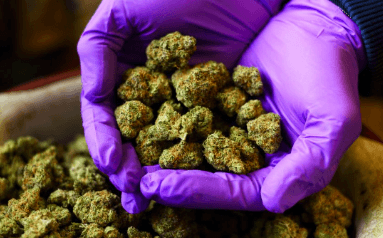
Unlike its distant alcoholic relative, cannabis is used to produce more than one type of product. While the most common craft product is flower, it can also be extended through the manufacturing process to make edibles, pre-rolls, tinctures, and more.
The process of cannabis cultivation and manufacturing is far more complex to narrow the craft definition to just the final weight of the yield. For flower alone, multiple variables are considered when defining craft—lot size, total yield, harvesting techniques, pest control solutions—just to name a few.
California has taken an impactful step forward by introducing the Cannabis Appellations Program to the cannabis industry. “An appellation of origin is a protected designation that identifies the geographical origin of a product and typically includes production requirements.” The most common use of appellations are in the wine (true Champagne must come from grapes grown in the province of Champagne, France) and coffee industries.
Craft Cannabis Webinar Series
Consumers play the largest role in the success of a cannabis brand and, with the help of small business advocates like NCIA, are now learning about the smaller craft cannabis brands available in their state. So then, what does it mean when your jar of fresh flower says “Craft Cannabis” on the label? What and who defines the craft? What does this new appellation program mean for craft cultivators? How can consumers and retailers support these specialized brands?
As the cannabis industry continues to evolve, staying informed about the latest trends and insights is crucial. To keep up with everything happening in the world of craft cannabis and beyond, we encourage you to follow us on LinkedIn for updates, event announcements, and industry discussions. Join our community on LinkedIn today!
Don’t miss out on valuable information—sign up for our newsletter to receive the latest news, resources, and event updates straight to your inbox. Stay ahead of the curve and be part of the growing cannabis community. Sign up for NCIA’s newsletter here!
We look forward to keeping you informed and engaged with the best in the cannabis industry!
Committee Blog: Extracting the Truth – Best Practices for Cannabis Extraction
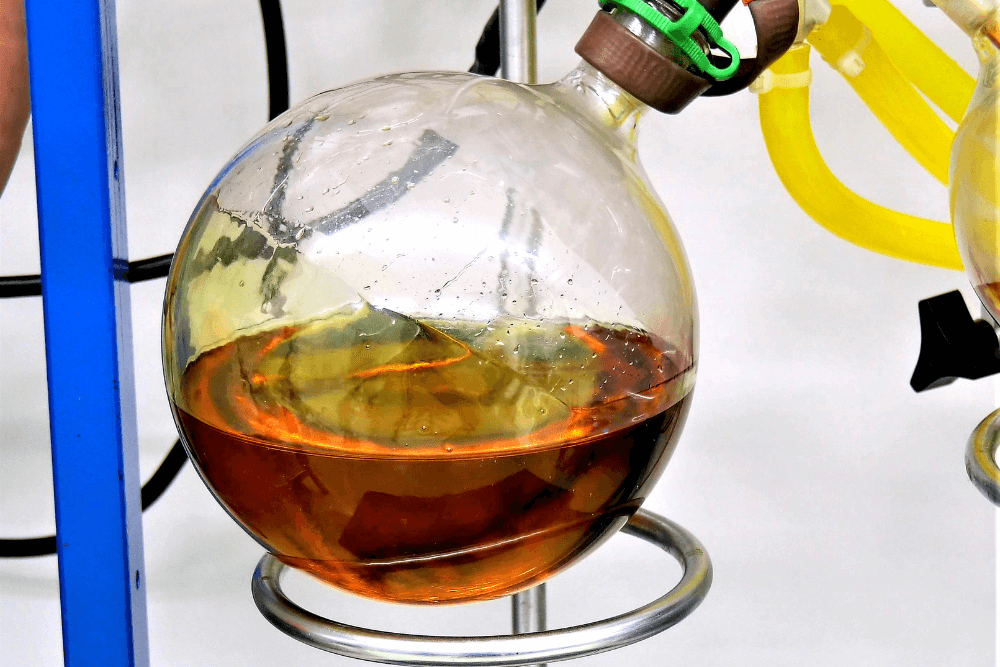
We stand at a pivotal juncture in the cannabis industry, defined by rapid technological advancements in extraction methods and an increasingly complex regulatory landscape. How do we make sense of it all? Before you can have consumables, topicals and concentrates, you must first extract the cannabinoids from the plant. There are multiple extraction methods available, and each method not only influences the efficiency and cost of production, but also affects the purity, potency, and safety of the final product. Manufacturers of cannabis products use various methods for extracting vital compounds from cannabis. Keep on reading to dive into the multifaceted world of cannabis extraction, exploring traditional, modern, and emerging technologies that are shaping the industry.
Understanding Extraction Methods
Here’s a look at some of the most common technologies used:
Traditional and Solvent-Based Extraction
Butane Hash Oil (BHO) and Ethanol Extractions: These are among the most prevalent methods, prized for their efficiency and ability to preserve terpenes. However, solvent-based methods require rigorous disposal of the solvent post-extraction to avoid contamination, highlighting the necessity for strong quality-control measures.
CO2 Extraction: Utilizing supercritical CO2 as a solvent, this method is celebrated for its safety and environmental friendliness. The precision and adjustability of CO2 extraction allow for targeted extraction of specific cannabinoids and terpenes, but at a higher operational cost.
Physical and Non-solvent Extraction Techniques
Rosin Tech and Ice Water Hash: These solventless techniques are gaining traction for their simplicity and the purity of the extract. While they offer a safer alternative by eliminating solvent residues, their scalability and efficiency in commercial settings remain areas for development.
Novel Extraction Innovations
Ultrasonic Extraction and Microwave-assisted Extraction (MAE): The cutting edge of extraction technology, these methods promise increased efficiency, reduced processing times, and enhanced terpene profiles. Their adoption is set to revolutionize the industry, provided they can overcome initial high capital investment barriers and integrate seamlessly with existing regulatory frameworks.
Product Quality and Regulatory Compliance
Which extraction method you choose will directly affect the chemical composition of the final product, and advanced testing and quality assurance protocols will be necessary. The industry has seen significant advancements in testing technologies, such as High Performance Liquid Chromatography (HPLC) and Gas Chromatography-Mass Spectrometry (GC-MS), which are crucial for verifying the absence of solvents, pesticides, and other contaminants.
Navigating the regulatory landscape is a formidable challenge for manufacturers. Regulations vary widely across jurisdictions and often lag behind technological advancements. Be sure to understand issues such as labeling requirements, potency limits, and compliance with Good Manufacturing Practices (GMP).
Manufacturing Challenges and Best Practices
Lab Safety and Employee Training
The extraction process involves handling volatile substances and operating complex machinery, so robust lab safety protocols and ongoing employee education are must-haves. Prioritize creating a culture of safety and compliance, such as creating SOPs for your processes. This will help prevent accidents and ensure the well-being of your staff. Also be sure to document training and day-to-day operational issues.
Scaling Production While Maintaining Quality
As the demand for cannabis extracts continues to grow, you might face the challenge of scaling your operations without compromising on product quality. You can achieve this balance by implementing scalable extraction technologies, maintaining stringent quality control, and investing in research and development.
Recommendations for Industry Growth and Policy Reform
Foster Innovation through Research and Development: Public and private investment in research can help identify new extraction technologies and their applications.
Harmonize Regulatory Standards: The standardization of safety and quality regulations across jurisdictions will facilitate compliance and ensure a level playing field.
Promote Consumer Education: Comprehensive educational initiatives will inform consumers about the safety, efficacy, and benefits of cannabis extracts.
Engage in Policy Dialogue: Active dialogue between industry stakeholders and policymakers will ensure that common-sense regulations are informed, pragmatic, and open to innovation.
The demand for infused products is growing, so manufacturers need to be planning for advanced extraction technologies – ones that fit within regulation and prioritize safety, quality, and consumer protection. By embracing innovation, advocating for harmonized regulations, and educating an informed consumer base, we can achieve growth and establish ourselves as a responsible and valuable sector of the global economy.
Committee Blog: Unwrapping the Complexities – The Plastic Packaging Predicament
Written by: Karen Quinto, MS Environmental Science, Willow Industries
Balancing Protection, Sustainability, and Safety in the Packaging Industry
In 2012, child-resistant packaging legislation prevented access to children while the legal cannabis market began to open up but the issue persists over a decade later and the topic is still controversial to some.
“CR [Child-resistant] packaging on flower products makes no sense. On edibles sure, but flower? Not to mention that alcohol has no CR, and I’d argue is 100x more harmful to a kid who gets into it…. It feels like a piece of legislation to make regulators feel good about themselves but is a frustration to everyone else,” voiced Tyler Works on his LinkedIn page.
Works, the Director of Account Management for Cannabiz Media, is not alone on this sentiment. The delicate balance between protecting products and ensuring consumer safety is continuously challenged by concerns over its efficacy and common sense.
“When we worked on these rules, this was considered but it was more important to satisfy the minds of the people terrified of kids getting into cannabis,” chimed Gus Green, who helped states adopt the Code of Federal Regulations for the Poison Prevention Packaging Act due to cannabis being a Schedule 1 drug, therefore automatically deemed harmful to children. “Now is a better time to breach the subject. The Poison Prevention Packaging Act states that any product deemed toxic for a child under 5 years old should be in child- resistant, and senior-friendly packaging. I worked with state agencies around the country to adopt these. The rule is a bit more specific than that if you dive in though, it’s about the ability for a child to ingest a toxic amount within a specific timeframe…[For example] travel-size Listerine bottles are not always CR, but the large bottles are always CR.My specialty was child-resistant, or specialty packaging. Packaging specialists should be the ones rewriting these rules but I often see committee members with no background in the field attempting to write them.”
CFR 16 PART 1700 refers to Title 16, Part 1700 of the Code of Federal Regulations (CFR), which specifically deals with Poison Prevention Packaging. This regulation focuses on the packaging requirements for substances that are potentially hazardous or poisonous, especially to children. The key objective is to prevent accidental ingestion by children and reduce the risk of poisoning incidents.
The regulation outlines standards and specifications for packaging design and labeling to ensure that products posing a poisoning risk are packaged in a way that makes it difficult for children to open or access the contents. This includes child-resistant closures and barriers to entry. The goal is to enhance the safety of household products, medications, and other substances that could be harmful if ingested by young children. Compliance with CFR 17 PART 1700 is essential to meet safety standards and protect consumers, particularly children, from accidental poisoning.
It seems straightforward enough but there are many problems inherent in adopting a rule that was not specifically made for the cannabis industry.
The Dose Makes the Poison
Works’ earlier sentiment is essentially that “the dose makes the poison”. This fundamental concept in toxicology states that any substance can be harmful in large quantities but may be safe at lower levels.
Proponents of this sentiment argue that cannabis flower contains THCA, which is a non-psychoactive cannabinoid, meaning it does not produce the “high” associated with THC and cannabis use. THCA is a precursor to THC through decarboxylation, which converts THCA to THC with the application of heat, typically when it is smoked, vaporized or cooked. Therefore, ingestion of THCA is unlikely to cause intoxication in a child. Moreover, Works argued that requiring child-resistant packaging for THC flower is inconsistent with the treatment of other potentially harmful household items that are not subject to the same level of regulation, such as bottles of alcohol that do not require child-resistant packaging despite their inherent availability and quantity in a household.
Advocates for the deregulation of child-resistant packaging of flower might suggest that just like for alcohol, home environment control would suffice in controlling cannabis as a safety measure for children. Storing THC flower in an inaccessible location followed by strong educational measures urging parents to responsibly store and prohibit access could be effective in preventing accidental ingestion.
While these points are presented for the sake of argument, it’s important to reiterate that child-resistant packaging regulations are designed to prioritize child safety. The potential risks associated with accidental ingestion of THC or other substances are serious, and any discussion around exemptions should carefully consider the well-being of children. Public health and safety regulations are typically enacted with the aim of preventing harm and protecting vulnerable populations. But this is not the only issue people have in mind regarding packaging.
Child-resistant packaging for flower not only seems problematic because it is incongruent with regulations for other harmful household substances including alcohol but also because it creates trash. A lot of it.
The Single-Use Abuse
The Sustainable Cannabis Coalition estimated that in 2020, the US Cannabis Industry used almost one billion pieces of single-use plastic that mostly ended up in landfills. Research and testing activities–including those for the cannabis industry–adds up to over 12 billion pounds per year. The majority of these plastics cannot be recycled due to their diverse material composition. A whopping 40% of total emissions are attributed to our procured goods and services.
Packaging materials, particularly plastics, are composed of various substrates such as polyethylene, each with distinct properties. Sustainability concerns arise as certain laminated plastics prove difficult to recycle. Challenges persist, especially in the context of single-dose packaging and restrictions on child-resistant reclosable plastics.
“People want to recycle bioplastics but they don’t have good barrier properties,” Gus Green states. “There is also a problem with the idea of biodegradables because they are designed to break down. Biodegradable plastic is not allowed in child-resistant reclosable plastics because the mechanism will fail because the material is frail, but laminated plastics that have great barrier properties cannot be recycled.”
The Sustainable Cannabis Coalition blog announced that in 2021, CULTA, a cannabis company, partnered with The High 5 Initiative, a non-profit company that’s working to keep Polypropylene #5 plastics out of landfills through recycling. Patients can return packaging to CULTA, where the initiative team sorts and processes the materials, recycling over 95% and transforming #5 plastics into Post Consumer Resin (PCR) for manufacturing other products.
Despite the environmental benefits, transitioning to eco-friendly packaging faces challenges, including cost implications. For instance, CULTA notes that switching to eco-friendly cellulose packaging would increase costs, making it economically challenging for cannabis companies, coupled with perceived quality issues with thinner and more pliable cellulose bags (which may seem cheaper, thus impacting consumer acceptance).
The Future of Plastic Waste in Cannabis
New metalized child-resistant compostable cellulose film bags have entered the market for the first time and offer the opportunity for both home and industrial composting, including the cannabis industry.
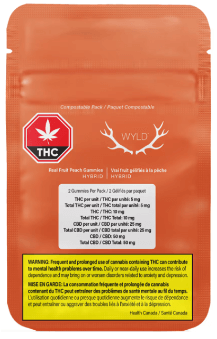
“In Canada, Wyld has adopted child-resistant compostable pouches. Many edibles brands are moving to an inner-outer pack combo with individually-wrapped pieces inside a mother bag, similar to many traditional candies. Think caramels, Starburst, cough drops, Hershey’s Kisses, Reese’s cups, etc. – cannabis consumers want fresh products, and individual wraps accomplish that. To avoid more single-use plastics, NatureFlex is seeing significant, promising interest,” Elisha Hedin, a regional sales manager from Futamura, manufacturer of NatureFlex explained. “Compostable films can actually have a very good barrier and NatureFlex is an ideal packaging material for both gummies and flower. There’s a perception in the industry that compostable materials are low quality and that’s simply not true.”
Wyld, a Climate Neutral Certified brand, offers the cellulose-based packaging made from cellulose film laminated to a biosealant for their gummies. In home composting, this metalized compostable film degrades completely in 12-16 weeks. In industrial settings, it takes twice as fast to convert the cellulose into water, CO2, biomass, and mineral salts in just 6-8 weeks.
Meanwhile, in the research industry, Polycarbin has touted itself as the world’s only circular economy for single-use lab plastics. This California-based company helps labs achieve their sustainability goals by diverting these valuable materials from landfills and incinerators into the next generation of low-carbon lab products.
“Much like with food-tech and biotech, the cannabis industry is driven by a growing dependence on single-use plastics. From the harvest fields to the QC and QA laboratories, it is more important than ever that this industry consider the carbon footprint associated with its supply chain,” James O’Brien, CEO of Polycarbin emphasized. “Through responsible waste stream management and sustainable procurement, the cannabis laboratories can significantly attenuate the environmental impact of a major source of its scope three emissions—fossil fuel-derived, single-use plastics.”
As the packaging and research industry grapples with the complex interplay of material properties, sustainability challenges, and stringent safety standards, a delicate balance must be struck. Navigating the evolving landscape requires continuous innovation, collaboration, and adherence to regulations, ensuring that the packaging not only safeguards products but also contributes to a sustainable and secure future.
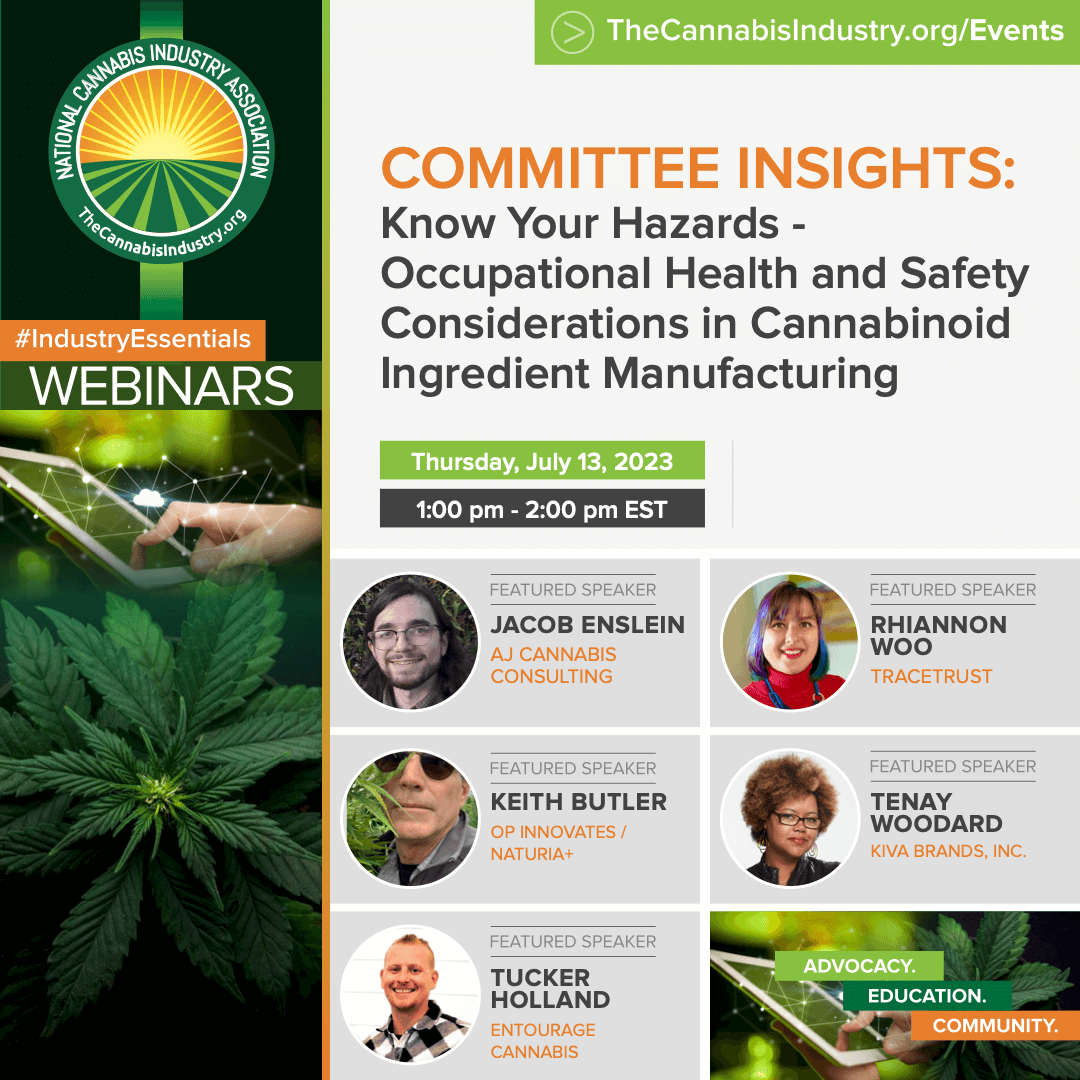
Committee Insights | 7.13.23 | Know Your Hazards – Occupational Health and Safety Considerations in Cannabinoid Ingredient Manufacturing
NCIA’s #IndustryEssentials webinar series is our premier digital educational platform featuring a variety of interactive programs allowing us to provide you timely, engaging and essential education when you need it most.
In this edition of our NCIA Committee Insights series, originally aired on July 13, we were joined by members of NCIA’s Cannabis Manufacturing, Scientific Advisory and Hemp Committees for an in-depth discussion highlighting the occupational health and safety considerations to make during the manufacture of cannabinoids and provide recommendations for mitigating risk.
There is no mistaking that manufacturing cannabinoids is here to stay. It is more and more prevalent to see historically plant/naturally derived bulk ingredients being manufactured in a controlled environment in the lab or through innovative processes like precision fermentation. It is likely that bulk ingredient manufacturing of cannabinoids will go this route too.
For cannabinoids like HHC, that do not exist naturally in the plant or in high enough quantities to be commercially viable for extraction, it is most certainly the case that manufacture of these compounds will occur in the lab. To produce these compounds safely, we can luckily look toward existing regulations and occupational health and safety guidelines for producing novel ingredients for use in foods and non-foods.
Learning Objectives:
• Recognizing common occupational safety hazards associated with manufacturing cannabinoids and recommendation to mitigate these hazards
• Learning the different occupational safety considerations between isolation and purification of naturally occurring cannabinoids and the manufacture (synthesis) of cannabinoids in the lab
• Understanding the special safety considerations that processes like hydrogenation and others have and why these are critical to mitigating liability for your business
Safeguarding Consumers in the Cannabinoid Product Landscape (Part III):
Know Your Hazards – Occupational Health and Safety Considerations in Cannabinoid Ingredient Manufacturing (Part IV): https://bit.ly/3rEUeKP
Concepts for Regulatory Consideration – Shifting the Conversation from “Cannabis vs. Hemp” to “The Cannabinoids” (Part V): https://bit.ly/3P3r5AW
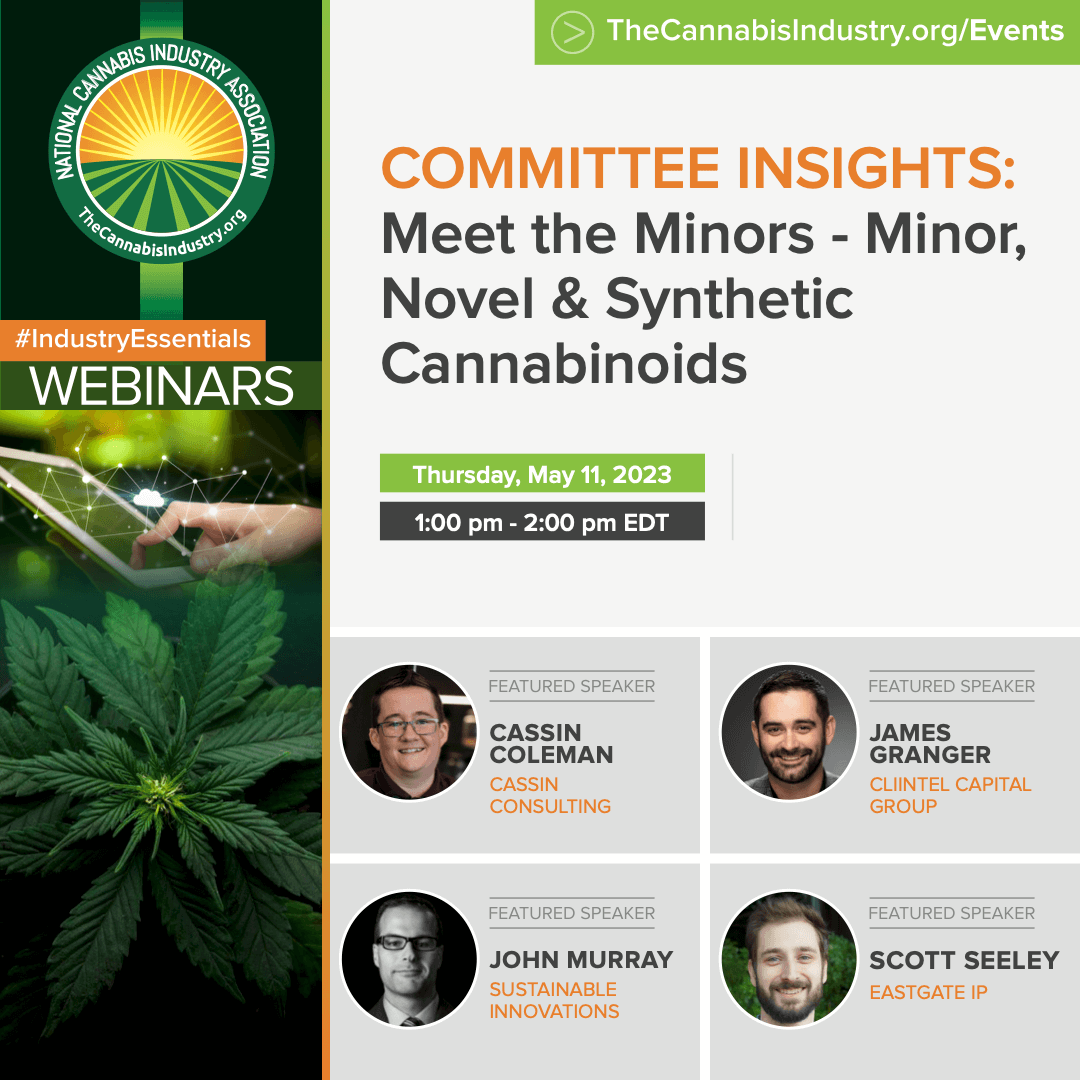
Committee Insights | Meet the Minors (Novel, Minor, Synthetic Cannabinoids – Part II)
In this edition of our NCIA Committee Insights series, originally aired on May 11, 2023, we were joined by members of NCIA’s Cannabis Manufacturing, Scientific Advisory and Hemp Committees for an in-depth discussion of the most talked about minor, novel, and synthetic cannabinoids.
What scientific publications exist for each compound? What do we know about each molecule’s physiological, psychoactive, and therapeutic effects?
You’ll find out during this informative session featuring leading chemical experts, manufacturers and product development specialists. Along with audience members they explored these compounds from various perspectives to examine their implications for consumers, medical practitioners, patients, producers and regulators.
Learning Objectives:
• Molecular Structures and Identification of novel, minor, and synthetic compounds
• Published Physiological and Psychoactive effects of these compounds
• Perceived therapeutic effects
• Opportunity to ask about other new compounds not in presentation.
Safeguarding Consumers in the Cannabinoid Product Landscape (Part III):
Know Your Hazards – Occupational Health and Safety Considerations in Cannabinoid Ingredient Manufacturing (Part IV): https://bit.ly/3rEUeKP
Concepts for Regulatory Consideration – Shifting the Conversation from “Cannabis vs. Hemp” to “The Cannabinoids” (Part V): https://bit.ly/3P3r5AW
Video: NCIA Today – Thursday, June 2, 2022
Happy PRIDE! NCIA Director of Communications Bethany Moore checks in with what’s going on across the country with the National Cannabis Industry Association’s membership, board, allies, and staff. Join us every other Thursday on Facebook for NCIA Today Live.
Make the investment, take the time, and do the work to position yourself for success in the Empire State!
NCIA Director of Communications Bethany Moore checks in with what’s going on across the country with the National Cannabis Industry Association’s membership, board, allies, and staff. Join us every other Thursday on Facebook for NCIA Today Live.
NCIA Deputy Director of Communications Bethany Moore checks in with what’s going on across the country with the National Cannabis Industry Association’s membership, board, allies, and staff. Join us every other Thursday on Facebook for NCIA Today Live.
This episode of NCIA Today is brought to you by Senseon Secure Access, offering concealed protection, monitoring, and workflow management for dispensaries. Senseon is ready to provide you with an exceptional customer experience, plus improved efficiency and compliance, not to mention slim and modular aesthetics. Learn more about their security solutions and cost benefits at Senseon.com.
Committee Blog: Protect Against Corporate Identity Theft with Trademark Rights
A company’s brand is its identity. Branding elements – names, logos, colors, graphics, slogans – are how customers recognize a product or service as coming from a particular source. Done properly, brands can be as recognizable to consumers as a person’s face, name, and voice. In some cases, brands may be some of the most valuable assets a company may own. Protecting physical assets is common in the cannabis industry, but how do companies protect intangible assets, like their identity? Fortunately, there are bodies of intellectual property law designed to provide legal protections against others from using brand elements that are too close to your own. To take advantage of these protections, however, cannabis companies must understand how each one works and develop a branding strategy that leverages intellectual property laws.
This is the second article in a 3-part series about cannabis IP. The first article focused on patent law and can be found here. The series will culminate with a Q&A-based webinar on April 19th at 1:00 Eastern. Advance questions can be sent to paul@thalo.io.
Mechanisms of Brand Protection
Brands are protected most prominently by legal domains known as trademark and trade dress. Trademarks include a company’s name, logos, and slogans, as well as those of any individual products. In some instances, trademarks may also include recognizable elements like colors (UPS’s brown) and sounds (NBC’s chimes). Trade dress is a similar concept to trademarks, but applies to the distinct appearance of a product or its packaging. Trade dress can even be used to protect the unique look and feel of a retail establishment, such as a restaurant or dispensary.
Both trademark and trade dress is intended to reduce confusion in the marketplace as to the origin of a product or service. The idea is that the public is best served when they can reliably determine which company to associate with each product. Reliable product-company association increases quality accountability, facilitates safety controls, allows consumers to form powerful brand loyalty.
Companies that avail themselves of trademark and trade dress laws gain access to a set of tools to legally fence off others from using branding that is likely to confuse customers about the source of a product. And, unlike other forms of intellectual property, trademark rights can last indefinitely and even strengthen over time. Some of these rights arise automatically just by using a mark, others must be sought out through registration.
Principles to Consider When Selecting a Brand
Every company should consider trademark principles from day zero, when first selecting a name. U.S. trademark rights only apply to marks that are “distinctive,” meaning they are capable of distinguishing things bearing the mark from goods and services offered by others. The more distinctive a mark is, the stronger protections provided by trademark law. Names that merely describe the goods or services are non-distinctive and are typically not eligible for trademark protection.
There are five general categories along the spectrum of distinctiveness – fanciful, arbitrary, suggestive, descriptive, and generic – arranged from strongest to weakest.
Fanciful marks words that were invented specifically to serve as a trademark, such as Xerox or Nvidia. Because these words have no other meaning than to identify the source of goods or services, they are the most distinctive category of trademark and receive the greatest protections.
Arbitrary marks are the second most distinctive category of mark and include words that have alternative meanings, but only meanings in contexts unrelated to the goods or services being sold. These include Apple computers, Lotus cars, and Bicycle playing cards.
Suggestive marks are less distinctive than Fanciful and Arbitrary marks, but still considered sufficiently distinctive to receive trademark protection, though registration may be more difficult. Suggestive marks imply a quality or characteristic of the good or service the mark is used in connection with. Some examples of suggestive marks would include: Microsoft, a portmanteau of microprocessors and software; ChapStick, for a stick-shaped balm used on chapped lips; and Netflix, which is suggestive of an internet-based video service.
Descriptive marks simply describe the goods or services being offered and are, therefore, not distinctive. In some cases, however, descriptive marks can acquire distinctiveness and achieve a “secondary meaning” as a source-identifier through long-term use (usually +5 years), heavy advertising, or pervasive adoption. Examples of Descriptive Marks would include: International Business Machines (IBM Computers); Best Buy retail stores; and Sports Illustrated magazine.
Generic marks are terms that broadly identify the product or service being offered. Generic marks are so non-distinctive that they are not eligible for trademark registration, even if secondary meaning can be shown. The idea is that these marks are so fundamental to the product that it would be detrimental to consumers and the marketplace to allow a brand to have exclusive use of the term in connection with the goods. “Escalator” and “Dumpster” were once brand names but, because they were used widely to refer to all mechanized stairways and trash receptacles regardless of manufacturer, they lost all trademark distinctiveness.
Parody Does Not Apply – Avoid Famous Brands
A surprising number of cannabis companies have used trademarks that reference or parody famous brands. Gorilla Glue, Girl Scout Cookies, and many others have been used as names for cannabis products. Companies have used packaging that resembles well-known products such as Life Savers and Sour Patch Kids. This is a bad idea. While this practice seems to be increasingly limited to unregulated markets, a recently published (and ill-advised) application for the mark and logo MCWEED for apparel shows that not everyone has received the message:
Registration and Scope of Protection
Some trademark rights are established as soon as a trademark is used in commerce. But to obtain the full scope of legal protections available, trademark owners must register their marks, preferably federally. Federal registration stakes a claim to a nationwide priority date, increases protections available, increases potential damages, and embodies a definities property that can accrue value.
All trademark registrations begin as applications. Trademark applications must, among other things, identify the mark, the applicable dates of use. Applicants must also describe the goods and/or services the mark is (or will be) used with and select one or more classes from an international menu of product classifications. The classes selected and the description of the products can greatly affect the scope and validity of a registration, so it is important to consult with an experienced trademark attorney.
These applications are examined by the U.S. Patent & Trademark Office to ensure they meet the statutory requirements. Typically, the USPTO completes examination within about 6 months, but currently the office is experiencing some delays and it is commonly taking 7-10 months for an application to be evaluated. If the examining attorney identifies any problems, they may issue rejections, to which the applicant will have an opportunity to respond.
If the USPTO approves the application, it will be published for 30 days (expandable to 180 days) to allow other trademark owners to oppose registration of the mark. Sophisticated trademark owners can set up alerts to be notified when any similar applications are published that may be concerning. At the close of that period the mark is recorded in the federal register and the trademark registration is complete.
A qualified trademark attorney can help guide you through the process and provide counseling concerning how to maximize your chances of registering your trademark without prejudicing your rights. Trademark application fees run $250-$350 per class of goods or services and a trademark attorney will typically charge a few hundred to a few thousand dollars, depending on their experience and the level of pre-application clearance. While trademark mills and self-guided applications are available, there are many pitfalls to avoid while preparing and prosecuting a trademark application, and applicants should be wary of attempting to navigate the process without legal guidance.
Applicants should also be aware that many companies mine the USPTO database to send unsolicited offers to trademark applicants. While these offers can look official and typically include some deadline to respond, they are usually scams. Nevertheless, it can be helpful to have an attorney review any correspondence relating to the trademark application to ensure that no important correspondence from the USPTO is missed.
Embrace the Zone of Expansion
There are a lot of benefits to registering trademarks, but registration is not available in all instances. Under federal law, registrations cannot be issued that cover goods or services that are federally illegal. But the same mark can be registered for other, legal products, and the trademark rights will extend to a reasonable “zone of expansion,” covering products that the trademark owner could reasonably branch out to in the future. This allows a brand owner to obtain the benefits of federal trademark registration and use it to provide some umbrella protection for their cannabis brands.
One option is to sell branded accessory products, such as apparel or smoking accessories, for which a trademark registration will pass muster. It is debatable, however, whether cannabis products are within the zone of expansion of t-shirts.
Another option is to develop one or more low-THC hemp products under the same brand as high-THC cannabis products. At least one case is already working its way through the courts where a trademark owner is claiming that cannabis edibles are within the zone of expansion of a line of hemp-infused, low-THC edibles. Edible IP, LLC and Edible Arrangements, LLC v. MC Brands, LLC and Green Thumb Industries, Inc., (Case No. 20-cv-05840). Though that approach is also not without its pitfalls, as discussed below.
A final option that every cannabis company should consider is state trademark registration. State registration requirements are typically governed by state law and, therefore, state trademark registrations can often be obtained for cannabis products. State registrations are more limited than federal registrations, but can be a powerful tool in the current landscape of cannabis IP.
Products with CBD Can Be Trademarked, But You Can’t Trademark “CBD” Products
Companies that produce hemp products do not have the same problem with federal illegality as companies with high-THC products. Federal registration is available for trademarks that are used on hemp and hemp products. However, as most hemp companies should know, the advertising of cannabidiol or “CBD” is regulated by the Federal Drug and Cosmetic Act (“FDCA”), 21 U.S.C. §§ 321(g)(1), 331(d) and 355(a). Because CBD is the active ingredient in an FDA-approved drug (Epidiolex®), the FDCA prohibits marketing CBD products (absent a New Drug Application or Abbreviated New Drug Application). Though that may change. As of now, however, the USPTO will refuse to register marks that identify the goods as “CBD.” In re AgrotecHemp Corp., Serial No. 88979905 (issued Feb. 10, 2022) (finding that PUREXXXCBD for plant extracts should be refused registration).
Notably, the AgrotechHemp decision went further than previous USPTO decisions in that it also criticized the issuance of registrations for marks used on products “derived from hemp.” This may signal a crackdown on all hemp-related registrations, or it may be limited to registrations that explicitly identify the goods as containing “CBD.”
Where’s the Value in Trademarks?
It may come as no surprise that brands can be incredibly valuable assets. In some cases, a company’s brand can make up a significant portion of its balance sheet and brand-centric companies can fetch a premium when they are acquired, known as “goodwill.” Increasingly, specialized lenders are even willing to use secured IP as financing collateral. Nonetheless, the real value for many trademark owners is non-monetary.
When many people think about intellectual property, they recall headlines of jury verdicts with huge damages that can reach into the billions of dollars. The reality is that, absent intentional copying, trademark cases rarely result in large-dollar awards. More often, successful trademark suits result in an injunction preventing further infringement and some relatively minimal damages. The primary value of trademark rights is the ability to control your brand and how consumers perceive your brand in the marketplace. Trademark rights give you the tools to define your brand as a unique identity and preserve that identity in an increasingly crowded industry.
Video: NCIA TODAY – Thursday, March 10, 2022
NCIA Deputy Director of Communications Bethany Moore checks in with what’s going on across the country with the National Cannabis Industry Association’s membership, board, allies, and staff. Join us every other Thursday on Facebook for NCIA Today Live.
Committee Blog: Protecting Innovations in Cannabis Technology
The Role of Patents in the Industry, Now and in the Future
Paul Coble is an intellectual property attorney and Chair of NCIA’s Cannabis Manufacturing Committee; Scott Seeley is an intellectual property attorney with Eastgate IP and is Organizer of the Cannabis Manufacturing Committee
Competition in the cannabis industry has always been fierce. To date, most competition has focused on securing licenses and sales territory. But, as markets saturate and the green pastures are all claimed, the battlefronts must shift. Cannabis companies now look to collect non-geographic assets, such as market share, profitability advantages, and a durable brand presence.
Intellectual property law provides mechanisms to capture and monetize these intangible assets. Assets that give a company a competitive advantage can build value into a business beyond its balance sheet. Well-crafted IP portfolios not only deter freerider copying, but are also valuable assets that can be sold, licensed, or provide incentive for investment or acquisition by larger entities. Businesses with a strong IP strategy are able to maintain their edge over their competitors by protecting their investments in technology and marketing to discourage competitors from utilizing their newfound developments or improperly capitalizing on their brand recognition.
Ignoring cannabis IP not only leaves this value on the table, but exposes the business to unnecessary risk. As in all other industries, cannabis companies must recognize that competitors have IP portfolios that may need to be avoided or licensed. Modern competition requires solidifying your own rights as well as understanding the rights of others.
Intellectual property is often broadly broken out into four major categories. Each category is tailored to protect different forms of intangible assets:
This blog post overviews patents, and how patents can be used by cannabis businesses to protect their technological advancements. This is the first of a 3-part series about cannabis IP. The series will culminate with a Q&A-based webinar on April 19 at 1:00 PM ET. Advance questions can be sent to paul@thalo.io.
What are Patents?
Patents protect technological advancements and can be used to exclude others from making, using, importing, or selling a claimed technological innovation.
Patents are often used by businesses to build walls around technologies they develop to temporarily prevent competitors from using the same advantages. Companies also use patents to build portfolios of technology that can be sold or licensed like any other asset, or used to bolster their valuation for acquisition or investment opportunities.
But patents are not just used to block competition, they can also be a tremendous source of information about technological developments in the field. While patent discovery tools are admittedly lacking at the moment (GooglePatents is a good place to start), the details in a patent can often short-circuit months or years of work. Of course, depending on the patent claims, you may need to license the patent in order to use that information. But that type of information-for-licensing-rights exchange, with the right mentality on both sides, is the foundation of an efficient industry.
Here are just a few examples of the cannabis technology that may be patent eligible:
Cannabis Strains
Formulations for Extracts, Topicals, Tinctures, Vape Liquid, Edibles
Vaporizer Design
Cartridge Design
Extraction Methods
Manufacturing and Processing Methods
There are three types of patents that can be used to protect cannabis technology: Utility, Design, and Plant. These types of protection are not mutually exclusive and sometimes can be combined to form a more comprehensive protection strategy.
Utility Patents
Utility patents are the most popular type of patent, offering the broadest and strongest form of protection. Utility patents last 20 years from the date of filing and are good for protecting nearly any new technological innovation including formulations for extracts, topicals, tinctures, or edibles, new vaporizer designs, new improvements to processing or manufacturing methods, and similar developments. Utility patents can also be used to protect new cannabis genetics, at least theoretically. As discussed below, however, there are several practical barriers to patenting cannabis genetics.
A significant benefit of utility patents is that they can protect the actual function of an innovation, rather than just the outwardly recognizable features or the specific implementation. This aspect of protection sets utility patents apart from other forms of protection like design patents and copyright, which are limited non-functional aspects.
Design Patents
Design patents protect an item’s unique ornamental appearance. Design patent protection is sometimes easier to obtain than utility patents because design patents only protect the look of an item, not how it works. So design patents do not protect against someone selling a functionally identical device with a different outward appearance. This narrower protection also lasts only 15 years instead of 20.
Nevertheless, design patents can be a strong tool to protect products that have a novel and distinct design aesthetic. They can cover the visual appearance of vaporizer batteries or cartridges, retail packaging, even unique dispensary displays. In some cases, design patents can be effectively combined with trademark and trade dress protections to create a highly defensible brand style.
Patenting Cannabis Strains
The most common questions about cannabis patents usually relate to patenting strain genetics. Newly developed strains can be protected by both utility and plant patents, with varying rights and requirements. Cannabis strains may also, theoretically, receive pseudo-patent protection under the Plant Variety Protection Act of 1970 (“PVPA”). As noted below, however, current practical realities make PVPA protection unattainable for most cannabis strains.
Both plant and utility patents can protect cannabis strains, but they do so very differently. Utility patents cover newly invented compositions of matter and, therefore, can be used to prevent copying a novel genetic sequence. These patents literally cover specific sequences of DNA base pairs. A key requirement of utility patents is that the applicant must enable others to make and use the same invention once out of patent. While it may be possible to meet the enablement requirement with a transgenic breeding or CRISPR gene editing, the more common method of enabling plant gene patents is with a biological deposit of seeds or other propagation material with a public organization. So long as cannabis remains federally illegal, it can be difficult or impossible to make the deposit within the U.S. Some applicants have had success making the seed deposit at foreign centers, but the growth of cannabis genetic patents has been slowed by these requirements. When cannabis is eventually descheduled, the practical barriers to genetic patents will fall and that may trigger a rush by more companies to seek patents for their proprietary cannabis strains.
Plant Patents
Another form of patents, plant patents, can protect new plant varietals that have been reproduced asexually. Although cannabis plants are relatively easy to reproduce asexually via cloning or cutting, one disadvantage of this form of protection is that plant patents only cover genetically identical copies, reproduced asexually from the claimed plant. That means to infringe a plant patent, one must physically clone the patented plant–a narrow base for an infringement claim.
Plant Variety Protection Act
The last vehicle that can protect a new cannabis strain is the Plant Variety Protection Act that was designed specifically to protect sexually reproducing plants, such as cannabis.
The PVPA, however, comes along with a strict requirement that at least 3,000 seeds of the claimed plant species be deposited with the U.S. Department of Agriculture in Fort Collins, CO. The USDA will not accept any deposits for plants that are classified as controlled substances, including cannabis. Meaning that, for the time being, PVPA protection is unavailable for cannabis plants that do not qualify as hemp (less than 0.3% d9-THC).
The Process – How to Get a Patent
All patents start as applications which must be examined and approved by the U.S. Patent & Trademark Office (“USPTO”) to become granted patents. The application process, from start to finish, can last 1-5 years and cost anywhere between a few thousand to tens of thousands of dollars.
The examination involves a review of the patent application, as well as related literature published before your application was filed (also called “prior art”). An examiner with technical expertise in the application’s field will search for prior art and determine whether the application meets all statutory requirements. Most notable of those requirements are that the invention must cover eligible subject matter and be sufficiently inventive to warrant a patent.
The prosecution process typically involves letters back-and-forth between the inventor and the Patent Office. It is often thought of as a negotiation — nearly all patent applications receive at least one rejection. The applicant is given an opportunity to change what the patent covers or explain why the rejection was wrong. Only if and when the Examiner is satisfied that all statutory requirements are met will the application be allowed to issue as a patent.
How will Patents Shape the Cannabis Industry?
Like it or not, patents are rapidly becoming a major force in the cannabis industry. The cannabis industry is in a unique position to determine the role intellectual property will play, but one thing is certain: cannabis IP cannot be ignored. Some companies, like Canopy Growth, Nextleaf, and various pharmaceutical companies, are aggressively developing patent portfolios and high-stakes patent litigation is already underway. Additionally, holding companies known as “non-practicing entities” have been formed to purchase valuable patents covering key aspects of cannabis cultivation, manufacturing, and consumption.
But these forces do not have to dominate the industry. Patents were originally designed to promote scientific advancement, not inhibit it. When the IP rights of others are respected and technology is licensed widely at reasonable rates, intellectual property can cut years and millions of dollars from research budgets. Some industries have found success with patent cooperatives and similar pooled-patent arrangements. The future may see some combination of patent licensing with blockchain technology, NFTs, or decentralized autonomous organizations (DAOs).
We will continue the discussion as to what an enlightened approach to intellectual property could look like in the cannabis industry in our webinar scheduled for April 19 at 1:00 PM Eastern. Please send any advance questions to paul@thalo.io.
Video: NCIA Today – August 20, 2021
Deputy Director of Communications Bethany Moore checks in with what’s going on across the country with the National Cannabis Industry Association’s membership, board, allies, and staff. Join us every Friday on Facebook for NCIA Today Live.
Committee Blog: Safety – Terpene Limits in Cannabis Manufacturing
by NCIA’s Cannabis Manufacturing Committee
From the taste of your fruits and vegetables to the aroma that travels from trees and flowers in bloom, terpenes are the organic compounds that play a vital role in the flavors and smells we experience daily. Terpenes are common ingredients that are used in many industries such as food, cosmetics, tobacco, and pharmaceuticals. Therefore, the information on the safety of terpenes in these industries can be used for determining the safe use of terpenes in a wide range of product applications.
Terpenes are currently being introduced into a variety of adult-use and medical cannabis preparations across the U.S. and hemp-CBD markets around the world for both flavor and functional purposes. Much research has been and still is being conducted on the therapeutic effects of terpenes and their synergistic effects when used in conjunction with cannabinoids. The strong research background supports the benefits of infusing terpenes into cannabis extracts, both in reference to endogenous terpenes found naturally in the plant and those terpenes that have been added back into preparations from other botanical sources. Therefore, almost every manufactured cannabis product contains a percentage of terpenes. However, the clear lack of understanding of the full potential of the terpene profiles, and misuse of these volatile, fragile compounds bring up various misconceptions regarding terpene safety versus their efficacy in creating an elevated user experience.
As terpenes make a significant contribution to the quality of cannabis products, which varies from one consumption method to the other, it is highly important to utilize the most advanced knowledge regarding terpenes in order to maximize their potential while maintaining product safety.
Inhalation
Bioavailability
Terpenes are a naturally occurring constituent in resin cannabis extracts. Terpenes have been incorporated into vaporizable formulations in the form of pre-filled cartridges. These terpene formulations are designed to produce specific effects based on the creator’s intentions, or the terpenes are simply reintroduced to mimic the source material since the extracts are often refined to the point that they have little or no taste (i.e., lost their original essence).
Inhalation of these volatile molecules leads to quick absorption of the compounds via the lungs and directly into the bloodstream. The high solubility of monoterpenes in the blood and hydrophobic medium suggests a high respiratory uptake and accumulation in fat tissues (Falk 1990a). This was confirmed by recent studies of uptake and elimination of a-pinene and 3-carene in humans (Falk 1990b, Falk 1991b). The bioavailability range via inhalation of alpha pinene, camphor and menthol has been studied and reported to be 54-76% (Kohlert 2000) which is relatively high compared to oral bioavailability. Therefore, terpenes via inhalation are an efficient route of administration which allows low dosage of terpenes.
General Guidelines
When examining terpene infusion, the points below should be taken into consideration:
From accumulated knowledge within the cannabis industry and considering terpenes’ natural ratios in cannabis (1 – 5%) and data on safety, it is suggested not to exceed a concentration of 10% in the final product.
As terpenes are volatile molecules, the final terpene-infused product is recommended to be used only with adjustable temperature vaporizers such that the oil will not be heated to high temperatures to prevent unnecessary heat-derived toxin production.
Aerosol testing for the final product is recommended to test for heavy metals leaching into the vaporizable product.
Terpenes are recommended to be used within their defined expiration date labeled on the suppliers’ bottle. The final vaporizable product must be tested in a certified lab under the requirements of the authority having jurisdiction to make sure it meets all quality and regulatory requirements.
Terpene Limits
By using position papers such as the ANEC Position Paper on E-cigarettes and e-liquids, suggestions regarding terpene limits can be made for cannabis inhalable products. It is important to mention that the final decision on added terpene amounts and determination of product safety is the sole responsibility of the manufacturer based on their assessments, internal procedures, and local regulations.
The following numbers are the suggested infusion percentage of specific terpenes in E-liquid. This suggestion was calculated by using DNEL (Derived No Effect Level) levels in inhalation as well as frequency of puffs a day.
On average, E-liquid users take 500 puffs a day (ANEC position paper), whereas cannabis users take around 9 puffs a day. Therefore, the suggested terpene limit percentage in cannabis inhalables may be higher than E-liquid due to the lower daily usage.
Substance
Suggested Terpene Limit in E-liquid According to ANEC
Linalool
0.34%
Menthol
7.8%
Beta Pinene
0.7%
Alpha-Terpineol
1.1%
Geranyl Acetate
7.4%
Carvone
0.14%
Ingestion
Bioavailability
Terpene presence in foods of plant origin and in herbs with functional properties has led to further exploration of their bioavailability following oral consumption. The research on terpenes’ bioavailability is commonly done through medicinal plants since they are subjected to digestion within the mouth and stomach before accessing the small intestine. Bioavailability through oral ingestion is affected by mechanical actions, enzymatic actions, and different pH conditions, Transformations into usually more water-soluble and more readily excreted in the urine compounds affect this process as well. These transformations appear mainly in the liver, but also in the gastrointestinal tissue, lungs, kidneys, brain, and blood (Furtado 2017) Several studies have shown that terpenes consumed orally are absorbed through the gastrointestinal tract and are bioavailable as soon as 0.5 h after intake, reaching their peaks between 2 and 4 h (Furtado 2017, Papada 2018).
General guidelines
Terpenes are commonly used as flavor ingredients and their usage guidelines are clear when used in foods, such as the FEMA values table below. However, when terpenes are used for therapeutic purposes, the suggested dose in food is not fully researched, and the balance between flavor and functionality is still yet to be determined. Basing the dosing according to flavor guidelines is a good place to start. Upper limits should be defined by safety limits such as the DNEL values table found below. It is important to use natural, Food Grade terpenes that are backed up with certificates of analysis and are safe to ingest.
Terpene Limits
The Flavor and Extract Manufacturers Association of the United States (FEMA) has developed an innovative program utilizing the GRAS concept to evaluate the safety of flavoring substances. The FEMA GRAS program began in 1959 with a survey of the flavor industry to identify flavor ingredients then in use and to provide estimates of the amounts of these substances used to manufacture flavors. This database provides information on all ingredients that have been determined to be “generally recognized as safe” under conditions of intended use as flavor ingredients. According to The FEMA GRAS assessment – aromatic terpenes used as flavor ingredients are ubiquitous throughout the food chain; and therefore, not surprising that they serve as effective flavoring ingredients.
The below table presents the average maximum usage levels of terpenes used as flavors in several product types as provided by FEMA.
Product
Lime Terpenes
Average Max (ppm)
Orange Terpenes
Average Max (ppm)
Grapefruit Terpenes
Average Max (ppm)
Limonene Average Max (ppm)
Myrcene Average Max (ppm)
Linalool Average Max (ppm)
Beverages, Nonalcoholic
750
1,550
500
31
4.4
7
Beverages, Alcoholic
1,000
1,000
1,000
NA
NA
50
Chewing Gum
20,000
20,000
20,000
2300
NA
200
Hard Candy
5,000
5,000
5,000
49
13
400
Soft Candy
5,000
5,000
5,000
NA
NA
10
ppm is an abbreviation for “parts per million” and it also can be expressed as milligrams per liter (mg/L) or in a percentage where 10,000 ppm is 1%. For example, the maximum suggested infusion for orange terpenes in chewing gum is 2%, where the suggested infusion in hard candy is 0.5%.
*Point of thought*: Since terpenes in the cannabis industry are mostly infused in cannabis-based products, the frequency of usage of such products is lower than regular food products.
Additional safety data can be gathered from reviewing reports from governmental agencies such as European Chemicals Agency (ECHA). The following data about the DNEL (Derived No Effect Level) in the category of General Population was collected from ECHA website. These numbers may be used as a guideline for maximum daily intake via oral administration:
Substance
DNEL (Derived No Effect Level)
Calculated Daily DNEL for 70kg subject (mg/day)
Linalool
0.2 mg/kg bw/day
14
Menthol
4.7 mg/kg bw/day
329
Beta Pinene
0.3 mg/kg bw/day
21
Alpha-Terpineol
no hazard identified
no hazard identified
Geranyl Acetate
8.9 mg/kg bw/day
623
Carvone
69.4 µg/kg bw/day
4,858
For example, a 70 kg person consumes a 1g cookie that is infused with 1% Pineapple Express terpene formulation and Linalool constitutes 10% of the formulation, then there will be overall 10mg of terpene formulation in the cookie, out of the 10mg there is 0.1mg of Linalool which doesn’t exceed the DNEL level.
Topical
Bioavailability
Terpenes are lipophilic, small, and nonpolar molecules that are considered to be the largest group of natural fragrances. Terpenes can easily penetrate the skin and enhance transdermal delivery (Aqil 2007) and can potentially aid cannabinoid transdermal delivery. Terpenes are also known to have several dermal benefits including anti-inflammatory (Maurya 2014), wound healing (d’Alessio 2014) and anti-acne (Yuangang 2010). Terpene bioavailability via transdermal delivery ranges between 3-12% depending on the type of terpene, medium and application (Brain 2007, Gilpin 2010). Following topical application, maximum plasma levels of terpenes are reached within 10 minutes (Kohlert 2000).
General guidelines
While some terpenes are known as dermal irritants, the severity of the irritation may depend on their concentration. These should not be used on any inflammatory or allergic skin condition and should always be appropriately diluted. The oxidation of terpenes can increase risk of causing skin reactions because the oxides and peroxides formed are more reactive. This can be seen with (+)-limonene, δ-3-carene and α-pinene and arise due to the formation of oxidation products, some of which are more sensitizing than the parent compound. For this reason, proper storage of terpenes is required to preserve their effectiveness and decrease the risk of adverse reactions.
The table below lists commonly known allergenic terpenes, and for this reason, should be declared on the packaging or in the information leaflet if the concentration of these allergenic fragrances is higher than the permissible concentration of 0.01% in shower gels and baths (rinse-off products) and higher than 0.001% in body oils, massage oils and creams (leave-on products)
Allergenic Terpenes
Citral
Citronellol
Eugenol
Farnesol
Geraniol
Isoeugenol
D-Limonene
Linalool
Terpene Limits
The International Fragrance Association (IFRA) defines which compounds represent a potential allergy risk and determines their maximum concentration to produce safe cosmetic products. IFRA also issues recommendations for the safe use of fragrance ingredients, which are published in the IFRA Code of Practice and its guidelines. In the below table, there can be found specific infusion recommendations for specific terpenes.
Substance Name
Restriction Limits in the Finished Product (%) according to IFRA:
Lip Products
Body Lotion, Cream & Oils
Hand Sanitizer & Hand Cream
Body Wash
Citronellol
2.20%
12.00%
3.20%
24.00%
Citral
0.11%
0.60%
0.15%
1.20%
Farnesol
0.21%
1.20%
0.29%
2.30%
Eugenol
0.45%
2.50%
0.64%
4.90%
Geraniol
0.85%
4.70%
1.20%
9.20%
Alpha Bisabolol
0.42%
2.40%
0.60%
4.60%
Testing of terpenes in dermal products can be achieved safely by making a sample product with terpene formulation infused at 0.5% to 5% concentrations in petrolatum. Patch testing can be a useful technique to detect and avoid skin reactions.
Video: NCIA Today – August 13, 2021
Deputy Director of Communications Bethany Moore checks in with what’s going on across the country with the National Cannabis Industry Association’s membership, board, allies, and staff. Join us every Friday on Facebook for NCIA Today Live.
As the cannabis industry scales and more states legalize for adult-use, the demand for consumable cannabis products increases. To keep up with the demand, manufacturing facilities have to not only scale, but stay ahead of the curve as far as conserving resources, constantly innovating facility design to meet regulations and third-party compliance, e.g., ASTM Cannabis Certification Program and Good Manufacturing Practices (GMP).
Here are a few areas of environmental, product quality, and worker impacts to consider when planning for the future of your manufacturing facility.
Energy
As with any manufacturing facility, cannabis manufacturers pull power from shared electrical grids, meaning there is increasing pressure to reduce energy usage as they scale their operations. There are many design strategies for facilities to consider, whether they retrofit or build new, to reduce environmental impacts and position their operation for a sustainable future. One example for the cannabis industry is to recapture and repurpose heat generated from the processing equipment used for manufacturing products. Another example is incorporating climate control technologies to reduce the amount of energy required in extreme environments. More and more energy companies are starting to incentivize cannabis operations to reduce their energy usage and offer guidance on how to do so. Furthermore, regulators are beginning to enforce energy usage requirements for manufacturing facilities.
There are many ways to reduce your facility’s energy usage from efficient lighting to control system maintenance and making sure your odor and emissions control systems are designed to your facility’s specific emission load and mechanical design. Whenever possible, installing cloud-based smart systems with the ability to capture energy usage and system maintenance data will help to improve your facility’s energy efficiency. More areas of impact and best management practice guidance can be found in the NCIA’s Environmental Sustainability Report, released in October 2020.
Air Quality
Manufacturers of Infused Products, or MIPs, are Colorado’s manufacturing facilities, which is one example of a market segment facing regulatory enforcements for air quality control. The large-volume use of solvents for extraction leads regulators to monitor the volatile organic compounds (VOCs) emitted from the use of these solvents, as VOCs are contributors to low-level ozone formation, poor air quality, and public health issues. These solvents are also potential contributors to water contamination if wastewater is not discharged properly from the facility and are consequently on the radar for regulators to tightly monitor. The EPA states “the main concern indoors is the potential for VOCs to adversely impact the health of people that are exposed. While VOCs can also be a health concern outdoors, EPA regulates VOCs outdoors mainly because of their ability to create photochemical smog (or low-level ozone) under certain conditions.”
Luckily, smart technology such as cloud-based platforms using the Industrial Internet of Things (IIoT) for control equipment is increasingly being installed in manufacturing facilities, allowing for the collection and monitoring of facility data, such as emissions. Furthermore, the same technologies that are used for odor mitigation, such as molecular filtration systems (aka carbon scrubbers) also remove VOCs in the facilities’ air space from both the products and the solvents in the facility. The ability to prove this removal to regulators with real-time data will help reduce facilities’ contributions to VOC emissions when regulators require reporting.
Worker Health & Safety
In addition to environmental impacts from VOCs, along with other emissions inside of a cannabis manufacturing facility, there is also the issue of indoor air quality and worker health. There is not a lot known about the potential impacts of the processing of cannabis on indoor air quality. What is known is that terpenoids that are emitted in the cultivation and processing of cannabis can contribute, through a series of atmospheric reactions, to the production of known air pollutants. Terpenoids, such as monoterpenes (C10H16) and sesquiterpenes (C15 H24), are highly reactive compounds with atmospheric lifetimes ranging from seconds to hours. These compounds on their own are non-toxic. However, the atmospheric reactions they participate in can result in a range of low volatility products that create aerosols or ozone. These two compounds have clear implications for indoor air quality and thus occupational health.
Uncertainty remains as to the extent of the formation of these pollutants since previous studies have been hampered by a lack of reliable data and are predicated on conditions and practices prevalent in illicit operations. Given that the methods employed in these illegal operations are driven by different needs, the methods currently used in legalized facilities may produce vastly different conditions. This speaks to the urgent need for rigorous new scientific research and evaluation to aid this new industry and relevant regulatory bodies in assessing the current occupational environmental threats of marijuana processing and provide solutions to mitigate those impacts.
Quality by Design
The competitive licensing process, regulatory requirements, and lack of knowledge on scaled cannabis production has contributed to facilities that were not designed to properly ensure control of environments, the process flow that minimizes risks of cross-contamination and the adequate storage for the many types of raw materials, work in process, and final products. The result is an inefficient operation that may have been spared significant Capital Expenses (CapEx), but requires significant Operational Expenses (OpEx) to maintain.
The concept of Quality by Design (QbD) was first developed by the quality pioneer Dr. Joseph Juran.It posits that quality should be designed into a product and recognizes that most quality issues are a result of poor initial design. It is supported by long-standing evidence that increased testing does not necessarily improve product quality.
Currently, there is an overarching emphasis on final product testing as the determinant of whether cannabis products are safe for release into the marketplace. This has pitted labs, regulators, and producers against each other, leading to accounts of lab shopping, exclusive contracts, and other nefarious activities. This approach does not serve anyone, and is in stark contrast with the concept of Quality by Design.
Transitioning from a Quality Control Approach to Quality by Design
Transitioning from our current processes into a proactive Quality by Design approach requires an understanding of Good Manufacturing Practices or GMPs.The first set of GMPs for finished pharmaceuticals were established for enforcement by the United States FDA in the Federal Register in 1963. Since then, GMPs have been created for and adopted globally for nearly all products that can be consumed or applied for human and veterinary use –- categorized under dietary supplements, food, cosmetics, and of course, pharmaceuticals. GMPs represent the minimum sanitary and processing requirements to ensure safe and consistent products. Consider the road map and cross-over between major FDA cGMP (current Good Manufacturing Practices) by industry sector.
GMP regulations are written by the FDA and adopted in the code of federal regulations under the authority given to the FDA by various laws. Almost all of these regulations are performance standards. There are dozens to potentially thousands of substantially different products regulated under each category of GMP standards. It is up to each manufacturer to ensure their unique processes meet the GMP standards. In this way the regulations are flexible yet force all manufacturers to operate with a minimum level of rigor that includes programs that proactively mitigate risks that can lead to product failures and cannot be controlled simply through final product testing. They take a holistic approach to facility operations, starting with the facility culture, design, layout, placement, and selection of equipment, along with ongoing training, supplier qualification, environmental monitoring, and executive commitment.
The current status quo of manufacturing facility design has been built on a quality control approach. Most facility owners believe cannabis will be assigned a cGMP category based on the final product type and have been trying to build compliant facilities under this assumption. Some States have incorporated by reference the federal GMP regulations. However the competitive application process and focus on final product safety via testing has created an environment in which facility owners feel compelled to do as much if not more than the other facilities in order to meet regulator expectations and all focus is on the final product, not the process. In order to win the application, businesses want to look ‘better’ than the other applicants so they tack on as many hazard controls as they can think of. This has given regulators unrealistic expectations as to the best practices required to operate responsibly. Instead of quantifying hazards by collecting data and making informed decisions as to how to best eliminate risks, facilities are simply copying hazard controls they have seen used in other industries with hopes they meet the regulators’ expectations of what a GMP facility looks like. This culture of adding as many hazard controls as possible is a quality control approach focused on the final product, not a Quality by Design approach focused on the process. As a result, envelope in an envelope style facilities in which the manufacturing process is entombed in layers of energy and resource consuming hazard controls are commonplace.
There are other ways of designing compliant facilities; ways that could be more efficient and use less energy and resources. With a Quality by Design approach, these options become explorable. With quantified hazards the process can be approached holistically and significant design questions asked, e.g.. how much energy goes into the outer envelope and how much product quality/safety is gained from that?
In the Southwest deserts, there is consideration given to opening canopy/atrium style extraction spaces that would use less energy while providing the safety of unconstrained open atmosphere ventilation. The important question to ask when considering alternative facility designs is – How much energy/resources goes into containing human contamination versus the likelihood and the actual consequences? Perhaps manufacturing facility workers can wear long sleeves, pants, and hair restraints and that will be sufficient versus wearing a full body gown?
Quantification of Risks
Quantifying the processes and proven hazards of the cannabis manufacturing industry will allow for more informed design and operational choices versus prescriptive solutions that may potentially over-mitigate the risks and possibly introduce additional risks. Moreover, this data would provide validation that the design and operational choices made are in fact the best practices. Instead of scrambling to follow each standard in a quality control approach, Quality by Design considers the whole process, how the 10 principles of GMP standards apply and focuses on finding the most efficient strategies to eliminate risks.
A Way Forward
Training is vital for the manufacturers to know the next steps and why they are critical for the future of cannabis extraction and post-processing. Knowledge is required to put valuable technology, tools, and equipment in place with the least operational downtime. Further, it is necessary to accept guidance from verified knowledgeable support, such as from a vetted supplier. Lastly, risk mitigation education is necessary to highlight the reality of long-term savings and sustainability versus the common short-sighted tendency for immediate cost savings, which can result in significant consequences for a business such as TerrAscend Canada’s 2021 recall of infused gummies due to mold contamination.
This site uses cookies. By using this site or closing this notice, you agree to the use of cookies and our privacy policy.