Committee Blog: The Best Way to Do the Worst Thing – Quick Tips for Demonstrating Empathy in Layoffs
Layoffs are unpleasant for all involved. Not only is it painful for a supervisor to part ways with someone they have hired and trained to be a productive part of the team, but jarring as an employee to suddenly learn that you are unemployed. Although there is no scenario where a layoff is a positive experience, here are some helpful ways to ensure you approach it with empathy and humanity.
Yes, we know it is business, but it is also personal (especially to the employee being laid off).
Think about each person individually and how to make the situation as comfortable as possible. If they work remotely generally, or have a significant commute, consider a virtual meeting. While in-person has generally always been perceived as better, in today’s flexible work environment some employees might be upset about being asked to come into the office, just to be terminated and then drive back home. Think about the physical location you have the conversation (if in-person), as you do not want to put the person in a position to walk past their peers on their way out and offer to ship their personal things to avoid the public packing of the box. Cater your choices to the person being impacted.
If possible, have HR present and give the employee time with HR after the supervisor delivers the news so the employee can ask specific questions about next steps that they may not feel comfortable asking while on the phone with their now previous supervisor. If your company doesn’t have a HR department, consider contracting with someone who can support you if the layoffs impact more than a few people.
Does your benefit plan run until the end of the month after termination? If so, consider planning the separation date toward the beginning of the month so the employee has access to benefits through the rest of the month. Not every company is in the position to provide lucrative separation packages. However, providing a week or two of remote transition time in addition to the severance paid, provides a better transition for the company and also gives the impacted employee more time to job search.
Start the conversation off with letting the person know the discussion will be a difficult one, as this will provide them the opportunity to prepare for the bad news. It can feel disingenuous to have dialogue about work projects, sports, or the weather, and then get into the topic at hand. It is ok to tell an employee who did a great job and contributed a lot, that you appreciate their contributions and that the layoff is not due to their performance. This can matter when they are later reflecting on what transpired.
The communication shouldn’t end after the termination conversation.
Anticipate that it is difficult to process the news that you’ve lost your job and retain what you’ve heard about next steps. Commit to immediately providing the details over email after the discussion so that they can review them whenever they are ready.
Have a separation package prepared that contains all the important information someone might need post-separation. They will want to know about accessing their W2, rolling over their 401k, how long their benefits are active until, how to use their Health Savings Account funds, how to access your HR or payroll system for pay stubs, etc.
Layoffs impact more than those who left.
Make it safe for employees to reach out to those impacted and offer their support and care. When informing stakeholders of the changes, let them know that you wish their colleague well and encourage anyone that wants to reach out, the opportunity to reach out and offer support.
Promises of safety usually cannot be made during times of uncertainty. Often employees will ask “Is that it? Are we done?” These are tough questions in times of uncertainty and caution should be taken when answering them. The worst thing would be to say that there will be no more layoffs, and then someone else gets laid off or terminated. Even if the termination was performance related, it can impact the credibility of leadership if employees feel like the promise was broken.
Encourage leaders to have personal conversations with their team members about how they are feeling. When you are feeling uncertain, you want to hear from the person you trust most. Of course, this needs to come with guidance and support from senior leaders. Senior leaders should role model this, and then their leaders should pay it forward. Tell your most critical players that their role and contributions are important to the organization. If appropriate, explain why the decision was made to reduce or eliminate certain groups so employees can understand the rationale and decide whether that provides them comfort in their position.
Generally, position reductions result in the remaining employees picking up additional tasks. Handle this with care. Have conversations with employees about their workload and include them in the process of solutioning how to cover the tasks.
Unfortunately, “what not to do” lessons are generally learned the hard way when it comes to layoffs, however, through research and reading employee feedback, you can learn a lot from others’ mistakes. If you lead and plan your layoffs with empathy and compassion, you are more likely to avoid major pitfalls.
Video: NCIA Today – Friday, December 10, 2021
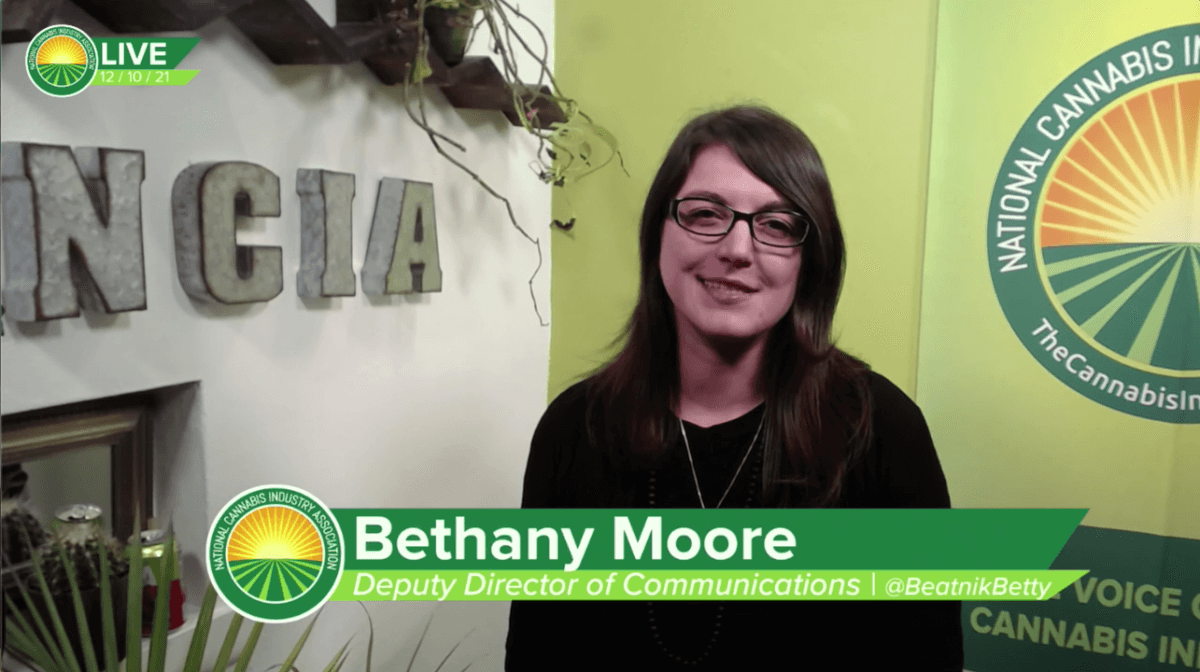
NCIA Deputy Director of Communications Bethany Moore checks in with what’s going on across the country with the National Cannabis Industry Association’s membership, board, allies, and staff. Join us every Friday here on Facebook for NCIA Today Live.
Member Blog: When Sustainability Comes to Compensation in Cannabis
by Fred Whittlesey, Founder, President, and Principal Consultant of Cannabis Compensation ConsultantsTM
Member of NCIA’s Human Resources Committee
At the NCIA Cannabis Business Summit & Expo next week, there is an all-day workshop on the topic of sustainability. As a member of the NCIA Sustainability Committee, representing the NCIA Human Resources Committee, I have been actively involved in putting this together. While this session will not directly address my specialty, employee compensation, there will be discussion of how broad the idea of sustainability is, and how it permeates every element and every decision in a business.
Not a day goes by that I don’t receive in my inbox one or more blogs, articles, or studies on introducing ESG metrics into executive compensation incentive plans. It’s all the rage. Consulting firms that published opinions only two years ago that this was “not a prevalent practice” and “not consistent with the current corporate governance environment” have been proven wrong.
I have been presenting on this topic, in the context of compensation, since 2014 – in London, Vancouver BC, Los Angeles, San Francisco, Silicon Valley, and Seattle among other places and virtual spaces.
As recently as 2019 we still couldn’t figure out what to call it. CSR, ESG, Triple Bottom Line, etc. These discussions inevitably include reference to Conscious Capitalism as well. I went to my first Conscious Capitalism conference, in San Francisco, in 2013. The key concept of Conscious Capitalism is consistent and balanced treatment of all stakeholders, not just shareholders. Employees, customers, suppliers, the environment, the community.
But the discussions today are primarily about adding ESG metrics to existing executive compensation structures. There’s a lot of greenwashing going on there.
Sustainability is not just about metrics, as essential as good metrics are for measuring progress. Building a sustainable organization is about more than carbon emissions, recycling, water conservation, and biodegradable packaging. Sustainability is a risk management strategy.
A prominent risk factor in every business is people. Not just regulatory enforcement of labor laws, or risk of litigation from discrimination, or wage and hour law violations. Building a sustainable organization is reducing the constant churn of employees, avoiding destructive labor cost-cutting to pacify shareholders while extracting the funds from other stakeholders, and considering social justice goals when deciding how to pay people.
At that first Conscious Compensation conference for me, I was astounded that employee compensation was not mentioned once. Well, one speaker had one bullet point on one slide that said “employee ownership” – that was it. I returned from the conference and trademarked the term Conscious Compensation® because you can’t practice conscious business without considering how you share value with your employees. From the trademark grew a conceptual model and then dozens of conference presentations, gradually sliding in the sustainability theme while avoiding the appearance of a “save the whales” label.
Now it’s the core of my approach to compensation advisory services. I may not call it that, but it’s in there.
It fits perfectly with the ethos of the cannabis industry. If I was a speaker at next week’s Sustainability workshop, I’d be talking about all of this. In the meantime, check out my other blog this week on the session, Cultivating Your Workforce where we will be discussing compensation.
Fred Whittlesey is the Founder, President, and Principal Consultant of Cannabis Compensation ConsultantsTM, a Compensation Venture Group SPC company.
Fred is a member of the NCIA Human Resources Committee and the NCIA Sustainability Committee.
Fred is recognized by corporations, professional organizations, universities, media, and colleagues around the world as a compensation expert and thought leader. His ideas have been presented in numerous book chapters, journal articles, media interviews, conference and seminar presentations, and hosted blog postings.
Fred’s thought leadership in the field of compensation is evidenced by his delivery of more than 300 conference presentations, seminars, certification courses, webinars and podcasts. He has presented and taught in 26 US States, 4 Canadian Provinces, UK, Ireland, France, Germany, Netherlands, Switzerland, Turkey, and Indonesia.
He has authored more than 50 peer-reviewed journal and magazine articles, book chapters, white papers, and sponsored papers. He has been a paid writer for PayScale.com, Salary.com, InvestorJunkie.com, and SeekingAlpha.
Fred has been interviewed and quoted more than 100 times by more than 35 different media sources including Associated Press, Bloomberg, Business Week, Fortune, New York Times, Los Angeles Times, Orange County Register, Seattle Times, San Jose Mercury News, and San Francisco Chronicle. He has been retained to conduct research to support investigative journalism for The Los Angeles Times and The Boston Globe.
Cannabis Compensation ConsultantsTM is a division of Compensation Venture Group SPC, a Washington Social Purpose Corporation. The company is a Green America Certified Business.
The firm specializes in compensation strategy, executive and director compensation, equity-based compensation, incentive design, and employee pay with a focus on sectors driven by innovation. We also provide expert witness and litigation support for civil litigation and regulatory matters. Our clients include Boards of Directors and executive teams of public and private companies, LLCs, S corporations, and foreign subsidiaries.
Our Canadian sibling consulting firm is Conscious Compensation Group Inc. in Squamish, BC.
Member Blog: Compensation in the Wild West of Cannabis
by Fred Whittlesey, Founder, President, and Principal Consultant of Cannabis Compensation Consultants
Member of NCIA’s Human Resources Committee
At the NCIA Cannabis Business Summit & Expo next week, there will be a panel session titled Cultivating Your Workforce. As a member of the NCIA Human Resources Committee, I have been actively involved in putting this together, and as a compensation expert, I wanted to ensure there is going to be, of course, a lot of discussion about compensation – executive compensation, incentive compensation, and employee ownership.
It’s appropriate that this month’s #CannaBizSummit is being held in San Francisco, arguably the historical culmination of Wild West culture, with the Gold Rush as its driver. Not unlike today’s cannabis industry – a gold rush of sorts, by federal definition a lawless community, and a community culture of moving fast and defining as we go.
As a compensation expert, I typically prefer a more orderly and well-defined world, which is why I am fascinated with working in the field of compensation in the cannabis industry. It’s challenging because I am in the business of answering clients’ questions about compensation. It’s not always easy to do in cannabis.
There are three factors that explain where we are today in understanding and analyzing compensation levels and practices in cannabis, and three driving forces that will take us from today’s Wild West to tomorrow’s still innovative, still creative, but a bit more business-like approach to compensating employees in cannabis companies.
Today
No valid compensation surveys or databases exist for the cannabis industry. There are various publications that self-label as “surveys” but are merely data compilations missing the rigor of survey methods that have been established over the past decades:
Little or no definitions of jobs
Extremely wide ranges that defeat usability
Reports of cash compensation only, some with base salary only
Very small sample sizes, often not disclosed
No list of participating companies
In short, they’re not compensation surveys. Established survey companies have not entered the cannabis market due to legal and/or stigma factors. They will, eventually. But they’ll be late to the party, so to speak.
For now, we have no real market data. Except for some executive positions…
For executive positions and equity compensation plan design details, data from public company securities filings continues to be the most valid and reliable source
Securities and Exchange Commission EDGAR filings (U.S.)
System for Electronic Document Analysis and Retrieval (SEDAR) (Canada)
Despite currency, cultural, and governance differences, combining U.S. and Canadian data makes sense given the integrated labor market for talent. But it’s no easy task.
Unlike for publicly-traded companies in the U.S., executive compensation information for cannabis companies is difficult to obtain and interpret for multiple reasons:
Most companies are listed on Canadian exchanges
The Canadian disclosure requirements are less rigorous, such as:
Lack of a single table for all forms of executive pay
No dollar value required to be calculated for equity compensation grants
Limited disclosure of the history of equity compensation grants
Companies whose shares are traded in the U.S. are not on major exchanges and not subject to the extensive disclosure requirements of NYSE and Nasdaq companies. This is changing – as exemplified by last week’s listing of the SPAC Canna-Global Acquisition Corp (NASDAQ:CNGLU) on Nasdaq, but SPAC listings have a reduced set of disclosure requirements. (full disclosure: I am an investor in CNGLU.)
Most companies are of a size and status (e.g., Emerging Growth Company) that also have reduced pay disclosure requirements.
So, despite what is a rich source of executive and equity compensation data which we have relied on for decades now, these databases are not (yet) of the same usefulness as for other industries.
And even if we didn’t have those tactical issues… the characteristics of the cannabis industry exacerbate these difficulties:
Smaller companies and private companies
High-growth stage, resulting in the lag time in reporting rendering the information significantly out-of-date
High concentration of founders and insider ownership, which results in compensation levels and practices that are not free-market based – one CEO taking zero compensation and another in the 8 figures.
Top-heavy C-level position structures, e.g., an Executive Chair and a CEO and a President and a COO – too many chiefs
So, the question of how much this company pays its top executives… is an unanswerable question. I wonder if even the company could answer that question?
Tomorrow
The turbulence in executive compensation levels and practices will lessen, and our knowledge and understanding will improve, when three trends converge:
More public companies, including SPAC deals, and continued M&A activity, bring in more outside investors with expectations of corporate governance and practices consistent with other industries in which they are invested. This also will have the effect of lessening the influence of founders as more “professional” (hired external) Board members are added to the governance structure.
With more public companies will come more market data, as we have for most industries today both in the U.S. and Canada. While limited to the top 3 or top 5 executives in each company, these disclosures provide a factual and verifiable dataset for the most senior positions, for the use of equity compensation for employees, and for the breadth of executive compensation arrangements such as new hire packages, severance and change in control agreements, and various perquisites.
And of course, legalization. With the U.S. federal restrictions and the associated stigma removed, cannabis companies will become subject to the same governance, institutional investor and proxy advisor pressures, and the large consulting firms will push them toward the ISS/Glass Lewis “playbook” approach to advising. I’m not saying that’s a good thing, because it’s not, but we already see it happening in Canada where large multinational compensation firms are overlaying the boiler-plate ABCs.
It is my hope that the innovation and creativity we see in the cannabis sector today will not suffer from these three dynamics. There’s nothing wrong with living in the Wild West, if you’re comfortable with fewer rules, fewer constraints, and less transparency. But it helps when there is a Sheriff and a couple of Deputies in town.
This conversation is not limited to executive compensation. Equity compensation for all employees is a common aspiration in cannabis companies. Equity compensation plans are always complex to design, implement, and administer and are exponentially more so in cannabis companies. Complex organization structures with public entities, private companies, LLCs, and even nonprofits all bring talent from diverse industries with vastly ranging experience with and expectations for equity compensation.
A trimmer coming from agriculture or a Dispensary Manager from specialty retail has likely not received equity as a component of their compensation in the past.
A chemist coming out of biopharma or a software developer, if told there is no equity compensation plan for all employees at your company will be, at the least, disappointed if they even continue interviewing with you.
Similarly, a candidate from the financial services world may be surprised that every employee is not participating in one or more cash incentive plans, not just the sales reps. There is a LOT of work to be done on compensation planning in the cannabis industry, and I’m thrilled to be right in the middle of it.
Fred Whittlesey is the Founder, President, and Principal Consultant of Cannabis Compensation ConsultantsTM, a Compensation Venture Group SPC company.
Fred is a member of the NCIA Human Resources Committee and the NCIA Sustainability Committee.
Fred is recognized by corporations, professional organizations, universities, media, and colleagues around the world as a compensation expert and thought leader. His ideas have been presented in numerous book chapters, journal articles, media interviews, conference and seminar presentations, and hosted blog postings.
Fred’s thought leadership in the field of compensation is evidenced by his delivery of more than 300 conference presentations, seminars, certification courses, webinars and podcasts. He has presented and taught in 26 US States, 4 Canadian Provinces, UK, Ireland, France, Germany, Netherlands, Switzerland, Turkey, and Indonesia.
He has authored more than 50 peer-reviewed journal and magazine articles, book chapters, white papers, and sponsored papers. He has been a paid writer for PayScale.com, Salary.com, InvestorJunkie.com, and SeekingAlpha.
Fred has been interviewed and quoted more than 100 times by more than 35 different media sources including Associated Press, Bloomberg, Business Week, Fortune, New York Times, Los Angeles Times, Orange County Register, Seattle Times, San Jose Mercury News, and San Francisco Chronicle. He has been retained to conduct research to support investigative journalism for The Los AngelesTimes and The Boston Globe.
Cannabis Compensation ConsultantsTM is a division of Compensation Venture Group SPC, a Washington Social Purpose Corporation. The company is a Green America Certified Business.
The firm specializes in compensation strategy, executive and director compensation, equity-based compensation, incentive design, and employee pay with a focus on sectors driven by innovation. We also provide expert witness and litigation support for civil litigation and regulatory matters. Our clients include Boards of Directors and executive teams of public and private companies, LLCs, S corporations, and foreign subsidiaries.
Our Canadian sibling consulting firm is Conscious Compensation Group Inc. in Squamish, BC.
Video: NCIA Today – September 10, 2021
NCIA Deputy Director of Communications Bethany Moore checks in with what’s going on across the country with the National Cannabis Industry Association’s membership, board, allies, and staff. Join us every Friday on Facebook for NCIA Today Live.
Committee Blog: Managing Your Workforce During Fall Harvest
It’s that time of year again, the busy fall harvest season. While indoor growers can harvest year-round, the fall can create significant workforce challenges, especially for outdoor producers and processors. Here are three tips to make sure you are ready to go for the fall harvest!
Plan ahead! If you have not already thought through your fall harvest plan, you will want to figure this out immediately. Most cannabis companies need additional workers during harvest season, unless their grow schedule is structured where they are harvesting on a regular basis, depending mostly – if not entirely – on their permanent employees for harvesting, de-leafing, trimming, etc. However, given the increased demand for workers by outdoor growers, even in a normal year, the demand for labor often exceeds the supply, placing added pressure on anyone competing for this talent.
Every fall we receive a rash of calls from producers, who failed to plan ahead, requesting workers that same week, if not the same day. Unfortunately, by this time, nearly all the available labor, especially those with experience and skill, have already been scheduled and committed elsewhere. In rare cases, staffing companies might be able to provide workers if they had another client in the area back out, at the last minute due to a heavily damaged crop or not being ready for harvest at the time they originally projected, however, cannabis growers shouldn’t count on this. A good rule of thumb is to provide at least 2-3 weeks’ notice, minimum, to request your harvest crews during the fall, and the further in advance the better. Many cannabis companies that have struggled in the past with worker shortages during the fall have started locking in their fall staffing as early as spring.
COVID-19 has created an even more significant labor shortage. Before 2020, we saw thousands of workers coming into the United States from other countries to take their ‘vacations’ working on unregulated market farms doing harvest work and trimming and getting paid cash. Due to COVID-19 travel restrictions keeping much of this seasonal labor out of the U.S., the regulated and unregulated market were increasingly forced to compete for the same domestic talent with the unregulated market often winning this battle as they were paying tax-free cash at higher wages, given their relatively lower costs compared to the regulated market. Thus, many cannabis companies ran into situations last year where, unless they were able to pay premium rates for harvest workers, their in-house staff were forced to work a ton of overtime to make up for the shortfall. We hope that in 2021 this won’t be the case, however with COVID-19 numbers rising again, this is something that cannabis companies should plan and budget for just in case.
If your cannabis operations are relatively remote or not within an easily commutable distance from a large population center, you may need to go the extra mile to make it easier for workers and staffing companies to assist you. If nothing else it is essential to take an inventory of nearby resources and be prepared to communicate them easily. For example, if you can’t provide lodging to your seasonal workers, you will want to create a list of local hotels/motels, RV Parks, and campgrounds that offer services. Many of these workers are accustomed to traveling from site to site in RV’s, camping, etc. Create a list of grocery stores, gas stations, and other retail establishments the crews may need to access. If there aren’t any lodging options close to your farm, and you have the means, you might want to consider buying some land nearby and building some basic lodging. We have even seen some cannabis companies open a cafe or restaurant close to their farm when there weren’t any good or healthy options in the area so that workers would have a place to go on their lunch breaks or after work. The more of a positive experience you can provide to these workers, even though they are seasonal, the better. Production will typically be quicker, you may gain a customer and even an ambassador for your product, and that worker may be excited to return for years to come, which will keep you from having to deal with some of the labor shortage issues other producers struggle with.
Have a contingency plan. Many of you already know this, but you should always have a plan B and plan C, maybe even a plan D. 2020 and 21 have definitely been years of fires, hot temperatures, and floods. If air quality is deemed especially poor in your area, due to smoke, many harvest workers won’t be able to work outdoors as worker’s compensation policies won’t cover workers laboring in such conditions and few people will want to. We’ve also noticed an uptick in state governments coming out with restrictions and safety guidelines during times of poor air quality or extreme heat. If you’re in an area that has a fire season, you’ll want to have a plan for workers during this time. Perhaps you will need to have them work indoors when the air quality is poor, focusing on things like bucking, trimming, and packaging; then back outside to continue the harvest when conditions allow.
Given the increase in COVID-19 cases, you’ll definitely want to have SOPs and contingency plans in place in the event your crew is exposed to COVID-19. To be proactive, you should also take precautions to protect workers from exposure before it occurs including having masks and hand sanitizer supplies on hand in abundance. Contingency plans could include having a partnership with a staffing firm to provide workers for your fall harvest or offering overtime and bonus incentives for your regular workers to pick up the slack, if necessary. If you’re working with a staffing company, most crews of harvest workers will have a team lead who is there to assist with any HR-related issues that might come up (i.e., sick workers, injury, etc.). However, if for some reason there is not a team lead assigned for your crew, you’ll want to make sure that the workers have a point of contact at your company for any HR-related issues that come up.
Last but not least, if you’re looking for great, experienced harvest talent, especially when it comes to trimming, you will need to budget for the kind of talent you want. With the most talented crews, you’ll likely need to pay some form of a retainer upfront as many of them have trimmed more seasons than adult-use has been around and have not always been paid for their work. Last year, we typically saw trimmers making $15-$25/hour. This was before bonuses. Companies who want to incentivize things like speed and quality increasingly offer bonuses for the quantity and quality of output. This has resulted in the best workers making nearly $50/hour!
The Godmother of Cannabis Industry Recruiting, Kara Bradford, MBA, MM, is Co-Founder & CEO of Viridian Staffing. Founded in 2013 as the first professional, full-service staffing, recruiting & HR consulting firm in the Cannabis industry, Viridian Staffing has led the way in providing temporary, temp to hire, direct placement & HR outsourcing services. Kara has been an HR professional, specializing in Talent Acquisition, Talent Management, Workforce Planning, Employer Branding, Compliance, Federal/State Employment Laws, and Organizational Design for over 15 years. Her career has spanned multiple Fortune 100 companies & start-ups in a wide variety of industries. More importantly, she has more experience recruiting in the cannabis industry than any other Recruiter globally. Kara has an MBA in Human Resources & Organizational Behavior and is LinkedIn Recruiter Certified. Kara is active in many organizations, including NCIA, The Cannabis Alliance, Women of Weed, etc., and was the Founding Chair of the NCIA’s Human Resources Committee.
Video: NCIA Today – July 30, 2021
NCIA Deputy Director of Communications Bethany Moore checks in with what’s going on across the country with the National Cannabis Industry Association’s membership, board, allies, and staff. Join us every Friday here on Facebook for NCIA Today Live.
Committee Blog: The Cure-All for Impostor Syndrome = Mentors
by Kimley Svendsen, Drive Talent on behalf of the Human Resources Committee
My dream as a child was to become a fashion designer. But there were many voices telling me this was not realistic, if I wanted to drive a nice car and live in a nice house. Step in line! While some people are able to ignore these messages and walk to the beat of their own drum come what may, I wanted to please those around me and continue the family tradition of academic achievement. The eventual result was being admitted to one of my dream schools as a graduate student.
Enter the Impostor Syndrome. According to the Oxford Dictionary, this is “the persistent inability to believe that one’s success is deserved or has been legitimately achieved as a result of one’s own efforts or skills.” I believe Impostor Syndrome can result from following someone else’s path versus your own, and/or achieving a position in life you believe you don’t deserve. By my mid-20’s, I had achieved an Olympic level of comparing myself to others, and feeling as if I were “playing the part” of a graduate student. I had the sneaking suspicion that an administrator in tweed would show up in class and say a mistake had been made (this didn’t happen by the way).
Re-enter Impostor Syndrome after 20+ years of twists and turns which bring me to today as the Founder of Drive Talent, a cannabis recruitment services business, for the past 5+ years. The tweed-clad administrator has been replaced with my peers and those I admire within cannabis. I don’t want to let them down, let my team down, or let myself down. Most days I can fight off the doubts that pop up, but the whisper is still there – “you don’t deserve this, someone else is faster/smarter/better than you, and you should hang it up my friend.”
Running a business is hard. Running a business within cannabis is REALLY hard! I imagine many of you out there entered the cannabis ecosystem for a variety of reasons – you worked within the space pre-state legalization, personally witnessed the plant’s benefits, desired an influence on unjust laws, wanted to be a part of a trailblazing industry, and/or saw the opportunity to profit. Most of these are true for me, albeit not quite the dream of designing for the runway. Still worth it!
Whether you are a founder, member of senior leadership or at the beginning of your career within cannabis, my best piece of advice to combat the Impostor Syndrome is to GET A MENTOR! Mentor #1 for me was my Grandfather who advocated for women to have access to the highest degree of education. Mentor #2 was a fellow graduate student who gave me rides to and from school in her beat-up Saab, and challenged me to have a creative vision for myself. Mentor #3 is my mentor today who encourages me to dream big. I have learned from him that I am not having a unique experience with Impostor Syndrome, I am not alone as a business owner, and my work can align with my dream of positively influencing the cannabis ecosystem. This is like medicine and reinforces my confidence and belief in myself on a daily basis.
There are formal and informal mentors, and those whose words of encouragement have stuck. Who are these people for you, and in what way have you served this role for someone else? Make this a priority and don’t be afraid to ask. The Mentor/Mentee relationship is beneficial for both parties, and can serve as a conduit to identify/reinforce your passion, capability, and confident following of your dreams.
Kimley Svendsen is the founder and CEO ofDrive Talent, a leading recruiting company that connects their clients with diverse talent within cannabis and other industries, and is a member of NCIA’s Human Resources Committee.
Committee Blog: Four Elements of Compensation Strategy in High-Growth (Cannabis) Companies
by Fred Whittlesey, Founder and President, Cannabis Compensation Consultants Member, NCIA Human Resources Committee
with assistance from
Kara Bradford, Co-Founder & CEO, Viridian Staffing Chair Emeritus, NCIA Human Resources Committee
All high growth companies face the same challenge: Hiring high-quality people at a feverish pace, while dealing with all of the issues that come with that including recruiting, onboarding, training, and of course, compensation.
The cannabis sector (more than just an “industry”) has another layer of challenges rarely seen when finding and hiring the employees needed for the explosive growth underway:
Diverse segments (to use a financial reporting term) often under a common entity, or
Multiple entities housing those distinct businesses, and
Diverse occupational categories either within a common entity or spread across multiple entities.
The cannabis product lifecycle, like any consumable product, spans agriculture, processing, packaging, branding, distribution, and direct sales. A fully vertically-integrated company might employ, within a single corporate entity, agricultural workers, lab workers and extraction specialists, manufacturing workers, distribution teams, and dispensary employees. That is a challenging environment for compensation plan design.
For example, agricultural workers, including agricultural managers, virtually never receive equity compensation as an element of their pay package. Biochemists, particularly when coming from a biopharma company, expect significant equity compensation. Retail dispensary managers, no equity. VP of sales, equity.
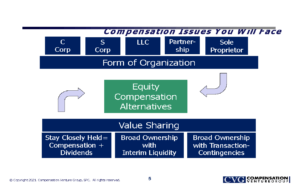
Now, imagine those jobs and people are spread across multiple entities. Maybe the overall corporate structure is a C Corp over some LLCs. Or, like in Arizona, a nonprofit corporation with a Management Services Agreement with a C Corp which directs money through an LLC.
Or in British Columbia which, like the U.S., prohibits alcohol and cannabis sales in the same stores or from the same company, but has owners that operate in both businesses. And the stores are next door to each other. Budtender vs. sommelier? Employees talk.
But perhaps the most compelling reason to consider a broad spectrum of compensation alternatives is unique to cannabis: The non-deductibility of compensation expenses that cannot be characterized as cost of goods sold — Tax Code Section 280E. More than in any other industry, using forms of compensation that avoid incurring a nondeductible compensation expense can have a direct and immediate impact on business financial performance.
Compensation Strategy
Complex cannabis companies have to mold their pay programs to fit this broad array of entities, lines of business, and types of jobs, under an unfavorable tax environment.
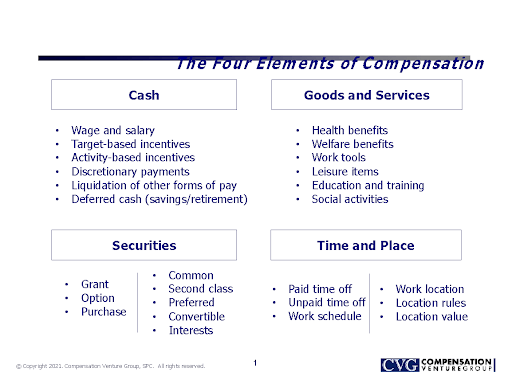
There are four, and really only four, types of compensation for employees (and independent contractors, and members of the Board of Directors, and consultants). Each of the four has many forms, but there are four types of things a company can do to pay — and hopefully continue to pay — an employee. This is a useful framework for thinking about compensation.
Cash
Wage, salary, performance incentives or bonuses, commission, 401(k) contribution (yes, a cannabis company can have a 401(k)), profit sharing, retention bonuses. Every employee will receive one or more of these forms cash payments. All require cash changing hands from the company to or on behalf of the employee.
The most common cash compensation arrangement is a base salary plus bonus as a percentage of salary that is typically dependent upon the performance of the individual, team, and/or company. Many companies have a 10% of base salary target. In the cases of budtenders and delivery drivers, tips (essentially a customer-paid commission) are common as compensation as well. Companies in some locations, such as California, continue to pay trimmers at piece rates (pay by unit production).
Goods and Services
I casually call this category “stuff” — a company gives people stuff as part of their compensation. Healthcare coverage, life insurance, job training, a laptop and a phone in the traditional model. But this category includes much more than traditional “employee benefits” — from free food to use of the company vacation home to sabbaticals, these meet employees’ needs while keeping them focused on, and sometimes physically at, work. Sometimes this free stuff is not taxable income to the employee (healthcare coverage, free food at work) and sometimes it is taxable (free gym membership). Be informed in your creativity here. Local regulations in many jurisdictions are dictating benefits coverage above the federally-mandated level.
Securities
This is by far the most complex form of compensation, and more so for cannabis companies. Whether it’s stock options, restricted stock, restricted stock units, or member interests (in an LLC) — the question is which entity is granting the compensation, and whether they are allowed to grant it to an employee in a different entity. We are beginning to see companies that compensate employees with cryptocurrency which is viewed as a “security” by both the IRS and SEC. Given the increasing social justice emphasis in the cannabis sector, equity compensation is the form of pay that truly levels the playing field across all income levels.
The choice of equity compensation will be driven by the form of organization and ownership philosophy.
Time and Place
Before COVID-19, companies in all industries were increasingly emphasizing this form of compensation. In the 1980’s, there was no “casual dress” and “working from home” was unheard of. An employee reported to the workplace at the assigned time, and there was no “flextime.” Over the past few years, companies were already experimenting with paid parental leave, unlimited vacation time, and employee-choice work location. Now, for many companies and many jobs, WFH is the model. Not for growers and not for budtenders (yet). But time and place can be highly valuable cash-free (sort of) equity-free forms of compensation.
And then…
Hiring is only half the battle. Retention of employees in the cannabis sector is as challenging as hiring. Companies need to be creative with the same four tools to retain employees. But you can’t wait until they give notice of resignation, because then it’s too late.
Your employee retention compensation program starts at the employee’s date of hire, because it is the same program.



 by Fred Whittlesey, Founder, President, and Principal Consultant of


 By Kara Bradford,
  The Godmother of Cannabis Industry Recruiting, Kara Bradford, MBA, MM, is Co-Founder & CEO of

 Kimley Svendsen is the founder and CEO of