Let’s ensure your marketing strategies are not only effective but also compliant with the ever-evolving legal landscape. For an even deeper dive into these topics, join us for our upcoming #IndustryEssentials webinar, where industry experts will provide actionable insights to help you thrive in this complex regulatory landscape.
The NCIA’s Marketing & Advertising Committee stresses the importance of avoiding unfair, abusive, and deceptive practices (UDAAP) in your marketing materials. UDAAP laws prohibit misrepresentations about product quality, and availability, failing to include appropriate warnings, and more.
However, what constitutes “deceptive” can be subjective, varying by state. With state attorneys general empowered to bring lawsuits against violators, staying informed about state-specific regulations is crucial. Additionally, federal implications under the FTC, FDA, and CFPB underscore the need for compliance.
Backing Health Claims with Science
Product substantiation and health claims are under scrutiny, especially in the CBD arena. While no single federal entity has jurisdiction over the nebulous area of “product substantiation,” the FDA and FTC have issued warning letters and fines related to companies making unsubstantiated health and wellness claims involving cannabis and hemp-derived products.
The FDA requires reliable and competent scientific evidence to support claims. Such claims can be difficult to validate in the cannabis industry, where federal prohibition has hampered research.
What about CBD? Although the 2018 Farm Bill opened the doors to more CBD research, the FDA concluded in 2023 that the existing regulatory framework for foods and supplements was not appropriate for CBD, and that it would work with Congress to determine how to properly substantiate claims for CBD products.
Amidst this uncertainty, it’s essential to prioritize reliable evidence to support your product claims.
Understanding Social Media Advertising Policies
Social media can be a potent tool for cannabis marketing, but it comes with challenges. Major platforms impose strict terms of use, often banning cannabis-related content including any imagery, sale, and even discussion about cannabis. It is important to familiarize yourself with each platform’s terms of use.
Despite these hurdles, compliant advertising strategies can leverage platforms such as X (formerly Twitter) and Pinterest, which at the time of this article’s publication offer more lenient policies. For example, on X, advertisers must be preapproved but can promote brands and include informational content for THC and CBD with some targeting restrictions.
The sale of cannabis products on social media is always prohibited.
Businesses must also navigate the FTC’s regulations on influencer endorsements to avoid misrepresentation as they may be held liable for third-party statements about their products. Endorsers should always disclose any relationship they have with a product they are recommending or reviewing.
Environmental Claims in Cannabis Advertising
As environmental consciousness rises, so do consumers’ expectations. Marketers must substantiate claims of being “environmentally friendly” or “organic” to avoid UDAAP violations. Businesses should consider how consumers are likely to interpret particular claims and avoid using vague terms such as “eco-friendly” or “sustainable,” which may be misleading.
Aligning with state and federal regulations regarding pesticide use and environmental claims is essential to maintain consumer trust. The FTC’s Green Guides sets the tone for environmental claims in cannabis.
Trademarks, Packaging & Branding Guidelines
Understanding trademark protections post-2018 Farm Bill is vital for brand protection.
Following the passage of the Bill, the United States Patent Office (USPTO) has allowed registration of marks for hemp and hemp-derived products containing <.3% or less THC. Federally registered marks offer broader protection, state, and common law protections may apply to legally classified marijuana products with >.3% THC. Cannabis-adjacent products such as t-shirts and caps are also registerable.
Cannabis operators should avoid branding or packaging that may be appealing to children.
Most states containing cannabis regimes prohibit such packaging and deem it an unfair trade practice.
Texting and Calling Compliance
Cannabis companies making calls or sending text messages to consumers should be aware of the Telephone Consumer Protection Act (TCPA) and relevant do-not-call (DNC) laws. Non-compliance can lead to hefty fines and legal repercussions.
The TCPA requires certain levels of consent before cannabis businesses or authorized telemarketers may make prerecorded or auto-dialed calls to consumers. Federal TCPA and DNC laws apply regardless of whether a cannabis business is making calls/texts itself or has hired a telemarketer or affiliate to place calls/texts.
“TCPA lawsuits premised on unlawful calling and texting practices are often bet-the company scenarios. Businesses may face class actions and millions in fines if their calling and texting practices are not TCPA compliant,” Helen Mac Murray, Partner | Mac Murray & Shuster LLP
With consumer protection laws evolving and states beginning to enact their own more rigorous “mini-TCPA” bills, staying updated and ensuring compliance with legal requirements are essential to mitigate risks. TPA lawsuits are difficult to defeat early in litigation and can lead to burdensome and invasive discovery.
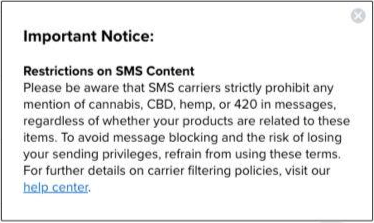
In addition to TCPA and DNC laws, short message service (SMS) providers may not allow the promotion of hemp or cannabis via text message.
A notice from email service provider Klaviyo. Captured by Maria Calabrese, Founder Green Bee Life, NCIA member.
Protect Your Marketing Strategy with Compliance
Compliance isn’t just about following rules; it’s about building trust and integrity in your brand. It is the cornerstone of successful cannabis marketing. By prioritizing transparency, evidence-based claims, and ethical practices, you can navigate the complex world of cannabis marketing with confidence. Let’s work together to create a responsible and sustainable future for cannabis marketing.
Mastering Cannabis marketing Compliance: Insights & Strategies from Industry Experts
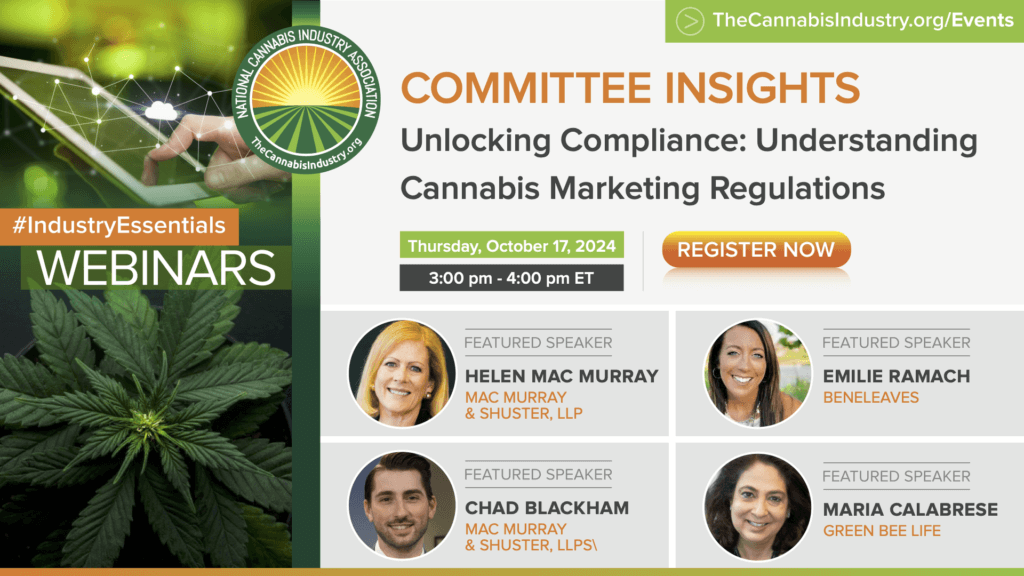
As the cannabis industry continues to evolve, staying ahead of the curve with compliant marketing practices is more important than ever. To ensure you’re equipped with the knowledge to navigate this complex landscape, don’t miss our upcoming #IndustryEssentials webinar, Committee Insights: Unlocking Compliance: Understanding Cannabis Marketing Regulations, where industry experts will dive deeper into these key compliance guidelines.
Gain invaluable insights on how to protect your brand, foster consumer trust, and grow your business while staying within legal boundaries. Register now and join us to empower your marketing strategies with the tools needed for success!
Committee Blog: Discovering the Potency of Data – How Cannabis Brands Can Harness Audience Insights to Elevate Success
In the rapidly evolving landscape of the cannabis industry, understanding your audience is critical to staying ahead of the curve. For brands, this can be difficult given retailers hold the keys to their customer data. However, through the utilization of digital marketing, cannabis brands have the opportunity to glean invaluable insights from their audience data. In this comprehensive breakdown, we’ll explore how cannabis brands can leverage audience data from programmatic advertising, email campaigns, SEO and more to gain a deeper understanding of their customers and enhance their overall success.
The Power of Data in the Cannabis Industry
Data is the cornerstone of informed decision-making, and in the cannabis industry, with its regulatory restrictions and shifting consumer preferences, its importance cannot be overstated. By harnessing audience data from digital marketing campaigns, cannabis brands can move beyond conjecture and gain actionable insights into their customers’ behaviors, preferences, and needs.
Analyzing Audience Demographics
One of the primary benefits of digital marketing is the ability to gather detailed demographic information about your audience. Through tools like Google Analytics, social media insights, campaign reports, and customer relationship management (CRM) platforms, cannabis brands can paint a vivid picture of their customer base. From age and gender to location and interests, this demographic data provides invaluable insights into who your customers are and how best to engage with them.
Understanding Consumer Behavior
Beyond demographic data, digital marketing campaigns offer a window into consumer behavior. By tracking website traffic, engagement metrics, and conversion rates, cannabis brands can gain a deeper understanding of how customers interact with their brand online. This insight allows brands to identify trends, uncover pain points, and optimize their digital presence to better meet the needs of their audience.
Personalizing the Customer Experience
One of the most powerful applications of audience data is in personalizing the customer experience. By segmenting their audience based on demographic information, cannabis brands can tailor their messaging and offerings to resonate with individual customers. Whether through targeted email campaigns, customized product recommendations, or educational content, this level of personalization not only enhances the customer experience but also drives engagement and loyalty.
Optimizing Marketing Strategies
Audience data also serves as a compass for guiding marketing strategies in the cannabis industry. By analyzing the performance of various marketing channels, content types, and messaging approaches, brands can identify what resonates most with their audience and allocate resources accordingly. Whether it’s investing more heavily in content creation, refining digital advertising tactics, or experimenting with email campaigns, data-driven insights enable brands to optimize their marketing efforts for maximum impact.
Predicting Trends and Forecasting Demand
In addition to informing day-to-day marketing decisions, audience data can also provide valuable insights into larger industry trends and consumer preferences. By analyzing macro-level data trends across their customer base, cannabis brands can identify emerging market opportunities, anticipate shifts in demand, and stay ahead of the curve. Whether it’s launching new product lines, expanding into new geographic areas, or pivoting to meet evolving consumer needs, data-driven forecasting empowers brands to make informed strategic decisions.
Enhancing Product Development
Finally, audience data can play a pivotal role in shaping product development strategies within the cannabis industry. By soliciting feedback from customers through surveys, reviews, and social media interactions, brands can gain valuable insights into product satisfaction, preferences, and needs. This feedback loop not only informs the development of new products but also enables brands to refine existing offerings based on real-time customer input, ensuring that their products remain relevant and competitive in a rapidly evolving market.
Conclusion
In conclusion, audience data is a potent asset for cannabis brands seeking to unlock the full potential of their marketing efforts. By analyzing demographic information, understanding consumer behavior, personalizing the customer experience, optimizing marketing strategies, predicting trends, and enhancing product development, brands can gain a deeper understanding of their customers and elevate their overall success in the cannabis industry. As digital marketing opportunities continue to evolve, brands that harness the power of data will undoubtedly emerge as leaders in this dynamic and rapidly growing market.
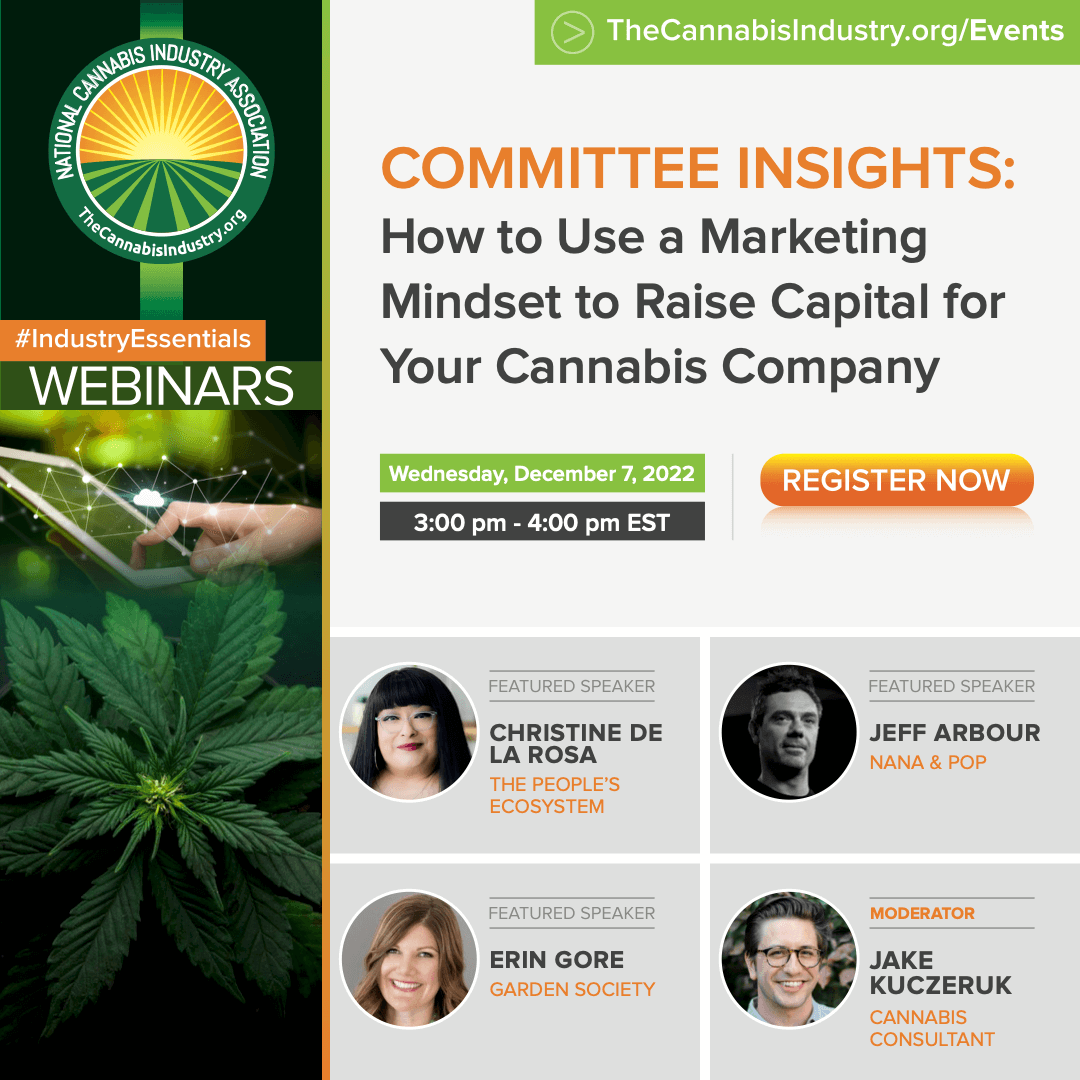
Committee Insights | 12.7.22 | How To Use A Marketing Mindset To Raise Capital For Your Cannabis Company
NCIA’s #IndustryEssentials webinar series is our premier digital educational series featuring a variety of interactive programs allowing us to provide you timely, engaging and essential education when you need it most.
In this edition of our NCIA Committee Insights series, originally aired on December 7 and produced by NCIA’s Marketing & Advertising Committee, our panel of cannabis finance specialists, leading operators and capital raising experts will guide you through best marketing practices and considerations to deploy when fundraising in the cannabis industry from a marketing perspective.
Learn tips and tricks and do’s and don’ts from marketing pro’s and industry insiders to best position your company to get the attention of investors in the current market conditions just as you’ve done when targeting consumers.
Member Blog: 7 Practical Marketing Tips for Navigating Unchartered Waters
Now is the time to maximize brand value on things that don’t cost extra.
By Tara Coomans, CEO of Avaans Media
Member of NCIA’s Marketing and Advertising Committee
You may look at these 6 cannabis PR ideas and wonder what they have to do with PR, but your reputation is holistic and dynamic, and these PR tips add up to big value.
2022 has been a mixed bag for the cannabis industry. If you are feeling the pinch then you’re probably looking for ways to increase revenue without incurring considerable extra costs.
Corrections are quite literally a matter of time – it’s just part of capitalism. But with every correction comes a recovery and THAT’S what you should be planning for right now. It might seem difficult to plan for that day, but now is the time – especially since your competitors are probably cutting marketing budgets, if you maintain yours and mix in these ideas, you’ll be exceptionally well positioned for the happier days ahead.
Here’s some good news, see how the experts are bullish.
MJ Biz projects the cannabis industry’s impact will still be near $100 billion by 2022, and nearly $158 billion by 2026.
According to Viridian Capital Advisors, a financial and strategic advisory firm for the cannabis market, investors are encouraged to invest in cannabis stocks now, because they forecast a 2023 & 2024 with a 25% increase in revenues for the cannabis sector, with flat margins. More good news U.S. cannabis stocks with trade at EV/EBITDA multiples of 5.7x (a 60% increase over 2022) for 2023 and 4.6x (a 50% increase over 2022)for 2024.
If you’re a smaller brand, keep at it, Viridian says MSOs will continue to lose share to small operators in 2022.
According to Gallup, the percentage of U.S. adults who say they have tried marijuana is sitting at 49%, the highest measurement to date.
These projections show some pretty impressive growth – so don’t act too rashly yet. But, you should absolutely consider adding these tips to your planning so you can excel during this time and maximize brand value. Frankly, you should do these things in the best of times too, because they’re fruitful and evergreen ideas.
Double Down On Relationships
“People will forget what you said, people will forget what you did, but people will never forget how you made them feel.” -Maya Angelou
Join and Participate in Active Industry Associations
Right now, we need to commit to the industry associations that are actively working to improve and defend our industry on the local level and the national level. When you join, ask how you can more actively support the organization. By supporting the organization, you’ll not only strengthen its mission, but you’ll also be able to get to know the people better too. Double down with your time and you’ll find the returns are immeasurable. Take full advantage of the membership benefits, if there are ways to share your point of view, maximize those. As the industry consolidates, people are looking to do work with people they trust and the best way to encourage trust is to be present, take part, show your commitment to the organization, the mission, and the people who are contributing to the industry. At Avaans Media, we’re big fans of the way National Cannabis Industry Association (NCIA) treats its members.
Treat Your Clients & Vendors Like Gold
When was the last time your CEO attempted to make budtenders feel special? Now is a great time. Budtenders, like it or not, are the face of your brand to the consumer and trust me, they feel stressed about the cannabis industry’s challenges too. Why not do something no one else will do for the front line during when things get rough: treat them with respect. Small efforts can go a long, long way right now. I’m not talking about training, I’m talking about thinking of ways to thank budtenders right now, genuinely show your appreciation. It could be as simple as a surprise visit to every dispensary with gift cards. Sure you can go bold and that’s fantastic too, but if you can’t be bold, that’s not an excuse to do nothing. Everyone else will do nothing, do more and get more.
While we’re at it, let’s talk vendors. Sure, go ahead, negotiate good terms – AND uphold your end of the bargain. No one will forget that you drove a hard bargain, but that’s business. But go the extra mile and hold up your end of the deal as if your life was on the line because, from a brand perspective, it is. The last thing you want right now is lackluster partners or partners who don’t really love you, what you want right now is passion, the vendors who are going the extra mile for you-but to do that, you need to treat them well too. Any partner who will go through the craziness of a correction while looking out for you is worth their weight in gold, treat them that way. Pay on time, acknowledge their efforts, and the importance of the relationship. Put a little free-but-important muscle into it and watch how that pays dividends.
When It’s Time to Say Goodbye
If you have to separate from employees or partners, do it with class. Be communicative and as fair as you can possibly be. Anything you do when severing a relationship, especially when it’s abrupt, will be especially remembered. So take a hard look at what your brand is worth and treat goodbyes with respect and dignity. If you’re letting employees go, be sensitive to timing. If you’re canceling a contract, have a real discussion with your partner about how to do it fairly. It’s easy to feel shame about these conversations, but don’t hide from them. Yes, these conversations are the worst kind to have, but during the tough times, it’s what you do more than what you say that people will remember.
Celebrate Your Most Passionate Customers
Customers are the obvious driver of revenue. Now is a great time to make being your customers more fun. Think about what’s REALLY important to your customers. What drives their motivations? Reward cost-conscious customers with small incentives like purchase cards that can be turned in for promotional products. If your customers are creative, how can you encourage them to spend their creative energies on their brand commitment? It could be making the inside of your packaging a game, it could be encouraging them to share your brand through social media. And by the way, track your most passionate brand advocates on social media and never forget to celebrate them and acknowledge them. No cannabis brand is too big to thank its customers right now.
Don’t Stop, Won’t Stop
“When they go low, we go high,” -Michelle Obama
Emphasize Your Strengths – More
You might not have had the time last year to really see where your best success stories were, but now is the time to look – and celebrate – what worked by actually increasing the heat of what’s doing well. Invest in things that are working well. Increase ROI of the things that are already returning value by committing to them at a whole new level. If your brand is great at social media, keep at it and make it better. Issue a special version of your most popular product line. Really taking a stand and focus on something you do well will make you stand out from the pack and return more ROI as your competitors struggle to figure out how to manage the dynamics of this marketplace.
Maintain Quality
Consumers know, especially your most passionate consumers, they can tell when you’ve made substitutions and formulation changes. As tempting as it may be to cut corners on the product right now, don’t. Keep your customers happy by maintaining quality while your competitors decrease theirs. Keeping the quality up doesn’t cost extra, but decreasing quality will cost you in the short and long run.
Keep Your Chin Up and Your Numbers Up Too
Incentivize your sales, marketing and PR teams & vendors with trackable KPIs and hold them accountable. Self-serving as this sounds, if you devest cannabis PR, marketing and sales now, you’ll struggle to regain market share when the market starts its inevitable upward tick. Resist the urge to reduce these expenses because the hidden costs are ginormous and tend to extrapolate themselves in silent but deadly ways over years, not months. I’ve seen this happen over and over again, eliminating these roles, or worse, hiring someone for cheaper, costs companies more. Instead, attend sales, marketing, and PR meetings and show that you’re in touch with the marketplace and work collectively to address issues early. Make sure you’re keeping a close eye on benchmarks and competitors so you have a real idea of how you’re faring in comparison.
In Short
Kindness, professionalism, and time don’t cost extra, but they can be the difference-maker. Now is a great time to really make your brand stronger. Now is a good time to focus on the solutions that will bring you the most value and even increase trust so you can maximize your opportunities during a rebound.
Tara Coomans, is CEO ofAvaans Media, a digitally forward PR agency that specializes in emerging industries, from startup through IPO, includingcannabis PR, since 2015. Services include bespoke PR for ambitious cannabis companies as well as PR Sprints exclusively for consumer brands and products. Avaans Media is based in Los Angeles, with distributed team members around the country including Washington D.C., New York, Oregon, Illinois, and Colorado. Coomans is on NCIA’s Marketing & Advertising (MAC) committee and leads the MAC Experts Directory subcommittee for 2021. Coomans is a frequent writer and speaker on public relations, marketing, and social media topics.
Video: NCIA Today – Thursday, July 14, 2022
NCIA Director of Communications Bethany Moore checks in with what’s going on across the country with the National Cannabis Industry Association’s membership, board, allies, and staff. Join us every other Thursday on Facebook for NCIA Today Live.
Video: NCIA Today – Thursday, June 30, 2022
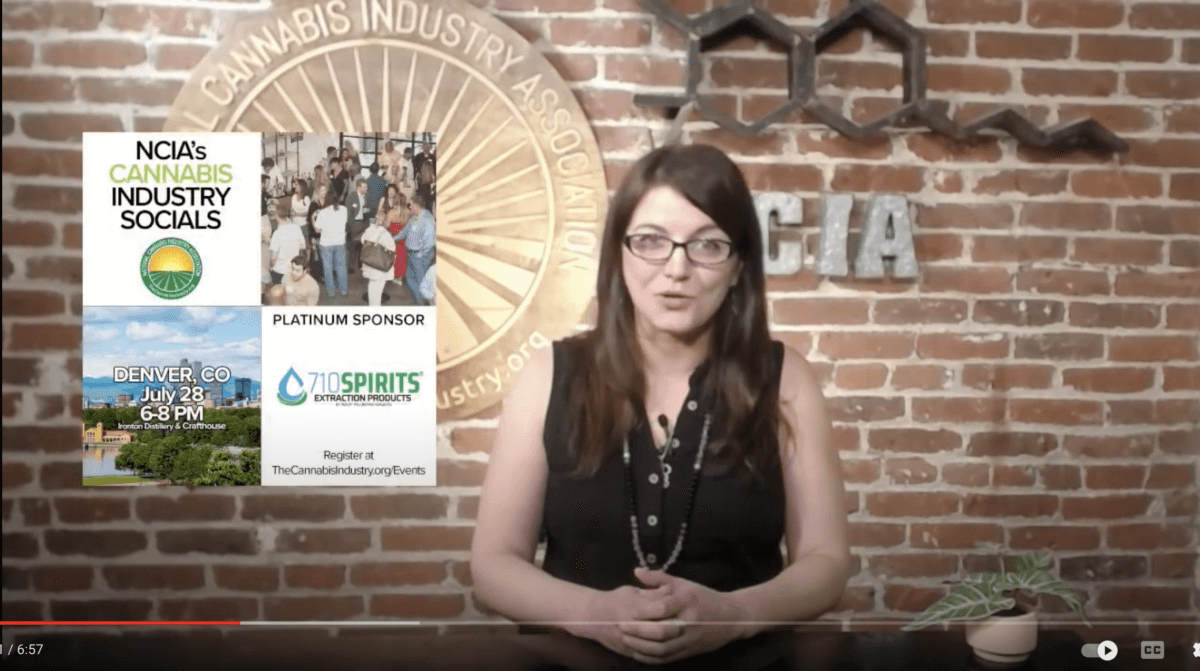
NCIA Director of Communications Bethany Moore checks in with what’s going on across the country with the National Cannabis Industry Association’s membership, board, allies, and staff. Join us every other Thursday on Facebook for NCIA Today Live.
Video: NCIA Today – Thursday, June 16, 2022
NCIA Director of Communications Bethany Moore checks in with what’s going on across the country with the National Cannabis Industry Association’s membership, board, allies, and staff. Join us every other Thursday on Facebook for NCIA Today Live.
Committee Blog: Do’s and Don’ts of Cannabis Influencer Marketing on Social Media
By NCIA’s Marketing and Advertising Committee, Helen Mac Murray, Mac Murray & Shuster LLP, and Dan Serard, Cannabis Creative Group
The requirements and restrictions surrounding paid advertising on social media are hardly a secret. Cannabis businesses have to tread carefully to avoid getting shut down or banned completely from online platforms.
However, there is one popular way to leverage the power of social media without risking your account: Influencer Marketing.
An influencer is any public figure, celebrity, creator, or individual that has the power to affect the purchasing decisions of others because of their authority, knowledge, position, or relationship with the audience. Influencers are typically content creators that actively engage in a select niche online, such as Lifestyle, Fashion, and even Cannabis.
Influencer marketing is a fantastic way for cannabis brands and dispensaries to leverage the power of social media without getting tangled up in the mess of rules and regulations. However, that doesn’t mean there are no rules and regulations for influencer marketing.
Here are some do’s and don’ts of cannabis influencer marketing on social media:
DO select your influencer partners carefully.
Marketers and business owners can be quick to forget that influencers are not just marketing tools, but rather, people as well. In that regard, influencers are their own brand. Their entire digital presence is curated carefully to align with their unique values and interests.
This means that when cannabis brands are interested in working with influencers, they have to be extremely careful who they choose. Not only does their character reflect on your brand, but also because it’s going to cost you a pretty penny.
Therefore, focus on building meaningful relationships with influencers and popular creators. Add value to their community and don’t view them as a tool in the toolkit. When you manage these relationships the right way, you turn one-time influencers into long-time brand ambassadors.
If you are partnering with someone who will be making claims about your brand or promoting your product in any way, be sure to:
Examine their credentials
Make sure they actually use and love your product
Evaluate whether their values align with your brand’s values
Check that their engaged audience is your target audience
One of the biggest benefits of influencer marketing across industries is that it is a relatable way to sell products. If your influencer partners or brand ambassadors do not actually use and love your product, the partnership will lose its value. Both your brand and the influencer will lose credibility.
When selecting influencers to partner with on campaigns, take time to do your research. Observe their regular social media activity as a follower, be patient during the agreement phase, and understand that this is a long-term partnership.
DON’T run or re-run any paid influencer ads without consent.
After the Borat debacle in Massachusetts, cannabis brands have (rightfully) become paranoid about using influencers or celebrities in their marketing campaigns.
While memes on social media are perfectly fair game, a disclaimer or two never hurt anybody if you want to cover your tracks. However, paid ads are a completely different ball game.
For those who are wondering what you can and can’t do when it comes to using a celebrity or cannabis influencer’s image or likeness, here’s a general rule to keep in mind: Do not run or re-run any paid advertising with a public figure without express legal consent.
When it comes to influencers, this means you need to be very specific on the terms of your engagement. For instance, if you are simply looking for a one-time product endorsement on their own channels, you can share these assets from their account to yours. However, you are not allowed to take those assets and use them in future campaigns, especially paid ones, unless you have explicit permission from the influencer.
In other words, if you want to be able to run any cannabis advertising campaigns with partner content, be sure to let the influencer know during the agreement phase, and prepare your budget accordingly.
DO make sure your influencer partners disclose your relationship with their audience.
Disclaimers are extremely important on social media and other marketing platforms when working with influencers. They provide your audience with transparency and protect all parties from any legal backlash.
If you have any relationship with a cannabis influencer of any kind (celebrities, bloggers, etc.), make sure they disclose that to their own audience when engaging in formal partner campaigns with your brand.
Using a descriptor in the caption or image, like #ad
Disclosing any paid travel, stay, or product exchanges
Add disclaimers in both the text and the media
Disclosing material connections with a brand is an important requirement for influencers, but brands are also liable for influencer posts that violate the law. You never want your cannabis brand to be associated with anyone that might find themselves in hot water, so be sure to make these terms clear when partnering with influencers.
DON’T run ads without proving your product claims.
This may go without saying, but when it comes to paid advertising in cannabis, throwing spaghetti at the wall and seeing what sticks isn’t really a good idea. When you’re running ads – whether it is on a traditional medium, like a billboard, or a digital medium, such as pay-per-click ads – it is important to do your due diligence.
Don’t wait to prove your product claims until after the ads have run. Not only will this get you in trouble with the FTC, but you will appear deceitful to your customers and quickly lose their trust.
Instead, ensure you have third-party lab testing, credible experts (like cannabis doctors or budtenders) able to speak to your specific product, and/or the receipts to back up your claims if challenged.
DO be cautious when using consumer testimonials about your product.
Existing customers are the best marketers for your brand. Using reviews to show social proof of your product is a great idea. In fact, any cannabis marketing professional will tell you that it is encouraged to show off testimonials on social media, websites, email lists, and more.
Only use the words of your customers if you have express permission to use them on other channels, or if they are already posted in public forums, such as Google Reviews.
It is also highly recommended that you only use testimonials if they reflect the results of most of your customers. You can’t use consumer testimonials if you do not have substantiation that the endorser’s experience is representative of what consumers will generally achieve unless the advertisement clearly and conspicuously discloses the generally expected performance in the depicted circumstances, and the advertiser must possess and rely on adequate substantiation for that representation.
While it’s always helpful to highlight benefits that real people have experienced, disclaimers should always be made if anything sounds too close to a health claim. For instance, if a customer comments on an Instagram post that your product has made their anxiety disappear, you’ll want to gain express permission from them to use their words as a testimonial, and you should add a note when posting that such claims one customer’s unique experience and can’t be interpreted as medical advice.
DON’T bring on a marketing company only for damage control.
Cannabis marketing agencies are a powerful tool for a brand or dispensary. From social media and email marketing to search engine optimization, branding, website design and development, and more, these companies are experts at crafting a digital presence for your business.
However, good marketing only goes so far. Even the best cannabis marketing professional or influencer can’t cover up for false information, a bad product, poor customer service, or just bad business overall.
Additionally, even when marketing companies have industry-specific expertise, they are not lawyers. As a brand, you can’t rely on your agency to know the exact letter of the law.
Instead of using social media or your marketing efforts as damage control, be intentional about building a high-value brand and bringing on a marketing agency that can make you stand out from the crowd in good conscience.
That means, start from the ground up, provide accurate information, and protect yourself and your brand from any liability by being cautious of any cannabis advertising and marketing rules and regulations.
Using cannabis influencers for your social media marketing campaigns
Developing a strong presence on social media isn’t just impressive, it’s important for your audience and potential customers to buy into your brand. Whether it’s paid or organic, influencer marketing is a great workaround to some of the more harsh realities of social media rules and regulations for cannabis brands and dispensaries.
When you harness the power of these public figures and their engaged communities online, you can take your brand to new heights.
This site uses cookies. By using this site or closing this notice, you agree to the use of cookies and our privacy policy.



 Tara Coomans, is CEO of