National Cannabis Industry Association Responds to FDA Statement on Cannabidiol (CBD) Regulation
FOR IMMEDIATE RELEASE
January 26, 2023
Contact:
Aaron Smith, CEO and Co-founder
(303) 223-3554
Bethany Moore, Director of Communications
(303) 223-9727
Communications@TheCannabisIndustry.org
National Cannabis Industry Association Responds to FDA Statement on Cannabidiol (CBD) Regulation
The Food and Drug Administration concludes a new regulatory pathway is needed for CBD products; advocates call for swift congressional action on cannabis policy
Washington, DC – Today the Food and Drug Administration announced that it has concluded that regulations governing food and supplements would not be appropriate for Cannabidiol (CBD) products and that the agency will work with Congress to develop a new way forward.
Cannabis industry advocates are disappointed with this result after the FDA’s protracted study of the issue since 2019 but are hopeful the decision will put more pressure on Congress to move to sensibly regulate CBD and other cannabis products.
“Today’s announcement by the FDA underscores the urgent need for Congress and the Administration to take swift action to modernize federal cannabis policy and regulate CBD and other products appropriately and in harmony with the vast majority of states that have already legalized cannabis in some form,” stated Aaron Smith, National Cannabis Industry Association (NCIA) CEO and Co-founder. “A vibrant state-regulated industry has formed to safely provide cannabinoid products and medicines to millions of Americans, which has the support of the vast majority of U.S. voters. Moving forward with bi-partisan federal cannabis reform this year would be both good public health policy and good politics.”
In 2019, NCIA published the white paper Adapting A Regulatory Framework For The Emerging Cannabis Industry, which outlined recommendations for four “regulatory lanes” for cannabis products, including CBD and other non-psychoactive cannabinoids.
A November 2022 Gallup survey found that 68% of Americans support making cannabis legal for adults and a recent Pew Research Center poll found that less than 10% of Americans still support marijuana prohibition.
# # #
The National Cannabis Industry Association (NCIA) is the largest cannabis trade association in the U.S. and the only one representing small cannabis businesses at the national level. NCIA promotes the growth of a responsible, sustainable, and inclusive cannabis industry and works for a favorable social, economic, and regulatory environment for that industry throughout the United States.
NCIA Releases Overview of Cannabis Medical Knowledge
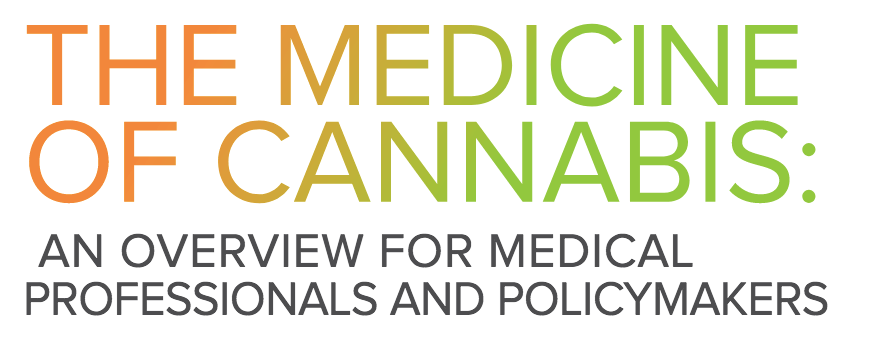
Summary intended to educate and guide policymakers and medical professionals
WASHINGTON, D.C. – The National Cannabis Industry Association (NCIA) has released an overview designed to help inform and guide policymakers and medical professionals on the science, history, and uses of medical cannabis and promote policies that facilitate further research and fair, legal access. This publication was developed by scientists and doctors working with NCIA’s Policy Council.
The objective of this report is to provide medical professionals and policymakers with an up-to-date, science-based perspective on the medicine of cannabis in the United States. It includes input from medical doctors, researchers, veterinarians, and policy experts, all committed to the development of a cannabis industry founded on scientific research, patient safety, and equitable access to safe products and clinical oversight. It includes a history of medical cannabis, an overview of the endocannabinoid system and the complex nature of the cannabis plant, and explores clinical uses as well as safety considerations. The paper also highlights the obstacles that currently hinder research, and includes policy recommendations to remove those barriers and promote evidenced-based therapeutic cannabis access and use.
The full paper is available here.
“Despite the well-established medical efficacy of cannabis and the overwhelming public support for regulating the substance, many politicians and doctors still lack a basic understanding of the science of cannabis and continue to oppose sensible reforms,” said Aaron Smith, co-founder and chief executive officer of the National Cannabis Industry Association. “We hope to provide a fundamental and balanced overview of the medical impacts and therapeutic uses of cannabis to the people who so often hold the keys to safe and legal access.”
NCIA intends to disseminate this overview to members of Congress and the Biden administration, as well as key federal agencies and medical organizations.
A recent Pew Research poll showed that 91% of U.S. adults think cannabis should be legal for medical purposes. A Gallup poll from late last year showed a record 68% national support for making cannabis legal for adults.
Cannabis is legal for adults in 17 states as well as the District of Columbia and the territories of CNMI and Guam, and 36 states as well as several territories have comprehensive medical cannabis laws. The substance is legal in some form in 47 states. Dozens of states are considering cannabis policy reform legislation this year.
###
House Committee Chair Introduces Legislation Allowing Legal Cannabis Industry to Access Small Business Administration Programs
FOR IMMEDIATE RELEASE
Friday, June 28, 2019
CONTACT:
Aaron Smith, National Cannabis Industry Association
303-569-6888, Aaron@TheCannabisIndustry.org
Bill would end federal prohibition and help level the playing field for small businesses
WASHINGTON, D.C. – On Thursday, Chairwoman of the House Committee on Small Business Rep. Nydia M. Velazquez (D-NY) introduced the Ensuring Safe Capital Access for All Small Businesses Act of 2019. This legislation would remove cannabis from the Controlled Substances Act and prohibit the Small Business Administration (SBA) from declining to provide a loan guarantee under the 7(a) Loan Guaranty Program, the Disaster Assistance Program, Microloan program, or the 504/Certified Development Company program to a cannabis related legitimate business or service provider.
This comes just a week after the House Committee on Small Business held a hearing entitled “Unlocked Potential? Small Businesses in the Cannabis Industry” to explore the opportunities for small businesses and entrepreneurs in legal cannabis markets, as well as the obstacles those businesses face when entering or operating in the emerging industry.
“State cannabis programs are successfully replacing criminal enterprises with tightly-regulated, responsible businesses but it’s increasingly difficult for smaller firms to compete in the legal industry without access to the essential Small Business Administration programs that other industries take for granted,” said Aaron Smith, executive director of the National Cannabis Industry Association (NCIA). “By improving access to capital, this legislation will also help level the playing field for entrepreneurs from communities of color and others disproportionately impacted by the failed policies of prohibition seeking to enter the legal cannabis industry.”
The Small Business Administration’s capital access programs are designed to provide financial assistance in the form of loans and loan guarantees to small businesses who cannot affordably access capital elsewhere. Small businesses in states with legal cannabis, however, are currently struggling with conflicting legal guidance coming from their home states and the federal government. In addition, because SBA’s loan products are generally more successful at reaching traditionally underserved business than conventional lending, it is also a measure aimed at ensuring minority, women, and veteran entrepreneurs in the legitimate cannabis industry are able to fairly and affordably access capital.
There are currently 47 states that allow cannabis in some form. Thirty-three states and several territories have effective medical cannabis laws, and 11 states as well as the District of Columbia and the territories of Guam and CNMI have made cannabis legal for adults.
###
The National Cannabis Industry Association (NCIA) is the largest cannabis trade association in the U.S. and the only organization broadly representing cannabis-related businesses at the national level. NCIA promotes the growth of a responsible and legitimate cannabis industry and works toward a favorable social, economic, and legal environment for that industry in the United States.
Rep. Barbara Lee Introduces Measure Supporting Equity in the Legal Cannabis Industry
Resolution urges state and local governments to institute policies to increase access to cannabis business licenses for communities most harmed by prohibition
WASHINGTON, D.C. – A resolution decrying the racial disparities in cannabis enforcement and urging improved access to cannabis business licensing for marginalized communities in states where it is legal was introduced in the House of Representatives today by Rep. Barbara Lee (D-CA).
The Realizing Equitable & Sustainable Participation in Emerging Cannabis Trades (RESPECT) Resolution brings attention to the racially discriminatory enforcement of marijuana prohibition, and recognizes that the people most harmed by prohibition benefit the least from some of the state and local policies regulating the cannabis market.
The resolution urges state and local leaders to implement a series of practices when granting licenses for legal cannabis businesses to improve access for these communities to the nascent industry, such as minimal application and license fees, no caps on the number of licenses, increased local control of the licensing process, and removing broad felony and cannabis convictions as automatic disqualifiers for participation. It also suggests methods to help undo some of the harms caused by prohibition, including a cost-free process for expunging past marijuana convictions, using cannabis tax revenue to benefit small businesses and marginalized communities, ensuring local cannabis regulatory bodies are representative of their communities, and creating legal spaces for social consumption.
“We commend Congresswoman Lee for bringing attention to the unjust and racially disparate harms caused by prohibition enforcement and the need for equal access to opportunities created by the burgeoning cannabis industry as more and more states move away from the old policies of prohibition,” said Aaron Smith, executive director of the National Cannabis Industry Association (NCIA).
On May 23, Rep. Lee joined a bipartisan group of lawmakers for a press conference at the U.S. Capitol hosted by NCIA to speak about the need for the cannabis industry to be treated fairly and regulated in a manner that encourages participation by people of color.
Senate Committee Approves Medical Cannabis Protections in Appropriations Spending Bill
Senate Committee Approves Medical Cannabis Protections in Appropriations Spending Bill
Historic move is first time provision to protect state medical cannabis programs from federal interference has been included in original Senate legislation; language was amended to previous spending bills since 2014
Washington, D.C. – The Senate Appropriations Committee approved legislation that would renew protections for state medical cannabis programs when the current spending budget expires in September. The language, which was introduced by Sen. Patrick Leahy (D-VT), prevents the Department of Justice from using any resources to target medical cannabis patients or providers who are in compliance with state laws.
This is the first time that this provision has been included in the original language of the spending bill by either chamber of Congress. Originally added to the federal budget in 2014, this restriction was consistently renewed as an amendment by the Senate or House Appropriations Committees or a continuing resolution in subsequent budgets, most recently in March. Current protections are set to expire on September 30 unless the new spending bill is approved or the current budget is extended.
“Once again, members of Congress have signaled that protecting state-legal medical cannabis is no longer a controversial issue,” said Aaron Smith, executive director of the National Cannabis Industry Association. “From protecting state medical cannabis programs from being targeted by federal law enforcement to growing support for allowing banks to work with the cannabis industry, lawmakers are increasingly unwilling to waste taxpayer money interfering with legal and responsible cannabis businesses.”
Last month, similar medical cannabis protections were amended to the House Appropriations spending bill in a committee vote.
Cannabis is legal in some form for medical purposes in 46 states. A Quinnipiac University poll released in April showed that 93% of voters support legal access to medical cannabis and 70% oppose enforcing federal marijuana laws in states that have approved cannabis for medical or adult use.
Follow NCIA
Newsletter
Facebook
Twitter
LinkedIn
Instagram
News & Resource Topics
–
This Just In
Member Blog: The Evolving Cannabis Legal & Regulatory Landscape in 2026
How THCa Vapes Are Changing Consumer