Member Blog: How Cannabis Legalization In Minnesota Can Further Equality
By Mell Green, CBD Oracle
Medical cannabis hasn’t always had a smooth go in the United States. Thankfully, as time has slowly started to change and viewpoints have shifted, cannabis legalization is finally gaining traction state-wide. While this is an incredible feat for so many different reasons, many states see long-term benefits of cannabis legalization much further reaching than anyone could have imagined.
Today, we’re talking about how cannabis legalization in Minnesota may actually help further equality and break down barriers that have long been deeply rooted. Let’s get started.
FIRST GLANCE:
- Cannabis has a rocky history in the United States, with most negative stigma being racially charged.
- This ideology lasted for decades until some states started decriminalizing and legalizing medical cannabis in the 80s and 90s.
- Now, as cannabis legalization spreads, the divide between white Americans and POC in the industry is more prominent than ever.
- Legalization can help further equality in states like Minnesota, but it requires holistic change from within communities.
- With legalization may come fewer victimless crimes, resulting in lessened police presence, effectively leaving targeted communities feeling safer and more comfortable.
- By supporting local Black or minority-owned dispensaries and working with local organizations, cannabis equality may progress in the ways that community members need — but the change will start with you!
Cannabis’s Rocky History
Quickly, it’s essential to understand the tumultuous history behind marijuana and just how far we’ve come as a society. However, seeing this rocky past also helps illuminate how much further we still have to go.
The cannabis plant has existed for millennia on planet Earth. Its therapeutic benefits have supported civilizations in spiritual, religious, and medicinal ceremonies across the globe. As this idea spread to Western societies, the plant was, at first, welcomed with open arms. At the start of the 20th century, all of this changed entirely in the United States.
During the Mexican Revolution from 1910-1920, many Mexican citizens fled their war-torn home country in search of a safer, more promising future. With this, the U.S. saw an influx of Mexican immigrants.
Throughout Mexico, enjoying cannabis for its recreational effects wasn’t a new idea. So, when citizens began migrating North, they also brought more normalized recreational cannabis use. At first, for those in the U.S. who already adored cannabis, this was incredibly exciting. But, for many in positions of power, class, and wealth, this type of cannabis use wasn’t going to fly. Thus came the Reefer Madness film and decades-long racially charged cannabis persecutions.
The Impact of Legalization and Equality
It took way too long, but the United States finally started getting on board with cannabis decriminalization and legalization back in the 80s and 90s. With this, the exposure to cannabis science became more extensive, and it was easier to see that the plant did (and still does) have some serious medicinal benefit. Seeing these facts caused a lot of opinions to change, resulting in an almost domino-like effect of cannabis legalization across the country.
Now, 36 states have legalized medical cannabis, allowing more people than ever access to the precious plant they love. But has this legalization impacted the people most disproportionately punished? Not really.
Still today, we see Black men arrested for cannabis crimes at disproportionately high rates, even though cannabis is legal in most states across the U.S. If anything, these legal changes have made the divide all the more evident, allowing the country to see just how horrific the cannabis industry can be for people of color. At the same time, it simultaneously celebrates white American consumers. This may help boost PR for big business, but it doesn’t help local (black-owned or otherwise) businesses on the ground. Legally or economically.
So, what can we do to change this? How can cannabis legalization help to further the progress we’ve made?
Legalization in Minnesota: How To Further Equality
I know, it sounds like we’re a bit cynical, but it’s crucial to bring up these divides before discussing how we can move further. The country often loves to praise all the beauty that the cannabis industry brings, forgetting the intense harm it has caused so many communities.
Let’s talk about Minnesota, for example. In May, it looks as though the state is going to vote to pass adult-use cannabis use. If this happens, here’s what could potentially occur in terms of furthering equality — but, at the end of the day, this change is up to you.
Realistically, the legalization of cannabis should help reduce the number of victimless crimes in the area, helping the community feel more at ease. With this, you would also expect a lowered number of consistent police presence in areas where cannabis use was a previous “problem.” Often, when communities of color experience increased and frequent police presence, this does not provide a sense of safety. Typically, it provides the opposite. Thus, legalizing cannabis in places like Minnesota may be able to create an environment that not only feels safer but feels more accepting of all residents. Feeling safe is great for business, big and small – but especially small. Reduction of victimless crimes and less police presence could really boost the state economy, and additionally enhance everyone’s sense of community and unity.
Furthering equality through the legalization of cannabis can be done, but the work goes much deeper than just on a legal level. As we’ve seen, just because the law says one thing, that doesn’t mean it applies to all groups of people. So, once legalization happens in Minnesota — or your state — the next steps are in your hands.
What’s Still Left To Do
- Take the time to research Black and minority-owned dispensaries in your area and support these shops.
- See if you have any local cannabis equality organizations that specialize in helping those who have been wrongly affected.
- Educate others on the history of cannabis and why the subject can still be painful for POC.
With this, you’ll also understand how legalization is not an end-all-be-all solution. If we want to erase cannabis’s racially charged stigma, the answer is holistic: it starts with a community.
 Mell Green is a content creator who believes that cannabis can help anyone achieve a life-enhancing experience. Her participation in the advocacy of the plant for the last several years has not only allowed her to create solid relationships with the world’s leading cannabis companies, but it has also helped her to educate and spread awareness on the power of alternative medicine.
CBD Oracle is a California-based online magazine dedicated to cannabis and CBD education. The company has made it its mission to provide specialized, expert advice to those who need it, publishing detailed, informative, and entertaining articles, guides, and reviews, all backed by the latest scientific studies and research.
Victories and Challenges For Cannabis Policy Reform
 By Morgan Fox, NCIA’s Director of Media Relations
On April 19, the House of Representatives approved legislation once again that would provide legal protections for financial service providers to work with cannabis businesses that are in compliance with state laws. The Secure and Fair Enforcement (SAFE) Banking Act, or H.R. 1996, was reintroduced in March by a bipartisan group of sponsors and had 177 total cosponsors by the time of the vote.
The legislation was approved by a vote of 321-101 and included 106 Republicans voting in favor of the measure, a small majority that represents a growing trend of increasing conservative support since the last time this bill was approved in the House in 2019. No Democrats voted against the bill. This is the fourth time that the House has approved the language of the SAFE Banking Act, initially as the first standalone cannabis policy reform bill ever passed by either chamber of Congress two years ago and two more times last year as part of pandemic relief packages that were not approved in the Senate.
In the time that elapsed between the last vote on the SAFE Banking Act and this one, a number of factors have added momentum and boosted the pressure on federal lawmakers to more seriously consider cannabis policy reform generally and bills like the SAFE Banking Act.
First, cannabis businesses were nearly unanimously declared essential in states with regulated markets during the pandemic, adding to the legitimacy of the industry in the eyes of many while providing uninterrupted healthcare, jobs, and tax revenue in a very challenging economic and public health environment. However, despite increased sales over the last year, the operational costs required to keep employees and customers safe have taken their toll, compounded by the added costs and other challenges associated with limited access to banking services or traditional loans.
These obstacles were felt even more keenly by cannabis businesses because they could not avail themselves of the federal stimulus packages approved by Congress, such as PPP or funds available through the Small Business Administration. Helping to ease the worsening financial burdens facing the cannabis industry during such a difficult time was a major reason for the inclusion of SAFE Banking language in the House-approved aid bills. Recently, standalone legislation has also been reintroduced by Small Business Committee Chair Nydia Velazquez to allow direct and indirect cannabis businesses to be able to access SBA-backed loans and other assistance programs.
Unfortunately, the inclusion of cannabis language in House stimulus packages was used as a political attack tool in the leadup to the election by some lawmakers, likely leading to a postponement of a House vote on the MORE Act, which would remove cannabis from the schedule of controlled substances and help repair the damage done by prohibition. Those attacks significantly died down in November, however, when five states approved adult-use or medical cannabis ballot initiatives by heavy margins, including the red states of Mississippi, Montana, and South Dakota. These victories paved the way for the historic passage of the MORE Act in the lower chamber in December. Three additional state legislatures have passed adult-use laws since then, including the first Southern state of Virginia.
This combination of political will, the feasibility of passing cannabis policy reform measures both comprehensive and incremental, and the introduction of eight new regulated cannabis markets in just a few short months has lawmakers of all stripes taking a much closer look at this issue than ever before. Even staunchly opposed legislators are being forced to reexamine their positions on bills that would directly benefit their constituents and businesses in their states, particularly in light of the urgent need for jobs and taxes as the pandemic response begins to pivot toward economic recovery. This is on top of record public support nationally for legalization. It is becoming increasingly clear to lawmakers that standing in the way of reform is a losing proposition.
With the passage of the SAFE Banking Act, it is likely that the House will move its attention to amending and approving the MORE Act for a second time, as well as considering several other pieces of cannabis-related legislation. The fate of the SAFE Banking Act now lies with the Senate. Senate Majority Leader Chuck Schumer said recently that he would prefer to wait for further consideration of that or other incremental reforms until after the introduction of his much-anticipated comprehensive descheduling bill in the coming weeks. We are confident that debate and progress on these bills is not mutually exclusive, and moving both pieces of legislation through the upper chamber simultaneously is both possible and likely, especially given the broad bipartisan support that the SAFE Banking Act enjoys.
State of the States – Cannabis Policy Reform in the Current Legislative Sessions

by Morgan Fox, NCIA Director of Media Relations
The last few weeks have seen quite a bit of excitement for the possibility of comprehensive federal cannabis policy reform being closer than it has ever been, but what about the states?
Historically, the vast majority of progress has been made at the state level, and this year is shaping up to be another one full of victories for legalization advocates as state governments struggle to support their economies, create new tax revenue and job sources, and tackle long-overdue criminal justice reforms.
The overwhelming approval by New Jersey voters of a referendum to make cannabis legal for adults last year has put the spotlight firmly on the Northeast and mid-Atlantic regions. With state legislative sessions already underway, a number of states are already prioritizing legalization much more heavily than in years past even as New Jersey lawmakers struggle to pass enacting legislation to carry out the will of the voters in a fair and equitable manner. It is pretty clear that New Jersey’s neighbors don’t want to be left behind when it starts reaping the benefits of regulated cannabis markets.
Early this year, New York’s Gov. Andrew Cuomo released a statement outlining his plan to make cannabis legal in the state, and just recently added amendments that would allow delivery, clarify the tax system, and reduce penalties associated with some cannabis activities. There are still some concerns with this plan, including the amount of funding that would actually go toward repairing the disparate harms caused by prohibition and the lack of legal home cultivation. Regulated cannabis in New York could be worth more than $3.5 billion and create more than 60,000 jobs, making it one of the largest state cannabis markets in the country.
Meanwhile, in Delaware, a legalization bill that was approved in the state House in 2019 is slated to be reintroduced by the sponsor in the coming weeks. This bill would come on the heels of a report released last month by the state auditor which estimated that Delaware could take in $43 million annually with a 20% excise tax, and create more than 1,400 jobs over a five year period. In what seems to be a disturbing trend in some state legislatures this year, this bill is not expected to initially include home cultivation either.
In Connecticut, however, a new adult-use bill has been introduced that would center on restorative justice and social equity in the industry and would allow adults to grow limited amounts of cannabis in their homes. This bill has strong support in the state legislature but may soon have to compete with Gov. Ned Lamont’s proposal, which is expected to be released soon.
Nearby Pennsylvania is likely to consider adult-use legislation this year, with Gov. Tom Wolf (along with the incredibly supportive and newly internet-famous lieutenant governor) urging lawmakers to address the issue and – earlier this month – calling it a priority for his state’s annual budget proposal. Rhode Island lawmakers are expected to consider legalization again this year as well, and with the departure of Gov. Raimondo, it is more likely that the emphasis will shift away from a state-run model and back to regulating private businesses.
Farther South, Virginia made headlines this month by becoming the first state in 2021 to have both chambers of its legislature approve adult-use bills. Lawmakers are committed to ironing out the differences between the two bills this month during an extended session. With Gov. Ralph Northam in full support, Virginia stands poised to become the 16th state overall to make cannabis legal for adults and the first state to do so in the South, and it would be only the third to regulate cannabis through its legislature.
Adult-use legislation has also been introduced in Maryland, with supporters and cosponsors optimistic that it could be passed this year, though lawmakers there are not as far along in the process as their neighbors in Virginia. And in medical news, advocates in South Carolina are taking another shot at passing a medical cannabis bill there.
There are signs of progress from elsewhere in the nation as well. After running out of time in an emergency session last year, New Mexico’s governor and lawmakers wasted no time in getting back to legalization efforts this year. There are currently several bills being considered, and it appears very likely that some form of adult-use will be approved there this year.
This is just a snapshot of the momentum and positive movement we are seeing at the state level this year. If you are interested in up-to-date information about all cannabis-related state legislation in the U.S., please consider subscribing to Marijuana Moment’s bill tracker.
Unfortunately, the news isn’t all good.
In South Dakota, where voters approved both medical and adult-use initiatives in November by wide margins, advocates have suffered a temporary setback on the adult-use front. After a pair of law enforcement officials sued to have the adult-use bill thrown out because it addresses too many issues for a constitutional amendment, a circuit court judge ruled in their favor earlier this month. This situation is extremely disheartening and outrageous: the will of the people was overturned by a judge who was appointed by a governor who not only actively campaigned against the ballot initiative but also paid for the lawsuit to overturn it with taxpayer money! However, supporters have appealed the decision to the state Supreme Court.
In Montana, where voters also passed an adult-use initiative in November, supporters are faced with another lawsuit on similar grounds that was filed by opponents. However, observers are skeptical of that suit being successful, and lawmakers are moving ahead with developing enacting legislation.
And in Idaho, where a medical cannabis initiative was prevented from getting on the ballot last year, prohibitionist lawmakers are moving forward with a bill that would prevent any future legislation to make cannabis or any other currently illegal substance legal. If passed, this bill would be put before the voters in 2022, where it could very well be on the same ballot as a medical cannabis referendum.
Despite efforts to overturn progress and maintain failed and harmful cannabis policies, things are generally looking up and we expect several states to pass laws to stop arresting cannabis consumers and establish legal, regulated marketplaces in the near future.
One last item, so as not to totally leave out federal news: this week, NCIA joined members of Congress, advocates, and other industry leaders in calling on Pres. Biden to pardon all non-violent cannabis convictions and commute the sentences of anyone currently serving time.
Stay tuned for further developments!
Cannabis State Ballot Measures – Facts & Figures

by Morgan Fox, NCIA’s Director of Media Relations
Arizona
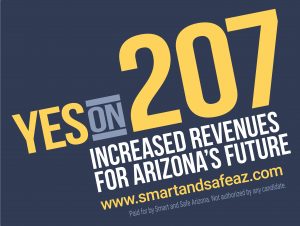 Ballot: Proposition 207, Smart & Safe Act (adult use)
Summary: https://smartandsafeaz.com/about/
Full language: https://mk0adassociatioy1jbg.kinstacdn.com/wp-content/uploads/2019/10/I-23-2020.pdf
Main backers: Smart and Safe Arizona
Possession: Adults 21+, 1 ounce flower or 5 grams concentrate
Home cultivation: YES, adults 121+ may have up to 6 plants in an enclosed locked location out of public view.
Licenses:
- Issue no more than one marijuana establishment license per 10 pharmacies;
- Issue no more than two marijuana establishment licenses in counties that contain no registered nonprofit medical marijuana dispensaries;
- Issue no more than one marijuana establishment license in counties with one nonprofit medical marijuana dispensaries; and
- Issue 26 licenses, notwithstanding the other limits, to entities qualified under the Social Equity Ownership Program.
Social Equity:
Department of Health Services would be required to establish a Social Equity Ownership Program to promote cannabis business ownership and employment for individuals from communities disproportionately impacted by the enforcement of previous marijuana laws.
Proposition 207 would establish a fund called the Justice Reinvestment Fund (JRF). Revenue in the JRF would be allocated as follows:
- 35 percent to local public health departments in proportion to the county’s population for the purpose of providing justice reinvestment programs or giving grants to nonprofits to provide justice reinvestment programs within the county’s area.
- 35 percent to DHS to provide grants to nonprofits to provide justice reinvestment programs in the state.
- 30 percent to DHS “for the purpose of addressing important public health issues” that affect Arizona.
Taxes & Revenue:
Transaction Privilege Tax (currently 5.6%)
Specific 16% excise tax (non-medical)
Revenue from the excise tax and license fees would be deposited into the Smart and Safe Arizona Fund. First, revenue would be used to implement and enforce marijuana regulations. The remaining revenue would be allocated as follows:
- 33.0 percent for community college districts;
- 31.4 percent for municipal police and fire departments, county sheriff departments, and fire districts;
- 25.4 percent for the state’s Highway User Revenue Fund;
- 10.0 percent for the new Justice Reinvestment Fund; and
DONATE NOW
Additional Resources: Proposition 7 Information, FAQ
Mississippi

Ballots: Initiative 65 (medical), Alternative 65A (medical, terminally ill patients only)
Summary:
Full Language:
Main Backers:
Possession:
- Initiative 65 – Qualifying patients may purchase/possess up to two and a half (2.5) ounces every 14 days
- Alternative 65A – Undefined, no explicit protections
Home Cultivation: NO
Licensing:
- Initiative 65 – TBD by Dept. of Health; no limits on number of treatment centers; may not be located within five hundred (500) feet of a pre-existing school, church, or licensed child care center
- Alternative 65A – Undefined
Social Equity: None explicitly included in either initiative.
Taxes & Revenue:
- Initiative 65 – Dept. of Health may authorize taxes up to the level of the state sales tax (currently 7%); revenue to be used for special operating fund and may not revert to state general fund
- Amendment 65A – Undefined
DONATE NOW
Additional Resources: Overview and Sample Ballot Question – IMPORTANT! These questions are worded in a confusing manner on ballots.
Montana
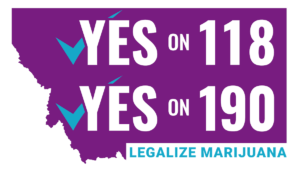 Ballots: Initiative 190 Marijuana Legalization Initiative (adult use), CI-118 Allow for a Legal Age for Marijuana Amendment
Summary:
- Initiative 118 would allow legislation or a citizen initiative to set the legal age limit for possession at an age higher than the state definition of adulthood (18 years old).
- Initiative 190 would regulate cannabis for adults age 21 and older.
- Summary of both initiatives is available here.
Full Language:
Main Backers: New Approach Montana
Possession: Adults 21+, up to one ounce of flower or 8 grams of concentrate
Home Cultivation: YES, up to four (4) plants per adult, maximum eight (8) per household.
Licensing:
The Department of Revenue shall develop rules and regulations regarding licensing of providers, marijuana-infused products providers, and dispensaries for adult use. For the first 12 months, only existing medical cannabis licensees may apply. Provider licenses are established in tiers based on canopy size and also include micro-business licenses. Applicants must have resided in Montana for at least one year prior and may not have been convicted of a felony involving fraud, deceit, or embezzlement or for distribution of drugs to a minor within the past 5 years. Cannabis businesses may not be located within 500 feet of a school or place of worship unless permitted by the local jurisdiction.
Social Equity: Persons convicted of behavior permitted by Initiative 190 may apply for resentencing or expungement.
Taxes & Revenue:
- Specific sales tax – 20%
- Revenue will be used to fund operating costs of regulation as well as to support conservation efforts, substance abuse treatment and education, veterans programs, local governments, the general fund, and other programs. More information is available here.
DONATE NOW
Additional Resources: Initiative 190 Information
New Jersey
 Ballots: Question 1, Marijuana Legalization Amendment (2020)
Summary: https://www.njcan2020.org/whats-on-the-ballot/
Main Backers: NJ Can 2020
Possession: 21+, limits TBD by Legislature
Home Cultivation: TBD by Legislature
Licensing: TBD by Legislature, regulated by existing Cannabis Regulatory Commission
Social Equity: TBD by Legislature
Taxes & Revenue: Standard state sales tax of 6.625%; Legislature can authorize municipalities to impose up to an additional 2% local tax
DONATE NOW
Additional Resources:
South Dakota
 Ballots: Measure 26 (medical), Amendment A (adult use)
Summaries: https://www.southdakotamarijuana.org/the-initiatives
Full Language:
Main backers:
Possession:
- Measure 26 – Registered patients, up to three (3) ounces
- Amendment A – Adults 21+, up to one ounce
Home Cultivation:
- Measure 26 – Patients with home cultivation certification may grow 3 plants minimum or a number determined by their physician
- Amendment A – 3 plants per person (6 max per household) in jurisdictions with no licensed retail stores
Licensing:
- Measure 26 – TBD by Dept. of Health
- Amendment A – TBD by Dept. of Revenue
Social Equity: None explicitly included in initiative language
Taxes & Revenue:
- Measure 26 – TBD by Dept. of Health and Legislature
- Amendment A – 15% sales tax, split evenly between public school fund and state general fund after implementation and operation costs are covered.
DONATE NOW
Additional Resources:
2020 Marijuana Ballot Initiatives – Time to Make History!
by Madeline Grant, NCIA’s Government Relations Manager
With the election coming up just around the corner, 2020 could be another big year for our movement. It is imperative that we all head to the polls, send in our mail-in ballots and make our voices heard in this monumental election. This week I will briefly go over each ballot initiative that has officially qualified for the November ballot. As we continue to get closer to the election, I will get into detail about what each ballot initiative does for each state. 2020 has been a year of uncertainty and as we approach the election it is our duty as U.S. citizens to get out and vote and as members of the cannabis industry, it’s important that we support the expansion of markets by donating to initiative campaigns.
Without further ado please see marijuana ballot initiatives below:
- Arizona – Adult-Use: Smart and Safe Act (Prop 207)
- Mississippi – Medical: Initiative 65
- New Jersey – Adult-Use: The New Jersey Marijuana Legalization Amendment
- Montana – Adult-Use: I-190 would legalize, regulate, and tax marijuana in Montana.
- More information provided by the Marijuana Policy Project here.
- Montana – CI-118 would allow the minimum legal age for marijuana to be set at 21.
- More information provided by the Marijuana Policy Project here.
- South Dakota – Medical- Initiated Measure 26
- More information provided by the Marijuana Policy Project here.
- South Dakota – Adult-use (and protects medical law) Constitutional Amendment A
- More information provided by the Marijuana Policy Project here.
- Nebraska – Medical marijuana ballot initiative is no longer happening due to the Nebraska Supreme Court deeming the legalization of medical marijuana on the November ballot as unconstitutional. Following over 180,000 signatures by Nebraskans in support of the measure, the Supreme Court decided to not include the vote on November’s ballot on the day before the deadline. The justification of unconstitutionality came from Nebraska’s single-subject rule for a ballot measure, which bans multiple issues into yes-or-no questions for voters to address.
 It is more important than ever to get out and vote. Our government relations team works hard in our nation’s Capital to achieve legislative victories at the federal level; however, achieving legislative victories at each state is just as important. It is through each successful ballot initiative at the state that provides the proof and support for legislative change and policy reform at the federal level. States are moving forward; therefore, we must be on Capitol Hill. We must keep fighting the good fight and get out and show our support for cannabis policy reform.
Are you interested in any of these states or want to learn more about one of these ballot initiatives? If so, please feel free to reach out to me to set up a meeting to discuss the information in more detail or contact the campaigns directly to find out how you can support them.
Member Blog: Advice for Surviving and Thriving in the New Era of Legal Cannabis From Those Who Have Climbed The Mountain (Part 1)

by James Schwartz, CEO of Cascade High Organics
Look to the past to see the future
The challenges facing companies pioneering a new industry where each state deals with its own issues are numerous. The importance of strategic business planning and the ability to predict future problems are essential to survival. Colorado, Washington, and Oregon have each dealt with their unique issues and challenges but there are also common problems that every cannabis business experiences: burdensome regulation, unfair taxation, and banking prohibition to name a few. Building your company and brand is dependent on your ability to maneuver your company through the obstacles that will arise in your state market while also planning for a future of legal interstate commerce through a change in federal policy. To place your company in a position to be successful, you should understand the past to predict the future.
Quick Summary of Cannabis History
The history of cannabis is long and distorted, however a few basic points of what brought us to the current state of federal prohibition and individual state markets should be noted for context.
Cannabis use as medicine dates back to 2700 BC in China, and has been used throughout history. In 1850, it was added to the U.S. Pharmacopeia. Prior to state and then Federal prohibition, cannabis was an elixir/tincture used in many common household cough/cold syrups and other medications for stomach-aches, asthma, depression, and many others. In the 1930s, cannabis was regulated as a drug in all states, and in 1937, the passing of the Marihuana Tax Act regulated it federally. Then in 1970, the Controlled Substances Act determined cannabis to be a Schedule 1 drug meaning it has no medical benefit and a high risk for abuse. From 1970 to 1996 the manufacture, use, or possession of cannabis was illegal in all fifty states.
CALIFORNIA
In 1996, California became the first state to legalize the medical use of cannabis through Proposition 215. California was the first domino to fall and further background of the early days of California medical cannabis will be addressed in later blogs in this series focusing on California. Over the next twenty years, 37 states have joined California with medically legal cannabis, and nine states have passed and implemented legal “recreational” (now referred to as “adult use”) cannabis programs.
OREGON
Oregon was the second state to pass medical cannabis in 1998 and that was the start of this author’s journey through the cannabis industry. Prior to 1998, Oregon had been a bastion of black market cannabis cultivation due to its climate and wide open spaces especially in rural southern and eastern Oregon. After 1998, the state “protections” offered by medical cannabis state law allowed the cultivation industry to flourish. However, as opposed to California the state was more focused on growing weed and selling it around the country rather than setting up a distribution system to the medical patients of Oregon. This led to some of the early challenges of the medical cannabis program in Oregon. At this time, the Oregon population was relatively small compared to the state’s cannabis production. Oregon was on its way to being one of the largest cannabis producers in the country. But because cannabis was so easily accessible there was little effort put into a healthy distribution system to Oregon patients. Most patients either grew for themselves or had a designated “grower” and that is where I started in the industry.
OREGON: FORMATION OF RETAIL ESTABLISHMENTS
As a nurse who had self medicated with cannabis for ADHD, I began growing for patients because I wanted to provide others with access to the amazing health benefits of cannabis. This was the common way most patients accessed their cannabis. There were no dispensaries when the program started and patients who didn’t have a grower were relegated to barter trade types of acquisition. In 2005, the Oregon Legislature allowed growers to be reimbursed for the cost of production and in 2010, the first dispensaries began to pop up. However, it wasn’t until 2012 that legal retail entities were allowed. This lack of a retail access point for patients was one of the first impediments to the program and allowed states like Colorado and California to take the mantel on progress of a robust program of medical cannabis distribution.
COLORADO
In 2000, Colorado became the sixth state to allow medical cannabis with Amendment 20. Its medical program remained low key until 2010 when the Colorado Medical Marijuana Code was created, which provided for licensing of production and retail establishments. This change was a giant step to the progress of cannabis legalization.
Colorado followed the early model presented in California and began implementing licensed retail establishments for card carrying medical cannabis patients. Retails stores began to flourish and this laid the groundwork for the establishment of the Adult Use program. In 2012, Colorado became the first state to legalize what was originally referred to as recreational cannabis now called “Adult Use” cannabis, which allowed the sales of cannabis to all adults aged twenty-one and older and the boom began. Colorado’s medical program developed into a rapidly growing Adult Use system and with the new federal guidance of the Cole Memo in 2013 canna-businesses began growing rapidly.
COLORADO: SEED TO SALE TRACKING
The primary language of the Cole Memo highlights a “robust tracking system” of all products produced and sold. The Cole Memo did not provide protections for cannabis businesses but provided guidance that helped assure businesses of some safety from federal interference. With the advent and implementation of a tracking system we could now be assured of where products came from and be able to track them back to their origin.
COLORADO: LAB TESTING
Once tracking was in place, lab testing for the safety of the consumer came to the forefront of industry progress. This was one of the first problems Colorado realized it had with its blossoming industry. As opposed to Oregon which required all products sold through its immature dispensary system since 2012, Colorado had not required lab testing of all its products until 2016 after several large quarantines and destruction of unsafe contaminated products. Many Colorado producers struggled with new pesticide regulations and was an early sticking point to growth of the industry. Over the first years of Adult Use cannabis program, Colorado struggled with the infancy of a brand new industry and how to regulate it and consequently, businesses suffered.
Other early challenges that the first legal state dealt with were allowable dosages and changes to dosing, as well packaging changes and the look of products, specifically how or if the products were attractive or marketed to children. The obstacles of a new industry most directly affect the businesses and their bottom lines. These are important points to consider when strategizing your business model and planning for inevitable changes to regulations. The time spent preparing for a system that will change will go a long way to ensuring for success.
WASHINGTON
Now let’s talk about Washington.
Washington was the third state to approve medical cannabis but had problems with implementation due to legislative issues. As multiple pieces of legislation were offered, adopted, and repealed, the lack of clarity prevented the medical cannabis industry from launching. Washington passed its adult use cannabis program at the same time as Colorado in 2012. In Washington, the two major obstacles the industry faced were licensing issues and taxes. A previously existing strong medical program in Colorado allowed for a seamless transition to an adult use program, but that was not present in Washington and this added to difficulties with implementing an adult use program.
Because the industry was just getting off the ground, both states relied on their medical programs as a foundation to the adult use. However, Washington’s medical program was murky and disorganized which lead to complications, Washington also limited licenses and put unfair taxes on the industry. These two factors aided in keeping the black market as the primary driver of the industry, rather than pulling people or businesses into a controlled, tracked, and regulated system.
280E TAX CODE
This provides a nice segue to one of the challenges all cannabis business face: unfair taxes in the 280E tax code. Internal Revenue Code section 280E specifically denies a deduction or credit for any expense in a business consisting of trafficking in illegal drugs “prohibited by Federal law or the law of any State in which such trade or business is conducted” which translates to only “Cost of Goods Sold” as the only deductible expenses. This means administrative costs, executive salaries, marketing and advertising, banking fees, etc., are non-deductible expenses for any cannabis business and subjects them to much higher taxes as most normal business deductions are prohibited. This challenge is one all cannabis businesses deal with and must be factored into financial modeling.
BANKING
While we are on the the subject of taxes and non-allowable deductions, banking is the other major challenge all cannabis businesses face. Due to federal policy around an illegal substance, FDIC insured institutions force canna-businesses to operate in all cash for fear of prosecution under racketeering and money laundering laws. There are a handful of financial institutions, credit unions, or state banks that offer “Enhanced Monitoring Accounts” for cannabis companies. However, they are highly priced and rare. The average cannabis bank account is likely to run $1,000.00 a month, just to have access to banking services, not including additional fees. This $12,000 a year budget line item, while not only expensive, is not a tax write-off per 280E tax code.
One can quickly see from just these two major hurdles or challenges to the industry, normal operations can be difficult. These obstacles are not to be taken lightly; they can be addressed but it must be factored into operating procedures, financial planning/budgeting, and strategic vision.
NOW BACK TO STATE SPECIFIC ISSUES
As Washington and Colorado dealt with its issues, Oregon voted to approve “Adult Use” cannabis in 2014. Using Colorado and Washington as a guide, Oregon implemented their system with more deliberation and vision based on what had been experienced in the first two states. But as was seen with the unique challenges in the first two states, Oregon encountered an entirely different set of problems. Oregon currently faces a massive oversupply problem which has affected all facets of business across the industry. In normal business and supply and demand economics, if an area is oversupplied, business move their products to where the demand is higher or the supply is lower. However, cannabis remains a federally illegal product and therefore interstate commerce remains illegal.
Oregon’s unique problem originated from two main issues:
- Oregon had already established itself as a cultivation mecca
- The regulatory authority decided against a cap on licenses
This lack of license caps has allowed the number of licensees to explode and thereby allowed the oversupply issue to occur and continue to grow. As stated, this is not a problem exclusive to cultivator/producers. Because of a 75% drop in value, cannabis attorneys, electricians, HVAC, security companies and other ancillary businesses are not getting paid. The oversupplied market and decreased revenue has reverberated across the industry and driven otherwise thriving companies into bankruptcy.
As you can see, each state deals with its unique challenges when implementing its Adult Use cannabis program, while we all deal with some issues that affect us all. The key to thriving… or surviving is to prepare your company to deal with the current challenges shared by us all and predict the challenges that your business will face in your state while preparation is taken for a national and international market.
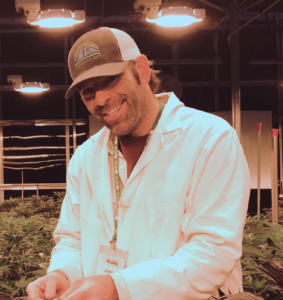 James Schwartz RN, BSN, LNC, is an experienced medical legal consultant and CEO of CascadeHigh Organics with 20 years experience cultivating legal cannabis. James is a self-described organic minimalist cultivating in the most sustainable manner. James believes in clean cannabis and its use as a wellness drug. His Oregon licensed cultivation, Cascade High, has been featured in Dope Magazine and on the cover of Oregon Leaf’s Sustainability issue (March ‘18). James was featured as the Inaugural Stoner Owner by OR Leaf in Dec 2018. He has articles published by Dope Magazine about Cannabusiness and the Pharmaceutical Industry (May 2017), as well as a medical cannabis article in the Jan. 2019 Healthcare issue of OR Leaf. James is currently on the NCIA Cannabis Cultivation Committee and has presented Cannabis topics to multiple audiences at conferences including Cannabis Science Conference, PDX Hempfest, Cannabiz Convention, CBD Expo and Webinar series, Cannabis Collaborative Conference(CCC), Cannabis Nurse Conference, NCIA and educational industry mixers. His business, legal, medical, and agricultural knowledge provides a unique perspective on the industry. James has lobbied for Cannabis on both the national and state level with Oregon Cannabis Association and is a fierce advocate for the plant and all who use it.
From The Ballot Box: Post-Midterm Election Analysis
by Michelle Rutter, NCIA Government Relations Manager
Last night, Americans all over the country let their voices be heard at the ballot box. Voters in Michigan cast their votes for the legalization of adult-use cannabis, increasing momentum of our movement. At the same time, voters in Missouri and Utah were successful in legalizing medical cannabis, becoming the 32nd and 33rd states to do so, and despite significant hurdles.
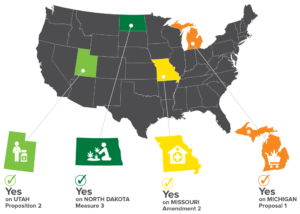 MICHIGAN
Appearing on the ballot as Proposal 1, this initiative passed by a whopping 55% and made Michigan the first state in the Midwest to legalize adult-use cannabis for those over the age of 21. The proposal outlined an excise sales tax of 10%, which will be levied on sales at retailers and micro-businesses, and then be allocated to local governments, K-12 education, and road and bridge maintenance. In the future, municipalities will be given the authority to to ban or limit cannabis businesses and establishments within their boundaries. Michigan’s prominent Midwest location, as well as the size of the projected adult-use market, make it a game-changing initiative to watch for cannabis reform. Michigan is the only adult-use state that also gave it’s electoral votes to President Trump in the 2016 election.
NORTH DAKOTA
In North Dakota, Measure 3, or the Marijuana Legalization and Automatic Expungement Initiative, appeared on the ballot and failed by only receiving 40% of the vote. This measure would have made cannabis legal in the state of North Dakota for people 21 years of age or older and, unlike other initiatives, also created an automatic expungement process for individuals with convictions for a controlled substance that has been legalized. Advocates and policy organizations were initially stunned when the campaign submitted enough signatures to appear on the ballot, and immediately recognized the importance of a staunchly, dependably conservative state choosing to legalize the adult-use of cannabis. Both of the candidates who ran for Senate in the state, Rep. Kevin Cramer (R) and Sen. Heidi Heitkamp (D) stated that they opposed the measure.
UTAH
In Utah, the Medical Marijuana Initiative (Proposition 2) appeared on the 2018 ballot and passed with 53% of the vote. This initiative legalized the medical use of marijuana for individuals with qualifying medical illnesses such as epilepsy, HIV, and and multiple sclerosis, among others. In October, the proponents and opponents of the measure, Mormon church leaders, and elected officials met to discuss the possibility of passing a medical cannabis law through the state legislature– regardless of the result for Proposition 2, which it was determined, would remain on the ballot. State lawmakers plan to hold a special session to work out details for how to make Utah the next medical cannabis state. Utah is a perfect example of a traditionally conservative state choosing to reform their cannabis laws to be more compassionate — Utah has given its electoral votes to Republican presidents in every election since 1968.
MISSOURI
In Missouri, three separate medical cannabis initiatives appeared on the ballot last night– including two proposed constitutional amendments and one statutory measure– with Amendment 2 triumphing with 65% of the vote. The other two medical cannabis initiatives failed. The winning Amendment 2, backed by New Approach Missouri, was favored by national advocacy groups such as NCIA, MPP, and NORML. The initiative legalized cannabis for medical purposes, creates a licensing system for cultivation, testing, and dispensing of medical cannabis and sets up a 4% tax on cannabis sales. State tax revenue garnered will be spent on healthcare services for veterans. Voters in Missouri also elected Josh Hawley (R) to replace sitting Sen. Claire McCaskill (D). Interestingly, Amendment 2 received over 300,000 more votes than Senator-elect Hawley — proving that cannabis is a winning issue across partisan lines.
OUTLOOK: 2019 AND THE 116TH CONGRESS
 These stunning victories have implications in Washington, D.C. and set the stage for federal reform in the 116th Congress. In addition to the ballot initiatives that were passed last night, Democrats took control of the House of Representatives, while Republicans maintained their control of the Senate. While this development surely means that cannabis policy will progress further than ever in the House, it also means that anything passed through that chamber will face significant hurdles in the more conservative Senate.
HOUSE
This year’s midterm election was one of the most highly anticipated in modern American history.
Last night, the House of Representatives switched from a Republican majority to a Democratic majority: as of Wednesday morning, Democrats held 220 seats, while Republicans held 194.
Republican leadership in the House of Representatives over the last two years has blocked even popular reforms such as banking access from receiving hearings or votes.
With a Democratic majority in the House of Representatives, cannabis legislation will likely move at an unprecedented rate. Because Democrats have traditionally been more friendly to cannabis reforms, there is the possibility that hearings will be held, bills will move through committees, and even possibly be voted on and passed on to the Senate.
Most, if not all, of last night’s House races will have implications for cannabis policy in the 116th Congress. Notable cannabis opponent and chairman of the powerful Rules Committee Pete Sessions was defeated in a stunning victory by Colin Allred, who has stated his clear support for medical cannabis. At the same time, cannabis advocates saw the loss of longtime cannabis champion Rep. Dana Rohrabacher (R-CA), marking the end of an era. While the loss of Rep. Rohrabacher will be felt by many, his challenger Harley Rouda has stated his unequivocal support for adult-use cannabis.
SENATE
As polls indicated prior to Election Day, Republicans maintained their control of the Senate, and in fact strengthened their majority. As of Wednesday morning, Republicans had gained two members in the Senate, holding a total of 51 seats, with three races still in play. While the Democrat-controlled House of Representatives may be able to move pro-cannabis amendments and legislation through that chamber, anything that moves on to the more conservative Senate will face significant hurdles.
One of the most closely watched Senate races in the country was in Nevada, where sitting Sen. Dean Heller (R) faced Rep. Jacky Rosen (D). While Sen. Heller has signaled his support for cannabis reform in the past, he currently does not co-sponsor any pro-cannabis legislation in the Senate. Rep. Rosen, however, is a co-sponsor of multiple bills in the House, including the SAFE Banking Act (H.R. 2215), the Small Business Tax Equity Act (H.R. 1810), and the STATES Act (H.R. 6043), among others. In addition, Rep. Rosen replied to an NCIA candidate survey and stated, “I was proud to support Nevada’s marijuana ballot initiative in 2016 and our state has already seen the positive impacts of this industry, including thousands of jobs and millions of dollars in tax revenue.”
With more on the line than ever before, political donations and investments in our industry are vital. NCIA’s political action committee (NCIA-PAC) is proud to have donated to 41 of the winning candidates on election night.
The 116th Congress will arrive in Washington, D.C. in January. With the change in leadership in the House of Representatives, cannabis policy and reforms will be able to advance in a way never seen before. At the same time, any pro-cannabis bills or amendments sent to the Senate will still face challenges, but as recent elections have proved, anything is possible.
Follow NCIA
Newsletter
Facebook
Twitter
LinkedIn
Instagram
News & Resource Topics
–
This Just In
Member Blog: The Evolving Cannabis Legal & Regulatory Landscape in 2026
How THCa Vapes Are Changing Consumer