Be Part of a Movement, Not a Moment: Highlights from NCIA’s Fall Stakeholder Summits
This fall, the National Cannabis Industry Association (NCIA) held four Stakeholder Summits across the United States, gathering cannabis industry operators, regulators, investors, and advocates to tackle the unique regulatory, operational, and strategic challenges facing cannabis businesses today. Held in Michigan, New York, Ohio, and Southern California, these Summits offered actionable insights into the evolving landscape of cannabis regulation and taxation, fostering a spirit of collaboration and movement-building in support of a thriving, equitable industry.
Michigan Stakeholder Summit: Regulatory Adaptation and Collaborative Solutions
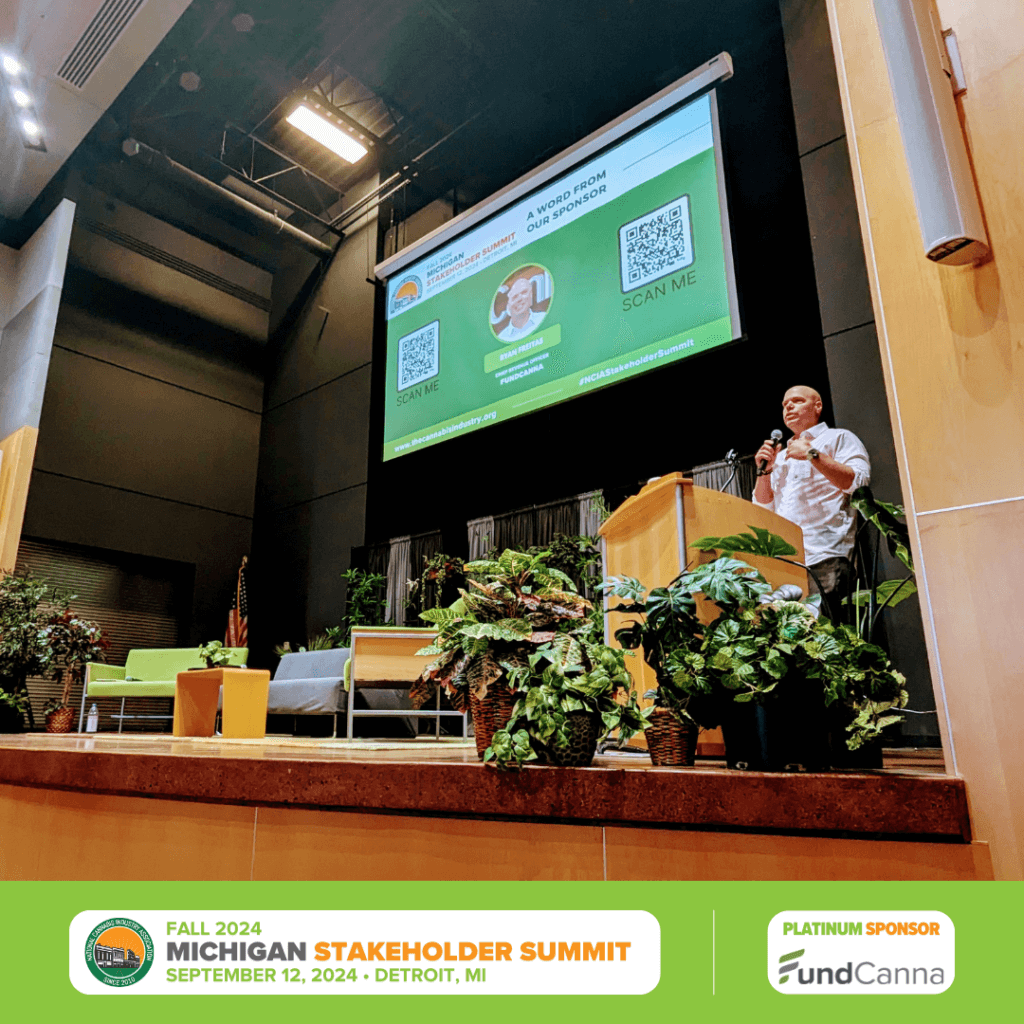
The Michigan Stakeholder Summit brought to light the latest regulatory shifts impacting cannabis operators in the state. From changes in the Hemp Farm Bill to Michigan’s approach to intoxicating hemp sales, the panel on “Operator Insights and Regulatory Perspectives” shed light on pressing issues. Brian Hanna, Executive Director of the Cannabis Regulatory Agency, addressed upcoming regulatory changes and discussed the need for balanced enforcement to protect Michigan’s legal market. Discussions also covered navigating compliance with agencies like the Department of Environment, Great Lakes, and Energy (EGLE) and MIOSHA, while maintaining operational efficiency.
One core theme emerged from panelists such as Rebecca Collett of Calyxeum and Allison Ireton of Bloom City Club: collaboration is essential. As the Michigan cannabis market faces evolving dynamics, including the rapid issuance of new licenses and pressures on medical caregivers, the need for a transparent dialogue between regulators and industry stakeholders remains critical. Attendees left with actionable strategies for adapting to compliance requirements, maintaining business viability, and ensuring consumer protection.
New York Stakeholder Summit: A Regulatory Landscape in Transition
In New York, the Stakeholder Summit focused on how operators can succeed in a rapidly maturing market. Led by John Kagia from the Office of Cannabis Management (OCM) and industry veterans like Jeffrey Schultz of Foley Hoag LLP, the “Operator Insights and Regulatory Perspectives” panel delved into the complexities of New York’s regulatory landscape. The session addressed social equity provisions, compliance hurdles, and strategies for growth in a highly regulated environment.
Key questions included navigating the intake process for new operators and the impact of recent enforcement actions on the illicit market. Kate Hruby of KJH Strategy emphasized the need for well-defined compliance guidelines to reduce ambiguity, while Marcella Osello of DOPE CFO Certified Advisors shared insights on the financial challenges facing small businesses in New York. The panel underscored the importance of partnerships between operators and policymakers, leaving attendees with insights on building a resilient business within a market in flux.
Ohio Stakeholder Summit: Legislative Updates and Strategic Business Growth
The Ohio Summit explored the convergence of legislation, legal complexities, and operational strategy essential for growth in Ohio’s cannabis market. Ohio State Representative Juanita Brent (D – District 22) shared updates on recent legislative actions affecting cannabis operators and emphasized the need for proactive policy advocacy, particularly as the legislative landscape shifts with changes in state leadership.
Legal experts like John Oberle of Ice Miller LLP and Helen Mac Murray of Mac Murray & Shuster LLP highlighted the nuances of Ohio’s regulatory requirements, with a focus on compliance around testing, product dosing, and advertising restrictions. Emillie Kelleher of BeneLeaves provided practical strategies for scaling a cannabis business within these parameters, underscoring the importance of understanding regulatory demands while fostering consumer trust. Ohio’s legislative season is critical for the cannabis industry, and the call to action was clear: advocate, educate, and ensure that the industry’s voice is heard as Ohio’s regulations continue to evolve.
Southern California Stakeholder Summit: Advancing Equity and Policy Innovation
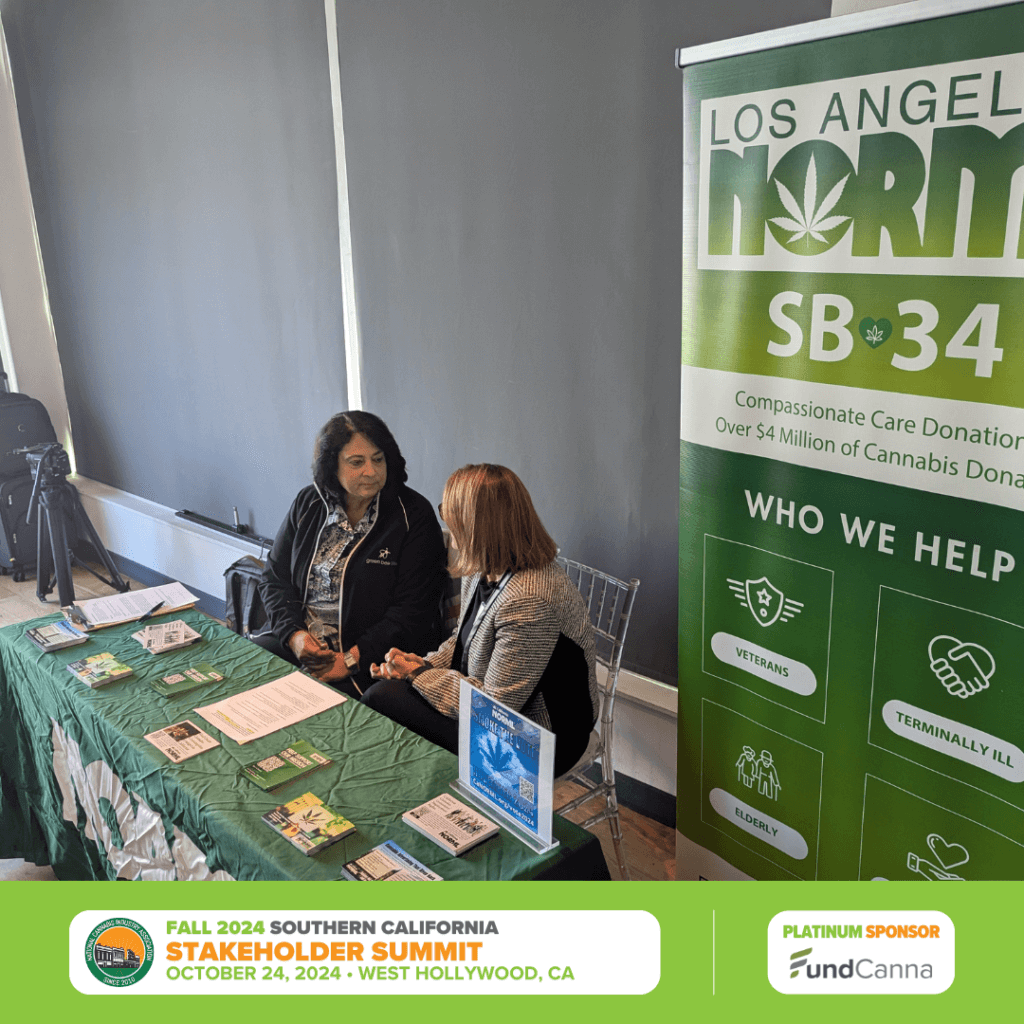
In Los Angeles, top regulators, operators, and industry advocates gathered to explore the unique challenges and growth opportunities within the region’s cannabis market. Michelle Garakian, Executive Director of the Los Angeles Dept. of Cannabis Regulation, and Laura Magallanes, Deputy Chief of the Office of Cannabis Management for Los Angeles County, shared insights on compliance, while moderator Yvette McDowell guided a discussion on strengthening industry-regulator collaboration. Jazmin Aguiar, Emerging Markets Consultant for Council Member Imelda Padilla, contributed her expertise on market expansion and policy development, underscoring the importance of community engagement in regulatory planning.
Equity operator Kika Keith, founder of Gorilla RX Wellness, advocated for streamlined processes and resources to support equity businesses, while Jerred Kiloh, President of the United Cannabis Business Association, called for policy reform, including excise tax reduction, alongside stronger enforcement against illicit operators. Panelists encouraged attendees to engage in advocacy and build stronger partnerships with local agencies, presenting a path forward for a compliant, thriving, and equitable cannabis industry in Southern California.
Schedule III & Section 280E: Navigating the Future of Cannabis Taxation
Across all four Summits, the “Schedule III & Section 280E: Navigating the Future of Cannabis Taxation” panel served as a pivotal discussion into how the potential rescheduling of cannabis could reshape financial and regulatory landscapes. Featuring a diverse lineup of industry experts and regional operators from across the cannabis supply chain, the discussion highlighted the anticipated end of 280E limitations and its impact on tax planning, capital access, and broader market opportunities.
Each panel featured unique perspectives: in Michigan, Thomas Lavigne, Jay Snipes and Scott Greiper explored strategic financial planning for capital investment in a post-280E landscape and how operators could prepare for new deductible expenses. In New York, Al Foreman and Marcella Osello shared expertise on how rescheduling could influence capital markets and growth for smaller operators. In Ohio, Thomas Haren and Ashley Mosby emphasized proactive compliance and planning for tax relief, while in Southern California, Neil Rosenfield, Henry Wykowski, and Eric Kaufmann discussed the regulatory adjustments needed to fully benefit from Schedule III status, with a focus on operational scalability and tax strategy. Panelists across all locations encouraged operators to adopt forward-thinking approaches, aligning financial practices with both current and evolving regulatory environments.
Honoring Our Speakers: Driving Conversations That Shape the Cannabis Industry
The success of the Fall 2024 Stakeholder Summits would not have been possible without the expertise and passion of our distinguished speakers. These industry leaders, policymakers, and advocates generously shared their knowledge, providing actionable insights and fostering critical dialogue on the challenges and opportunities facing cannabis businesses today. We extend our heartfelt gratitude to each of them for their invaluable contributions.
Schedule III & Section 280E: Navigating the Future of Cannabis Taxation
Thank you to each of these exceptional speakers for advancing the conversations that define the future of our industry. Their insights and leadership continue to inspire progress and innovation across the cannabis landscape.
Thank You to Our Sponsors and Partners: A Driving Force Behind the Fall 2024 Stakeholder Summits
Platinum Sponsors
FundCanna and Bavis Fabacraft led the way as our Platinum Sponsors, opening each Summit with impactful contributions that set the stage for dynamic discussions and actionable takeaways. Their support was instrumental in creating events that inspired collaboration and innovation across all four Summits.
Together, these sponsors and partners exemplify the power of collaboration and the impact of collective action. Their support not only elevated the Fall 2024 Stakeholder Summits but also strengthened our shared mission to create a sustainable and equitable future for the cannabis industry.
Thank you for being an essential part of this movement and for helping us continue to inspire, advocate, and lead as we shape the future of cannabis.
Building a Movement for Change
The NCIA’s Stakeholder Summits brought together a diverse array of voices committed to the growth and integrity of the cannabis industry. From navigating complex compliance landscapes to advocating for inclusive regulatory frameworks, the message across each session was clear: this is a movement, not just a moment. Industry stakeholders must collaborate, advocate, and actively participate in shaping the future of cannabis in the United States.
For cannabis operators, now is the time to align with the NCIA’s mission, engage in industry advocacy, and contribute to a movement that transcends individual business interests. Together, we can forge a resilient industry that not only meets today’s challenges but also paves the way for a sustainable and equitable future.
The conversation continues in 2025 — NCIA will hold follow-up Stakeholder Summits in Sacramento and Denver in Q1 and Q2, culminating with our first-ever National Stakeholder Summit in May 2025. This event will coincide with our 13th Annual Cannabis Industry Lobby Days in Washington, D.C., where we’ll unite industry leaders to make an impact on the national stage.
Join the movement — Drive meaningful change and help define the cannabis industry for generations to come by becoming a member of NCIA. Learn more about membership here.
Unlock Data-Driven Success: Watch the Full Recording of Our Latest NCIA Webinar
The cannabis industry is evolving rapidly, and data is the key to staying ahead. If you missed our latest Service Solutions webinar, now’s your chance to catch up on everything shared by leading experts in the field. During this NCIA Industry Essentials session, we explored how cannabis and ancillary businesses can harness data to drive growth, adapt to shifting regulations, and remain competitive in a dynamic market.
The session featured Adam Hutchinson, Co-Founder of CannaSpyglass, a leading provider of market intelligence and cannabis data solutions. Adam shared valuable insights into how businesses can use data to anticipate trends, identify emerging market opportunities, and optimize decision-making. CannaSpyglass specializes in providing cannabis businesses with access to comprehensive data analytics, helping them remain agile in a competitive environment. Their expertise in leveraging real-time market data has helped numerous cannabis operators scale their businesses and stay ahead of industry changes.
Along with Adam, John Manlove, CEO of Apex Trading, and Vib Gupta, Co-Founder & CEO of CannMenus, discussed the importance of utilizing market data for B2B and B2C insights, and how companies are embedding data-driven decision-making into their operations for better performance and growth.
This session was packed with actionable takeaways on how to leverage cannabis market data, anticipate challenges, and make more informed strategic decisions.
Exclusive Offers for NCIA Members & Webinar Viewers
As part of this special session, we’re offering exclusive discounts to NCIA members and webinar viewers:
Essentials Plan: Get started with CannaSpyglass for just $1/month using code NCIA1DOLLAR. This plan gives you access to a wide range of cannabis data insights, allowing you to explore the latest industry trends and consumer behavior on a budget.
Pro Plan: Save 25% on an annual subscription to CannaSpyglass with code NCIA4ANNUAL. This plan provides full access to CannaSpyglass’s advanced market analytics, real-time data, and custom reporting tools—perfect for businesses looking to gain a deeper understanding of cannabis market dynamics and make data-driven decisions.
CannMenus Offer: CannMenus is offering 60% off your first month of the Pro Suite to all webinar attendees and NCIA members. Use code NCIA60 at checkout to unlock full access to CannMenus’ suite of market analytics, sales enablement tools, unlimited real-time alerts, and custom reporting, with aggressive bundle pricing for additional markets.
These exclusive discounts give you access to the tools and resources you need to drive success in the cannabis industry. From market analytics to real-time alerts, these offerings will help you stay ahead of the competition and ensure compliance as market dynamics continue to shift.
NCIA’s Member-to-Member Discount Program: More Ways to Save
By becoming a member of NCIA, you gain access to our Member-to-Member Discount Program, which connects you with exclusive deals and services from trusted industry providers. From software solutions to legal services, our program offers discounts on products and services that can help your cannabis business stay compliant, scale, and succeed.
Exclusive educational content, including webinars, reports, and industry insights
Member-only discounts on a wide variety of business tools and services
Advocacy that ensures your voice is heard in important regulatory matters
Networking opportunities with key players in the cannabis space
Joining NCIA is more than just about savings; it’s about investing in the future of your business. Whether you’re navigating regulations or looking for new ways to grow, NCIA provides the resources, education, and connections you need to succeed.
Why Join NCIA?
By joining the National Cannabis Industry Association (NCIA), you gain access to a powerful network of cannabis professionals and resources. Our members benefit from:
Cutting-edge webinars and educational content that keep you informed and prepared for the future
Exclusive discounts that save you money on essential tools and services for your business
Advocacy efforts that protect your business and the cannabis industry at large
Networking opportunities with thought leaders, service providers, and industry professionals
Joining NCIA gives you the support and resources necessary to scale and succeed in a rapidly evolving industry.
???? Join NCIA Today and unlock a wealth of discounts, resources, and support to grow your cannabis business! Become a Member
Watch the Full Webinar Recording
Don’t miss the opportunity to catch up on this essential session. Watch the full Service Solutions: Mastering Data-Driven Success webinar recording now, and discover how you can leverage market data to drive smarter, more informed decisions for your cannabis business.
Stay ahead in the cannabis industry with NCIA—your partner in success!
Member Blog: Maximizing Success in the Cannabis Industry – Unpacking Market Maturity and Strategic Approaches
The cannabis industry is evolving faster than ever, with new markets opening up and existing ones maturing. But how do you know if your state is primed for growth or if you’re navigating an already saturated market? To thrive, it’s essential to understand where your state sits on the legalization journey and what strategic actions can drive success.
Join us for an insightful webinar hosted by the National Cannabis Industry Association (NCIA) in collaboration with CannaSpyglass and featuring expert insights from Apex Trading and CannMenus. This session, titled “Service Solutions: Mastering Data-Driven Success in the Cannabis Industry,” will dive into key factors that shape success in emerging and mature cannabis markets. Below, you’ll get a sneak peek at what we’ll cover on November 13th, 2024, at 3:00 PM ET.
Key Market Phases: Understanding Your State’s Trajectory
Cannabis markets in the U.S. generally fall into three categories: Upcoming, Emerging, and Mature. Each stage comes with unique regulatory landscapes, market opportunities, and challenges. Let’s break down what each phase means and how it could impact your business:
Upcoming Markets These states are in the early stages of cannabis legalization, often focusing on medical use with limited licenses. Examples include Kentucky and Minnesota, where medical programs are being established, with retail sales anticipated by early 2025. In these states, early movers can seize vendor partnerships and establish consumer trust before the market becomes crowded.
Emerging Markets States like New Jersey and Ohio represent active markets where licenses are increasingly accessible. Businesses here benefit from expanding consumer bases and opportunities for new entrants, with regulated sales expected to soar—New Jersey alone anticipates over $1 billion in sales by the end of 2024. Emerging markets are excellent grounds for growth but demand a keen focus on compliance and adapting to evolving regulations.
Mature Markets In established states like California and Colorado, competition is fierce, and margins can be tight. While new licenses may be limited, these markets allow opportunities for mergers, acquisitions, and refined operations. Mature markets also provide a roadmap for price trends and consumer demand shifts, valuable lessons for businesses in newer markets.
Navigating the Hype Cycle: The Influential Role of Market Dynamics
Whether you’re in an upcoming or mature market, the factors that influence success go beyond the legalization timeline. During the webinar, our panel will address the critical elements of the cannabis hype cycle and discuss how they influence market dynamics:
License Caps & Moratoriums: Limited vs. unlimited license markets can dictate competition levels and growth rates.
Compliance Requirements: From rigorous inspections to video surveillance mandates, compliance can impact operational costs and scalability.
Municipal Guidelines: Local opt-outs and license restrictions affect market density and accessibility for consumers.
Social Equity Programs: Equity initiatives can provide critical opportunities or barriers, depending on your status and location.
Multi-State Operators (MSOs): In certain states, MSOs dominate, creating competitive challenges and setting high standards for new entrants.
Seizing Opportunities in Each Market Phase
For cannabis businesses, each market phase offers opportunities and hurdles. Here’s a quick look at how each stage requires tailored strategies:
Upcoming Markets: These markets present chances for early partnerships and brand establishment. Vendors here are in high demand as businesses prepare for retail launches.
Emerging Markets: Building a loyal customer base and securing real estate can be pivotal as more operators enter. For cultivators, planning for price declines is critical.
Mature Markets: Efficiency is paramount. Businesses must focus on lowering production costs and exploring niche segments to sustain profitability amidst tightening margins.
Webinar Takeaways: Empowering Cannabis Business Leaders with Data-Driven Insights
This session won’t be just an industry overview; it will provide you with a roadmap for actionable insights. Attendees will walk away with:
Understanding of Your Market’s Position in the Maturity Cycle: Learn where your state stands and what challenges or opportunities lie ahead.
Strategic Tips for Each Market Stage: Discover tailored approaches for upcoming, emerging, and mature markets.
Insights into Regulatory Impacts: Gain a thorough understanding of how license caps, compliance, and social equity affect the industry.
This is an unmissable opportunity for cannabis entrepreneurs and stakeholders to elevate their knowledge and drive data-driven success. Register nowto join NCIA, CannaSpyglass, Apex Trading, and CannMenus on November13th for a webinar that promises to reshape your approach to cannabis market strategy.
Member Blog: Ensuring Pre-Roll Compliance – Navigating New York’s Stringent Cannabis Testing Regulations
With several states going legal ahead of them, New York State regulators had the benefit of watching other states develop testing programs, which is why New York’s testing regiment goes beyond many of the early adopter states to be one of the most stringent in the nation.
And while the rollout of licenses has been slower than many expected, testing regulations are now in place to ensure the products that do make their way to the public are safe for consumption.
New York also requires products be tested in their final form, which means that pre-rolls, for example, will be tested with rolling papers included so it is vitally important that your rolling papers will also pass the following tests to ensure that all cannabis products are safe for human consumption.
New York requires testing for the following:
Moisture Content and water activity;
Residual solvents and processing chemicals;
Residual pesticides;
Microbial impurities;
Mycotoxins;
Foreign materials;
Eight different heavy metals;
Cannabinoids; and
Terpenes.
Each of these tests are performed to protect consumers and are performed in some capacity by every state that has a legal cannabis program, though every state has its own regulation.
Some of the testing limits are fairly standard, like for example the limits on moisture content and water activity. Because any water activity above 0.70 Aw creates the conditions for mold to grow, which can be harmful if consumed, New York, like most states, caps water activity at 0.65 Aw in flower and pre-rolls. Additionally, dried flower batches must have a moisture content between 5.0-15.0%, with any sample exceeding 15.0% deemed unacceptable.
One of the major differences between New York and other programs is the number of heavy metals for which it tests. Plants absorb heavy metals from the soil, but they can damage all the body’s vital systems, including respiratory, central nervous and even the reproductive system.
While New York tests for the “Big Four” – mercury, cadmium, lead and arsenic (all of which are toxic even at small doses) – it is also one of a handful of states that also add chromium, which can damage the kidneys and liver.
But the Empire State goes even a step farther, requiring additional testing for copper, nickel and antimony.
Microbial and mycotoxin testing
Microbes and mycotoxins represent the greatest threat to human health among the tested items.
Most people are familiar with how microbes can make you sick, which is why New York tests for Salmonella, E. coli and several Aspergillus species of mold, including A. fumigatus, A. flabus, A. niger and A. terreus.
Mycotoxins are a toxic compound produced by molds like Aspergillus and can suppress the immune system and cause liver damage. New York requires testing for two classes of mycotoxins: Aflatoxins and Ochratoxin A. Both have properties that can alter DNA and potentially cause the formation of cancer cells. Testing for mycotoxins help ensure cannabis products are safe for human consumption.
The limit for all mycotoxins in New York is 0.02 micrograms per gram.
All pesticide products sold in New York State must be registered with the state, unless classified as a “minimum risk pesticide” by the federal government. To help producers determine if a pesticide can be used on cannabis, the state’s Department of Environmental Conservation even added “cannabis” and “hemp” to the use/type drop down menu in its pesticide database.
All pesticide use “must be declared for targeted testing” and additionally, New York law also requires labs to specifically test for 70 different pesticides, providing actionable limits.
Ensuring New York Pre Roll Compliance
As we noted, New York law requires all products be tested in their final form, including pre-rolls. According to the law, “the entire pre-roll or a portion of it (depending on size (blunt, 0.5-g, 1-g)) must be prepped and tested for all contaminants of concern,” which means even if your cannabis is clean, your products can fail and be destroyed if your rolling papers or pre rolled cones are not.
Because of that, manufacturers need to protect themselves – and their customers – by carefully selecting suppliers. After all, a study from California’s SC labs found that 11% of rolling papers they tested would fail that state’s testing regiment – which doesn’t even include Chromium, copper, nickel or antimony – and that 90% of rolling papers contained heavy metals with more than 8% containing them at a rate above the allowable limits.
Pre-roll manufacturers in particular need to pay attention to their suppliers and make sure that the company from which they buy their paper takes testing as seriously as they do. This is especially true for blunt products, which contain more moisture and biomass in the hemp wraps, which makes these products more susceptible to fail these compliance tests.
Custom Cones USA’s Compliance Manager André Bayard always recommends making sure your pre-roll paper supplier is a partner.
“It’s important to find a supplier that does the due diligence and is willing to work with you so you know ahead of time if your papers will pass lab tests,” he says.
Bayard notes that when contacted by a manufacturer concerned about heavy metals content causing failures, Custom Cones USA sent samples ahead of time so the manufacturer could pack and test a handful of their completed pre-rolls to make sure the products were clean before committing to a full order.
If your pre-roll supplier is not willing to go through that step, it may be a sign that you should find another pre rolled cone supplier.
Testing failures can be expensive and damaging to a brand, so make sure you not only keep up on the latest changes to your state’s regulations, but also work with a reputable pre rolled cone company to get the cleanest, best tested pre rolled cones you can find. And always ask to see COAs. Even if you are just a dispensary selling rolling papers and empty cones for smoking, offering tested papers and pre rolled cones is crucial to protect your brand and offer quality products to your customers.
Join Us for More Exclusive Insights on the Michigan Marketplace
Striving to stay informed about New York’s dynamic cannabis industry? Mark your calendars for our upcoming New York Stakeholder Summit being held in New York, NY on Tuesday, September 24th.
At the New York Stakeholder Summit you’ll be able to dive deep into the latest trends, regulations, and opportunities shaping New York’s cannabis landscape, including hearing directly from John Kagia Hanna, Director of Policy for New York’s Office of Cannabis Management. All industry professionals are invited; NCIA members attend free. Register here to secure your spot.
Start Making Sense: What Does Schedule III & Section 280E Mean for Me?
Rescheduling cannabis signifies a monumental shift for our industry, specifically presenting a potential pathway to alleviate the burdens imposed by Section 280E. In a new multi-part #IndustryEssentials webinar series, led by experts from our 14 member-led Committees, NCIA will provide a comprehensive analysis of the immediate and long-term impacts on different sectors within the cannabis industry.
In our debut session, led by the Banking & Financial Services Committee, we provided invaluable insights into the transformative implications of rescheduling cannabis to a Schedule III drug and its consequent impact on Section 280E of the Internal Revenue Code. In “Schedule III & Section 280E: What Does It Mean for Me?” broadcast LIVE on Thursday, May 30th, we explored the game-changing potential of this shift, offering actionable insights for businesses navigating the evolving regulatory environment.
Neil Rosenfield, CPA:Provided insights into the significance of comprehending and championing advocacy organizations to address regulatory hurdles.
Steven Gotsdiner, CPA: Illuminated accounting requirements tailored to cannabis businesses, drawing attention to the nuances across various states.
Eric Kaufman, COO: Shed light on the hurdles encountered by cannabis enterprises, while also elucidating the potential benefits stemming from regulatory changes.
Aaron Smith, NCIA: Emphasized the pivotal role of industry participation in policy reform endeavors, highlighting NCIA’s instrumental role.
Among the topics explored during the webinar was the profound impact of rescheduling cannabis on federal legality, state and local tax obligations, and the broader regulatory landscape. With cannabis poised to transition to Schedule III, businesses are poised to embrace newfound opportunities while confronting challenges inherent in navigating this regulatory terrain.
Neil Rosenfield of BakerTilly USA underscored the significance of contributing to and championing advocacy organizations to effectively address regulatory hurdles. Aaron Smith echoed this sentiment, emphasizing the pivotal role of industry participation in policy reform endeavors, highlighting NCIA’s instrumental role in spearheading these changes.
Another focal point of discussion revolved around the ramifications of rescheduling on tax obligations and deductions governed by Section 280E. The panelists provided invaluable insights into the implications for tax planning, including adjustments to tax bills, cash flows, and essential updates to accounting records and charts of accounts.
Steven Gotsdiner of HBK CPAs illuminated accounting requirements tailored to cannabis businesses, drawing attention to the nuances across various states. Eric Kaufman, COO of FundCanna, shed light on the hurdles encountered by cannabis enterprises, while also elucidating the potential benefits stemming from regulatory changes, such as managing surplus cash flows and preparing for shifts in interstate commerce.
Eric Kaufman explored whether rescheduling cannabis to Schedule III would reduce the cost of capital for operators and recommended strategies for deploying increased cash flows to scale and grow businesses effectively.
The webinar also delved into the anticipated timeline for these regulatory shifts, offering insights into potential implementation trajectories spanning from 2023 to 2025. Strategies for navigating diverse timelines and regulatory fluxes were discussed, equipping businesses with the tools needed to adapt and flourish in an ever-evolving landscape.
Thanks to the informed engagement of our audience members, a cornerstone of what makes our webinar series so valuable for members, the discussion touched on the definition of “Good Accounting Practices” and whether this includes Generally Accepted Accounting Principles (GAAP). The panelists also speculated on the possibility of new excise taxes replacing 280E and the potential impacts on federal protections like bankruptcy and IPOs.
As the program was extended in order to answer all of our audience questions, the session concluded with insights into how these regulatory changes might affect the CBD and hemp industries. The panelists emphasized the importance of staying informed and adapting to varying state-level requirements.
As the cannabis industry continues its evolution, proactive engagement with regulatory changes remains paramount for business success. The insights shared during NCIA’s #IndustryEssentials webinar series offer a compass to navigate the labyrinth of regulatory complexities and position businesses for enduring prosperity. By fostering active engagement and advocacy, cannabis enterprises can shape a regulatory landscape conducive to industry growth and development.
To continue facilitating these crucial dialogues amongst operators, regulators, and stakeholders, NCIA relies on the support of dedicated members like you. Join NCIA today to access exclusive resources, stay informed about the latest industry developments, and be part of a community committed to driving positive change in the cannabis industry.
Supporting advocacy efforts is integral to driving meaningful change in the cannabis industry. By becoming an NCIA member, you’re not just investing in your business’s success; you’re also supporting initiatives that shape the future of the industry. Together, we can amplify our collective voice and effect tangible change.
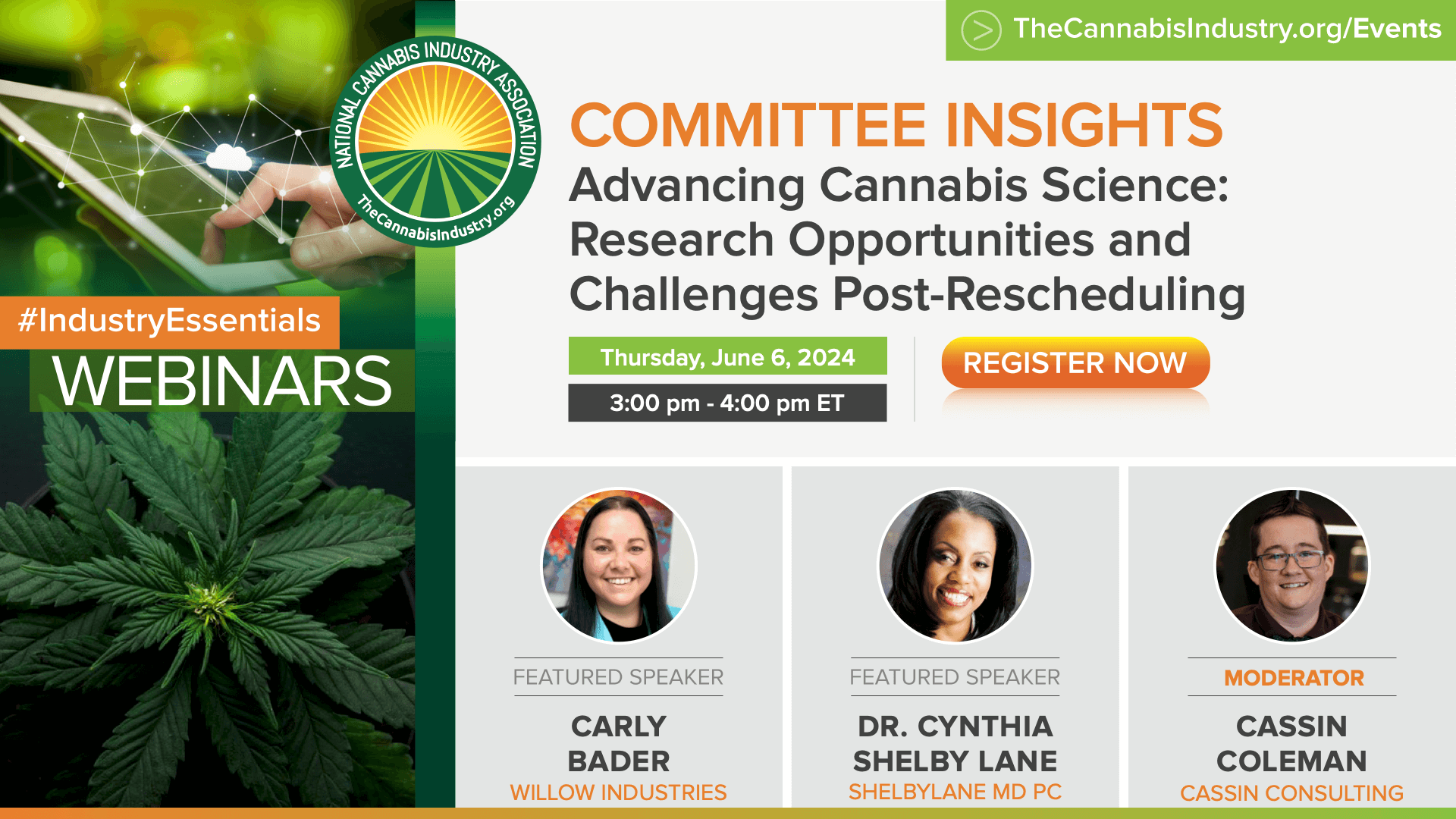
As we conclude this recap of our insightful session on Schedule III and Section 280E, we’re thrilled to announce the next episode in NCIA’s #IndustryEssentials multi-part webinar series: “Committee Insights: Advancing Cannabis Science: Research Opportunities and Challenges Post-Rescheduling.” Led by our esteemed Scientific Advisory Committee, this episode promises to explore the exciting realm of scientific research and consumer safety in the wake of cannabis rescheduling.
Join us for an engaging discussion with industry experts, gain valuable insights, and shape the future of cannabis science and consumer safety. Register now to reserve your spot and be part of the conversation!
Member Blog: Colorado’s Evolving Cannabis Testing Regulations
Among the first two states to legalize and the first market to open, Colorado has had adult-use cannabis regulations in place for more than a decade now and helped set a standard for all the programs that came after it.
But Colorado’s testing regiment, like the industry, is ever evolving, with the state testing for additional pesticides beginning this year, for example. In addition, the state’s new “reduced testing allowance” could make the whole process easier for manufacturers in good standing.
Like many states, Colorado requires testing of the final product, be it flower, edible or pre-roll, which means not only must your flower be clean, but everything else you put into your products as well. In the case of pre-rolls, that means the paper used in the pre-rolled cones, as well as the filter tip.
The “big four” heavy metals (arsenic, cadmium, lead and mercury); and
Cannabinoid potency.
WATER ACTIVITY
Like every state, Colorado testing requires laboratories check for water activity because high amounts of moisture can create an environment with the potential for mold growth.
Any water activity above 0.70 Aw creates the conditions for mold to grow, which can be harmful if consumed, which is why Colorado caps water activity at 0.65 Aw in flower and pre-rolls.
PESTICIDES AND SOLVENTS
Colorado also requires testing for residual pesticides and other chemicals and has been slowly ramping up its required pesticide testing.
For example, on January 1, 2023, the state tested for a total of 13 different pesticides. By July 1, 2023, that number had increased to 28. But new regulations going into effect this year drastically increase that number.
Beginning July 1, 2024, state law requires labs to test cannabis products, including completed pre-rolls, for 99 different pesticides, each with their own actionable limits that can cause a whole batch to be destroyed.
Additionally, the state requires cannabis concentrate products, including those used in infused pre-rolls that combine flower with a concentrate for increased potency and flavor, to be tested for residual solvents.
The state requires testing and provides actionable limits for 13 specific solvents that can be used to make extracts and concentrates, as well as requiring “none detected” for “any other solvent not permitted for use.”
HEAVY METALS
The Centennial State also requires testing for the heavy metals mercury, cadmium, lead and arsenic. All four metals are toxic to humans, even at small doses, and can damage all the body’s vital systems, including pulmonary, reproductive and even the central nervous system.
Testing for heavy metals is especially important because cannabis plants are a well-known bio-accumulator that absorbs and collects heavy metals from the soil in which it grows.
For all inhalable products, including pre-rolls, the state sets the pass/fail actionable level at 1.5 parts per million (PPM) for mercury and arsenic, 0.5 PPM for cadmium and 1 PPM for lead.
MICROBIALS AND MYCOTOXINS
But while heavy metals are dangerous, they do not pose the greatest risk to human health among the testing. That distinction is reserved for microbials and mycotoxins.
Among the microbes – bacteria and fungus – for which Colorado requires testing are salmonella, Staphylococcus aureus and e coli. There is also a total yeast and mold limit.
Mycotoxins are a toxic compound produced by molds, such as Aspergillus, and can suppress the immune system and cause liver damage. Testing for mycotoxins help ensure cannabis products are safe for human consumption.
Colorado requires testing for two classes of mycotoxins, Aflatoxins and Ochratoxin A, each with an actionable limit of 20 PPM. Both have properties that can alter DNA and potentially cause the formation of cancer cells.
PRE-ROLL TESTING
But it’s not just the flower that needs to be tested in Colorado. Products must be tested in their final form, which means that pre-rolls, for example, must be tested after they have been packed, so the paper has to be as clean as the flower. And with no regulations or requirements on the testing of rolling papers themselves, several manufacturers have run afoul of the rules because of untested rolling papers or wraps. And testing by SC Labs, one of California’s licensed testing labs, found that 11% of rolling papers tested during a recent study would fail testing. So even if you are packing your own pre-rolls, it’s important to make sure the paper you choose is tested and clean.
Colorado has also had issues with this in the past, particularly in palm leaf wraps and blunts. In 2022, the states Marijuana Enforcement Division issued a recall for King Palm products due to unsafe mold and yeast levels found in the products.
“Take due diligence to make sure your product is viable,” says Custom Cones USA Compliance Manager André Bayard, noting that manufacturers should work with suppliers that are working to set industry standards. “Any one issue can be detrimental to your brand reputation.”
REDUCED TESTING ALLOWANCE
Recognizing the unique challenges and cost of testing, Colorado has introduced new reduced testing allowances, including one tailored for pre-roll cannabis products. This allowance enables cannabis manufacturers to submit composite samples for testing, rather than subjecting each individual batch of pre-rolls to separate testing.
For example, a manufacturer may achieve a Reduced Testing Allowance for contaminant testing for a specific product, like pre-rolls, if every production batch that it produced during at least a four- to eight-week period passed all contaminant tests. However, if those pre rolls are produced using different input materials, such as a different cannabis category (e.g. flower or trim), different wrapper materials, different processes or different equipment, they must get a separate Reduced Testing Allowance.
Additionally, effective July 1, 2024, to achieve or maintain a Reduced Testing Allowance for microbial contaminants, a cultivation facility must have a Hazard Analysis and Critical Control Point (HACCP) System in place. An HACCP must contain elements defined in ASTM D8250-19: “Standard Practice for Applying a Hazard Analysis Critical Control Points (HACCP) System for Cannabis Consumable Products” that addresses each product type for which a microbial contaminant Reduced Testing Allowance is sought.
It’s important to highlight that not all cannabis products qualify for this reduced testing allowance, and pre-roll manufacturers must meet specific criteria to be eligible for this exemption. For example, to get a reduced testing allowance for microbial testing, a company must maintain cleaning records and maintenance records.
Reduced testing allowances are valid for one year.
It’s a complicated program to be a part of, but well worth it for manufacturers who have their procedures locked in, as well as a supplier that also tests their pre-rolled cones and tubes to the highest standards to ensure passage of these important tests.
FINAL THOUGHTS
Colorado’s pre-roll cannabis testing regulations play a vital role in safeguarding public health and ensuring consumer confidence in the state’s legal cannabis industry. And from a business standpoint, a testing failure can be costly, especially for smaller businesses, and can follow a company and its products even after the issue is corrected.
Make sure your suppliers take the same care as you do to ensure passage of all required tests. And always ask for COAs.
Member Blog: Regulating the Cannabis Industry for Accuracy and Integrity
Regulating the Cannabis Industry forAccuracy and Integrity
In the fast-evolving landscape of the cannabis industry, ensuring accurate testingstandards is paramount to safeguarding consumer safety, maintaining regulatorycompliance, and fostering fair market competition. However, a pervasive challengeknown as cannabinoid inflation threatens to undermine these essential principles,posing a significant obstacle to the industry’s growth and legitimacy.
Understanding Cannabinoid Inflation
Cannabinoid inflationrefers to the practice of cannabis testing laboratories providinginaccurately high cannabinoid concentrations in their reports, often in an attempt toattract business. This phenomenon distorts market dynamics, leading to unfaircompetition and jeopardizing the credibility of legitimate labs that adhere to rigoroustesting standards. Contaminant deflationis a significant concern, too, as labs willing toinflate cannabinoids are also more likely to underreport the presence and/or amount ofhazardous substances.
At the heart of this issue lies a fundamental discrepancy between reported and actualcannabinoid content in cannabis products. As cannabis producers and distributors seekout labs offering higher THC values, a troubling trend is to use only labs that will inflatethe value of desirable cannabinoids, such as THC. This practice, known as laboratory shopping, perpetuates the cycle of inflated results, undermining integrity and forcingaccurate reporting labs out of business.
Proposing Regulatory Solutions
To address this pressing cannabinoid inflation challenge, Digamma Consulting,renowned experts in cannabis chemistry, presents a comprehensive set of regulatorysolutions in their latest white paper, Solutions to Cannabinoid Inflation.
Solution A: Data Analysis Reports Advocating the adoption of data analysis reports,Digamma proposes a systematic approach to analyzing testing data, providingregulators with a solid foundation for action. By leveraging data analytics, authoritiescan identify trends, anomalies, and potential instances of cannabinoid inflation. Suchidentification enables regulators to make targeted and legally justified interventions thatcan help to improve testing integrity.
Solution B: Suspect Product Checks Digamma recommends implementing suspectproduct checks, also known as “secret shopper” programs, to detect inflatedcannabinoid values. This cost-effective mechanism allows states to conduct productsampling and testing of suspected lab results by independent accredited referencelaboratories that will validate reported cannabinoid content and mitigate inflated results.
Solution C: Chemical Analysis Laboratory Audits Digamma proposes implementingin-person audits of chemical analysis laboratories to ensure testing integrity and thusdirectly address cannabinoid inflation. Subjecting testing facilities to rigorous scrutiny byexpert auditors enables regulators to assess compliance with standards and uphold theintegrity of the testing process.
Digamma’s White Paper: Solutions to Cannabinoid Inflation
Digamma’s white paper on regulating the cannabis industry for accuracy and integrityrepresents a significant step toward addressing the pervasive challenge of cannabinoidinflation. By advocating for practical, low-cost regulatory solutions, Digamma Consultingaims to empower government regulators to uphold transparency, impartiality, and legaldefensibility in cannabis testing reporting and labeling.
As the industry continues to evolve, it is imperative to prioritize consumer safety,regulatory compliance, and market fairness. Through collaborative efforts and ongoingdialogue, we can navigate the complexities of the cannabis industry and propel it towarda future characterized by integrity, transparency, and accountability. Join Digammainthe quest to build a safe, fair, and thriving cannabis industry for all.

















Follow NCIA
Newsletter
Facebook
Twitter
LinkedIn
Instagram
News & Resource Topics
–
This Just In
How THCa Vapes Are Changing Consumer
Announcing NCIA’s 2026-2028 Board of Directors