Dr. Amanda Reiman in conversation with Jeremy Marsh, from the Office of Congresswoman Dina Titus
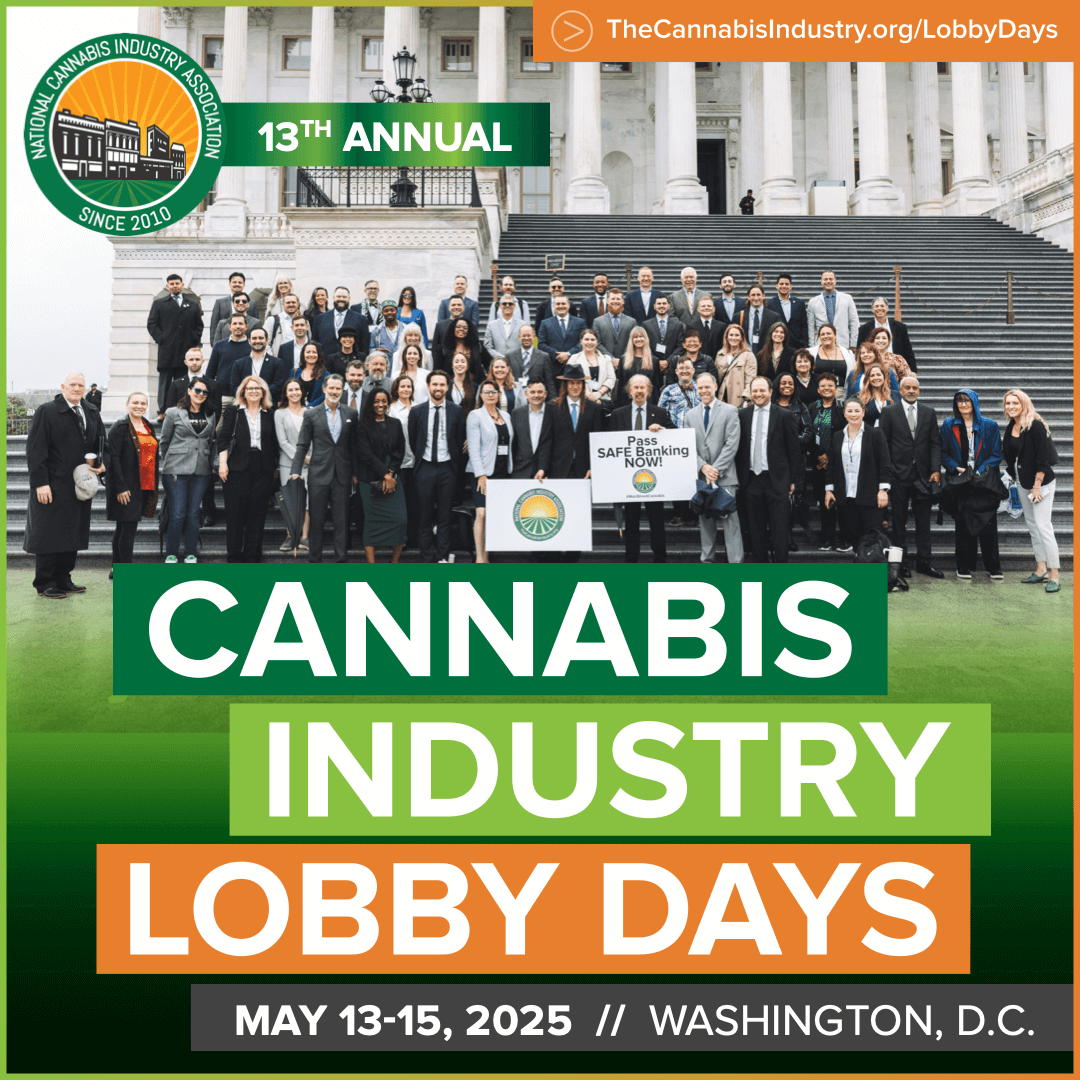
NCIA’s 13th annual Cannabis Industry Lobby Days is rapidly approaching and new and seasoned attendees alike may be wondering how to make the most out of the precious time with electeds’ offices. Meeting with allies and skeptics both present unique challenges and opportunities. To provide advice on how to make the most out of Lobby Days, I reached out to Congresswoman Dina Titus’ office and spoke with Legislative Assistant Jeremy Marsh. Following his advice will help you walk away from Lobby Days feeling accomplished and confident that your message got through.
Stories from the community matter
White papers and data points are fine, but what really moves the needle are stories from the community and the front lines. Tailoring stories to the district/state of the office you are meeting with shows how constituents and local businesses are impacted by policy. These stories are great tools for supportive legislators to take to the floor and their committees. And, when meeting with a legislative office that has supported cannabis in the past, be sure to thank them! Standing up for cannabis is still a risk and those willing to take it should be acknowledged.
Rescheduling and hemp are still areas of confusion
Elected officials are more cannabis savvy now than ever before, but there are still some issues where education is needed. Don’t assume that elected officials, even supporters of cannabis are experts in all of the hot button issues being discussed in the industry. Mr. Marsh explains that rescheduling/descheduling and hemp regulation are two areas where confusion persists. Explain the issue before asking for support, and have some fact sheets ready with background information, as well be willing to answer questions and give context to these issues. Be sure you yourself can clearly explain the issues you are bringing into your Lobby Days visits.
Be early and be flexible
If you’re early you’re on time, if you’re on time, you’re late. This adage was drilled into my head by my Dad (thanks Dad!) and it is a great rule of thumb for Lobby Days. Try to be at least 5 minutes early to each meeting. Time is precious and being early shows that you are taking the process seriously. It also gives you time to collect your thoughts and your breath before heading into a meeting. Lines to get into the Capitol can be long, so keep this in mind before your first meeting of the day. If you are going to be late to a meeting, call the office and let them know. At the same time, be flexible. Schedules are constantly shifting for elected officials, so don’t take it personally if you are meeting with a staffer, or in the hallway outside the office. ALL communication is important, and many vital conversations happen outside the office doors (just watch Veep!).
The economy and public safety are selling points for opponents
Many would argue that meeting with opponents is just as, if not more, valuable than meeting with allies. And although cannabis has gained support from both sides of the aisle over the years, many are still skeptical of changing the laws around cannabis. If you meet with someone who has not traditionally been supportive, discussing the economic and public safety benefits of legalization is a good focus. Cannabis tax revenue has been used to support schools, roads, substance abuse programs, job placement and more. And, research shows that, after legalization, fewer teens are using cannabis, and fewer people are using opiates. You don’t have to be a fan of cannabis to be a fan of legalization.
NCIA’s 13th annual Cannabis Industry Lobby Days is a chance to bring the cannabis issue front and center with lawmakers. Once a source of snickers and jokes, the cannabis movement has become a major political force. Even so, assumptions about those involved in cannabis persist. Being prepared, professional and well versed on the issues will make an impression. And being a part of shedding a positive light on this industry and the people who work in it feels really great.
Committee Blog: Breaking the Stigma – Cannabis in the Retail World
Cannabis, once relegated to the shadows of society, is making a significant push into mainstream America. However, the journey from prohibition to acceptance is faced with many challenges, particularly in the retail world. The stigma surrounding cannabis stems from historical, legal, social, and cultural factors, and lack of education, plays a role in shaping the stigma. In this blog, we’ll explore some of the roots of the stigma on cannabis and how the landscape is gradually changing.
The Historical Backdrop
The roots of cannabis stigma are deeply embedded in history. In the early 20th century, cannabis was criminalized in many parts of the world. The United States’ War on Drugs, which began in the 1970s, heavily penalized cannabis use, linking it to criminal behavior and societal decay. Media reports of cannabis users as lazy, unmotivated, or criminals; these negative stereotypes are what many believe to be true.
However, alongside this negative portrayal, there exists a rich history of cannabis as a medicinal plant. For centuries, cannabis has been used to treat a variety of medical issues. Ancient cultures across Asia, the Middle East, and Africa utilized cannabis for its therapeutic properties, including pain relief and anti-inflammatory benefits.
In more recent times, cannabis has shown promise in helping cancer patients manage symptoms such as nausea, pain, and loss of appetite. Additionally, it has been found to fight inflammation, which is beneficial in treating conditions like arthritis and multiple sclerosis. This positive history of cannabis as a healing plant is often overshadowed by its criminalization and the stigma attached to its recreational use.
Legal and Regulatory Hurdles
One of the most significant barriers to cannabis acceptance in retail is the complex legal landscape. In the United States, for instance, cannabis remains illegal at the federal level, despite being legal in several different states. This legal ambiguity creates uncertainty and fear among businesses, banks, customers as well as B2B consumers.
Moreover, the reluctance of banks and financial institutions to work with cannabis-related businesses due to federal regulations results in limited access to financial services and funding. This financial exclusion makes it difficult for cannabis businesses to operate and expand, perpetuating the stigma. It also makes it challenging for funding purposes for these businesses to continue to operate efficiently.
Social and Cultural Challenges
Public perception plays a crucial role in the acceptance of cannabis. Despite increasing acceptance, many still view cannabis use negatively and as a Schedule 1 drug, influenced by concerns about health impacts, addiction, and moral values. Workplace policies that maintain strict no-drug stances, regardless of legal status, also contribute to this negative perception. Enhancing education on cannabis can help mitigate this stigma within our culture, which in turn will aid in positioning the cannabis industry as a credible sector in the eyes of consumers, banks, and other business sources.
Retail Industry-Specific Issues
In addition, mainstream retailers are often hesitant to carry cannabis products due to fear of backlash from conservative customers or communities, which limits the visibility and availability of these products in the broader spectrum.
Furthermore, stringent marketing and advertising regulations restrict cannabis businesses from effectively reaching new customers and normalizing their products. Social Media advertising is prohibited as well as certain television channels.
Conclusion
Resolving the challenges surrounding the stigma of cannabis in the retail world requires a multifaceted approach. Firstly, education plays a pivotal role: increasing public awareness about the medicinal benefits of cannabis and dispelling myths through targeted campaigns can shift negative perceptions. Secondly, advocating for legislative reform to align federal and state laws can provide clarity and confidence for businesses to operate effectively. Moreover, fostering open dialogue among stakeholders, including policymakers, industry leaders, and the public, can promote understanding and acceptance. Lastly, mainstream retailers can be encouraged to embrace cannabis products through initiatives that demonstrate responsible consumption and highlight regulatory compliance, thereby normalizing its presence in the retail market. By addressing these aspects comprehensively, we can gradually reduce stigma and integrate cannabis as a legitimate and beneficial sector within the retail market.
Navigating the Confusing, Crowded World of Cannabis Payments
When you’re a cannabis retail operator looking for electronic cannabis payment solutions you’re faced with a baffling array of options and it’s hard to pick out the ones you can trust and the ones that you should avoid at all costs. Every potential vendor is going to tell you that their solution is the best (trust me!) so you need to understand the basic landscape of cannabis payment solutions in order to know what questions to ask. There’s a lot of solid vendors out there that only want to help the industry but there are, sadly, those out there that prey upon a lack of familiarity with the crowded, confusing payments landscape to push solutions that are at best unsustainable and at worst fraudulent.
ACH transactions are a way for a person or a business to do direct bank money transfers.
These transactions are conducted on a computer network run by NACHA, the National Clearinghouse Association. Since these don’t run over the networks run by the credit card companies like Visa or Mastercard – known as “payment rails” – these transactions don’t violate their rules. While NACHA hasn’t officially made a statement either way about cannabis, their actions suggest they don’t have an issue processing these transactions over their network.
The downside with many ACH solutions is that they aren’t necessarily convenient for the buyer. Because a customer or patient can’t just pull out a bank card they are often required to download an app and provide banking details like account and routing numbers. This isn’t necessarily an issue from the second purchase forward, but this can be a bit of a pain for a customer or patient trying to use an app for the first time if they’re not expecting to have to go through an account onboarding process that might take several minutes. The upside to this is that there are platforms that allow the buyer to upload funds via ACH to an eWallet, which, after the initial transaction, will enable them to make instant purchases. Platforms also allow the buyer to automatically replenish their eWallet via ACH, allowing them to always have funds to make purchases. These purchases can also be combined with a store’s loyalty points program.
Questions to ask about ACH solutions:
What does a customer or patient need to do to use the solution?
How long does it normally take for the funds to transfer, allowing a user to make purchases?
Are there any contactless platforms that allow a buyer to purchase the product for delivery or curbside pickup?
Do you need additional hardware to display a single-use QR code specific to the transaction?
Cashless ATMs and PIN Debit solutions are among the most common electronic payment methods that allow customers to directly use cards.
To discuss the issues that go along with any card-based solution we need to take a step back and talk about how payments are processed. As previously mentioned, every credit card company has a set of rails used by merchants to process a sale over their network. Each transaction is sent as a packet of information that broadly contains the following information: name of business, location of business, any additional merchant information, and merchant category code (MCC).
Every transaction has to be associated with a four digit MCC used by the merchants to indicate the nature of the business and the transaction. The code that’s traditionally been used by cashless ATMs and PIN Debit solutions is 5912, reserved for pharmacies and “cannabis (where legal to do so)”. This is what’s used in Canada where credit cards are an option but it’s not an acceptable option in the US because the major credit card networks have clarified that their rails cannot be used for the purchase of marijuana. They do so by prohibiting activities associated with “controlled substances, or recreational/street drugs” (VISA) or even more broadly “any Transaction that is illegal” (Mastercard) in their operating agreements.
It’s important to note that you can’t just randomly choose an alternative MCC because miscoding constitutes fraud. You may remember a few years ago that California-based delivery company Eaze was prosecuted in 2019 for using MCC codes associated with things like “carbonated drinks, green tea, face creams and other products” in an attempt to obscure the fact that the network was being used for the direct purchase of marijuana.
It should be noted however that there are a few ATM networks out there that aren’t directly owned by the big credit card companies like NYCE, Allpoint, Star, and Moneypass. These companies have been relatively quiet regarding the use of their networks for the purchase of marijuana products, so there is an argument to be made that if card transactions are sent over those rails they’re not violating any operating rules, but anecdotally we’ve heard that some of these networks aren’t necessarily cannabis friendly and, as private companies, they’re able to change their mind (for or against) whenever they wish.
Questions to ask about Cashless ATMs and PIN Debit solutions:
What MCC code is the payment processor using?
What network is being used to process the transaction?
Credit cards are notoriously off-limits to cannabis because of the very public positions taken by the major card networks but that doesn’t stop companies from popping up offering credit card processing for cannabis purchases. Let’s clarify here at the outset – there is no way to directly purchase marijuana with a credit card in the United States with a credit card from American Express, Visa, Mastercard, or Discover.
So, with necessity being the mother of invention, some companies are trying out a new strategy to get credit card processing into dispensaries legally. Among them are solutions that take advantage of another MCC code: 6051. This code is associated with the purchase of “liquid and cryptocurrency assets” and some enterprising payment providers are using it to set up a structure where a customer isn’t “technically” buying marijuana. Instead they are “buying” what’s called a “stablecoin”, a form of cryptocurrency whose value is pegged 1:1 to the US dollar.
Questions to ask about cryptocurrency or stablecoin solutions:
What MCC code is the payment processor using?
What stablecoin is being leveraged?
How is the stablecoin preserving its value?
What will the offramping of funds from a crypto wallet to my DDA account look like to my bank?
Cannabis retail operators are faced with serious business and legal considerations when determining the payment processing solution provided to patients and customers. What solution will be the easiest for the customer? Is the solution compliant?
The cannabis industry’s evolving legal and regulatory landscape is challenging, especially with bad actors seeking to implement non compliant make-shift payment solutions intended to capitalize off of cannabis businesses seeking efficient and effective cannabis payment solutions. It is essential that you do your due diligence on cannabis payment solutions presented to your business to confirm that it will not cause an issue for you, the business and its patterns and customers. We hope that this article outlines considerations that will allow you to protect your business and its patients and customers.
Member Blog: 5 Things You Need to Do Before You Launch Your Cannabusiness in New York
Cannabis was legalized in New York in 2021, and now the market is starting to fully open up for all types of cannabusinesses across the state. Despite a rocky start to rolling out new licenses, it’s almost time for the general public to dip their toes in and start their own dispensaries.
New York’s legal cannabis market is projected to be worth $4.2 billion by 2027, making it the country’s second-largest recreational cannabis state. It won’t be long before cannabis businesses have hundreds of locations across New York.
Curious about how to open a New York dispensary? Here are five things you need to do to get ready for your blossoming cannabusiness.
Conduct Market Research & Choose a Location
Since many cannabusinesses will be opening up in New York in the next few years, you need to ensure that yours is set up for success from the start. The best way to secure success is by selecting a high-demand area with minimal competition. You can identify lucrative locations by exploring different neighborhoods and conducting market research.
Visit prospective spots in person, instead of just looking at them on a map. You’ll get a much better sense of the feel of the area, the type of people walking through, the surrounding businesses, and more. And if feasible, talking to residents and local business owners will help you to really understand the market.
It is also important to be mindful of the New York zoning laws before securing a location. According to statewide zoning restrictions, a cannabis dispensary can’t be on the same road or within 500 feet of a school and 200 feet from a house of worship. Cities may have additional restrictions to limit the number of cannabis dispensaries in a certain location. Do your research before you get married to a location that won’t work out for logistical reasons.
Apply for a License
You’ll need a license to open a cannabusiness in the state of New York. However, as of October 2023, the path to applying and receiving a cannabis license in the state is a little up in the air.
When applications for the first licenses opened up, New York legislators wanted to ensure that people who were negatively impacted by the state’s previous criminalization of cannabis could apply first. This included people who were convicted of a cannabis offense in New York or were affected by a loved one’s conviction.
Now, starting on October 4, 2023, New York will start accepting license applications from a much broader pool of entrepreneurs. Applications are open to everyone over the age of 21 who does not already have three licenses. This is exciting news for many aspiring cannabusiness owners who were not eligible the first time around.
However, these licenses may not be issued as soon as prospective owners hope. When the state legalized cannabis, its goal was to award half of the retail licenses to people with previous cannabis convictions, racial minorities, women, and veterans disabled during service. Several veterans have filed a lawsuit stating that veterans were unfairly passed over for the early licenses. The judge in the case ordered that the state wait to award any new dispensary licenses until the case continues.
Opening a dispensary in New York will be expensive. While profits will likely be high once you open, you need to find a way to secure the funding needed to get your cannabusiness operational — which experts say could cost between $500,000 to $2 million.
This figure accounts for a variety of expenses for your cannabusiness, including:
Licensing and application fees
Lawyers and consultants
Real estate
Dispensary design and construction
Staffing
Business equipment
Surveillance and security system
Marketing and advertising
Products and inventory
Many cannabis entrepreneurs take out loans to cover these up-front costs, either from credit unions or cannabis-friendly banks. Some are able to partner with others or enlist investors to start their businesses. However, you should do your due diligence and research before taking on a loan or going into business with an investor. Unfortunately, there has been some predatory lending occurring in the market because of the inability to lend from large banks. Make sure that you do this research before you get too far in the process of creating your cannabusiness.
Understand Cannabis Laws & Regulations in New York
There are hundreds of laws and regulations that apply to cannabusinesses in New York. While this can feel overwhelming, it’s important to follow them carefully, especially when you’re setting up your dispensary.
There are some regulations that apply to your customers that you’ll need to adhere to, including:
Customers must be over the age of 21
Customers can only buy 3 ounces of cannabis flower per day
Customers can only buy 24 grams of cannabis concentrates per day
Others regulations apply to your business location, including:
Installing a 24-hour commercial-grade security system
Installing a perimeter alarm
Conducting video surveillance in every part of the store with cannabis products
Products cannot be visible from outside of the store
Maintaining minimum staffing levels (depends on business plan submitted with application)
Training staff on local ordinances, laws, and cannabis safety
It’s vital to take these rules seriously from the beginning. Neglecting even a single law could result in your dispensary getting shut down. You can consult an extensive overview of the New York cannabis laws and regulations here.
Invest in the Right Team
You need to hire a team of high-quality employees who will help your business succeed from the very first day. Your budtenders can make or break your entire business model, so you need to vet them carefully and train them well.
Your budtenders will be interacting directly with clients. They’ll answer their questions, suggest products, and upsell items. Hire these employees carefully, and make sure they’re happy in their positions by offering great pay and benefits.
To streamline training, create training manuals and SOPs (standard operating procedures) so that every employee is trained in the same way. This will limit mistakes and increase efficiency and customer satisfaction.
Final Thoughts on Launching Your New York Cannabusiness
Cannabis is expected to become a booming industry in New York. If you’ve always dreamed of opening a cannabusiness, now’s your chance to get in as early as possible and make your impact on the market!
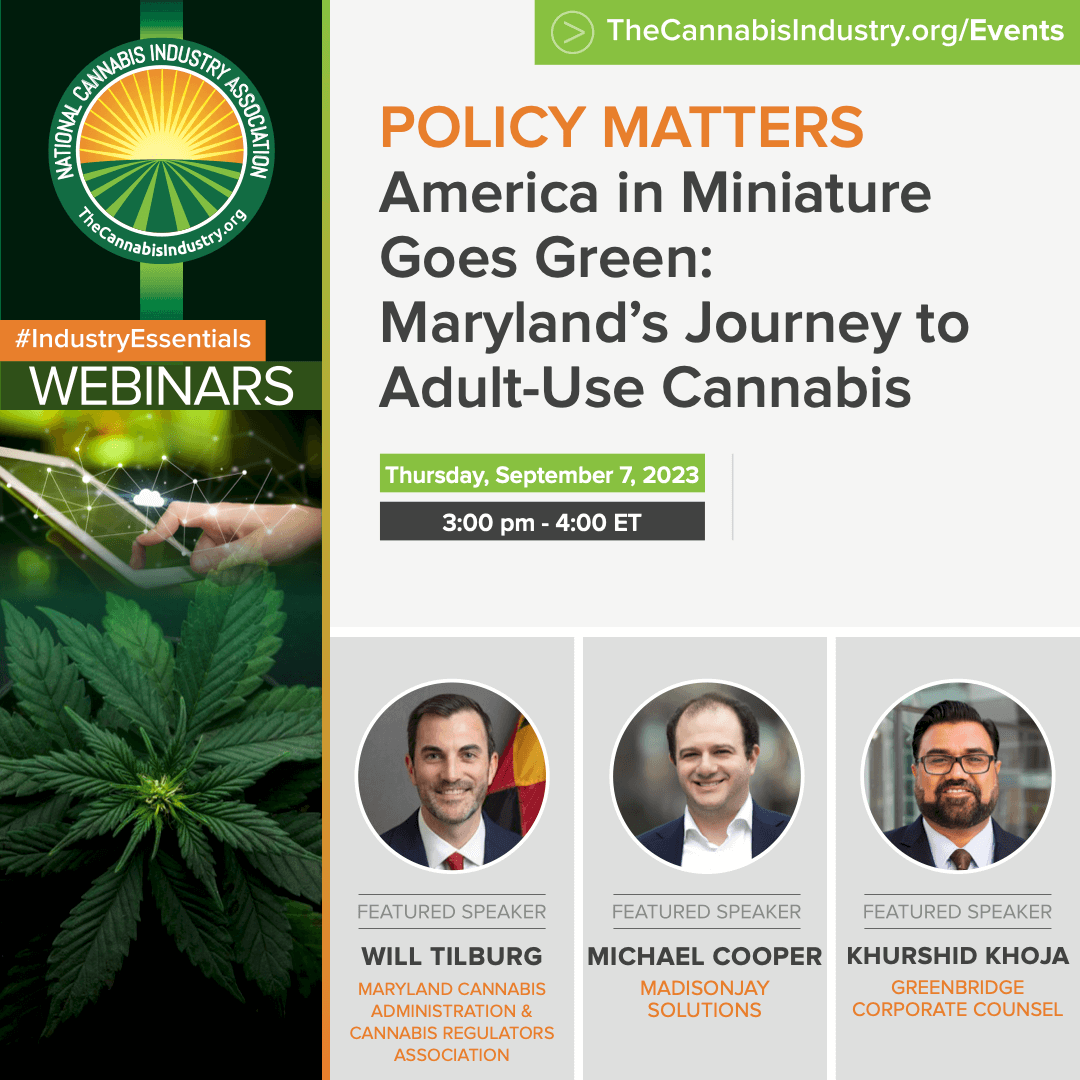
America in Miniature Goes Green: Maryland’s Journey to Adult-Use Cannabis | 9.7.23 | Policy Matters
Introducing “Policy Matters” – an insightful new #IndustryEssentials webinar series dedicated to unraveling the intricate world of regulatory and policy dynamics within the cannabis industry. As the cannabis landscape continues to evolve, staying informed about the latest regulations and policies impacting Main Street cannabis operators is crucial for success. Join us for a series of engaging discussions where regional regulators, industry leaders, legal experts, and policy influencers come together with NCIA leadership to shed light on the most pressing issues facing cannabis professionals.
Are you curious about the intricacies of launching an adult-use cannabis market in record time? In the debut episode of our new Policy Matters webinar series we delved into the strategic aspects of designing a thriving cannabis market while meeting regulatory standards. In this exclusive session, NCIA Policy Co-Chairs Khurshid Khoja and Michael Cooper were joined by Will Tilburg, Director of the Maryland Cannabis Administration and President of the Cannabis Regulators Association, to explore invaluable insights into the objectives that drive cannabis regulators and the pitfalls they strive to avoid. Discover the pressing enforcement challenges that are top of mind for cannabis regulators in 2023 and gain a clear understanding of the evolving landscape.
Don’t miss this opportunity to gain an understanding of how policy matters in the fast-paced cannabis sector. Stay informed, stay ahead, and be part of the conversation that’s shaping the future of cannabis policy. Tune in today and empower yourself with the knowledge to thrive in this dynamic industry.
03:40 – Launching an Adult Use Market in 2023 | Were there lessons from the existing medical market and others around the nation that you identified as important, both success stories and pitfalls to avoid?
07:23 – Launching an Adult Use Market in 2023 | What allowed you to move so efficiently and what lessons would you highlight for industry and regulators in new markets rolling-out in the future?
12:48 – Launching an Adult Use Market in 2023 | What are some priorities you have for the months ahead?
16:55 – Launching an Adult Use Market in 2023 | What advice would you give to future regulators on building relationships within the executive branch to prioritize these issues?
22:20 – Social Equity | Can you talk about reserving the first round of adult-use cannabis licenses exclusively for social equity applicants and other recent milestones or developments working with the Office of Social Equity?
28:56 – Social Equity | How has Maryland worked to make its medical cannabis industry more equitable and ensure these goals aren’t undercut as they have been with similar licensing preferences in other states?
34:04 – Enforcement | How did the state set up its enforcement plan? How do you strike a balance in a new market between a complete absence of enforcement and protecting public health?
37:34 – Enforcement | What are some key enforcement priorities for you looking ahead?
41:40 – CANNRA | Can you talk about the Cannabis Regulators Association (CANNRA) purpose, membership, and goals?
44:39 – CANNRA | What are the priorities or goals for your tenure as CANNRA president?
47:20 – Federal Reform & Regulation | What is Maryland doing to address the hemp-derived cannabinoids issue as it relates to protecting public health and unfair competition with adult-use cannabis licensees?
52:10 – Federal Reform & Regulation | As a state regulator, how did you receive the recent HHS recommendation for rescheduling of cannabis to Schedule III?
56:34 – Federal Reform & Regulation | What is the optimal division of labor between state and federal government if cannabis is completely descheduled in the future?
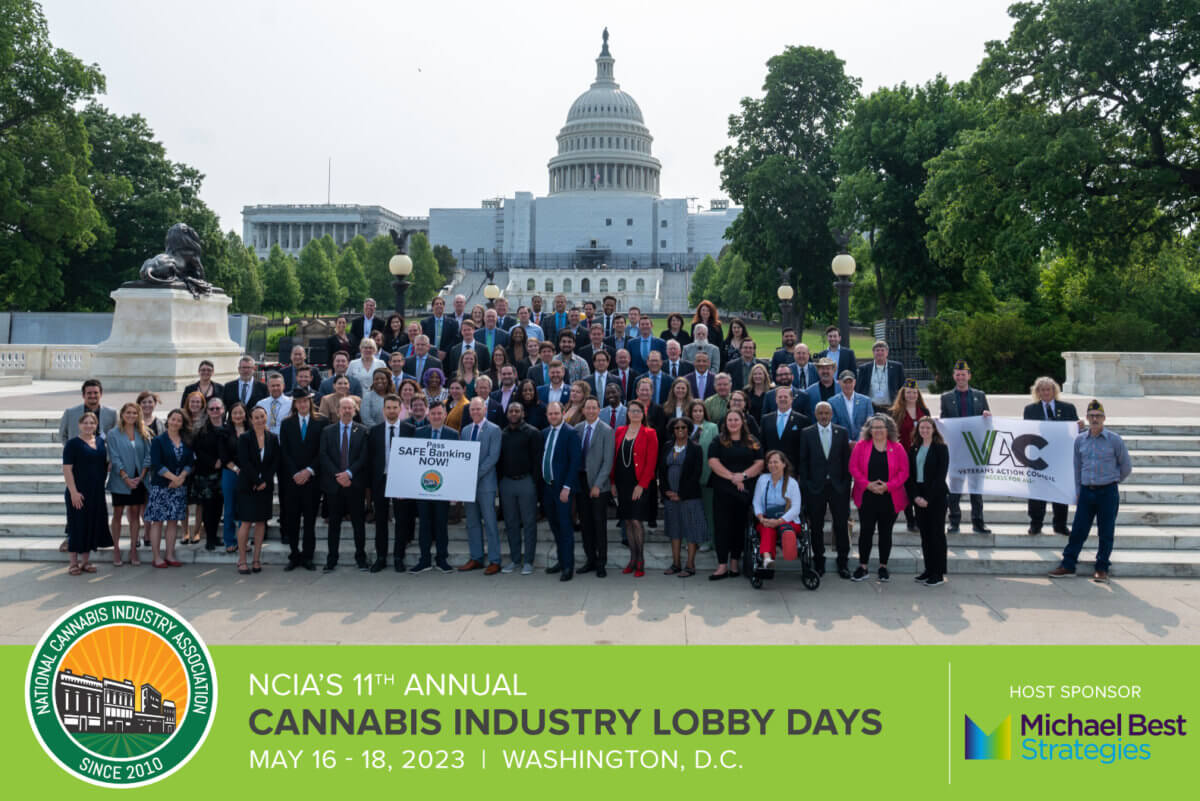
NCIA Members United in D.C. at Lobby Days! Join Us Next Year!
Photo By CannabisCamera.com
by Michelle Rutter Friberg, NCIA’s Deputy Director of Government Relations
Essentially every industry and association with a presence in Washington, D.C. hosts their own lobby days, advocacy days, or fly-ins – whatever you want to call them – where their members come to the Capitol to lobby Congress on their respective industry and legislative issues.
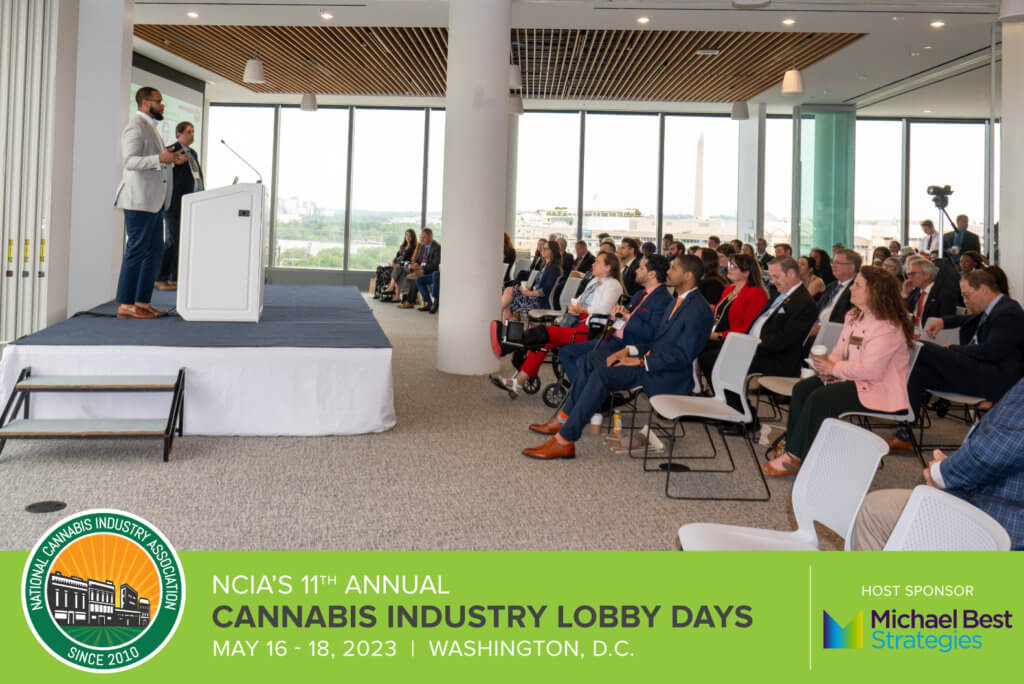
Thanks to NCIA, the cannabis industry is no different. In fact, just a few weeks ago, more than 100 members of the National Cannabis Industry Association (NCIA) descended upon Capitol Hill for NCIA’s 11th Annual Cannabis Industry Association Lobby Days. Lobby Days are an opportunity to advocate for our industry and tell Capitol Hill staff about the real, lived, on-the-ground experiences that cannabis professionals experience daily.
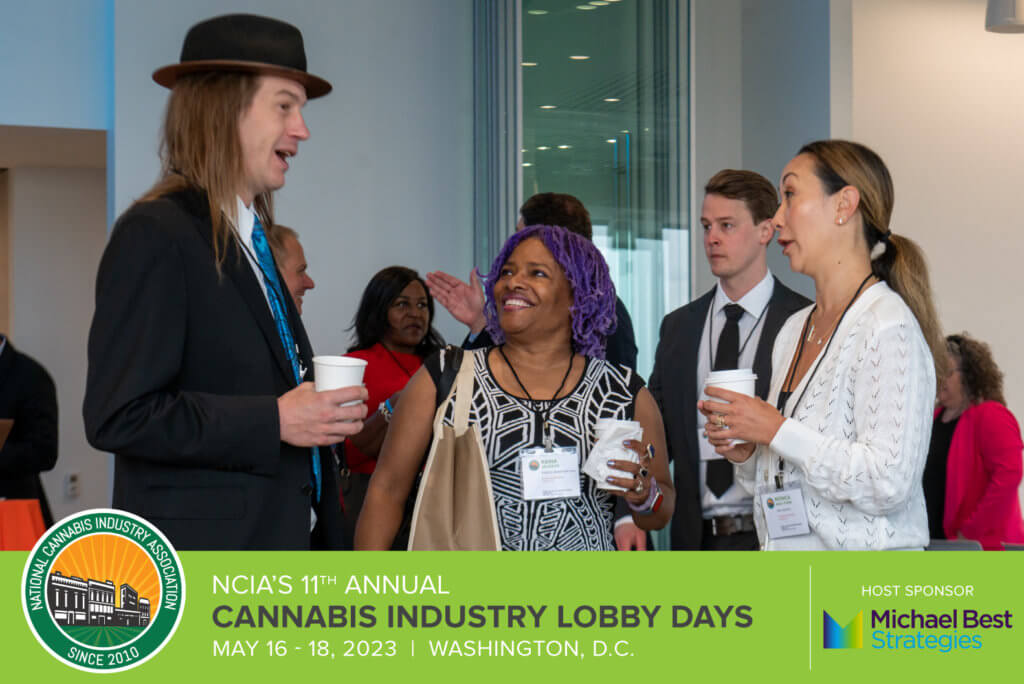
Planning 150+ meetings over the course of two days with 100+ attendees and 21 teams is about as easy as it sounds. That’s not to mention the multiple events, a congressional briefing, and training sessions! But that’s exactly what the NCIA team does for our members every spring. At lobby days, NCIA members gather to amplify our message and make their voices heard in the halls of Congress, while simultaneously forging strong relationships with the most influential leaders in the cannabis industry.
With more than 80 freshman members in Congress this session and multiple bills that have yet to be reintroduced, we wanted to focus our efforts on educating new members about the issues the cannabis industry – and the people that comprise it – face regularly. Many of these members and their staff have never heard of 280E, haven’t had to vote on SAFE Banking (yet!), and are on the fence about legalization, while others have never even talked with a cannabis professional. As a result, it was incredibly important to us that we reach out to those offices and provide them with the resources they need to best inform their position on the various policy areas that cannabis touches.
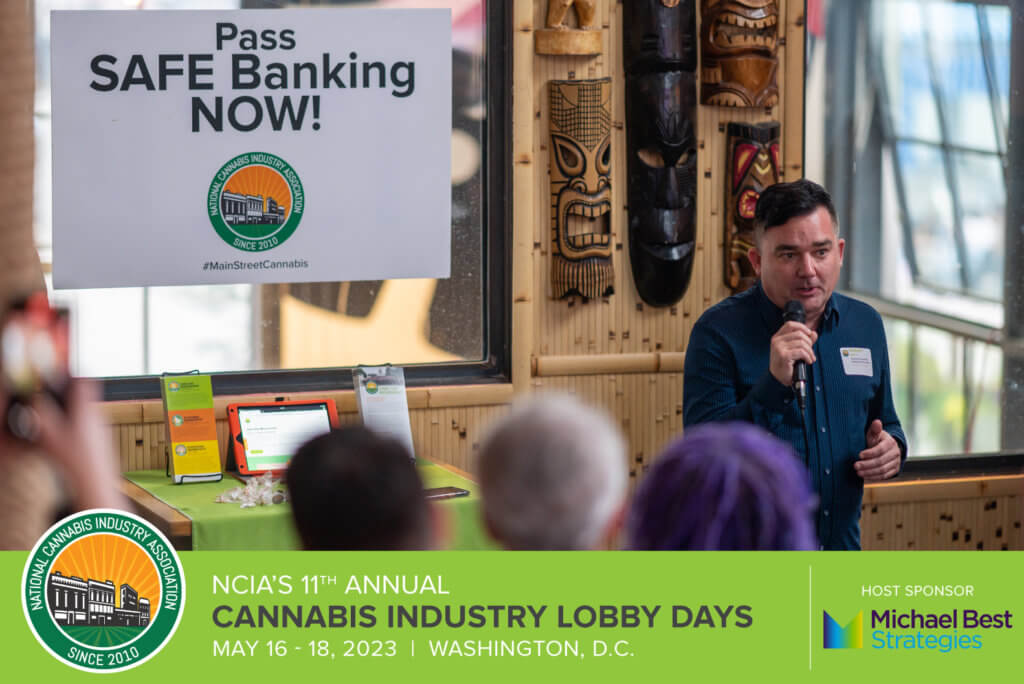
After arriving in D.C., attendees were greeted with a tropical vibe at our welcome reception at Tiki TnT & Potomac Distilling Company. This gave teams an opportunity to meet up ahead of meetings and mingle with other professionals who made the trip. The next day, we all gathered bright and (very) early for our mandatory breakfast training ahead of shuttling to the Capitol grounds for our group photo. At the training, attendees were able to grab a quick bite to eat, drink some coffee, get together with their teams, and get the final “do’s and don’ts” for their meetings. After our training and group photo, our teams split off for their meetings and reconvened at the end of the day for our stunning closing reception. There, attendees debriefed after an incredibly productive day and unwound with beautiful views, some drinks, and a dreamy jazz band. On the final day, attendees began their morning with a Senate briefing focused on SAFE Banking, where they rubbed elbows with congressional staff. Post-briefing, teams broke off for their final meetings, and just like that, lobby days 2023 was a wrap!
It’s no secret that the cannabis industry is undergoing significant struggles and we’re feeling that squeeze in Washington, D.C. Many companies have downsized and laid off government relations professionals, while others continue to just hope that Congress will pass reform magically. The truth is that lobbying, advocating, and being active in the legislative process are critical to moving our industry forward. Stay tuned for other citizen lobbying opportunities, and take it to the next level by sponsoring NCIA’s 12th Annual Cannabis Industry Lobby Days in 2024!
Midterm Election Wins, Losses, and the Lame Duck Session
Photo By CannabisCamera.com
by Michelle Rutter Friberg, NCIA’s Deputy Director of Government Relations
Last week, the long-anticipated 2022 midterm elections (finally) took place. In addition to the usual House and Senate elections, five states voted on cannabis ballot initiatives: Arkansas, Maryland, Missouri, North Dakota, and South Dakota – with only two of those passing successfully. Let’s take a look at what transpired and what it means for the lame duck session and possibly the 118th Congress:
Ballot Initiatives
Voters in Arkansas, Maryland, Missouri, North Dakota, and South Dakota were all faced with a similar question on election day: whether or not to legalize cannabis for adult use. Unfortunately, three of the five initiatives did not gather enough support to pass: Arkansas, North Dakota, and South Dakota.
The results for Maryland’s referendum came in early on election night with a decisive victory: more than 65% of voters cast their ballots in support. They were asked “Do you favor the legalization of the use of cannabis by an individual who is at least 21 years of age on or after July 1st, 2023, in the state of Maryland?” Now that the measure has been approved by voters, it will require the legislature to put forth a bill that will set basic regulations for the adult-use cannabis program.
Missouri voters also approved Amendment 3, which would legalize cannabis for adults 21 and over, as well as impose a six percent tax on recreational cannabis sales and use the revenue to facilitate automatic expungements for people with certain non-violent marijuana offenses on their records. The amendment garnered 53% of the vote.
This gives advocates an increase in the number of representatives and four more Senators from legal states, most notably those from Missouri, who are both avid conservatives and have not supported cannabis reform broadly in the past.
House of Representatives
Although Republicans are still projected to win the House, the margins are shaping up to be narrower than initially predicted. It takes 218 seats to win a majority in the chamber, and as of publication, Republicans hold 212 with a number of districts still yet to be called.
The change in party control means a change in leadership and shake-ups at the committee level. Minority Leader McCarthy is expected to run for Speaker of the House, while Minority Whip Steve Scalise has thrown his hat in the ring for Majority Leader – but there’s much uncertainty and infighting within the caucus.
Senate
Control of the Senate will remain in the hands of Democrats. Over the weekend, Nevada’s Senate race was called for incumbent Catherine Cortez Masto – making Georgia’s runoff election slightly less contentious.
A closely watched Senate race in Pennsylvania flipped in favor of Democrats: legalization advocate John Fetterman (D) defeated TV-personality and New Jersey resident Dr. Oz (R). We continue to closely monitor the races in Alaska and Arizona and what their outcomes may mean for cannabis reform.
Lame Duck Session
The likelihood of a split Congress means that the lame duck session happening between now and January will be jam-packed. In addition to must-pass legislation like the National Defense Authorization Act (NDAA) and a budget/omnibus bill of some type, Democrats will also be focused on other topics like judicial nominations, the debt ceiling, and hopefully the SAFE Banking Act.
Video: NCIA Today – July 16, 2021
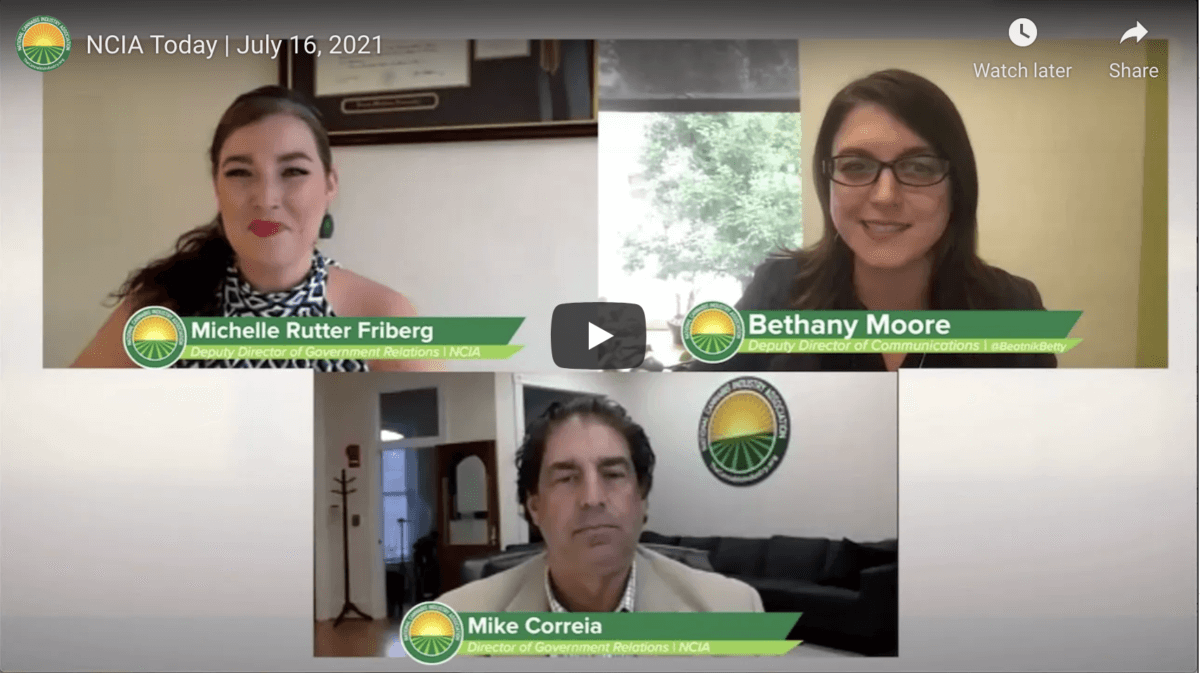
NCIA Deputy Director of Communications Bethany Moore checks in with what’s going on across the country with the National Cannabis Industry Association’s membership, board, allies, and staff. This week Bethany is joined by NCIA’s GR team in Washington D.C. to discuss the Cannabis Administration and Opportunity Act discussion draft introduced by Senate Majority Leader Chuck Schumer. Join us every Friday on Facebook for NCIA Today Live. Registration to our Midwest Cannabis Business Conference in Detroit is now open with special limited-time super early bird pricing on tickets available, head to www.MidwestCannabisBusinessConference.com today.
Momentum Across The Nation – New Mexico, Virginia, and the District of Columbia
By Madeline Grant, NCIA’s Government Relations Manager
We may be barely three months into 2021, but we’ve seen a lot of action in state legislatures already! This week, let’s take a look at three significant state victories in their respective state legislatures: Virginia, New Mexico, and the District of Columbia.
Virginia
The Virginia legislature approved adult-use cannabis legalization this past Saturday in a historic vote. The state of Virginia specifically is a major achievement as it’s the first state in the South to embrace full cannabis legalization. The House passed the measure in a 48-43 vote, and the Senate approved it in a 20-19 vote. It is important to note that not a single Republican voted for the bill in either chamber, but regardless, it passed and this is a major victory for cannabis policy reform.
So, what’s next? Virginia is the 16th state to pass an adult-use cannabis legalization law. Along with Illinois and Vermont, Virginia is the third state to pass legalization to legalize, tax and regulate recreational cannabis through the state legislature.
The Conference Committee established a January 1, 2024 enactment date for the law — this is when regulated sales are scheduled to start. Additionally, lawmakers agreed to establish an independent agency, the Virginia Cannabis Control Authority, to oversee the regulations and govern the adult-use market in Virginia. Adults will be able to possess up to one ounce of marijuana and cultivate up to four plants per household without penalty. The remainder of the bill, which details regulatory and market structure social equity provisions, and repeals criminal penalties, is subject to a second review and vote by the assembly next year. Lawmakers were sure to address issues such as how to prevent large corporations from taking over the cannabis market, how to handle expungement of cannabis offenses, addressing social equity provisions, including prioritizing business licenses for individuals who have been disproportionately impacted by criminal enforcement, and more. This is a big move for Virginia and we are excited to keep a close eye.
New Mexico
Last Friday, Members of the New Mexico House of Representatives approved House Bill 12, to legalize and regulate the use, possession, cultivation, and retail sale of cannabis for adults. House Bill 12 will move to the Senate for further consideration. If passed, the current measure, approved by the House by a 39 to 31 vote, would allow adults to purchase at least two ounces of marijuana and cultivate up to six plants for personal use. Additionally, those convicted of an offense involving up to two ounces of marijuana possession would be eligible for automatic expungement, and those currently incarcerated for these offenses would be eligible for dismissal. House Bill 12 is one of the five competing adult-use legalization measures and specifically addresses social equity and community reinvestment provisions.
So, what’s next? We’ve seen a history of opposing chambers in New Mexico through cannabis legalization efforts in 2019 and 2020. The following day after the vote in the House, the Senate Tax, business Transportation Committee considered three additional measures to legalize and regulate cannabis retail sales. The lawmakers discussed the differences and similarities between the competing cannabis measures and noted the need to reach an agreement on differences before the end of the short legislative session, adjourning for the year on March 20, 2021. We will keep an eye on the Virginia state legislature and actions moving forward.
District of Columbia
We saw movement in D.C. when voters showed support at the ballot box by passing Initiative 71 in 2014, which allows adults in D.C. to grow, possess, and gift marijuana but not sell it. Since then, we’ve seen Congress prevent D.C. from allowing the sale of cannabis by attaching a provision to D.C.’s appropriations bill that precludes the District from using its fund to legalize or regulate cannabis sales. The District’s Mayor, Muriel Bowser, is pushing forward with legalization to legalize cannabis in the District. The Safe Cannabis Sales Act of 2021 was introduced last Friday. It would legalize recreational cannabis sales in the District for people 21 and up. The bill also takes steps to combat the toll cannabis criminalization has taken on communities of color, expunge some marijuana-related offenses from people’s criminal records, funnel sales tax revenue into helping get start-ups off the ground, and creates a new license category for microbusiness and third-party “social equity” delivery services. Additionally, more revenue from cannabis sales would go towards funding organizations in wards 7 and 8, which includes women and minority-owned small businesses opening or expanding restaurants; small grocery stores; and public school after-school programs. D.C. would require cannabis vendors to have their products tested by an independent facility to track their potency and check them for contaminants. Days after Mayor Bowser unveiled her reform proposal, Council Chairman Phil Mendelson introduced a cannabis regulation bill. When comparing the two pieces of legislation there are some key differences surrounding tax rate, revenue, licensing, and expungements. For more details, check out Washington City Paper’s article here.
What’s next? As I mentioned previously, since 2014, Congress has included language in a spending bill that prevents the District from spending any of its funds to create a tax-and-regulate system. Because of this, the District has been stalled in implementing the sale of cannabis. However, now that Democrats control both houses of Congress and therefore the appropriations committees, we are hopeful that this rider preventing cannabis sales in the nation’s capital could be lifted.
According to the latest Gallup poll, 68% percent of Americans support legalizing cannabis, which is up from last year’s 66 percent. With support for full cannabis legalization growing, it’s not particularly surprising to see reform happening in these states. We are watching these states closely as they inch towards cannabis legalization. We see different entities making efforts to reform outdated cannabis laws; such as governors, mayors, advocates, patients, lawmakers, and the overall cannabis community. Together, through dedication and commitment, we will continue to move the ball forward in states and at the federal level.
Please stay tuned for more updates and please make sure to check out NCIA’s State Policy Map where all state updates are housed. As we continue the good fight it’s important to count our victories.
VIDEO: The Benefits of Legalizing Cannabis
In this third installment of NCIA’s animated educational video series, we explore the benefits of legalizing cannabis nationwide and beyond. Learn how ending federal prohibition can improve public safety and add economic opportunities to our communities, and how you can help.






 By Madeline Grant, NCIA’s Government Relations Manager
Follow NCIA
Newsletter
Facebook
Twitter
LinkedIn
Instagram
News & Resource Topics
–
This Just In
Member Blog: The Evolving Cannabis Legal & Regulatory Landscape in 2026
How THCa Vapes Are Changing Consumer