Cannabis Rescheduling Explained: What We Know, What We Don’t, and What’s Next
Last week, President Trump made history when he signed an executive order (EO) directing the Attorney General to expedite the process of reclassifying cannabis to Schedule III and removing barriers to research to “increase medical marijuana and CBD research to better inform patients and doctors.”
There’s no disputing that this is a game-changing moment for the cannabis industry and how the plant is viewed writ-large, but there’s still many questions and unknowns. Let’s take a look at some of the most frequently asked questions I’m getting about what’s next and what it all means:
What Did the Cannabis Rescheduling Executive Order Actually Say?
The EO directs the Attorney General to expedite completion of the process of rescheduling marijuana to Schedule III of the Controlled Substance Act (CSA). It also directs the White House Deputy Chief of Staff for Legislative, Political, and Public Affairs to work with the Congress to allow Americans to benefit from access to appropriate full-spectrum CBD products while still restricting the sale of products that pose serious health risks. Additionally, the EO directs the Department of Health and Human Services (HHS) to develop research methods and models utilizing real-world evidence to improve access to hemp-derived cannabinoid products in accordance with Federal law and to inform standards of care.
When Will Cannabis Rescheduling to Schedule III Take Effect?
What This Means for 280E Relief and Cannabis Businesses
The truth is, we really don’t know. There is no deadline, and we know that it will be at least30 days due to the Administrative Procedure Act (APA). As of publication, the Attorney General has not filed any type of final rule and neither the DEA nor the DOJ has responded to the public comments that were received on the proposed rule in 2024.
We also have to consider litigation that will surely be filed by our opponents. For instance, Smart Approaches to Marijuana (commonly known as Project SAM) had already stated that they plan to file against the Administration (likely on procedural grounds).
The APA establishes the framework for judicial review of agency actions and while the APA itself does not specify a statute of limitations for general review, the default period for a civil action against the United States is generally six years after the claim first accrues, however, specific statutes for judicial review of certain agency actions may impose shorter deadlines, sometimes requiring a petition to be filed within 30 days after the final agency action.
In short, we have to wait and see (frustrating, I know!).
How Cannabis Rescheduling to Schedule III Affects Banking
A move to Schedule III does not solve the cannabis industry’s banking problems completely. Such a move would/will likely result in lower perceived legal risk for banks, more compliance comfort, expanded access to traditional services, and possibly even improve capital markets access; but it would/will not provide safe harbor for cannabis businesses or automatically change FinCEN guidance. That’s why it’s more important now than ever that we continue to advocate for the introduction and passage of bills like the SAFER Banking Act and the CLAIM Act.
NCIA’s Position on Cannabis Rescheduling to Schedule III
NCIA supports President Trump’s decision to officially direct the Attorney General to reclassify cannabis as a Schedule III substance. Medical professionals, patients, and millions of Americans have long understood that cannabis has accepted medical use and does not belong in the same category as the most dangerous controlled substances. By taking this step, the Administration is recognizing the realities of today’s regulated markets and the work states have done to responsibly oversee them.
That said, Schedule III cannot be the final word. NCIA urges policymakers to build on today’s decision by establishing a framework that respects states’ rights, supports responsible operators, and provides clear federal enforcement guidelines in order to provide certainty to the thousands of businesses operating openly and in compliance with state law. NCIA will continue working to ensure that this industry can thrive under policies that are fair, consistent, and reflective of modern realities.
After more than half a century of prohibition, the importance of this moment cannot be understated- but our association knows that this is just the beginning of a new day for cannabis. As we close out the year, NCIA is thankful to our members for their support and urges those of you who aren’t members to join today or make a donation. Together, we’ll continue to move this industry forward and ensure that progress continues in Washington, DC and beyond.
Wishing you and yours a wonderful holiday season and happy new year!
Turning Advocacy Wins into Operator Wins
The word “advocacy” is a loaded term. It evokes different emotions in different people. However, in the cannabis industry, it’s a case of goose and gander, as a win for advocacy is a win for operators as well — with policy wins ultimately translating into financial benefits for operators. Thus, it would stand to reason that whenever possible, operators should lend their support to the side of advocacy. In this article, we’ll explore how the two can work together to their mutual benefit.
From Bill Passage to Bank Balance
Due to its quasi-legal status, every positive legislative change can be a massive boon for the cannabis industry. As many are aware, the industry can often operate on a cash-only basis due to federal restrictions. Thus, something like theSAFER Banking Act, which advocates have been pushing for, can be highly beneficial to the industry. To recap: this act would help provide federal protection to financial institutions, including preventing the depository institution from being penalized for providing banking services to a state-sanctioned cannabis business. Further, the Act prohibits a federal banking service from requesting or requiring a depository institution to cancel a deposit account.
While this act isstill waiting to be passed by the Senate, it could represent a significant step forward for the industry by offering essential banking services such as loans, credit lines, and cash management services, such as armored deposit services.
Another big issue for cannabis advocacy isrescheduling. Going from a Schedule I narcotic to a Schedule III narcotic would also open many doors for the industry. One of the most significant advantages of this shift would be the elimination of IRC 280E, which restricts what operators can deduct under the tax code. Unshackled from this prohibitive tax code, operators would have a wealth of items they could deduct, such as wages, rent, utilities, insurance, marketing, and administrative costs.
The benefits of rescheduling wouldn’t stop there. This shift could also herald more research and development opportunities for cannabis, as there would be a greater legal recognition of the plant’s medicinal value.
TL;DR: Advocacy could help operators in many ways; here are but a few examples:
The SAFER Banking Act would provide federal protections, allowing banks to safely offer essential services, such as checking accounts, loans, and cash management, to state-legal cannabis businesses. This would reduce cash-only risks and improve industry stability.
Rescheduling cannabis to Schedule III would eliminate the restrictive tax code 280E, enabling cannabis businesses to deduct regular business expenses and promoting more research, development, and legal recognition of cannabis’s medical value.
Now, let’s discuss how the industry is already working together to be most effective for everyone.
Coalition Building
Fortunately for the cannabis industry, supporters are passionate and proactive. We can examine several examples of how the industry has leveraged partnerships across different segments to the benefit of everyone.
The oldest chapter of NORML, established in 1972, the National Organization for the Reform of Marijuana Laws — California chapter continues its legacy from the Compassionate Use Act of 1996 to the recent passage of AB 564, a tax-reducing policy. California NORML unites the cannabis industry by coordinating lobbying, publishing resources, and building a business directory — acting as a bridge between consumers, legislators, and cannabis businesses to promote equitable laws and industry cohesion.
Favoring a grassroots approach, the MCBA seeks, in their words:
“To create equal access for cannabis businesses and economically empower communities of color through policy, programming, and outreach initiatives to achieve equity for the communities most impacted by the War on Drugs.”
Through advocacy and events, the MCBA creates partnerships through many industry segments (retail, cultivation, etc.) for maximum impact.
Besides working together, let’s explore how we can utilize onestate’swin as a model for others.
NCIA brings together various players in the cannabis industry by providing national advocacy, policy coordination, education, networking, and a member directory across all verticals — ensuring businesses and stakeholders speak with one informed, powerful voice.
Scaling Local Success
We can look to states such as California, Oregon, and Washington as (limited) success stories. These states have passed legislation enabling their governors to enter into interstate agreements, allowing border-transversing sales of cannabis between states where it is legal. This enables operators to reach far-flung markets beyond their home state. We see how these states follow each other’s lead while also working collaboratively to secure the best return on investment, although full-scale interstate commerce remains limited pending federal changes.
We can also turn back the clock nearly thirty years from today to when California passed the Compassionate Use Act of 1996. Other states would follow California’s model, and by 2023, 37 states had medical marijuana laws.
Or we can turn to Colorado and Washington, rewinding the clock not quite as far to 2012, when the states legalized recreational cannabis use. This would also serve as a model for other states, and by 2023, 19 states had followed Colorado’s example.
It goes without saying that when one state makes progress for cannabis reform and has quantifiable results, other states are likely to follow suit.
Conclusion
There is no cannabis industry without advocacy. Every step advocacy makes, operators are in lockstep with it. Fortunately, as competitive as the industry is, groups like the National Cannabis Industry Association are arduously working for legislative changes that benefit many in the industry. At the same time, we have other organizations like the Minority Cannabis Business Association toiling to help specific groups that have been historically disadvantaged. However, when these minority groups benefit, everyone benefits — as these social equity initiatives support whole communities by providing jobs and using tax revenue for mental health support, legal services, and other community reinvestment programs.
And speaking of tax revenue, when one state’s cannabis laws are effective — whether medical or recreational — it’s easier to get the ball rolling on similar laws in other states.
Make Your Comment Count! A Guide for Industry Advocates
Understanding the Importance of Effective Public Comments on Cannabis Rescheduling Proposals
The cannabis industry is abuzz with anticipation over the rescheduling proposals. From industry groups to advocacy organizations, companies, and activists, discussions on submitting effective public comments are in full swing. This marks a significant moment as the federal government proposes to reclassify cannabis for the first time, moving it from Schedule I to Schedule III. This move acknowledges cannabis’s medical value, a recognition long sought after. Amidst this pivotal moment, it’s crucial to ensure that your public comments on cannabis rescheduling are not only heard but are also meaningful and impactful.
For a comprehensive toolkit to assist in crafting your public comment, visit NCIA’s resource page here.
Tips for Crafting Effective Public Comments on Cannabis Rescheduling Proposals
1. Be Respectful
While it may seem obvious, maintaining respectful language is crucial. Emotions can run high when discussing cannabis regulation, but name-calling or using foul language can undermine your message. Ensure your comments are taken seriously by maintaining a professional tone.
2. Stay on Topic
Focus your comments narrowly on the specific cannabis rescheduling issue at hand. Whether addressing the DEA or local city council, avoid including unrelated grievances. For example, if discussing zoning laws affecting cannabis businesses, refrain from delving into tax issues or home grow regulations. This clarity strengthens your argument and prevents your message from appearing scattered.
3. Clearly State Your Requests
Ensure your asks are explicit and easy to identify. Begin and conclude your letter with a clear statement like, “I am asking you to…”, followed by the action you want. Decision-makers review numerous letters daily, so clarity on your stance and desired action is essential for your public comment on cannabis rescheduling to be counted.
4. Provide Supporting Data and Stories
Back your arguments with relevant data and compelling anecdotes. This enriches your public comment on cannabis rescheduling and provides context for your requests. Ensure your evidence supports your advocacy effectively.
The Importance of Advocacy in Cannabis Rescheduling
Public support has been instrumental in progressing cannabis rescheduling reform. However, societal attitudes towards cannabis are dynamic, and advocacy efforts are crucial in maintaining momentum. Active participation in public processes, done respectfully and productively, is our best defense against potential setbacks in cannabis policy.
Advancing Change: Advocacy Through Effective Public Comments on Cannabis Rescheduling
Crafting effective public comments on cannabis rescheduling is a vital tool in advocating for cannabis rescheduling. By following these tips, you can ensure your voice is heard in the ongoing discussions. Remember to share this guide with fellow advocates to strengthen our collective impact in shaping cannabis rescheduling policy.
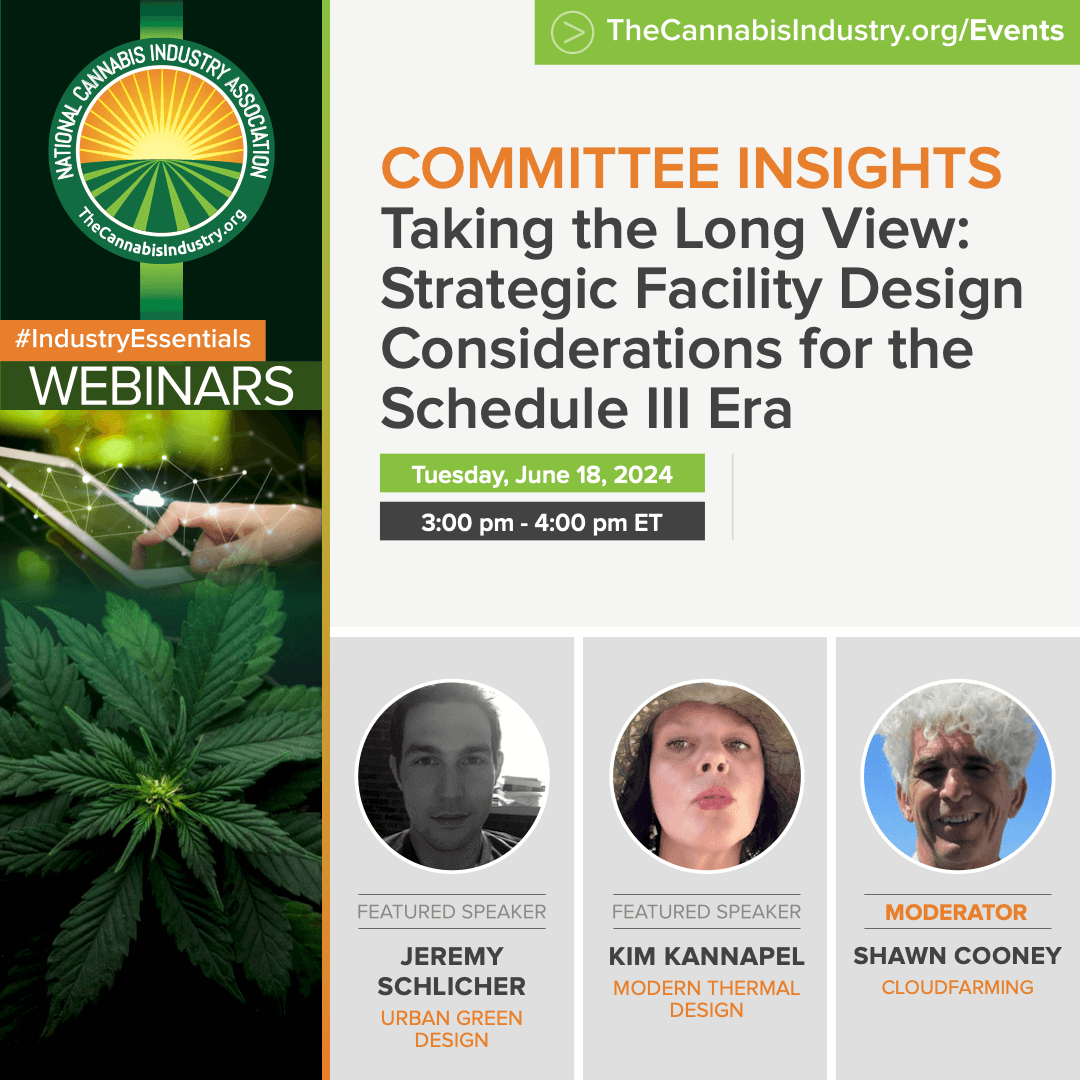
Taking the Long View – Strategic Facility Design Considerations for the Schedule III Era
In the dynamic landscape of the cannabis industry, regulatory changes can significantly impact how businesses operate and plan for growth. The recent proposal to reschedule cannabis from Schedule I to Schedule III has sparked discussions across the industry, particularly regarding facility design and operational strategies. This blog dives into key insights from the National Cannabis Industry Association’s webinar on “Taking the Long View – Strategic Facility Design Considerations for the Schedule III Era,” highlighting expert advice and practical recommendations for stakeholders navigating these changes.
The webinar, hosted by Brian Gilbert of the NCIA, served as a crucial platform for industry professionals to explore the implications of cannabis rescheduling on facility design and operations. The session focused on four main pillars: understanding tax changes, enhancing operational efficiency, promoting sustainable growth, and implementing practical strategies to navigate regulatory shifts.
Key Takeaways
1. Policy and Tax Implications
The discussion, led by Shawn Cooney of Cloud Farming, Chair of NCIA’s Facilities Design Committee, underscored the potential financial benefits for businesses following cannabis rescheduling (00:03:41). A highlight was the exploration of Section 280E, which could offer substantial tax savings once regulatory changes are implemented. Jeremy Schlicher of Urban Green Design expanded on these insights, offering strategic financial planning advice aimed at leveraging tax incentives to reinvest in facility improvements (00:07:21).
2. Operational Efficiency and Sustainability
Efficiency in energy management emerged as a critical theme throughout the webinar. Experts emphasized the importance of conducting energy audits and adopting efficient lighting and HVAC systems (00:10:18). These measures not only reduce operational costs but also align with sustainability goals crucial for long-term viability in the industry. Practical recommendations tailored to cultivation, manufacturing, and retail sectors were discussed to optimize workflow efficiencies and regulatory compliance (00:15:10).
3. Cultivation Methods and Environmental Considerations
Kim Kannapel of Modern Thermal Design provided invaluable insights into cultivation methods and environmental sustainability. The webinar highlighted the viability of various methods—indoor, greenhouse, and outdoor—each catering to different market segments and regulatory landscapes. The discussion underscored the role of climate and local regulations in shaping cultivation decisions (00:37:28), emphasizing the need for adaptable strategies that prioritize energy efficiency and environmental stewardship.
As Chair of NCIA’s Facility Design Committee, Shawn Cooney brought deep regulatory expertise to the discussion. He emphasized the importance of holistic sustainability practices and compliance with evolving regulatory frameworks. His insights into tax implications and strategic planning resonated with participants seeking clarity on financial strategies post-rescheduling (00:25:32).
Kim Kannapel’s contributions focused on environmental sustainability within cannabis cultivation. Her expertise in optimizing cultivation methods highlighted the interconnectedness of environmental stewardship and operational efficiency. By advocating for adaptive strategies, Kim encouraged businesses to consider long-term environmental impacts when designing and expanding their facilities (00:37:28).
A staunch advocate for the innovative triple bottom line approach, Jeremy Schlicher brings a wealth of knowledge to the discussion on strategic facility design in the cannabis industry. He emphasizes the integration of economic prosperity, environmental stewardship, and social responsibility in every aspect of facility planning and operations. Jeremy’s insights into maximizing operational efficiency through sustainable practices, such as energy audits and efficient HVAC systems, underscore his commitment to reducing environmental impact while enhancing business profitability.
Importance of Participating in the Public Comment Period
Participating in the public comment period is crucial for shaping the future regulatory landscape of the cannabis industry. The Department of Justice’s proposal to reschedule cannabis presents a unique opportunity for stakeholders to voice their perspectives and influence policy decisions. NCIA has launched a dedicated tool to streamline this process, making it easier for industry professionals to submit informed comments.Submit your comment here.
Recap of Episode I & II
Episode I: Understanding Section 280E and its Impact on Cannabis Businesses
In Episode I, the focus was on the financial and tax implications of rescheduling cannabis. Section 280E was a major topic, with discussions centered on how the rescheduling could lead to significant tax savings and the importance of strategic financial planning for businesses to maximize these benefits.
Episode II: Cannabis Rescheduling’s Impact on Research and Safety
Episode II delved into the implications of cannabis rescheduling on research and safety protocols. This session emphasized the potential for increased research opportunities and the necessity for businesses to stay ahead of regulatory changes to maintain compliance and ensure product safety.
Looking Ahead: Preview of Episodes 4 & 5
Episode IV: Navigating Insurance and Risk Management in the Schedule III Era
Join us for the fourth episode of NCIA’s multi-part #IndustryEssentials webinar series, “Navigating Insurance and Risk Management in the Schedule III Era,” led by our Risk Management & Insurance Committee. This session delves into the evolving landscape of cannabis insurance and risk management, highlighting the opportunities and challenges presented by the rescheduling of cannabis to Schedule III.
Date: Tuesday, July 9th, 2024 Time: 3:00 PM EST – 4:00 PM ET
Episode V: Cannabis Manufacturing in the Schedule III Era
Building on the insights from our first four episodes, join us for the fifth installment of NCIA’s #IndustryEssentials multi-part webinar series. This session, led by our expert Cannabis Manufacturing Committee, will focus on the profound impacts and implications of rescheduling cannabis on the manufacturing sector. As we navigate these unprecedented changes, our panel of industry leaders will provide critical insights and practical guidance to help your business adapt and thrive in this new landscape.
Advancing the Industry Together: NCIA’s Mission in Action
The overarching theme of this series is to equip cannabis industry stakeholders with the knowledge and strategies needed to navigate the complex landscape of regulatory changes. By understanding the financial, operational, and research implications of cannabis rescheduling, businesses can better position themselves for sustainable growth and success. Each episode builds on the previous one, creating a comprehensive resource for industry professionals to stay informed and proactive in their planning and operations.
The webinar “Taking the Long View – Strategic Facility Design Considerations for the Schedule III Era,” offered a comprehensive roadmap for stakeholders navigating regulatory changes in the cannabis industry. By addressing tax implications, promoting operational efficiency, and advocating for sustainable growth practices, the session equipped participants with actionable strategies to thrive amidst evolving regulatory landscapes.
Call to Action
As the industry continues to evolve, staying informed and proactive is crucial for cannabis businesses. Explore NCIA’s resources, including upcoming webinars and educational materials, to deepen your understanding of regulatory changes and strategic facility design considerations. Engage with industry peers and experts to share insights and best practices that drive sustainable growth and operational excellence.
For those not yet members, consider joining the National Cannabis Industry Association (NCIA) to unlock unmatched benefits, resources, and access. Membership provides exclusive opportunities to influence industry standards, gain regulatory insights, and network with industry leaders. Join NCIA today to leverage these benefits and stay ahead in the competitive cannabis market.
Cannabis Rescheduling Impact on Research and Safety: Insights from NCIA Webinar
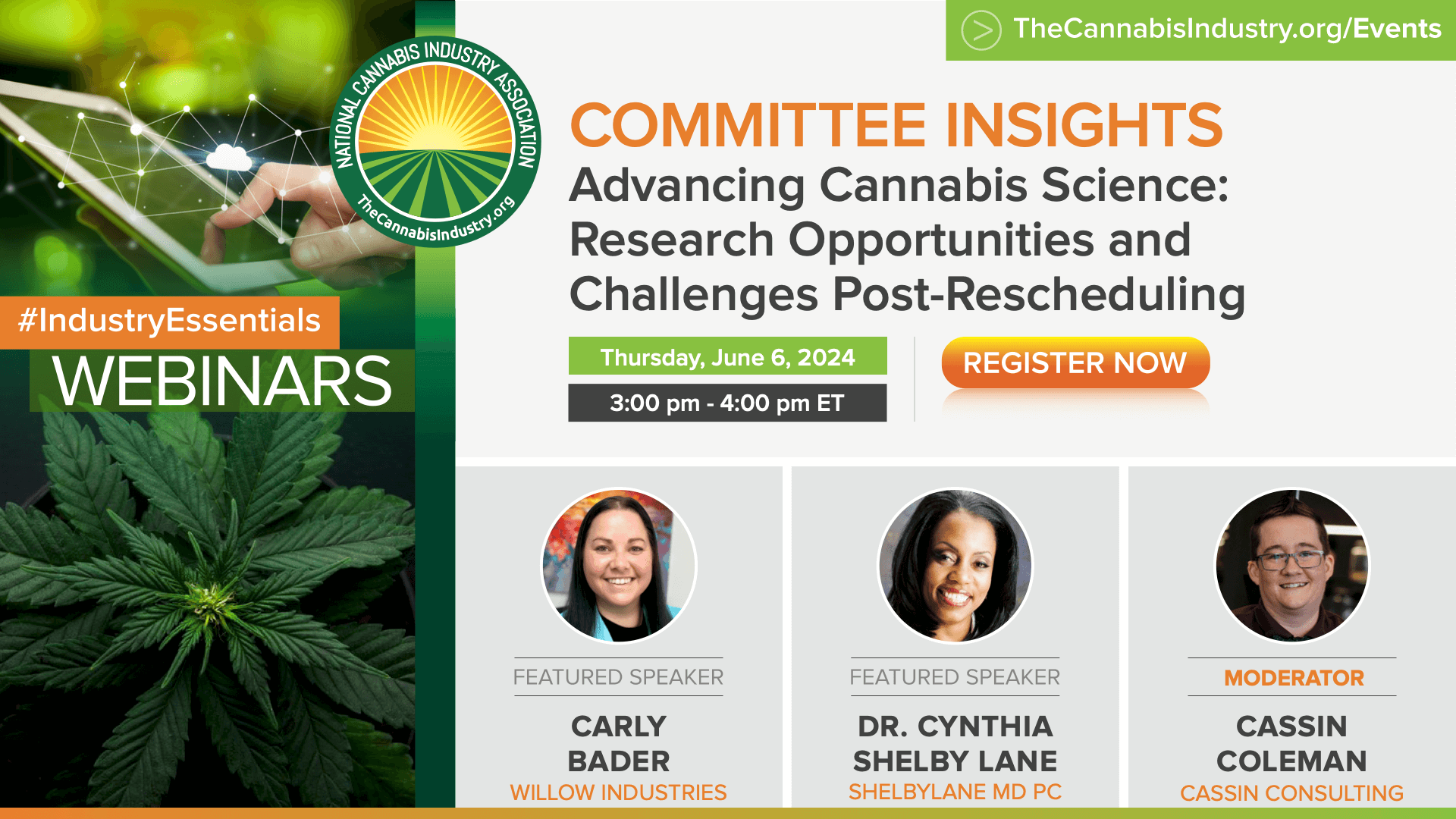
In the second episode of NCIA’s new multi-part #IndustryEssentials webinar series, titled “Advancing Cannabis Science: Research Opportunities and Safety Post-Rescheduling,” we delved into the significant changes and opportunities that would emerge following the rescheduling of cannabis to a Schedule III drug. Led by NCIA’s Scientific Advisory Committee, this session provided a comprehensive overview of the cannabis rescheduling impact on research and safety in the evolving cannabis landscape.
Setting the Stage | Panelist & Moderator Introductions
The discussion began with an overview of the Controlled Substances Act and the historical context of cannabis scheduling. The panelists highlighted the journey from Schedule I to Schedule III, emphasizing the critical changes that come with this shift, particularly in terms of research opportunities and regulatory frameworks.
Cassin Coleman provided an in-depth explanation of the rescheduling process, focusing on the 8-factor analysis used to determine the appropriate schedule for a substance. This analysis includes factors such as the drug’s potential for abuse, scientific evidence of its pharmacological effects, and the current scientific knowledge regarding the substance.
The panelists explored the new landscape for researchers, discussing the relaxation of stringent requirements that previously hampered cannabis research. They highlighted the potential for increased federal funding, the ability to conduct more comprehensive studies, and the removal of barriers that have long impeded scientific progress in the field.
The conversation shifted to the practical implications for researchers and industry professionals. The panelists shared insights on how to prepare for the new opportunities afforded by rescheduling, including advice on setting up compliant research protocols and leveraging the new regulatory environment to advance scientific inquiry and innovation.
Kenya Alexander and Dr. Cynthia Shelby-Lane emphasized the importance of ensuring diverse representation in cannabis research. She discussed strategies to include underrepresented communities in studies and the critical need for research that addresses the unique needs and experiences of these populations. This part of the discussion further underscored the cannabis rescheduling impact on research and safety.
The panel addressed the broader social implications of cannabis rescheduling, particularly the need to heal the damage caused by the War on Drugs. They discussed the importance of bridging the communication gap between researchers and communities and ensuring that the benefits of cannabis research are equitably distributed.
Audience Q&A
The session included a robust Q&A segment, where the panelists answered a wide range of questions from the audience:
In their closing remarks, the panelists reiterated the importance of embracing the new opportunities presented by cannabis rescheduling. They encouraged researchers, product developers, and industry stakeholders to stay informed and proactive in adapting to these changes.
The session concluded with a heartfelt thanks to all participants and a reminder of the value of NCIA membership. By supporting the organization, members help drive critical reforms and advancements in the cannabis industry, ensuring a brighter future for all stakeholders.
This episode of NCIA’s #IndustryEssentials webinar series provided essential insights into cannabis rescheduling impact on research and consumer safety. As we navigate these changes, NCIA remains committed to supporting our members and advocating for a more inclusive, equitable, and scientifically advanced industry. Stay tuned for future episodes and continue to engage with our expert-led discussions.
Join us for Episode III, “Committee Insights: Taking the Long View – Strategic Facility Design Considerations for the Schedule III Era,” on Tuesday, June 18th at 3PM ET / 12PM PT. Experts from NCIA’s Facilities Design Committee will discuss the implications of cannabis rescheduling on facility design and operations, focusing on strategies for optimizing facility layout, equipment selection, and workflow management. Learn how to leverage tax changes and sustainability principles to enhance operational efficiency and ensure long-term viability. Don’t miss this opportunity to gain valuable insights for your cannabis business. Register now!
Start Making Sense: What Does Schedule III & Section 280E Mean for Me?
Rescheduling cannabis signifies a monumental shift for our industry, specifically presenting a potential pathway to alleviate the burdens imposed by Section 280E. In a new multi-part #IndustryEssentials webinar series, led by experts from our 14 member-led Committees, NCIA will provide a comprehensive analysis of the immediate and long-term impacts on different sectors within the cannabis industry.
In our debut session, led by the Banking & Financial Services Committee, we provided invaluable insights into the transformative implications of rescheduling cannabis to a Schedule III drug and its consequent impact on Section 280E of the Internal Revenue Code. In “Schedule III & Section 280E: What Does It Mean for Me?” broadcast LIVE on Thursday, May 30th, we explored the game-changing potential of this shift, offering actionable insights for businesses navigating the evolving regulatory environment.
Neil Rosenfield, CPA:Provided insights into the significance of comprehending and championing advocacy organizations to address regulatory hurdles.
Steven Gotsdiner, CPA: Illuminated accounting requirements tailored to cannabis businesses, drawing attention to the nuances across various states.
Eric Kaufman, COO: Shed light on the hurdles encountered by cannabis enterprises, while also elucidating the potential benefits stemming from regulatory changes.
Aaron Smith, NCIA: Emphasized the pivotal role of industry participation in policy reform endeavors, highlighting NCIA’s instrumental role.
Among the topics explored during the webinar was the profound impact of rescheduling cannabis on federal legality, state and local tax obligations, and the broader regulatory landscape. With cannabis poised to transition to Schedule III, businesses are poised to embrace newfound opportunities while confronting challenges inherent in navigating this regulatory terrain.
Neil Rosenfield of BakerTilly USA underscored the significance of contributing to and championing advocacy organizations to effectively address regulatory hurdles. Aaron Smith echoed this sentiment, emphasizing the pivotal role of industry participation in policy reform endeavors, highlighting NCIA’s instrumental role in spearheading these changes.
Another focal point of discussion revolved around the ramifications of rescheduling on tax obligations and deductions governed by Section 280E. The panelists provided invaluable insights into the implications for tax planning, including adjustments to tax bills, cash flows, and essential updates to accounting records and charts of accounts.
Steven Gotsdiner of HBK CPAs illuminated accounting requirements tailored to cannabis businesses, drawing attention to the nuances across various states. Eric Kaufman, COO of FundCanna, shed light on the hurdles encountered by cannabis enterprises, while also elucidating the potential benefits stemming from regulatory changes, such as managing surplus cash flows and preparing for shifts in interstate commerce.
Eric Kaufman explored whether rescheduling cannabis to Schedule III would reduce the cost of capital for operators and recommended strategies for deploying increased cash flows to scale and grow businesses effectively.
The webinar also delved into the anticipated timeline for these regulatory shifts, offering insights into potential implementation trajectories spanning from 2023 to 2025. Strategies for navigating diverse timelines and regulatory fluxes were discussed, equipping businesses with the tools needed to adapt and flourish in an ever-evolving landscape.
Thanks to the informed engagement of our audience members, a cornerstone of what makes our webinar series so valuable for members, the discussion touched on the definition of “Good Accounting Practices” and whether this includes Generally Accepted Accounting Principles (GAAP). The panelists also speculated on the possibility of new excise taxes replacing 280E and the potential impacts on federal protections like bankruptcy and IPOs.
As the program was extended in order to answer all of our audience questions, the session concluded with insights into how these regulatory changes might affect the CBD and hemp industries. The panelists emphasized the importance of staying informed and adapting to varying state-level requirements.
As the cannabis industry continues its evolution, proactive engagement with regulatory changes remains paramount for business success. The insights shared during NCIA’s #IndustryEssentials webinar series offer a compass to navigate the labyrinth of regulatory complexities and position businesses for enduring prosperity. By fostering active engagement and advocacy, cannabis enterprises can shape a regulatory landscape conducive to industry growth and development.
To continue facilitating these crucial dialogues amongst operators, regulators, and stakeholders, NCIA relies on the support of dedicated members like you. Join NCIA today to access exclusive resources, stay informed about the latest industry developments, and be part of a community committed to driving positive change in the cannabis industry.
Supporting advocacy efforts is integral to driving meaningful change in the cannabis industry. By becoming an NCIA member, you’re not just investing in your business’s success; you’re also supporting initiatives that shape the future of the industry. Together, we can amplify our collective voice and effect tangible change.
As we conclude this recap of our insightful session on Schedule III and Section 280E, we’re thrilled to announce the next episode in NCIA’s #IndustryEssentials multi-part webinar series: “Committee Insights: Advancing Cannabis Science: Research Opportunities and Challenges Post-Rescheduling.” Led by our esteemed Scientific Advisory Committee, this episode promises to explore the exciting realm of scientific research and consumer safety in the wake of cannabis rescheduling.
Join us for an engaging discussion with industry experts, gain valuable insights, and shape the future of cannabis science and consumer safety. Register now to reserve your spot and be part of the conversation!
Breaking Down the Recent Cannabis Rescheduling Recommendation
For more than fifty years, the federal government has maintained that cannabis is a Schedule I drug, meaning that it has a high potential for abuse and no accepted medical value. That changed last week (somewhat) when the Department of Health and Human Services (HHS) recommended to the Drug Enforcement Administration (DEA) that cannabis be placed in Schedule III, meaning that it has moderate to low abuse potential, a currently accepted medical use, and a low potential for psychological dependence.
Why now?
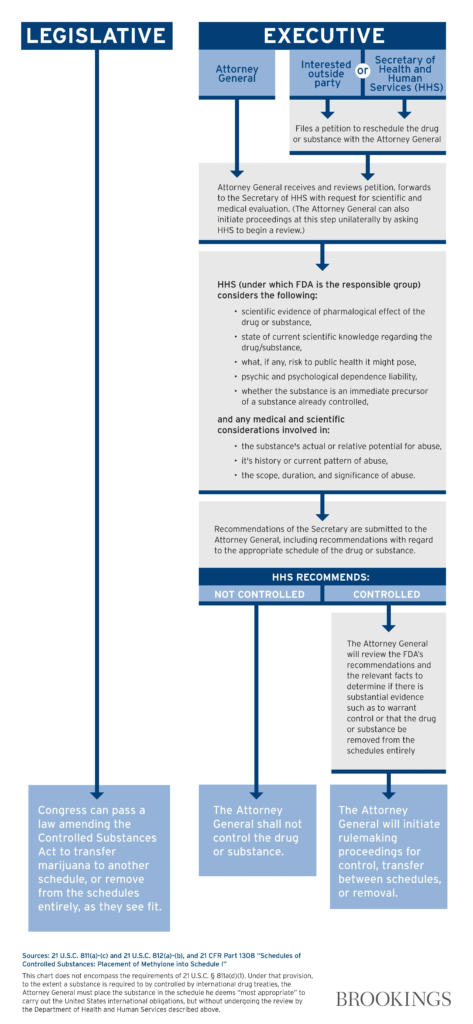
In October 2022, the Biden Administration announced that it would ask the Secretary of HHS and the Attorney General to initiate the administrative process to review expeditiously how marijuana is scheduled under federal law. As the Brookings Institute outlined years ago, the Executive process for rescheduling is much more complex than the Legislative path.
It’s no secret that the presidential election is barely more than a year away, and the President seems to be looking to make good on his campaign promise to reform the nation’s marijuana laws.
What does this mean?
First off, it’s critical to note that HHS’ recommendation to DEA is just that: a recommendation. It is non-binding. The DEA may come to the same conclusion that HHS did, but is not required to.
If cannabis is moved to Schedule III of the Controlled Substances Act, one positive outcome would be that 280E would no longer apply to plant-touching businesses, removing an incredibly punitive and debilitating provision in the tax code.
According to NCIA’s board chair emeritus, Khurshid Khoja, Esq., “…it’s important to remember that rescheduling would not apply the federal Food Drug and Cosmetic Act (FDCA) to marijuana for the first time—it applies right now, and like the federal Controlled Substances Act (CSA), would continue to apply after rescheduling. But absent any statutory authority permitting FDA to do otherwise, the FDCA would continue to apply after descheduling too, just as it does to hemp products.”
Others claim that the shift to Schedule III would have minimal impact on businesses and individuals. Here at NCIA, we’re cautiously optimistic but recognize that moving cannabis to schedule III could have some limited benefit but does nothing to align federal law with the 38 U.S. states which have already effectively regulated cannabis for medical or adult use.
What now?
Now that HHS has made their recommendation, the DEA will begin its scheduling review process.
Many are divided about what a move to Schedule III would actually look like. Yes, there would be the elimination of 280E, but what about enforcement priorities? Interstate commerce? Criminal penalties? There are so many unknowns.
NCIA has previously produced a common sense, workable roadmap for that federal comprehensive reform and provided detailed feedback on legislative efforts. It is time for Congress to follow the will of the American people. Don’t get me wrong, there’s no doubt that this recommendation is a step in the right direction and is long overdue. But we can’t lose sight of the ultimate goal: removing cannabis from the Controlled Substances Act entirely.
Have questions?
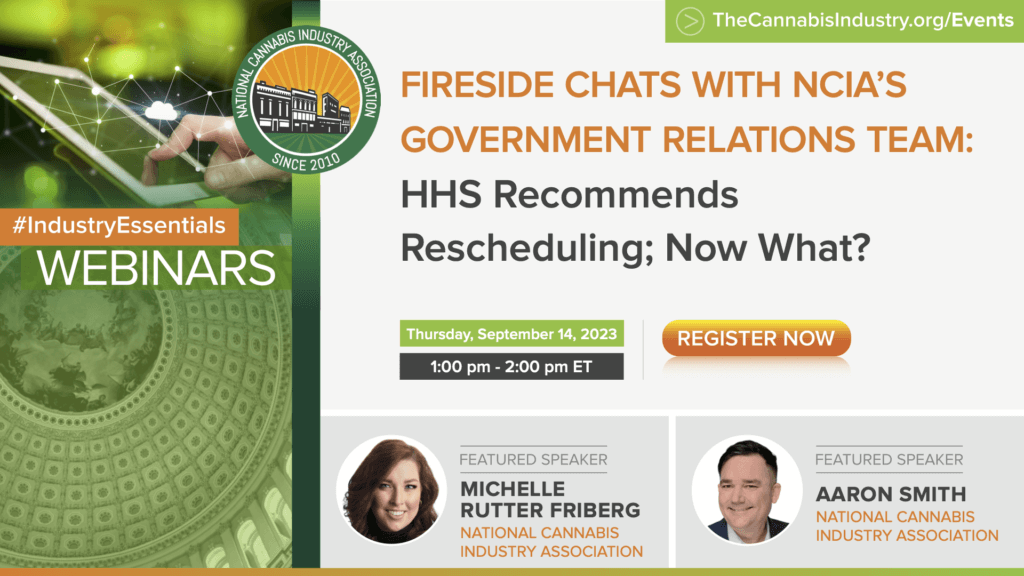
Join NCIA on September 14 at 1 pm ET for an engaging webinar where we will unpack all your questions! Register today and don’t miss your chance to hear more about what this means for the cannabis industry and your business.





Follow NCIA
Newsletter
Facebook
Twitter
LinkedIn
Instagram
News & Resource Topics
–
This Just In
Member Blog: What Consumers Really Want in a Pre-Roll
Member Blog: The Evolving Cannabis Legal & Regulatory Landscape in 2026