Honoring Our Veterans – Cannabis Research and Legislation
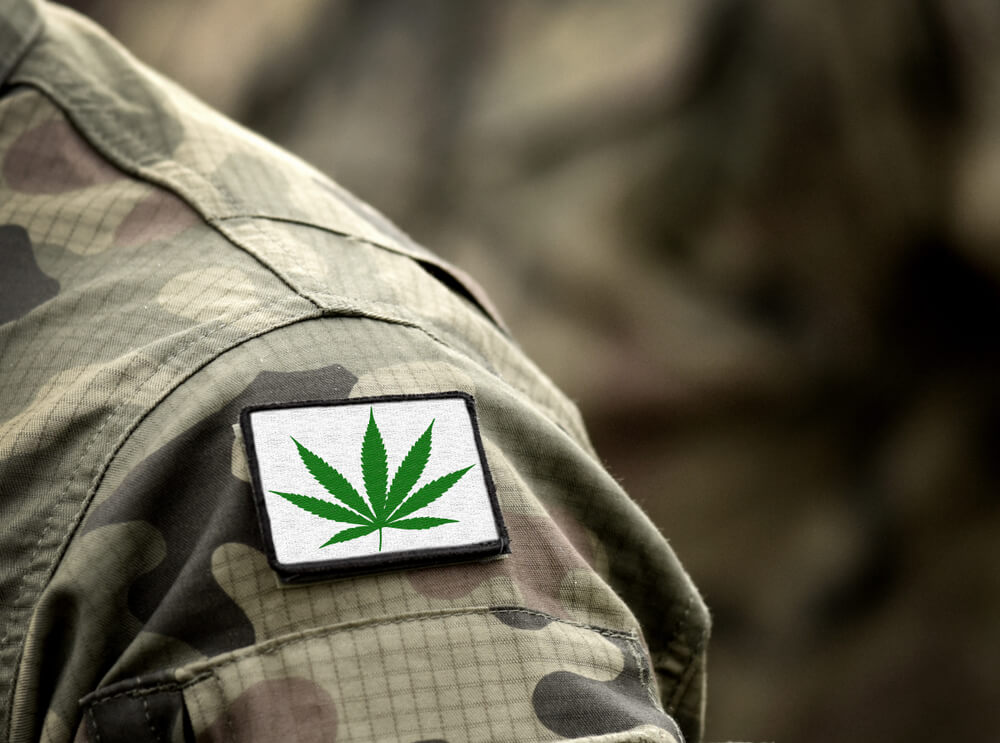
Photo By CannabisCamera.com
by Michelle Rutter Friberg, NCIA’s Deputy Director of Government Relations
Every November, Americans around the world honor our armed service members on Veterans Day. While the holiday first appeared after the conclusion of World War I in 1918 as Armistice Day, it was later renamed Veterans Day in 1954. This week, we’re remembering all the veterans in our lives (shoutout to my Dad, a Navy veteran!) and providing you with the latest update on cannabis and veterans legislation from D.C. Let’s take a look to see what’s been happening:
H.R. 2916: VA Medicinal Marijuana Research Act
Sponsored by Congressman Lou Correa (D-CA), this bill would require the Department of Veterans Affairs (VA) to conduct clinical trials of the effects of medical-grade cannabis on the health outcomes of covered veterans diagnosed with chronic pain and those diagnosed with post-traumatic stress disorder. Covered veterans are considered as those who are enrolled in the VA health care system. The trials must include a control group and an experimental group that are of similar sizes and structures and represent the demographics of the veteran population, and the data collected in the trials must be preserved to facilitate further research. Importantly, under this bill, participation in the clinical trials does not affect a covered veteran’s eligibility or entitlement to other VA benefits.
The bill had a hearing in October where Dr. David Carroll, Executive Director at the Office of Mental Health and Suicide Prevention at the Department of Veterans Affairs (VA) essentially testified that the VA does not support this bill. I’d also like to highlight the statement Rep. Correa submitted for the record, which you can find here.
Most recently, just last week, the House Veterans Affairs Committee held a markup on the bill, where it passed by a vote of 18-11. It was a party line vote with just one Republican, Rep. Mariannette Miller-Meeks, voting in favor. Now that the bill has passed out of committee, its next stop could be the House Floor – stay tuned!
NDAA, cannabis, and veterans
As you may know, there’s been much discussion around cannabis policy and the upcoming must-pass NDAA. While we’ve already expanded upon that concept as it relates to banking, more recently, there’s been developments surrounding the NDAA, cannabis, and veterans. Late last week, Sens. Brian Schatz (D-HI), Bernie Sanders (I-VT), Tim Kaine (D-VA), Jeff Merkley (D-OR), Ron Wyden (D-OR), Jacky Rosen (D-NV), Alex Padilla (D-CA) and Gary Peters (D-MI) filed Schatz’s Veterans Medical Marijuana Safe Harbor Act as an amendment to the larger package. This amendment would federally legalize medical marijuana for military veterans who comply with a state program where they live and allow physicians with the U.S. Department of Veterans Affairs (VA) to issue cannabis recommendations. Further, it would require VA to study the therapeutic potential of marijuana for pain and reducing opioid misuse. Under current federal policy, VA allows its physicians to talk about cannabis use with veterans, but they’re prohibited from issuing recommendations that would allow their patients to obtain medical marijuana from state-legal markets.
It’s unclear whether either of these provisions will be enacted into law, however, we applaud our congressional champions for never forgetting about those who have served. NCIA will continue to lobby in favor of legislation that will provide our veterans with relief. Do you have a veteran in your life you’re honoring this week? Hop over to NCIA Connect and let me know!
The Agricultural Improvement Act of 2018 (the “2018 Farm Bill”) helped to further define the pathway by which “hemp-derived” ingredients can be legally incorporated into food. Since then, hemp-ingredient companies have materialized selling purified cannabinoids that are found naturally-occurring in hemp. Despite the young market, these companies are facing difficult times as the buyers for these ingredients are few and manufacturers mostly compete on price. The GRAS path offers a route out of this conundrum.
What is GRAS?
The Generally Recognized as Safe (GRAS) for food-use pathway was established by the 1958 Food Additives Amendment to the Federal Food, Drug, and Cosmetic Act (FD&C Act). It delineated how substances that are GRAS for their defined conditions of use in food are different from food additives.
Others have previously delved into why firms might consider pursuing GRAS notifications and/or New Dietary Ingredient Notifications (NDIN) independent of hemp and hemp-derived ingredients so I will refrain from wholesale repetition. Two key points on specificity are nonetheless worth repeating: 1) a substance is deemed GRAS for a specific use under specific conditions and 2) a GRAS notification is specific to the company filing the notification.
Why GRAS?
There are a number of practical reasons why firms that produce cannabinoids would seek to pursue the GRAS pathway. Here are five:
Market Expansion
Currently, firms that produce purified hemp cannabinoids are mostly selling their wares to businesses operating in state-regulated delta-9 tetrahydrocannabinol (THC) markets or to operations that may not be in full-compliance with dietary supplement regulations. Almost all firms that produce food products, including beverages, and most dietary supplement manufacturers, will not use ingredients that do not have a history of use in food or that cannot be legally marketed.
For ingredients such as purified hemp cannabinoids that do not have a history of use as articles used for food, the only way to open-up the food, beverage, and dietary supplement markets is via the GRAS/NDIN pathways.
Safety Demonstration
An integral part of any GRAS dossier is the basic demonstration of acceptable risk (cf. safety) for the named substance and impurities. This includes any byproducts that may be introduced by the manufacturing process. Whether one is interested in pursuing a GRAS Notification for submission to FDA or for a self-affirmed GRAS conclusion, the process involves an evaluation of safety for the conditions of use (e.g. serving size, no-observed adverse event level, etc.).
Beyond the ethical necessity of understanding the hazards of a product meant for human consumption, pursuing GRAS helps protect a firm from product liability in the event that harm is created. But more importantly, GRAS helps guard against product liability by seeking to prevent the potential hazard in the first place. That is always good for business.
Avoiding Drug Preemption
FDA has described in numerous forums, including the Administration’s own website, why it has concluded that cannabidiol (CBD) cannot be used as an ingredient in food or dietary supplements. The key is section 201(ff)(3)(B) of the FD&C Act. This section disqualifies an ingredient from use in food or dietary supplement products if the ingredient is 1) an active ingredient in an approved drug or 2) if substantial clinical investigation of the substance as a drug has been conducted AND made public.
While the situation remains unclear for CBD, the only way to avoid a similar murky situation for other cannabinoids (e.g. cannabigerol, CBG) is for those ingredients to be marketed as a food or dietary supplement prior to the public disclosure of clinical trials directed at the development of that substance as a drug.
It is FDA’s position that “legal” marketing entails more than simple inclusion of the substance in marketed products — the substance must have been the subject of GRAS, food-additive, or NDIN pathways, if required, to be legally marketed. To that point, FDA is highly unlikely to conclude that legal marketing includes the marketing of products in state-regulated cannabis systems while THC remains federally illegal.
Side-Stepping Price Wars
The nascent hemp-derived ingredients market is experiencing significant downward price pressure. The reasons are simple. There is currently more supply than demand (see #1 above) and all commercial offerings are essentially generic.
The GRAS pathway is a mechanism out of this me-too trap. A GRAS cannabinoid would be a premium ingredient by virtue of GRAS status alone. Premium ingredients command premium prices. And the types of sophisticated customers that firms like to do business with do not mind paying premium prices for compliance.
Regulatory Intelligence
While we wait on FDA to draft regulations for manufactured hemp-derived products, it is difficult for businesses to make decisions about what products to pursue. Some firms may not care about internal FDA thinking for hemp-related issues like delta-8 THC or proposed New York State in-process hemp material THC limits of 3%, because they are going to seek to exploit the here-and-now.
For forward-looking firms, engaging with FDA through GRAS or other regulated ingredient pathways can help illuminate what lay around the bend. Effectively navigating bends in a fast-paced, regulated marketplace can be the difference between knowing when to brake… and going broke.
How GRAS?
There are a few ways to go about this, but simply asking the question within your company and with your legal and regulatory counsel will help generate more of a groundswell. There are a few hemp- and cannabinoid-specific intricacies that must be navigated in practice, including FDA’s own policies on hemp. But there is no reason why this cannot be done.
EAS Independent Consultant, Brad Douglass, Ph.D., evaluates FDA and FTC compliance of dietary supplement materials including review and audit of dietary supplement labels and labeling. He is experienced in multiple technical, quality, and formulation roles in the dietary supplement and cannabis industries which lends perspective not only regulatory requirements but also the realities of real-world business. Brad’s previous positions include VP of Regulatory Affairs and Director of Advanced Botanical Strategy at the Werc Shop in Los Angeles. He has a doctorate in Organic/Medicinal Chemistry from USC. EAS Consulting Group, a member of the Certified Group of companies, is a global leader in regulatory solutions for industries regulated by FDA, USDA, and other federal and state agencies. Our network of over 150 independent advisors and consultants enables EAS to provide comprehensive consulting, training and auditing services, ensuring proactive regulatory compliance for food, dietary supplements, pharmaceuticals, medical devices, cosmetics, tobacco, hemp and CBD. easconsultinggroup.com
If you represent a firm that creates hemp-derived cannabinoids, are a regulator that has responsibility over products that incorporate non-THC cannabinoids, or are just an interested reader that has been intrigued by this blog post, do not hesitate to reach out to me at bdouglass@easconsultinggroup.com.

Follow NCIA
Newsletter
Facebook
Twitter
LinkedIn
Instagram
News & Resource Topics
–
This Just In
Member Blog: What Consumers Really Want in a Pre-Roll
Member Blog: The Evolving Cannabis Legal & Regulatory Landscape in 2026