As the cannabis industry continues to evolve, so do the discussions around regulations, particularly concerning flavor additives in inhalable cannabis products. This blog post represents the members of NCIA’s State Regulations Committee current reflections on the successes and shortcomings of existing cannabis vape regulations, focusing on flavor limitations, safety considerations, quality specifications, and labeling practices. While technical, this topic has a tremendous impact on cannabis brands and consumer safety.
First, for those who might question the need to add flavors to cannabis vapes, it’s essential to highlight the following points regarding why flavors are added and the benefits they bring:
Restoration
In some cases, such as with cannabis distillates, processing or manufacturing techniques can alter or remove natural cannabis flavors from vape liquids. Adding cannabis flavors back simply returns the final product back to nature’s intended taste profile, providing consumers with a comprehensive vaping experience.
Mimicking Smoking Sensation
For individuals transitioning from traditional smoking to vaping, flavors can mimic the sensations and tastes they are accustomed to, making the switch more enjoyable and satisfying.
Customizing Preferences
Consumers have diverse preferences, and adding flavors allows them to customize their vaping experience based on their personal taste preferences, whether they prefer fruity profiles or classic cannabis flavors. Akin to aromatherapy, consumers may also predict the mood impression they will experience by vaping a particular flavor.
Providing Consistency
Consumers often expect certain flavors in products based on their product familiarity so it is important for brands to be able to deliver a consistent vaping experience wherever their product is sold despite changes that the consumer may otherwise notice due to harvesting variability of the cannabis or limitations on strain availability across borders.
Meeting Market Demands
The vape industry is driven by consumer demand for a wide variety of flavors. Adding flavors allows vape manufacturers to meet market demands and cater to the preferences of different consumer segments. In regions where certain flavors are restricted or banned due to regulation, the legal vape industry is challenged to compete with the illicit market, where flavors would continue to be available. However, these illicit market alternatives may not undergo the same safety and quality standards as legal vape products, potentially posing risks to consumers’ health. By offering a wide range of flavors, the legal vape industry can provide consumers with safer alternatives and help combat the proliferation of potentially unsafe, unregulated products.
Personal taste aside, the dangers of unsafe flavors in unregulated products are real, as was demonstrated in 2019 through cases of EVALI (E-cigarette or Vaping Associated Lung Injury). As detailed in this piece, manufacturers need to follow best practices to protect vaping consumers no matter if they are in regulated cannabis, unregulated cannabis, or the CBD/hemp markets.
Flavor Limitations
Overall, the addition of flavors to cannabis vapes is not just about enhancing taste but also about meeting consumer expectations and improving consumer safety. Flavors create consistency in products and are common across consumer products we already enjoy daily. Consumers are trained to expect flavor variety and consistency in traditional e-cigarettes, and cannabis vapes should be no different.
What’s Working?
We commend states like Oregon for taking a pragmatic approach by allowing a broad range of natural, artificial, and cannabis-specific flavoring ingredients while rightly prohibiting scientifically known inhalation hazards. This approach provides broad room for innovation while protecting the public from valid safety risks.
What’s Not Working?
Conversely, restrictions on flavor ingredients to only natural sources, as seen in states like Nevada, California, and New York, are unnecessarily limiting and not scientifically justified. Further limiting flavoring terpenes to being cannabis or hemp-derived, like in Connecticut, also hinders creativity, imposes higher costs, and potentially pushes consumers towards unregulated alternatives. Likewise, enforcement actions to prevent adolescent access to vapes should be prioritized over regulations to limit flavors or labels thought to be more appealing to adolescents.
Safe Flavors
Everyone’s goal should be to provide consumers with the safest possible experience when using inhalable products containing flavors. What’s safe to eat isn’t always safe to inhale.
What’s Working?
Responsible suppliers implementing robust quality and regulatory pre-qualification measures for all flavor ingredients is a positive step. Vendors should be vetted, approved, and responsible for the products they supply. Encouraging manufacturers to develop comprehensive toxicological programs tailored for inhalation safety is also crucial.
What’s Not Working?
Requiring flavors or flavor ingredients to be listed on the pharmaceutical FDA IID for inhalation is inappropriate and does not guarantee a safer flavor. The only reason flavors or flavor ingredients may be in the FDA IID is because they already exist in pharmaceutical products that went through a safety review process. However, the flavors themselves haven’t been evaluated independently for inhalation safety (emphasis added).
Instead of mandating a specific database of flavors, it’s more appropriate to regulate the process of sourcing and validating ingredients.
Quality Specifications
Once a desirable and suitable flavor has been identified, manufacturers need to understand how to maintain quality.
What’s Working?
Adhering to the approach of FDA’s Food Safety Modernization Act (FSMA) for quality plans is best practice, ensuring hazards are identified and controlled by qualified individuals at each manufacturing stage.
What’s Not Working?
Overly broad testing requirements for non-cannabis-derived flavors or multi-ingredient cannabis products are redundant and economically unviable, particularly when hazards are effectively controlled through quality plans at earlier or later stages of a supply chain.
Labeling Practices
Finally, it’s important to examine how manufacturers should disclose when flavoring has been added to products. Consumers have a right to understand if a product is flavored.
What’s Working?
Simple, consumer-friendly labeling, such as using common terms like “Natural and Artificial Flavors,” aligns with other industry standards and will be recognized by the common consumer. Adopting labels familiar to the conventional Consumer Packaged Goods (CPG) industry effectively bridges the gap between industries and aligns with how consumers already make these decisions across all products they buy.
What’s Not Working?
Listing the chemical names of all flavoring ingredients, as mandated in Oregon, New York and Missouri, is excessive and may confuse or intimidate consumers. Consumers are not qualified to assess risk from formula information. Unregulated products that do not list flavor ingredients may become more appealing to some consumers that are intimidated by the chemical names on the flavor label of the licensed product.
Recommendations
Having reasonable and consistent regulations across the country will help to create a safe and level playing field for manufacturers and brands to compete for consumer market share. While nuanced, these regulations materially impact the ability to bring a product to market or make a product economically viable.
Starting with flexible flavor definitions allows for a wide range of internationally recognized flavor ingredients, including natural, artificial, and cannabis-inspired isolates.
Banning known risks is common sense best practice. This process must be dynamic and listen to science. For example, Diacetyl, once a popular popcorn flavoring, was banned after research concluded it was unsafe for inhalation. A known, published inhalation hazard list is critical.
Implementing a safety certification policy based on thorough toxicological risk assessments specific to inhalation exposure ensures accountability.
Finally, adopting simple and recognizable labeling terms like “Natural and Artificial Flavors” and aligning allergen disclosures with established FDA and EU regulations make sense and protect intellectual property. We are advocating for consistency.
These effective regulations prioritize safety without stifling innovation or burdening stakeholders. We welcome ongoing dialogue and collaboration to develop pragmatic, science-based regulations that benefit consumers and the industry.
Member Blog: Regulating the Cannabis Industry for Accuracy and Integrity
Regulating the Cannabis Industry forAccuracy and Integrity
In the fast-evolving landscape of the cannabis industry, ensuring accurate testingstandards is paramount to safeguarding consumer safety, maintaining regulatorycompliance, and fostering fair market competition. However, a pervasive challengeknown as cannabinoid inflation threatens to undermine these essential principles,posing a significant obstacle to the industry’s growth and legitimacy.
Understanding Cannabinoid Inflation
Cannabinoid inflationrefers to the practice of cannabis testing laboratories providinginaccurately high cannabinoid concentrations in their reports, often in an attempt toattract business. This phenomenon distorts market dynamics, leading to unfaircompetition and jeopardizing the credibility of legitimate labs that adhere to rigoroustesting standards. Contaminant deflationis a significant concern, too, as labs willing toinflate cannabinoids are also more likely to underreport the presence and/or amount ofhazardous substances.
At the heart of this issue lies a fundamental discrepancy between reported and actualcannabinoid content in cannabis products. As cannabis producers and distributors seekout labs offering higher THC values, a troubling trend is to use only labs that will inflatethe value of desirable cannabinoids, such as THC. This practice, known as laboratory shopping, perpetuates the cycle of inflated results, undermining integrity and forcingaccurate reporting labs out of business.
Proposing Regulatory Solutions
To address this pressing cannabinoid inflation challenge, Digamma Consulting,renowned experts in cannabis chemistry, presents a comprehensive set of regulatorysolutions in their latest white paper, Solutions to Cannabinoid Inflation.
Solution A: Data Analysis Reports Advocating the adoption of data analysis reports,Digamma proposes a systematic approach to analyzing testing data, providingregulators with a solid foundation for action. By leveraging data analytics, authoritiescan identify trends, anomalies, and potential instances of cannabinoid inflation. Suchidentification enables regulators to make targeted and legally justified interventions thatcan help to improve testing integrity.
Solution B: Suspect Product Checks Digamma recommends implementing suspectproduct checks, also known as “secret shopper” programs, to detect inflatedcannabinoid values. This cost-effective mechanism allows states to conduct productsampling and testing of suspected lab results by independent accredited referencelaboratories that will validate reported cannabinoid content and mitigate inflated results.
Solution C: Chemical Analysis Laboratory Audits Digamma proposes implementingin-person audits of chemical analysis laboratories to ensure testing integrity and thusdirectly address cannabinoid inflation. Subjecting testing facilities to rigorous scrutiny byexpert auditors enables regulators to assess compliance with standards and uphold theintegrity of the testing process.
Digamma’s White Paper: Solutions to Cannabinoid Inflation
Digamma’s white paper on regulating the cannabis industry for accuracy and integrityrepresents a significant step toward addressing the pervasive challenge of cannabinoidinflation. By advocating for practical, low-cost regulatory solutions, Digamma Consultingaims to empower government regulators to uphold transparency, impartiality, and legaldefensibility in cannabis testing reporting and labeling.
As the industry continues to evolve, it is imperative to prioritize consumer safety,regulatory compliance, and market fairness. Through collaborative efforts and ongoingdialogue, we can navigate the complexities of the cannabis industry and propel it towarda future characterized by integrity, transparency, and accountability. Join Digammainthe quest to build a safe, fair, and thriving cannabis industry for all.
The cannabis industry has seen success and achievement in recent years. However, with this success comes a challenge: counterfeiting. Counterfeit cannabis products pose serious risks to consumers and can damage the reputation of legitimate businesses. To preserve authenticity and protect consumer safety, solid anti-counterfeiting measures can be implemented. One crucial aspect of anti-counterfeiting efforts is using packaging solutions that are both secure and reliable. Let’s take a closer look at the types of counterfeiting and the packaging options available to protect brands and consumers.
What is Counterfeiting?
There are two main types of counterfeiting that we’ll focus on:
Packaging Impersonation: Occurs when fraudsters recreate the packaging of popular and trusted brands. The aim is to deceive consumers into believing they are purchasing authentic products from a brand. Counterfeit packaging can closely mimic the design, colors, and labeling of genuine products, making it difficult for consumers to differentiate between authentic and counterfeit items. This poses a risk to a brand’s reputation if counterfeit products are being sold under their name because these fake products usually do not meet a brand’s standards for safety and quality.
Product Tampering: Product tampering involves attempts to alter, manipulate, contaminate, or compromise cannabis products. This poses significant health and safety risks to consumers, especially if harmful contaminants are introduced or if the potency of the product is affected.
Anti-Counterfeiting Options
To combat packaging impersonation, there are a myriad of solutions available. Most solutions aim at making packaging replication difficult. Using holograms on packaging is one option that will increase the difficulty fraudsters will face when trying to duplicate packaging accurately. Holograms can also incorporate additional security features like microtext and unique serial numbers. This further increases the complexity and uniqueness of the package. The complexity, specialized equipment, and materials required to create convincing holograms may deter counterfeiters from even trying to replicate that specific package, as it increases the cost.
Additionally, color changing inks, specifically tamper-indicating inks, can provide a visible indication of tampering. If someone attempts to move or reposition a label, the tamper-indicating ink is triggered and will display a different color indicating that the product may not be valid. Another type of color changing ink technology is photochromic inks. This color changing ink technology can act as an invisible layer of protection. They are only visible under specific lighting conditions and fraudsters may miss adding these to counterfeit packaging. Lastly, digital watermarking is a great option to combat packaging impersonation. These are not visible to the naked eye, but are embedded within your packaging design, for example in your logo. When these watermarks are scanned with specialized software, devices or cell phones, it can allow for verification of authenticity. Not only do digital watermarks help with authenticity, but can add customer interaction as well. When a customer scans the watermark with their smartphone, they can be taken to the brand’s website, a special landing page, and more. To take the level of protection even further, with digital printing it is possible to put a different code in each package which creates unique IDs for one product. These watermarks can even contain important information such as batch numbers, production dates, and more to enable product tracing.
To combat product tampering, a simple solution is using tamper evident bands on containers. Tamper-evident bands fit snugly around the closure of a container and are applied when the product is sealed. The only way the product can be opened is if the band is removed. Tamper evident bands provide visual evidence of tampering to the consumers and also help prevent the container from being refilled and sold. Similarly, tear notches on flexible packaging provide the same benefit that temper bands do. These are small indentations or perforated areas on flexible packaging that provide a visual indicator to consumers if a product has been opened. Both tamper bands and tear notches instill confidence in consumers by ensuring that the product meets brand’s standards for quality and safety. Lastly, using a tamper-evident seal which incorporates color-changing inks to indicate unauthorized access to a package. When the seal is intact, it will remain the original color, however if someone attempts to peel off or break the seal, the ink changes color providing evidence of potential tampering. This technology helps to safeguard products during storage, transportation, and distribution, providing assurance to consumers and protecting against counterfeit or tampered goods.
Best Practices and Conclusion
In addition to implementing the anti-counterfeiting options above, brands in the cannabis industry should consider adjusting their labels and packaging designs to increase the difficulty for replication. Furthermore, educating consumers about the key elements to observe on a brand’s package or label can enable them to detect subtle indications of tampering. By protecting both the packaging and the product, the cannabis industry can preserve its reputation and ensure the success of legitimate businesses.
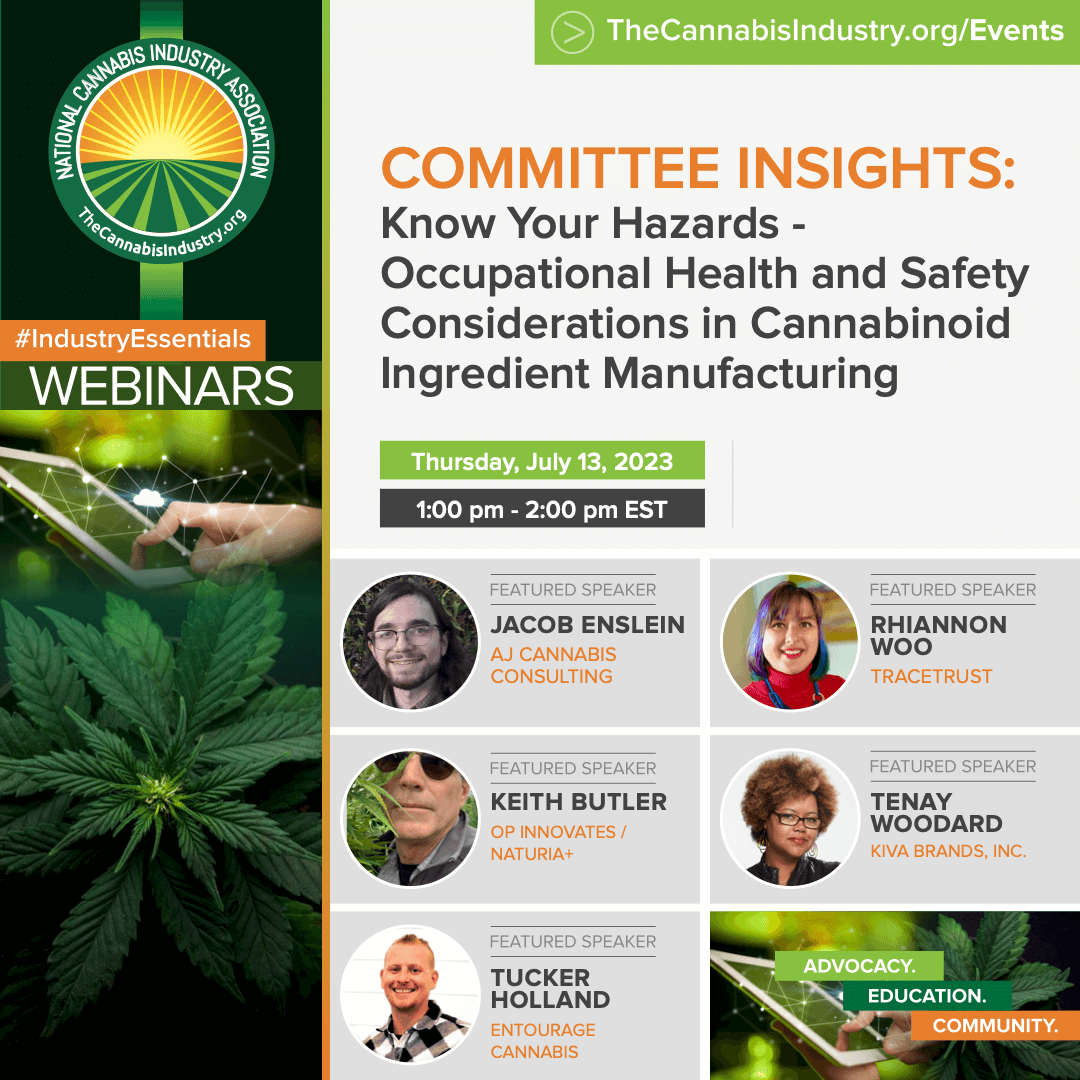
Committee Insights | 7.13.23 | Know Your Hazards – Occupational Health and Safety Considerations in Cannabinoid Ingredient Manufacturing
NCIA’s #IndustryEssentials webinar series is our premier digital educational platform featuring a variety of interactive programs allowing us to provide you timely, engaging and essential education when you need it most.
In this edition of our NCIA Committee Insights series, originally aired on July 13, we were joined by members of NCIA’s Cannabis Manufacturing, Scientific Advisory and Hemp Committees for an in-depth discussion highlighting the occupational health and safety considerations to make during the manufacture of cannabinoids and provide recommendations for mitigating risk.
There is no mistaking that manufacturing cannabinoids is here to stay. It is more and more prevalent to see historically plant/naturally derived bulk ingredients being manufactured in a controlled environment in the lab or through innovative processes like precision fermentation. It is likely that bulk ingredient manufacturing of cannabinoids will go this route too.
For cannabinoids like HHC, that do not exist naturally in the plant or in high enough quantities to be commercially viable for extraction, it is most certainly the case that manufacture of these compounds will occur in the lab. To produce these compounds safely, we can luckily look toward existing regulations and occupational health and safety guidelines for producing novel ingredients for use in foods and non-foods.
Learning Objectives:
• Recognizing common occupational safety hazards associated with manufacturing cannabinoids and recommendation to mitigate these hazards
• Learning the different occupational safety considerations between isolation and purification of naturally occurring cannabinoids and the manufacture (synthesis) of cannabinoids in the lab
• Understanding the special safety considerations that processes like hydrogenation and others have and why these are critical to mitigating liability for your business
Safeguarding Consumers in the Cannabinoid Product Landscape (Part III):
Know Your Hazards – Occupational Health and Safety Considerations in Cannabinoid Ingredient Manufacturing (Part IV): https://bit.ly/3rEUeKP
Concepts for Regulatory Consideration – Shifting the Conversation from “Cannabis vs. Hemp” to “The Cannabinoids” (Part V): https://bit.ly/3P3r5AW
Committee Blog: Manufactured Product Safety – 2021 Series Premier
by NCIA’s Cannabis Manufacturing Committee
Product safety isn’t an endpoint, it’s a journey. And let’s face it, there is years-worth of research left to do on the safety of cannabis products. That’s why it’s important to stay up to speed on the latest thinking from leaders in the industry. In 2021, the National Cannabis Industry Association’s Cannabis Manufacturing Committee intends to help you do just that by providing information and approaches aimed to help you continue to improve the safety of your manufactured cannabis (marijuana and hemp) products while providing your customers with increasingly trusted experiences. This Manufactured Product Safety Series will consist of blogs, podcasts, and expert panel discussions focused on providing insight into topics relevant to a wide range of manufacturers.
Over the course of the next several months, we’ll bring you content with the following working titles.
Vapor Liquid Formulations
The Importance of Testing Vapor Products as a System
Edibles Stability – Microbial Growth Due to Insufficient Packaging
Terpene Limits Across Multiple Product Formats
But while we’re busy crafting these new pieces, we want to take advantage of our past publications to keep important safety topics front and center. Back in January of 2020, in response to the then-emergent EVALI outbreak, NCIA’s Policy Council created a whitepaper to provide guidance to the industry and regulators. We’re republishing portions of this whitepaper starting with the Vaporizer Liquid Formulations section below. We’ve learned more about EVALI since its original publication, and while some of the specifics may be a little dated, the principles remain relevant to helping you understand product safety.
Disseminating our knowledge of this topic also helps promote better regulation. Examples of what can go wrong are the Oregon Liquor Control Commission’s (OLCC) recently adopted regulations that effectively ban the use of propylene glycol (PG). Granted, they were addressing a difficult issue and made some good decisions, but had they read this piece, they might have better understood that PG “degradation has been shown only with temperatures in excess of what is typically produced by well-controlled hardware.” Even in studies where the temperature was not well controlled, thermal degradants were detected in amounts that are lower in the vapor stream when compared to combustion and inhalation of plant products, such as cannabis flower. And given that PG has been “used at up to 90% concentration in e-cigarette products for the past decade without reports to date of significant health issues,” it is unwise to ban an ingredient option that may turn out to have a better safety profile than even certain native terpenes, some of which may have to be added at abnormally high concentrations in order to achieve the desired viscosity, without further research.
So with that in mind, stay tuned for the next piece in the series and enjoy the excerpt below!
Excerpted from THE KEY TO CONSUMER SAFETY: DISPLACING THE ILLICIT CANNABIS MARKET RECOMMENDATIONS FOR SAFE VAPING
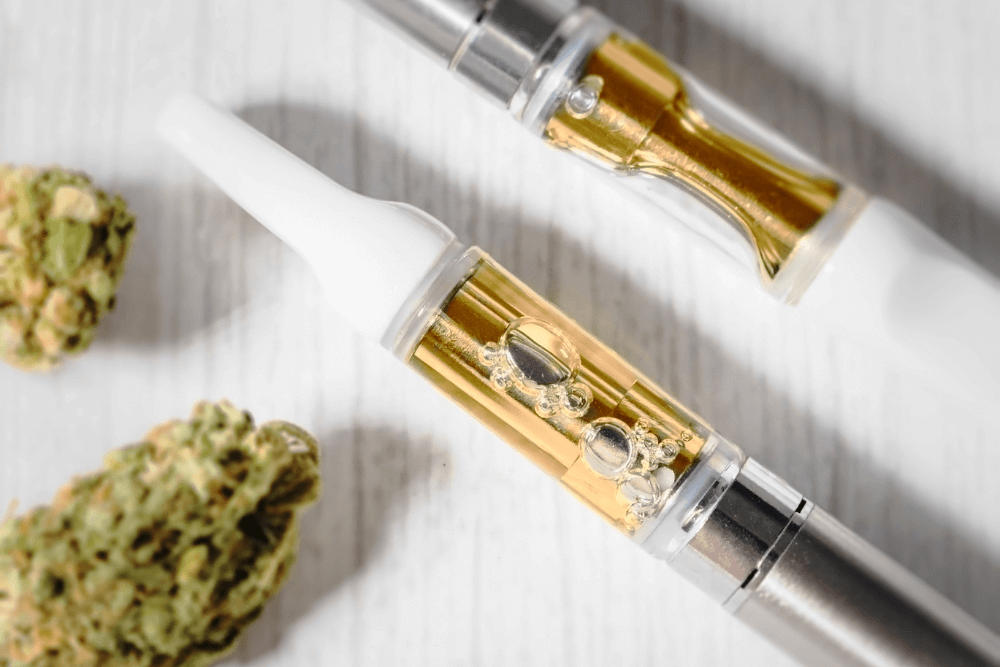
The cannabis-derived ingredient in cannabis oil vaporizers is a concentrate that is produced by extracting the cannabinoids and other compounds from the plant. With the exception of supercritical CO2 extraction, most other common extraction methods use butane, alcohol, or hexane as solvents for the extraction of cannabis oils used in vape pens. Extraction processes using these solvents may result in a small presence of the solvent in the extracted oil. Any residual solvent must ultimately be removed prior to any product being sold to consumers. States that have legalized and regulated cannabis typically have specific requirements regarding allowable concentration levels of these solvents. These states also require full analytical testing by licensed independent labs, including reporting of residual solvents, to ensure that only safe levels of any solvents are present in the final formulation of cannabis vape products.
The type of cannabis concentrate used in a vaporizer is important to consider. Some require diluents or other additives to be effectively vaporized while other types of concentrates (eg: live resin) have the appropriate viscosity to be used in vaporizers without adding any diluting non-cannabis ingredients.
Similar to what we are seeing in the commercial e-cigarette industry, some manufacturers of cannabis extract-containing vape pens choose to add ingredients that help adjust the viscosity of the cannabis oil. This allows the oil to flow evenly through the atomizer when heated. Some of these additives may also contribute to a vapor “cloud” when exhaled. PG, VG, and PEG are the most commonly used cosolvents or diluents. PG and VG are on the FDA’s Inactive Ingredient List for inhalable drug products and are allowable only at fairly low concentrations in drug products, but have been used at up to 90% concentration in e-cigarette products for the past decade without reports to date of significant health issues. PEG is not on the FDA’s list and less is known about its inhalation toxicity. Therefore, PEG should be viewed with more caution, even at lower concentrations.
The state of Colorado has paved the way for the industry on forward-thinking cannabis regulations and remains an industry leader. Governor Polis, his cannabis advisor, and the Marijuana Enforcement Division should be commended for creating an environment in the state that fosters business development while simultaneously protecting consumers. After discussions between Colorado regulators and stakeholders about additives, and given the lack of sufficient safety reviews of these ingredients, the state of Colorado prohibited Polyethylene glycol (PEG); Vitamin E Acetate; and Medium Chain Triglycerides (MCT Oil) in inhalable concentrates and products effective January 1, 2020. Colorado further banned non-botanical terpenes, any additive that is toxic, and any additive that makes the product more addictive, appealing to children, or misleading to patients or consumers. Other states should consider following Colorado’s lead.
The creation of degradants through overheating is also an important consideration. For example, overheating PG and VG may result in their degradation into molecules with established toxicity profiles such as glyceraldehyde, lactaldehyde, dihydroxyacetone, hydroxyacetone, glycidol, acrolein, propanal, acetone, allyl alcohol, acetic acid, acetaldehyde, formic acid, or formaldehyde. However, this degradation has been shown only with temperatures in excess of what is typically produced by well-controlled hardware. Because PEG is a polymer of glycerin, its degradation upon heating is similar to that of VG and it forms the same unwanted toxic molecules.
Vitamin E Acetate and Tocopherols Inhalable Safety Profile Has Not Been Evaluated
Investigators at the FDA and CDC recently found that some cannabis-containing vape products from the illicit market contain a molecule called vitamin E acetate (VEA), also known as Tocopheryl acetate. Vitamin E is a common name for several similar types of chemicals called “tocopherols.” Vitamin E occurs naturally in certain foods, such as canola oil, olive oil and almonds, but also can be made synthetically. Tocopherols are used as nutritional supplements, and manufacturers put tocopherols in food and cosmetics. VEA is the acetic acid ester derived from vitamin E and is also not known to cause harm when ingested as a supplement or applied to the skin.
VEA’s safety when inhaled has not been evaluated. Numerous published studies indicate that the inhalation of vaporized oils, including certain tocopherols, are harmful to the lungs and numerous cases of lung injury after their inhalation have been documented since 2000. Tocopherols such as VEA adhere to an important fluid in the lungs called lung surfactant. Lung surfactant enables oxygen to transfer from air into your body. Studies have shown that tocopherols impair gas transfer in the lungs. Currently, it is believed that inhalation of significant amounts of certain tocopherols can lead to the death of lung cells and initiate a massive inflammatory reaction that can further contribute to lung damage and functional impairment. Accordingly, VEA should not be used as an additive in any inhaled product. Following the FDA and CDC’s investigation, Colorado added VEA to their list of prohibited ingredients in inhalables to their regulations effective January 1, 2020.
Artificial Flavorings Have Not Been Fully and Scientifically Evaluated.
Some manufactures of cannabis extract-containing vape pens choose to add flavoring agents to the cannabis oil to give them a distinctive flavor, similar to products in the electronic cigarette industry. These additives tend to produce flavorings that are appealing to some consumers. While a number of flavorings have been used for many years without incident, the safety of the majority of flavorings when added to vaporized products – alone or in combination with cannabis extracts – have not been fully and scientifically evaluated.
In one study, certain chemicals that are used in flavorings for vanilla, cherry, citrus, and cinnamon can create compounds called acetals when they are mixed with solvents such as PG and VG. Acetals are known to cause irritation when inhaled and can lead to chronic inflammation in the lung. The long-term
effects of these flavoring agents on lung function are unknown. A separate study showed that some popular flavorings may increase the risk of cardiovascular disease when inhaled, although several other studies show no negative effects.
As approximately 17 million Americans use vape products, many of which contain flavors, and only around 2,000 cases of e-cigarette, or vaping, product-use associated lung injury (EVALI) are currently being reported, it appears unlikely that all flavoring agents in all hardware devices are linked to EVALI. However, until more detailed safety studies have been completed on these product lines, manufacturers should proceed with caution.
Some Terpenes are Safe (GRAS); Some Can be Harmful When Heated
Terpenes are a class of molecules found in many plants, including cannabis, that are responsible for the aroma of the plant. Plants evolved to make terpenes to attract pollinators and to deter herbivores and unwanted pests. Terpenes are biologically active and help contribute to many of the physiological effects of inhaled cannabis. Isolated terpenes have been widely used as fragrances in perfumes in the cosmetic industry and in medicine, such as aromatherapy. Although many terpenes are considered “Generally Regarded As Safe” (GRAS) by the FDA, some terpenes are toxic when inhaled/ingested at high concentrations. While most cannabis goods on the market contain levels of terpenes similar to those that occur naturally in the cannabis plant (~1-5%), some products contain terpenes at much higher concentrations (upwards of 25%). High levels of terpenes and other molecules can also occur if chemical procedures such as distillation are used to concentrate cannabis or hemp oil.
In general, terpenes are benign at low concentrations; however, overexposure to concentrated terpenes has the potential to lead to negative effects, including hypersensitive (allergic) reactions in chemically sensitive people. Additionally, some vape pens do not have the means to adequately control the temperature and can heat the cannabis oil to a very high temperature. In certain instances, this has been shown to lead to thermal decomposition of some molecules in cannabis extracts, such as terpenes, resulting in the formation of new molecules with established toxicities. It is also worth noting that even when these new molecules have been shown to form, they have beendetected in amounts that are lower in the vapor stream when compared to combustion and inhalation of plant products, such as cannabis flower, or tobacco leaf.
Cannabis-derived Terpenes
Cannabis contains terpenes, such that cannabis oil extracts used in vape products typically also contain these molecules, depending on the extraction method. Typically, the distillation process causes a loss of terpenes. Some vape manufacturers now recover cannabis-derived terpenes during the distillation process and then re-introduce them back into the final formulated product. Because of poor process control, one potential safety concern from this procedure is that these cannabis-derived terpenes have an undefined molecular composition and the specific concentration of any terpene in the crude mixture likely varies from batch-to-batch due to numerous experimental variables. For example, many manufacturers that are producing large volumes of vape products by necessity must make the oil extracts from a mixture of cannabis strains. Since every cannabis strain contains different terpene profiles, this means that formulated products made from these strains will also vary in their terpene profiles from batch-to-batch.
The potential for terpene profiles changing during the manufacturing process could pose a potential safety concern. Additionally, new isomers, oxidative by-products, or degradative terpenes may be present in these captured terpenes, which could possibly present hazards never presented by merely combusting and smoking the cannabis plant. Some states that have regulations on cannabis require analytical testing of formulated products, including the reporting of terpene concentrations, but this is not yet the universal standard. Vape manufacturers must exercise caution and be required to analyze terpene profiles of products they make in order to begin to develop a better understanding of this subject. Adhering closely to terpene concentrations known to be present in cannabis flower is a good practice.
Non-Cannabis Derived Terpenes Can Contain Residual Solvents and Pose Dangers
One widespread misconception in the cannabis vape industry is that cannabis-derived terpenes are somehow safer or better for you than non-cannabis-derived terpenes. There are few cannabis-specific terpenes because most terpenes are also present in other plants. Most cannabis vape manufacturersthat operate at a large scale, therefore, prefer to use terpenes isolated from non-cannabis sources to introduce into their formulated products. There are several reasons why this is popular in the industry. High purity terpenes (e.g. >99% pure) are sold by numerous retailers, which allows these terpenes to be re-introduced into cannabis vape products at defined and safe concentrations. Also, the cost of using non-cannabis-derived terpenes is far lower than the cost of isolating and using cannabis-derived terpenes.
For example, the terpene D-Limonene is present at extremely high levels in citrus fruits, and therefore can be isolated to high purity easily and inexpensively from them. In contrast, in most cannabis strains D-Limonene is only found at relatively low concentrations, and therefore one would have to use massive amounts of cannabis material to isolate significant quantities of this terpene required for companies that are operating at scale.
The origin and concentration of non-cannabis-derived terpenes that manufacturers use in their formulations is nevertheless important. Non-cannabis-derived terpenes from overseas often have several residual solvents in them, including ethanol, hexane, xylenes, benzene, butane, and toluene. Moreover, some retailers of non-cannabis-derived terpenes do not list the actual concentration or purity of terpenes in their products. It is imperative that cannabis vape manufacturers purchase and use non-cannabis derived terpenes that are accompanied by a COA that reports the purity of the terpene, any solvent(s) that may carry the terpene, and be required to adhere to the same purity standards and mandatory analytical testing requirements as cannabinoids. Reputable companies will also supply a safety data sheet (SDS) that describes the known toxicities of that terpene by different routes of ingestion, including inhalation.
Cannabis manufacturers that make formulated vape products should be aware of any toxic liabilities of non-cannabis-derived molecules introduced into these products. Vape products should also undergo analytical testing for cannabinoids, terpenes, and contaminants. Finally, analytical tests for aerosolized cannabis, similar to those used in the e-cigarette industry, should be developed, implemented, and mandated to address safety concerns. The industry needs to build the volume of inhalation safety data required for all of these ingredients, hardware, and end product combinations.
Committee Blog: Interstate Cannabis Commerce Will Benefit Public Safety, Consumer Choice, and Patient Access (Part 2)
By Sean Donahoe, Founder and CEO, Sungrown Developments Inc. Member of NCIA’s State Regulations Committee
In Northern California’s legendary cannabis growing region of Mendocino, the elected county sheriff was recently a competitor at a homebrew festival, jovially pouring samples of his “Pretty Sour Powerful Sider” (jokingly referring to the “Public Safety Power Shutoffs” recently implemented by the electricity utility PG&E to prevent wildfires.) While this relaxed scene of neighbors bonding in the wake of shared inconveniences was not exceptional in itself, here, Sheriff Allman was posing for selfies with licensed (but possibly a few unlicensed) cannabis cultivators sharing the liquid bounties of harvest for the benefit of a local nonprofit.
For nearly a decade, the elected officials and staff of Mendocino county have worked together to normalize the local cannabis farmers by providing a pathway for medical cannabis cultivation permits, long before the state established a licensing system. This public policy process brought once-outlaw cannabis growers into conformance with every regulation of modern life: from building code standards to streambed alteration regulations to the quantification of gross receipts for tax collection. Bringing regulators onto these farms has curtailed previous practices that may have threatened consumer safety: pesticide and other chemicals are now tracked and regulated, while every gram can now be tracked back to its very plot of origin (in case of a safety recall or other concerns post-harvest.) This has been unquestionably difficult for and disruptive to many heritage and small farmers, but it has also allowed in these regions for simple scenes of social bonding and neighbors trusting neighbors again, as participants in the illicit sector were normalized into first their local county’s community then into a system of state license and next (hopefully soon) into a web of regulated interstate commerce. The process of bringing every farm into the regulated supply chain is far from complete, of course, and there are still illicit operators producing for consumers in urban areas in the state and beyond.
Rather than dwell on the incomplete success of California’s ongoing efforts to bring order to the world’s largest cannabis marketplace, it is essential to focus on the quality of life benefits from every cannabis operation successfully brought over from the traditional market to the regulated sector. Each licensed operation makes for one more safe workplace, one more source for lab-tested products for consumers and patients, and one more farm abiding by environmental regulations while providing stable employment and economic sustainability in rural communities. Under the previous medical cannabis paradigm, while there was certainly an abundance of responsible operators, there was virtually zero guidance from the state on matters of workplace safety, manufacturing standards, or environmental compliance. We are now several years into a robust legislative and administrative rulemaking process that has established a (mostly) clear set of rules of the road for commercial cannabis activities. It has unquestionably been a bumpy road for many of the legacy farmers to comply with new regulatory standards, but we are nonetheless able to say that there are now thousands of well-regulated cannabis farms in California (and southern Oregon) eager to sell their clean and craft quality products in a hopeful system of interstate commerce.
Has every cannabis farm in California transitioned? Of course not, but neither have the illicit cannabis economies been entirely supplanted by adult-use cannabis retailers in Colorado and Washington. Sensible and sustainable cannabis policy reform is a process, not a simple flipping of a switch from “illegal” to “legal,” and Americans should be realistic about the progressive and iterative nature of this process. This process, like most evolutionary processes, has already experienced several inflection points, transformative moments that noticeably shifted public opinion or opened up new frontiers in policy reform. While the earlier era of medical cannabis state laws certainly created a base of public opinion and laws, it was questionably the passage of adult-use ballot measures in Colorado and Washington which brought onto the global stage and accelerated the awareness that adult consumers could buy cannabis in clean, responsible retail locations rather than furtive or even dangerous transactions in the illicit marketplace
Throughout this policy process, we have established that licensed retail options can be scaled without negatively affecting public safety and are highly efficient competitive enterprises, offering consumers ample product selection and low prices. In both Colorado and Washington states (but also in later states) we have seen imbalances for some time as market forces, regulatory factors and new cultivation capacity coming online have all helped to create price fluctuations, product shortages, and other supply disruptions. These disruptions were not unique to these early states and will likely continue in every market as new in-state regulated options come online in fits and starts (but when interstate commerce becomes possible we should expect significant price fluctuations unlike any seen to date.) During these fiscally trying periods, we have often seen cannabis operators attempt to cut corners on compliance to make ends meet, which can lead to compromised consumer safety and public safety. The goals of consumer availability and cost competitiveness should be foremost in the minds of policymakers crafting cannabis policy reform nationwide, most notably in the anticipated markets of the Northeast. As these next anticipated adult-use states are designing the framework of their retail and distribution systems, strong consideration should be taken on the potential benefits of quickly and effectively scaling their programs by incorporating interstate commerce as soon as (politically) possible.
The Interstate Commerce Conversation
As the serious policy conversations about compliant interstate cannabis commerce begin, it is helpful to study how in our proverbial laboratories of democracy we can see that decreasing retail friction and shifting consumers from the illicit marketplace benefits crime reduction efforts and improves overall public safety. We should also note that retail cannabis sales have continued to grow in Colorado and Washington, even after the initial novelty and the surge of tourism waned, while legal sales have supplanted illicit sales. These early-adopting states have created models that are addressing consumer demand as national interest in cannabis for wellness and adult-use purposes are soaring and the cultural normalizing continues to occur on a global scale. Interest is high, consumer demand is real, and evidence shows that our drug reform policies should be crafted to bring every cannabis consumer transaction into the regulated supply chain in order to fulfill the demand while benefiting from increases in public safety.Interstate commerce could provide not only safer products but also a greater variety of quality and highly competitive offerings. For medical patients and wellness-oriented consumers, interstate commerce may be the only viable means of access for certain formulated cannabis products or cultivars, especially in smaller state markets.
In addition to the above benefits, regulated interstate cannabis commerce system could provide a more robust and differentiated production and distribution network combined with the ability to rapidly scale retail sales and address insufficient cultivation capacity in new adult-use markets.Cannabis consumers are price sensitive and illicit market retail options continue to entice consumers in states with functional adult-use programs such as California (or Canada), where there is an insufficient amount of licensed retail options to address total consumer demand. With the beginning of adult-use sales in Illinois and larger adult-use states yet to come, it is frankly a bit difficult to envision how total consumer demand will be able to be fulfilled in any near term by relying on licensed cannabis cultivated in-state alone.
The Safe Vaping Discussion
While moving to allow interstate commerce will best position licensed operators to compete with the prices available to consumers in the illicit sector, moving towards a borderless system of production and distribution will also increase safety and access for patients and consumers. Most prominent is the recent nationwide discussion on vaping and vaping-related issues, where tainted products and resultant injuries have been found in the unregulated, illicit sector (or in a very few instances from licensed but arguably under-regulated sources.)Notably, NCIA’s Policy Council established a Safe Vaping Task Force to work on these issues and has released a more comprehensive document advocating for the expansion of a regulatory approach for the safe manufacturing and distribution of cannabis products, whether vape cartridges or otherwise.
The issue of vaping extends to broader issues of product safety including educational campaigns, quality assurance, and testing programs, supply chain integrity, track and trace, and other reporting systems, and (when all else fails) a capable and sophisticated product safety recall system and these are all necessary components of a well-regulated marketplace. These consumer safety programs have already been carefully designed and stress-tested in Colorado and California and the insights from these systems and those in other states should be incorporated into the crafting of interstate cannabis policy (which will require significant harmonization of Certificates of Analysis and testing standards, packaging and labeling standards, etc., again all of which will benefit patients and consumers by offering greater predictability and reliability of their preferred products.)
Multi-State Coordination
In various forums, we have begun to see state regulators liaise with each other and we hope to see more coordination in the future and potentially an earnestness in harmonizing standards where statutorily possible. This multi-state coordination on product safety standards would be accelerated as part of the regulatory coordination efforts that are likely necessary for interstate commerce and, again, consumers and patients will benefit from safer cannabis and cannabis products, and we see NCIA as the critical player in this coming national conversation. In conclusion, moving to a system of regulated interstate cannabis commerce will have tangible benefits for the general public, for consumers and patients and I encourage forward-thinking members of the industry to participate and help manifest a system of interstate cannabis commerce with NCIA, its Allied Associations and other industry groups.
After studying Russian affairs and working as a political consultant, Sean Donahoe co-founded the California Cannabis Industry Association. He served as its Deputy Director through 2014 when he transitioned to consulting for investors and operators, communicating with public stakeholders, serving on local government committees, and advising industry trade groups. He holds an MSc in Government from the London School of Economics and is CEO of Sungrown Developments Inc., an advisory firm and holding company in Oakland, California.
Member Blog: There’s No Place Like CBD For The Holidays
While April 20th, or “420” is the “high” holiday of cannabis, did you know there are a variety of lesser-known CBD-related holidays throughout the year that can be great grist for the promotional mill? To achieve notoriety and engagement, CBD purveyors may want to include lesser-known celebrations into their annual marketing calendar.
For example, there’s National CBD Month in January, National Hemp Day February 4, National Hemp Month in July, Oils and Concentrates Day July 10 (sometimes referred to as 710 because OIL upside down resembles the number), National CBD Day August 8 and National Pet CBD Month in October.
And let’s not forget Jack Herer’s (The Hemperor’s) birthday celebrated June 18. According to Wikipedia, the devoted cannabis rights activist and author promoted cannabis and hemp for decades. His book, “The Emperor Wears No Clothes” has been in print for three-plus decades. Herer was “frequently cited in efforts to decriminalize and legalize cannabis… Herer also founded and served as the director of the organization Help End Marijuana Prohibition (HEMP).”
CBD purveyors wanting to get even more innovative can use their branding — including labels — to tie to lesser-known holiday promotions. Here are some ways to use labels as powerful promotional tools in conjunction with “holiday” celebrations:
Extend their reach for a whole year via extended content labels (ECLs). For CBD purveyors committing to promotions tied to a calendar of holidays, ECLs can be a fun and impactful way to present information, offers and calls to action.
Create a major promotion around one celebration (e.g., January’s National CBD Month), and use ECLs to explain/inform. This could be a contest with details, one or more discount offers, or even a history of the CBD “movement.”
Print specific labels for each holiday. For example, create fun and informative labels around “The Hemperor’s” birthday month in June. A series of labels could detail various hemp-related accomplishments by Herer, even possibly going so far as to be small pieces of art depicting him and his life’s work.
Use them to link to digital media. There’s always a case to be made for labels containing QR codes, URLs and other links to more information. This can be especially appropriate for surveys, reviews and other interactive platforms where consumer feedback is desired. Any of these efforts can be themed around holiday celebrations (e.g., an upcoming anniversary of hemp or CBD adoption/legalization). In the CBD world particularly, companies need to understand how their consumers view them, assess the quality of products and express any concerns that may emerge.
Present labels as a quality control and consumer safety tool. At a time when buyers worry about the safety and authenticity of the products they consume, labels can help come to the rescue. And what better holiday than one which celebrates both the healthy effects of products and a concerted effort to protect those consuming them?
For example, new label technologies enable consumers to verify the authenticity of their products through a smartphone app that scans a small digital ID on the label. These track-and-trace digital IDs offer a powerful deterrent to counterfeiting, protecting consumers from harmful or ineffective fake products. In turn, CBD product manufacturers can demonstrate to customers that they are working actively to ensure their safety. That creates favorable word-of-mouth, goodwill and loyalty among buyers who will criticize or even pursue regulatory and legal remedies if they feel there’s a problem.
Gary Paulin is Director of Sales and Client Services for Lightning Labels, a Denver-based label printer that has been offering state-of-the-art affordable, full-color custom labels and custom stickers of all shapes and sizes to cannabis purveyors for more than a decade. They offer many options for materials and laminates and special effects to achieve digital short-run requirements (50 minimum) on up to 15 million labels, plus Lightning fast delivery. For more information and to place orders online, visit LightningLabels.com. For the latest in packaging news and labeling promotional offers, find Lightning Labels on, Facebook, Instagram, Twitter (@LightningLabels), Pinterest, and LinkedIn.



 After studying Russian affairs and working as a political consultant, Sean Donahoe co-founded the California Cannabis Industry Association. He served as its Deputy Director through 2014 when he transitioned to consulting for investors and operators, communicating with public stakeholders, serving on local government committees, and advising industry trade groups. He holds an MSc in Government from the London School of Economics and is CEO of Sungrown Developments Inc., an advisory firm and holding company in Oakland, California.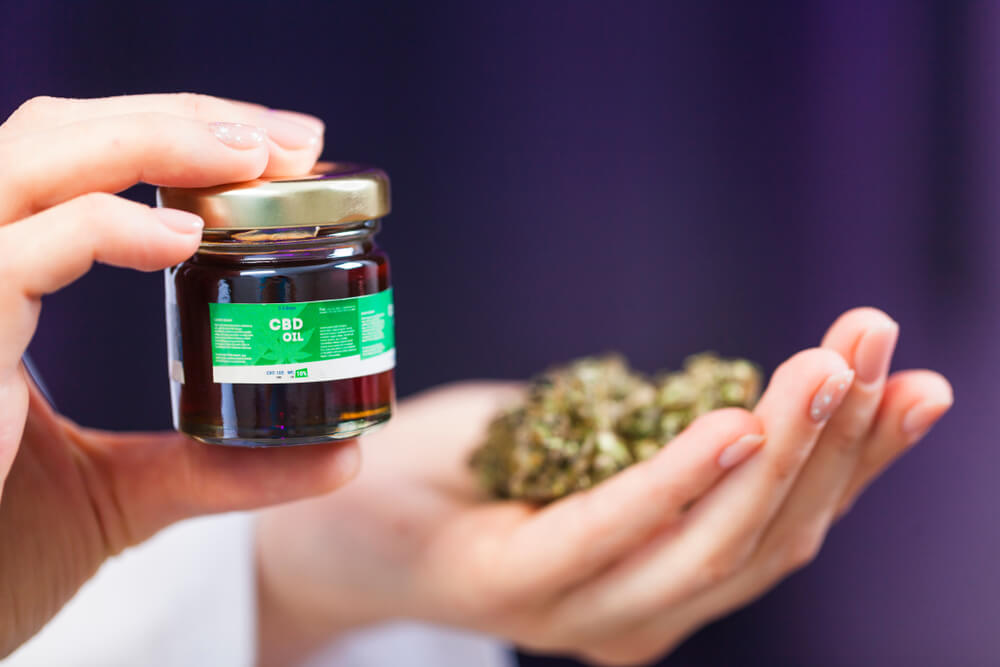
 Gary Paulin is Director of Sales and Client Services for Lightning Labels, a Denver-based label printer that has been offering state-of-the-art affordable, full-color
Follow NCIA
Newsletter
Facebook
Twitter
LinkedIn
Instagram
News & Resource Topics
–
This Just In
DOJ Reschedules Medical Cannabis to Schedule III & Announces June 2026 Hearing on Broader Rescheduling
National Cannabis Industry Association (NCIA) to Convene Industry Leaders in Washington for Annual Lobby Days, Bringing Together a Unified Voice for Federal Cannabis Reform