NCIA’s #IndustryEssentials webinar series is our premier digital educational series featuring a variety of interactive programs allowing us to provide you timely, engaging and essential education when you need it most.
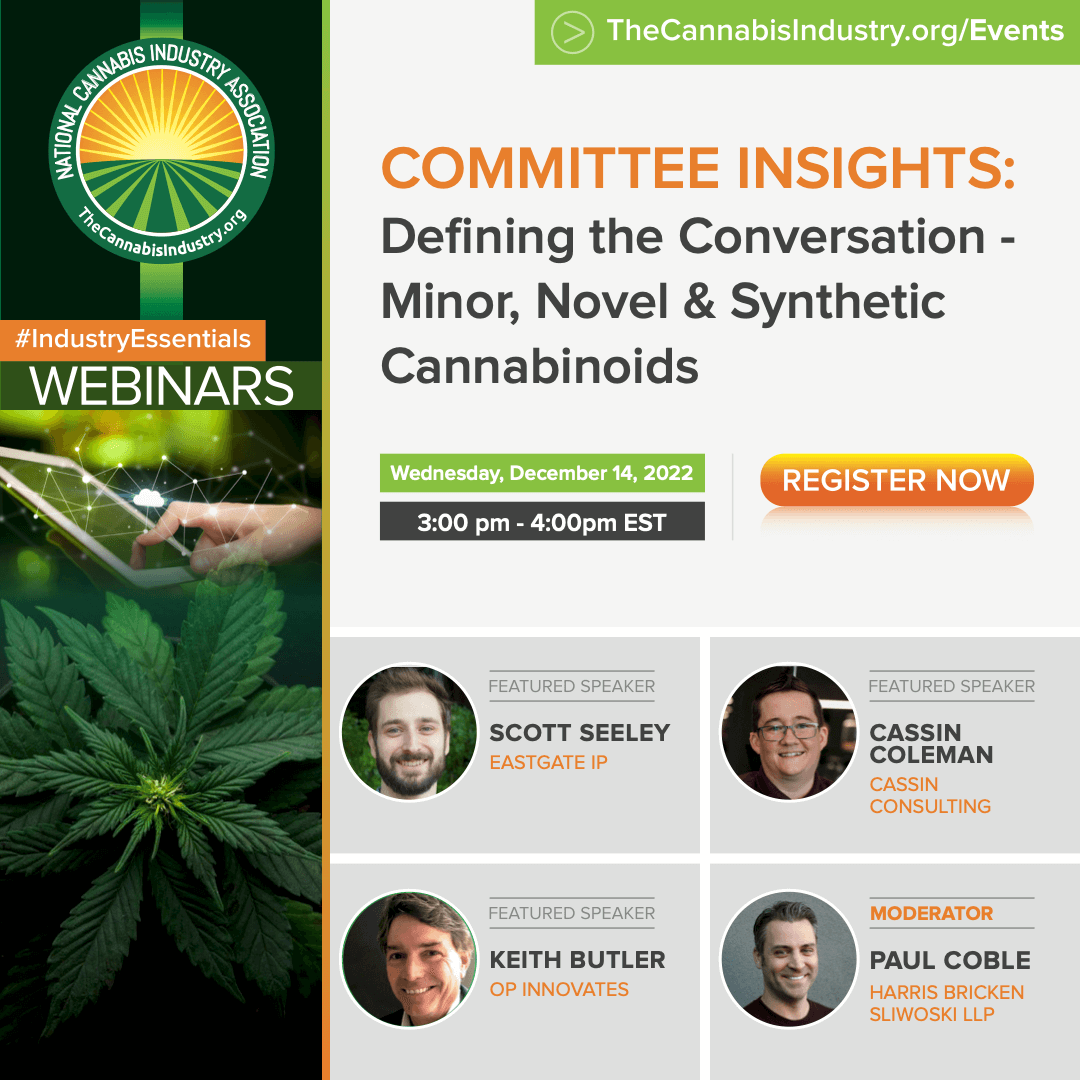
In this edition of our NCIA Committee Insights series, originally aired on December 14 and produced in collaboration by NCIA’s Cannabis Manufacturing Committee, Scientific Advisory Committee and Hemp Committee we introduced and framed the myriad regulatory, scientific, linguistic, and ethical issues that come with the rise of minor, novel, and synthetic cannabinoids.
Learning Objectives:
• Understand the role of minor, novel, and synthetic cannabinoids in the cannabis industry and the unique issues relating to their current status.
At the conclusion of the discussion our panel hosted a lengthy moderated Q&A session so our network could get all their burning questions answered by these leading manufacturing, biochemical, and legal professionals from the hemp and cannabis industries.
Panelists:
Scott Seeley
Biochemist and Patent/TM Attorney @Eastgate IP
Cassin Coleman
Founder
Cassin Consulting
Keith Butler
CEO
OP Innovates / Hemp Mellow
Paul Coble
Intellectual Property Attorney
Harris Bricken Sliwoski LLP
There is more to cannabis than THC and CBD. As our understanding (and commercialization) of cannabis evolves, new compounds like CBG, delta-8-THC, THCv, and others are coming onto the scene. These various “minor” cannabinoids, however, bring with them a host of new issues.
Over the next few months this collaboration will continue to explore these issues with various subjects ranging from basic and advanced overviews of these molecules, regulatory recommendations, risk management and compliance concerns all the way to consumer and manufacturer safety. Stay up to date and be the first to know when additional follow-up sessions are scheduled by signing up via the form below.
There is a lot of confusion about payment processing in the cannabis space because payment processing is somewhat confusing to begin with, and because, in the cannabis space, ambiguity is a way of life.
The title of this very blog post could, realistically, seem misleading to some.
So, to be clear, when I say, “Cannabis Space,” I mean the entire industry — from plant-touchers (CBD included) to the ancillary businesses built up around it.
The passage of the 2018 Farm Bill marked an exciting new chapter for the industry. Suddenly, CBD, or, more specifically, any ingestible cannabis product containing .3% THC or less by volume, was classified as hemp. And since it is marijuana, and not hemp, that is defined as a Schedule I substance under the United States Controlled Substance Act, the Farm Bill, technically, made products like CBD as legal as cow milk — federally, anyway.
The upshot of this new classification is that now, at least some players in the cannabis space can market their products to a national base of consumers and clients, and they can do so by accepting credit cards as payment.
However, the myriad Acquiring Banks across the United States have not exactly jumped for joy at the prospect of providing credit card processing in the form of merchant accounts to CBD retailers. Reticence rules. CBD is considered high risk, and four years on, only a handful of them have thrown their hat in the ring.
Jargon Alert I: Acquiring Banks and Issuing Banks
In merchant processing parlance, banks fall into two categories: Acquiring Banks and Issuing Banks. Acquiring Banks, or, Acquirers, provide merchant processing accounts to businesses wishing to accept credit card transactions. Issuing Banks, short for Card Issuing Banks, are banks that offer branded payment cards directly to consumers. For example, if your bank has ever offered you a Visa card, it is an Issuing Bank (not that it couldn’t also be an Acquiring Bank, too).
Jargon Alert II: CBD is ‘High Risk’
CBD is deemed high risk by the card associations (i.e., Visa, MasterCard, American Express), and when the card associations deem a product or industry high risk, most Acquiring Banks tap out. This is because financial institutions are, by nature, risk averse (subprime mortgage crisis notwithstanding).
So let’s talk for a minute about risk. High risk, that compound term, is a truncation of a longer phrase: ‘Higher risk of fraud or chargebacks.’
Why are CBD products at higher risk of fraud? It’s impossible to say for sure since the Visas and MasterCards of the world are publicly traded companies with their own trade secrets and IP, but there are several characteristics unique to CBD, or any cannabis product now federally legal, that likely figured into that decision.
Those FDA disclaimers that CBD retailers must print or paste on all product packaging and webpages are as good a place as any to start. They are mandatory because none of the benefits assigned to CBD have been clinically proven. There just isn’t enough data or testing at this point, and no big story there. That’s what happens when you demonize a plant for 100 years.
Consequently, from the perspective of the FDA, and the card associations, by extension, consumers are making CBD purchases with baked-in expectations based, exclusively, on word-of-mouth advice and anecdotal data. That’s a recipe for dissatisfied customers. And dissatisfied customers tend to charge back transactions.
The card associations, and the banks who provide merchant accounts, worry incessantly about fraud and chargebacks.
Too Close for Comfort
Dissatisfied customers aside, there are onerous legal nuances that make the prospect of boarding cannabis merchants, even those selling products that are federally legal, daunting for banks.
Selling a product with .31% THC across state lines is felonious. It is a federal offense. Violating a law like that could get a bank’s charter revoked, or, at a minimum, result in massive fines.
On the other hand, selling a product with .30% THC across state lines is 100% federally legal. As stated above, safe as milk, federally.
That is a heck of a distinction. If any product contains more than .3% THC by volume, it is ‘marijuana’ in the eyes of the federal government. From the perspective of the banks, that’s a little close for comfort. Furthermore, banks don’t operate laboratories. They must rely on testing data presented to them in the form of third-party lab reports — Certificates of Analysis or COAs for short — to verify that the products being sold are federally legal.
The last thing an Acquiring Bank wants to do is violate a federal law EVER. It could result in a loss of their charter, lawsuits, and massive fines. And it’s important to keep in mind that the Acquiring Banks out there offering merchant accounts to CBD retailers are not giant, publicly traded institutions like Bank of America or Wells Fargo. They tend to be much smaller, and therefore, have infinitely smaller war chests for court cases.
Still, separating the federally legal Tier I cannabis product from the federally illegal Tier I cannabis product should be pretty cut-and-dry. If the product you’re selling is .3% THC by volume or less, it is exempt from the Controlled Substance Act (CSA). If that threshold is documented in the product’s Certificates of Analysis (COA), you ought to be able to sell it.
Unfortunately, it’s not that simple. When bank underwriters look at percentages of Delta 8, Delta 9, and Delta 10 on the COAs that cross their desks, they’re frequently at sixes and sevens trying to figure the whole thing out.
From the perspective of the 2018 Farm Bill, a cannabis product is hemp if it contains .3% Delta-9 THC or less by volume, but what everybody says is “.3% THC or less by volume.” Consequently, when the compliance officer at the bank is performing her due diligence by inspecting the COAs corresponding to each product, she may encounter a lot of crooked numbers, and she may blanch at the results.
Those results, often, look something like the following:
00.195% D9-THC
52.475% d8-THC.
Federally, the Delta-9 threshold is the only threshold that matters. The 2018 Farm Bill says as much, and the 9th Circuit Court of Appeals in California affirmed it in a ruling this past May. Therefore, in the example above, the Delta-9 threshold has not been crossed. It’s not even close. It is textbook HEMP, even if the Delta-8 threshold is off the charts.
However, if the compliance officer was provided the remit, “.3% or lower,” he’s likely to look at this and say, “Fail,” without realizing that the Delta-8 THC information is irrelevant as far as federal law goes.
Complicating the underwriting further is the fact that there is, to date, no standard template for COA reports. Every lab presents them differently. Bank compliance officers rarely moonlight as scientists. Like most of us, these CBD COAs are probably the first lab reports they’ve looked at since high school chemistry.
Furthermore, the banks can set their own rules. They don’t have to board CBD merchants. Few do, and those few that do have their own standards and practices.
Todd Glider has been an e-Commerce leader since the start of the Internet age. He has an MFA in Creative Writing from the University of Miami, and has served as CEO for small and medium-sized technology companies in Spain, Austria and the United States. As our Chief Business Development Officer, Todd introduces MobiusPay’s suite of award-winning financial services to new industries, and implements the development strategies and key partnerships needed to bring value to new customers.
MobiusPay, Inc. is a U.S.-based global financial services organization that is committed to empowering individuals and businesses. For more than a dozen years, MobiusPay has leveraged state-of-the-art secure billing technology, long-standing relationships with financial institutions and award-winning customer support to provide merchant processing and payment solutions to brick and mortar and digital businesses around the world.
Video: NCIA Today – Thursday, June 2, 2022
Happy PRIDE! NCIA Director of Communications Bethany Moore checks in with what’s going on across the country with the National Cannabis Industry Association’s membership, board, allies, and staff. Join us every other Thursday on Facebook for NCIA Today Live.
Make the investment, take the time, and do the work to position yourself for success in the Empire State!
U.S. Federal Appeals Court Legalizes Delta-8 THC, Setting Precedent for the Cannabis Industry
By Sadaf Naushad, NCIA Intern
Thanks to the Agricultural Improvement Act of 2018 (2018 Farm Bill), hemp is now federally legal, permitting U.S. farmers to cultivate, process, and sell hemp. Since its passing, however, businesses in the hemp industry have found themselves in a legal gray area.
With the 2018 Farm Bill eliminating restrictions on the psychoactive cannabinoid delta-8 THC, the companies deemed their delta-8 THC products within legal guidelines. Several jurisdictions disagreed, calling for clarification on the status of delta-8 THC.
Last week, the U.S. Court of Appeals for the Ninth Circuit addressed the dilemma, claiming delta-8 THC products as federally legal.
Let’s consider what delta-8 THC legalization means for the future of the cannabis industry.
Because recreational cannabis use remains federally illegal, delta-8 THC products continue to gain popularity nationwide. Manufacturing developments have led to enhanced consumer products, in which cultivators safely extract delta-8 THC cannabinoids from hemp plants.
While delta-9 THC constitutes a major psychoactive cannabinoid in the marijuana plant, delta-8 THC appears in trace amounts of the plant. Its psychoactive properties grant consumers gentler side effects compared to delta-9 THC.
On Thursday, a three-panel judge of the U.S. Court of Appeals published their opinion regarding delta-8 THC, ruling products containing the psychoactive ingredient as federally legal. According to the panel, delta-8 THC qualifies as a legal substance under the present federal definition of hemp. Federal law outlines hemp as “any part of” the cannabis plant, in which “all derivatives, extracts and cannabinoids” with less than 0.3% delta-9 THC by weight are allowed.
Had U.S. Congress unintentionally created a loophole leading to the legalization of delta-8 THC, the U.S. Federal Appeals Court stated that Congress should be responsible for resolving the issue. The panel specified that they would not replace its own judgment with Congress’ policy rulings. In the meantime, the Court defines the federal hemp law as “silent with regard to delta-8 THC.”
According to a Politico article, “Members of Congress have proposed fixes to federal hemp laws that would close this loophole. Rep. Chellie Pingree (D-Maine) introduced a bill in February to limit hemp and hemp products by calculating the total THC rather than focusing on Delta-9 THC. At the same time, state hemp regulators are voicing for a similar change advocating for the 1 percent total THC definition of hemp. Meanwhile, some states have moved to ban the sale of Delta-8 THC products or to regulate them similar to recreational marijuana.”
NCIA takes a strong position that Delta-8 products and any other psychoactive cannabinoids must be restricted to adults over 21 and regulated by the states so that these products are subject to the same testing requirements, track-and-trace rules, and excise taxes as other adult-use cannabis products.
Furthermore, if you are interested in learning more or getting involved with NCIA’s Government Relations work please contact Madeline Grant at madeline@thecannabisindustry.org to schedule a call. As the oldest and largest trade association, our Government Relations team has been hard at work for over a decade educating and working with congressional offices. NCIA held its Virtual VIP Lobby Days last week, May 16-19 on Capitol Hill. NCIA’s Evergreen members participated in congressional meetings all week long to advocate and educate members of Congress(s) and staff on the importance of cannabis policy reform. We discussed the importance of keeping the Secure and Fair Enforcement (SAFE) Banking in the America COMPETES Act and descheduling cannabis at the federal level. You can read more about cannabis and banking from last week’s blog HERE.
NCIA members were able to share their personal stories about being in the cannabis space and relay their expertise to further understanding of the struggles and hurdles cannabis businesses face every day. There is never a time more important than now to support NCIA’s efforts for cannabis policy reform.
Committee Blog: An Introduction to Minor/Novel Cannabinoids
In our rapid advance in cannabis science through recent years with the easing of restrictions of handling and experimenting on cannabis and cannabinoids via legalization and regulation efforts across the country, we have discovered and re-discovered cannabinoids that hold potential for great advancement in cannabis chemistry and potential for many beneficial health and wellness benefits along with identifying via production methodology, the safe and cost-effective means of producing these cannabinoids themselves.
We define these new cannabinoids, different from the standard ones identified and required to be noted on regulated cannabis products (i.e. THC-A, THC, and CBD) in a number of ways, all being used in this article to define Minor/Novel cannabinoids. Minor cannabinoids are simply defined as every other cannabinoid that is found in cannabis besides THC and CBD. Science has identified over 100 outside the two standards, and more are discovered each year. Defining “Novel” cannabinoids; we look at five major classifications; Classical, Non-Classical, Hybrids, Aminoalkindoles, and Eicosanoids. Finally, we use the term “Synthetic” cannabinoids to define compounds related to cannabinoids, but not naturally found in any concentration in the cannabis plant or related plants themselves. Realistically, the term Synthetic could be replaced by Novel, Classical Synthetics, and Non-Classic Synthetic compounds. For the sake of this article, we will be defining and discussing the basics of the generalized “Minor” cannabinoid family along with touching briefly on possible “Synthetic” compounds of interest in the future.
It would be easy to dismiss all these compounds outside THC and CBD as so rarely found in the natural cannabis plant, that they would not impact the industry or growth/focus on regulatory affairs in the space for discussion. However, one thing that these compounds have been found to cause is not only true intoxication in individuals, but also potential workarounds between State and Federal law regarding restrictions around classic cannabinoids THC and CBD, which have been the main focus of lawmakers and regulators in the past. One of the most prevalent and important that has made its way into many small gas stations and head shops across the country would be a compound such as Delta-8-THC. Often described as “THC light” Delta-8 has been produced through semi-synthetic means to achieve intoxicating effects while still skirting around the laws regarding Delta-9 THC. Delta-8 is not a new compound, having been known for years in the organic chemistry field and now being produced via widely available and federally legal CBD isolate. Compounds such as “Delta-10” and others are now becoming available to market in a large way and generalized knowledge of the substance and its effects are becoming widely discussed.
Overall, the compounds themselves have years of real research behind them, showing that when produced correctly and tested for efficacy, there are real potential benefits to use in the human body for a variety of reasons or conditions. Many more years of research are to be done to learn proper testing methodology based on production methods, but overall, we are seeing many potential benefits of these compounds for human use.
The human body internally operates and relies on what is called the endocannabinoid system. The system affects the human body’s ability to heal/regenerate, regulate body temperature, and many other positive background systems in the body. Humans are built to process and use cannabinoids and the deficiencies of those can lead to imbalance in the body’s systems. One effect of cannabinoids in the human body is also that of intoxication. Scientists rely on various interacting chemistries in the body and brain to determine the concept of intoxication. There is no doubt in the argument against any intoxication, however, we tend to view intoxication through a negative light while simultaneously ingesting a cup of coffee in the morning for the intoxicating effects of caffeine. Looking at intoxication through this light, down to the way in which a cup of tea can calm, soothe, rejuvenate, or stimulate; we seek to define and examine the potential benefits of these minor cannabinoids in the human experience while studying and researching their potential uses in the future.
Taking a brief look at overall results from studies around minor cannabinoids, we find a variety of effects and use in minor cannabinoids that far outstrips the standard belief of what THC or CBD can do for the body. THC-V, for instance, that is found in higher concentrations of strains from specific parts of the world, including the south part of the continent of Africa, has been shown to work towards appetite suppression and could potentially be a lesser harmful compound in the quest for weight loss in individuals. Looking at the compound CBG, it has been shown in studies to improve focus and cognition, a very different outcome than its relative THC. THC-O has even been shown to have a greater intoxicating effect than Delta-8 or 9 due to the ability of the human body to uptake the compound more efficiently. Finally, one compound that is making waves in the field of sleep science is CBN, an oxidized molecule of CBD that could help people find non-habit-forming relief in the quest for better rest. While all of these compounds are and can be created from various forms of THC and CBD, much more research is needed (and thankfully finally becoming allowed in this country) to judge their effectiveness and side effects.
All these modifications via organic chemistry with existing cannabinoids, while yielding beneficial results in the lab and clinical research; should be examined and tested like any other regulated product being consumed by humans. One very real potential danger is not only the continued prohibition and extreme regulation of research into cannabinoids leading to clandestine production methods in markets that do not require testing (i.e., “Bathtub” Delta-8 production using strong and dirty acid compounds) but the continued chasing of new compounds outside the current regulatory structure that exists with the DEA here in America. Cannabis has been through this struggle before; with THC highly regulated and tested for in individuals in the military, probation, transportation, or heavy equipment operation; there was a desire to still feel the effects while “complying” with the strict THC ban. These compounds were developed at a rapid rate, leading to “Synthetic THC” or “Spice”-type compounds. While the legislation was aware of the issue, the methodology of banning a single compound led underground chemists here and around the world to tweak the molecular structure to have a similar effect while essentially testing their new blends on the unsuspecting masses, resulting in many injuries and developing long-lasting negative effects in individuals.
One of our biggest tools to combat another “Spice” development cycle that outpaces the research done on these compounds is to deregulate and lessen the difficulties in studying these compounds in highly regulated scientific settings (i.e., universities and scientific institutions). Following that initial change, there needs to be significant development through those institutions regarding establishing long-term studies and testing methods to examine the effects on the human body. Regarding final product testing; in the regulated market, all cannabis products sold through licensed dispensaries from licensed producers need to undergo stringent testing for potency/solvents/heavy metals contamination/microbial contamination, and other potential hazards before the product are deemed safe to sell to customers. Allowing other minor compounds, such as Delta-8-THC, to be sold to consumers via untested pathways and through unregulated channels opens the possibility of harm either through incorrect dosing or contamination via shoddy production methods or less-than-clean packaging standards. Labs need to continue to modify and develop their means to accurately test these compounds and regulators need to hold manufacturers accountable in following the health and safety testing requirements as are currently being done in the regulated cannabis markets across the country.
Not only do these compounds have a significant potential for health and human wellness but could even assist in the development of significantly cleaner production methodology for the main cannabinoids like THC, allowing for lower costs of production and for much more market competitiveness and development by lowering hurdles like highly regulated cannabis agriculture. If you do not need to spend valuable resources to grow the plant itself and the compounds can be safely produced with higher consistency, it will be a boon to manufactured products that require them for their formulations.
In no way should we shut the door on the potential future of these compounds but embrace the study and research to re-invigorate the development and growth of the use of a plant that has been part of the human consciousness for over 3,000 years. While the names sound scary and different, we are just cracking the code on the depth of this plant and what it can do after so many years in the shadows.
The Cannabis Manufacturing Committee focuses on reviewing existing business practices and state regulations of concentrates, topicals, vaporizers, and edibles, ensuring the manufacturing sector is helping shape its destiny.
Member Blog: How Can Hemp Businesses Better Self-Regulate?
The hemp industry is still in its early stages, especially when it comes to emerging products like delta-8 THC. While there is some regulation for hemp products, it’s much less than for legal cannabis, and this gives companies some freedom in terms of how they operate and what they do. For the most part, this is a good thing, but there is a downside too. Our report into the industry found that 76% of delta-8 THC products contained illegal quantities of delta-9 THC. This is terrible for consumers, but it also poses a risk to the industry: if you keep raising red flags, the government will eventually swoop in and take action. This is why self-regulation is a crucial concept for hemp businesses going forward.
Why Self-Regulate?
Self-regulation is crucial for hemp businesses because of the scrutiny the industry faces and to improve consumer confidence. Although CBD is generally accepted, this is especially important for companies selling something like delta-8 THC, which attracts more scrutiny because of its psychoactive nature. With states like Texas attempting bans on the substance and the findings of our report showing that the vast majority of products break legal limits for delta-9, the industry is in serious danger of attracting the attention of more lawmakers who may opt for an outright ban. In fact, there are already 18 states with some form of ban or restriction on the substance.
Jayneil Kamdar, PhD from InfiniteCAL Labs commented to us that: “The current delta-8 THC products on the market are very concerning because there is no regulatory body monitoring the safety of these products.”
In our report, we also found that companies tend to undercut customers on delta-8, that only 14% of companies perform substantial age verification checks and that two-thirds of companies don’t test their products for impurities.
It isn’t that self-regulation would be a cure-all, but if companies opt to act responsibly, it is much less likely that they will attract attention from lawmakers. In addition to this, though, self-regulation sends a strong message to consumers that you care about them and that they will get what they wanted when they buy your products. When this doesn’t happen,people will tell others about it.
The more the industry can mirror the regulations of regulated cannabis companies, the better things will go in the long run.
How Can Companies Better Self-Regulate?
However, “self-regulation” can’t just become a vague, catch-all term for generally responsible business practices: clear recommendations are essential in making this goal a reality. Luckily, our in-depth investigation of the delta-8 industry and other similar investigations into the CBD industry have revealed some key areas companies can focus on.
Provide Transparent Lab Reports with QR Codes
Lab reports are a vital part of building consumer trust, and you should ensure there is a QR code on the report so it’s easy for consumers to verify the report on the lab’s website.90% of CBD companies already do this, based on our industry analysis.
Offer a Lab Report for Every SKU
Many companies, however, only offer a COA for the base distillate, rather than every specific type of product it produces. If you sell vape cartridges, for instance, you should have a report available for each variation in flavor, strain, and potency.
Choose Credible Labs for Your Report
Not all labs are equal. If you get a report from a questionable or unknown lab, savvy consumers will still be wary of your product, and in some cases, the results may be unreliable. It’s best to choose a lab with a strong reputation, such as ProVerde, Anresco, SC Labs, InfiniteCAL, and CannaSafe.
Test for Impurities
With two-thirds of delta-8 companies not lab testing their products for impurities, this is a good way to stand out in the marketplace as well as good practice in general.
Verify Customer’s Ages
With most CBD companies not performing robust age verification checks, using a credible age verification system such asAgeChecker is a great step towards self-regulation. They stay up to date with FDA requirements, state laws, and merchant account policies, so you can set it up and then continue basically as normal. This is especially important for delta-8, but it’s also crucial for higher-strength CBD products too.
Label Your Products Accurately
What you claim on the label should be what’s in the product. Lab reports help you verify that this is the case.
Warning and Caution Labels
Only about 55% of hemp delta-8 companies use a warning label, but this is another key part of self-regulation. Suggested verbiage includes:
This product should be used with caution when driving motor vehicles or operating heavy machinery.
Use this product under the guidance of a physician if you have a medical condition, are pregnant or lactating.
Keep out of the reach of children.
This product was manufactured from hemp material that meets federal requirements for hemp products; however, consumption may be flagged by some drug tests.
This goes hand-in-hand with the above, but also, having your products that looklike a bag of Cheetos or anything along these lines is not a good look.
Avoid Medical Claims
Although many people opt to use delta-8 and CBD for medical purposes, if you’re selling the products, making medical claims that might not meet official organizations’ standards of proof is simply a terrible idea. Leave it to your consumers to determine.
Get Industry Certifications
Getting certified by an organization like theU.S. Hemp Authority is a great way to show your customers that you’re one of the responsible companies.
Conclusion
Self-regulation really just means taking a few basic steps to establish to both customers and politicians that you’re running a legitimate business which does what it claims to and is socially responsible. It might increase costs in the short-term, but over time and especially as consumer knowledge increases, it will pay off many times over. And the next time there’s a situation like what happened recently in Texas, the industry will have a much easier time defending its practices.
Lee Johnson is a writer at CBD Oracle who has been covering science, vaping, and cannabis for over a decade. He focuses on research-driven deep dives into topics ranging from medical uses for CBD to industry and user statistics, as well as general guides and explainers for consumers. He is a passionate advocate of both CBD and cannabis, and a strong believer in informed choice for consumers.
CBD Oracle is a consumer research company working to improve the safety and transparency of cannabis products, producing in-depth statistics on CBD and cannabis, detailed research pieces and analysis of social and legal issues.
The Agricultural Improvement Act of 2018 (the “2018 Farm Bill”) helped to further define the pathway by which “hemp-derived” ingredients can be legally incorporated into food. Since then, hemp-ingredient companies have materialized selling purified cannabinoids that are found naturally-occurring in hemp. Despite the young market, these companies are facing difficult times as the buyers for these ingredients are few and manufacturers mostly compete on price. The GRAS path offers a route out of this conundrum.
What is GRAS?
The Generally Recognized as Safe (GRAS) for food-use pathway was established by the 1958 Food Additives Amendment to the Federal Food, Drug, and Cosmetic Act (FD&C Act). It delineated how substances that are GRAS for their defined conditions of use in food are different from food additives.
Others have previously delved into why firms might consider pursuing GRAS notifications and/or New Dietary Ingredient Notifications (NDIN) independent of hemp and hemp-derived ingredients so I will refrain from wholesale repetition. Two key points on specificity are nonetheless worth repeating: 1) a substance is deemed GRAS for a specific use under specific conditions and 2) a GRAS notification is specific to the company filing the notification.
Why GRAS?
There are a number of practical reasons why firms that produce cannabinoids would seek to pursue the GRAS pathway. Here are five:
Market Expansion
Currently, firms that produce purified hemp cannabinoids are mostly selling their wares to businesses operating in state-regulated delta-9 tetrahydrocannabinol (THC) markets or to operations that may not be in full-compliance with dietary supplement regulations. Almost all firms that produce food products, including beverages, and most dietary supplement manufacturers, will not use ingredients that do not have a history of use in food or that cannot be legally marketed.
For ingredients such as purified hemp cannabinoids that do not have a history of use as articles used for food, the only way to open-up the food, beverage, and dietary supplement markets is via the GRAS/NDIN pathways.
Safety Demonstration
An integral part of any GRAS dossier is the basic demonstration of acceptable risk (cf. safety) for the named substance and impurities. This includes any byproducts that may be introduced by the manufacturing process. Whether one is interested in pursuing a GRAS Notification for submission to FDA or for a self-affirmed GRAS conclusion, the process involves an evaluation of safety for the conditions of use (e.g. serving size, no-observed adverse event level, etc.).
Beyond the ethical necessity of understanding the hazards of a product meant for human consumption, pursuing GRAS helps protect a firm from product liability in the event that harm is created. But more importantly, GRAS helps guard against product liability by seeking to prevent the potential hazard in the first place. That is always good for business.
Avoiding Drug Preemption
FDA has described in numerous forums, including the Administration’s own website, why it has concluded that cannabidiol (CBD) cannot be used as an ingredient in food or dietary supplements. The key is section 201(ff)(3)(B) of the FD&C Act. This section disqualifies an ingredient from use in food or dietary supplement products if the ingredient is 1) an active ingredient in an approved drug or 2) if substantial clinical investigation of the substance as a drug has been conducted AND made public.
While the situation remains unclear for CBD, the only way to avoid a similar murky situation for other cannabinoids (e.g. cannabigerol, CBG) is for those ingredients to be marketed as a food or dietary supplement prior to the public disclosure of clinical trials directed at the development of that substance as a drug.
It is FDA’s position that “legal” marketing entails more than simple inclusion of the substance in marketed products — the substance must have been the subject of GRAS, food-additive, or NDIN pathways, if required, to be legally marketed. To that point, FDA is highly unlikely to conclude that legal marketing includes the marketing of products in state-regulated cannabis systems while THC remains federally illegal.
Side-Stepping Price Wars
The nascent hemp-derived ingredients market is experiencing significant downward price pressure. The reasons are simple. There is currently more supply than demand (see #1 above) and all commercial offerings are essentially generic.
The GRAS pathway is a mechanism out of this me-too trap. A GRAS cannabinoid would be a premium ingredient by virtue of GRAS status alone. Premium ingredients command premium prices. And the types of sophisticated customers that firms like to do business with do not mind paying premium prices for compliance.
Regulatory Intelligence
While we wait on FDA to draft regulations for manufactured hemp-derived products, it is difficult for businesses to make decisions about what products to pursue. Some firms may not care about internal FDA thinking for hemp-related issues like delta-8 THC or proposed New York State in-process hemp material THC limits of 3%, because they are going to seek to exploit the here-and-now.
For forward-looking firms, engaging with FDA through GRAS or other regulated ingredient pathways can help illuminate what lay around the bend. Effectively navigating bends in a fast-paced, regulated marketplace can be the difference between knowing when to brake… and going broke.
How GRAS?
There are a few ways to go about this, but simply asking the question within your company and with your legal and regulatory counsel will help generate more of a groundswell. There are a few hemp- and cannabinoid-specific intricacies that must be navigated in practice, including FDA’s own policies on hemp. But there is no reason why this cannot be done.
EAS Independent Consultant, Brad Douglass, Ph.D., evaluates FDA and FTC compliance of dietary supplement materials including review and audit of dietary supplement labels and labeling. He is experienced in multiple technical, quality, and formulation roles in the dietary supplement and cannabis industries which lends perspective not only regulatory requirements but also the realities of real-world business. Brad’s previous positions include VP of Regulatory Affairs and Director of Advanced Botanical Strategy at the Werc Shop in Los Angeles. He has a doctorate in Organic/Medicinal Chemistry from USC. EAS Consulting Group, a member of the Certified Group of companies, is a global leader in regulatory solutions for industries regulated by FDA, USDA, and other federal and state agencies. Our network of over 150 independent advisors and consultants enables EAS to provide comprehensive consulting, training and auditing services, ensuring proactive regulatory compliance for food, dietary supplements, pharmaceuticals, medical devices, cosmetics, tobacco, hemp and CBD. easconsultinggroup.com
If you represent a firm that creates hemp-derived cannabinoids, are a regulator that has responsibility over products that incorporate non-THC cannabinoids, or are just an interested reader that has been intrigued by this blog post, do not hesitate to reach out to me at bdouglass@easconsultinggroup.com.

 Todd Glider has been an e-Commerce leader since the start of the Internet age. He has an MFA in Creative Writing from the University of Miami, and has served as CEO for small and medium-sized technology companies in Spain, Austria and the United States. As our Chief Business Development Officer, Todd introduces MobiusPay’s suite of award-winning financial services to new industries, and implements the development strategies and key partnerships needed to bring value to new customers.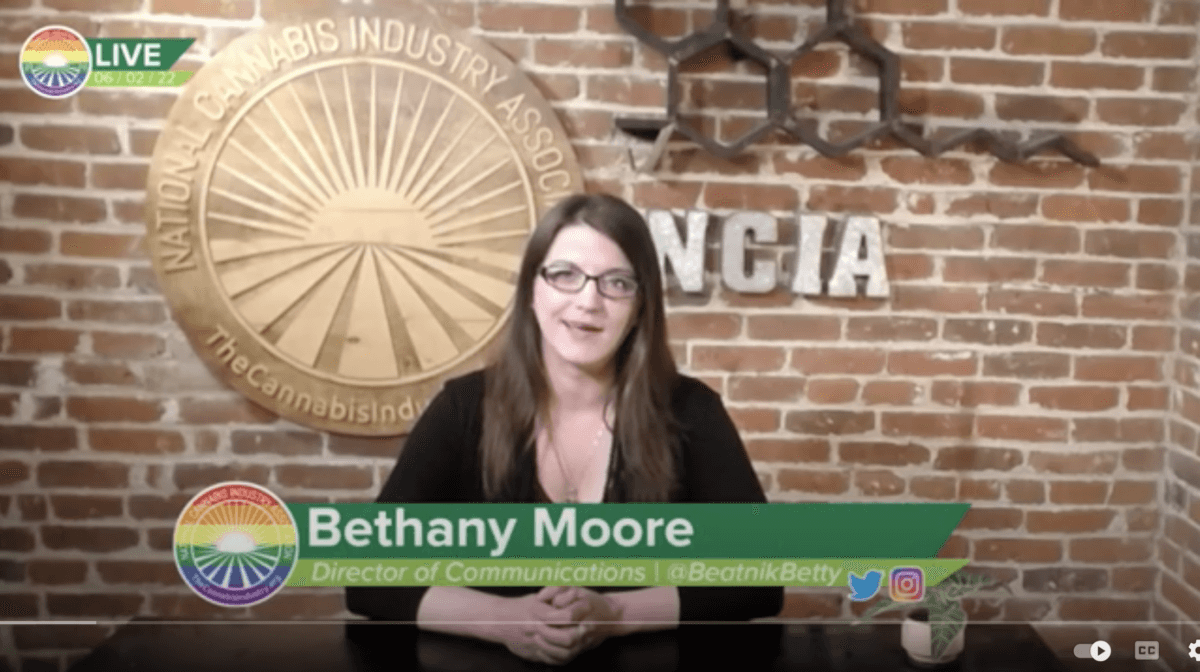
 By Sadaf Naushad, NCIA Intern

Follow NCIA
Newsletter
Facebook
Twitter
LinkedIn
Instagram
News & Resource Topics
–
This Just In
How THCa Vapes Are Changing Consumer
Announcing NCIA’s 2026-2028 Board of Directors