Breaking Down the Recent Cannabis Rescheduling Recommendation
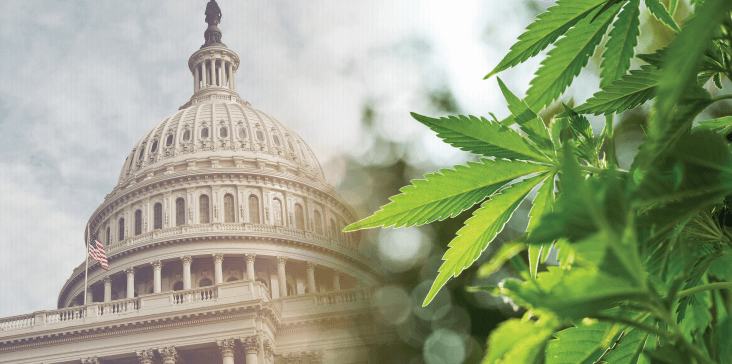
For more than fifty years, the federal government has maintained that cannabis is a Schedule I drug, meaning that it has a high potential for abuse and no accepted medical value. That changed last week (somewhat) when the Department of Health and Human Services (HHS) recommended to the Drug Enforcement Administration (DEA) that cannabis be placed in Schedule III, meaning that it has moderate to low abuse potential, a currently accepted medical use, and a low potential for psychological dependence.
Why now?
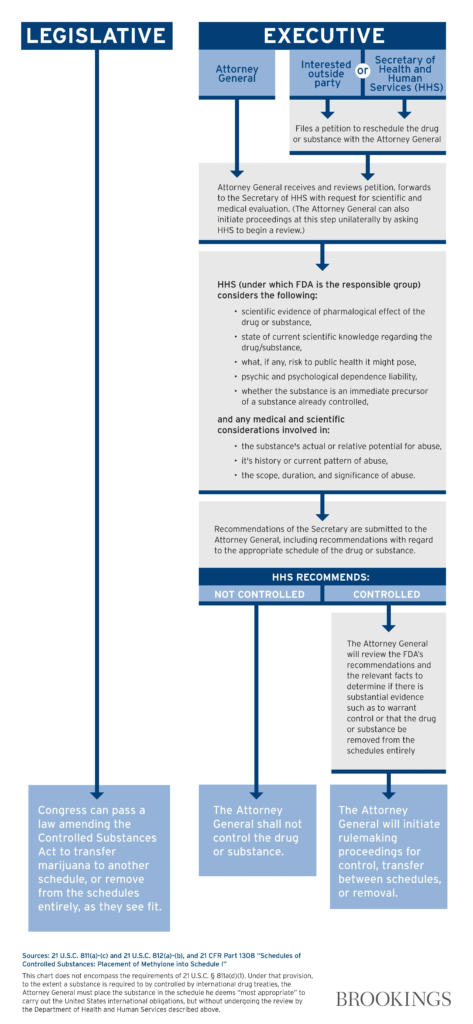
In October 2022, the Biden Administration announced that it would ask the Secretary of HHS and the Attorney General to initiate the administrative process to review expeditiously how marijuana is scheduled under federal law. As the Brookings Institute outlined years ago, the Executive process for rescheduling is much more complex than the Legislative path.
It’s no secret that the presidential election is barely more than a year away, and the President seems to be looking to make good on his campaign promise to reform the nation’s marijuana laws.
What does this mean?
First off, it’s critical to note that HHS’ recommendation to DEA is just that: a recommendation. It is non-binding. The DEA may come to the same conclusion that HHS did, but is not required to.
If cannabis is moved to Schedule III of the Controlled Substances Act, one positive outcome would be that 280E would no longer apply to plant-touching businesses, removing an incredibly punitive and debilitating provision in the tax code.
According to NCIA’s board chair emeritus, Khurshid Khoja, Esq., “…it’s important to remember that rescheduling would not apply the federal Food Drug and Cosmetic Act (FDCA) to marijuana for the first time—it applies right now, and like the federal Controlled Substances Act (CSA), would continue to apply after rescheduling. But absent any statutory authority permitting FDA to do otherwise, the FDCA would continue to apply after descheduling too, just as it does to hemp products.”
Others claim that the shift to Schedule III would have minimal impact on businesses and individuals. Here at NCIA, we’re cautiously optimistic but recognize that moving cannabis to schedule III could have some limited benefit but does nothing to align federal law with the 38 U.S. states which have already effectively regulated cannabis for medical or adult use.
What now?
Now that HHS has made their recommendation, the DEA will begin its scheduling review process.
Many are divided about what a move to Schedule III would actually look like. Yes, there would be the elimination of 280E, but what about enforcement priorities? Interstate commerce? Criminal penalties? There are so many unknowns.
NCIA has previously produced a common sense, workable roadmap for that federal comprehensive reform and provided detailed feedback on legislative efforts. It is time for Congress to follow the will of the American people. Don’t get me wrong, there’s no doubt that this recommendation is a step in the right direction and is long overdue. But we can’t lose sight of the ultimate goal: removing cannabis from the Controlled Substances Act entirely.
Have questions?
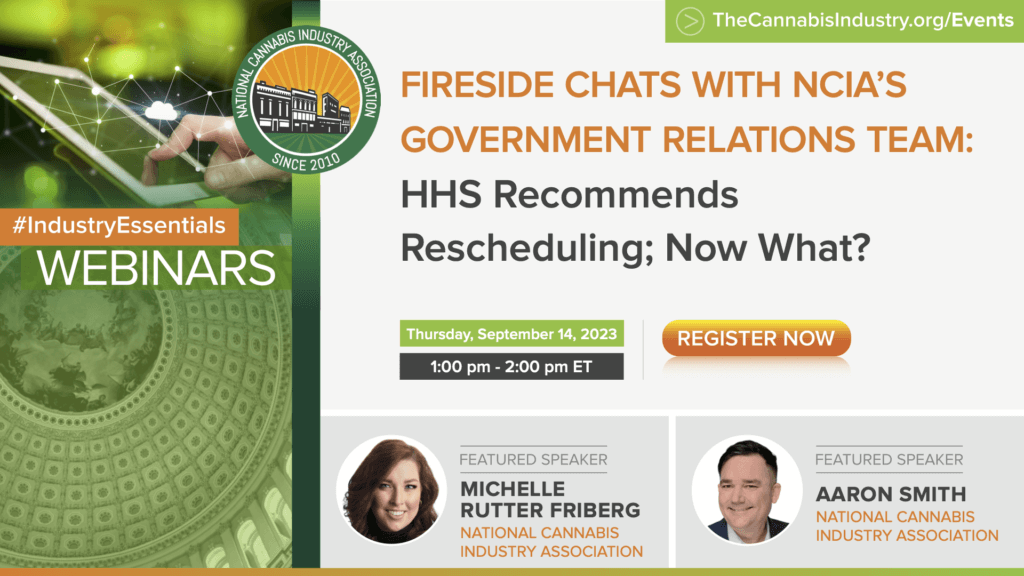
Join NCIA on September 14 at 1 pm ET for an engaging webinar where we will unpack all your questions! Register today and don’t miss your chance to hear more about what this means for the cannabis industry and your business.
Member Blog: Future Of FDIC Easing for Cannabis Banking After Biden Decriminalizes Marijuana
Over the years, the simple possession or use of cannabis has seen many lives upended by arrests and criminal convictions. Unfairly, racial disparities have determined that black and brown individuals suffer most of these convictions, arrests, and prosecutions, even though white individuals use and possess cannabis at similar rates. The resulting criminal records lead to individuals being denied fundamental rights to employment, housing, and education opportunities.
However, on October 6, 2022, President Biden made an announcement that could change the cannabis and criminal clemency conversation. The president asserted he would:
grant pardons to individuals with prior low-level federal cannabis possession offenses
change federal cannabis laws by reviewing the cannabis Schedule I rule.
The federal government’s classification of cannabis as a Schedule I substance puts it in the same category as more lethal drugs like heroin and LSD while drugs like fentanyl are not considered less severe than marijuana since it falls under Schedule II.
As more states legalize the sale and use of cannabis, the classification of Schedule I no longer makes sense. Additionally, more direct research on the proper utilization of marijuana can develop suitable restrictive and preventative measures to protect against harmful outcomes of cannabis use.
The Biden initiative is crucial because it can begin to remove the burden of employment, education, and housing limitations often experienced by individuals with simple cannabis possession convictions. Besides, if marijuana is rescheduled to Schedule II, or as many advocates champion for a complete descheduling, it could mean the end of cannabis prohibition altogether.
Widespread Support for this Initiative
Nearly 70% of Americans support the President’s pardon proclamation. Publicly, two in three Americans support Biden’s plan for cannabis reforms, and three in four support the removal of cannabis from Schedule I of the Controlled Substances Act.
Bipartisan support for this move is also high, with 74% of Independents, 84% of Democrats, and 58% of Republicans backing the proposal. At the state level, 68% of respondents support governors that want to issue pardons for people with low-level cannabis possession convictions.
Why This is Important
The expeditious review process requested by President Biden has the potential to open the cannabis industry to further changes, like the easing of banking restrictions for cannabis businesses. For instance, the call for action by governors is already inspiring many to rethink state and local relief for marijuana users. Kentucky, Colorado, and Kansas are three states already actively considering enacting the Biden pardons and drafting new reform bills for marijuana cases.
“The lack of safe banking and financial services for the cannabis industry in the State of Colorado has become a dire public safety issue for highly regulated cannabis businesses operating in compliance with state law,” Gov. Jared Polis’ office wrote to House and Senate leaders.
“Further, the lack of safe banking exacerbates the uneven playing field faced by small and minority-owned cannabis businesses, despite their serving the same communities and being subject to the same increased state regulation as other cannabis businesses in the State,” the letter said.
It’s true – over the years, the cannabis industry has dealt with a lack of financial and banking services because of the strict regulations and criminalization associated with marijuana. Consequently, this has resulted in severe public safety issues, even for cannabis businesses that operate within the compliance mandates of the state law.
Additionally, operators are disadvantaged because they lack funding or banking systems that support cannabis business processes. But following Biden’s pardon, many hope that Congress’ marijuana reform will pass the Secure and Fair Enforcement (SAFE) Banking Act for the industry.
If passed, the protection against armed robbery will increase. Also, the SAFE Banking Act will support the minority, veterans, and women who own small cannabis businesses. This, in turn, is expected to improve public safety amid the growing use of cannabis and cannabis products while simultaneously creating jobs within states.
Ushering in the Era of Cannabis Banking and FDIC
Even though the SAFE Banking Act has been in the House of Congress seven times, federally insured banking services and modern digital banking solutions like electronic payment processing are still inaccessible to the cannabis industry.
The Act lags in the senate under Democratic and Republican control. However, the senate is said to be preparing to enact the reform for the SAFE Banking Act as part of the Biden marijuana proposals. And why not? There is significant support for the SAFE Banking Act.
For instance, National Association of State Treasures members have voiced their support for the SAFE Banking Act. Public policy also demands the immediate relief the ACT will provide cannabis businesses. Therefore, the expectation that leaders in the government will push for banking reforms for cannabis businesses is prevalent.
The SAFE Banking Act is an Advocate for the War on Drugs
Many believe that the baking legislation would advocate for the war on drugs because it would offer protection against the risk of robbery and violence. By denying cash-based cannabis businesses access to the traditional financial system, the state and local governments provide an invitation threat that has seen many victims working in cannabis businesses lose their lives or livelihoods.
On the other hand, the right to payment solutions, like credit cards, protects against armed robbery. Nonetheless, for the banking legislation to work, it requires the support of criminal reforms. This is where initiatives like predicant Biden’s pardon and marijuana schedule reform come in.
The SAFE Banking Act will solve the injustice associated with financial inequality, thus, providing public safety that protects customers, employees, and businesses in the cannabis industry. And with reduced invitations for armed robberies working in tandem with the use of mandated cannabis products, the war on drugs will ensue.
Cannabis Businesses Contribute Equally to the Economy
As such, it is only fair to provide them with the same rights and protections that other businesses, whether big or small, enjoy. Therefore, starting with the push to decriminalize and legalize marijuana, not just at the federal level but at the state level, is a solid place to start.
Following this pardon with an advocacy of the SAFE Banking Act will additionally provide cannabis businesses with the capability to carry out operations securely and optimally. But attention must be paid to the details pertinent to these reforms to ensure thousands of convicts get a better chance at life and cannabis businesses get opportunities to continue contributing to the economy.
FAQs
What does President Biden’s pardon for marijuana possession entail?
President Biden’s cannabis reform initiatives are set to accomplish three things:
Pardon convicts with low-level marijuana possession offenses, thus, allowing them to get housing, education, and employment without prejudice
Reduce the marijuana Schedule level on the Controlled Substances Act from Schedule I to Schedule II, which lessens the seriousness of marijuana possession
Inspire governors to offer the same pardons at the state and local levels where most marijuana convictions are carried out
Is there support for President Biden’s announcement?
Yes. There is ample support from the public and bipartisan control for Biden’s pardon and advocacy for the marijuana schedule change in the Controlled Substances Act.
What would the pardon mean for cannabis banking?
The de-scheduling of the marijuana Controlled Substances Act would remove the many legal hurdles and fears of the financial institutions that keep them from supporting cannabis businesses. This would reduce the discriminatory risks associated with banking or financing cannabis businesses.
Joshua Gilstrap is the Marketing Manager for e2b teknologies, in addition to his marketing responsibilities Joshua leads business development for e2b teknologies emerging Canna Suite product line. A business graduate with a focus in marketing from Miami University in Oxford, Ohio, he joined the e2b team in the Fall of 2019. Josh brought with him a wide array of business and practical experience in planning and execution. Since coming aboard he has led multiple projects including website hosting and theme standardization company wide, marketing automation streamlining the efficiency of the customer journey, and sales automation where he is changing the conversation from promotion to education, from pitching to catching, and from push to pull in order to keep up with the shifting tides of a digital transformation.
Behind Closed Doors: NCIA at CANNRA’s June Conference
The discussion about the future of cannabis legalization is ongoing, to say the least. Recently, Cannabis Regulators Association (CANNRA) held a two-day conference in early June to gather Marijuana government regulators, trade associations, and businesses. The Cannabis Regulators Association (CANNRA) is a national nonpartisan organization of government cannabis regulators that provides policymakers and regulatory agencies with the resources to make informed decisions when considering whether and how to legalize and regulate cannabis.
Representatives from NCIA participated in the conference – NCIA Board Members Khurshid Khoja (Chair Emeritus) and Michael Cooper (Board Secretary), and we caught up with them in this blog interview to better understand the goals and outcomes of the event.
From a bird’s eye view, what was the overall goal of this conference?
MC: The conference was an opportunity for regulators from around the nation to hear directly from stakeholders on the current and future challenges that face these markets and different models of regulation to tackle them.
KK: I’ll add that our own goals, as the current Policy Co-chairs for NCIA, were to better understand the priorities of state and local cannabis regulators across the country, and anticipate future developments in cannabis policy early on, so we could take that back to the NCIA membership and the staff – especially Michelle Rutter Friberg, Mike Correia, and Maddy Grant from our amazing government relations team.
Let’s talk about who was invited to participate in these panel discussions. From cannabis industry associations to those who regulate cannabis, who else was there?
KK: Michael and I each spoke on a panel. The other speakers included reps from federal trade associations, lobbyists, vendors, and ancillary companies who were helping to underwrite the event (along with NCIA). Given that CANNRA is a non-profit that doesn’t receive any funding from their member jurisdictions, and has a single paid full-time staff member, I thought they were still able to obtain a fairly diverse and interesting set of speakers at the end of the day – including NCIA Board and Committee alums Ean Seeb, Steve DeAngelo, Amber Senter and David Vaillencourt (representing the Colorado Governor’s Office, LPP, Supernova Women and ASTM, respectively), as well as folks from Code for America, Americans for Safe Access, and the Minority Cannabis Business Association, U.S. Pharmacopeia, NIDA, the CDC, and the Alcohol and Tobacco Tax and Trade Bureau, representatives of the pharmaceutical, hemp, tobacco and logistics industries, and public health officials.
Were there any organizations or sectors of the industry that were not in attendance, whether they weren’t invited or just didn’t participate, and why is it important to note the gaps of who was not represented?
MC: No licensed businesses were invited. Instead, organizations that represent industry members were invited. As a result, we felt it was crucial to inform these discussions with the perspective of the multitude of small and medium-sized businesses otherwise known as Main Street Cannabis that have built this industry and continue to serve as its engine.
KK: Sadly, we did not have an opportunity to hear from members of the Coalition of Cannabis Regulators of Color. I can’t speak to why that was, but it was unfortunate for us nonetheless. And while we had some public health officials there, I know that CANNRA Executive Director Dr. Schauer would have preferred to see more of them in attendance.
Across the spectrum of policy and regulations and legislative goals, what topics were covered in the panel discussions across the two-day conference?
KK: We covered a ton, given the time we had, including the federal political and policy landscape; interstate commerce; the impact of taxes on the success of the regulated market; social equity and social justice; preventing youth access; regulation of novel, intoxicating and hemp-based cannabinoids; the prospects for uniform state regulations; technological solutions to improve compliance and regulatory oversight; and delivery models.
What information or perspectives did NCIA bring to the panel discussions that were unique from other participants? What does NCIA represent that is different from the other voices at the event?
MC: There really are a wide variety of perspectives on how best to regulate this industry. We felt it was essential that NCIA give a voice to Main Street Cannabis, the small businesses that so many adult-use consumers and medical patients rely upon. We emphasized, for example, that these are often businesses that cannot simply operate in the red indefinitely, but provide essential diversity (in the background and life experience of operators as well as in product selection and choice). NCIA wants to make sure that the future of cannabis isn’t simply the McDonalds and Burger Kings of cannabis. There are times when consumers want that, but there are also times when they want something unique and different. And it’s crucial that policy not destroy the small and medium-sized, frequently social equity-owned, businesses that provide those choices.
What else was interesting to you about this gathering of minds? Were you surprised by anything, or was there anything you heard that you disagreed with?
MC: There are a ton of different perspectives and approaches to cannabis, and that’s no surprise to anyone who has followed these issues closely because the tensions are very clear in the policy debates that are ongoing.
As the voice for the industry, we sought to urge an approach grounded in reality. Americans want these products. That’s clear from the ballot box and public polling. The question should be about how to encourage Americans to purchase regulated, tested versions of these products.
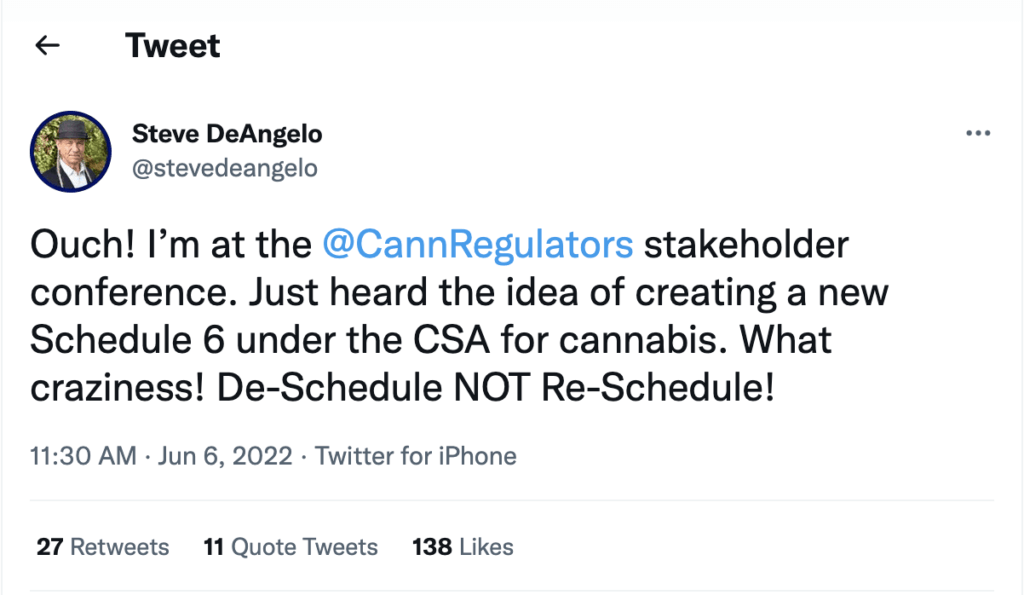
KK: There was definitely stuff we didn’t agree with – some of it from folks that we otherwise largely agree with. For example, our good friend Steve Hawkins of the USCC shocked a few of us in the audience when he seemed to indicate some receptivity to re-scheduling cannabis on an interim basis, rather than moving to de-scheduling immediately. I think that while rescheduling may benefit scientific research and pharmaceutical development, it could ring the death knell for Main Street Cannabis businesses. NCIA has consistently advocated for de-scheduling rather than re-scheduling.
After two days of panels, did anything new come through these discussions, or were any accomplishments achieved?
KK: I think there’s a growing recognition that addressing social equity solely through preferential licensing and business ownership for the few isn’t enough and that the licensing agencies and regulators that execute social equity policies have a very limited (and often underfunded) arsenal to comprehensively redress the harm caused by federal, state and local governments prosecuting the war on drugs. In my remarks, I said it was time for us to start discussing additional forms of targeted reparation and had a number of regulators approach me afterward to continue the discussion. Candidly, I expected my remarks to fall on deaf ears. They didn’t. That was very encouraging.
MC: There was definite progress. At the end of the day, these cannabis regulators are working hard to try to get this right. But in such a new area, and with so many competing perspectives and voices, their job isn’t easy. We were heartened to see the level of engagement from regulators on these points, including follow-ups to get more information on some of the pain points we identified for small and equity businesses in the industry.
It was definitely rewarding to provide NCIA and our members’ perspectives in a forum like this, and we’re looking forward to continuing to further strengthen NCIA’s relationship with CANNRA and regulators around the country.
An Optimistic Congress Aims to Legislate a Bipartisan Cannabis Omnibus Package
By Sadaf Naushad, NCIA Intern
As the cannabis industry progresses nationwide, the public demands Congress to pass major cannabis reforms. After months of opposition met among Congress members, a breath of fresh air awaits cannabis advocates, lobbyists, and consumers.
Last Thursday, two crucial congressmen revealed objectives to establish an extensive package of incremental cannabis proposals.
While Senate Majority Leader Chuck Schumer (D-NY) expects to file the final version of the Cannabis Administration and Opportunity Act (CAOA) sometime this summer, lawmakers are using the draft language as a guide to propose an alternative backup bill in creating a cannabis “omnibus” package.
With the wide-ranging package garnering support across Democratic and Republican lawmakers, industry insiders have high hopes that both chambers could come together to endorse an effective, bipartisan bill by the end of this year.
Let’s discuss the potential inclusions within the bipartisan cannabis package.
Recently, a number of Congress members have discussed the possibility of creating a new cannabis bill that would comprise several incremental measures, including provisions focusing on banking, access to medical cannabis for veterans, research expansion, access to SBA programs, drug sentencing reformations, and more.
Lead sponsor of the Secure and Fair Enforcement (SAFE) Banking Act, Rep. Ed Perlmutter (D-CO) is hoping to incorporate protection for financial institutions operating with state-legal cannabis businesses in a potential package. According to Rep. Perlmutter, members also have interest in including Rep. Dave Joyce’s (R-OH) Harnessing Opportunities by Pursuing Expungement (HOPE) Act, a bill designed to expunge prior marijuana convictions. Additionally, lawmakers are deliberating over granting cannabis businesses access to SBA loans and services that are obtainable to every other industry, a reform initially advocated by Sen. Jacky Rosen (D-NV).
These four concerns –- veterans, research, expungements, and banking – constitute a small portion of the package’s considerations.
Congress will also potentially consider including a non-cannabis item as part of the wider deal, known as the EQUAL Act, which looks to alleviate racial disparities within the criminal justice system by eliminating the federal sentencing disparity between crack and powder cocaine.
Leader Schumer, however, faces the requirement of having a 60-vote threshold to pass legislation. Although the chamber comprises a slim majority of Democrats with the vast majority of GOP members opposing numerous past bills, the 60-vote requirement may be attainable. In contrast to Schumer’s CAOA, indications are that the incremental package has more broad bipartisan support.
Though members have not reached an official deal as these major reforms remain under deliberation, Congress members are not abandoning their efforts to push for a broader-based CAOA bill.
Currently in the bicameral conference committee remains the large-scale manufacturing bill, known as the America COMPETES Act. Leader Schumer has rejected attempts to integrate the SAFE Banking Act as currently written into the COMPETES Act, alleging that it may weaken the ability to approve a slightly larger cannabis reform package. Having passed the House six times, industry insiders feel certain that the Senate will authorize the SAFE Banking Act later this year.
Altogether, the above-mentioned legislation would come up short in federally descheduling cannabis; however, these provisions may acquire the support necessary to reach U.S. President Biden’s desk.
Committee Blog: Social Equity Perspectives on Interstate Commerce – Part 1
As the debate heats up on “how” rather than “if” cannabis legalization will happen, social equity and comprehensive reform are at the forefront of the minds of national legislators and advocates. Historically, people chose to legalize cannabis as a method of legitimizing the illicit cannabis market. Beyond the message that “Black Lives Matter,” the issue of the federal legalization of marijuana means, fundamentally, that the federal government must spearhead meaningful policies in diversity, equity, inclusion, and social justice, to balance the scales of injustice during prohibition and early legalization efforts by the States.
Further, the Biden Administration’s priority of respecting the sovereignty and self-governance of tribal nations means federal trust and treaty responsibilities may finally be met by regularly having meaningful consultations with tribal nations to create federal policy. Thus, the inclusion of tribal nation’s representatives is imperative when creating federal policy to ensure their rights are secure and there is parity amongst states and tribes.
Any descheduling or legalization framework must hold a social equity objective that is clear at the core of its function: To create as much NEW generational wealth for the most number of those disparaged from participating in the legal cannabis industry because of the socioeconomic impacts of more than 80 years of federal marijuana prohibition and due to the barriers to entry created amid state regulatory regimes.
Sadly, as written currently, all proposed federal bills fail to meet this critical objective.
As soon as the federal government deschedules marijuana, it falls under Congress’ constitutional purview to regulate interstate commerce. Marijuana included. This is likely the ONLY opportunity available for those impacted by the war on marijuana to balance the scales of historic injustice, by providing an opportunity to participate in cannabis business ownership in a meaningful and valuable way.
If social equity is not adequately addressed in a federal act, it would require a secondary bill to tax and regulate interstate commerce activities. This would waste precious time and open a door to unregulated and taxed activities until congressional consensus and control are established. We have seen mistakes like this lead to disaster already amid state markets who leapt before ensuring a safety net. It also would NOT guarantee that social equity would be addressed in a second bill under new congressional, senate, or executive purview.
More importantly, the projected market cap of the U.S. cannabis industry is projected to be $85B by 2027 and was $18B in 2020. To put that number in perspective today, the largest tobacco company’s market cap is $95.6B – that’s over 5x the market cap of the whole cannabis industry. Similarly, the largest beverage distribution company has a $45.5B market cap – or over $2.5x of the current cannabis industry cap.
Both of these “big businesses” are in the cannabis industry already and they are preparing for federal legalization. The moment cannabis is de-scheduled, it quickly becomes an “extinction event” for social equity unless guardrails are put in place in the first Federal Act to offer social equity a fighting chance.
To avoid needless delay, to leverage effective taxation and regulation, to protect social equity from rapid market consolidation and control, and to spearhead well-thought-out and innovative ideas to address the inequities of the cannabis industry, the National Cannabis Industry Association’s Diversity Equity and Inclusion Committee (DEIC) presents these considerations to amend any proposed federal act – in order to preserve key concepts central to addressing interstate commerce and the short-falls of previously enacted social equity programs.
The Problems with Current Social Equity Programs
In analyzing the social equity programs undertaken at municipal and state levels so far, the NCIA’s DEIC has found multiple shortcomings in achieving the goal of generating new generational wealth for as many people who have been systematically discriminated against during the prohibition era of cannabis.
Namely, the following major issues continue to prevail:
Social equity applicants who are unqualified or do not participate meaningfully in the ownership or operation of the cannabis business. This can be because of the following reasons:
A lack of experience or expertise in business skills necessary to operate
A lack of experience or expertise in regulated cannabis operations
Fear of continued persecution and distrust related to trauma from being victimized by the war on drugs.
Based on the fact cannabis arrests have and still disproportionately affected BIPOC community members.
This causes many traditional, large, and privileged Multi-State Cannabis Operators (MSOs), in addition to established market entrants (Tobacco and Alcohol) as well as Special Purpose Acquisition Funds (SPAC’s) – collectively referred to as “mega players” – to decide to “take the wheel and drive” the cannabis licensing process and to put the social equity operator in the proverbial “back seat.” Another issue that remains unaddressed and underlies challenges in successful social equity programs is that:
Social equity operators do not have access to financing to meaningfully contribute to capital or operating expenditures to partnerships with cannabis companies who have capital and expertise.
This is certainly in large part due to generational prohibition and lack of access in being underprivileged.
Prohibition also impacts financing which systematically discriminates against the disprivileged; regardless of their interest to participate in the cannabis industry.
These individuals were prohibited from entering the legal market (when barriers were lower) and were initially labeled as “undesirables” because of past criminal history. This gave the cannabis industry and culture away to people who never suffered a day in the war on drugs.
The lack of access to education, experience, and wealth often drives the existing “mega players” who “hold the keys” to expertise and wealth, to justify operating agreements that contain provisions that make the social equity licensee’s position dilutable in the event they cannot meet their operating or fiduciary duties. Which brings up the third underlying problem in social equity programs which is connected to the above factors:
2. Attracting and grooming social equity candidates to qualify for licenses only to then leverage the applicant out of the licenses, is often how “mega players” skirt around social equity provisions. The justification in doing so is due to the above two factors and is justified as “what is best for business” by traditional operators expanding their footprint through social equity licensing.
In the social equity conversation, these partnership agreements are often referred to as “predatory operating agreements” which refer to the manner in which many “mega player” operators, knowing social equity applicants cannot bring education, experience, or money to the table, systemically target and groom qualified social equity applicants into delusions of wealth participation in cannabis only to obtain a license and then proceed into diluting the social equity partner – rather than educating them, providing them experience, or helping them obtain the wealth to contribute as equals.
Mega players, multi-licensed cannabis businesses, and vertical cannabis businesses may also engage in “social equity colonialism” in which they create “incubator programs” to educate, train, possibly fund, or partner with social equity entrepreneurs only to have them compete against one another in “pitch competitions” in which the mega player can cherry-pick the most controllable or affordable operator or otherwise leverage them to benefit including using taxpayer funds granted by the state or through discounts on licensing and/or taxes. Too often, the intent is to “tokenize” social equity operators, rather than empower them as equals.
Whether intentional or not, the impact of reducing social equity applicant participation after using them to obtain social equity licensing is a commonplace practice and shortfall of the programs analyzed by the DEIC.
To solve these problems, the DEIC acknowledges that the motivation for those in power to remain in power does not incentivize them to provide a truly equitable partnership simply because a program exists to do so. To address these diluting agreements, we recognize that the Government must play a role in addressing the underlying factors which justify the behavior driving “predatory operating agreements” and “social equity colonialism”.
Indeed, federal legalization and the regulation of interstate commerce with social equity at the forefront may be the last opportunity to address the harms caused by prohibition nationwide and the inequity of governments refusing to address social equity in cannabis. Similar to the Civil Rights Act of 1964, the victims in the war on cannabis cannot depend solely on state and local governments to address social equity.
Over the next two parts of this series, we will outline a framework of components that may be amended or included in a federal legalization bill to resolve the problems in social equity identified and to provide a comprehensive reform for permitting interstate commerce and addressing the inequity prevalent in the cannabis industry.
Read more in Part 2 and Part 3 of this blog series.
House Floor Debates, Markups, and Beyond for SAFE Banking and MORE Act
Photo By CannabisCamera.com
By Michelle Rutter Friberg, NCIA’s Deputy Director of Government Relations
Usually, things are somewhat slow when it comes to cannabis policy reform in Washington, D.C., but the last week has been quite the whirlwind! In the span of one week, the SAFE Banking Act was included in (and passed via) the must-pass National Defense Authorization Act (NDAA) and the House Judiciary Committee marked up and subsequently passed the Marijuana Opportunity, Reinvestment, and Expungement (MORE) Act!
Last week, the House passed the language of the SAFE Banking Act for the fifth time via the must-pass NDAA. NCIA and our allies on Capitol Hill are always trying to be creative and come up with new, different avenues to advance our policy priorities, and the NDAA was a great opportunity that we were able to take advantage of! At first, there were some concerns that the language (proposed as an amendment to the larger package) would not be ruled germane, however, we were able to clear that hurdle in the House Rules Committee, allowing the provision to move forward for Floor debate and a vote.
The amendment was then debated for a short period of time on the House floor and for the first time ever, passed via voice vote! This is incredibly exciting and reinforces the strong, bipartisan support that this legislation has.
SAFE’s inclusion in the Senate’s version of the bill is a bit more uncertain. Currently, the Chair and Ranking Member of the Senate Armed Services Committee (which has jurisdiction over the NDAA) have circulated their draft of the package that differs in many ways from the House’s bill. Here at NCIA, we will be working with Senate allies to determine what’s next for the NDAA in that chamber and collaborating with other stakeholders to ensure that the SAFE Banking language is included and passed into law. I’ll be the first to admit that I am not (nor have I ever been) a defense lobbyist, however, I’m definitely getting a crash course now!
Then, less than 24 hours later, the House Judiciary Committee announced that they would be holding a markup on the Marijuana Opportunity, Reinvestment, and Expungement (MORE) Act. You’ll recall that the MORE Act was marked up in that committee in November 2019 (during the last Congress), and passed by a vote of 24-10. Then, after all of the other relevant committees waived their jurisdiction, the MORE Act was brought to the House Floor in December 2020 and passed 228-164.
While the MORE Act passed out of the Judiciary Committee this session by a vote of 26-15, the bill still has a long journey ahead of it. It’s unlikely that committees like Ways and Means and Energy and Commerce will waive their jurisdiction again, and it’s critical to remember that the chamber actually became slightly more conservative following the 2020 election. Additionally, there is no companion legislation in the Senate as of publication.
As always, NCIA will continue to work with our allies and stakeholders on and off Capitol Hill to get these policies enacted into law. Have questions? Find me on NCIA Connect. Want to become more involved with policy at NCIA? Learn more about our new Evergreen Roundtable here.
Hurry Up And Wait: Descheduling, DEA Licenses, And Other Reform Legislation to Watch
By Morgan Fox, NCIA’s Director of Media Relations
The cannabis world is still eagerly awaiting the introduction of Senate Majority Leader Chuck Schumer’s comprehensive descheduling legislation, but that doesn’t mean things haven’t been moving on the policy front in recent weeks!
First up, the DEA announced that it was finally moving forward with approving applications to cultivate cannabis for research purposes, which would effectively end the federal government’s stranglehold on research production. The agency spent years fending off lawsuits from applicants, who correctly asserted that not only was the monopoly limiting research, but the cannabis being grown at the single licensed facility at the University of Mississippi was basically unusable for research purposes anyway. This announcement comes several years after the DEA publicly stated that it would begin the licensing process. Better late than never.
Next, Sen. Ron Wyden, who is also working closely with Majority Leader Schumer on descheduling along with Sen. Cory Booker, introduced S. 1698 last week. While text of this bill is currently not publicly available, the name suggests that this legislation would direct the FDA to allow hemp-derived CBD, made legal under the 2018 Farm Bill, to be used as a dietary supplement or in food. Some perceive this bill as necessary to get some regulatory clarity from the FDA, which has been dragging its feet and missed several deadlines for CBD regulations. Many in the industry blame this lack of regulation for larger retailers staying out of the CBD market, which has led to massive supply gluts of the substance and has been hypothesized to be a leading cause for the recent boom in Delta 8 THC production.
And earlier this month, Rep. David Joyce, an Ohio Republican who co-chairs the Congressional Cannabis Caucus, introduced a narrowly tailored bill to remove cannabis from the schedule of controlled substances. The bill assigns regulatory responsibilities to the FDA and the Alcohol and Tobacco Tax and Trade Bureau and gives them a one-year deadline to come up with a regulatory structure similar to alcohol. It also contains provisions similar to the protections that exist in the House-approved SAFE Banking Act, calls for studies on how cannabis impacts pain and driving, and improves access for veterans. Notably, this bill does not contain any social equity or restorative justice language.
While the chances of such legislation passing in the Democrat-controlled House are slim, it could serve as a doorway to get fence-sitting Republicans into the debate. It could also be a tool to identify those members of the GOP who are steadfastly opposed to any legalization bill and out of touch with their constituents, many of whom would directly benefit from cannabis policy reforms and who are increasingly in support of ending federal prohibition.
We’re also getting word that the Marijuana Opportunity, Reinvestment, and Expungement (MORE) Act is getting reintroduced in the House this week (and may have already been at the time of this publication). This legislation made history last December when it became the first descheduling bill to receive a floor vote – and pass – in either chamber of Congress. We are hopeful that there will be some revisions from the previous bill, including the removal of a provision that would allow federal licensors to deny applications for cannabis business licenses based on prior state or federal felony convictions, and the inclusion of a more sensible and robust regulatory framework.
We are less than halfway through the calendar year, and it is shaping up to be a momentous one for cannabis advocacy! Stay tuned for more updates from Capitol Hill.
P.S. On the state side, Alabama became the latest state to approve an effective medical cannabis law. Yes, Alabama. That brings the count of medical states to 36, after unfortunately losing Mississippi to a shameful court decision. So far in 2021, four states have approved adult-use or medical cannabis legislation, and more are expected to do so in the coming weeks and months.
Victories and Challenges For Cannabis Policy Reform
By Morgan Fox, NCIA’s Director of Media Relations
On April 19, the House of Representatives approved legislation once again that would provide legal protections for financial service providers to work with cannabis businesses that are in compliance with state laws. The Secure and Fair Enforcement (SAFE) Banking Act, or H.R. 1996, was reintroduced in March by a bipartisan group of sponsors and had 177 total cosponsors by the time of the vote.
The legislation was approved by a vote of 321-101 and included 106 Republicans voting in favor of the measure, a small majority that represents a growing trend of increasing conservative support since the last time this bill was approved in the House in 2019. No Democrats voted against the bill. This is the fourth time that the House has approved the language of the SAFE Banking Act, initially as the first standalone cannabis policy reform bill ever passed by either chamber of Congress two years ago and two more times last year as part of pandemic relief packages that were not approved in the Senate.
In the time that elapsed between the last vote on the SAFE Banking Act and this one, a number of factors have added momentum and boosted the pressure on federal lawmakers to more seriously consider cannabis policy reform generally and bills like the SAFE Banking Act.
First, cannabis businesses were nearly unanimously declared essential in states with regulated markets during the pandemic, adding to the legitimacy of the industry in the eyes of many while providing uninterrupted healthcare, jobs, and tax revenue in a very challenging economic and public health environment. However, despite increased sales over the last year, the operational costs required to keep employees and customers safe have taken their toll, compounded by the added costs and other challenges associated with limited access to banking services or traditional loans.
These obstacles were felt even more keenly by cannabis businesses because they could not avail themselves of the federal stimulus packages approved by Congress, such as PPP or funds available through the Small Business Administration. Helping to ease the worsening financial burdens facing the cannabis industry during such a difficult time was a major reason for the inclusion of SAFE Banking language in the House-approved aid bills. Recently, standalone legislation has also been reintroduced by Small Business Committee Chair Nydia Velazquez to allow direct and indirect cannabis businesses to be able to access SBA-backed loans and other assistance programs.
Unfortunately, the inclusion of cannabis language in House stimulus packages was used as a political attack tool in the leadup to the election by some lawmakers, likely leading to a postponement of a House vote on the MORE Act, which would remove cannabis from the schedule of controlled substances and help repair the damage done by prohibition. Those attacks significantly died down in November, however, when five states approved adult-use or medical cannabis ballot initiatives by heavy margins, including the red states of Mississippi, Montana, and South Dakota. These victories paved the way for the historic passage of the MORE Act in the lower chamber in December. Three additional state legislatures have passed adult-use laws since then, including the first Southern state of Virginia.
This combination of political will, the feasibility of passing cannabis policy reform measures both comprehensive and incremental, and the introduction of eight new regulated cannabis markets in just a few short months has lawmakers of all stripes taking a much closer look at this issue than ever before. Even staunchly opposed legislators are being forced to reexamine their positions on bills that would directly benefit their constituents and businesses in their states, particularly in light of the urgent need for jobs and taxes as the pandemic response begins to pivot toward economic recovery. This is on top of record public support nationally for legalization. It is becoming increasingly clear to lawmakers that standing in the way of reform is a losing proposition.
With the passage of the SAFE Banking Act, it is likely that the House will move its attention to amending and approving the MORE Act for a second time, as well as considering several other pieces of cannabis-related legislation. The fate of the SAFE Banking Act now lies with the Senate. Senate Majority Leader Chuck Schumer said recently that he would prefer to wait for further consideration of that or other incremental reforms until after the introduction of his much-anticipated comprehensive descheduling bill in the coming weeks. We are confident that debate and progress on these bills is not mutually exclusive, and moving both pieces of legislation through the upper chamber simultaneously is both possible and likely, especially given the broad bipartisan support that the SAFE Banking Act enjoys.
What The Cannabis Industry – And Congress – Can Do To Help The Vaping Illness Outbreak
by Morgan Fox, NCIA Director of Media Relations
In recent weeks, the reports of mysterious respiratory illnesses tied largely to unregulated cannabis vaping products, as well as some other products including nicotine vapes, have turned from a trickle into a steady flow. The most recent count is at over 1000 cases, including more than a dozen deaths. One of the most troubling aspects of this outbreak is that it is still unknown what exactly is causing these illnesses. Early research seems to be pointing to additives or thickening agents as the most likely culprit, but other causes are being explored such as the presence of pesticides and fungicides that create dangerous byproducts, faulty delivery devices, problematic consumption patterns, and pre-existing medical conditions.
One thread seems to tie all these cases together: almost all of them involved untested products that were produced and purchased on the illicit market.
At its roots, however, is the same thing that has caused most of the other problems associated with cannabis: prohibition.
Outdated federal policies are responsible for the existence of the underground market for this popular substance in the first place. Their dominance over this medically beneficial plant for nearly a century continues to block research, discourages states from regulating cannabis and making it legal for adults, prevents the federal government from establishing uniform safety standards or providing guidance to states that are implementing sensible policies, and make it harder for legal businesses to displace illicit operators around the country. This is in addition to the suffering and harm caused by the criminal enforcement of these policies, which disproportionately impacts low-income communities and people of color.
Unfortunately, some governmental agencies are glossing over these facts. Last month, Massachusetts instituted a four-month ban on all vaping products, and on Friday the Food and Drug Administration issued a warning urging people to stop consuming any vape products containing THC, despite THC itself and legal products generally not being implicated in these cases. Other states and localities are considering total bans as well.
The cannabis industry is deeply troubled by this outbreak, but we are also concerned that reactionary responses to it at the state and federal levels could make the problem even worse. Preventing the sale altogether of regulated and quality-controlled cannabis products could easily drive more consumers to purchase potentially dangerous products from the illicit market. The lack of competition from legal, licensed producers and retailers could also embolden irresponsible underground operators to drastically increase production in order to meet demand, as well as cut corners even further and make their products even more unsafe. Such reactions are a common response to tragedies like this, but they often cause more harm than good in the long run.
Rather, states should be reviewing their regulations regarding testing and labeling and should be in close contact with federal and state medical authorities so that they can incorporate the latest information into their regulatory response. Producers should also be reexamining their methods and avoiding the use of any additives that have so far been linked to these cases.
At the federal level, the best way to help fix this issue, as well as prevent further outbreaks from happening at all, is to end prohibition.
On October 3rd, NCIA delivered a letter to every member of Congress signed by more nearly 800 business leaders, advocates, and policy experts, which urges them to immediately work to remove cannabis from the Controlled Substances Act and work to regulate the substance at the federal level. This letter references a paper produced by NCIA’s Policy Council released on October 1 that suggests a regulatory framework for various cannabis products through existing federal agencies, most notably the FDA and the Alcohol and Tobacco Tax and Trade Bureau (TTB).
The letter closes with: “It is clear that the American public wants quality-controlled cannabis products made available for adults and patients. The recent news is, unfortunately, yet another reminder that there is no time to waste. Our industry wants to provide the products voters demand with a tireless focus on improving consumer safety. While state regulators and licensed businesses appear to be doing an excellent job at keeping potentially dangerous products out of the legal market, federal descheduling and regulation will allow more research and help states continue to improve their regulatory activities and oversight, as well as provide universal standards for safety. We are ready to work collaboratively with federal lawmakers, the same way we have at the state level for over a decade. Please let us know how we can help move the ball forward on descheduling legislation. Lives are literally at stake.”
That pretty much says it all. It is up to members of the legal cannabis industry to continue to prioritize consumer safety and do everything in their power to make sure they are going above and beyond state regulatory requirements in this area. But it is ultimately up to Congress to end prohibition, regulate cannabis intelligently, and help us replace the illicit market to the greatest extent possible. With your support, we can continue to work with lawmakers every day to help make this a reality.
How Will The Federal Government Regulate Cannabis? We Have a Plan.
by Andrew Kline, NCIA’s Director of Public Policy
NCIA could not be more proud of the collective efforts of the cannabis industry in passing SAFE Banking legislation in the House. Last week was a truly historic moment for the industry. Now, on to the Senate!
While we always relish in victories, we can’t lose momentum, and we need to start thinking about what comes next. As luck (and a bit of hard work) would have it, NCIA has a plan. While NCIA has been fully supportive of incremental steps like SAFE Banking, we believe that the only long-term viable path forward for this industry is descheduling. It’s the only way to solve social equity, it’s the best way to fix 280E, it’s the way that we start looking at cannabis through a public health lens (instead of a criminal enforcement lens), it fixes issues around interstate commerce, and it’s the only way to end the unsustainable federalism clash.
In addition to de-scheduling, our plan calls for cannabis products, like other highly regulated consumables, to be regulated by the government agencies that currently regulate most food and drugs, primarily the Food and Drug Administration (FDA) and the Alcohol and Tobacco Tax and Trade Bureau (TTB) within the U.S. Department of the Treasury.
Under our plan, cannabis products would be divided into four categories, based on chemical components, safety, intended use, and consumption method. Each of these groups would be regulated through a separate regulatory “lane” tailored to the public policy issues raised by that particular classification. The four lanes are:
Lane #1 — Pharmaceutical drugs (e.g., Epidiolex; Marinol)
(Regulated Like Prescription/OTC Drugs; Lead Federal Regulator: FDA)
Lane #2 — Ingested, inhaled, or topically applied products with more than de minimis amounts of THC (+0.3%)
(Regulated Like Alcohol; Lead Federal Regulator: TTB)
Lane #3 — Ingested and inhaled products with de minimis amounts of THC (<0.3% THC) (e.g., CBD, CBN, and CBG)
(Regulated Like Food/Dietary Supplements; Lead Regulator: FDA)
Lane #4 — Topically applied products with de minimis amounts of THC (<0.3% THC) (e.g., CBD, CBN, and CBG topicals)
(Regulated Like Cosmetics; Lead Federal Regulator: FDA)
Photo By CannabisCamera.com
We firmly believe that our plan sets the stage for the weeks and months ahead. We hope that lawmakers will heed our call for de-scheduling and federal regulation. There is no other viable option for the burgeoning cannabis industry. As always, NCIA stands ready to provide technical assistance to lawmakers and to the Executive Branch as we forge ahead. There is no stopping us now.
If you’re interested in working on public policy issues like this one, please reach out to me to inquire about the Policy Council. We are the think tank for cannabis and we’re just getting started.
Re-Cap of House Judiciary Hearing on Marijuana Laws in America
On Wednesday, for the first time ever, lawmakers in the House of Representatives held a hearing to address the disproportionate ways in which marijuana prohibition has negatively impacted people of color and marginalized communities. The hearing, entitled “Marijuana Laws in America: Racial Justice and the Need for Reform,” was called by the House Judiciary Subcommittee on Crime, Terrorism, and Homeland Security and exclusively featured testimony from witnesses in favor of sweeping cannabis policy reforms.
Notably, none of the members of the subcommittee or witnesses advocated for keeping cannabis illegal.
Rep. Tom McClintock (R-CA) participated as acting subcommittee Ranking Member, and began his opening statement by saying, “Marijuana decriminalization may be one of the very few issues upon which bipartisan agreement can still be reached in this session.” He added, “it ought to be crystal clear to everyone that our laws have not accomplished their goals.”
Chairwoman of the subcommittee, Rep. Karen Bass (D-CA), also gave strong opening remarks: “The collateral consequences of even an arrest for marijuana can be devastating. These exclusions create an often permanent second class status for millions of Americans. Like drug war enforcement itself, these consequences fall disproportionately on people of color.”
While there seemed to be a consensus on reforming our outdated cannabis laws, how to reform them was more murky than anything else. Essentially all of the Republicans who spoke during the hearing iterated their support for the Strengthening the Tenth Amendment Through Entrusting States (STATES) Act, while Democrats on the subcommittee stressed the need for reforms that address equity, inclusivity, and diversity — which the STATES Act does not address in any way.
NCIA’s written testimony, submitted at the hearing by Rep. Steve Cohen (D-TN), urges Congress to remove cannabis from the Controlled Substances Act (commonly known as de-scheduling); to enact legislation repairing the damage prohibition has inflicted on communities of color; and to begin the process of regulating cannabis products at the federal level. However, NCIA also recognizes that the STATES Act (and other incremental reforms) deserve the support of the industry, given that it addresses many of the problems plaguing cannabis businesses today.
On behalf of the largest and most-diverse membership base of any cannabis trade association in the U.S., NCIA’s team in D.C. is continuing to work with allies in Congress to end federal prohibition and replace it with federal jurisdiction that benefits an inclusive, diverse, and legal cannabis industry.
NCIA thanks our nearly 2,000 members who have made this progress possible. If your business is not yet a member of NCIA, please join the movement today.


 Joshua Gilstrap is the Marketing Manager for
 MC
MC

 By Sadaf Naushad

 By Morgan Fox, NCIA’s Director of Media Relations


Follow NCIA
Newsletter
Facebook
Twitter
LinkedIn
Instagram
News & Resource Topics
–
This Just In
Member Blog: What Consumers Really Want in a Pre-Roll
Member Blog: The Evolving Cannabis Legal & Regulatory Landscape in 2026