by Michelle Rutter Friberg, NCIA’s Deputy Director of Government Relations
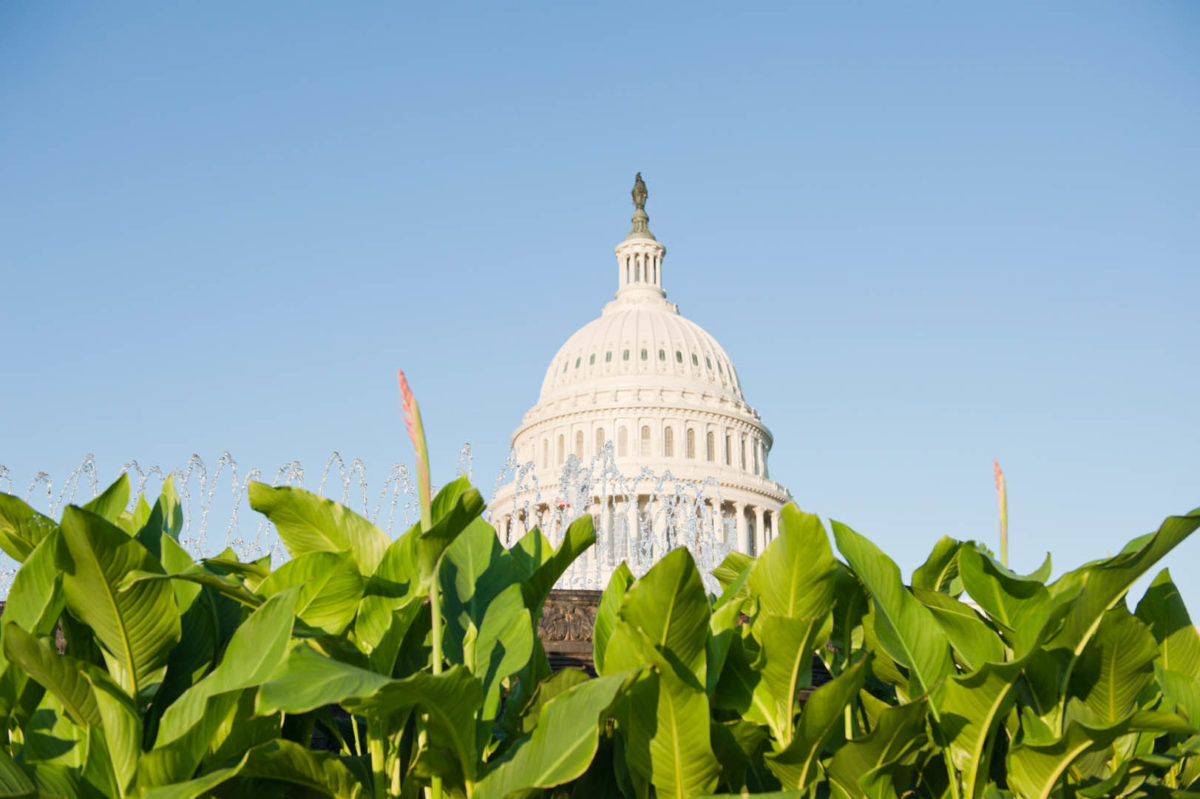
Photo By CannabisCamera.com
Since 2014, federal funding bills, or appropriations bills, have included provisions restricting the Department of Justice from using tax dollars to prosecute or penalize state-legal medical cannabis businesses and patients. Since then, NCIA and others have worked diligently to expand those protections and enact cannabis reform through the budget, with some efforts being more successful than others. Another issue making matters more complicated: the federal appropriations process requires this provision to be approved by congressional process annually, so introducing, lobbying on, and enacting these provisions has to reoccur every year.
Last week, Congress passed the most recent omnibus appropriations bill, which is increasingly used to group together the budgets of all departments in one year. Keep reading to find out what provisions related to cannabis were included (or weren’t!) and why it matters:
PROTECTIONS
If you’ve been in cannabis for a while, you might remember when medical cannabis protections were first enacted in 2014. Back then, the provision was known as the “Rohrabacher-Farr Amendment,” named for then-Reps. Dana Rohrabacher (R-CA) and Sam Farr (D-CA). This amendment forbids the Department of Justice (DOJ) from spending money to prevent the implementation of state-level medical cannabis programs, in addition to removing funding for federal medical cannabis raids, arrests, and prosecutions in states where medical cannabis is legal. To put it simply: the DoJ can’t use any of its money against state-legal, compliant medical cannabis businesses.
So, the omnibus had some good news and some bad news regarding protections for cannabis businesses from the Department of Justice. Good news? Those protections for medical cannabis businesses, patients, and programs remain in place. Bad news? Congressional leaders declined to expand those protections to include all cannabis businesses, despite the fact that the House has voted twice in the past to do so.
WASHINGTON, D.C.
For decades, Congress has used its power and jurisdiction over Washington, D.C. as a bargaining chip and test subject for various policies, and cannabis is no exception.
Washington, D.C. voted to legalize adult-use cannabis via Initiative 71 in 2014. However, because the Constitution gives Congress jurisdiction over the District of Columbia, Washingtonians have been, and continue to be, unable to implement the taxed and regulated sales of cannabis for adults. (That hasn’t stopped a flourishing gray market, but that’s a topic for another blog!)
One Congressman, in particular, has obstructed D.C’s cannabis market: Andy Harris, the lone Republican in the House from the state of Maryland. The “Harris Amendment,” which prevents legal sales from occurring in D.C., has been included in every appropriations bill since – again, despite the fact that House Democrats have voted to strip the language multiple times.
The inclusion and maintenance of this provision – especially while Democrats control both chambers of Congress – is simply unacceptable and inexcusable. To that end, NCIA recently signed on to a letter urging leadership to remove the language. It’s also critical to point out that Washington, D.C. is one of the places where disparate cannabis arrests occur at an alarming rate, making the need for reform even more dire.
EXPUNGEMENTS
A new appropriations amendment that NCIA supported was also included in the most recent omnibus. The language, championed by Cannabis Caucus Co-Chair Dave Joyce (R-OH), would allow JAG funding to be used for the cost of state and local cannabis expungements and record clearing. This is a small but incredible reform that we hope will be the first step in providing justice to individuals impacted by the War on Drugs.
VAPING
The omnibus also included report language related to cannabis. Report language is non-binding and essentially encourages an agency to do something. In this case, Congress is urging NIDA (the National Institute on Drug Abuse) to conduct interdisciplinary research on the relationship between the vaping of tobacco and marijuana, with an emphasis on risk perceptions, decision-making, and neuroscience.
Interestingly, the appropriations process for FY2023 is beginning to get underway already. NCIA will be working with appropriators and other allies in Washington, D.C. to maintain provisions that protect cannabis businesses and consumers while stripping those that deny opportunity and justice to others. Interested in learning more about appropriations, or working with our team on an amendment? Learn more about our Evergreen Roundtable and committees by visiting our website!
Momentum Across The Nation – New Mexico, Virginia, and the District of Columbia
By Madeline Grant, NCIA’s Government Relations Manager
We may be barely three months into 2021, but we’ve seen a lot of action in state legislatures already! This week, let’s take a look at three significant state victories in their respective state legislatures: Virginia, New Mexico, and the District of Columbia.
Virginia
The Virginia legislature approved adult-use cannabis legalization this past Saturday in a historic vote. The state of Virginia specifically is a major achievement as it’s the first state in the South to embrace full cannabis legalization. The House passed the measure in a 48-43 vote, and the Senate approved it in a 20-19 vote. It is important to note that not a single Republican voted for the bill in either chamber, but regardless, it passed and this is a major victory for cannabis policy reform.
So, what’s next? Virginia is the 16th state to pass an adult-use cannabis legalization law. Along with Illinois and Vermont, Virginia is the third state to pass legalization to legalize, tax and regulate recreational cannabis through the state legislature.
The Conference Committee established a January 1, 2024 enactment date for the law — this is when regulated sales are scheduled to start. Additionally, lawmakers agreed to establish an independent agency, the Virginia Cannabis Control Authority, to oversee the regulations and govern the adult-use market in Virginia. Adults will be able to possess up to one ounce of marijuana and cultivate up to four plants per household without penalty. The remainder of the bill, which details regulatory and market structure social equity provisions, and repeals criminal penalties, is subject to a second review and vote by the assembly next year. Lawmakers were sure to address issues such as how to prevent large corporations from taking over the cannabis market, how to handle expungement of cannabis offenses, addressing social equity provisions, including prioritizing business licenses for individuals who have been disproportionately impacted by criminal enforcement, and more. This is a big move for Virginia and we are excited to keep a close eye.
New Mexico
Last Friday, Members of the New Mexico House of Representatives approved House Bill 12, to legalize and regulate the use, possession, cultivation, and retail sale of cannabis for adults. House Bill 12 will move to the Senate for further consideration. If passed, the current measure, approved by the House by a 39 to 31 vote, would allow adults to purchase at least two ounces of marijuana and cultivate up to six plants for personal use. Additionally, those convicted of an offense involving up to two ounces of marijuana possession would be eligible for automatic expungement, and those currently incarcerated for these offenses would be eligible for dismissal. House Bill 12 is one of the five competing adult-use legalization measures and specifically addresses social equity and community reinvestment provisions.
So, what’s next? We’ve seen a history of opposing chambers in New Mexico through cannabis legalization efforts in 2019 and 2020. The following day after the vote in the House, the Senate Tax, business Transportation Committee considered three additional measures to legalize and regulate cannabis retail sales. The lawmakers discussed the differences and similarities between the competing cannabis measures and noted the need to reach an agreement on differences before the end of the short legislative session, adjourning for the year on March 20, 2021. We will keep an eye on the Virginia state legislature and actions moving forward.
District of Columbia
We saw movement in D.C. when voters showed support at the ballot box by passing Initiative 71 in 2014, which allows adults in D.C. to grow, possess, and gift marijuana but not sell it. Since then, we’ve seen Congress prevent D.C. from allowing the sale of cannabis by attaching a provision to D.C.’s appropriations bill that precludes the District from using its fund to legalize or regulate cannabis sales. The District’s Mayor, Muriel Bowser, is pushing forward with legalization to legalize cannabis in the District. The Safe Cannabis Sales Act of 2021 was introduced last Friday. It would legalize recreational cannabis sales in the District for people 21 and up. The bill also takes steps to combat the toll cannabis criminalization has taken on communities of color, expunge some marijuana-related offenses from people’s criminal records, funnel sales tax revenue into helping get start-ups off the ground, and creates a new license category for microbusiness and third-party “social equity” delivery services. Additionally, more revenue from cannabis sales would go towards funding organizations in wards 7 and 8, which includes women and minority-owned small businesses opening or expanding restaurants; small grocery stores; and public school after-school programs. D.C. would require cannabis vendors to have their products tested by an independent facility to track their potency and check them for contaminants. Days after Mayor Bowser unveiled her reform proposal, Council Chairman Phil Mendelson introduced a cannabis regulation bill. When comparing the two pieces of legislation there are some key differences surrounding tax rate, revenue, licensing, and expungements. For more details, check out Washington City Paper’s article here.
What’s next? As I mentioned previously, since 2014, Congress has included language in a spending bill that prevents the District from spending any of its funds to create a tax-and-regulate system. Because of this, the District has been stalled in implementing the sale of cannabis. However, now that Democrats control both houses of Congress and therefore the appropriations committees, we are hopeful that this rider preventing cannabis sales in the nation’s capital could be lifted.
According to the latest Gallup poll, 68% percent of Americans support legalizing cannabis, which is up from last year’s 66 percent. With support for full cannabis legalization growing, it’s not particularly surprising to see reform happening in these states. We are watching these states closely as they inch towards cannabis legalization. We see different entities making efforts to reform outdated cannabis laws; such as governors, mayors, advocates, patients, lawmakers, and the overall cannabis community. Together, through dedication and commitment, we will continue to move the ball forward in states and at the federal level.
Please stay tuned for more updates and please make sure to check out NCIA’s State Policy Map where all state updates are housed. As we continue the good fight it’s important to count our victories.
Member Spotlight: District Growers
While the fate of establishing a well-regulated cannabis industry in the District of Columbia remains up the air, a small handful of medical marijuana dispensaries have been operating for several years to serve extremely ill patients in our nation’s capital. Located in the northeast neighborhood of our nation’s capital, District Growers is a close-knit, local business founded with the goal of creating only the highest quality cannabis products on the market. This month, we chat with owner Corey Barnette to hear more about efforts to serve the community of Washington, D.C.
Tell me a bit about you and why you opened District Growers?
District Growers owner Corey Barnette
My background is that of an engineer-turned-investment-banker-turned-venture capitalist. In early 2003, I stepped away from the Small Enterprise Assistance Fund, an emerging market venture fund, to acquire small high-growth companies operating in traditional industries. Between 2003 and 2010, I and my team acquired six different small businesses across the country in numerous industries.
In 2008, a friend and colleague invited me to serve on the board of – and eventually acquire – the San Diego Medical Collective (SDMC), a dispensary in San Diego, California. The purchase of SDMC was my entry to the formal medical cannabis industry. While operating in San Diego, my team and I built two of the ten largest dispensaries out of more than 238 dispensaries in the San Diego area. We served a patient base greater than 16,000 patients strong and produced approximately 30% of the medicine provided within our own patient gardens. After federal authorities began threatening landlords in the San Diego area, I sold the operations in San Diego to my employees after converting our platform to a delivery service.
Upon winning a license in Washington, D.C., where I maintained residence since 1999, I founded District Growers to offer medical marijuana program patients with safe, high-quality, medicinal-grade cannabis and cannabis-infused products. I also acquired the Metropolitan Wellness Center, a licensed dispensary in Washington, D.C., to provide a high-quality, dignified purchasing experience to patients in a comfortable and aesthetically pleasing environment. Leveraging our prior experience, knowledge of local preferences, and superior operating tactics, we have become the largest dispensary operator in Washington, D.C., with approximately a third of patients belonging to our dispensary exclusively.
Why should patients seeking medical cannabis seek out District Growers?
At District Growers, we recognize that patients depend on our products for their livelihood and well-being. Further, many of those patients are our employees, relatives, and friends. Because of this, we engage in a constant quest to offer the best quality products – bar none.
Internally, we use the phrase “Grow True” to define our efforts. We use this term as a constant reminder of our goal to provide to those who depend on our solutions. To accomplish this, we marry cutting-edge cultivation solutions, proven technologies, and nature’s very own touch to achieve unmatched quality. When it comes to cultivation, we believe that convenient shortcuts should never overcome proven methods. Consequently, we have taken the time to optimize our methods and processes to deliver the highest quality. From our production methods to our service, we endeavor to exceed all expectations. It is not enough to be the best if the best is not perfect. Put simply, to Grow True is to pursue perfection.
As a business owner, you’re very involved in your community and in causes that you care about. Can you tell us more about what matters most to you, and how your business participates in pushing for progress?
The team at District Growers
As a provider of relief solutions to the sick and vulnerable, District Growers views its entire offering as a betterment to the community. Additionally, we recognize that our industry carries with it a negative taboo. To combat this taboo and to carry the burden of good stewardship within our community, we push for progress primarily in three ways: in the garden, in the community, and in the town hall.
In the Garden – Simply put, we endeavor to be the most trusted source of medicinal grade cannabis to patients seeking treatment with cannabis.
In the Community – District Growers is a strong supporter of community gardens in Washington, D.C. We offer employees paid time-off when such is approved in the service of working with community gardens and in-home fruit & vegetable gardens.
In the Town Hall – District Growers actively works with legislators, regulators, and activist organizations to set policies around cannabis that better serve the public interest. It is our belief that today’s prohibitionary policies do more harm than good to our society. Consequently, we actively seek to change these policies for the betterment of our communities and our industry.
Why did you join NCIA?
Because we exist in an industry that suffers a negative stigma, it is imperative that we organize as an industry to promote our industry image, to promote good policy, and to promote good outcomes. NCIA is best positioned generally to do that. Consequently, we seek to be supportive.


 By Madeline Grant, NCIA’s Government Relations Manager

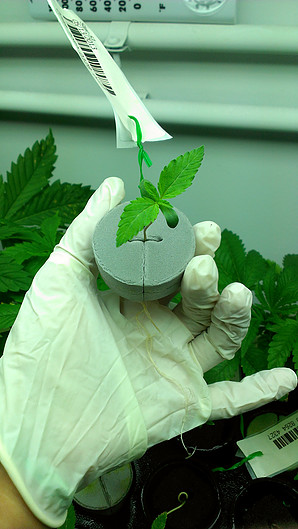 At District Growers, we recognize that patients depend on our products for their livelihood and well-being. Further, many of those patients are our employees, relatives, and friends. Because of this, we engage in a constant quest to offer the best quality products – bar none.
Follow NCIA
Newsletter
Facebook
Twitter
LinkedIn
Instagram
News & Resource Topics
–
This Just In
Committee Blog: Access to Capital in the U.S. Cannabis Market Outlook
Member Blog: The Risks of Removing a Regulated Cannabis Market