As the debate heats up on “how” rather than “if” cannabis legalization will happen, social equity and comprehensive reform are at the forefront of the minds of national legislators and advocates. Previously, in part 1 of this series, the DEIC examined the problems inherent in existing social equity programs and the merit of federal social equity in regulating interstate commerce. Sadly, as written currently, all proposed federal bills fail to meet the critical objective of creating as much NEW generational wealth as possible for those harmed by the war on drugs.Now, we examine the key components of a proposed framework to address these challenges, how to define social equity federally, and the merit of determining the types and numbers of permits to be issued.
Key Considerations for a Federal Cannabis Social Equity Program:
Fundamentally, any federal act for cannabis legalization should be a social justice bill that deschedules cannabis federally and that creates the most amount of new generational wealth for those most impacted by prohibition. Expungement for all persons with a past criminal record involving cannabis is the bare minimum these bills should do. However, proposed bills so far fall short of the latest innovative solutions to known problems in social equity programs and should be amended to include these key considerations.
Any proposed act must be amended to include provisions on regulating interstate commerce immediately after descheduling. The NCIA’s Diversity Equity and Inclusion Committee (DEIC) believes any federal act must prioritize social equity ownership of interstate commerce permits issued by the federal government. Learning from the municipal and state social equity programs, this policy paper seeks to propose amendments that meet these objectives, by instituting the following amendments to federal legalization bills:
Defining the regulatory agency for federal interstate commerce regulation and taxation
Alcohol and Tobacco Tax and Trade Bureau (TTB) and U.S. Small Business Administration (SBA) roles and responsibilities
Defining number and types of seats for a Federal Cannabis Social Equity advisory board
Ensure a diverse and representative Federal Cannabis Social Equity advisory board members, e.g., federal, state, tribal nations, diverse city representation, NCIA, and social equity cannabis owners, and operators.
Defining who qualifies as a social equity interstate commerce permit holder:
Outlining what states must meet as a minimum standard set by the federal government to participate with equivalent/reciprocal qualification.
May be determined by advisory board to define social equity qualifications
With minimum areas defined such as: income, arrest history, disproportionately impacted area(s), residency or heritage to avoid gentrification issues at large.
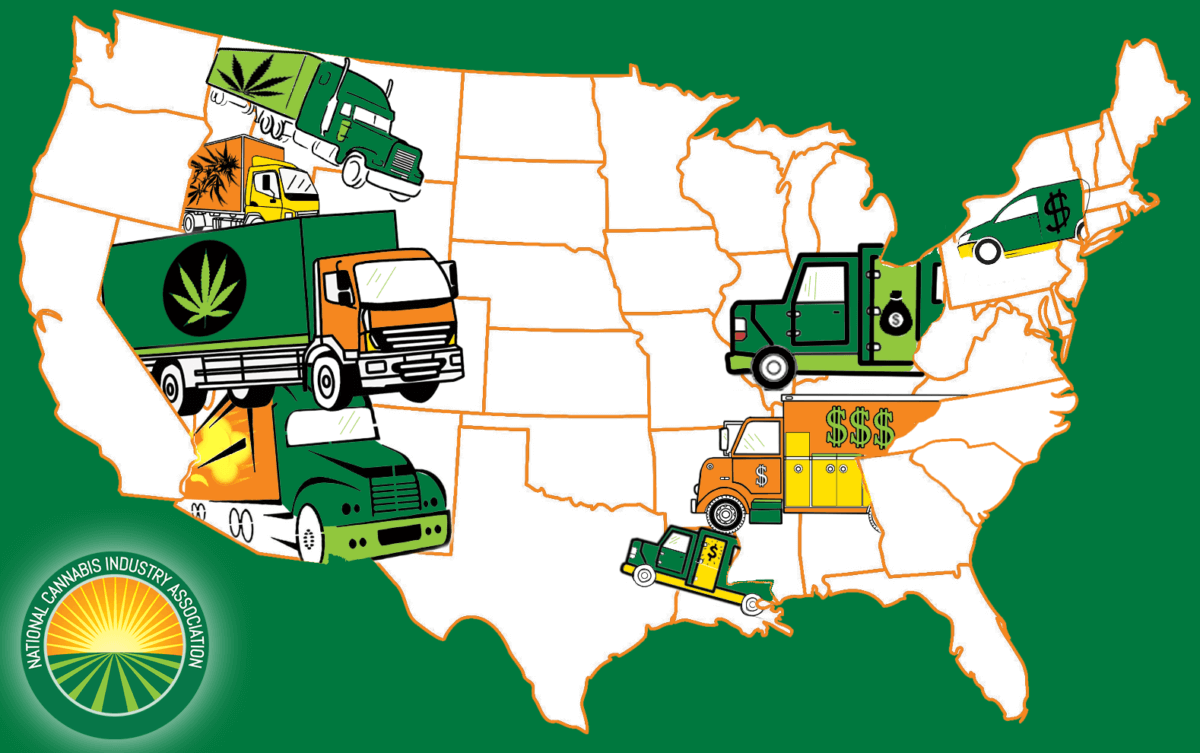
Defining permit types (similar to wine wholesale model) such as:
Importing
Privileges to buy from exporters directly and sell to distributors or transporters and licensees into a state system from another state
Exporting
Privileges to buy from operators and sell from a state system to an importer in another state
Transporting
Privileges to sell to or buy from qualified cannabis licensed businesses within a state system and to move product from or to licensees in a state or between importers and exporters interstate
Testing
State labs that meet national standards to ensure consistency with results for other permit types
May not be strictly social equity since existing labs are more specialized in converting to federal standards and adding this permit
Defining these basic requirements offers a framework for interstate commerce permitting and establishes the essential agencies required to enact a robust social equity program federally. More importantly, it stalls illegal and gray area activity from taking root under the guise of federal legalization by ensuring interstate commerce activity falls under a specific regulatory agency already well versed in interstate commerce permitting and regulation.
Suggested Social Equity Definition:
To define social equity applicant qualifications, DEIC suggests the TTB and SBA move away from diversity supplier program definitions which are too restrictive for a new industry to qualify. In order to accommodate the cannabis industry, DEIC recommends looking at other state definitions of social equity qualification that have proven to be effective.
Factors like living in a disproportionately impacted area for 5 out of 10 years, being arrested for cannabis or having a family member who was arrested, as well as income below the poverty line, should become qualifying factors.
Additionally, minorities, women, and veterans should be given additional consideration in the definition of who qualifies as a minority cannabis business.
High poverty rate, unemployment rate and participation in federal or state income-based programs, a history of arrests, convictions and other law enforcement practices in a certain geographic area, such as, but not limited to, precincts, zip codes, neighborhoods, census tracts and political subdivisions, reflecting a disparate enforcement of cannabis prohibition during a certain time period (war on drugs started in 1971), when compared to the rest of the state.
Utilize the advisory committee and collaborate with cannabis social equity groups to make sure gentrification and displacement are taken into account. Many areas have drastically changed over the last 5-10 years. Where a person spent their formative, childhood years should also be factored in. Guarding against ‘gerrymandering’ types of map cutouts, where folks who grew up literally surrounded by DIA’s, and who dealt with many of the same issues growing up, are somehow not considered to be disproportionately impacted.
We believe the federal government should leave regulations within each state alone during this multi-year implementation and defer to the TTB and SBA to work in conjunction with any Federal Drug Administration (FDA) regulations with their primary focus pertaining to interstate commerce and taxation as it relates to social equity permit issuance.
Defining How Many Permits to Issue to Social Equity Operators
To address the common shortfalls of state programs, the DEIC realizes that social equity applicants are already a minority stakeholder in existing cannabis licensing. In most states, sadly, constituting less than 5% ownership. This is a huge difference compared to the proportion of individuals in prison for the same activities a licensed business is allowed to conduct.
Accordingly, the DEIC recommends a direct balance in ensuring a lock-out period on issuing new permits and ensuring, during that time, that 95% of the permits go to social equity owners/operators.
While some may consider such a counter-balance to be extreme, more and more states are increasing the committed amount of licenses for social equity to ensure a fair counter-balance. If anything, mega-players should be competing with each other for a select number of limited licenses – not the other way around.
We also realize that, in order to generate investment or value behind interstate commerce permits, there could not be an unlimited number of them initially issued. While the advisory board may issue more in the future, we feel a bold stand to increase the number of valuable permits for initial social equity applicants nationwide is necessary to ensure a balance that reflects the oversight to include social equity business into the industry thus far.
DEIC suggests 1,500 permits as a starting point divided among the three primary types (import, export, transport) as a fair balance initially.
The above policies may seem bold, but they are designed to seek to balance the industry and state’s failure to allow social equity participation. Most cannabis states left out social equity operators by mandating residency and felony-free requirements.
The reality is that interstate commerce means selling the products already owned and produced by non-social equity folks. Further, if it was not for these legacy operators, there would not be a cannabis culture. A culture that has been co-opted from legacy social equity operators by mega operators who kept “undesirables” from the industry at its inception.
These policies seek to balance the needs of traditional cannabis businesses that would most benefit from interstate commerce, with the needs of social equity businesses to create equal opportunity. By limiting the number and availability of interstate commerce permits for at least a 5 lock-out year period, the policy ensures traditional operators partner with social equity permit holders to export, import, and transport their goods between various markets.
The policy helps ensure partnerships that are more equitable for both parties and, in doing so, seeks to avoid “predatory operating agreements” or “social equity colonialism” that dilute social equity operators who are not given the opportunity or resources to bring anything to the table. Therefore, the DEIC stands by lock-out periods and a dedicated high percentage of limited licenses for social equity interstate commerce permitting as a policy to balance existing inequity.
In the next part of this policy paper series, the DEIC will examine how this framework sets up social equity technical assistance, qualification, and a phased approach of implementation to ensure the widest net is cast and that social equity operators have ample time to qualify, are appropriately funded, and set up for success with an equal starting line for interstate commerce.
Video: Voices of NCIA’s DEI Scholarship Recipients
Laws and regulations need to be designed and implemented with equity and fairness in mind. NCIA’s Diversity, Equity, Inclusion Committee is focused on recommendations that will create access to opportunity for those most adversely affected by cannabis prohibition.
A more diverse cannabis industry means a more prosperous one. We aim to foster a more equitable industry where participation and success are possible regardless of the numerous factors that have historically held many people, businesses, and communities back.
At the core of NCIA’s Diversity, Equity, and Inclusion Program is our Equity Scholarship Program, which provides our Equity Members one year of complimentary membership to NCIA. Hear from some of the business owners who became a part of NCIA’s DEI Scholarship Program in this video.
If you share our vision for a more inclusive and equitable cannabis industry, please support NCIA’s DEI program through sponsorship. DEI program sponsors not only help us continue to provide complimentary memberships to equity operators, but it also comes with benefits! Click here to learn more about the program.
NCIA’s DEI Program New Year Update
by Mike Lomuto, NCIA’s DEI Manager
We must not let federal legalization become the “War on Drugs 2.0.” Rather, it must be the foundation for the building of generational wealth.
The modern-day cannabis industry is the product of a century of prohibition and the war on drugs. With federal legalization fast approaching, it is up to us all to ensure that this industry does not become the “Drug War 2.0.”
At the National Cannabis Industry Association, we recognize the importance of impactful Diversity, Equity, and Inclusion initiatives.
At the core of our DEI Program is our Equity Scholarship Program (ESP). Launched in 2020, nearly 200 ESP members are enjoying the benefits of a complimentary first year of NCIA membership thanks to this program and its financial sponsors.
Equity Scholarship Program Features
Complimentary passes to all NCIA events
Live Social Equity Workshops at our national conferences
Weekly video conference calls
Facebook community
Catalyst Conversation Educational Webinars
Unique Opportunities for ESP Members to Leverage NCIA’s Platforms
Greater representation on NCIA panels and webinars
“Being part of the program has transformed our company. The mentorship we’ve received has been instrumental in our growth. Being part of NCIA provided opportunities for us to gain new business relationships, become committee members, and participate in webinars. It’s also been great meeting other social equity members and building a community together.” – Kay Villamin, Hush Chicago, NCIA’s State Regulations Committee
As a trade association, at the core of NCIA’s mission is to create industry-shaping policy advocacy. Our Diversity, Equity, and Inclusion Program is ensuring that diverse voices are properly integrated into that advocacy, including:
Launching NCIA’s Sustainability Collaboration, in collaboration with several dedicated NCIA Committee Leaders, with an emphasis on incorporating the DEI perspective, which is too often left out of the sustainability conversation
A new Health Equity project in development
Of course, Diversity, Equity, and Inclusion would be meaningless unless we see that greater representation plays out on our biggest stages and in our board rooms.
NCIA has one of the most diverse boards of directors in the industry, including members who joined NCIA through our Social Equity Scholarship Program
Increasingly diverse representation across the leadership of NCIA’s fourteen sector committees
Consistently inclusive representation on panels – live and virtual. The overwhelming sentiment at our recent Midwest Cannabis Conference in Detroit was that it was “the most diverse and inclusive conference” many speakers and attendees had ever experienced
“I’m a firm believer that the more you give, the more you get, and my experience at NCIA is proof of that. Becoming a scholarship member at NCIA as a woman and minority founder has been an incredible opportunity… Committee work has rewarded me with new perspectives, recognition, and invaluable relationships that have strengthened my business.” – Helen Gomez Andrews, Co-Founder & CEO, The High End; Committee Organizer, DEI Committee
“The Scholarship Program gave way more than we could ever ask for. As a veteran and minority-owned company, with a core focus on community impact through cannabis, we have been provided with important opportunities and resources. The program is holding the door open for others like us to enter into the industry. You will not regret being a part of the Social Equity Scholarship Program.” – Keyston Franklin, The Doobie Room; Vice Chair, Banking Committee
As we continue to build for the integrity of the industry and future generations, we are looking for partners to join us.
Equity Member Spotlight: Next Level Edibles – Anthony Jenkins Jr.
This month, NCIA’s editorial department continues the monthly Member Spotlight series by highlighting our Social Equity Scholarship Recipients as part of our Diversity, Equity, and Inclusion Program. Participants are gaining first-hand access to regulators in key markets to get insight on the industry, tips for raising capital, and advice on how to access and utilize data to ensure success in their businesses, along with all the other benefits available to NCIA members.
Tell me a bit about your background and why you launched your company?
I was born in Hayward, California and spent most of my childhood in Mesa, Arizona, and in the Bay Area, in Northern California. After high school, I spent some time at The Farm (Stanford) and graduated from The House (Morehouse College).
Next Level was started almost 10 years ago. During a particularly trying part of my life, a medical professional recommended antidepressants and anti-anxiety medicine for symptoms I was experiencing. Taking these drugs made me feel slightly better, but came with a host of other problems; twitching, irritability, weight gain. I needed another solution.
In college, I experimented with cannabis and as an adult, I found that it alleviated my symptoms without the side effects. Unfortunately, the halflife for cannabis is only 90 minutes which wasn’t nearly long enough to cover my full workday. I learned about edibles and how they can last for 4 to 6 hours and I was really attracted to their lack of smell. As a business professional, a deal could be broken if I smelled like cannabis. Edibles did not have a negative connotation and were perfectly discreet for my work environment.
Unfortunately, edibles only came in two different types at this time period: tasty, but completely lacking on potency, or absolutely disgusting and potent. No one should ever need a chaser for their edibles. The industry was ripe for a company with absolutely delicious products that could also provide a strong dosage.
What unique value does your company offer to the cannabis industry?
Next Level empowers people to infuse any food or beverage and accurately dose it for higher tolerances. With our products, the home cook can imbue any dish her heart desires and the morning warrior can add a kick to his favorite hot beverages.
Cannabis companies have a unique responsibility to shape this growing industry to be socially responsible and advocate for it to be treated fairly. How does your company help work toward that goal for the greater good of the cannabis industry?
When we started this venture, there was not much information out there about equity cannabis companies. Realizing there are probably many other minority entrepreneurs trying to start a cannabis business, I started a Facebook group called CES (Cannabis Equity Success) to help disseminate information about equity programs across America and to raise the profile of equity companies to support. In addition, I’ve been assisting new entrepreneurs to get connected with resources to see their vision come to light. As a minority-owned business, it is very important that we celebrate and support other businesses owned and operated by women, veterans, those with disabilities, and people of color.
It is Next Level’s vision to support these minority-owned businesses. Partnering with women-owned businesses, like Changemaker Creative, not only makes good business sense as they are local leaders in the industry, but also allows us to gain key insights into our target market. The owner and head creator, Lilli Keinaenen, is able to provide details and cater designs that appeal directly to her demographic. Other awesome women-led companies that are our strategic partners include our copacker, the Galley, and Supernova women.
In our distribution chain, we work with BIPOC owned companies like Local Equity Distribution and Breeze which provide jobs and revenue to the people and communities negatively impacted by cannabis arrests.
What kind of challenges do you face in the industry and what solutions would you like to see?
The biggest challenge we face in the industry is getting dispensaries to buy small company products. We are a small “mom and pop” owned by family members from Oakland, CA. It’s more challenging to get dispensary buyers to sit down with us because they prefer to save their time and shelf space for the larger established brands. One possible solution for this problem is to have each dispensary dedicate a certain portion of its stock to legacy brands/small mom and pops/equity companies.
The other challenge we face is getting access to capital. This is a bootstrapped venture, and issues in cannabis take a lot more time and money to solve than other industries. Unfortunately, there are not a lot of angel investors or investment companies putting money in cannabis and even less in minority entrepreneurs. The solution for this is to make the investment world much more equitable and inclusive.
Why did you join NCIA through the DEI Scholarship Proogram? What’s the best part about being a member?
I joined NCIA through the DEI Scholarship Program for an opportunity to learn best practices for my industry and to network with the finest minds in cannabis.
Equity Member Spotlight: iFlyWellness – David Rodrigues, CEO
This month, NCIA’s editorial department is reviving the monthly Member Spotlight series by highlighting our Social Equity Scholarship Recipients as part of our Diversity, Equity, and Inclusion Program. Participants are gaining first-hand access to regulators in key markets to get insight on the industry, tips for raising capital, and advice on how to access and utilize data to ensure success in their businesses, along with all the other benefits available to NCIA members.
Tell us a bit about you, your background, and why you launched your company?
I have been using cannabis for 20 years, and got into the industry in 2011, before METRC was implemented, and before adult-use legalization. I was working in cultivation, budtending, purchasing, and managing. At the time, I was seeing firsthand the products dispensaries were providing, and began developing a vision of what the San Jose community needed versus what was out there. Stepping back from my position at a successful dispensary, I made a choice to go all in on my visions and build a delivery service and lifestyle brand in San Jose. I created iFlyWellness for the people.
iFlyWellness delivery service will connect the legendary Humboldt County to the Bay Area. Offering a unique flower menu from Humboldt County to Indoor exotic flower, iFlyWellness will cater to the everyday smoker/user, specifically the people of San Jose. There are over 1.1 million people in San Jose, with a high percentage of cannabis users. Connecting the “farm to blunt” is the method behind iFlyWellness. Patients are currently buying jars at ninety dollars an eighth. The everyday consumer has struggles affording such medicine. The logic is to figure out a way for patients to consume top-tier flower at an affordable price.
What unique value does your company offer to the cannabis industry?
I know quite a few cannabis growers and will go straight to the source. This is the “farm to blunt” experience. The indoor cultivation side and the Humboldt side both make a supply chain connection from the Emerald triangle all the way to the Bay Area. This is really good medicine for the people.
What is your goal for the greater good of cannabis?
It’s about getting on the ground. Talking directly to the people in the community that you want to make a social impact with. I am working with Daniel Montero and Javier Armas of BALCA (Bay Area Latino Cannabis Alliance), and I am connected directly with Humboldt farmers and legacy growers.
Our vision is for the patient to feel a direct connection with the flower they are smoking. Big corporations in this industry fail to recognize that this industry has been here for over 100 years. They are looking at the industry as a money grab. You can make it as a small business owner, but it comes with many more challenges. Forming alliances among us and going directly to the people helps us face these challenges.
What kind of challenges do you face in the industry and what solutions would you like to see?
Capital is big and can dominate the industry. I am working right now with Javier Armas of BALCA to acquire a building and license in Oakland, CA. With the minimal amount of licenses the city of San Jose has to offer, if you don’t have deep pockets, it can be challenging applying for the same license that a multi-million dollar corporation is applying for.
Why did you join NCIA? What’s the best or most important part about being a member?
I joined NCIA through the DEI Scholarship Program to learn and network, as the cannabis industry is constantly changing and I need to stay up to date. When I was working for dispensaries in San Jose, I was networking a lot but representing someone else’s company, not representing my vision and dreams of connecting and catering to the everyday cannabis consumers. It’s time now to build my vision and with the strength of great associations like NCIA and BALCA, I’m confident it will happen.
Commmittee Blog: NCIA’s Diversity, Equity, and Inclusion Committee Offers Critiques and Recommendations for Illinois Social Equity Dispensary Licensing Process
by NCIA’s Diversity, Equity, and Inclusion Committee
We are NCIA’s Diversity, Equity, and Inclusion Committee (DEIC), comprising experienced professionals representing a diverse range of backgrounds. In response to the early results of the Illinois Adult Use Dispensary application process, and with the interest of supporting Illinois’ Social Equity efforts, we felt compelled to reach out and offer our analysis and recommendations.
While the creation of the Social Equity Program in the Cannabis Regulation and Tax Act and Illinois Department of Financial and Professional Regulations (“IDFPR”) implementation of the licensing scheme was well-meaning and intentioned, the recent litany of lawsuits and outcry from advocacy groups following Illinois’ inaugural issuance of cannabis licenses indicates heavy criticism. As demonstrated thus far, the Social Equity Program appears limited in its ability to capture a sufficient representation of persons most harmed by the War on Drugs in Illinois in business licensure and ownership, or to generate the opportunities for restorative justice and building generational wealth for such persons as hoped.
Our intention with this letter is to state our express desire to lend the expertise and resources of NCIA’s DEIC to support Illinois legislators in crafting Illinois’ licensing and regulatory systems in a manner that reflects the Social Equity Program’s laudable mission of reducing barriers to cannabis business ownership, and establishing a legal cannabis industry that is equitable and accessible to those most harmed by the disparate enforcement of drug-related laws in Illinois. Furthermore, we hope to lend support to local organizations building toward that same goal, and to form a coalition as we all strive to rectify the harmful effects of prohibition and the War on Drugs.
At this time, and pending further collaboration with local officials, NCIA’s DEIC makes the following recommendations for your consideration. For further understanding of the analysis supporting these recommendations, please see the attached report.
For IDFPR to move forward with license scoring and issuance as soon as possible, we suggest the following:
Removing the required possession of premises and overhead to hold on to property (not required of dispensary applications and may bankrupt existing applicants awaiting results)
Ensuring oversight of KPMG (the 3rd-party firm hired by the State of Illinois to score the applications) by persons of color and social equity representatives
Allowing for a documented appeals process internally with KPMG results before issuing them to all applicants
Scrutinizing Operating Agreements in the rubric and gradient to ascertain and avoid predatory or straw-man agreements
Moving forward, reasonable transparency would include knowing what the makeup and process was for KPMG in making their first evaluations, and what the process will look like for the re-scoring to avoid conflicts of interest. Specifically, IDFPR can ensure transparency by making the following information public:
Evaluation Rubric
Composition of the Reviewers
Scoring Process and Determination of Grading
Frequency of KPMG Meetings
KPMG Public Relations Contact
Timeline of Events During the Scoring Process
Lessons Learned and Plan for Improvement on Future Scoring Rounds
For future rounds of applications, we offer these recommendations:
Pre-qualifying social equity applicants for state funding to ensure economic empowerment in the application process
Providing a path forward for those who are not (yet) qualified to operate a cannabis business, but are qualified as social equity applicants
Allowing for 100% Social Equity Applicant owned businesses to qualify for cannabis experience points without partnering with a multi-state operator (“MSO”)
Issuing delivery licenses for social equity operators
We also express our support for the recommendations made by the Cannabis Business Association of Illinois’ Minority Access Committee, in their October 5, 2020, letter to Governor Pritzker. (see here)
Finally, we appreciate the efforts taken by Governor Pritzker, the Illinois legislature, and IDFPR thus far to address disparities in the application process and commend Governor Pritzker for taking leadership on this important issue. Allowing this first generation of applicants to address deficiencies in their applications, as it was originally intended to allow them to do, offers another opportunity to enter the lottery system, which we recognize and appreciate.
Additionally, the commission of a disparity study is commendable and should prove helpful in understanding what went wrong and how to improve. If anything, we hope our expertise and professional experience will assist in this process and in the effort to improve upon the mistakes of the past to achieve a more diverse, inclusive, and socially equitable future.
Thank you for your time and attention to this matter. Please let us know if we can assist in any way.
Sincerely,
The National Cannabis Industry Association Diversity, Equity, and Inclusion Committee
 by Mark Slaugh, iComply LLC
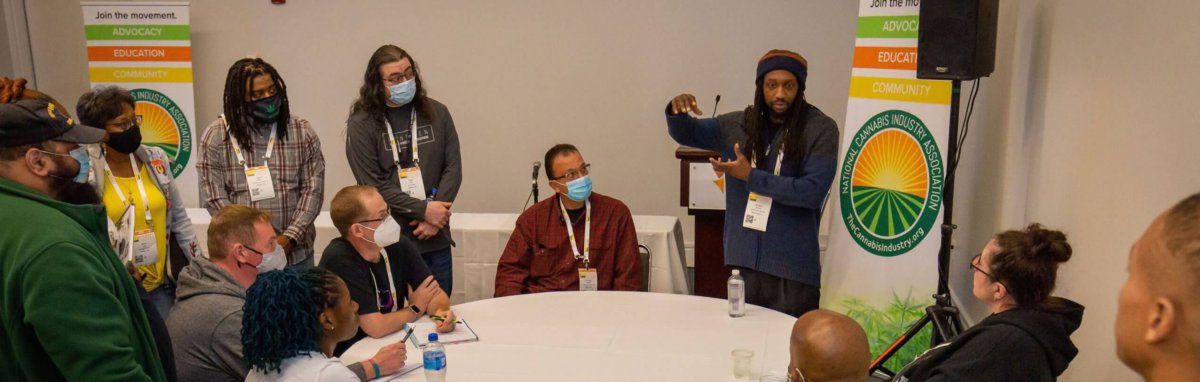
 by Mike Lomuto, NCIA’s DEI Manager




 It’s about getting on the ground. Talking directly to the people in the community that you want to make a social impact with
 We are NCIA’s Diversity, Equity, and Inclusion Committee (DEIC), comprising experienced professionals representing a diverse range of backgrounds. In response to the early results of the Illinois Adult Use Dispensary application process, and with the interest of supporting Illinois’ Social Equity efforts, we felt compelled to reach out and offer our analysis and recommendations.
Follow NCIA
Newsletter
Facebook
Twitter
LinkedIn
Instagram
News & Resource Topics
–
This Just In
NCIA Applauds Reintroduction of SAFE Banking Following Lobby Days
Beyond Rescheduling: Inside NCIA’s 14th Annual National Cannabis Industry Lobby Days