NCIA’s #IndustryEssentials webinar series is our premier digital educational series featuring a variety of interactive programs allowing us to provide you timely, engaging and essential education when you need it most.
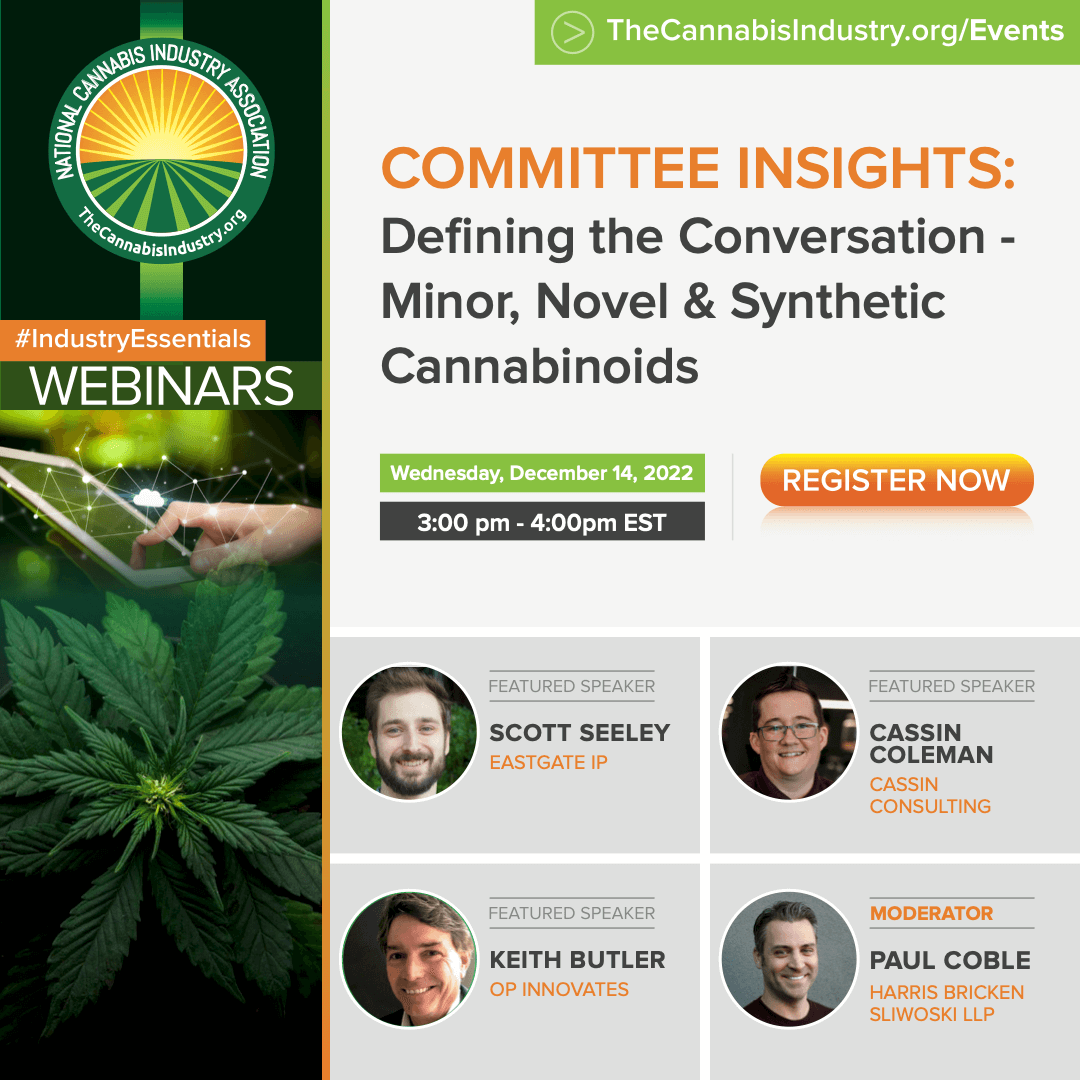
In this edition of our NCIA Committee Insights series, originally aired on December 14 and produced in collaboration by NCIA’s Cannabis Manufacturing Committee, Scientific Advisory Committee and Hemp Committee we introduced and framed the myriad regulatory, scientific, linguistic, and ethical issues that come with the rise of minor, novel, and synthetic cannabinoids.
Learning Objectives:
• Understand the role of minor, novel, and synthetic cannabinoids in the cannabis industry and the unique issues relating to their current status.
At the conclusion of the discussion our panel hosted a lengthy moderated Q&A session so our network could get all their burning questions answered by these leading manufacturing, biochemical, and legal professionals from the hemp and cannabis industries.
Panelists:
Scott Seeley
Biochemist and Patent/TM Attorney @Eastgate IP
Cassin Coleman
Founder
Cassin Consulting
Keith Butler
CEO
OP Innovates / Hemp Mellow
Paul Coble
Intellectual Property Attorney
Harris Bricken Sliwoski LLP
There is more to cannabis than THC and CBD. As our understanding (and commercialization) of cannabis evolves, new compounds like CBG, delta-8-THC, THCv, and others are coming onto the scene. These various “minor” cannabinoids, however, bring with them a host of new issues.
Over the next few months this collaboration will continue to explore these issues with various subjects ranging from basic and advanced overviews of these molecules, regulatory recommendations, risk management and compliance concerns all the way to consumer and manufacturer safety. Stay up to date and be the first to know when additional follow-up sessions are scheduled by signing up via the form below.
From Lab to Label: Safeguarding Consumers in the Cannabinoid Product Landscape (Part III): https://bit.ly/3Xc9Lx6
Know Your Hazards – Occupational Health and Safety Considerations in Cannabinoid Ingredient Manufacturing (Part IV): https://bit.ly/3rEUeKP
Concepts for Regulatory Consideration – Shifting the Conversation from “Cannabis vs. Hemp” to “The Cannabinoids” (Part V): https://bit.ly/3P3r5AW
The 2018 Farm Bill and the Return of Hemp to American Farms
by Michelle Rutter, NCIA Government Relations Manager
HISTORY
Farming and agriculture has long been a part of North American history. When the Great Depression hit in the 1930’s, both President Franklin Delano Roosevelt and Congress knew that the United States would struggle until the agriculture industry became prosperous again. As a result, many New Deal programs dealt with farming, but arguably the most notable agriculture related legislation was the Agricultural Adjustment Act of 1938, which was the first version of what we know today as simply the “Farm Bill” that is updated roughly every five years.
TODAY
Now, for the first time since the end of World War II, states are slated to soon be able to create federally legal hemp programs under the 2018 Farm Bill, which President Trump is expected to sign into law any day. The bipartisan legislation, which passed overwhelmingly in the Senate and House last week, would allow states to submit plans created by their respective Secretaries of Agriculture in coordination with their governors and chief law enforcement officers to the Department of Agriculture to grow and process hemp and hemp-derived products.
SEED TO SALE
As the law is written, state applications would need to include methods for tracking land used for hemp production and audit producers to make sure that the hemp they are growing contains less than 0.3% THC. Programs would also need to be approved by the Secretary of Agriculture, Sonny Perdue, in consultation with the Attorney General within 60 days of being submitted. Additionally, states would not be permitted to ban the transportation of hemp and hemp products through their jurisdictions, but production and sales would only be permitted in states with approved programs. The bill also contains a number of directives for research on hemp and hemp cultivation.
SCHEDULING
Hemp-derived cannabidiol (CBD) would be exempted from the Controlled Substances Act (CSA) in states with approved programs, but CBD will remain a Schedule 1 substance under the CSA and illegal at the federal level. The Farm Bill also does not impact the current Food & Drug Administration ban on CBD products or its ability to regulate the substance in the future.
INDUSTRY EMPLOYMENT
The law prevents anyone with a drug-related felony from working in legal state hemp industries, preventing many people who have been impacted by the unequal enforcement of cannabis prohibition from participating in the economic opportunities created by new programs. However, a late compromise led to the inclusion of a ten-year sunset period from either the date of conviction or the start of the state program, whichever is more recent.
THE FUTURE
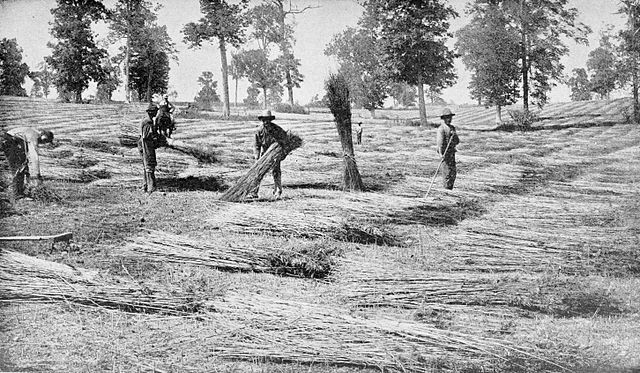
Marijuana’s “cousin,” hemp, is generally barred because it is part of the cannabis plant, despite the fact that it contains very little of that drug’s key psychoactive ingredient, THC. In 2014, Majority Leader McConnell (R-KY) secured a hemp pilot program in that year’s farm bill. Since then, at least 35 states have taken up the offer and developed industrial hemp programs, and those states will be eligible to pursue a legal, regulated market when the bill is signed into law. The passage of this provision will surely bring about a new era for the agricultural industry, and the cannabis industry — when hemp returns to American farmlands.
Follow NCIA
Newsletter
Facebook
Twitter
LinkedIn
Instagram
News & Resource Topics
–
This Just In
DOJ Reschedules Medical Cannabis to Schedule III & Announces June 2026 Hearing on Broader Rescheduling
National Cannabis Industry Association (NCIA) to Convene Industry Leaders in Washington for Annual Lobby Days, Bringing Together a Unified Voice for Federal Cannabis Reform