The Illicit Cannabis Market Puts Consumers At-Risk and Is an Existential Threat to the State-Legal Cannabis Industry
by Andrew Kline, NCIA Director of Public Policy
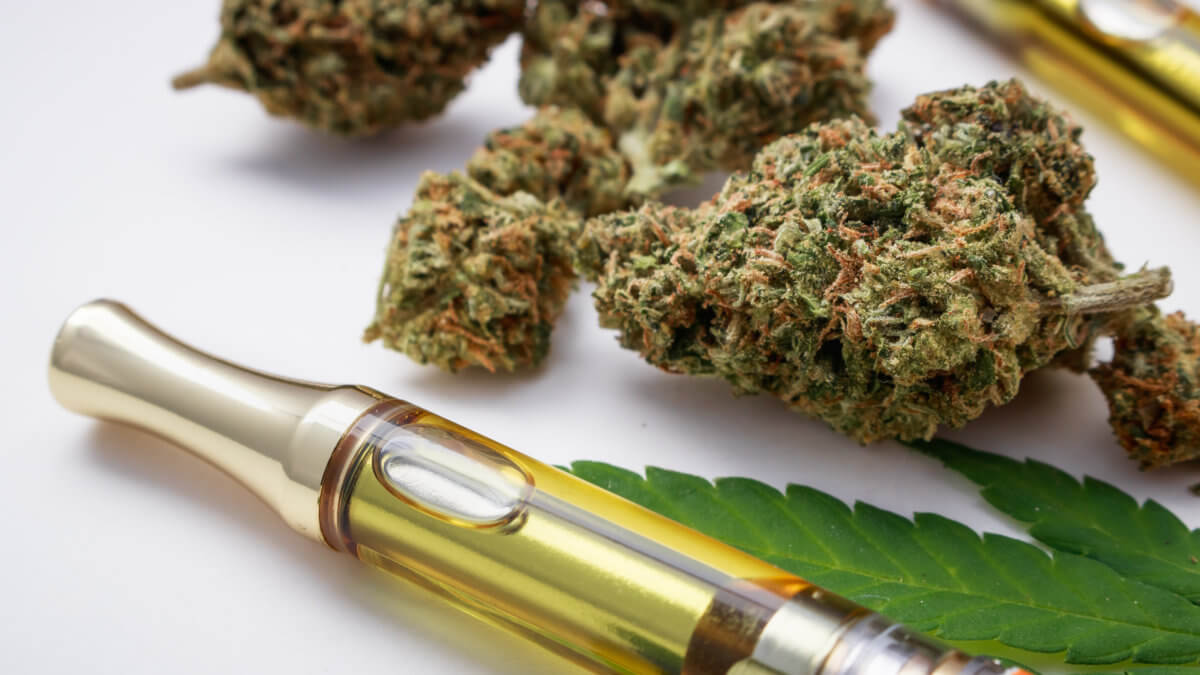
Photo By CannabisCamera.com
The illicit market is not working for anyone. The illicit market puts consumers at risk by offering untested, unregulated, and dangerous products, including “vape cartridges” filled with additives that are not intended for inhalation. These illicit vape products alone have caused 2,768 injuries and 64 deaths to date nationally. Pop-up dispensaries are selling illicit, unregulated, and untested products to unwitting consumers. Unscrupulous people are unlawfully selling cannabis products over the internet in violation of state and federal law, and online platforms are enabling the illicit market by advertising for illegal online and brick and mortar stores. Counterfeit and ready-to-fill packaging is being sold with fake lab results, batch numbers, and barcodes. Illegal growers are causing serious environmental harms. Even illicit market operators with the best intentions still put consumers at risk when they sell untested products produced in unregulated facilities.
And these illicit operators pose an existential threat to the regulated markets that voters have demanded. Operators are laying out significant funds for licenses and compliance to compete against an illegal, untested, unregulated, untaxed marketplace. Law enforcement is playing whack-a-mole. Consumers are often unaware of which operators are legal, particularly where illegal operators often have a veneer of legitimacy or have stolen the intellectual property of these regulated businesses to gain consumer trust. We need to make certain that reliable and safer products (tracked, tagged, and tested) are being sold in the regulated market. Trust in the safety of the supply chain is key here, with laboratory testing, traceability, and safeguards (eg: ability for recalls) as mandatory prerequisites.
On February 19, 2020, NCIA, along with NCIA’s Policy Council, former Boston Police Commissioner Ed Davis, and Commissioner Britte McBride, public safety appointee on the Massachusetts Cannabis Control Commission, partnered to facilitate an important discussion with law enforcement, advocates, and industry stakeholders seeking solutions to the illicit cannabis market. The summit brought together federal, state and local law enforcement; state regulators, cannabis entrepreneurs and multi-state operators, ancillary technology companies, and social equity experts. The purpose of the summit was to dialogue about the illicit cannabis market with the goal of developing recommendations on resources, policies, best practices, and public-private partnerships to share information.
Here are some key takeaways:
First, the cannabis industry needs to help law enforcement find alternatives to arrest and incarceration. Some states have been creative in their approach to combating the illicit market, by locking doors and shutting off electricity and water, levying fines, and prosecuting tax evasion. It is essential that we rely most heavily on alternatives to arrest and prosecution so that we don’t perpetuate the myriad problems associated with the “war on drugs.”
Second, the industry must better define the illicit market. The illicit market looks very different in Idaho than it does in Colorado. In Idaho, all sales are illegal and diversion from legal states into Idaho is a serious problem. In Colorado, state regulators are concerned about unsafe products being manufactured and sold outside of the state regulatory regime. So, we need to take a hard look at the products that are causing the most significant problems (injuries and deaths) and focus our attention on the most serious of those cases. Until we prioritize what we deem to be illicit market activity, it will be difficult to prioritize limited law enforcement resources.
Third, the industry needs to definitively determine the root cause of the illicit market. We know that three probable causes of illicit market activity are: (1) lack of legal access to cannabis and cannabis products and (2) price disparity between legal and illicit markets, largely due to high taxes of legal products, and (3) a lack of economic opportunities in marginalized communities causing people to turn to illicit sales. But, what are other causes and effects?
Fourth, the industry needs a forum for collaboration with law enforcement. The middle of a crisis is not the time to develop relationships.
Fifth, the industry needs a pathway for illicit market operators to enter the legal market. We can’t displace the illicit market unless we create a pathway for previous illicit market entrepreneurs to enter the legal market. That means that states must create realistic pathways to enter the regulated market for legacy illicit market actors. There are an increasing number of potential models here, from the states such as Massachusetts (which has led on attempting to prioritize social equity during license application processes) and Illinois (which made such pathways a key point in the legislation to create a legal market) to industry groups such as the Minority Cannabis Business Association (which has published recommendations for state regulators intent on incorporating social equity requirements into their licensee applications).
Sixth, law enforcement has competing demands and needs help prioritizing cases. What are the most egregious cases that warrant criminal arrest and prosecution? What are the cases that warrant automatic expungement? And what do we do with the cases that fall in between?
Finally, the industry needs to speak with one voice and start rowing in the same direction. The industry needs national messaging from states that have a regulated market to help dispel myths and prepare warnings for responsible use. We need to share information on packaging and labeling, testing, universal symbols, etc., nationally. And most significantly, the industry needs to start speaking with one voice and work to bring legacy businesses into the regulated market. NCIA’s Policy Council is committed to continuing efforts to create a safe place for everyone in the industry to begin that dialogue.
Andrew Kline is the Director of Public Policy for the National Cannabis Industry Association and leads NCIA’s Policy Council. He can be reached at Andrew@TheCannabisIndustry.org
Committee Blog: Interstate Cannabis Commerce Will Benefit Public Safety, Consumer Choice, and Patient Access (Part 2)
By Sean Donahoe, Founder and CEO, Sungrown Developments Inc. Member of NCIA’s State Regulations Committee
In Northern California’s legendary cannabis growing region of Mendocino, the elected county sheriff was recently a competitor at a homebrew festival, jovially pouring samples of his “Pretty Sour Powerful Sider” (jokingly referring to the “Public Safety Power Shutoffs” recently implemented by the electricity utility PG&E to prevent wildfires.) While this relaxed scene of neighbors bonding in the wake of shared inconveniences was not exceptional in itself, here, Sheriff Allman was posing for selfies with licensed (but possibly a few unlicensed) cannabis cultivators sharing the liquid bounties of harvest for the benefit of a local nonprofit.
For nearly a decade, the elected officials and staff of Mendocino county have worked together to normalize the local cannabis farmers by providing a pathway for medical cannabis cultivation permits, long before the state established a licensing system. This public policy process brought once-outlaw cannabis growers into conformance with every regulation of modern life: from building code standards to streambed alteration regulations to the quantification of gross receipts for tax collection. Bringing regulators onto these farms has curtailed previous practices that may have threatened consumer safety: pesticide and other chemicals are now tracked and regulated, while every gram can now be tracked back to its very plot of origin (in case of a safety recall or other concerns post-harvest.) This has been unquestionably difficult for and disruptive to many heritage and small farmers, but it has also allowed in these regions for simple scenes of social bonding and neighbors trusting neighbors again, as participants in the illicit sector were normalized into first their local county’s community then into a system of state license and next (hopefully soon) into a web of regulated interstate commerce. The process of bringing every farm into the regulated supply chain is far from complete, of course, and there are still illicit operators producing for consumers in urban areas in the state and beyond.
Rather than dwell on the incomplete success of California’s ongoing efforts to bring order to the world’s largest cannabis marketplace, it is essential to focus on the quality of life benefits from every cannabis operation successfully brought over from the traditional market to the regulated sector. Each licensed operation makes for one more safe workplace, one more source for lab-tested products for consumers and patients, and one more farm abiding by environmental regulations while providing stable employment and economic sustainability in rural communities. Under the previous medical cannabis paradigm, while there was certainly an abundance of responsible operators, there was virtually zero guidance from the state on matters of workplace safety, manufacturing standards, or environmental compliance. We are now several years into a robust legislative and administrative rulemaking process that has established a (mostly) clear set of rules of the road for commercial cannabis activities. It has unquestionably been a bumpy road for many of the legacy farmers to comply with new regulatory standards, but we are nonetheless able to say that there are now thousands of well-regulated cannabis farms in California (and southern Oregon) eager to sell their clean and craft quality products in a hopeful system of interstate commerce.
Has every cannabis farm in California transitioned? Of course not, but neither have the illicit cannabis economies been entirely supplanted by adult-use cannabis retailers in Colorado and Washington. Sensible and sustainable cannabis policy reform is a process, not a simple flipping of a switch from “illegal” to “legal,” and Americans should be realistic about the progressive and iterative nature of this process. This process, like most evolutionary processes, has already experienced several inflection points, transformative moments that noticeably shifted public opinion or opened up new frontiers in policy reform. While the earlier era of medical cannabis state laws certainly created a base of public opinion and laws, it was questionably the passage of adult-use ballot measures in Colorado and Washington which brought onto the global stage and accelerated the awareness that adult consumers could buy cannabis in clean, responsible retail locations rather than furtive or even dangerous transactions in the illicit marketplace
Throughout this policy process, we have established that licensed retail options can be scaled without negatively affecting public safety and are highly efficient competitive enterprises, offering consumers ample product selection and low prices. In both Colorado and Washington states (but also in later states) we have seen imbalances for some time as market forces, regulatory factors and new cultivation capacity coming online have all helped to create price fluctuations, product shortages, and other supply disruptions. These disruptions were not unique to these early states and will likely continue in every market as new in-state regulated options come online in fits and starts (but when interstate commerce becomes possible we should expect significant price fluctuations unlike any seen to date.) During these fiscally trying periods, we have often seen cannabis operators attempt to cut corners on compliance to make ends meet, which can lead to compromised consumer safety and public safety. The goals of consumer availability and cost competitiveness should be foremost in the minds of policymakers crafting cannabis policy reform nationwide, most notably in the anticipated markets of the Northeast. As these next anticipated adult-use states are designing the framework of their retail and distribution systems, strong consideration should be taken on the potential benefits of quickly and effectively scaling their programs by incorporating interstate commerce as soon as (politically) possible.
The Interstate Commerce Conversation
As the serious policy conversations about compliant interstate cannabis commerce begin, it is helpful to study how in our proverbial laboratories of democracy we can see that decreasing retail friction and shifting consumers from the illicit marketplace benefits crime reduction efforts and improves overall public safety. We should also note that retail cannabis sales have continued to grow in Colorado and Washington, even after the initial novelty and the surge of tourism waned, while legal sales have supplanted illicit sales. These early-adopting states have created models that are addressing consumer demand as national interest in cannabis for wellness and adult-use purposes are soaring and the cultural normalizing continues to occur on a global scale. Interest is high, consumer demand is real, and evidence shows that our drug reform policies should be crafted to bring every cannabis consumer transaction into the regulated supply chain in order to fulfill the demand while benefiting from increases in public safety.Interstate commerce could provide not only safer products but also a greater variety of quality and highly competitive offerings. For medical patients and wellness-oriented consumers, interstate commerce may be the only viable means of access for certain formulated cannabis products or cultivars, especially in smaller state markets.
In addition to the above benefits, regulated interstate cannabis commerce system could provide a more robust and differentiated production and distribution network combined with the ability to rapidly scale retail sales and address insufficient cultivation capacity in new adult-use markets.Cannabis consumers are price sensitive and illicit market retail options continue to entice consumers in states with functional adult-use programs such as California (or Canada), where there is an insufficient amount of licensed retail options to address total consumer demand. With the beginning of adult-use sales in Illinois and larger adult-use states yet to come, it is frankly a bit difficult to envision how total consumer demand will be able to be fulfilled in any near term by relying on licensed cannabis cultivated in-state alone.
The Safe Vaping Discussion
While moving to allow interstate commerce will best position licensed operators to compete with the prices available to consumers in the illicit sector, moving towards a borderless system of production and distribution will also increase safety and access for patients and consumers. Most prominent is the recent nationwide discussion on vaping and vaping-related issues, where tainted products and resultant injuries have been found in the unregulated, illicit sector (or in a very few instances from licensed but arguably under-regulated sources.)Notably, NCIA’s Policy Council established a Safe Vaping Task Force to work on these issues and has released a more comprehensive document advocating for the expansion of a regulatory approach for the safe manufacturing and distribution of cannabis products, whether vape cartridges or otherwise.
The issue of vaping extends to broader issues of product safety including educational campaigns, quality assurance, and testing programs, supply chain integrity, track and trace, and other reporting systems, and (when all else fails) a capable and sophisticated product safety recall system and these are all necessary components of a well-regulated marketplace. These consumer safety programs have already been carefully designed and stress-tested in Colorado and California and the insights from these systems and those in other states should be incorporated into the crafting of interstate cannabis policy (which will require significant harmonization of Certificates of Analysis and testing standards, packaging and labeling standards, etc., again all of which will benefit patients and consumers by offering greater predictability and reliability of their preferred products.)
Multi-State Coordination
In various forums, we have begun to see state regulators liaise with each other and we hope to see more coordination in the future and potentially an earnestness in harmonizing standards where statutorily possible. This multi-state coordination on product safety standards would be accelerated as part of the regulatory coordination efforts that are likely necessary for interstate commerce and, again, consumers and patients will benefit from safer cannabis and cannabis products, and we see NCIA as the critical player in this coming national conversation. In conclusion, moving to a system of regulated interstate cannabis commerce will have tangible benefits for the general public, for consumers and patients and I encourage forward-thinking members of the industry to participate and help manifest a system of interstate cannabis commerce with NCIA, its Allied Associations and other industry groups.
After studying Russian affairs and working as a political consultant, Sean Donahoe co-founded the California Cannabis Industry Association. He served as its Deputy Director through 2014 when he transitioned to consulting for investors and operators, communicating with public stakeholders, serving on local government committees, and advising industry trade groups. He holds an MSc in Government from the London School of Economics and is CEO of Sungrown Developments Inc., an advisory firm and holding company in Oakland, California.
NCIA Policy Council Publishes New Safe Vaping Recommendations Report
by Morgan Fox, NCIA Director of Media Relations
In September of last year, reports began surfacing of mysterious respiratory illnesses generally associated with the use of vape cartridges, including those containing cannabinoids. Over the following months, reports of these cases climbed to more than 2000 nationwide, including more than 50 deaths. The Center for Disease Control and state health agencies struggled to determine the proximate causes, but it became increasingly clear that the vast majority of these cases were linked to unregulated cannabis vape products. As the focus began to narrow on the presence of Vitamin E acetate and other additives in unregulated products, NCIA and members of the industry urged producers, regulators, and lawmakers to take steps to prevent the use of these substances in vape cartridges and enact changes that would make legal, licensed, and tested products competitive with illegal market products that were making people sick.
New reports of this illness – called EVALI – have slowed, and the CDC has ended its official state of emergency related to vaping. However, there is still significant confusion on the part of stakeholders and the government about how to avoid similar issues in the future and the huge causal role prohibition played in this outbreak. In an incredibly misguided statement earlier this month, the CDC even lumped all “commercial” sources for vape cartridges together as a source for one sixth of the harmful products, despite only a handful of links to regulated businesses out of thousands of cases. This is especially troubling for states like California, where no cases were linked to regulated businesses and where unlicensed storefronts greatly outnumber those with licenses. Equating licensed, regulated businesses to those operating without oversight or regulations completely misses the mark and creates a dangerously inaccurate set of assumptions that could lead to even worse public health issues in the future.
As such, NCIA is proud to be releasing a thorough report on EVALI this week entitled “The Key to Consumer Safety: Displacing the Illicit Cannabis Market – Recommendations for Safe Vaping” which was produced by our Policy Council and informed by a variety of subject experts. This paper explores not only the additives that were the primary culprit but also potential areas for future concern such as heavy metals in vape cartridge manufacturing, potential problems caused by poor temperature control, and the use of certain types of flavorings and terpenes. It clearly lays out suggestions for both producers and regulators that will help avoid potentially dangerous products in the legal market, as well as ways to make sure that unregulated counterfeit products don’t make it into the hands of consumers. Just as important, this paper offers a guide on how states – as well as the federal government – can combat the illicit market by removing the onerous burdens placed on legal businesses, lowering barriers of entry to the industry and creating easier pathways for legacy businesses to become licensed, and exploring non-criminal methods to shut down illicit operators.
Whether you are a producer, regulator, policymaker or just concerned with public health and cannabis policy, this paper is an important tool for you. We ask that you please read and share it with your networks and urge your elected representatives at every level to explore and implement these evidence-based recommendations.
As members of the responsible cannabis industry, it is our duty to look out for the safety of cannabis consumers and shine a light on the policies that are bolstering the unregulated market.
As this paper concludes, the American consumer clearly wants cannabis products to be both accessible and legal. It’s time for the federal government to deschedule marijuana and regulate it like alcohol. Legalization through descheduling, regulation, and testing is the best path forward to keeping consumers safe. In the end, sensible regulation and a clear path to licensure and compliance will be the most compelling force in driving people from the illicit market to the state-legal market.
Oversupply and shortages, high prices and lack of choice for patients and consumers, illicit markets, tainted products, and the inability to access banking and capital all plague the burgeoning cannabis industry. While cannabis advocates and industry leaders are working on each of these problems, there is one solution that would ease the burden on all of them. Allowing for interstate trade between states with legal cannabis markets would improve each of these issues while supporting the individual solutions to each that the industry has been working on. This is the first post in a series that explores the benefits and barriers to setting up a legal framework for interstate trade, even before wholesale legalization at the federal level.
Since the beginning of legal, adult-use cannabis, when Colorado and Washington passed the first ballot measure allowing for adult-use, the industry was guided by the Cole Memo, which laid out the parameters for the federal government staying out of the states’ cannabis experiments. Among other things, the Cole memo stated that the DEA could crackdown on cannabis moving from states with well-regulated systems to states that do not allow cannabis. This statement has been interpreted conservatively to mean that no cannabis should cross state lines for any reason, ever, based on the fact that at the federal level, cannabis is still a Schedule I drug under the Controlled Substances Act.
Today, there are 10 states which have legalized adult-use, another 19 which allow for medical use, and six more which allow the use of CBD products only. Many of these states share borders, and producer states could serve several nearby markets without ever entering a state that does not allow cannabis in any form. Furthermore, the Cole Memo, which was rescinded by Jeff Sessions in 2018, has not been replaced by any guidance whatsoever. This means that each U.S. Attorney’s office is free to set their own enforcement priorities around state-legal cannabis activities, and there is no official overriding policy at the DOJ on interstate trade between states with medical or adult use. Corresponding guidance from FinCEN, however, remains in effect and similarly discourages the transfer of cannabis between states.
Cannabis markets vary widely from state to state with regard to the underlying market dynamics and challenges that they face. Some states produce too much while other states experience shortages. Meanwhile, new states pass legislation or have voter initiatives that allow medical or adult-use every year without any infrastructure in place to supply that state’s demand. In each new legal market, the vast majority of demand had long been met through illicit market supply, and generally from outside of the state’s boundaries.
The artificial boundaries around cannabis markets have far-reaching impacts for local economies, patient access, illicit market activity, and social equity. Later posts in this series will take a deep dive into each of these issues, and in this post, we will look at how this has impacted states, the industry, and consumers so far.
Lessons Learned:
Washington State chose to take the strictest possible reading of the Cole Memo, and insist that not only must cannabis not cross state lines but also sources of funding must come from within the state. Combined with their high capitalization requirement for licenses, the result was a disaster from an equity standpoint: only wealthy and well-connected individuals in the state (which are overwhelmingly white males) were able to even attempt a license. This decision was based substantially on the fact that interstate trade was not allowed.
In Oregon, which has an ideal growing climate and a long tradition of exporting cannabis (albeit in the illicit market), the artificial boundaries created by the ban on interstate trade lead to a massive oversupply for its small population, which crippled the industry and tanked many small businesses. Despite the fact that Oregonians consume more cannabis per capita than any state, their climate and culture have led to growing massive quantities of world-class cannabis that cannot reach patients and consumers, even in neighboring states that might have under-supply issues. The result is that hundreds of small, mom-and-pop shops and family farms have gone out of business, eradicating millions of dollars of local capital, and accelerating mass consolidation of the industry into the hands of a few foreign corporations. Meanwhile, in medical markets like Illinois and Michigan, patients have had sporadic access to quality cannabis-based medicines.
When Nevada originally launched, due to the influence of local liquor distributors, it was almost impossible to get products to market, and the state’s dispensaries sold out on the first day of sales. After ironing out some of the kinks, sales are going strong, but the practice of growing thirsty plants indoors in the desert is of dubious value when the same plant can be grown with a fraction of the inputs in northern California and southern Oregon.
California’s legal system is a perfect example of how over-regulation fuels illicit market activity. Because of the structure of their regulatory framework and high taxes, the state is served by only 800 licensed dispensaries, whose prices are double and triple those found on the illicit market for similar products. This has led to the emergence of thousands of “pop-up” or unlicensed dispensaries, selling untested products tax-free in a thriving illicit market. The booming illicit market in California has also led to massive wholesale markets of hardware, branded packaging, and flavoring and cutting agents (all technically legal) to supply the illegal operators with everything they need to look legitimate. This is a major contributing factor to the wide-spread vaping related illness cases popping up all over the country, as many illicit market operators purchase their supplies in downtown Los Angeles.
The ban on interstate trade promises to continue to create new and novel problems as well. If New York, the 4th most populous state in the union, legalized adult-use (which seems likely in the near future), and interstate trade were still banned, it would require a massive investment, on the order of billions of dollars, to create enough indoor and greenhouse grow facilities to supply the demand created by its 19 million inhabitants. The recent legalization of hemp under the last Farm Bill has created a number of legal dilemmas as well, as some individual states that do not recognize any difference between hemp and cannabis flower have seized products and arrested individuals taking hemp legally grown in one state to a market where it is legal to sell.
Some suggest that these issues will be sorted in local markets, and in each state individually this approach might seem to make sense. When you add these problems together, though, a much more elegant, efficient, and obvious solution emerges: let states that have always exported cannabis send it to states that have always imported it. A set of different and seemingly unconnected problems become each other’s solutions.
Historically, people across the country have consumed cannabis, and the vast majority of it was grown in a few locations that are particularly well-suited to the plant. It is highly likely that a fully-matured nationwide legal market (one which must account for not only interstate, but also international competition) will ultimately be best served by the same general market dynamics. The only question is: how long will we allow the artificial market boundaries around each state to decimate local capital, curb access for patients and consumers, encourage investments that are attractive short-term but disastrous long-term, and prop up the illegal markets that pose a public health risk?
Interstate trade between states that allow some form of legal cannabis would provide much-needed relief on a number of fronts for cannabis businesses, and could be structured in such a way to support social equity efforts. With a little guidance on enforcement and thoughtful programs and agreements between states, there is a path to legal interstate commerce even before cannabis is removed from the Controlled Substances Act. The state of Oregon has already passed legislation allowing for the export and import of cannabis products provided that the Federal Government allows it. This could be either through legislation such as the proposed Blumenauer/Widen State Cannabis Commerce Act, or though DOJ enforcement guidance (whether from the Attorney General or the relevant local U.S. Attorney’s). There are multiple paths that can lead to the end of banned interstate trade, and it seems increasingly inevitable that we will see legal cannabis trade across state borders in the near future. For most operators in the cannabis industry, and for all patients and consumers, this will be a good thing, and can’t come soon enough.
Gabriel Cross is a Founder and CEO at Odyssey Distribution, LLC, a distributor for locally-owned craft cannabis producers and processors in Oregon. Gabe worked in the sustainable building industry for a decade before starting Odyssey and brings his experience with sustainability and systems thinking to his work in the cannabis industry. Odyssey manages logistics, sales and marketing for boutique producers so they can focus on creating great craft cannabis products for the Oregon market.
Member Blog: Stop The Illicit Market With Profitability, Save Lives
By now, we’ve all seen the concerning vape cartridge illnesses and deaths across various states. While the exact cause is still being determined, our industry has an opportunity to step up our game. So the question we must ask ourselves is: how can the cannabis industry help to prevent potentially dangerous illicit market cannabis sales?
The everyday consumer is seduced by lower-cost alternatives and some turn to the grey market with an assumption of safety. “If the price is half as much, why not?” wonders the consumer. Unfortunately, tragic examples slapped us back to reality and we are now seeing all too clearly the downsides of the laissez-faire approach that feeds the grey market. Low cost is good, but people are dying. This is where our crisis is real.
Safety protocols, procedures, regulations, and oversight, applied to the old methods of production, lead to increased costs that are duplicated on the way through the channel. High taxes multiply that effect, serving as a barrier to the consumer. The illicit market circumvents the bureaucracy and offers a lower cost that meets consumer demand at an increased risk.
Lower Production Costs = Lower Costs For The Consumer
As the end of cannabis prohibition nears, we have to remember that long before we had added regulations and government overhead, proponents of legal cannabis emphasized the medicinal value of the plant, for treating everything from chronic pain to post-traumatic stress syndrome. What started as a simple plant that grew outdoors with free sun and water has evolved, with numerous controls added to regulate, generate tax revenue, and improve the odds that this new medicine is safe. As well-meaning as those precautions are, they have added significant cost to the wonder drug through legal channels. Our best hope for migrating consumers away from dangerous shortcut products is to get a handle on production cost and make it easier for cultivators to follow the rules and enjoy profitability.
It pains all of us when we see the recent spate of illnesses — even deaths — increasingly associated with vaping cannabis, despite the fact that the majority of health issues appear to stem from the illicit market. If we don’t fix this, the market will be severely impacted by either consumer avoidance or government fiat. I’m proud to see that NCIA is taking a lead role in communications around this critical issue and in the fight to deschedule cannabis and enacting federal regulations at a reasonable cost, protecting consumers from potentially dangerous illicit cannabis distribution.
Raise The Quality, Lower The Cost Of Production
Safety, of course, has been and always will be a key concern of the legal cannabis industry. But as our industry grows up and competitive pressures bear down, we can’t afford to shortcut our responsibilities. Running a grow operation is full of potentially harmful contaminants that can strike at any time. Producers need to choose ways to protect their investments with safe operational procedures and new technologies that guarantee both safe and superior products for our customers. At a lower cost!
Where there is a need and a business opportunity, innovation will rise to the challenge. The vape crisis points to an urgent need for low-cost yields and profits for legal cannabis producers. This can be achieved through a highly controlled aeroponic approach for consistent, pure, clean yields that exceed regulatory and medicinal requirements. Using advanced technology, the cost of production can be reduced to as low as $0.30/gram, and the result is legal cannabis that can enter the channel at much lower cost at levels where the illicit market can’t compete, and legal producers can profit.
Fully automated environments, nutrients, pH, air, lighting, humidity, temperature — are all monitored and adjusted through software-controlled electromechanical systems in a soil-free environment. With minimal labor required, contamination risks are low, natural contaminants won’t take root and heavy metals and pesticides can be excluded from the environment.
Indoor aeroponic grow systems represent a sea change for many longtime growers and modernizing the industry means new opportunities. New technology replaces labor-intensive efforts with cruise control automation in an efficient climate-controlled environment. Cutting corners proves to be costly while the rewards for doing it right are considerable: precision fast-turning superior yields — and a dramatic reduction in the potential for contaminants to wreak havoc and impact safety.
We all know that risk is part of any business, and that a key element of our jobs is to reduce risk and cost for our customers. Growing in a highly controlled indoor environment at lower cost to the consumer can dramatically mitigate your risks so you, and your customers, can breathe easier, and we can ensure cannabis remains safe.
Phil Gibson, Vice President of Marketing has 30 years of sales, marketing, and channel experience with 3 years at AEssenseGrows, and is known as the creator of the WEBENCH online design environment now owned by Texas Instruments. Previously, Phil held executive marketing positions at Infineon, TI, and National Semiconductor. With 8 patents in web technology, Phil is an expert in digital marketing and built his first web site in 1995. Phil holds an MBA from the University of Southern California and a BSEE from UC Davis.


 After studying Russian affairs and working as a political consultant, Sean Donahoe co-founded the California Cannabis Industry Association. He served as its Deputy Director through 2014 when he transitioned to consulting for investors and operators, communicating with public stakeholders, serving on local government committees, and advising industry trade groups. He holds an MSc in Government from the London School of Economics and is CEO of Sungrown Developments Inc., an advisory firm and holding company in Oakland, California.
 In September of last year, reports began surfacing of mysterious respiratory illnesses generally associated with the use of vape cartridges, including those containing cannabinoids. Over the following months, reports of these cases climbed to more than 2000 nationwide, including more than 50 deaths. The Center for Disease Control and state health agencies struggled to determine the proximate causes, but it became increasingly clear that the vast majority of these cases were linked to unregulated cannabis vape products. As the focus began to narrow on the presence of Vitamin E acetate and other additives in unregulated products,
  Gabriel Cross is a Founder and CEO at

Follow NCIA
Newsletter
Facebook
Twitter
LinkedIn
Instagram
News & Resource Topics
–
This Just In
Member Blog: What Consumers Really Want in a Pre-Roll
Member Blog: The Evolving Cannabis Legal & Regulatory Landscape in 2026