Member Blog: Impact of Cannabis on Sleep Medication Use
Last year, Management Science Associates (MSA) partnered with Vireo Health of Minnesota to complete a first of its kind study that sought to analyze the relationship between opioid reduction and cannabis consumption (you can find more information on those findings in our previous post).
More recently, MSA has been exploring the impact of cannabis on sleep medication use. An estimated 30% of adults experience symptoms of insomnia, which can include difficulty falling asleep, staying asleep, or waking up too early. Patients with insomnia often rely on various prescription and/or over the counter sleep aids to manage their conditions, which can result in adverse effects, including the risk of abuse and cognitive impairment, especially in older adults. Fortunately, the increased acceptance of medical cannabis has resulted in many patients exploring it as a potential alternative.
Although previous studies have shed light on the impact of cannabis for insomnia, more research is needed to fully understand its potential and determine appropriate dosages and long-term effects. Using real-world data, MSA has conducted a study on patients diagnosed with insomnia to investigate the effectiveness of medical cannabis to reduce sleep medication use.
Methodology
The study included adults aged 18 and over, diagnosed with insomnia disorders based on ICD-10 codes, who have purchased cannabis products through medical cannabis dispensaries in Minnesota from 2016 to 2020. Using MSA’s patented de-identification technology, we linked each patient’s electronic health records (EHRs) with medical cannabis dispensary transaction records while protecting patient privacy.
We investigated the trends of cannabis products use in patients with insomnia, according to demographics, and quantified changes in sleep medication use over time, using the Defined Daily Dose (DDD) established by the World Health Organization (WHO) to obtain a ratio that reflects the patient’s daily medication intake in a standard measure. We analyzed the differences in medication use before and after cannabis use, and characterized the patients who experienced a reduction in sleep medication use.
Key findings included:
Demographics: The majority of insomnia patients participating in our study fall within the middle-aged bracket. Almost 50% of the participants were aged 35-50 years, closely followed by 44.4% within the 51-64 year age group.
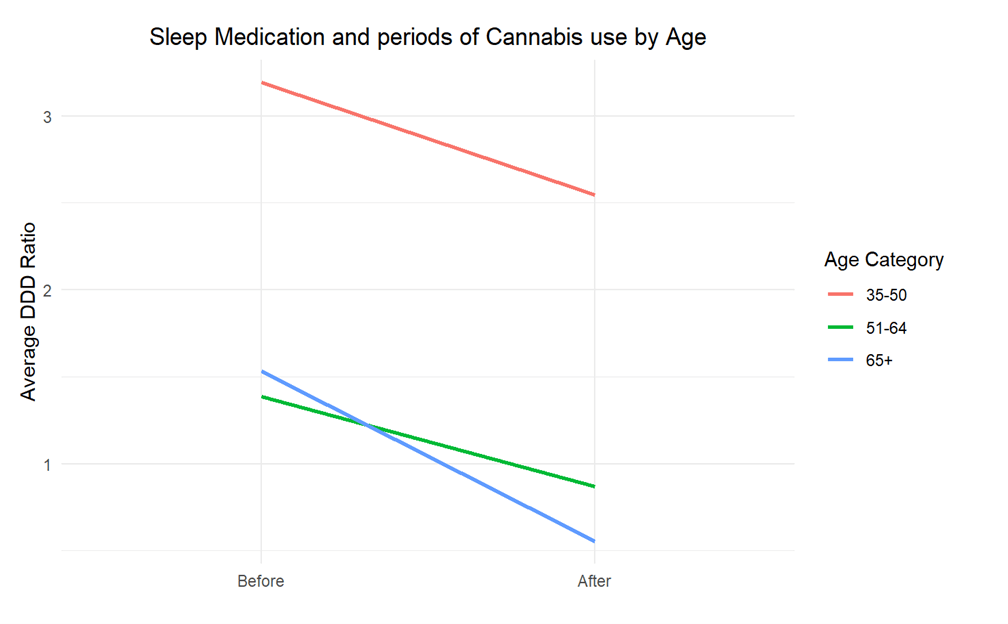
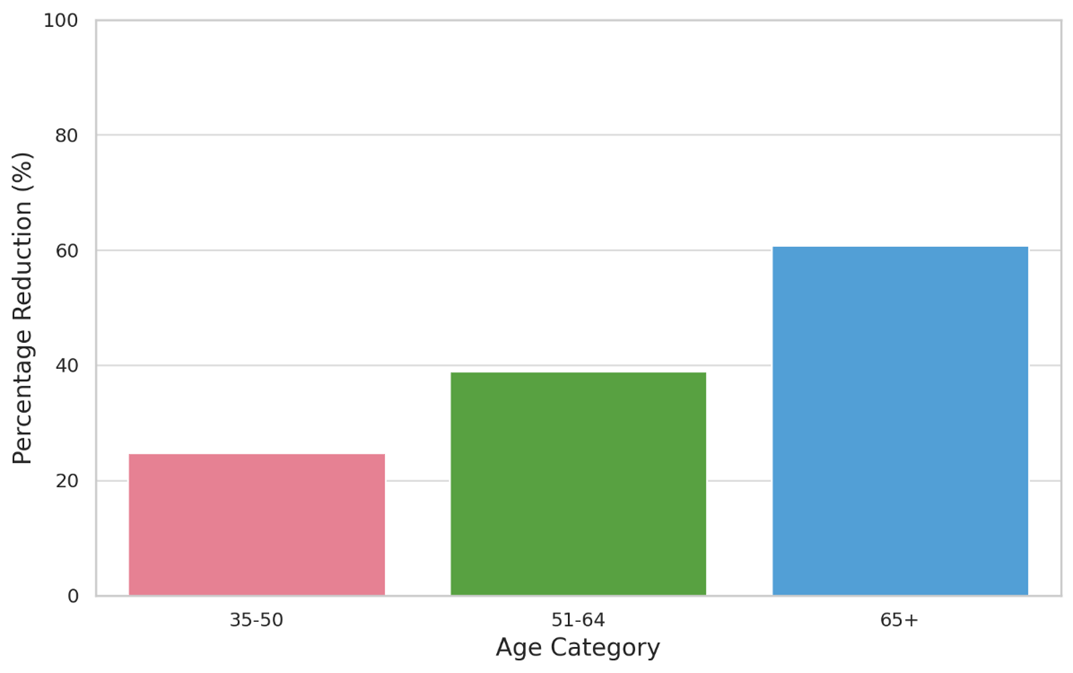
Decrease in sleep medication usage: Our results showed an overall 26.7% decrease in the defined daily dose (DDD) of sleep medications after cannabis use. Patients using cannabis experienced notable decreases in sleep medication use, with the most substantial improvements seen in individuals aged 50 and older. Specifically, those over 65 years old saw a dramatic 60% reduction. Meanwhile, the 51-64 age group benefited from a 39% reduction, and those aged 35-50 observed a 25% decrease. Patients 35-50 years old were using higher doses of Sleep medications than other age groups. Patients over 65 years old exhibited a more pronounced reduction in DDD ratios compared to other age groups. This suggests that older patients might benefit more significantly from cannabis use in terms of reducing their sleep medication intake.
Percentage Reduction of sleep medication by age category
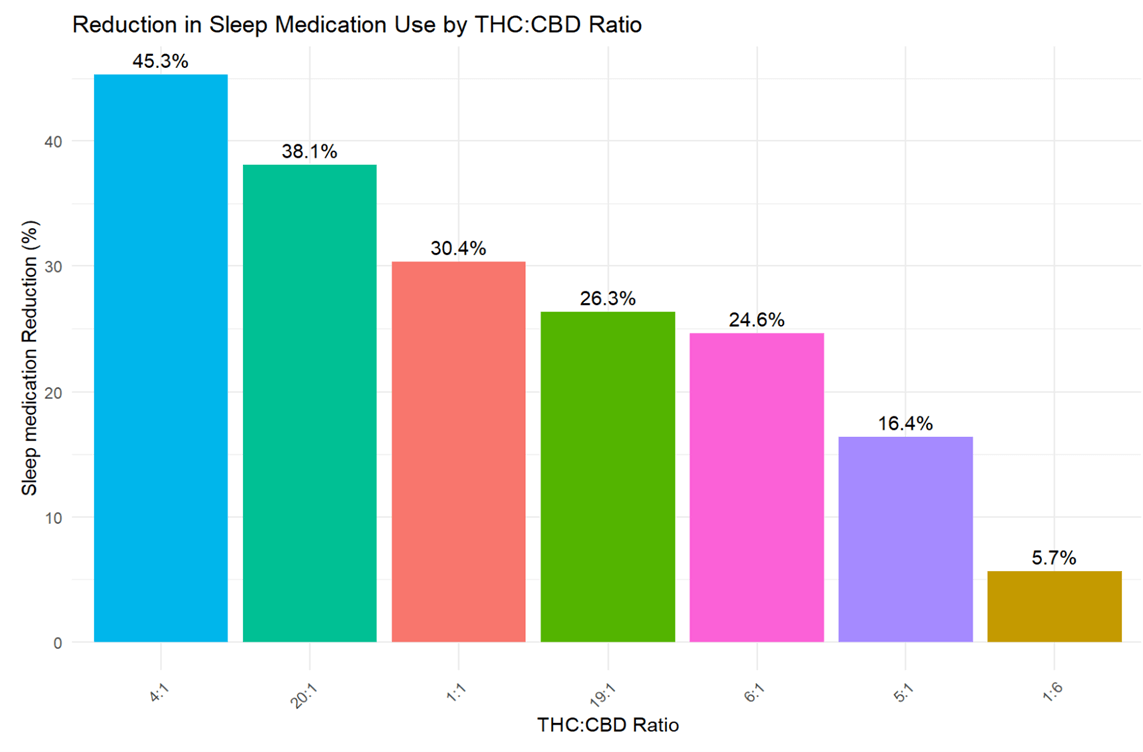
Reduction by THC:CBD ratio: Although most patients with insomnia in this study were using cannabis products with a ratio of 19:1, the THC:CBD ratios that were most effective to reduce sleep medication use were 4:1. 20:1, and 1:1.
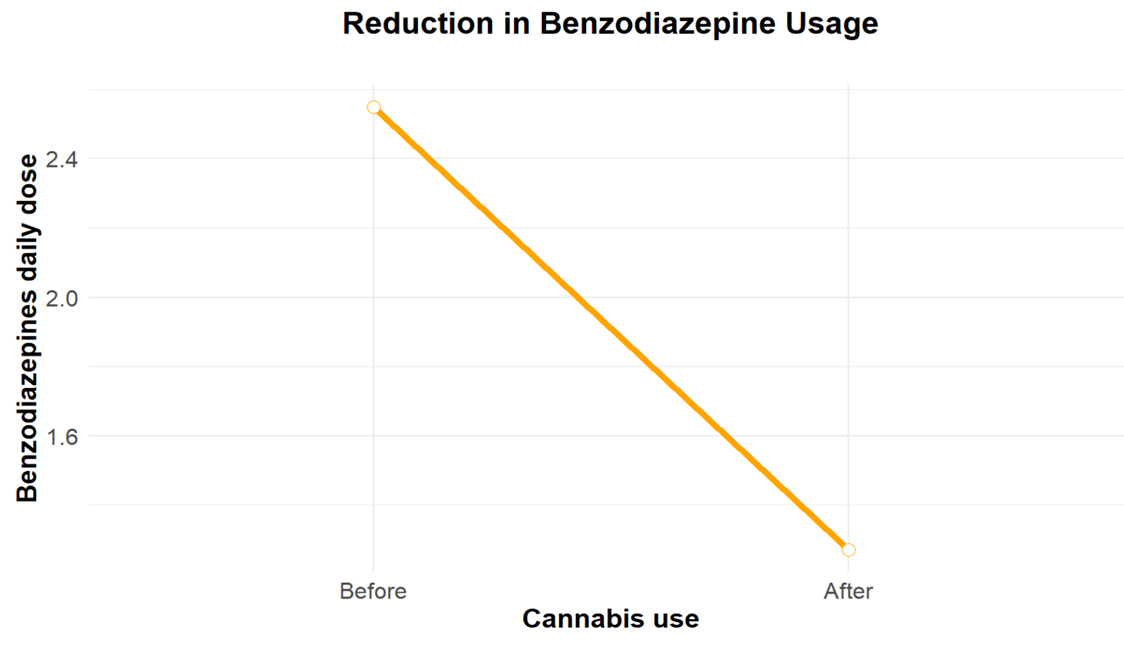
Reduction by Type of sleep medication: In our analysis, we observed a significant reduction in the use of various sleep medications among patients who began using cannabis, with benzodiazepines showing a particularly notable decrease of approximately 50% of the daily dose. The group of patients that experienced a reduction of sleep medication during cannabis use were mostly using Benzodiazepines, among which the most used were Alprazolam, Lorazepam, Diazepam, and Clonazepam.
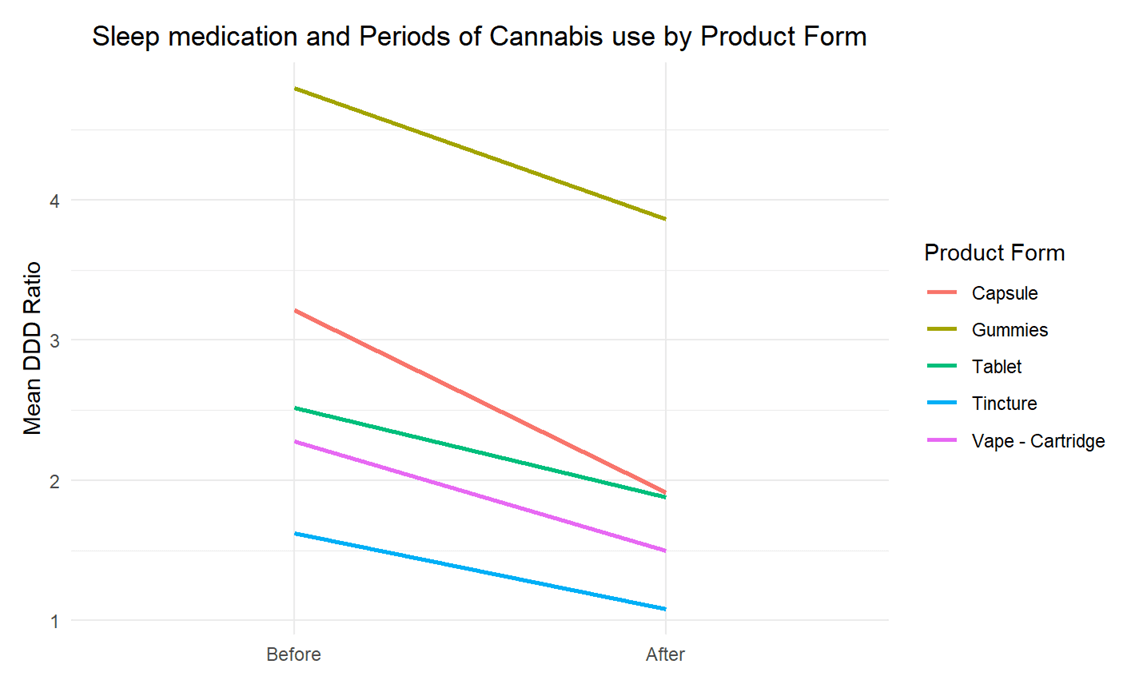
Product Form and Reduction of Sleep Medication: Patients who were using cannabis in capsules experienced the most reduction in sleep medication use. Capsules can have a high bioavailability, meaning more cannabis enters the bloodstream compared to tablets, which could make them more effective. Gummies were most used by patients using high dosages of sleep medications at baseline.
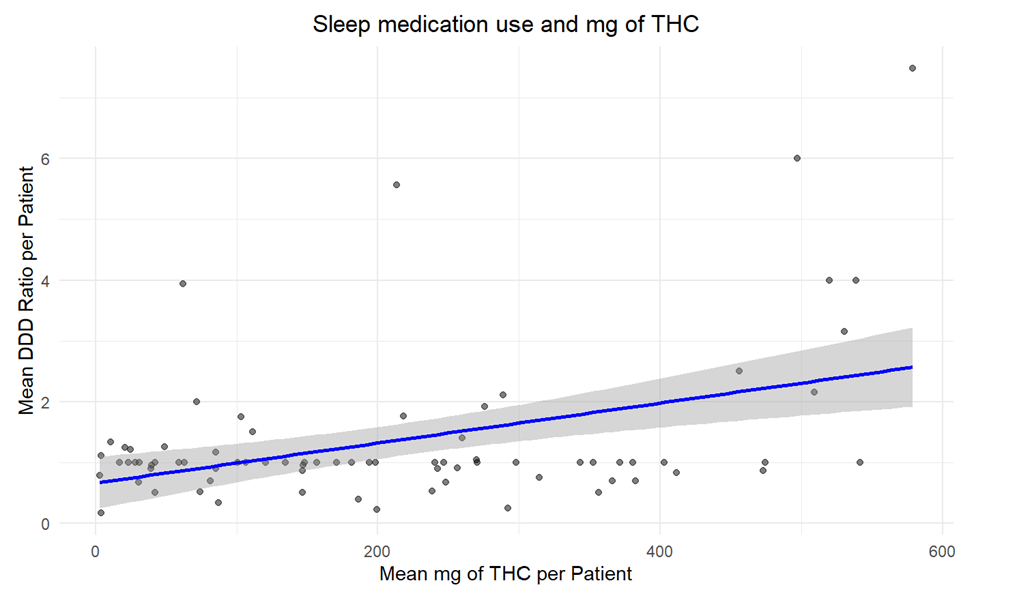
Milligrams of THC: Cannabis products with higher amount of mg of THC were corelated with higher daily dose of sleep medications. This supports previous literature about the effect of THC on insomnia, where lower contents of THC being most effective to alleviate insomnia are reported.
Conclusion
These preliminary findings suggest that cannabis has the potential to significantly reduce the use of traditional sleep medications, particularly among older adults. The preference for specific forms of cannabis in patients using high doses of sleep medications, and a higher effectiveness of capsules in reducing its use highlights important considerations for patient preferences and adherence. As MSA continues this research, we aim to further elucidate the mechanisms behind these trends and refine our understanding of how cannabis can be optimized for managing insomnia and sleep disturbances.
Additionally, MSA aims to support the development of comprehensive guidelines to help clinicians incorporate cannabis safely into insomnia treatment plans. A high-level of evidence from real-world data can help regulatory bodies to update policies based on the latest research and implement educational programs for both healthcare providers and patients about the safe use of cannabis for sleep disorders.
If you are interested in learning more or getting involved with MSA by being a prominent leader in cannabis research, we’d love to hear from you. You can reach out to Madeline Grant at mgrant@msa.com to schedule an introductory call.
Member Blog: Sleep-Focused Brands Are Seeing Bottom Line Dividends

By Jackie Berg, HealthHub
Nearly 40% of the nation’s top 100 CBD brands focus on need states. Chief among them is sleep, something the American Academy of Sleep Medicine (AASM) reports that 85% of Americans are falling far short of.
The 7.2 million sleep-related Google searches logged this past year provide ample evidence of interest. according to NBC News, which reports that 9 million Americans take prescription drugs to help them fall asleep.
Others prefer more natural solutions.
Nearly 11 million rely upon CBD and/or cannabis-based products to manage insomnia or sleeplessness, according to a 2021 report issued by High Yields Insights. Among them, almost 70% are women considered statistically more likely to suffer from insomnia.
YOUNG AND RESTLESS
Millennials are driving the bulk of market growth. Together, with a smaller percentage of Gen Z consumers, these severely stressed consumers represented 48% of the U.S. CBD market in the fourth quarter last year, according to High Yields Insights President Mike Luce.
Regardless of age or gender, brands like CBDfx are discovering that an ever-increasing number of their customers are using CBD to treat sleep-related issues. The Brightfield Group reports more than 58% of CBDfx customers purchased sleep products in the fourth quarter.
Collectively, 40% (4 in 10) of consumers, rely upon CBD to manage insomnia or sleeplessness, according to a recently issued High Yield Insights and InnovateMR 2021 sleep trend report.
FIGHTING FOR SLEEP
Growing pandemic-related uncertainty, anxiety, and associated sleep deprivation issues have kept sleep specialists like Colorado-based Pulmonologist Dr. Julie Whitaker, struggling to manage ever-increasing patient loads.
“We’re not seeing everyone we should,” says Dr. Whitaker, who sees the need to elevate the understanding of the importance of sleep, particularly among Americans.
The pandemic helped to elevate awareness of the importance of good sleep and has softened the momentum of the “sleep is for suckers” mantra, according to the pulmonologist.
CBD and cannabis brands are seeing significant growth, most notably among 25 to 35 year-olds. Although millennials dominate the growth trends, one brand reported moms 40 – 50 years of age are among its fastest-growing demographic.
Veterans, known to experience higher levels of insomnia (57% veterans) than the general population (30%), face elevated pandemic-related risks. Among veterans with Post-traumatic stress disorder (PTSD) or a traumatic brain injury (TBI), the rates are even higher — 93%, according to the Department of Veteran Affairs in San Diego.
Sleep specialists, like Whitaker, are particularly concerned about the stress levels in at-risk populations, particularly women- and veteran-headed households, whose support needs are more imminent.
When it comes to sleep, routines are important, according to the specialist who recommends patients develop healthy and consistent sleep routines, avoid consuming alcohol and OTC products known to disrupt sleep cycles, particularly antihistamines known to disrupt healthy sleep patterns.
CBD AND CANNABIS EFFICACY GROWING
In regard to other solutions, Dr. Whitaker says there’s “reasonable scientific evidence,” that CBD, particularly when combined with a small amount of THC, can help promote sleep.
Two in five working moms use cannabis, according to a newly minted survey released by San-Francisco analytics firm Lucky Analytics.
Women are helping cannabis brands like Ganja Goddess achieve record-breaking triple-digit sales growth. The cannabis company reports a 635% increase in its sleep lines last year, according to its SVP of Marketing Heidi Genrich.
Gummies provide a popular entry point, according to Incredible Edibles Brand Director Jessica Benchetrit, whose company helps make cannabis more accessible via entertaining and informative educational sessions.
“Consumers are looking for an enhanced sleep experience, says Benchetrit. “The majority (78%) are actively seeking out ‘indica-like’ edibles.
Incredibles’ Snoozzzeberry gummies climbed to the number one infused gummy product in the markets it sold in, during the fourth quarter of last year, according to BDS analytics reports.
REVEALING RESEARCH
A 2019 study published in the Journal of Alternative and Complementary Medicine, found cannabidiol (CBD) improved the sleep quality and reduced nightmares of 38% of the participants, all of whom had PTSD.
Joseph Maroon, M.D., a clinical professor and neurosurgeon at the University of Pittsburgh Medical Center who has researched the effect of cannabis on the brain, says that CBD has properties that could help some people sleep better. Most notably, he says, it appears to ease anxiety and pain, both of which can make it harder to fall asleep or stay asleep, according to a published statement in Consumer Reports.
“CBD is safe,” says Dr. Daniel Clauw, an internationally known pain expert and head of the University of Michigan Director of Chronic Pain and Fatigue Center, who frequently collaborates with the Arthritis Foundation on education efforts.
Among sleep associations, the American Sleep Association has indicated that cannabis may help induce sleep in people with insomnia, anxiety or post-traumatic stress.
A MEANINGFUL IMPACT
“People are interested in better ways to relax at the end of the day,” says Ginrich. “And they are increasingly concerned about safeguarding their well-being over the long term.
“Stress and anxiety are not going away, so products and rituals that help people sustainably manage these pressures are in high demand,” adds the Ganja Goddess Marketing Director.
We all have a role to play in helping put America’s sleep issues to bed.
 Author Jackie Berg is the publisher of the Health Hub, a publication division of CBD Marketing Hub, as well as the publisher of TheHUB Detroit, TheHUB Flint and recipient of the Association of Women in Communications 2018 Vanguard award. To learn more CBD Marketing Hub, a cultivator of CBD and cannabis clients, visit its website or reach out at hello@cbdmarketinghub.com.

Follow NCIA
Newsletter
Facebook
Twitter
LinkedIn
Instagram
News & Resource Topics
–
This Just In
Member Blog: What Consumers Really Want in a Pre-Roll
Member Blog: The Evolving Cannabis Legal & Regulatory Landscape in 2026