The Burning Question – When Will SAFE Banking Get A Vote?
by Michelle Rutter, NCIA Government Relations Manager
With Congress returning from their annual August recess, all I seem to be asked is “when will we get a vote on SAFE Banking?” And while it’s unclear whether that vote will be in September or beyond, it’s important to remember that this is the farthest a standalone, pro-cannabis bill has ever gotten in the U.S. House of Representatives. Since the House Financial Services Committee hearing on this topic earlier this year, it seems like the momentum to pass this legislation has only increased. Let’s take a look back and what’s happened and what’s to come:
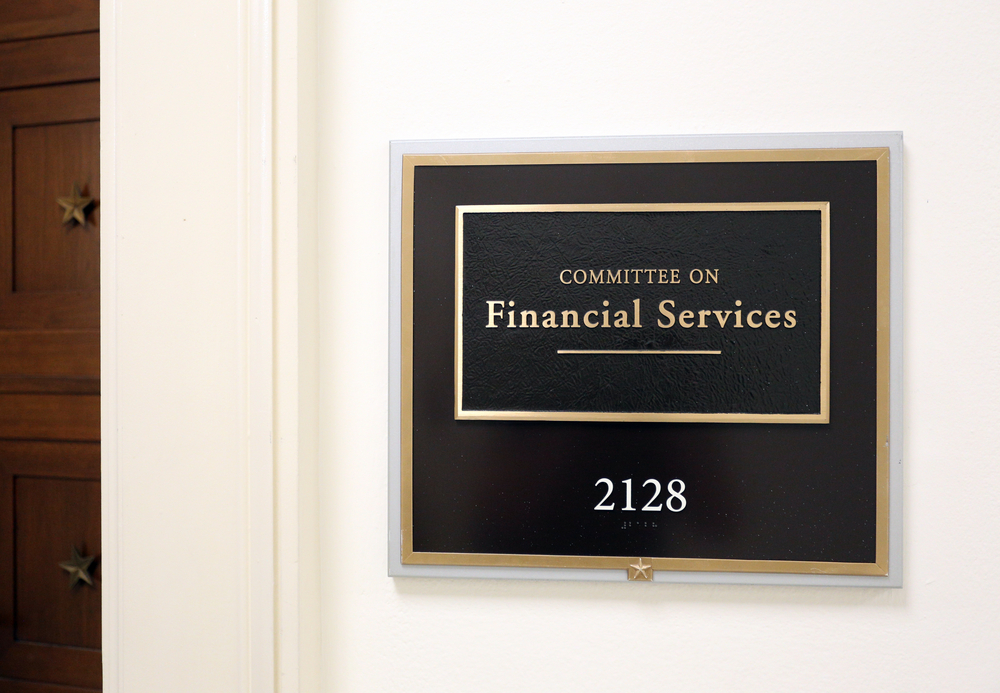
First, in February, the Subcommittee on Consumer Protection and Financial Institutions held its first-ever hearing on marijuana and financial services, entitled: Challenges and Solutions: Access to Banking Services for Cannabis-Related Businesses. Up for discussion at the time was a draft of the Secure and Fair Enforcement (SAFE) Banking Act. Later, in March, HR 1595/S. 1200: the Secure and Fair Enforcement (SAFE) Banking Act was introduced in the House of Representatives by Reps. Ed Perlmutter (D-CO) and Denny Heck (D-WA) and in the Senate by Sens. Jeff Merkley (D-OR) and Cory Gardner (R-CO). In a stunning, historic surprise, the legislation was introduced with a whopping 106 original cosponsors in the House. By July, that number rose to include more than 205 cosponsors.
As a refresher, the SAFE Banking Act would prevent federal banking regulators from punishing banks for working with cannabis-related businesses that are obeying state laws or halting their services, taking action on loans made to those businesses, or limiting a depository institution’s access to the Deposit Insurance Fund. The bill would also protect ancillary businesses that work with the cannabis industry from being charged with money laundering and other financial crimes, and requires the Financial Institution Examination Council to develop guidance to help credit unions and banks understand how to lawfully serve cannabis businesses.
After the bill was introduced, the House Financial Services decided to take the next step in the legislative process and schedule a mark-up of the bill. A markup is the process by which a congressional committee debates, amends, and rewrites proposed legislation.
The bill is read for amendment, one section at a time, with committee members offering their amendments to each section after it is read but before the next section is read. Committees do not change the texts of the bills they mark up. Instead, committees vote on amendments that their members want to recommend that the House adopts when the House considers the bill on the floor. The bill passed out of committee with flying colors — by a margin of 45-15.
In May, we got another signal that the SAFE Banking Act is being taken very seriously on Capitol Hill- the Congressional Budget Office (CBO) released a cost estimate, or “score” of the legislation. The report stated, “CBO estimates H.R. 1595 would decrease net direct spending by $4 million over the 2019-2029 period.”
Then, in July, we couldn’t believe our eyes and ears when it was announced that longtime cannabis opponent and Chairman of the Senate Banking Committee, Sen. Mike Crapo (R-ID) planned to hold a hearing entitled, “Challenges for Cannabis and Banking: Outside Perspectives,” to discuss the current banking challenges faced by the legal cannabis industry and to assess the unintended consequences and public safety risks associated with commercial businesses operating in an all-cash environment.
Chairman Crapo dedicated much of his time to understand how the SAFE Banking Act would regulate financial institutions and ensure the banking industry could and operate in compliance with a business selling a Schedule I product. Towards the end of the hearing, Crapo said, “I think the case has been made pretty strongly here today about the need to get the banking industry issues relating to cannabis resolved.”
This week, Congress returns to Washington, and we at NCIA are preparing for a House Floor vote on SAFE in the next one to two months. In the meantime, we need you to call your Representative and Senators and ask them to ask leadership to hold a vote on HR 1595/S. 1200, the SAFE Banking Act! You can findtips and talking points here.
The SAFE Banking Act: What To Expect
As our readers saw in last week’s blog, this month has been a milestone for cannabis banking reform.
Earlier this month, the Subcommittee on Consumer Protection and Financial Institutions held its first ever hearing on marijuana and financial services, entitled: Challenges and Solutions: Access to Banking Services for Cannabis-Related Businesses. Up for discussion was a new draft of the Secure and Fair Enforcement (SAFE) Banking Act, which is expected to be introduced any day. The bill is being sponsored by Reps. Ed Perlmutter (D-CO) and Denny Heck (D-WA) in the House, and by Sen. Jeff Merkley (D-OR) in the Senate. All of them have been longtime champions of this cause.
Watch this video for an update on the February 13 hearing:
Because cannabis remains illegal under the federal Controlled Substances Act, individuals who grow, possess, use, sell, transport, or distribute cannabis remain subject to federal criminal prosecution. Under current law, financial institutions providing banking services to legitimate and licensed cannabis businesses under state laws are subject to criminal prosecution under several federal statutes such as “aiding and abetting” and money laundering.
Regardless of whether they’re state or federally chartered, all banks are federally regulated (by FDIC, OCC or the Fed), and thus subject to these rules.
The SAFE Banking Act seeks to harmonize federal and state law by prohibiting federal banking regulators from:
Threatening or limiting a depository institutions’ access to the Deposit Insurance Fund
Discouraging, prohibiting, or penalizing depository institutions for servicing cannabis related businesses
Taking any action against a loan made to a covered business
Forcing a depository institution to halt providing any kind of banking services to state-legal cannabis related businesses
The bill has a few changes from last Congress, including:
Protections for ancillary businesses from money laundering and other laws
Changes the language addressing businesses in Indian Country.
Adds requirement that Financial Institution Examination Council develop guidance to help credit unions and banks understand how to lawfully serve cannabis businesses.
Adjusts the definition of “Cannabis-related legitimate business” to match up with the definition used in last session’s Senate language
Once the SAFE Banking Act is introduced, NCIA will begin gathering cosponsors from both sides of the aisle for the legislation, and will be working with the House Financial Services Committee and its members to advocate for a mark-up of the bill.
While NCIA is making change and advancing our issues every day, there’s still much work to do! Make sure to mark your calendars for our 9th Annual Cannabis Industry Lobby Days in Washington, D.C. on May 21-23 so that you can tell congressional offices your personal story. There’s strength in numbers, and we can’t do it without you!
Show Me The Money! Banking Hearing Held In Congress Last Week
by Michelle Rutter, NCIA Government Relations Manager
A week ago today, the House Financial Services Committee made history.
On Wednesday, the Subcommittee on Consumer Protection and Financial Institutions held its first ever hearing on marijuana and financial services, entitled: Challenges and Solutions: Access to Banking Services for Cannabis-Related Businesses. Up for discussion was a new draft of the Secure and Fair Enforcement (SAFE) Banking Act, which is expected to be introduced at the end of the month by Reps. Ed Perlmutter (D-CO) and Denny Heck (D-WA) and Sen. Jeff Merkley (D-OR) in the House and Senate, respectively. Compared to last session’s SAFE Banking Act (H.R. 2215), the discussion draft of this session’s bill has some differences: it adds protections for ancillary businesses providing products or services to a cannabis-related legitimate business; specifies how businesses on tribal land could qualify; and requires the Federal Financial Institution Examination Council to develop guidance to help financial institutions lawfully serve cannabis-related legitimate businesses.
NCIA was proud to work closely with the offices leading the effort, members of the subcommittee, and witnesses leading up to this historic hearing. NCIA submitted written testimony that was introduced for the record by Congressman Ed Perlmutter (D-CO) during the hearing. In addition to submitting our own testimony, NCIA called upon its members to submit their own stories and tell us why the cannabis banking crisis needs to be fixed. By doing so, we were able to submit nearly 100 personal stories that are now a part of the congressional record. Congressman Perlmutter even read three of those testimonies aloud at the hearing!
According to the hearing documents, “An increasing number of financial institutions have expressed interest in providing banking services to state authorized cannabis-related businesses as nearly all states have authorized various degrees of cannabis use, such as for medical use. However, many financial institutions are refraining from offering banking services to these businesses based on several legal and compliance risks. Furthermore, public safety and other concerns have been expressed by stakeholders, including state and local government officials regarding cannabis-related businesses having difficulties accessing basic banking services, such as depositing large sums of cash from their business activity.”
Witnesses for the majority (Democrats) included :
Congressman Ed Perlmutter (D-CO)
Fiona Ma, California State Treasurer
Maj. Neill Franklin (Ret.), Baltimore City & Maryland State Police Departments and Executive Director, Law Enforcement Action Partnership (LEAP)
Rachel Pross, Chief Risk Officer, Maps Credit Union, on behalf of Credit Union National Association (CUNA)
Gregory S. Deckard, President, CEO and Chairman, State Bank Northwest, on behalf of Independent Community Bankers of America (ICBA)
Corey Barnette, Owner, District Growers Cultivation Center & Metropolitan Wellness Center
The minority (Republicans) invited Jonathan Talcott, partner at Nelson Mullins and board member of Smart Approaches to Marijuana (Project SAM) to speak at the hearing. Interestingly, in 2018, Nelson Mullins was paid $200,000 to lobby on behalf of cannabis company WeedMaps. The company has since found another firm to represent them.
This hearing was an historic and important first step in solving the cannabis banking crisis. In the coming months, we are hopeful that the House Financial Services Committee will hold an additional hearing and potentially even a mark-up on the SAFE Banking Act. You can also take a behind the scenes look at this video from the hearing day.
While NCIA is making change and advancing our issues every day, there’s still much work to do! Make sure to mark your calendars for our 9th Annual Cannabis Industry Lobby Days in Washington, D.C. on May 21-23 so that you can tell congressional offices your personal story. There’s strength in numbers, and we can’t do it without you!
Follow NCIA
Newsletter
Facebook
Twitter
LinkedIn
Instagram
News & Resource Topics
–
This Just In
Member Blog: What Consumers Really Want in a Pre-Roll
Member Blog: The Evolving Cannabis Legal & Regulatory Landscape in 2026