Innovation in CBD Gummies: Vegan, Custom-Dose, Functional Blends
A few years ago, picking a CBD gummy was simple—grab the fruitiest one on the shelf and hope it worked. But as users got smarter, so did the products. People started asking, What’s actually in this?How much CBD do I really need?And can it do more than just help me relax?
That curiosity is driving a quiet revolution in the CBD gummy world. We’re seeing cleaner formulas, precise dosing, and wellness stacks that combine CBD with adaptogens, minor cannabinoids, and smarter absorption tech. It’s no longer about just having a gummy—it’s about choosing one that fits how you live and what your body needs.
Let’s walk through the innovations behind this new generation of CBD gummies—and what they mean for both consumers and the cannabis industry.
A New Generation of CBD Gummies Is Emerging
CBD gummies aren’t just sweet treats with mystery ingredients anymore. Today’s users want more: cleaner labels, reliable effects, and benefits tailored to real-life needs.
That’s pushing real innovation. Brands are rethinking how they source, formulate, and deliver their products. The result? CBD gummies that are vegan, gluten-free, organically grown, and third-party tested; not as extras, but as standard features.
Even more, there’s a shift toward purpose-built edibles. It’s not just about how many milligrams you’re taking, but why. What’s the function? What’s the goal?
This new wave is reshaping consumer expectations and raising the bar for the cannabis industry.
Vegan Formulations Are Now the Standard, Not the Exception
It wasn’t long ago that buying CBD gummies meant flipping the label, spotting gelatin, and walking away. For vegans, or anyone avoiding animal byproducts, options were slim and rarely satisfying.
That’s no longer the case.
Today, vegan CBD gummies are the default in many product lines. Brands are using fruit-based pectin, skipping artificial dyes, and sweetening with natural alternatives. Not because it’s a trend—but because consumers asked for better.
This shift isn’t about niche appeal anymore. It’s about making CBD accessible, no matter your diet or lifestyle.
The shift has also pushed the industry toward cleaner, more thoughtful ingredient lists. Now, when you pick up a pack of CBD gummies, there’s a good chance it checks off more than just the “plant-based” box.
And honestly, that’s a good sign—not just for consumers, but for the industry as a whole.
Custom-Dose Options Are Giving Users More Control
Not everyone needs the same amount of CBD and the industry has finally caught up to that.
For a long time, most CBD gummies came in standard doses: 10mg, maybe 25mg. But now, brands are offering more precise options. Some start as low as 2.5mg for those who are new or simply want a light effect. Others go up to 50mg or more for users with higher needs—like pain, sleep, or deeper relaxation.
This shift gives people the ability to adjust based on the day. Need less during the workweek? Take a lower dose. Want stronger support after a tough workout? Take a little more.
A few products even include multiple strengths in the same pack, so users can experiment and find what actually works for them—instead of guessing.
These changes aren’t just about convenience. They reflect a deeper shift: treating CBD like a personal routine, not a generic solution.
Functional Blends: CBD + Botanicals + Minor Cannabinoids
CBD alone is no longer the full story—and honestly, it never was. Today’s top gummies are combining CBD with other natural compounds to create formulas with a purpose.
Think CBD + CBN for sleep. CBD + ashwagandha for stress. CBD + turmeric for inflammation. These aren’t just feel-good combos—they’re targeted blends built on research-backed synergies.
Minor cannabinoids like CBG, CBN, and CBC are showing up more often too. They’re not just filler; each has unique effects that can support mood, focus, or physical recovery in ways CBD can’t do alone.
Add in functional botanicals—like chamomile, valerian root, or even green tea extract—and the result is a more customized experience, without synthetic ingredients or guesswork.
This is where the industry is headed: precision over general wellness, and formulas designed to actually support how you live, work, and recover.
What This Innovation Means for the Cannabis Industry
All these shifts, vegan formulas, custom dosing, and functional blends aren’t just consumer wins. They’re setting new benchmarks for the entire cannabis market.
It’s no longer enough to offer a basic CBD gummy. Brands are now expected to deliver transparency, purpose-driven formulations, and real results.
This demand is pushing manufacturers to invest in better extraction methods, smarter delivery systems, and more precise R&D. It’s also opening doors for cross-industry partnerships with wellness, nutrition, and even pharmaceutical sectors.
In short? The bar is higher and that’s a good thing.
Conclusion
CBD gummies aren’t what they used to be, and that’s a good thing.
What started as a simple chewable has grown into a category full of thoughtful design: plant-based formulas, precise dosing, and blends that actually serve a purpose. It’s less about jumping on trends and more about meeting people where they are: whether they’re managing stress, supporting sleep, or just looking for something clean and consistent.
This shift tells us a lot about where cannabis is headed. It’s growing up. And the more the products evolve, the more trust they earn.
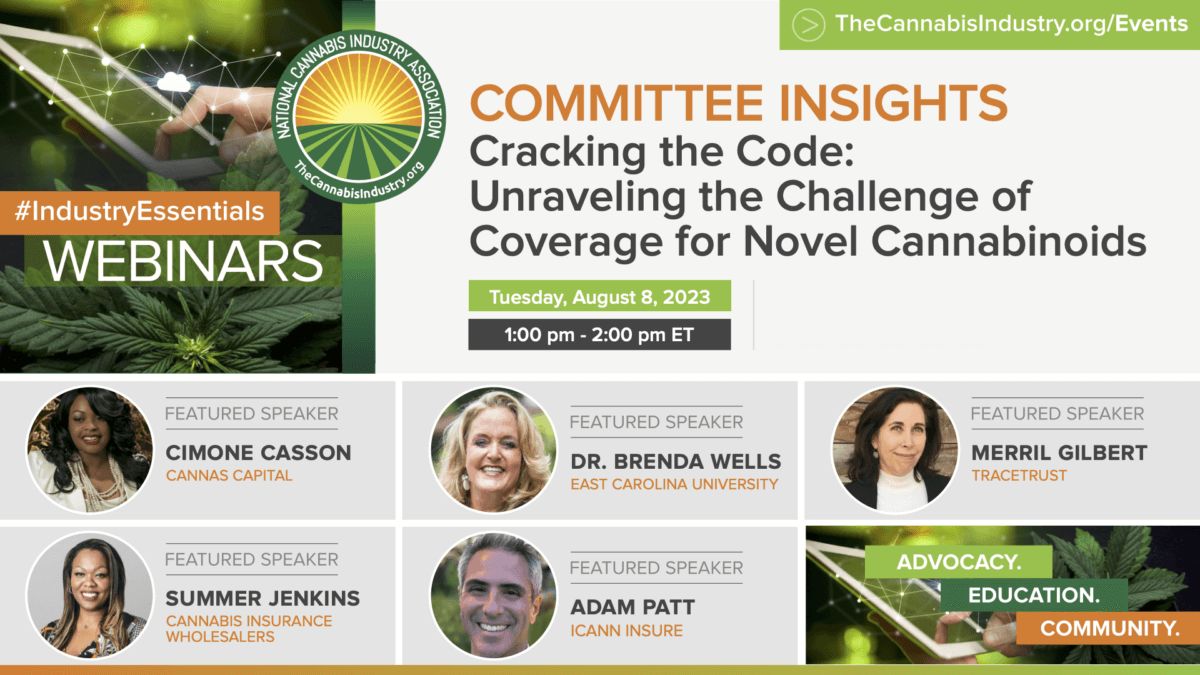
Cracking the Code – Unraveling the Challenge of Coverage for Novel Cannabinoids | 8.8.23 | Committee Insights
NCIA’s #IndustryEssentials webinar series is our premier digital educational platform featuring a variety of interactive programs allowing us to provide you timely, engaging and essential education when you need it most.
In this edition of our Committee Insights series, originally aired on August 8, NCIA’s Risk Management & Insurance Committee explored why insurance for novel cannabinoids can be such a challenging code to crack. Our discussion will help you navigate through liability and legislative loopholes, offering a clearer understanding of your exposure, while considering the patchwork of federal and state requirements.
In case you missed it, in conjunction with this session they’ve also released the third edition of their “Risk Management and Insurance Manual” specifically exploring this subject, which is available for download on NCIA’s website here: https://bit.ly/3OvGtag
You’ll leave with a better understanding of how unravel the complexities of insuring novel cannabinoids and equipped with the knowledge needed to make informed decisions regarding your insurance coverage. Whether you’re a cannabis business owner, a risk manager, an insurance professional, or anyone with an interest in this topic, this webinar will provide you with practical takeaways to safeguard your products, operations, and workforce.
Tune in as we crack the code to safeguard your products, operations and workforce!
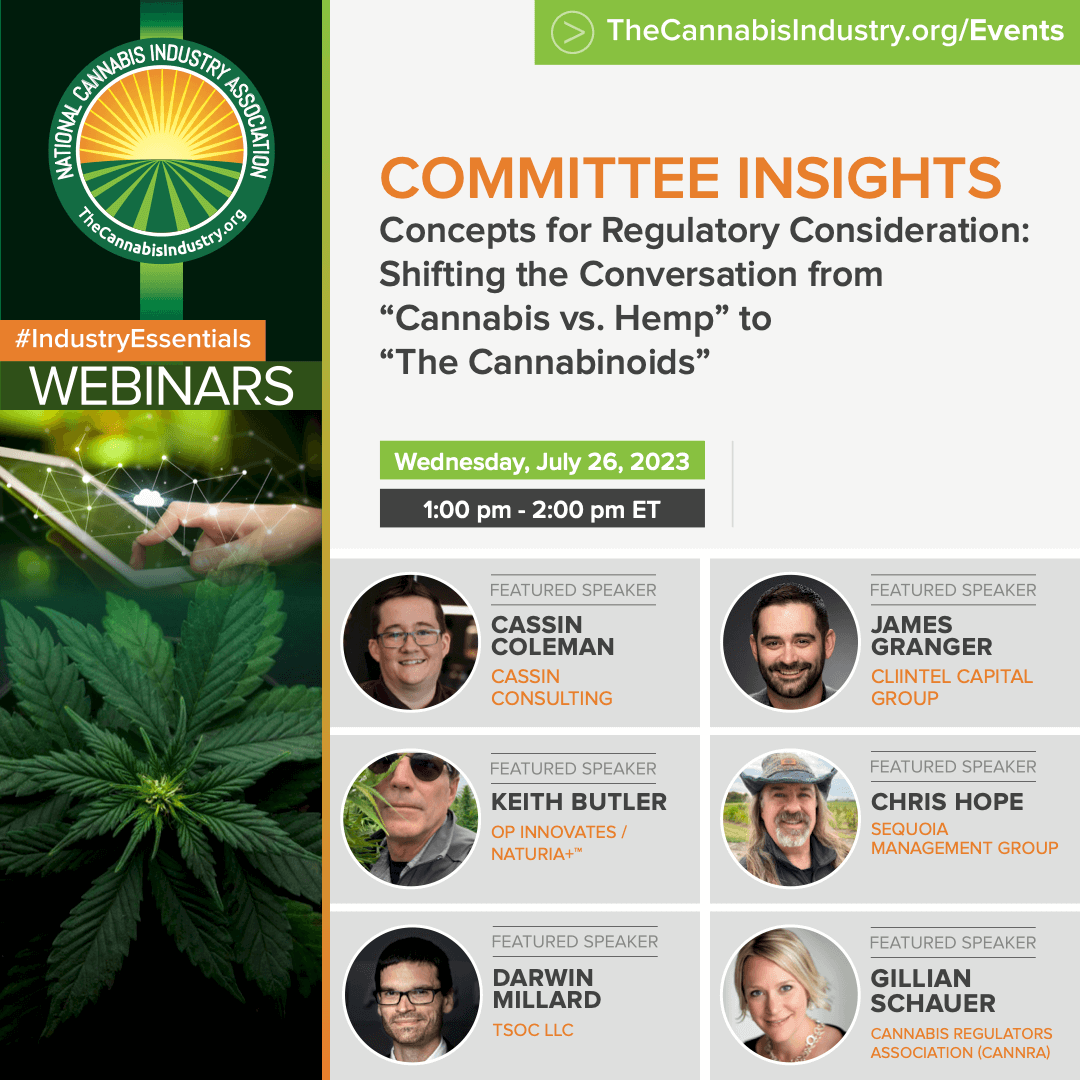
Committee Insights | 7.26.23 | Concepts for Regulatory Consideration – Shifting the Conversation from “Cannabis vs. Hemp” to “The Cannabinoids”
NCIA’s #IndustryEssentials webinar series is our premier digital educational platform featuring a variety of interactive programs allowing us to provide you timely, engaging and essential education when you need it most.
In this edition of our NCIA Committee Insights series, originally aired on July 26, we were joined by leading cannabinoid product manufacturers and Cannabis Regulators Association (representing cannabis and hemp regulators across more than 40 states and U.S. territories) to examine different approaches to regulating consumer products containing cannabinoids across the US and discuss the potential for harmonized regulations in the future.
Regulating the cannabinoids is difficult enough, but throw in the challenges associated with cannabinoids derived from marijuana or hemp and the challenges can get even more complicated. Not to mention the debate between intoxicating and non-intoxicating cannabinoids and how to address the risks to public health and safety from these different types of cannabinoids. Then you have the proverbial “cherry on top” with how to address cannabinoids, both naturally occurring and novel, being produced by genetically modified organisms and scientists in the lab. There has got to be a logical way to solve this problem.
One potential solution is shifting the conversation away from cannabis vs. hemp and toward the constituents of concern, the cannabinoids. By regulating the cannabinoids, we can focus the debate on what matters, how to regulate cannabinoid ingredients in a way that is proportional to the level of risk to public health and safety. This ensures we have both a functional and vibrant cannabinoid products market and the means to protect consumers.
Learning Objectives:
• Learn about the similarities and differences between marijuana and hemp regulations for consumer products containing cannabinoids
• Find out what a consumer product containing cannabinoids is and how this concept can be used to promote more common sense regulations
• Listen to new perspectives on the challenges facing the cannabinoid-containing consumer products space and how to more efficiently regulate this marketplace
Curious about the complex world of cannabinoid regulation? Sit back and settle in for an insightful webinar where we delve into the challenges (and solutions!) surrounding cannabinoids derived from marijuana and hemp.
Safeguarding Consumers in the Cannabinoid Product Landscape (Part III):
Know Your Hazards – Occupational Health and Safety Considerations in Cannabinoid Ingredient Manufacturing (Part IV): https://bit.ly/3rEUeKP
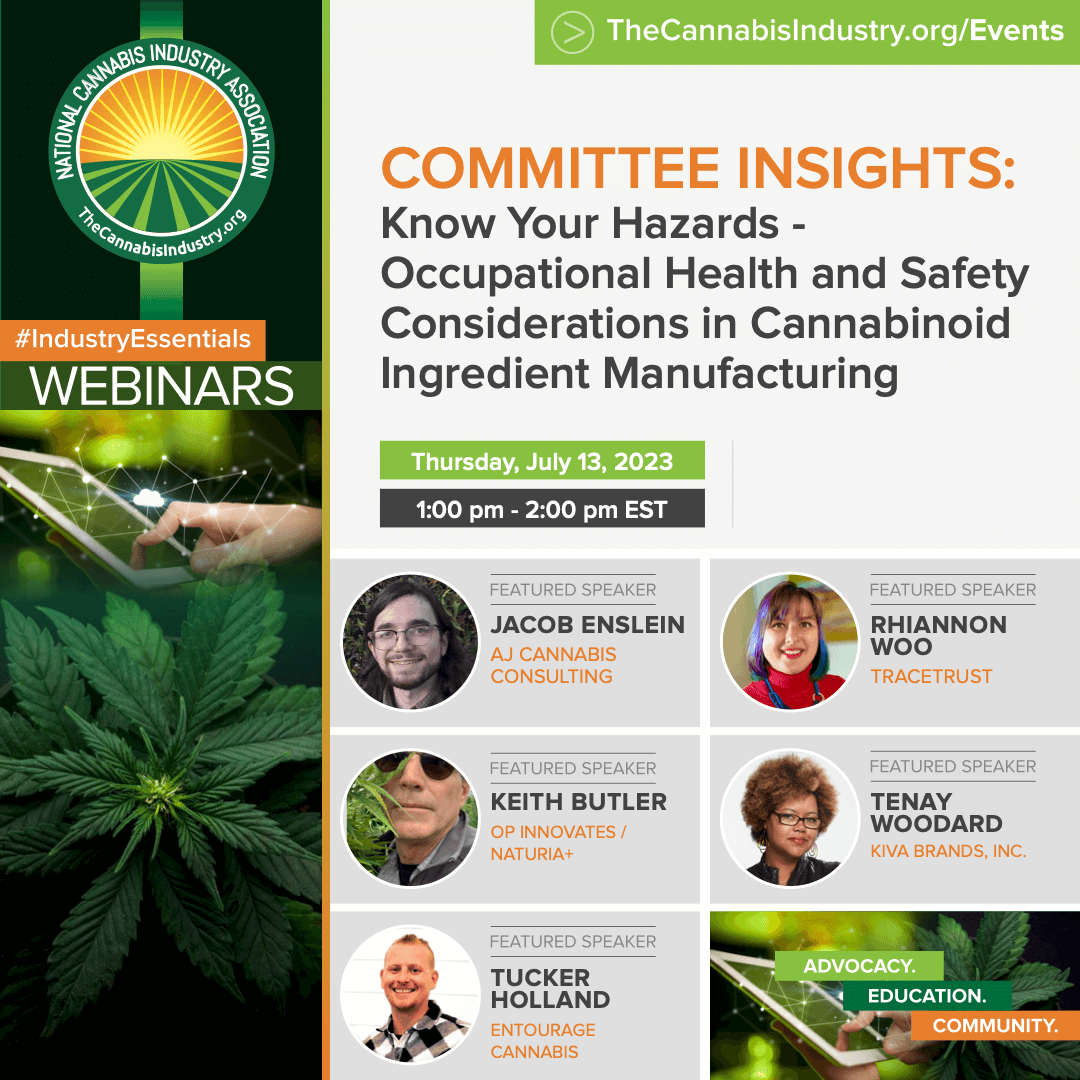
Committee Insights | 7.13.23 | Know Your Hazards – Occupational Health and Safety Considerations in Cannabinoid Ingredient Manufacturing
NCIA’s #IndustryEssentials webinar series is our premier digital educational platform featuring a variety of interactive programs allowing us to provide you timely, engaging and essential education when you need it most.
In this edition of our NCIA Committee Insights series, originally aired on July 13, we were joined by members of NCIA’s Cannabis Manufacturing, Scientific Advisory and Hemp Committees for an in-depth discussion highlighting the occupational health and safety considerations to make during the manufacture of cannabinoids and provide recommendations for mitigating risk.
There is no mistaking that manufacturing cannabinoids is here to stay. It is more and more prevalent to see historically plant/naturally derived bulk ingredients being manufactured in a controlled environment in the lab or through innovative processes like precision fermentation. It is likely that bulk ingredient manufacturing of cannabinoids will go this route too.
For cannabinoids like HHC, that do not exist naturally in the plant or in high enough quantities to be commercially viable for extraction, it is most certainly the case that manufacture of these compounds will occur in the lab. To produce these compounds safely, we can luckily look toward existing regulations and occupational health and safety guidelines for producing novel ingredients for use in foods and non-foods.
Learning Objectives:
• Recognizing common occupational safety hazards associated with manufacturing cannabinoids and recommendation to mitigate these hazards
• Learning the different occupational safety considerations between isolation and purification of naturally occurring cannabinoids and the manufacture (synthesis) of cannabinoids in the lab
• Understanding the special safety considerations that processes like hydrogenation and others have and why these are critical to mitigating liability for your business
Safeguarding Consumers in the Cannabinoid Product Landscape (Part III):
Know Your Hazards – Occupational Health and Safety Considerations in Cannabinoid Ingredient Manufacturing (Part IV): https://bit.ly/3rEUeKP
Concepts for Regulatory Consideration – Shifting the Conversation from “Cannabis vs. Hemp” to “The Cannabinoids” (Part V): https://bit.ly/3P3r5AW
Committee Insights | Safeguarding Consumers in the Cannabinoid Product Landscape
NCIA’s #IndustryEssentials webinar series is our premier digital educational platform featuring a variety of interactive programs allowing us to provide you timely, engaging and essential education when you need it most.
In this edition of our NCIA Committee Insights series, originally aired on June 13, we were joined by members of NCIA’s Cannabis Manufacturing, Scientific Advisory and Hemp Committees for an in-depth discussion of the current cannabinoid testing & labeling landscape alongside complications compounding consumer safety and product manufacturing concerns.
Consumer products that contain cannabinoids are a popular new consumer product category sweeping the United States. Whether these consumer products are manufactured using cannabinoids derived from cannabis or hemp, consumers deserve to know what they are consuming.
Truth in labeling is critical to providing cannabinoid content information to a consumer so they can make an informed purchase decision and in ensuring consumer safety. However, with so many different label content requirements from state to state for consumer products containing cannabinoids, this lack of consistency can lead to potential risks to the end consumer.
This is especially true when the majority of cannabinoid product manufacturers are dependent on third-party data during product manufacturing and compliance testing. This interdependence between testing laboratories and product manufacturers makes it all the more important that label content requirements are both achievable from a manufacturing standpoint without being overly burdensome for regulators to verify and do not endanger public health and safety.
In this webinar, our panelists explored about the current state of America’s somewhat-monitored cannabinoid-product marketplace, and examined several of the issues related to cannabinoid quantification, cannabinoid content declarations, and label claim verification and how these relate to consumer safety.
Learning Objectives:
• Learn about the potential risks associated with untested, unlabeled products both for the business owner and as a consumer
• Review the current landscape of cannabinoid testing requirements, how they vary state to state and the role 3rd party labs play in the picture
• Understand the nuances with label content compliance and implications on label claims
• Explore data integrity issues preventing consumers from making informed decisions
• Share best practices for what the the industry should do, what consumers can do and what regulators need to do
Panelists:
Paul Coble
Technology Attorney
Harris Bricken Sliwoski LLP
Matthew Johnson
Vice President, Risk Services
QuadScore Insurance Services
Safeguarding Consumers in the Cannabinoid Product Landscape (Part III): https://bit.ly/3Xc9Lx6
Know Your Hazards – Occupational Health and Safety Considerations in Cannabinoid Ingredient Manufacturing (Part IV): https://bit.ly/3rEUeKP
Concepts for Regulatory Consideration – Shifting the Conversation from “Cannabis vs. Hemp” to “The Cannabinoids” (Part V): https://bit.ly/3P3r5AW
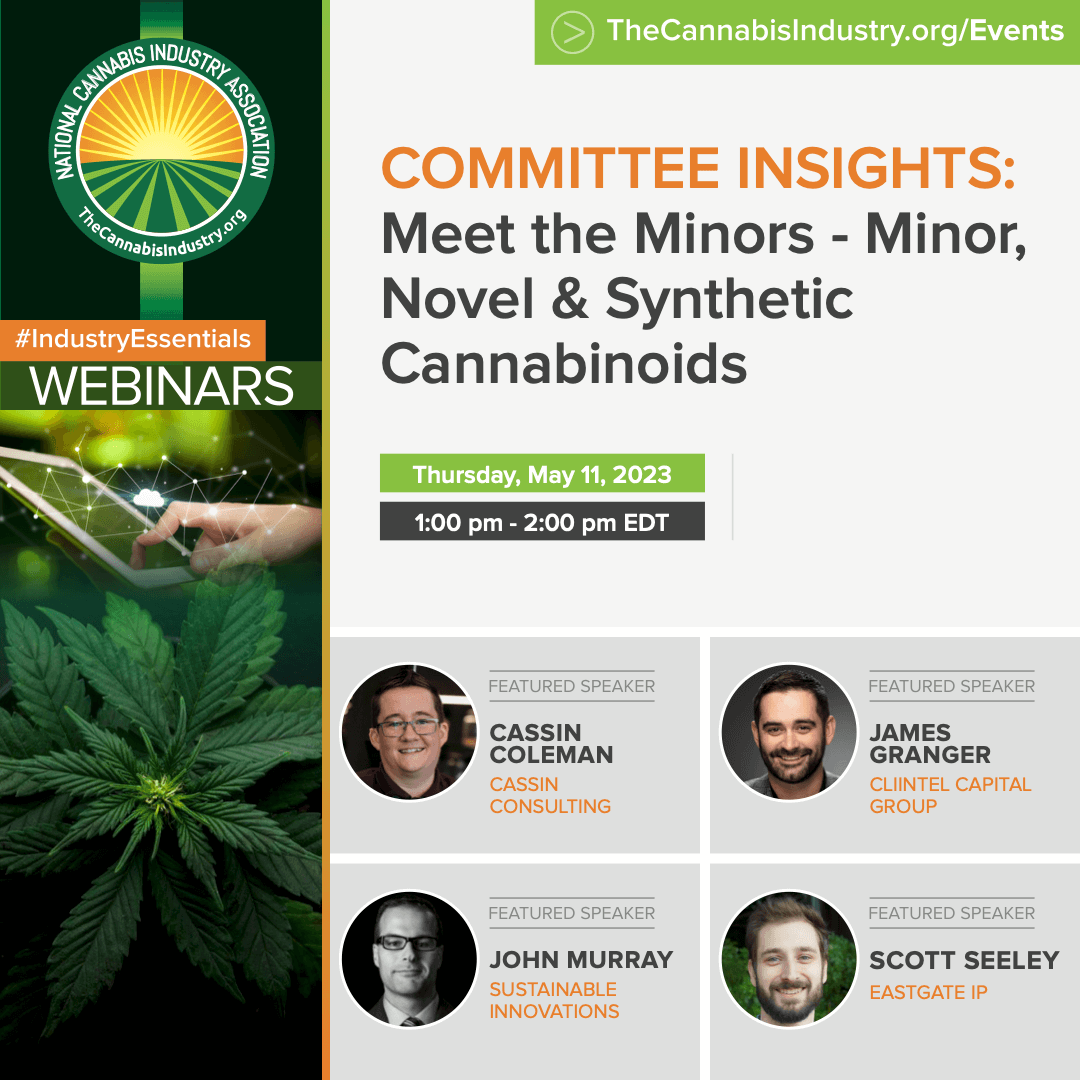
Committee Insights | Meet the Minors (Novel, Minor, Synthetic Cannabinoids – Part II)
In this edition of our NCIA Committee Insights series, originally aired on May 11, 2023, we were joined by members of NCIA’s Cannabis Manufacturing, Scientific Advisory and Hemp Committees for an in-depth discussion of the most talked about minor, novel, and synthetic cannabinoids.
What scientific publications exist for each compound? What do we know about each molecule’s physiological, psychoactive, and therapeutic effects?
You’ll find out during this informative session featuring leading chemical experts, manufacturers and product development specialists. Along with audience members they explored these compounds from various perspectives to examine their implications for consumers, medical practitioners, patients, producers and regulators.
Learning Objectives:
• Molecular Structures and Identification of novel, minor, and synthetic compounds
• Published Physiological and Psychoactive effects of these compounds
• Perceived therapeutic effects
• Opportunity to ask about other new compounds not in presentation.
NCIA’s #IndustryEssentials webinar series is our premier digital educational series featuring a variety of interactive programs allowing us to provide you timely, engaging and essential education when you need it most.
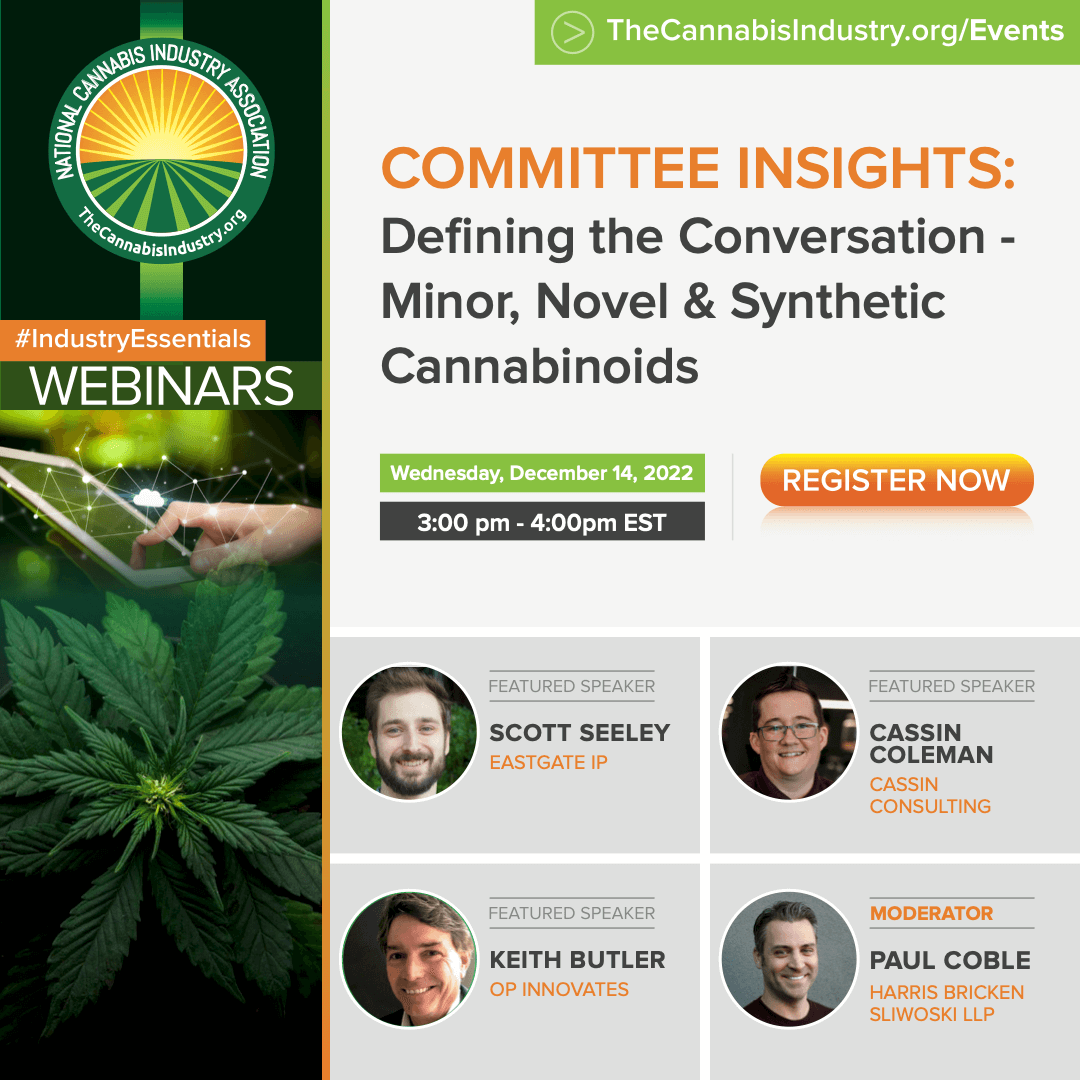
In this edition of our NCIA Committee Insights series, originally aired on December 14 and produced in collaboration by NCIA’s Cannabis Manufacturing Committee, Scientific Advisory Committee and Hemp Committee we introduced and framed the myriad regulatory, scientific, linguistic, and ethical issues that come with the rise of minor, novel, and synthetic cannabinoids.
Learning Objectives:
• Understand the role of minor, novel, and synthetic cannabinoids in the cannabis industry and the unique issues relating to their current status.
At the conclusion of the discussion our panel hosted a lengthy moderated Q&A session so our network could get all their burning questions answered by these leading manufacturing, biochemical, and legal professionals from the hemp and cannabis industries.
Panelists:
Scott Seeley
Biochemist and Patent/TM Attorney @Eastgate IP
Cassin Coleman
Founder
Cassin Consulting
Keith Butler
CEO
OP Innovates / Hemp Mellow
Paul Coble
Intellectual Property Attorney
Harris Bricken Sliwoski LLP
There is more to cannabis than THC and CBD. As our understanding (and commercialization) of cannabis evolves, new compounds like CBG, delta-8-THC, THCv, and others are coming onto the scene. These various “minor” cannabinoids, however, bring with them a host of new issues.
Over the next few months this collaboration will continue to explore these issues with various subjects ranging from basic and advanced overviews of these molecules, regulatory recommendations, risk management and compliance concerns all the way to consumer and manufacturer safety. Stay up to date and be the first to know when additional follow-up sessions are scheduled by signing up via the form below.
In our rapid advance in cannabis science through recent years with the easing of restrictions of handling and experimenting on cannabis and cannabinoids via legalization and regulation efforts across the country, we have discovered and re-discovered cannabinoids that hold potential for great advancement in cannabis chemistry and potential for many beneficial health and wellness benefits along with identifying via production methodology, the safe and cost-effective means of producing these cannabinoids themselves.
We define these new cannabinoids, different from the standard ones identified and required to be noted on regulated cannabis products (i.e. THC-A, THC, and CBD) in a number of ways, all being used in this article to define Minor/Novel cannabinoids. Minor cannabinoids are simply defined as every other cannabinoid that is found in cannabis besides THC and CBD. Science has identified over 100 outside the two standards, and more are discovered each year. Defining “Novel” cannabinoids; we look at five major classifications; Classical, Non-Classical, Hybrids, Aminoalkindoles, and Eicosanoids. Finally, we use the term “Synthetic” cannabinoids to define compounds related to cannabinoids, but not naturally found in any concentration in the cannabis plant or related plants themselves. Realistically, the term Synthetic could be replaced by Novel, Classical Synthetics, and Non-Classic Synthetic compounds. For the sake of this article, we will be defining and discussing the basics of the generalized “Minor” cannabinoid family along with touching briefly on possible “Synthetic” compounds of interest in the future.
It would be easy to dismiss all these compounds outside THC and CBD as so rarely found in the natural cannabis plant, that they would not impact the industry or growth/focus on regulatory affairs in the space for discussion. However, one thing that these compounds have been found to cause is not only true intoxication in individuals, but also potential workarounds between State and Federal law regarding restrictions around classic cannabinoids THC and CBD, which have been the main focus of lawmakers and regulators in the past. One of the most prevalent and important that has made its way into many small gas stations and head shops across the country would be a compound such as Delta-8-THC. Often described as “THC light” Delta-8 has been produced through semi-synthetic means to achieve intoxicating effects while still skirting around the laws regarding Delta-9 THC. Delta-8 is not a new compound, having been known for years in the organic chemistry field and now being produced via widely available and federally legal CBD isolate. Compounds such as “Delta-10” and others are now becoming available to market in a large way and generalized knowledge of the substance and its effects are becoming widely discussed.
Overall, the compounds themselves have years of real research behind them, showing that when produced correctly and tested for efficacy, there are real potential benefits to use in the human body for a variety of reasons or conditions. Many more years of research are to be done to learn proper testing methodology based on production methods, but overall, we are seeing many potential benefits of these compounds for human use.
The human body internally operates and relies on what is called the endocannabinoid system. The system affects the human body’s ability to heal/regenerate, regulate body temperature, and many other positive background systems in the body. Humans are built to process and use cannabinoids and the deficiencies of those can lead to imbalance in the body’s systems. One effect of cannabinoids in the human body is also that of intoxication. Scientists rely on various interacting chemistries in the body and brain to determine the concept of intoxication. There is no doubt in the argument against any intoxication, however, we tend to view intoxication through a negative light while simultaneously ingesting a cup of coffee in the morning for the intoxicating effects of caffeine. Looking at intoxication through this light, down to the way in which a cup of tea can calm, soothe, rejuvenate, or stimulate; we seek to define and examine the potential benefits of these minor cannabinoids in the human experience while studying and researching their potential uses in the future.
Taking a brief look at overall results from studies around minor cannabinoids, we find a variety of effects and use in minor cannabinoids that far outstrips the standard belief of what THC or CBD can do for the body. THC-V, for instance, that is found in higher concentrations of strains from specific parts of the world, including the south part of the continent of Africa, has been shown to work towards appetite suppression and could potentially be a lesser harmful compound in the quest for weight loss in individuals. Looking at the compound CBG, it has been shown in studies to improve focus and cognition, a very different outcome than its relative THC. THC-O has even been shown to have a greater intoxicating effect than Delta-8 or 9 due to the ability of the human body to uptake the compound more efficiently. Finally, one compound that is making waves in the field of sleep science is CBN, an oxidized molecule of CBD that could help people find non-habit-forming relief in the quest for better rest. While all of these compounds are and can be created from various forms of THC and CBD, much more research is needed (and thankfully finally becoming allowed in this country) to judge their effectiveness and side effects.
All these modifications via organic chemistry with existing cannabinoids, while yielding beneficial results in the lab and clinical research; should be examined and tested like any other regulated product being consumed by humans. One very real potential danger is not only the continued prohibition and extreme regulation of research into cannabinoids leading to clandestine production methods in markets that do not require testing (i.e., “Bathtub” Delta-8 production using strong and dirty acid compounds) but the continued chasing of new compounds outside the current regulatory structure that exists with the DEA here in America. Cannabis has been through this struggle before; with THC highly regulated and tested for in individuals in the military, probation, transportation, or heavy equipment operation; there was a desire to still feel the effects while “complying” with the strict THC ban. These compounds were developed at a rapid rate, leading to “Synthetic THC” or “Spice”-type compounds. While the legislation was aware of the issue, the methodology of banning a single compound led underground chemists here and around the world to tweak the molecular structure to have a similar effect while essentially testing their new blends on the unsuspecting masses, resulting in many injuries and developing long-lasting negative effects in individuals.
One of our biggest tools to combat another “Spice” development cycle that outpaces the research done on these compounds is to deregulate and lessen the difficulties in studying these compounds in highly regulated scientific settings (i.e., universities and scientific institutions). Following that initial change, there needs to be significant development through those institutions regarding establishing long-term studies and testing methods to examine the effects on the human body. Regarding final product testing; in the regulated market, all cannabis products sold through licensed dispensaries from licensed producers need to undergo stringent testing for potency/solvents/heavy metals contamination/microbial contamination, and other potential hazards before the product are deemed safe to sell to customers. Allowing other minor compounds, such as Delta-8-THC, to be sold to consumers via untested pathways and through unregulated channels opens the possibility of harm either through incorrect dosing or contamination via shoddy production methods or less-than-clean packaging standards. Labs need to continue to modify and develop their means to accurately test these compounds and regulators need to hold manufacturers accountable in following the health and safety testing requirements as are currently being done in the regulated cannabis markets across the country.
Not only do these compounds have a significant potential for health and human wellness but could even assist in the development of significantly cleaner production methodology for the main cannabinoids like THC, allowing for lower costs of production and for much more market competitiveness and development by lowering hurdles like highly regulated cannabis agriculture. If you do not need to spend valuable resources to grow the plant itself and the compounds can be safely produced with higher consistency, it will be a boon to manufactured products that require them for their formulations.
In no way should we shut the door on the potential future of these compounds but embrace the study and research to re-invigorate the development and growth of the use of a plant that has been part of the human consciousness for over 3,000 years. While the names sound scary and different, we are just cracking the code on the depth of this plant and what it can do after so many years in the shadows.
The Cannabis Manufacturing Committee focuses on reviewing existing business practices and state regulations of concentrates, topicals, vaporizers, and edibles, ensuring the manufacturing sector is helping shape its destiny.


Follow NCIA
Newsletter
Facebook
Twitter
LinkedIn
Instagram
News & Resource Topics
–
This Just In
How THCa Vapes Are Changing Consumer
Announcing NCIA’s 2026-2028 Board of Directors