Equity Member Spotlight: Modesto Cannabis Collective
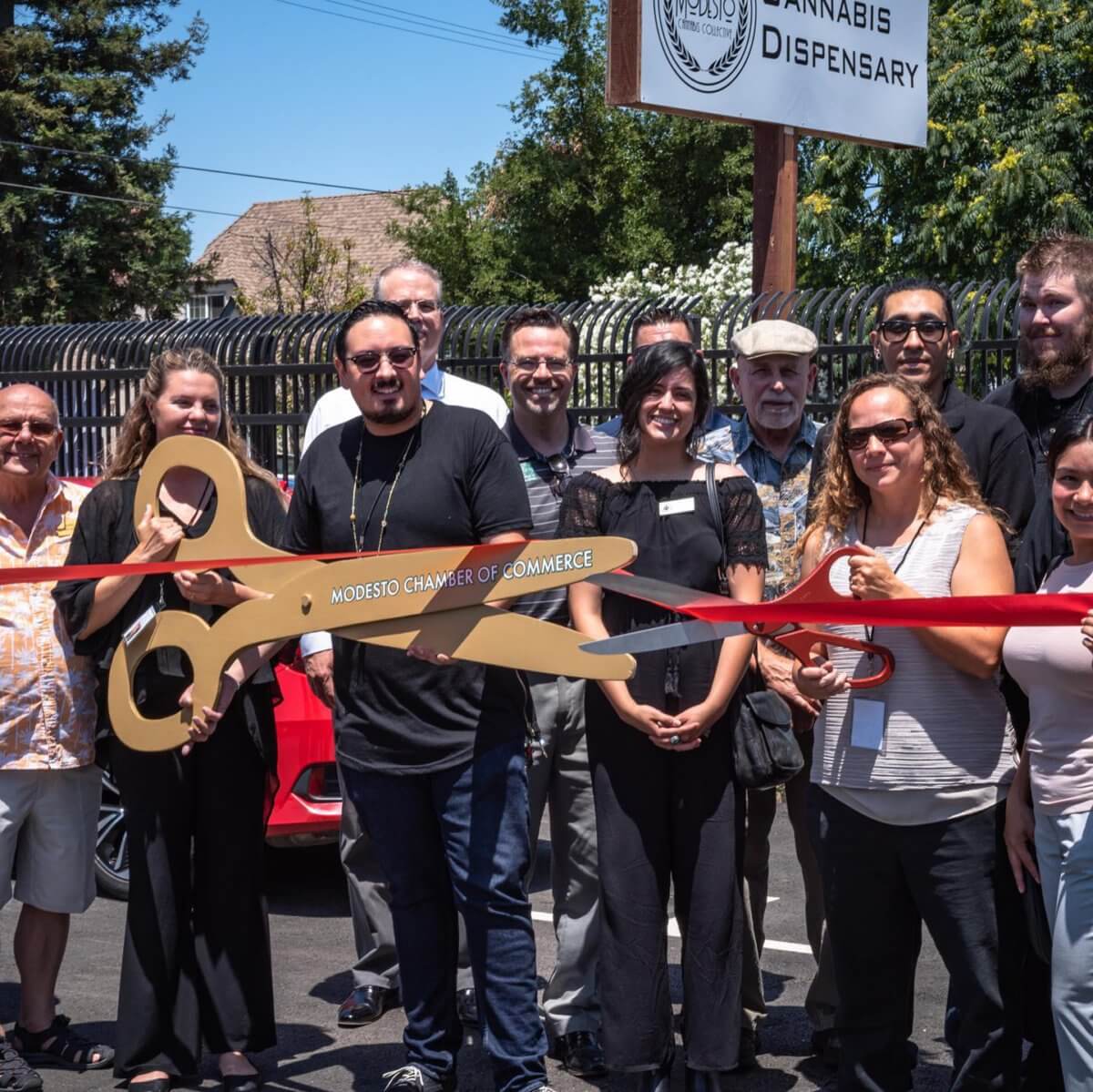
NCIA’s editorial department continues the Member Spotlight series by highlighting our Social Equity Scholarship Recipients as part of our Diversity, Equity, and Inclusion Program. Participants are gaining first-hand access to regulators in key markets to get insight on the industry, tips for raising capital, and advice on how to access and utilize data to ensure success in their businesses, along with all the other benefits available to NCIA members.
Tell us a bit about you, your background, and why you launched your company.
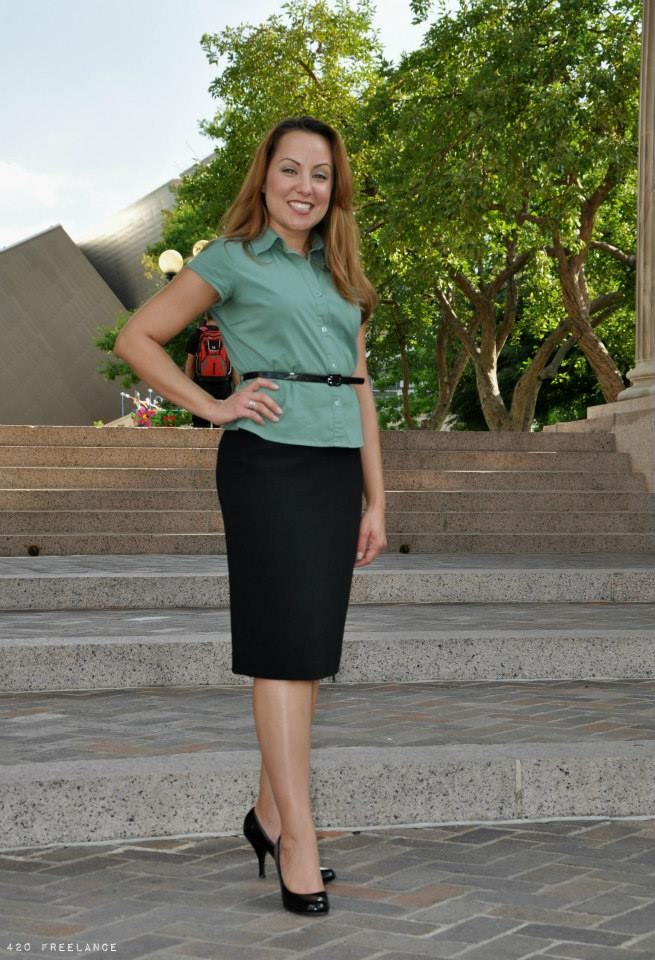
My name is Deanna Garcia with Modesto Cannabis Collective. I was born and raised in the city of Sacramento. I am a mother of five amazing humans and a loving wife. I started growing cannabis in my garage for my personal use as a patient. In 1996, I found cannabis to help me with the arthritis symptoms and pains I was experiencing. During this time I joined as many cannabis groups as possible such as NORML, Americans For Safe Access, and different collectives around Sacramento and Oakland to educate myself.
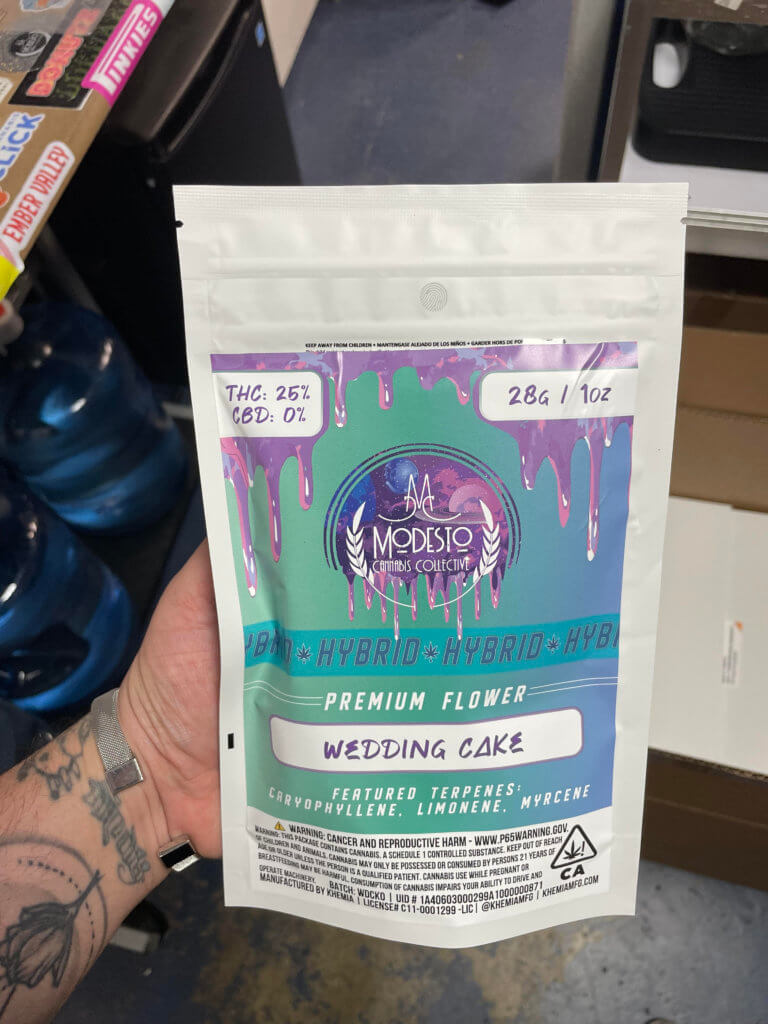
20 years later, in 2016, the city of Sacramento allowed me to register as a cannabis cultivator. I purchased a warehouse in the city of Sacramento where I would give tours to government officials and staff to help form the legislation and regulations currently being used today. I later sold my indoor grow to help fund and start Riverbank Cannabis Collective, Dixon Wellness, Modesto Cannabis Collective, Napa Cannabis Collective, Chuck’s Wellness, Tracy Cannabis Collective, Khemia Cannabis Dispensary, Khemia Manufacturing, Yolo Family Farms, and Woodland Roots Farm, along with my best friend and business partner Kimberly Cargile (NCIA Board Member). We have been tremendously blessed by God to win so many cannabis licenses across the Central Valley of California.
What unique value does your company offer to the cannabis industry?
Our companies are unique in that our board’s ownership all comes from an incubator program at A Therapeutic Alternative, a retail store in the city of Sacramento. All of the CEOs started as staff members of A Therapeutic Alternative, some working in the very first dispensaries in California prior to that. As trailblazers, we believe in locking arms and rising together making staff into owners sharing and creating generational wealth. So far we have been successful and able to help over 25 people become owners of cannabis companies and we are not finished.
What is your goal for the greater good of cannabis?
My goal is to help as many people as I can, that have been in the legacy cannabis industry become licensed cannabis business owners before it is out of reach forever. I want to keep spreading education on cannabis and its healing powers. I also seek to help bring safe access to every part of California, by attending one Board of Supervisors and or City Council meeting at a time to educate the officials and citizens.
What kind of challenges do you face in the industry and what solutions would you like to see?
For owners and operators that have been in the legacy cannabis industry and are now becoming owners of newly regulated cannabis businesses, the challenge they face is the cost. The capital is just not there to start up, or for upgrading to the new regulations. The banks will not work with the industry and we can not go to the small business administration. The cost is so much more money to become a licensed regulated cannabis business and the obstacles are extreme. We are now going up against billion-dollar companies for licenses in cities and counties across California. Before you know it, all of the California cannabis industry will be taken over by huge corporations and billionaires. We are just trying to help the ones still hanging on. I am working on the Diversity Inclusion Social Equity team with the California Cannabis Industry Association and with the city of Modesto to help form more social equity in the state. I would love to see a state equity program to include the people of every city and county. The same guideline, the same application. One state-funded and run equity program.
Why did you join NCIA? What’s the best or most important part about being a member through the Social Equity Scholarship Program?
I joined the National Cannabis Industry Association to help build reasonable responsible regulations across the United States. I enjoy the supportive community through the weekly calls with other Diversity Equity Inclusion members and appreciate the opportunity to access NCIA’s full member benefits. The best part is the overall support of NCIA’s DEI program in order to help begin to alleviate the injustices from the war on drugs by those most impacted. And of course to free a loving, caring, and healing plant from over-burdensome regulations and corporate greed.
Member Spotlight: Cannabis Consumers Coalition
In the cannabis industry, the life cycle of growers, retailers, extractors, and infused product manufacturers would not exist were it not for the consumers. As we move toward self-regulating our industry from the inside out, it’s important to consider all views and perspectives in those decision-making processes. This month, we check in with Larisa Bolivar of Cannabis Consumers Coalition to talk about the work she’s doing to protect the interests and concerns of cannabis consumers.
I have been in the cannabis industry/movement since 2001 when I moved to Colorado as a medical cannabis refugee, and I have been a cannabis consumer for 25 years. I helped to establish safe access for Colorado patients through my organization called Caregivers for Safe Access, which became the Colorado Compassion Club and the first dispensary in Colorado prior to 2009. After several years on hiatus from the front lines of the movement, and spending time consulting on policy, business and communications in the emerging industry, I saw a need for more consumer-focused advocacy and that what was missing was a consumer protection agency. Much of the conversation had been focused on the needs of the industry, and that continues to play out today. It is my mission to change that. I believe that consumers are who drive the economy.
I believe my background is perfect for the task of playing watchdog for the industry. I have worked in startup and corporate environments in multiple emerging markets, including software, dot-coms, clean tech, and cannabis. My work in clean tech and software really prepared me for working in a tightly regulated environment. The clean tech company that I worked at, GridPoint, a billion-dollar-valuated startup with successful launch and exit is a smart grid company focused on energy management in the utility space, one of the most regulated industries in our country. When working in software, I worked as a technical recruiter staffing sensitive, high-level technical contracts mostly in defense, which is also highly regulated. I understand highly regulated environments really well, and it is easy to forget the consumer when trying to jump through so many regulatory hoops. I believe that with a strong consumer voice, we will eventually have fewer regulations.
Larisa Bolivar, Executive Director of Cannabis Consumers Coalition.
How does CCC provide unique value to the cannabis industry and movement?
The mission of the Cannabis Consumers Coalition is to provide cannabis consumers with a voice in the growing cannabis industry, and to ensure consumer rights and ethical behavior on behalf of cannabis-related businesses. The biggest value we provide is giving consumers a powerful voice and helping them to realize the purchasing power they have with their dollar in helping to hold the industry accountable to operating in an ethical, consumer-centric model. We provide consumers with a powerful voice, and have been very effective in changing laws to protect consumers. This occurred recently when we obtained and released the names of pesticide violators in Colorado. We quickly made a lot of enemies, and good friends, in the industry. Some business owners have called us anti-industry, which is quite the contrary. I risked my life trailblazing medical marijuana and laying the foundation for the launch of a billion-dollar industry in Colorado. This was pre-regulation, prior to when moneyed interests got into the game and created the framework for regulations. The industry began with blazing the path to create that possibility, breaking ground for the foundation to be laid. As such, I feel personally accountable for it, along with many of my peers and supporters who were also trailblazers and pioneers.
Consumers deserve the right to know that the cannabis they are purchasing is indeed the quality that is being marketed. They also need a strong voice to fight for their rights, and that is what I myself provide, especially with my history of activism, along with the support of our legal team at Fox Rothschild LLP. An Am Law 100 law firm, they have nearly 750 attorneys spanning multiple practice areas and across multiple industries, and have a reputation for working with nonprofit organizations and community groups.
Another value we provide is in helping businesses strive to provide the best consumer experience and high quality products. Quality end products in the cannabis industry are multi-faceted, starting with how a plant is grown, how it’s positioned in the market, to the consumer experience at retail outlets. All of it is so interrelated.
Here in Colorado, the issue of public consumption is hot and there are a couple of initiatives in the works this year to address that need. Can you tell me more about that and how you’re involved in this effort?
Indeed this is probably the hottest issue Colorado. Voters voted for the right to use cannabis legally, yet there are no places to consume. This also poses issues for cannabis consumers visiting the state. There are bed and breakfasts and some hotels that allow for consumption, but there are no places to consume and socialize. There are two initiatives in consideration.
There is the Responsible Use initiative put forth by Denver NORML, which is a private club designated license that requires people to become members, bring their own cannabis and allows for permitted events. The other initiative, The Neighborhood Approved Cannabis Consumption Pilot Program Initiative, will give permission to businesses, including bars, to allow cannabis consumption. Either one will be good for consumers. One is more exclusive, and by requiring membership it keeps things manageable and accountable by limiting the amount of people who can join, it does alienate neighborhood groups and businesses. My concern with the initiative permitting businesses to allow consumption, including bars, is that tourists new to cannabis consumption and consuming alcohol, can easily over-consume the two if they are not “seasoned” cannabis consumers.
Why did you join NCIA?
We joined NCIA after careful research into industry trade groups and selected the one that was the most diverse, influential, and had an ethical and inclusive industry. It is our desire to see a successful multi-billion dollar industry built on a foundation of integrity and inclusiveness, and NCIA offers that. While we may not align with the philosophies of all members, the organization pushes integrity in all that is does, and what I like the most is that it has organized councils that are really committed to creating an exemplary foundation for the entire industry, not just its members. You can see this in their Minority Business Council, where the discussions are always industry and community focused. I also like the networking available, especially meeting other passionate cannabis business owners across the country and having dynamic and energizing conversations.
Guest Post: The Common Ground between Advocacy and Business in the Cannabis Industry
The growth of the medical marijuana movement presents a unique opportunity for advocacy groups to work hand-in-hand with the business community in order to bring about positive social change. Historically, advocates for important social reforms like the 40-hour week and safer working conditions had an understandably anti-business orientation. But when we’re talking about providing greater access to medical marijuana, such an attitude is less than helpful. In fact, it’s counter-productive. I believe if that fact were merely recognized and accepted by both medical marijuana activists and the business community, we would be much closer to establishing national acceptance than we are today.
Changing state law to allow access to medical marijuana always starts with advocacy. Most likely groups like NORML will have been agitating for years, and individual patients’ rights groups will have formed around specific issues like access for children with epilepsy or veterans with PTSD. Eventually the Marijuana Policy Project, the largest organization working solely on marijuana policy reform, will start backing the local movements by injecting capital and other resources as part of an organized push for either a statewide initiative or legislative action. Although that is an oversimplification, it paints a picture of the landscape.
Usually, once a state law has been enacted to allow for access, the advocates quiet down and business rules the day. Licensees, who are above all businesspeople thrilled at this newfound opportunity, plow full steam ahead. They raise money, build infrastructure, create jobs, and serve the community.
Although they have common interests, the link between businesspeople and advocacy groups is never formally cemented and no long-term commitments are ever made. It seems like every other big (or growing) industry understands the need for advocacy at the local and federal level. This is true across the board, not only for industries like ours which reside in a controversial space. This is reflected in the effectiveness of groups like the National Restaurant Association or the American Medical Association.
Our industry has failed to create an effective symbiosis and I lay the blame on both groups. I will start with the business element; since I am part of that contingency, I am more comfortable calling out my closest colleagues. Far too many of us fail to acknowledge that, although it may be legal to run a cannabis business in your state today, it wasn’t yesterday and it may not be tomorrow. State rules can change, and even in instances where access expands, that doesn’t mean those in the business will have a seat at the table. California is the greatest example of this. Those currently operating dispensaries in California are doing so without state licensure (as none exists). The fact that millions of dollars from the current industry participants are not pouring into advocacy and lobbying efforts to ensure California eventually does standardize licensing, and when they do, to maintain a window of opportunity for those previously operating, is mind-boggling.
All you have to do is look at the online gaming fiasco to see what could happen. Online poker sites were previously licensed offshore but doing business in the United States. When the U.S. finally accepted the reality of online gambling and allowed licensing, one of the first regulations was to ban participation by companies who had previously operated without a license. The result was the domestic closure of all the major online poker sites and a huge advertisement at the Las Vegas airport promoting real money online poker now available at WSOP.com (owned by Harrah’s). Why did this happen? Because the “big business” folks understood the link between advocacy/lobbying and business, and at the end of the day the Las Vegas casino corporations were the primary supporters of the new landscape, and of course they helped influence it being set up in their favor.
In addition to the possibility of being shut out of their current marketplaces, the cannabis business community must understand that success in their state is partially reliant on the growth of the overall marketplace and success in other states. The best thing for a licensee in Illinois is to have Missouri legalize medical cannabis. The ideal situation would be for the operators in Illinois to somehow leverage their experience in that state to access licenses in their neighboring state. The only way this has a chance of happening is for the advocacy side to be successful. For that to occur, they need money and a commitment of resources.
2013 Lobby Days, National Cannabis Industry Association, with Rep. Earl Blumenauer (D-OR)
To be fair, the advocacy groups have not done any better in forging lasting alliances. In fact, my biggest gripe with this community is their widespread distancing of their agenda from capitalism. Most, if not all, of the prominent drivers of social change on this issue have some part of their platform addressing the fact that this is about patients first. A downward spiral then ensues where, because it’s patients first, it must mean business second… or third or last or somehow altogether evil. Without successful businesses, patients will have nowhere to access the medicine that they fought so hard to get. Without successful businesses, there is no money to be poured into advocacy to open access in new states and hopefully once and for all, federally, which is the core mission of groups like the National Cannabis Industry Association (NCIA). There is absolutely no arguing this point. If that is the case, why is business so evil? It would be like a group that is fighting for family rights having part of their platform be anti-sex. Without sex you make no babies, and without successful business, patients have no cannabis.
Advocates and cannabis business owners have considerable common ground, but until they are willing to combine their efforts and wage a unified campaign, it’s going to continue to be a much harder fight than it should be.
MedMen is a medical marijuana licensing and management company with years of experience helping clients enter the field of medical marijuana, and has been a member of NCIA since August 2013.
Without a strong political machine driving legal reforms across the country, there would be no cannabis industry.
If you are a member of NCIA and would like to participate in our Annual Member Lobby Days, please visit our event page with details about the NCIA Policy Symposium and Member Lobby Days in Washington, D.C. from April 28-30, 2015.
A one-day conference focused on the latest efforts to reform state and federal marijuana laws will be held alongside NCIA’s Lobby Days, and will feature panel discussions as well as an interactive workshop teaching you how to lobby for cannabis reform. Please join us and pre-register today!
 NCIA’s editorial department continues the Member Spotlight series by highlighting our Social Equity Scholarship Recipients as part of our Diversity, Equity, and Inclusion Program. Participants are gaining first-hand access to regulators in key markets to get insight on the industry, tips for raising capital, and advice on how to access and utilize data to ensure success in their businesses, along with all the other benefits available to NCIA members.
  My name is Deanna Garcia with Modesto Cannabis Collective. I was born and raised in the city of Sacramento. I am a mother of five amazing humans and a loving wife. I started growing cannabis in my garage for my personal use as a patient. In 1996, I found cannabis to help me with the arthritis symptoms and pains I was experiencing. During this time I joined as many cannabis groups as possible such as NORML, Americans For Safe Access, and different collectives around Sacramento and Oakland to educate myself.
 For owners and operators that have been in the legacy cannabis industry and are now becoming owners of newly regulated cannabis businesses, the challenge they face is the cost. The capital is just not there to start up, or for upgrading to the new regulations. The banks will not work with the industry and we can not go to the small business administration. The cost is so much more money to become a licensed regulated cannabis business and the obstacles are extreme. We are now going up against billion-dollar companies for licenses in cities and counties across California. Before you know it, all of the California cannabis industry will be taken over by huge corporations and billionaires. We are just trying to help the ones still hanging on. I am working on the Diversity Inclusion Social Equity team with the California Cannabis Industry Association and with the city of Modesto to help form more social equity in the state. I would love to see a state equity program to include the people of every city and county. The same guideline, the same application. One state-funded and run equity program.

Follow NCIA
Newsletter
Facebook
Twitter
LinkedIn
Instagram
News & Resource Topics
–
This Just In
Member Blog: The Evolving Cannabis Legal & Regulatory Landscape in 2026
How THCa Vapes Are Changing Consumer