Member Blog: The Hidden Gem of Licensing and Endorsement Deals in Cannabis
By Dan Shapiro, Greenlane Holdings
Sitting here on July 14, 2021, the Senate Majority Leader of the United States Chuck Schumer just introduced legislation to (among other things) federally legalize cannabis. Yet, despite the Senate’s official entrance into the path to legalization, many states, businesses, and importantly here, athletes and celebrities, or “talent,” continue to behave as if legalization has already occurred. Side note – it has in many states!
Talent throughout the country have engaged in a variety of licensing and endorsement deals within the cannabis industry, ranging from Martha Stewart, Keith Haring, Bob Marley, Seth Rogan, Berner, Travis Scott, Rick Ross, “Sugar” Sean O’Malley, Jonathan Adler, to Gary Payton. A common theme among talent newly entering the space seems to be a default to the plant itself, i.e., partnering with cannabis producers to either endorse or license intellectual property (“IP”) to create cannabis strains and products. Here, I would like to first describe what licensing and endorsement deals are and then discuss a hidden gem of the cannabis licensing and endorsement space. That is, talent partnering with cannabis ancillary businesses, meaning, businesses that sell cannabis accessories and products but do NOT ‘touch the plant.’
Before I dive into a discussion of cannabis accessories, it is important to quickly outline “licensing and endorsement deals.” At a high level, a licensing deal is the process of an individual granting another party the right to use his or her name, image, and likeness, for a particular purpose, in exchange for certain consideration (payment). For example, publicly-traded cannabis accessory distributor Greenlane (NASDAQ: GNLN), where I serve as the Associate General Counsel, has remitted consideration to the owner of the artist Keith Haring’s IP, to use images of his artwork on a line of smoking accessories. A licensing deal allows an owner of IP to capitalize on its value by finding the right partner who can harness the IP in a way to create a profitable outcome. It allows an IP owner to find a partner with the production and distribution capacity and operational know-how that an IP owner likely does not possess. In a licensing deal, the end consumer is often under the impression that the end product is coming directly from the IP owner, which can add huge value to the talent’s brand; whether the talent is alive or deceased. This perception for the end consumer can be different with endorsement deals where there is usually a clear delineation between the talent and brand.
An endorsement deal is where talent is used to create awareness for a particular product or service; this can be seen in commercials, Instagram or Twitter posts, and public appearances. Unlike a pure licensing deal, an endorsement deal will commonly make it clear that the product being endorsed is not coming from the talent directly, but that he or she is merely promoting the underlying product in exchange for consideration. Nevertheless, despite the distinction, licensing deals and endorsement deals often merge into one and the same. For instance, Greenlane’s cannabis accessory house brand and retail arm Higher Standards did a licensing and endorsement deal with UFC MMA fighter “Sugar” Sean O’Malley. In this deal, Higher Standards secured a license to use Sugar Sean’s IP to create a limited-edition water pipe and promote this water pipe using his IP on all of its promotional mediums. As part of the deal, Greenlane also caused Sugar Sean to promote the Higher Standards brand on his social media platforms through a select number of posts and mentions. This is a prime example where talent and brands will often dip their toes into a deal that incorporates both a licensing and endorsement component.
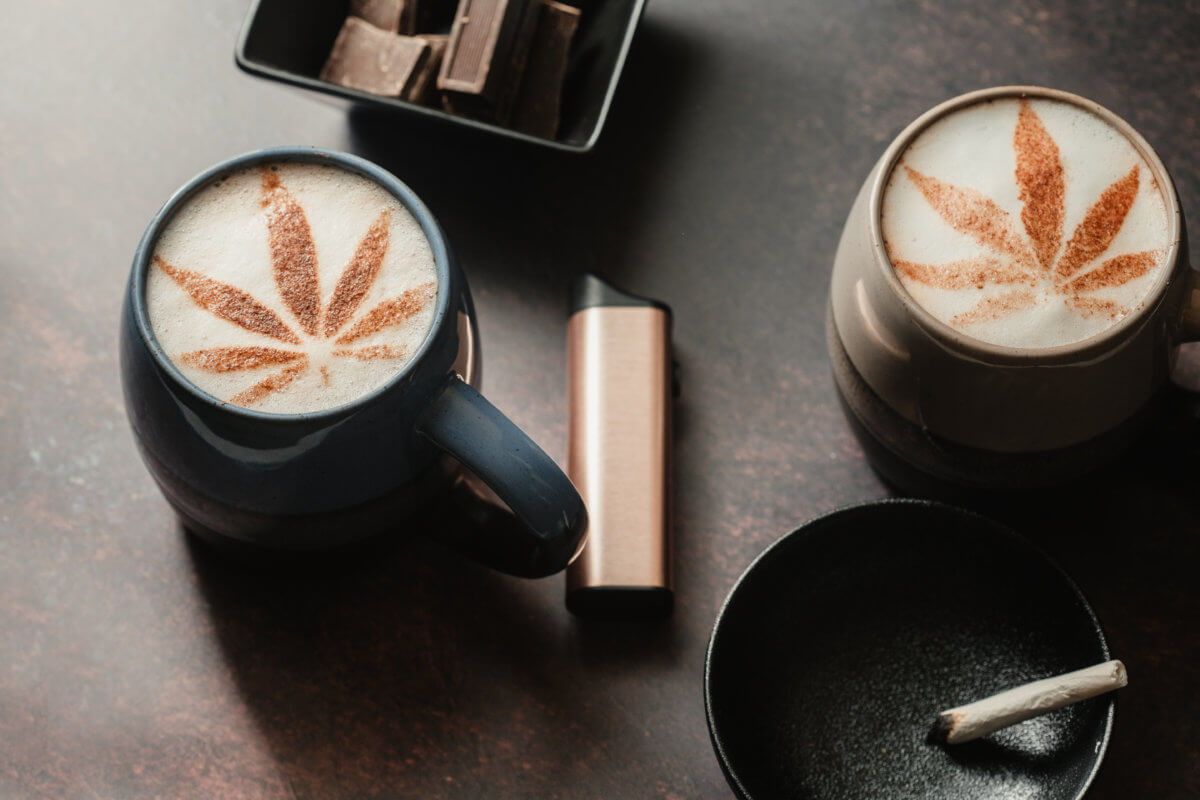
So, now that I have established what a licensing and endorsement deal looks like, I want to shift to a discussion of the benefits of working with cannabis accessories. For clarity, cannabis accessories can include rolling trays, roach clips, rolling papers, vaporizers, water pipes, jars, grinders, lighters, packaging, and in certain cases, clothing. So, why should talent focus on licensing and endorsement deals with cannabis accessories?
Cannabis accessories can allow for a unique form of creative control for talent. Talent can create a product from scratch, like an ashtray, jar, or water pipe, and have a direct impact on the structural design. Additionally, accessories can be sold in a plethora of different locations. Unlike cannabis products, accessories can be found in department stores, headshops, smoke shops, convenience stores, clothing stores, and upscale interior design boutiques. In addition to the broad array of available doors, accessories can also allow certain talent to enter the cannabis space in a way that more closely aligns with their primary non-cannabis-focused brand. A great example of this is Greenlane’s licensing deal with iconic designer Jonathan Adler. It would be impossible for Jonathan Adler to partner with a plant-touching product and still be able to sell those products in his stores throughout the world. By partnering with Greenlane, Jonathan Adler is able to enter the cannabis space while maintaining his traditional brand and his ability to sell these products in his interior design boutiques.
An additional appeal of the cannabis accessory space is timing, flexibility, and speed. While talent could quickly endorse an already developed and cultivated cannabis strain or other plant-touching product, the process could be timely. In contrast, to go back to the Sugar Sean example, Greenlane and Sugar Sean were able to move swiftly and nimbly to promote a line of water pipes for a launch in direct correlation to an upcoming fight. The deal moved quickly and highlighted the maneuverability and flexibility of working with accessories. Often, a template or mold for a product is already developed, with the talent’s unique branding and direction the last piece of the puzzle. For plant-touching products, talent may want to be a part of the cultivation process; focused on taste and effect on consumers. This process will usually take a bit more time and can present far more variables and regulatory concerns and limitations.
Ultimately, there are fascinating and innovative deals to be made for both plant-touching and non-plant-touching products, but moving forward, I believe the hidden gem of cannabis endorsement and licensing deals is with the non-plant-touching cannabis accessories.
 Dan Shapiro is the Associate General Counsel at Greenlane Holdings, Inc. (NASDAQ: GNLN), one of the largest global sellers of premium cannabis accessories and CBD products. Prior to joining Greenlane, Dan worked at CAA in the Sports Business & Legal Affairs division. Dan is the Founder and Inaugural Chair of the Cannabis Division of the American Bar Association Forum on Entertainment and Sports Industries and a member of the National Cannabis Industry Association’s States Regulations Committee. Dan is a member of the New York Bar and Authorized House Counsel in Florida, and holds a JD from Cardozo Law School where he served as the President of the Cardozo Sports Law Society, and a BA from The George Washington University.
Member Blog: Nevada and Las Vegas Cannabis Market Analysis
By Dr. Dominick Monaco, CLS Holdings
The state of Nevada has always been a unique place to do business. Not only is its economy fueled almost entirely by tourism, but its population is located almost exclusively within a few key urban centers. These factors influence nearly every type of business opportunity in Nevada – including cannabis.
While Nevada’s economic and geographic constraints are unique in themselves, the type of tourist industry found here is one of a kind. Las Vegas is famously known as “Sin City.” It is a place where people flock from around the globe to indulge their vices, such as gambling and clubbing.
As a microcosm of Nevada itself, the Nevada cannabis industry has its own set of challenges and opportunities.
Overview of the Nevada Cannabis Industry
Nevada boasts both medical and adult-use cannabis markets. The state voted to legalize medical cannabis back in 2000, although their first medical dispensary did not open until 2015. While the medical cannabis space in Nevada began with a crawl, the adult-use industry has been quite different.
Nevada voted to legalize adult-use cannabis in late 2016, with the first adult-use dispensary opening mid-2017. Nevada has both medical and recreational dispensaries, although certain stores service both customer bases.
One of the more exciting facets of the Nevada cannabis market has to do with home cultivation. Its unique program allows people 21+ years old to grow at home if they live more than 25 miles from a dispensary. Nevada put these rules in place to accommodate citizens living in rural areas who cannot access dispensaries.
Since Nevada’s legalization, cannabis has become a big business. Here are some statistics for the 2019-2020 fiscal year in the Nevada cannabis industry:
- Total Sales: $684,959,149.00
- Cannabis Taxes: $105,180,947.00
- Licensing & Application Fees: $5,212,557
Nevada sales are ahead of other new adult-use recreational markets such as Illinois and Massachusetts to put these numbers in perspective. Nevada falls short compared to more established industries such as Colorado and Washington, but it holds promise for massive growth.
What is Unique About the Las Vegas Cannabis Market?
The tourism industry in Las Vegas makes for a unique market. Adult-use market regulations coupled with the global renown of the city lead to an environment where out-of-state visitors greatly influence cannabis sales.
The structure of a cannabis market directly influences business opportunities. In medical cannabis, qualifying conditions and patient counts dictate potential market growth. Conversely, adult-use markets are only limited by people’s age.
The interesting thing about the Las Vegas market is that anyone over 21-years can legally purchase cannabis – this includes out-of-state visitors. According to the Las Vegas Conventions and Visitors Authority website, the city saw 42,523,700 visitors in 2019 alone. These people spent over $10 billion in Las Vegas that year. Within these billions of dollars in tourist money lies an excellent opportunity for adult-use operators in Nevada.
Another fact worth noting is that people flock to “Sin City” to partake in activities inaccessible in other U.S. states. Cannabis fits nicely into this package of taboo activities that can only be done in Las Vegas, NV.
Is it Hard to Open a Cannabis Business in Las Vegas?
While the tourist money in Las Vegas makes for a very intriguing adult-use market, it is not easy to acquire a cannabis business license. Unfortunately, Nevada has put a cap on the number of licenses available in the state, making it much more difficult to enter than other adult-use states like Colorado.
There are five types of business licenses in the Nevada cannabis industry:
- Cultivation Facility
- Distributor
- Product Manufacturing Facility
- Testing Facility/Laboratory
- Retail Store
It’s worth noting that both the medical and adult-use markets offer these same business licenses. Similarly, the licensing cap in the state includes both verticals.
As of early 2021, the state of Nevada awarded 132 dispensary licenses. However, these licenses did not go to 132 different operators. Certain businesses acquired multiple licenses, with some able to open as many as seven retail stores. While Nevada has issued 132 retail licenses, there are only 80 dispensaries operational at this point.
The licensing situation in Nevada is frustrating for local investors and outside interests alike. Namely, because studies show that the Nevada economy could support as many as 1,283 more dispensaries than it has issued licenses for. Aggravation mounts with a lack of expansion opportunities in the area.
The state of Nevada only accepts additional cannabis business license requests during “application periods.” These short windows are scheduled by the Nevada Cannabis Compliance Board and stay open for just ten days. However, there has not been an application opportunity since 2018, and it doesn’t appear there will be one anytime soon. As such, it appears that plant-touching opportunities in Nevada are limited to current license holders.
Where is the Most Opportunity in Nevada Cannabis?
While many believe there is ample room for new players in the Nevada cannabis market, the state does not agree at this point. As a result, if you are looking to get involved in the Nevada industry, you are well-advised to look into ancillary business models instead of plant-touching businesses.
With such promise in the Nevada market, you can rest assured that those cannabis companies that have won licenses will be extremely busy. Ancillary operators can take advantage of this climate by developing models that operate in the business-to-business (B2B) vertical. To help plant-touching companies in Nevada, both product-based and service-based ancillary businesses could prove profitable. Examples of product-based companies include business management software and cultivation technology, while service-based businesses work in marketing, staffing, and consulting.
Opening an ancillary cannabis company in Nevada gives you the ability to enter the market by circumventing the licensing process. Even more, you don’t have to worry about application fees, compliance mandates, and other stressors faced by plant-touching companies. You also have the option to operate across state and national borders if you so desire.
Summary
There is no doubt that the Nevada cannabis industry is one-of-a-kind. While there is a good deal of excitement surrounding the market, many feel it hasn’t even come close to reaching its potential. To this end, the adult-use market in Nevada was only 1.5 years old when the COVID-19 pandemic struck. The financial blow of the pandemic was cataclysmic in Las Vegas, as the tourism industry dropped to 50% below average in 2020.
With the pandemic on the downswing in 2021, there is an unmistakable air of excitement across the globe. Some economists feel that we are about to enter a new “roaring 20’s” period, where people celebrate by spending travel money that was unusable during COVID-19. With this celebratory outlook on the near feature, there is no doubt Sin City will see its share of visitors. With the casinos and hotels full again, maybe we will finally see what the Nevada cannabis market can really do.
 Dr. Monaco is the Director of Laboratory Operations for CLS Holdings’ newly opened approximately $4 million laboratory, and is responsible for all day-to-day operations inside the North Las Vegas facility. Dr. Monaco brings over 8 years of licensed & regulated cannabis experience, starting back in 2012 when medical marijuana first opened in Arizona, he has held numerous positions, with escalating responsibilities year over year. He graduated from the University of Arizona College of Pharmacy, in Tucson, Arizona, with a Doctor of Pharmacy in 2010.
Follow NCIA
Newsletter
Facebook
Twitter
LinkedIn
Instagram
News & Resource Topics
–
This Just In
Member Blog: The Evolving Cannabis Legal & Regulatory Landscape in 2026
How THCa Vapes Are Changing Consumer