Member Blog: Stellar Customer Service, Transparency, & Education Drive Cannabis Success

by Gary Paulin, VP of Sales and Client Services at Lightning Labels
With expansive product choices, it’s no longer enough to rely solely on product quality and availability. Today’s maturing cannabis marketplace requires differentiation to resonate and succeed.
Three pillars of that differentiation are stellar customer service, total transparency, and excellent education. At the core of each, sincerity and truth must predominate. In this age of “fake news,” anything that doesn’t seem trustworthy and true likely will backfire on the company sooner or later.
It only takes one unsubstantiated quality control or product claim to hit the social media lie detector, then potentially go viral. At the very least, one consumer badmouthing your company via word-of-mouth and/or digital messaging will harm your reviews and ratings. In most cases, the damage will be undetectable until it reaches a level where revenues and reputation are noticeably impacted.
Following are four basics of stellar customer service, transparency, and education:
-
Interact authentically. Scripts and canned phrases instinctively don’t resonate with most consumers. One obvious example is the “I’m so sorry you’re having a problem” response. How likely is it that the person is really sorry and not just parroting something they’ve been told to repeat time and time again? Instead, communicate in a real way by tuning into what the existing or prospective customer is trying to address.
For example, when someone complains about lengthy waits to receive live phone support (including disconnects while waiting), it’s okay to say something like, “I get it. We’ve been having challenges. Now that we’re on the phone together, let’s address your needs right away. And, please give me your phone number, just in case this call drops. I’ll call you right back.”
-
Offer multichannel communications preferences. Some people want live phone support, not a digital option. Chat bots can be extraordinarily frustrating unless the programming and ability is advanced. Ditto for “live chat.” As much as possible, make it easy and meet everyone’s preferences. Email, live phone support, texting, website knowledge center, and digital chat should all be offered to meet the customer in a way that works best.
-
Offer total and transparent education. Knowledge centers (and associated forums) and FAQs can be excellent tools to help provide priority information, but they’re only one piece of the puzzle. Consumer questions and concerns can cover anything. There should be an easy way to find more information through the above-referenced channels as needed. Product labels can provide easy access to a variety of information, starting with label content and extending to either Augmented Reality or QR digital gateways for more in-depth education. Those digital gateways should contain valuable information, along with easily found follow-up calling, emailing, live chat, and additional educational options (including possibly Knowledge Center, FAQs, and keyword-search forums/articles, et al).
“Full disclosure” should be at the core of all things educational, both in information repositories and customer service support. For example, CBD can make some people cranky and anxious. Full disclosure must override the desire to sell. By fully informing a consumer of risks as well as rewards, the experience is much more likely to result in high marks for the company.
Conversely, incomplete or inaccurate information provided by salespeople motivated only by making sales will backfire when less than optimum outcomes occur. In contrast, a salesperson willing and able to fully educate will help build long-term customer relationships with the company.
-
Hire motivated, attentive, smart people. No matter what policies and training are in place, ultimately companies need to focus on hiring the best candidates — those dedicated to top-notch customer service, truthtelling, and education. Workforce shortages are not a valid reason to abandon these core values in the name of expedient hiring. Be committed to employee wants and needs, and be prepared to follow through. Offer generous wages, but beware of those who seem overly money motivated and demanding. They likely will be gone as soon as the next “shiny toy” opportunity comes along.
There are companies that have weathered supply chain and workforce shortage issues — and even inflationary pressures — well. One that comes to mind is Costco. Unlike many retailers during the pandemic, their quality of service has remained high. Product availability and selection have been maintained. Prices, although subject to some upward movement, don’t seem to have risen as much as most retailers.
Clearly, Costco found solutions instead of blaming challenging conditions and using those as an excuse for failure. Follow this example. Find ways to do more with less, get creative about becoming more efficient, and plan ahead so that emergent problems don’t become overly taxing.
Cannabis companies that excel in being trusted, liked, and respected will outperform their competitors willing to live with mediocrity.
 Gary Paulin is VP of Sales and Client Services at Lightning Labels, a Denver-based custom label printer that uses state-of-the-art printing technology to provide affordable, full-color custom labels and custom stickers of all shapes and sizes. Contact: sales@lightninglabels.com; 800.544.6323 or 303.481.2304.
Member Blog: How Can Hemp Businesses Better Self-Regulate?
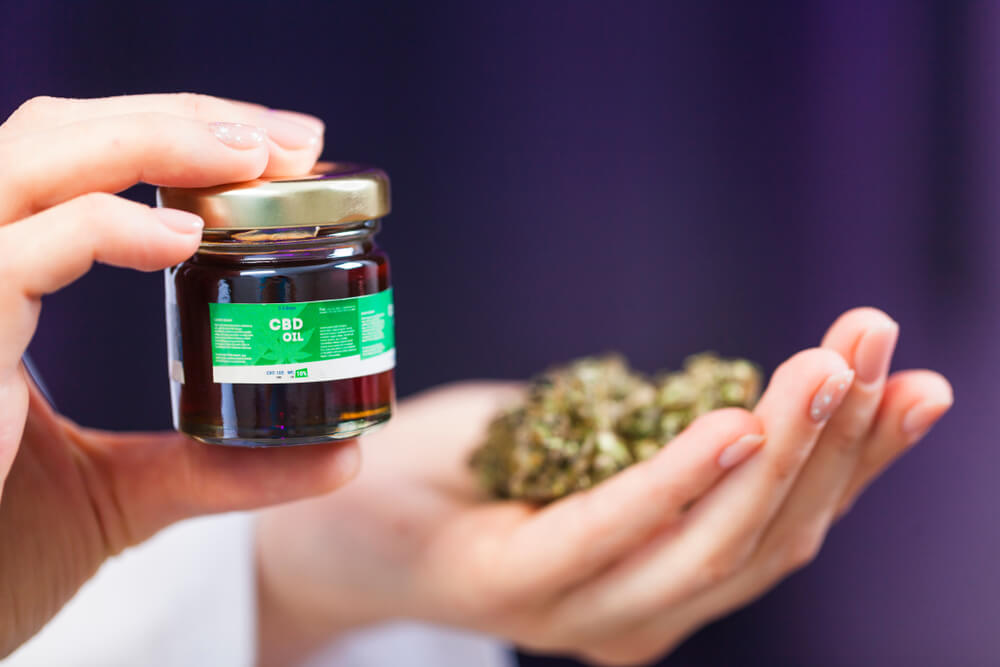
by Lee Johnson, CBD Oracle
The hemp industry is still in its early stages, especially when it comes to emerging products like delta-8 THC. While there is some regulation for hemp products, it’s much less than for legal cannabis, and this gives companies some freedom in terms of how they operate and what they do. For the most part, this is a good thing, but there is a downside too. Our report into the industry found that 76% of delta-8 THC products contained illegal quantities of delta-9 THC. This is terrible for consumers, but it also poses a risk to the industry: if you keep raising red flags, the government will eventually swoop in and take action. This is why self-regulation is a crucial concept for hemp businesses going forward.
Why Self-Regulate?
Self-regulation is crucial for hemp businesses because of the scrutiny the industry faces and to improve consumer confidence. Although CBD is generally accepted, this is especially important for companies selling something like delta-8 THC, which attracts more scrutiny because of its psychoactive nature. With states like Texas attempting bans on the substance and the findings of our report showing that the vast majority of products break legal limits for delta-9, the industry is in serious danger of attracting the attention of more lawmakers who may opt for an outright ban. In fact, there are already 18 states with some form of ban or restriction on the substance.
Jayneil Kamdar, PhD from InfiniteCAL Labs commented to us that: “The current delta-8 THC products on the market are very concerning because there is no regulatory body monitoring the safety of these products.”
In our report, we also found that companies tend to undercut customers on delta-8, that only 14% of companies perform substantial age verification checks and that two-thirds of companies don’t test their products for impurities.
It isn’t that self-regulation would be a cure-all, but if companies opt to act responsibly, it is much less likely that they will attract attention from lawmakers. In addition to this, though, self-regulation sends a strong message to consumers that you care about them and that they will get what they wanted when they buy your products. When this doesn’t happen, people will tell others about it.
The more the industry can mirror the regulations of regulated cannabis companies, the better things will go in the long run.
How Can Companies Better Self-Regulate?
However, “self-regulation” can’t just become a vague, catch-all term for generally responsible business practices: clear recommendations are essential in making this goal a reality. Luckily, our in-depth investigation of the delta-8 industry and other similar investigations into the CBD industry have revealed some key areas companies can focus on.
Provide Transparent Lab Reports with QR Codes
Lab reports are a vital part of building consumer trust, and you should ensure there is a QR code on the report so it’s easy for consumers to verify the report on the lab’s website. 90% of CBD companies already do this, based on our industry analysis.
Offer a Lab Report for Every SKU
Many companies, however, only offer a COA for the base distillate, rather than every specific type of product it produces. If you sell vape cartridges, for instance, you should have a report available for each variation in flavor, strain, and potency.
Choose Credible Labs for Your Report
Not all labs are equal. If you get a report from a questionable or unknown lab, savvy consumers will still be wary of your product, and in some cases, the results may be unreliable. It’s best to choose a lab with a strong reputation, such as ProVerde, Anresco, SC Labs, InfiniteCAL, and CannaSafe.
Test for Impurities
With two-thirds of delta-8 companies not lab testing their products for impurities, this is a good way to stand out in the marketplace as well as good practice in general.
Verify Customer’s Ages
With most CBD companies not performing robust age verification checks, using a credible age verification system such as AgeChecker is a great step towards self-regulation. They stay up to date with FDA requirements, state laws, and merchant account policies, so you can set it up and then continue basically as normal. This is especially important for delta-8, but it’s also crucial for higher-strength CBD products too.
Label Your Products Accurately
What you claim on the label should be what’s in the product. Lab reports help you verify that this is the case.
Warning and Caution Labels
Only about 55% of hemp delta-8 companies use a warning label, but this is another key part of self-regulation. Suggested verbiage includes:
- This product should be used with caution when driving motor vehicles or operating heavy machinery.
- Use this product under the guidance of a physician if you have a medical condition, are pregnant or lactating.
- Keep out of the reach of children.
- This product was manufactured from hemp material that meets federal requirements for hemp products; however, consumption may be flagged by some drug tests.
- Use with caution if subject to urinalysis.
Use Child-Proof Packaging
The CDC recently raised an alert about children accidentally consuming delta-8 products. Using child-proof packaging is an easy way to prevent this from happening.
Avoid Child-Attractive Packaging
This goes hand-in-hand with the above, but also, having your products that look like a bag of Cheetos or anything along these lines is not a good look.
Avoid Medical Claims
Although many people opt to use delta-8 and CBD for medical purposes, if you’re selling the products, making medical claims that might not meet official organizations’ standards of proof is simply a terrible idea. Leave it to your consumers to determine.
Get Industry Certifications
Getting certified by an organization like the U.S. Hemp Authority is a great way to show your customers that you’re one of the responsible companies.
Conclusion
Self-regulation really just means taking a few basic steps to establish to both customers and politicians that you’re running a legitimate business which does what it claims to and is socially responsible. It might increase costs in the short-term, but over time and especially as consumer knowledge increases, it will pay off many times over. And the next time there’s a situation like what happened recently in Texas, the industry will have a much easier time defending its practices.
 Lee Johnson is a writer at CBD Oracle who has been covering science, vaping, and cannabis for over a decade. He focuses on research-driven deep dives into topics ranging from medical uses for CBD to industry and user statistics, as well as general guides and explainers for consumers. He is a passionate advocate of both CBD and cannabis, and a strong believer in informed choice for consumers.
CBD Oracle is a consumer research company working to improve the safety and transparency of cannabis products, producing in-depth statistics on CBD and cannabis, detailed research pieces and analysis of social and legal issues.
Member Blog: Augmented Reality CBD, Cannabis Product Labels – Entertainment Paves Path to Education

by Gary Paulin, VP of Sales and Client Services at Lightning Labels
Everyone loves good, entertaining stories. In part, their value lies in information — and education — sticking with recipients long after the storytelling has ended.
There’s a correlation in this to the value of Augmented Reality (AR) CBD and cannabis labels — which provide a novel, entertaining way to capture and keep audience attention. Along the way, product-makers have an opportunity to provide credibility-enhancing education about products, trends, quality control, and the like.
More than ever, consumers want to feel their products protect them. Likewise, cannabis and CBD manufacturer reputation and revenues hinge on consumers feeling safe using their products, and clear about proper (and improper) uses.
Augmented Reality brings interaction and product labeling together, using smart device apps, and even your smart phone’s camera to create an enhanced user experience. When viewers download a related smartphone app and point it at the product’s label, they can see an array of different options including videos, 2D/3D content, social media sharing options, and content that enables seeing how products appear in the real world. A web-based interaction can be launched using your phone’s camera – just open your camera app and point it toward a QR code. In either case, the AR experience is initiated, and interacting with brand labels this way is fun, interesting, and can be extremely educational.
In many ways, it’s like hearing and seeing a story. When connected to useful, practical educational information, AR can fully address common and compelling consumer concerns at a time when fears about safety and health are at an all-time high.
In turn, this can assist manufacturers looking to gain another competitive edge when it comes to consumer awareness, preference, and sentiment. This further strengthens the labels’ role as the front door to product marketing and sales.
TrendHunter.com, dedicated to trend identification, notes that AR is gaining popularity in a variety of industries, ranging from food and beverage to cannabis. Regarding labels, the site notes: “The food and beverage industry adopts augmented reality-based labels… The use of AR in food labels is on the rise, with brands using such technology to both engage and educate their customers on the products they’re considering, or have already purchased. Such items cater to consumers’ continued interest in gamification, and add an element of interactivity that tends to be limited in product packaging.”
TrendHunter.com continues: “Though consumers tend to go online and research the details pertaining to products they purchase, the amount of information to sort through can be overwhelming. Thus, having brands do some of the work in relation to product education allows consumers the freedom to purchase in-person. With tech-integrations into labeling and packaging, this process is streamlined for consumers.”
Specifically targeting cannabis, TrendHunter.com emphasizes: “Virtual and augmented reality enters the cannabis space… The merging of augmented and virtual realities with the cannabis industry is on the rise as brands look to offer immersive experiences for connoisseurs and beginners alike. These platforms offer benefits like virtual product libraries and augmented package engagement — prioritizing both informative and creative experiences for viewers… For novice consumers, being informed about this emerging space is crucial in order to alleviate some of the apprehension they feel when they’re considering consuming a substance that was once attached with stigma and misinformation.”
Here are some hands-on, straightforward ways that AR-powered cannabis and CBD product labels can engage and educate consumers:
- Show products being manufactured, establishing quality controls, purity and other credibility-building examples along the way;
- Relate customer stories and reviews endorsing products, benefits and efficacy;
- Address claims and controversies within the industry or involving the company itself;
- Document complete tracking of products from seed to shelf, proving authenticity and quality control;
- Provide ways (and encouragement) for consumers to interact with a brand via AR;
- Offer easy social media sharing options, so that individual consumers can become brand information hubs via their networks.
 Gary Paulin is VP of Sales and Client Services at Lightning Labels, a Denver-based custom label printer that uses state-of-the-art printing technology to provide affordable, full-color custom labels and custom stickers of all shapes and sizes. Contact: sales@lightninglabels.com; 800.544.6323 or 303.481.2304.
Follow NCIA
Newsletter
Facebook
Twitter
LinkedIn
Instagram
News & Resource Topics
–
This Just In
DOJ Reschedules Medical Cannabis to Schedule III & Announces June 2026 Hearing on Broader Rescheduling
National Cannabis Industry Association (NCIA) to Convene Industry Leaders in Washington for Annual Lobby Days, Bringing Together a Unified Voice for Federal Cannabis Reform