Maximizing Cannabis Marketing ROI: Key Insights from NCIA’s Latest Webinar
In an increasingly competitive cannabis market, understanding how to measure and maximize your marketing and PR efforts is essential. Our latest Industry Essentials webinar brought together top industry experts from NCIA’s Marketing & Advertising Committee to break down effective strategies for increasing visibility, proving ROI, and aligning marketing efforts with business growth.
Key takeaways from the discussion included:
PR isn’t just about press—it’s about measurable business impact. Understanding how earned media translates to sales and brand credibility is crucial.
Data-driven marketing decisions lead to stronger ROI. Identifying the right KPIs ensures you’re focusing on what truly moves the needle.
A strong brand strategy outperforms disconnected tactics. Thoughtful, integrated campaigns create long-term success rather than short-term spikes.
Access Exclusive Resources from Our Panelists
???? Watch the full webinar on demand:Register Now
Stay ahead of industry trends and ensure your marketing efforts deliver real results. Catch the replay now and level up your strategy!
Member Blog: Where Is Delta-8 THC Legal and Where Is It Banned? CBD Oracle’s Map Has the Answers
Delta-8 THC is probably the most controversial cannabinoid on the planet right now. With the 2018 Farm Bill being widely considered to have removed the THC isomer from the federal list of controlled substances, hemp and CBD companies quickly found a use for their excess CBD isolate. But if you’re considering selling delta-8 THC,federal law is only a part of the picture, and at state level, you have a patchwork of different laws and regulatory schemes to contend with.
This is why CBD Oracle, working alongsideNeil Willner co-chair of the Cannabis Group at Royer Cooper Cohen Braunfeld, has produced astate-by-state map of delta-8 THC’s legality based on extensive reviews of state law. If you want to know what’s going on with delta-8 THC in a specific state, this is one of the best resources around to get the answer you’re looking for.
Delta-8 THC Is Legal in 22 States and 1 District With Limited Regulation
Despite the controversy surrounding delta-8 THC, it remains legal in 22 states and 1 district, with only limited regulation. This covers the following states:
Alabama*
Arizona
Arkansas
Florida*
Georgia (?)
Illinois
Indiana (?)
Kentucky*
Maine
Maryland* (?)
Missouri
Nebraska
New Jersey
New Mexico
North Carolina
Ohio
Oklahoma
Pennsylvania (?)
South Carolina (?)
Texas (?)
Washington D.C.
Wisconsin
Wyoming*
Here, a * beside the state’s name means they’ve instituted age restrictions, preventing anybody aged 21 or under from buying delta-8 THC. States marked with (?) are currently involved in legal action about the status of delta-8 THC.
In the majority of these cases, state law basically follows the blueprint laid down by the 2018 Farm Bill with few or no additional rules. In fact, only a handful of states (Alabama, Florida, Kentucky, Maryland and Wyoming) have even passed laws preventing youth from buying delta-8 THC.
Legal actions are ongoing in several states, with the situation being slightly different in each. For instance, in Maryland, thehemp industry won a temporary injunction against the state, preventing the state from enforcing the provisions of House Bill (HB) 556 which relate to hemp until the action is resolved. The bill originally made it so that delta-8 THC products (and most CBD) could only be sold in licensed marijuana dispensaries, but this was deemed by the court to create a monopoly.
Delta-8 THC Is Banned in 17 States and Severely Restricted in 7 More
For every state where delta-8 THC is de facto legal, there is another state which has either banned or severely restricted the cannabinoid. In total, CBD Oracle’s analysis shows that delta-8 THC is banned in 17 states and severely restricted in 7 more. The states with bans are:
Alaska
Colorado
Delaware
Hawaii
Idaho
Massachusetts
Mississippi
Montana
Nevada (technically could be approved for marijuana industry)
New York (isomerization banned, could theoretically be sold in adult use)
North Dakota
Oregon
Rhode Island
Utah (possible in medical industry)
Vermont
Washington
West Virginia
And there are severe restrictions – limiting all THCs to be under 0.3% for hemp products, unless otherwise noted – in the following seven states:
Iowa
Kansas
Louisiana (all THCs must be under 8 mg per serving and 1% by dry weight)
Michigan (all THCs under 0.3% and only marijuana-derived delta-8 allowed)
Minnesota (all THCs under 0.3% and less than 5 mg per serving)
New Hampshire
Virginia (2 mg serving limit or >25:1 CBD:THC ratio)
Exactly how delta-8 THC is banned or restricted varies by state. For instance, while Coloradobans the “isomerization” process used to make delta-8 from CBD, Idahobasically bansanything that contains THC at all, even if it’s just CBD with trace, federally-acceptable levels of delta-9 THC. For the restricted states, most require that all THCs total to under 0.3% by dry weight, which is technically possible for a delta-8 THC product to meet, but essentially none do.
The analysis also revealed that – just like with marijuana – making delta-8 THC illegal doesn’t automatically remove it from a community. In Hawaii and Mississippi, for instance, despite state law banning delta-8 THC, it is still openly sold.
Only Three States Have Substantial Regulations on Delta-8 THC
In California, Connecticut and Tennessee, delta-8 THC is legal but has substantial regulations in place. In California and Connecticut, delta-8 THC is treated as marijuana and is sold as part of the adult use industry. This automatically institutes a wide range of requirements on the cannabinoid, including rules on testing and labeling to ensure safety and transparency for consumers.
Tennessee is the unique case here, where delta-8 THC is regulated as a “hemp-derived cannabinoid” and is legal to sell to adults aged 21 and over.Senate Bill (SB) 378 includes requirements for testing for contaminants, informative labeling and marketing which does not target youths, as well as a 25 mg serving size limit.
The Patchwork of Laws and the Future of Delta-8 THC
The key take-away for sellers of delta-8 THC is that current state regulations are a patchwork, making it very difficult to navigate for even the most responsible of companies. The product you can sell in Arizona without issues is probably not legal in Kansas, and would require batch testing and more to be sold in Tennessee.
This uncertainty may be resolved by the upcoming 2023 Farm Bill, but even this isn’t a sure thing. While the 2018 Farm Bill opened the door to a whole host of products and simply assumed (incorrectly) that the FDA would step up to regulate finished products, the new version might offer the clarity that was lacking. However, it’s just as likely that the bill will redefine “hemp” in a way that excludes delta-8 THC by default.
Pretty much the only thing you can depend on is that you’ll need to keep a close eye on state laws in the coming year. CBD Oracle’s map will be continuously revised to reflect the current legal reality and help responsible hemp companies remain compliant. ______________________________________________________________________________________
Lee Johnson is the senior editor at CBD Oracle, and has been covering science, vaping and cannabis for over a decade. He focuses on research-driven deep dives into topics ranging from medical uses for CBD to industry and user statistics, as well as general guides and explainers for consumers.
CBD Oracle is a cannabis consumer research company working to improve the safety and transparency of cannabis and hemp products, which publishes in-depth scientific, legal and consumer analyses on cannabis and cannabinoids.
Navigating the New Normal: A Regulator’s Outlook on Federal Momentum | 10.26.23 | Policy Matters
Welcome to the second edition of our new Policy Matters series, dedicated to unraveling the intricate world of regulatory and policy dynamics within the cannabis industry. In the previous edition of Policy Matters, we had the privilege of hosting Will Tilburg from the Maryland Cannabis Administration, who shared his perspectives into the strategic aspects of designing a thriving cannabis market while meeting regulatory standards. This month, we continue our exploration into the world of cannabis policy, focusing on the potential implications of federal cannabis reform and recommended preparations for various stakeholders, including regulators, industry players, and the public.
In this #IndustryEssentials webinar series, we aim to provide Main Street cannabis operators valuable insights from regulators, industry experts, and advocates to keep you informed about the latest developments and challenges in the ever-evolving cannabis landscape. This article provides a comprehensive summary of the discussions, speaker highlights, and key takeaways from the event, continue reading and view the full recording below.
John Hudak: A Transition from Academia to Public Service
Our guest speaker for October’s edition of “Policy Matters”, John Hudak, serves as the Director of the Office of Cannabis Policy in Maine, a role he took on after serving as a senior fellow at the Brookings Institution. His background is an interesting blend of academic expertise and hands-on experience in state government and he touched on how this transition reflects his strong commitment to public service and his desire to implement real-world policies.
Hudak emphasized the challenges of engaging with industry stakeholders and regulators, even from a state perspective. He highlighted the importance of good public policy that not only benefits the cannabis industry but also safeguards the well-being of the people of Maine. His insights underscored the need for a balanced approach in crafting cannabis policies that are in the best interest of all stakeholders.
The Significance of Cannabis Rescheduling
The recent rescheduling recommendations of cannabis was discussed as great momentum in the right direction on the path to federal cannabis reform. While it wasn’t expected to lead to full descheduling, rescheduling still represents a positive step forward. This shift in classification may offer some much-needed tax relief for an industry that has faced considerable financial challenges, especially for smaller businesses.
The change in cannabis classification may also prompt a reevaluation of state-level business deductions, aligning them more closely with federal tax codes. Additionally, it was noted that the optics of President Biden initiating the rescheduling process were noteworthy, given his history on drug policy. However, it was emphasized that federal legalization should only occur when the government is well-prepared to manage the potential repercussions to avoid any undesirable outcomes.
Congressional Challenges to Federal Cannabis Reform
Michelle Rutter Friberg, NCIA’s Director of Government Relations, joined the discussion this month, shedding light on the challenges related to congressional action or inaction in the context of federal cannabis reform. She raised concerns that Congress might view its work as done if rescheduling takes place and that the historical difficulty in reaching a consensus on various issues within Congress poses a potential threat to further federal cannabis reform.
Years of congressional inaction have led to market consolidation, impacting small businesses and creating disparities within the industry. These insights highlighted the inherently political nature of the current reform process. Michelle also mentioned President Biden’s campaign promise to reform cannabis policies, which continues to influence the ongoing debate.
Balancing Politics and Cannabis Policy
Khurshid Khoja, NCIA’s Policy Co-Chair & Co-Host of Policy Matters, contributed his perspective to the discussion, recognizing that rescheduling is indeed a positive step as it acknowledges the medical uses of cannabis. He emphasized that the cannabis industry would welcome any form of tax relief that may come with rescheduling. The speakers collectively explored the fears and expectations related to rescheduling and its potential impact on the industry. They also discussed the importance of cautious regulation and research-backed medical claims while stressing the importance of protecting small businesses and ensuring they are not left behind during the reform process.
John Hudak shared further insights into the importance of collaboration between federal and state regulators with the challenges of shared jurisdiction between federal and state authorities being highlighted, particularly concerning public health and safety. Hudak emphasized the need for guidance or regulations from the Food and Drug Administration (FDA) to provide clarity for both regulators and the industry. The benefits of standardization in labeling and packaging across states were also discussed, with an emphasis on reducing burdens for small cannabis businesses.
Hudak’s approach to preparing Maine for federal legalization differs from how other states might approach it. Rather than rushing to issue new rules or guidance based on assumptions, he emphasized the importance of crafting contingency plans. Such plans would allow states to be ready for various scenarios post-federal legalization, rather than being caught flat-footed. He explained that they are considering unknown, known, and nearly guaranteed aspects of federal legalization to ensure they are well-prepared.
Hudak cited the importance of labeling standards, as these are among the regulatory aspects that are likely to be implemented. Drawing from past experiences with federal reforms, such as the Affordable Care Act and HIPAA, he illustrated the significance of state preparation and the impact it has on successful implementation.
Audience Question and Opportunities for Industry Engagement
An audience question by Tucker Holland (principal of Blooming Member Entourage Cannabis, an Oregon infused product manufacturer) raised the necessity of federal descheduling leading to federal re-regulation. The question emphasized that states already regulate their individual markets, and there was interest in exploring a pathway where federal responsibility might be pushed to the states.
In response, the speakers discussed the complexities of the issue and the need for effective collaboration between state and federal regulators. While the specifics of such collaboration remain a work in progress, the role of state regulators remains pivotal in shaping the future of cannabis regulation.
Conclusion
In conclusion, the insights shared during this Policy Matters webinar shed light on the complexities and challenges associated with federal cannabis reform. From the significance of rescheduling to the impact of taxation and market consolidation, the conversations between the panelists highlighted the need for cautious and well-informed policies. The discussions also underscored the importance of industry engagement and active participation in shaping federal regulations. This is a pivotal moment for the cannabis industry, and it is clear that industry stakeholders have a role to play in influencing the path forward.
The journey towards federal cannabis reform is an ongoing process, and it’s imperative that industry stakeholders, advocates, and regulators work together to navigate the challenges and opportunities that lie ahead. With your commitment to informed and balanced policies, we can continue to move forward, fostering an environment that benefits all members of the cannabis community. Join NCIA today to be a part of this influential movement.
Watch the Full Discussion on YouTube
If you’re eager to dive deeper into this insightful conversation, we encourage you to watch the full webinar on NCIA’s official YouTube channel. This video provides an opportunity to absorb every detail, gain a comprehensive understanding of the issues discussed, and explore the valuable insights offered by our panel of experts.
The Path Forward
As the cannabis industry continues to evolve and adapt, staying informed and engaged remains crucial. Opportunities like the NCIA’s committee applications, industry events, and educational sessions provide avenues for individuals and businesses to get involved and make their voices heard.
Last month, we had the opportunity to gain valuable insights from Will Tilburg of the Maryland Cannabis Administration, shedding light on the challenges and successes of of launching an adult-use cannabis market in record time. This month, we’ve explored the critical topic of preparing for federal cannabis reform, its potential implications for various industry stakeholders and the nuanced aspects surrounding it.
Stay tuned for future editions of Policy Matters, where we’ll continue to tackle the most pertinent issues in the cannabis industry, providing you with valuable insights and fostering dialogue on the policies that shape the future of cannabis in the United States. Your voice in the development of common sense policy matters, and together, we can make a difference.
Welcome to the National Cannabis Industry Association’s (NCIA) insightful webinar recording, “Committee Insights: Where Risk Assessment Integrity Meets Policy.” Hosted by NCIA’s Cannabis Manufacturing Committee and originally broadcast on Tuesday, October 24th, 2023, this session provided a deep dive into the complex but critical intersection of cannabis industry risk assessment and policy development. This blog post will highlight key discussions and insights from the panel, offering a condensed overview of the critical issues explored during the webinar, continue reading and view the full recording below.
Comprehensive Risk Assessment for Vape Product Manufacturers
The panelists underscored the importance of thorough risk assessments for vape product manufacturers, especially in the highly regulated cannabis and hemp sectors. The conversation centered on essential areas of concern, including the potential for fraud, liability, and the significance of ingredient selection, particularly terpenes. Material of construction and employee safety were also key factors that were addressed.
Hardware Risks and Due Diligence
The webinar uncovered the risks associated with hardware components and vendors. It shed light on the due diligence required when introducing new vape products, which includes vetting hardware suppliers and partners. Addressing concerns related to shrinkage and theft was another significant aspect of risk management. Additionally, the panel stressed the importance of setting safety guidelines based on industry standards such as ASTM.
Safety Standards and Ingredient Considerations
The discussion dived into the implications of safety standards, especially ASTM, and their role in determining acceptable safety levels within the industry. The panel emphasized the importance of ingredient considerations, particularly in preventing E-cigarette or Vaping Product Use-Associated Lung Injury (EVALI). Risk assessment for ingredients was a major focus, as it plays a critical role in product safety and integrity.
Implications of Fraud and Counterfeit Products
A crucial point discussed was the far-reaching implications of fraud, counterfeit products, and negligence within the cannabis and hemp industry. The panelists delved into the legal considerations when unknowingly selling dangerous products. They also highlighted the industry’s ongoing struggle with counterfeiting and the need for robust prevention measures to protect consumers.
Regulatory Challenges and Industry Growth
The webinar touched upon the challenges of navigating regulatory environments for both regulators and operators. The panelists emphasized the need for striking a balance between regulation and innovation to ensure the industry’s growth while maintaining product safety. The conversation also addressed the evolving landscape of marketing and advertising regulations, emphasizing the need for clear guidance in these areas.
Essential Insights from Industry Experts
Learn more about our distinguished panel of NCIA member experts including hardware & product manufacturers, toxicologists, legal professionals and regulators each of which brought their unique perspective and insights to our comprehensive exploration.
This is the third of five in a multi-part series of #IndustryEssentials webinars. You can watch Parts I & II plus register Part IV & V at the links below.
Episode I – Committee Insights: Mapping the Vape Landscape: Where are We and Where Do We Go from Here?” – [Watch Here]
Episode II – Committee Insights: Cannabis Vaping – Avoid Being an Easy Target – [Watch Here]
Episode IV: Committee Insights: Cannabis Vaping – Beyond the Pen – [Date & Time TBD]
Episode V: Committee Insights: Dabinar Special Edition – Dabbing 101 – [Date & Time TBD]
For access to our full webinar recording archive, featuring 100+ episodes from five separate recurring series, head here.
Join NCIA and Be Part of Future Speaking Opportunities
If you’re eager to share your expertise and insights with our dynamic cannabis community, we encourage you to consider becoming a member of the National Cannabis Industry Association (NCIA). Our member-led committees, such as the Cannabis Manufacturing Committee, offer numerous opportunities to participate in our webinars and events as a speaker. By joining NCIA, you’ll be well-positioned to become a part of our expert panelists in the future. Don’t miss the chance to contribute to meaningful discussions that help shape the cannabis industry.
Learn more about NCIA membership and the benefits it offers here.
Explore Sponsorship Opportunities
For those interested in sponsoring future webinars and events to reach a broad and engaged audience within the cannabis industry, we invite you to fill out our sponsorship inquiry form. Our team will be happy to provide you with more details on how you can collaborate with NCIA to promote your brand and engage with our community.
Your involvement with NCIA opens doors to a wealth of opportunities in the ever-evolving cannabis industry. We look forward to having you as part of our vibrant community!
A Valuable Resource for Industry Professionals
NCIA’s “Committee Insights” series serves as a comprehensive resource for cannabis and hemp industry professionals and this episode offers valuable insights into the critical role of risk assessment and policy development in shaping the future of cannabis operations. By exploring our full recording, you’ll gain invaluable insights and stay informed about the latest developments in the ever-evolving cannabis industry.
Stay Connected with NCIA
Thank you for being a part of our dynamic cannabis community. NCIA’s #IndustryEssentials webinar series is our premier digital educational platform, offering timely and essential insights precisely when you need them. This session is part of our Committee Insights series, produced in collaboration with our member-led committees. Sign up today to receive more industry insights and updates to stay ahead in the evolving cannabis and hemp sectors.
Cannabis Vaping – Avoid Being an Easy Target | 10.12.23 | NCIA #IndustryEssentials Webinar
In the ever-evolving cannabis industry, staying informed and educated is paramount. The National Cannabis Industry Association (NCIA) understands this need and presents its premier digital educational series, the #IndustryEssentials webinar series. The latest installment, “Committee Insights: Cannabis Vaping – Avoid Being an Easy Target” is a deep dive into the world of cannabis manufacturing risk management.
A Changing Landscape: The 2019 EVALI Outbreak
The year 2019 brought a significant shift in the cannabis vaping landscape with the EVALI outbreak. This crisis stirred up the cannabis vape industry, causing some businesses to become easy targets in the court of public opinion. The incident prompted a critical need for companies to design safer products and expand their due diligence testing during the product development phase. With vaping remaining a popular form of consumption, particularly among GenZ users, the industry found itself at a crossroads.
A Journey into Risk Management
NCIA’s second vaping webinar of 2023 addressed these challenges head-on, gathering industry experts to discuss what their companies are doing to avoid being easy targets, prevent another EVALI-like crisis, and navigate an industry in the absence of regulations. The session focused on key learning objectives, including risk assessment and due diligence protocols, best practices and manufacturing standards during product development, youth prevention strategies, and insights gained from emissions testing of vape products.
A Source of Valuable Insights
This webinar was a source of invaluable insights, covering risk management strategies that are crucial for manufacturers in the cannabis industry. It highlighted the significance of risk assessment and due diligence protocols, enabling businesses to determine consumer exposure limits. The presentation of best practices and manufacturing standards helps set industry benchmarks, ensuring product quality and safety. Addressing youth prevention strategies is essential for responsible cannabis consumption. Finally, the discussion on emissions testing of vape products provides information for creating a safer industry.
Becoming Part of the NCIA Community
If you found this webinar valuable and wish to access more educational content and networking opportunities, consider becoming a member of the National Cannabis Industry Association (NCIA). Membership opens doors to a wealth of resources and opportunities in the cannabis industry.
Sponsorship Opportunities
For businesses looking to gain visibility in educational programs and webinars like this one, NCIA offers sponsorship opportunities. Partnering with NCIA can help companies establish a presence in the industry and connect with professionals and enthusiasts.
In conclusion, NCIA’s commitment to providing timely, engaging, and essential education is evident in its #IndustryEssentials webinar series. The “Committee Insights: Cannabis Vaping – Avoid Being an Easy Target” webinar brings us closer to understanding the risks and challenges faced by manufacturers in the cannabis industry. As the industry continues to evolve, staying informed and educated is key to success.
Future Editions of this Series
This is the second of five in a multi-part series of #IndustryEssentials webinars. You can watch Parts I & III plus register Part IV & V at the links below.
Episode I – Committee Insights: Mapping the Vape Landscape: Where are We and Where Do We Go from Here?” – [Watch Here]
Episode III – Committee Insights: Where Risk Assessment Integrity Meets Policy –[Watch Here]
Episode IV: Committee Insights: Cannabis Vaping – Beyond the Pen – [Date & Time TBD]
Episode V: Committee Insights: Dabinar Special Edition – Dabbing 101 – [Date & Time TBD]
Stay tuned as more details surrounding Parts IV & V will be announced soon!
Thank you for reading, and stay tuned for more updates from NCIA, your trusted source for cannabis industry insights and knowledge.
Mapping the Vape Landscape | 10.2.23 | Committee Insights
Welcome to the recorded session of our webinar, “Mapping the Vape Landscape: Where are We and Where Do We Go from Here?” In this engaging discussion, hosted by NCIA’s Cannabis Manufacturing Committee, we dive into the dynamic world of vaping in the cannabis industry.
NCIA’s #IndustryEssentials webinar series is our premier digital educational platform, offering timely and essential insights when you need them most. This session is part of our Committee Insights series, produced in collaboration with our member-led committees.
Vaping is often hailed as the future of our industry, providing potent doses at a lower cost. However, it’s also a topic of controversy. This webinar features a distinguished panel that covers all aspects of the vaping vertical, from industry leaders to experts in hardware and safety standards. Whether you’re a retailer, brand representative, manufacturer, or a newcomer, this discussion addresses misconceptions, spotlights current trends, and prepares you for the future of vaping.
Learning Objectives:
• Explore the current categories of devices, products, and formulations.
• Discover strategies to optimize the user experience in a rapidly evolving market.
• Gain insights into the regulations shaping the vaping industry.
• Peer into the future: standards, trends, and potential game-changers.
Panelists:
Tucker Holland
Co-founder, CFO and Processing Director Entourage Cannabis
Darwin Millard
Chief Scientific Officer Final Bell
Join us in this exploration of the vape landscape and gain valuable insights from industry experts. Watch the recording to enhance your understanding of the cannabis industry’s most polarizing yet transformative segment.
—
This is the first of five in a multi-part series of #IndustryEssentials webinars. You can watch Parts II & III plus register Part IV & V at the links below.
Episode II – Committee Insights: Cannabis Vaping – Avoid Being an Easy Target – [Watch Here]
Episode III – Committee Insights: Where Risk Assessment Integrity Meets Policy –[Watch Here]
Episode IV: Committee Insights: Cannabis Vaping – Beyond the Pen – [Date & Time TBD]
Episode V: Committee Insights: Dabinar Special Edition – Dabbing 101 – [Date & Time TBD]
Stay tuned as more details surrounding Parts IV & V will be announced soon!
Unlocking Social Equity in Legal Cannabis Delivery | 9.21.23 | NCIA #IndustryEssentials Webinar
Welcome to the National Cannabis Industry Association’s (NCIA) latest webinar recording, “Committee Insights: Balancing the Scales – Social Equity in Legal Cannabis Delivery.” NCIA’s #IndustryEssentials webinar series is your gateway to timely, engaging, and essential education in the dynamic world of cannabis. In this insightful session we partnered with NCIA’s Diversity, Equity & Inclusion Committee (one of our 14 member-led committees) to explore the pressing need to address historical inequities in the legal cannabis industry.
As the cannabis industry experiences exponential growth, it’s crucial to provide a platform for individuals adversely affected by past cannabis laws. Our esteemed panel of experts shed light on the importance of social equity in cannabis delivery regulations and offered actionable solutions for a more inclusive industry.
Learning Objectives:
• Understand the historical context of cannabis-related offenses and their disproportionate impacts.
• Recognize the crucial importance of social equity provisions in cannabis regulations.
• Identify best practices for implementing social equity in cannabis delivery.
• Engage stakeholders in constructive dialogues for industry-wide change.
Our target audience for this webinar included cannabis industry professionals and regulators, entrepreneurs interested in cannabis delivery services, social justice advocates, and policymakers, as well as legal professionals.
Whether you’re an industry insider or a passionate advocate, this webinar recording is a valuable resource to deepen your understanding of social equity in the cannabis industry. Join us as we work towards creating a more equitable and inclusive future.
Member Blog: 5 Things You Need to Do Before You Launch Your Cannabusiness in New York
Cannabis was legalized in New York in 2021, and now the market is starting to fully open up for all types of cannabusinesses across the state. Despite a rocky start to rolling out new licenses, it’s almost time for the general public to dip their toes in and start their own dispensaries.
New York’s legal cannabis market is projected to be worth $4.2 billion by 2027, making it the country’s second-largest recreational cannabis state. It won’t be long before cannabis businesses have hundreds of locations across New York.
Curious about how to open a New York dispensary? Here are five things you need to do to get ready for your blossoming cannabusiness.
Conduct Market Research & Choose a Location
Since many cannabusinesses will be opening up in New York in the next few years, you need to ensure that yours is set up for success from the start. The best way to secure success is by selecting a high-demand area with minimal competition. You can identify lucrative locations by exploring different neighborhoods and conducting market research.
Visit prospective spots in person, instead of just looking at them on a map. You’ll get a much better sense of the feel of the area, the type of people walking through, the surrounding businesses, and more. And if feasible, talking to residents and local business owners will help you to really understand the market.
It is also important to be mindful of the New York zoning laws before securing a location. According to statewide zoning restrictions, a cannabis dispensary can’t be on the same road or within 500 feet of a school and 200 feet from a house of worship. Cities may have additional restrictions to limit the number of cannabis dispensaries in a certain location. Do your research before you get married to a location that won’t work out for logistical reasons.
Apply for a License
You’ll need a license to open a cannabusiness in the state of New York. However, as of October 2023, the path to applying and receiving a cannabis license in the state is a little up in the air.
When applications for the first licenses opened up, New York legislators wanted to ensure that people who were negatively impacted by the state’s previous criminalization of cannabis could apply first. This included people who were convicted of a cannabis offense in New York or were affected by a loved one’s conviction.
Now, starting on October 4, 2023, New York will start accepting license applications from a much broader pool of entrepreneurs. Applications are open to everyone over the age of 21 who does not already have three licenses. This is exciting news for many aspiring cannabusiness owners who were not eligible the first time around.
However, these licenses may not be issued as soon as prospective owners hope. When the state legalized cannabis, its goal was to award half of the retail licenses to people with previous cannabis convictions, racial minorities, women, and veterans disabled during service. Several veterans have filed a lawsuit stating that veterans were unfairly passed over for the early licenses. The judge in the case ordered that the state wait to award any new dispensary licenses until the case continues.
Opening a dispensary in New York will be expensive. While profits will likely be high once you open, you need to find a way to secure the funding needed to get your cannabusiness operational — which experts say could cost between $500,000 to $2 million.
This figure accounts for a variety of expenses for your cannabusiness, including:
Licensing and application fees
Lawyers and consultants
Real estate
Dispensary design and construction
Staffing
Business equipment
Surveillance and security system
Marketing and advertising
Products and inventory
Many cannabis entrepreneurs take out loans to cover these up-front costs, either from credit unions or cannabis-friendly banks. Some are able to partner with others or enlist investors to start their businesses. However, you should do your due diligence and research before taking on a loan or going into business with an investor. Unfortunately, there has been some predatory lending occurring in the market because of the inability to lend from large banks. Make sure that you do this research before you get too far in the process of creating your cannabusiness.
Understand Cannabis Laws & Regulations in New York
There are hundreds of laws and regulations that apply to cannabusinesses in New York. While this can feel overwhelming, it’s important to follow them carefully, especially when you’re setting up your dispensary.
There are some regulations that apply to your customers that you’ll need to adhere to, including:
Customers must be over the age of 21
Customers can only buy 3 ounces of cannabis flower per day
Customers can only buy 24 grams of cannabis concentrates per day
Others regulations apply to your business location, including:
Installing a 24-hour commercial-grade security system
Installing a perimeter alarm
Conducting video surveillance in every part of the store with cannabis products
Products cannot be visible from outside of the store
Maintaining minimum staffing levels (depends on business plan submitted with application)
Training staff on local ordinances, laws, and cannabis safety
It’s vital to take these rules seriously from the beginning. Neglecting even a single law could result in your dispensary getting shut down. You can consult an extensive overview of the New York cannabis laws and regulations here.
Invest in the Right Team
You need to hire a team of high-quality employees who will help your business succeed from the very first day. Your budtenders can make or break your entire business model, so you need to vet them carefully and train them well.
Your budtenders will be interacting directly with clients. They’ll answer their questions, suggest products, and upsell items. Hire these employees carefully, and make sure they’re happy in their positions by offering great pay and benefits.
To streamline training, create training manuals and SOPs (standard operating procedures) so that every employee is trained in the same way. This will limit mistakes and increase efficiency and customer satisfaction.
Final Thoughts on Launching Your New York Cannabusiness
Cannabis is expected to become a booming industry in New York. If you’ve always dreamed of opening a cannabusiness, now’s your chance to get in as early as possible and make your impact on the market!
HHS Recommends Rescheduling: Now What? | 9.14.23 | Fireside Chats with NCIA’s Government Relations Team
NCIA’s #IndustryEssentials webinar series is our premier digital educational platform featuring a variety of interactive programs allowing us to provide you timely, engaging and essential education when you need it most. The Fireside Chat series of NCIA’s #IndustryEssentials webinars are an opportunity for industry professionals to hear from our government relations team and guests about the latest developments in federal policy LIVE.
For more than fifty years, the federal government has maintained that cannabis is a Schedule I drug, meaning that it has a high potential for abuse and no accepted medical value.
That recently changed when the Department of Health and Human Services (HHS) recommended to the Drug Enforcement Administration (DEA) that cannabis be placed in Schedule III, meaning that it has moderate to low abuse potential, a currently accepted medical use, and a low potential for psychological dependence.
There’s no doubt this move was an historic one– but what does it mean? What’s next? How will it impact your business? Join NCIA’s Aaron Smith and Michelle Rutter Friberg as they unpack all these questions surrounding cannabis rescheduling impact and more!
America in Miniature Goes Green: Maryland’s Journey to Adult-Use Cannabis | 9.7.23 | Policy Matters
Introducing “Policy Matters” – an insightful new #IndustryEssentials webinar series dedicated to unraveling the intricate world of regulatory and policy dynamics within the cannabis industry. As the cannabis landscape continues to evolve, staying informed about the latest regulations and policies impacting Main Street cannabis operators is crucial for success. Join us for a series of engaging discussions where regional regulators, industry leaders, legal experts, and policy influencers come together with NCIA leadership to shed light on the most pressing issues facing cannabis professionals.
Are you curious about the intricacies of launching an adult-use cannabis market in record time? In the debut episode of our new Policy Matters webinar series we delved into the strategic aspects of designing a thriving cannabis market while meeting regulatory standards. In this exclusive session, NCIA Policy Co-Chairs Khurshid Khoja and Michael Cooper were joined by Will Tilburg, Director of the Maryland Cannabis Administration and President of the Cannabis Regulators Association, to explore invaluable insights into the objectives that drive cannabis regulators and the pitfalls they strive to avoid. Discover the pressing enforcement challenges that are top of mind for cannabis regulators in 2023 and gain a clear understanding of the evolving landscape.
Don’t miss this opportunity to gain an understanding of how policy matters in the fast-paced cannabis sector. Stay informed, stay ahead, and be part of the conversation that’s shaping the future of cannabis policy. Tune in today and empower yourself with the knowledge to thrive in this dynamic industry.
03:40 – Launching an Adult Use Market in 2023 | Were there lessons from the existing medical market and others around the nation that you identified as important, both success stories and pitfalls to avoid?
07:23 – Launching an Adult Use Market in 2023 | What allowed you to move so efficiently and what lessons would you highlight for industry and regulators in new markets rolling-out in the future?
12:48 – Launching an Adult Use Market in 2023 | What are some priorities you have for the months ahead?
16:55 – Launching an Adult Use Market in 2023 | What advice would you give to future regulators on building relationships within the executive branch to prioritize these issues?
22:20 – Social Equity | Can you talk about reserving the first round of adult-use cannabis licenses exclusively for social equity applicants and other recent milestones or developments working with the Office of Social Equity?
28:56 – Social Equity | How has Maryland worked to make its medical cannabis industry more equitable and ensure these goals aren’t undercut as they have been with similar licensing preferences in other states?
34:04 – Enforcement | How did the state set up its enforcement plan? How do you strike a balance in a new market between a complete absence of enforcement and protecting public health?
37:34 – Enforcement | What are some key enforcement priorities for you looking ahead?
41:40 – CANNRA | Can you talk about the Cannabis Regulators Association (CANNRA) purpose, membership, and goals?
44:39 – CANNRA | What are the priorities or goals for your tenure as CANNRA president?
47:20 – Federal Reform & Regulation | What is Maryland doing to address the hemp-derived cannabinoids issue as it relates to protecting public health and unfair competition with adult-use cannabis licensees?
52:10 – Federal Reform & Regulation | As a state regulator, how did you receive the recent HHS recommendation for rescheduling of cannabis to Schedule III?
56:34 – Federal Reform & Regulation | What is the optimal division of labor between state and federal government if cannabis is completely descheduled in the future?
Member Blog: How to Avoid the 4 Most Common Payroll Mistakes
To achieve your goals in business, your payroll system must be flawless. It is an aspect in which you must strive for perfection whenever possible. Avoiding payroll mistakes in the cannabis industry is especially crucial due to the highly regulated nature of the industry. Compliance with payroll regulations is essential to avoid legal repercussions and penalties from governing agencies. Additionally, accurate and timely payroll ensures proper compensation for employees, and maintaining precise payroll records promotes transparency and accountability, building trust with employees and stakeholders in an industry where transparency is vital.
It is better to be safe by managing your payroll as thoroughly as possible, if not you would be sorry you didn’t. Most people have most likely made these mistakes and have had minor consequences accompanying them. If these mistakes persist, the business owner often pays dearly for them. These common payroll mistakes have cost some their business.
Having Multiple Records for a Certain Payroll
It pays to have all your payroll information in a single database. This enhances security and ensures that you know where to look for your payroll information. If this has been your practice and your business uses tools like HCM software that helps you manage your employees and other business information, then this shouldn’t be much of a problem.
All you’ll have to do is use that same software to manage and process payroll information. If your business documents are disorganized, be sure to have them all in one place.
Not Updating Needed Information
Ensure that you are not complacent by relying on automated software to do everything. The system is not aware that your employee would be changing addresses therefore such info should be entered manually.
That error could lead to mistakes in filling that employee’s taxes as the bills might arrive at the wrong address. As much as simplifying a process is great, you still need to play your path in getting things done.
It would help you to set timely reminders in the system that should help you avoid the mistake of not keeping up with the latest information.
Weak Security System
Confidential information should remain so. To avoid your system being compromised, you should be using a payroll processing system with strong cybersecurity.
This has got to be the costliest mistake common to payroll processing. Every information concerning your business that is not available on your website and to your customers, is most likely not public information. Private information about your business should remain private.
Information in payroll systems is as sensitive as can be. There’s almost every piece of information you need to know about a person, and as such strict rules should apply to keeping them safe. A weak security measure means a weak business and a weak business means trouble.
Inaccurate or Delayed Tax Payments
In calculating taxes absolute precaution is required. If you are not a tax accountant you are probably not so proficient in this calculation. Your tax accountant (if your business has one) should learn how to adequately use the system to avoid delay or inaccuracy.
Bear in mind that inaccurate tax payment makes your business a tax defaulter. Your business as a taxpayer has the duty of tax calculations assigned to an accountant. Note that taxes ought to be paid within the required time bracket. The systems are programmed to make the tax payments when due.
The human capital management system does not only process payroll information but can also tell when employees qualify for federal or state tax credits.
In Conclusion
To maintain payroll accuracy and timeliness in the cannabis industry, it is crucial to avoid payroll mistakes. By opting for a third-party payroll provider like Tesseon you can benefit from our expertise and ensure that your payroll is consistently accurate and delivered on time, regardless of any industry-specific challenges. The Cannabis industry is both very young and extremely regulated, it is imperative that businesses stay vigilant and proactive to avoid costly mistakes.
Committee Insights | 7.26.23 | Concepts for Regulatory Consideration – Shifting the Conversation from “Cannabis vs. Hemp” to “The Cannabinoids”
NCIA’s #IndustryEssentials webinar series is our premier digital educational platform featuring a variety of interactive programs allowing us to provide you timely, engaging and essential education when you need it most.
In this edition of our NCIA Committee Insights series, originally aired on July 26, we were joined by leading cannabinoid product manufacturers and Cannabis Regulators Association (representing cannabis and hemp regulators across more than 40 states and U.S. territories) to examine different approaches to regulating consumer products containing cannabinoids across the US and discuss the potential for harmonized regulations in the future.
Regulating the cannabinoids is difficult enough, but throw in the challenges associated with cannabinoids derived from marijuana or hemp and the challenges can get even more complicated. Not to mention the debate between intoxicating and non-intoxicating cannabinoids and how to address the risks to public health and safety from these different types of cannabinoids. Then you have the proverbial “cherry on top” with how to address cannabinoids, both naturally occurring and novel, being produced by genetically modified organisms and scientists in the lab. There has got to be a logical way to solve this problem.
One potential solution is shifting the conversation away from cannabis vs. hemp and toward the constituents of concern, the cannabinoids. By regulating the cannabinoids, we can focus the debate on what matters, how to regulate cannabinoid ingredients in a way that is proportional to the level of risk to public health and safety. This ensures we have both a functional and vibrant cannabinoid products market and the means to protect consumers.
Learning Objectives:
• Learn about the similarities and differences between marijuana and hemp regulations for consumer products containing cannabinoids
• Find out what a consumer product containing cannabinoids is and how this concept can be used to promote more common sense regulations
• Listen to new perspectives on the challenges facing the cannabinoid-containing consumer products space and how to more efficiently regulate this marketplace
Curious about the complex world of cannabinoid regulation? Sit back and settle in for an insightful webinar where we delve into the challenges (and solutions!) surrounding cannabinoids derived from marijuana and hemp.
Safeguarding Consumers in the Cannabinoid Product Landscape (Part III):
Know Your Hazards – Occupational Health and Safety Considerations in Cannabinoid Ingredient Manufacturing (Part IV): https://bit.ly/3rEUeKP
Committee Insights | 7.13.23 | Know Your Hazards – Occupational Health and Safety Considerations in Cannabinoid Ingredient Manufacturing
NCIA’s #IndustryEssentials webinar series is our premier digital educational platform featuring a variety of interactive programs allowing us to provide you timely, engaging and essential education when you need it most.
In this edition of our NCIA Committee Insights series, originally aired on July 13, we were joined by members of NCIA’s Cannabis Manufacturing, Scientific Advisory and Hemp Committees for an in-depth discussion highlighting the occupational health and safety considerations to make during the manufacture of cannabinoids and provide recommendations for mitigating risk.
There is no mistaking that manufacturing cannabinoids is here to stay. It is more and more prevalent to see historically plant/naturally derived bulk ingredients being manufactured in a controlled environment in the lab or through innovative processes like precision fermentation. It is likely that bulk ingredient manufacturing of cannabinoids will go this route too.
For cannabinoids like HHC, that do not exist naturally in the plant or in high enough quantities to be commercially viable for extraction, it is most certainly the case that manufacture of these compounds will occur in the lab. To produce these compounds safely, we can luckily look toward existing regulations and occupational health and safety guidelines for producing novel ingredients for use in foods and non-foods.
Learning Objectives:
• Recognizing common occupational safety hazards associated with manufacturing cannabinoids and recommendation to mitigate these hazards
• Learning the different occupational safety considerations between isolation and purification of naturally occurring cannabinoids and the manufacture (synthesis) of cannabinoids in the lab
• Understanding the special safety considerations that processes like hydrogenation and others have and why these are critical to mitigating liability for your business
The cannabis industry has experienced rapid growth in recent years, with more and more states legalizing its use for medical and recreational purposes. As a result, cannabis dispensaries are becoming increasingly popular, with many people visiting them for the first time. For dispensary owners, managers, and budtenders, it’s essential to provide a positive customer experience to build brand loyalty and attract repeat business. This blog will discuss the importance of focusing on the customer experience at cannabis dispensaries and how understanding terpenes, cannabinoids, and THC percentages can improve the overall experience for both new and experienced users.
Understanding the Customer Experience
What makes a great customer experience at a cannabis dispensary? A positive experience can be characterized by:
Knowledgeable Staff:
Budtenders and other staff members should be well-trained and able to provide accurate and easily digestible information on various cannabis products, including their effects and appropriate dosages.
Welcoming Atmosphere:
Dispensaries should be clean, well-organized, and aesthetically pleasing, making customers feel comfortable and at ease during their visit.
Product Selection:
A wide variety of high-quality cannabis products should be available to cater to the diverse preferences and needs of customers.
Personalized Recommendations:
Budtenders should be able to make personalized recommendations based on the customer’s preferences, desired effects, and level of experience with cannabis.
Terpenes, Cannabinoids, and THC: Key Components of Cannabis
To provide an exceptional customer experience, it’s essential for dispensary staff to understand the key components of cannabis, including terpenes, cannabinoids, and THC percentages. These components play a significant role in the overall effects of cannabis and can help staff make tailored recommendations for customers.
Terpenes:
Terpenes are aromatic compounds found in many plants, including cannabis. They give each strain its unique aroma and taste, and they can also have therapeutic effects. There are over 100 different terpenes in cannabis, with some of the most common ones being myrcene, limonene, and pinene. Understanding the terpene profile of a specific strain can help staff recommend products based on the desired flavor and aroma, as well as the potential therapeutic benefits.
Cannabinoids:
Cannabinoids are the chemical compounds found in cannabis that interact with the body’s endocannabinoid system, producing various effects. Many Cannabis products advertise “full-spectrum” CBD, meaning that the product not only contains CBD, but can also contain the other cannabinoids as well as terpenes, essential oils, and up to 0.3% THC. There are over 100 different cannabinoids in cannabis, with THC (tetrahydrocannabinol) and CBD (cannabidiol) being the most well-known. THC is responsible for the psychoactive effects of cannabis, while CBD has various therapeutic effects without causing a “high.” Dispensary staff should be familiar with the different cannabinoids and their effects to help customers choose products based on their desired experience.
THC Percentages:
The THC percentage of a cannabis product indicates the concentration of THC, which largely determines the psychoactive effects of the product. Generally, higher THC percentages lead to more potent effects. However, it’s important to note that the overall effects of a cannabis product are influenced by other factors, such as the terpene profile and the presence of other cannabinoids. Dispensary staff should be able to explain the significance of THC percentages and guide customers in selecting products with appropriate potency levels.
Educating Customers and Tailoring Recommendations
Dispensary staff should prioritize educating customers about terpenes, cannabinoids, and THC percentages to help them make informed decisions about their purchases. By understanding these components, customers can better tailor their cannabis experience to their preferences and needs.
For example, a customer looking for a relaxing experience may be interested in a strain high in myrcene, a terpene known for its sedative and relaxing effects. In contrast, someone seeking a more uplifting and energizing experience might prefer a strain with a higher concentration of limonene, which is associated with elevated mood and increased energy. Additionally, customers with little to no experience with cannabis may prefer strains with lower THC percentages to avoid overwhelming psychoactive effects.
When assisting customers, dispensary staff should ask about their preferences, desired effects, and experience level with cannabis. Based on this information, they can recommend strains and products that align with the customer’s goals while considering the terpene profile, cannabinoid content, and THC percentage. This personalized approach can help customers feel more confident in their purchases and lead to a more satisfying experience.
For HR Professionals: Training and Development
To ensure that dispensary staff can effectively educate customers and provide tailored recommendations, it’s crucial for HR professionals to invest in comprehensive training and development programs. Training should cover a wide range of topics, including:
Cannabis Fundamentals:
Staff should have a solid understanding of cannabis basics, such as the differences between indica, sativa, and hybrid strains, and the various forms of cannabis product, methods of ingestion and their varying timing of effects (e.g., flower, edibles, concentrates, tinctures, and topicals, vaping, eating, and drinking).
Terpenes, Cannabinoids, and THC:
As discussed earlier, staff should be well-versed in the role of terpenes, cannabinoids, and THC percentages in determining the effects of cannabis products.
Customer Service Skills:
Staff should be trained in effective communication, active listening, and empathy to better understand and serve their customers.
Compliance and Regulations:
Dispensary staff should be knowledgeable about state and local regulations regarding cannabis sales, as well as safety protocols and best practices for handling cannabis products.
By providing thorough training and development opportunities, HR professionals can ensure that dispensary staff are equipped to deliver an exceptional customer experience.
The Role of Technology in Enhancing the Customer Experience
As the cannabis industry continues to grow and evolve, technology is playing an increasingly important role in enhancing the customer experience at dispensaries. In this section, we’ll explore several innovative technologies and tools that can help dispensary owners, managers, and staff provide an even better experience for their customers.
Point-of-Sale (POS) Systems:
Modern POS systems designed specifically for cannabis dispensaries can streamline the sales process and improve the customer experience. These systems can track customer preferences, manage inventory, calculate taxes, and ensure compliance with state and local regulations. By investing in a robust POS system, dispensaries can provide a more efficient and personalized service for their customers.
Digital Menus:
Instead of relying on printed menus that can quickly become outdated, dispensaries can use digital menus to display their product offerings. These menus can be easily updated to reflect current inventory, and they can also include detailed information about each product, such as terpene profiles, cannabinoid content, and THC percentages. By providing customers with easy access to this information, digital menus can help them make more informed decisions about their purchases.
Online Resources and Mobile Apps:
Dispensaries can enhance the customer experience by offering online resources and mobile apps that provide valuable information and tools related to cannabis consumption. For example, they can develop educational content about terpenes, cannabinoids, and THC percentages or create interactive tools that help customers determine their ideal dosage based on their preferences and experience level. By providing customers with access to these resources, dispensaries can support them in their cannabis journey and help them make more informed decisions.
Customer Engagement and Community Building
Another crucial aspect of providing an exceptional customer experience at cannabis dispensaries is fostering a sense of community and engagement among customers.
Events:
Hosting events such as product launches, tastings, and guest speaker sessions can provide customers with an opportunity to learn more about cannabis, sample new products, and connect with other like-minded individuals. These events can also help establish a dispensary as a trusted source of information and a hub for the local cannabis community.
Educational Workshops:
Dispensaries can offer workshops that focus on various aspects of cannabis, such as understanding terpenes, cannabinoids, and THC percentages, cooking with cannabis, or cultivating cannabis at home. These workshops can help customers gain a deeper understanding of cannabis and its various uses, ultimately improving their overall experience.
Social Media:
Actively engaging with customers on social media platforms can help dispensaries stay connected with their audience, provide real-time updates on products and promotions, and gather valuable feedback. Dispensaries can also use social media to share educational content, answer customer questions, and participate in industry-related conversations.
Loyalty Programs:
Dispensaries can implement loyalty programs that reward customers for their repeat business, encouraging them to return and further engage with the dispensary. Loyalty programs can include discounts, exclusive promotions, or early access to new products, and can be an effective way to strengthen the customer-dispensary relationship.
Focusing on the customer experience at cannabis dispensaries is crucial for building brand loyalty, attracting repeat business, and maintaining a competitive edge in the growing cannabis industry. Dispensary owners, managers, and budtenders must prioritize educating customers about terpenes, cannabinoids, and THC percentages to help them make informed decisions and tailor their cannabis experience to their preferences and needs. HR professionals play a key role in ensuring that staff receive comprehensive training and development, enabling them to provide exceptional service and create a positive customer experience. By investing in the customer experience, dispensaries can set themselves apart and thrive in the competitive cannabis market.
Committee Insights | Safeguarding Consumers in the Cannabinoid Product Landscape
NCIA’s #IndustryEssentials webinar series is our premier digital educational platform featuring a variety of interactive programs allowing us to provide you timely, engaging and essential education when you need it most.
In this edition of our NCIA Committee Insights series, originally aired on June 13, we were joined by members of NCIA’s Cannabis Manufacturing, Scientific Advisory and Hemp Committees for an in-depth discussion of the current cannabinoid testing & labeling landscape alongside complications compounding consumer safety and product manufacturing concerns.
Consumer products that contain cannabinoids are a popular new consumer product category sweeping the United States. Whether these consumer products are manufactured using cannabinoids derived from cannabis or hemp, consumers deserve to know what they are consuming.
Truth in labeling is critical to providing cannabinoid content information to a consumer so they can make an informed purchase decision and in ensuring consumer safety. However, with so many different label content requirements from state to state for consumer products containing cannabinoids, this lack of consistency can lead to potential risks to the end consumer.
This is especially true when the majority of cannabinoid product manufacturers are dependent on third-party data during product manufacturing and compliance testing. This interdependence between testing laboratories and product manufacturers makes it all the more important that label content requirements are both achievable from a manufacturing standpoint without being overly burdensome for regulators to verify and do not endanger public health and safety.
In this webinar, our panelists explored about the current state of America’s somewhat-monitored cannabinoid-product marketplace, and examined several of the issues related to cannabinoid quantification, cannabinoid content declarations, and label claim verification and how these relate to consumer safety.
Learning Objectives:
• Learn about the potential risks associated with untested, unlabeled products both for the business owner and as a consumer
• Review the current landscape of cannabinoid testing requirements, how they vary state to state and the role 3rd party labs play in the picture
• Understand the nuances with label content compliance and implications on label claims
• Explore data integrity issues preventing consumers from making informed decisions
• Share best practices for what the the industry should do, what consumers can do and what regulators need to do
Panelists:
Paul Coble
Technology Attorney
Harris Bricken Sliwoski LLP
Matthew Johnson
Vice President, Risk Services
QuadScore Insurance Services
Safeguarding Consumers in the Cannabinoid Product Landscape (Part III): https://bit.ly/3Xc9Lx6
Know Your Hazards – Occupational Health and Safety Considerations in Cannabinoid Ingredient Manufacturing (Part IV): https://bit.ly/3rEUeKP
Concepts for Regulatory Consideration – Shifting the Conversation from “Cannabis vs. Hemp” to “The Cannabinoids” (Part V): https://bit.ly/3P3r5AW
Committee Insights | Meet the Minors (Novel, Minor, Synthetic Cannabinoids – Part II)
In this edition of our NCIA Committee Insights series, originally aired on May 11, 2023, we were joined by members of NCIA’s Cannabis Manufacturing, Scientific Advisory and Hemp Committees for an in-depth discussion of the most talked about minor, novel, and synthetic cannabinoids.
What scientific publications exist for each compound? What do we know about each molecule’s physiological, psychoactive, and therapeutic effects?
You’ll find out during this informative session featuring leading chemical experts, manufacturers and product development specialists. Along with audience members they explored these compounds from various perspectives to examine their implications for consumers, medical practitioners, patients, producers and regulators.
Learning Objectives:
• Molecular Structures and Identification of novel, minor, and synthetic compounds
• Published Physiological and Psychoactive effects of these compounds
• Perceived therapeutic effects
• Opportunity to ask about other new compounds not in presentation.
Safeguarding Consumers in the Cannabinoid Product Landscape (Part III):
Know Your Hazards – Occupational Health and Safety Considerations in Cannabinoid Ingredient Manufacturing (Part IV): https://bit.ly/3rEUeKP
Concepts for Regulatory Consideration – Shifting the Conversation from “Cannabis vs. Hemp” to “The Cannabinoids” (Part V): https://bit.ly/3P3r5AW
NCIA Best of 420 CLIO Cannabis Award Returns for 2023
The cannabis industry’s most accessible award program returns in 2023. A coveted award by brands and creatives alike, NCIA Best of 420 Award sets the standard for top creative work highlighting this important holiday and the biggest day in cannabis.
When launched in 2021, the NCIA Best of 420 Awards was a digital event for NCIA members highlighting each brands marketing efforts in a very challenging year. In 2022, the Best of 420 Awards partnered with the prestigious Clio Cannabis Awards – live in Las Vegas. What a thrill to showcase the NCIA Best of 420 winners alongside the industry’s most prestigious creative work.
For the cannabis community, by the cannabis community, the award program, wholly conceived and executed by the NCIA’s Marketing and Advertising Committee volunteers, is a labor of love that celebrates the most impactful 420 marketing work in the industry.
seen at Clio Cannabis Awards at Thursday, Sept. 29, 2022, in Las Vegas. (Photo by David Becker/Invision for Clio Cannabis Awards/AP Images)
“The Clio Cannabis Awards presentation during MJ Unpacked was a 2022 highlight for Claybourne Co., it made the sweet success of our 420 campaign even more special. The award brought the internal team together, made our external partnerships stronger, and created free awareness! It’s a great cannabis industry event, and we’re proud to be a recipient.” said Jonathan Griffith, VP of Marketing for Claybourne Co.
Any brand with a 2023 420 campaign is eligible, so now is a great time to start planning for success! Entries will be judged on the following criteria:
Community Impact: How did your campaign bring your community together? How did it highlight the best of the cannabis community to others? Did it support an advocacy campaign such as DEI, or sustainability?
Creativity: How creative was your overall 420 campaign?
Results: Was it an effective campaign for your own goals and KPIs?
It’s never too early to start planning your 420 campaign! Stay tuned for more information about how to enter the NCIA Best of 420 Award program!
—-
Cannabis Community Marketers – as you form your Best of 420 Campaigns, the NCIA Marketing & Advertising Committee provides these: 10 Tips for Winning Campaigns.
Tip #1: Build campaigns with end goals and metrics in mind. What gets measured gets done. Be ready to report on metrics for your submissions even before you start your campaign.
Tip#2: Be authentic and personable. The most successful cannabis brands show their authenticity and personality. Campaigns celebrating the audience /community as much as they do the brand tend to resonate best!
Tip #3: Collaborate and be creative. Campaigns are great opportunities to collaborate within or outside the cannabis community and gain exposure in each other’s networks.
Tip #4: Think beyond the campaign date. You can start a campaign anytime they can be tied to the 4/20 event, before or after.
Tip #5: Apply a 360-degree approach. Where possible and where budget allows, include as many channels and assets as possible for the best ROI and impact.
Tip #6: Engage your community. Great cannabis brands are constantly looking forat ways to engage in deep, lasting relationships with their communities.
Tip #7: Success at all budgets. A campaign does not have to have a big budget, and often the best campaigns are executed on smaller budgets. Focus on 1-2 applications of your campaigns that are better for your KPIs.
Tip #8: Tap into customer passions. Don’t be myopic and see this as an opportunity to tap into the full range of your customers’ interests and what is meaningful to them. This is about relationship building, and you want to see the customer’s lifetime value improve year after year.
Tip #9: Remember those regulations. A reminder that it is not just the general cannabis federal and state regulations but also the marketing and communications regulations in states and across the country that provide guidelines. Be creative within the legal boundaries.
NCIA’s #IndustryEssentials webinar series is our premier digital educational series featuring a variety of interactive programs allowing us to provide you timely, engaging and essential education when you need it most.
In this edition of our NCIA Committee Insights series, originally aired on December 14 and produced in collaboration by NCIA’s Cannabis Manufacturing Committee, Scientific Advisory Committee and Hemp Committee we introduced and framed the myriad regulatory, scientific, linguistic, and ethical issues that come with the rise of minor, novel, and synthetic cannabinoids.
Learning Objectives:
• Understand the role of minor, novel, and synthetic cannabinoids in the cannabis industry and the unique issues relating to their current status.
At the conclusion of the discussion our panel hosted a lengthy moderated Q&A session so our network could get all their burning questions answered by these leading manufacturing, biochemical, and legal professionals from the hemp and cannabis industries.
Panelists:
Scott Seeley
Biochemist and Patent/TM Attorney @Eastgate IP
Cassin Coleman
Founder
Cassin Consulting
Keith Butler
CEO
OP Innovates / Hemp Mellow
Paul Coble
Intellectual Property Attorney
Harris Bricken Sliwoski LLP
There is more to cannabis than THC and CBD. As our understanding (and commercialization) of cannabis evolves, new compounds like CBG, delta-8-THC, THCv, and others are coming onto the scene. These various “minor” cannabinoids, however, bring with them a host of new issues.
Over the next few months this collaboration will continue to explore these issues with various subjects ranging from basic and advanced overviews of these molecules, regulatory recommendations, risk management and compliance concerns all the way to consumer and manufacturer safety. Stay up to date and be the first to know when additional follow-up sessions are scheduled by signing up via the form below.
From Lab to Label: Safeguarding Consumers in the Cannabinoid Product Landscape (Part III): https://bit.ly/3Xc9Lx6
Know Your Hazards – Occupational Health and Safety Considerations in Cannabinoid Ingredient Manufacturing (Part IV): https://bit.ly/3rEUeKP
Concepts for Regulatory Consideration – Shifting the Conversation from “Cannabis vs. Hemp” to “The Cannabinoids” (Part V): https://bit.ly/3P3r5AW
Committee Insights | 11.29 | The Pathway to Greater Equity in New York’s Adult Use Cannabis Market
In this edition of our NCIA Committee Insights series, originally aired on November 29 and produced NCIA’s Diversity, Equity & Inclusion Committee, we held a lively discussion to present the official recommendations jointly submitted to the New York Office of Cannabis Management in Fall 2022.
Since early 2022, NCIA and our DEI Committee has been conducting an ongoing roundtable discussion consisting of multiple national and New York based cannabis social equity and industry organizations to assess and provide feedback regarding rules and regulations. We also covered the PIES Program, which is an innovative program that draws on the lessons learned from other states to create a streamlined solution with true DEI front and center.We also covered the PIES Program, which is an innovative program that draws on the lessons learned from other states to create a streamlined solution with true DEI front and center.
Learning Objectives:
• Learn about NCIA’s New York Social Equity Roundtable, a collaboration of multiple National and New York based cannabis social equity and industry organizations
• Gain insights into how New York is rolling out its Adult Use Cannabis market with regards to Social Equity and Justice Involved individuals
• Understand how our recommendations would impact New York’s market if implemented, and Identify opportunities for organizations and the state agency to work collaboratively
Panelists:
Frederika McClary Easley
Director of Strategic Initiatives
The People’s Ecosystem
Scheril Murray Powell, Esq.
Chief Operating Officer
The JUSTÜS Foundation
Maur Stringer
Founder, Owner, CEO
The Magi Tree LLC
Cynthia L. Mompoint
Black and Brown Economic Power in Cannabis
Adrian Adams, Ed.D.
CEO
Ontogen Botanicals
Mike Lomuto (Moderator)
Diversity, Equity, and Inclusion Manager
National Cannabis Industry Association
Sponsored By:
Committee Insights | Setting the Stage: Minor, Novel, and Synthetic Cannabinoids
There is more to cannabis than THC and CBD. As our understanding (and commercialization) of cannabis evolves, new compounds like CBG, delta-8-THC, THCv, and others are coming onto the scene. These various “minor” cannabinoids, however, bring with them a host of new issues.
NCIA’s Cannabis Manufacturing Committee, Scientific Advisory Committee and Hemp Committee are all collaborating on a series of #IndustryEssentials webinars over the next few months which will explore these issues with various subjects ranging from basic and advanced overviews of these molecules, regulatory recommendations, risk management and compliance concerns all the way to consumer and manufacturer safety.
To kick off this series we’re showcasing an initial session taking place on Wednesday, December, 14th at 3PM ET / 12PM PT introducing and framing the myriad regulatory, scientific, linguistic, and ethical issues that come with the rise of minor, novel, and synthetic cannabinoids.
But before we get started … Acquire the foundational knowledge needed to dive deep into this session by watching this introductory video on Minor, Novel and Synthetic Cannabinoids.
During this brief 15-minute presentation our panelists Scott Seeley of Eastgate IP and James Granger of Clear Cannabis Inc, both members of NCIA’s Cannabis Manufacturing Committee, will walk you through the categories of compounds, outside of the commonly known big two – THC and CBD, and explain what is known about these compounds along with what the industry can do to move forward to provide safe products to consumers.
Member Blog: Trends in Cannabis Technology – Data Mining And Compliance
Cannabis businesses are looking for the best practices to enhance operations, with a primary focus on optimization and growth. So whether you are in the cultivation, production, manufacturing, or selling and marketing section of the cannabis industry, you need technology to steer your business into the future.
The cannabis industry is still growing, albeit faster than anticipated, with an increasing demand for products that continue propelling innovation. Data is driving this innovation because it’s the differentiating factor for long-term success and sustainability.
Today, cannabis is a $25 billion business in the U.S. In fact, the 2022 Leafly Jobs Report found the legal cannabis industry supports 428,059 right now, a 33% increase over the 280 new jobs created per day, on average, last year.
We know all of this because of data, and it’s a critical decision-making factor in this industry. Without access to real-time information, cannabis companies can’t know where to invest or improve to remain competitive and compliant.
Here are the top 4 data and technology trends transforming the cannabis industry to keep in mind.
Laws and Regulations Software
Cannabis compliance is one of the most challenging yet vital factors to consider in the cannabis industry. Government mandates demand that cannabis companies provide cultivation, production, shipping, and sales information to help monitor the entire distribution process.
This makes sense because lack of transparency in other industries has caused several crises, likethe vaping crisis or theromaine lettuce E.coli outbreak of 2019. But collecting, tracking, and monitoring data is challenging for businesses, so is understanding the government regulations and ramifications.
With the emergence of cloud-based cannabis software, cannabis companies remain updated with these tight data restrictions. This software collects the appropriate data and analyzes business operations by checking the right boxes to ensure compliance.
With these industry-specific software solutions, cannabis businesses can establish and implement a standard of operations that comply with cannabis regulations. As an added benefit, these solutions offer convenient avenues for cannabis employees and business owners alike to understand the rules and regulations of the industry. Some also provide security against potential threats like cybersecurity threats.
Artificial Intelligence (AI) and Machine Learning (ML)
Cannabis plants usually require significant attention and fixed schedules because of their temperamental nature. As such, AI and ML are taking effect in the cannabis industry. Machine learning gathers data and provides suggestions on what farmers can change in the growing process.
The detail in machine learning makes it possible to collect, monitor, and track the growing cycle every hour, meaning cannabis farms use machine learning to improve these plants’ growing environment significantly.
For instance, farmers are using agricultural sensors to manipulate the growing environment to suit the needs of the cannabis plants. This is achieved by connecting the environment to growing systems with humidity sensors and controls, thermostats, and temperature controls.
These sensors ensure that cannabis is continually growing in optimal conditions. As such, the products cultivated continue to be of high quality.
Also, the machine learning sensors and tracking IDs make it easier to track cannabis products from seed to sale.
Artificial intelligence then automates these processes to make the entire growing experience easy for cannabis farmers. For instance, AI helps to automatically control the humidity levels as per the settings given by the farm moderator.
AI also automatically changes the light in the growing room since it affects the temperature needed for the plants to grow optimally. This continued innovation and adoption of AI and machine learning in the cannabis industry will lead to increased crop production and reduced manual labor.
Hybrid Cloud-Based Storage
Video data is a significant investment in the cannabis industry right now. Some government regulations outline the need for cannabis companies to have immediate access to video surveillance footage and on-demand. This need is driving the demand for storage spaces for the video footage.
While many cannabis businesses store data on-site, it is unpredictable and expensive. This is where hybrid cloud-based storage technology comes in. The technology is enough to hold video data until it is needed, like in the case of a cyberattack and the subsequent investigation.
It also gives cannabis businesses the choice to store data on-site and in the cloud. This enhances the flexibility, accessibility, and security of business files. Cloud platforms also make it easier to access business information from any location.
Blockchain Technology
Traditionally, the cannabis industry is a cash transaction industry, especially in dispensaries where the majority of the cannabis sales take place. Additionally, many cannabis businesses find it challenging to work with banks since most aren’t legally allowed to work with companies in the industry.
There is also the matter of making secure payments and tracking transactions successfully. In a word, the cannabis industry is adopting blockchain technology for cryptocurrency payments and transaction tracking.
Blockchain is secure, and it has processes that make it easy to track and monitor transactions. But because using blockchain as an alternative to traditional payments methods is a relatively new trend, there is still the challenge of getting cannabis companies to agree on solutions that can standardize the trend.
In conclusion
Every business industry is now leveraging data by defining connections between the different data points and gathering actionable insights on processes. As such, you can optimize, strategize, plan, report, and identify problems using business data.
You can also better understand the consumer using data insights like your consumer consumption preferences. As such, data is crucial for determining where to invest, improve, and remain competitive and compliant in the cannabis industry.
FAQs
What is the future of the cannabis industry?
The future of the cannabis industry is very bright… The cannabis industry is expected to grow by about 20 to 30 percent every year to a value of $50 billion by 2026.
How is technology influencing the cannabis industry?
Technology is propelling the growth of the cannabis industry quickly. Cannabis businesses use innovation and technology to identify downtime in workflows, streamline processes, and identify opportunities for success and growth.
What is the role of data in cannabis manufacturing?
Data is critical for improving all the cannabis processes from seed to sale. Decisions driven by data significantly improve the quality of the cannabis operations from cultivation through to marketing, sales, and customer satisfaction. As such, data is now an integral part of cannabis manufacturing.
Joshua Gilstrap is the Marketing Manager for e2b teknologies, in addition to his marketing responsibilities Joshua leads business development for e2b teknologies emerging Canna Suite product line. A business graduate with a focus in marketing from Miami University in Oxford, Ohio, he joined the e2b team in the Fall of 2019. Josh brought with him a wide array of business and practical experience in planning and execution. Since coming aboard he has led multiple project’s including website hosting and theme standardization company wide, marketing automation streamlining the efficiency of the customer journey, and sales automation where he is changing the conversation from promotion to education, from pitching to catching, and from push to pull in order to keep up with the shifting tides of a digital transformation.
U.S. Cannabis Business Conditions Survey Report Reveals Critical Concerns for the Cannabis Industry in 2022
by Beau Whitney, NCIA’s Chief Economist
As the largest national trade association of the cannabis industry, NCIA works to advocate for and advance the interests of hundreds of member businesses. The recent publication of the Whitney Economics U.S. Cannabis Business Conditions Survey Report offers a granular look at how respondents are feeling, and what they are worried about.
Survey description
There were a total of 396 respondents to the Whitney Economics U.S. Cannabis Business Conditions Survey. Respondents were either licensed cannabis businesses or ancillary businesses to the cannabis industry, and were from 20 states across the country. According to the report, the objective of the survey was to “establish a baseline of data, and identify the successes and the challenges that operators in the industry are facing.”
The survey examined policy, regulatory issues, industry successes, and overall industry sentiment using questions around demographics, questions intended to definitively answer a specific question, and questions with the opportunity to offer multiple responses or comments. We are pleased that NCIA members participated in the survey. Because this survey is intended to be conducted on a quarterly basis moving forward, we expect that a growing number of the NCIA membership will want to participate.
Key Takeaways From the Survey
Only 42% of respondents are turning a profit. Further, in terms of profitability, female respondents and non-white respondents are faring much worse than white, male respondents.
While 58% of businesses overall are not making a profit (either breaking even or losing money), 62.5% of female-run businesses are not turning a profit and 67.8% of BIPOC businesses are not turning a profit.
Lack of banking, market volatility, and state & federal taxation are the key issues facing cannabis operators.
72% of respondents stated that access to banking and other financial services was the top issue facing them.
Smaller operators are struggling by being pulled in two different directions. On one side is the competition from the illicit market that competes for the same customers as the smaller operators and the other side is the ever presence of big businesses looking to consolidate the market.
Taxation is an issue that impacts all businesses regardless of size. Cannabis operators run the risk of being taxed out of business. State policymakers are focused on state issues without considering the impact of federal policy and federal policymakers are not considering the state policy. This lack of a unified tax policy is creating strain on business operators.
The concerns of the industry are weighing heavier on the minds of operators than are the successes, and this is impacting industry sentiment.
Business owners are quite proud of their accomplishments over the past year, from increasing opportunities for women and minorities, to doing more for their workers and educating an ever-increasing clientele.
Despite this success though, cannabis operators’ concerns far outweigh their feeling of success and this is impacting the overall sentiment.
The word cloud on the successes tells a compelling story.
We are very excited that we have now established a baseline of new data that reflects operator sentiment and business conditions. This can help support the narratives with data when having policy discussions at the state and federal levels and to help shape strategy for operators in this space.
“We are delighted on how this initial survey turned out and look forward to surveying the cannabis landscape regularly in the future. We really appreciate the support we received from leading national cannabis organizations such as NCIA.” – Beau Whitney
Member Blog: How to Avoid Compliance Issues with Your Cannabis Business
All businesses must adhere to tax rules and regulatory compliance, but for cannabis companies, the laws are significantly more challenging to navigate. The cannabis industry has specific tax rules that differ from other sectors, and failing to follow them can result in severe financial and legal implications.
At Green Space Accounting, we know that managing your finances as a cannabis company can be much more complicated than the average start-up. Keeping a compliant financial system in place is not always easy with constantly changing state laws and regulations.
Here are a few tips on how to avoid compliance issues with your budding cannabis business.
Have Your Business Documentation in Order
One of the first steps to staying compliant is to have all the appropriate financial information and licensing for your business on hand.
Always be prepared with copies of your cannabis license, information from your seed-to-sale tracking system, and your point of sale software records. Having this paperwork, along with legal documents like operating agreements, Articles of Incorporation or Organization, and EINs will ensure that you have a fully compliant relationship with your bank, as well as local and state government.
It’s also a good idea to have detailed records on all sales transactions within your business, especially ones dealing with cash. Cash is used more frequently in cannabis dispensaries than in other retail industries. Having proper cash-handling procedures in place can save you from theft and keep you ready for any unexpected auditing.
Stay up to Date with State and Local Regulations
It’s important to remember that regulations surrounding cannabis change over time, so monitoring your state legislature and all applicable state and local agencies is crucial to keeping your business compliant. By making yourself aware of the rules for the cultivation, manufacturing, and distribution of cannabis, you can avoid the risk of fines or legal action and build a better relationship with your local government, law enforcement, and, most importantly, customers.
One way to stay up to date with regulatory compliance laws is to consume state and industry news surrounding cannabis daily. Not only do these publications keep you informed on business and consumer trends, but they also avoid complicated legal jargon, speaking directly to business owners in a way that’s easy for them to understand.
Another great way to stay on top of state and local cannabis laws is to network and build relationships with your local regulators. While maintaining compliance internally is the biggest goal, creating an ongoing relationship with the regulators in your area can help you better understand the changes within the industry and the steps you can make to conduct business more transparently.
Develop SOPs, Training, and Reporting Systems
Think of these SOPs as a set of rules that all employees need to abide by to keep your company’s production, sales, and accounting processes consistent and safe. Having a set of standard operating procedures can help you recognize potential compliance issues and fix them before they occur. These procedures can include an employee handbook on proper handling and storage of cannabis consumables to installing a seed-to-sale tracking system for inventory management purposes.
The best way to stay on top of your SOPs is to create reports, checkbooks, and logs in all aspects of your operations to show regulators that you are a transparent business that has a complete understanding of your state’s compliance laws. Frequent compliance training sessions are also an effective way to educate your entire team on the legal and tax regulations associated with your business.
Cannabis Payroll
To avoid issues concerning payroll, installing time tracking software for employees is also a great way to keep your staff organized and stay on top of the 280E tax code. The 280E law denies cannabis businesses federal income tax deduction for operating business expenses, which means that the wages for some employees may be deductible, and some may not be. By introducing software where employees can specify the tasks they’re doing and track the salaries they’re receiving, you’ll stay compliant with the tax code and better understand the productivity your team is generating.
Frequently Audit your Business
Hiring an outsourced accounting team to audit your cannabis business is a great way to avoid any potential risks regarding compliance. Auditors serve as an additional, unbiased set of eyes that will examine all areas of your organization and identity aspects that might need improvement.
If you are looking to stay on top of the legal and tax regulations for your cannabis business on a tight budget, self-auditing your company is a great way to check whether or not your training, bookkeeping, and SOPs are being appropriately implemented.
Entrepreneurs who belong to the National Cannabis Industry Association can receive discounted access to an acclaimed compliance management platform created by Simplifiya, which gives licensed operators a self-audit checklist that helps them identify, track, and mitigate potential issues before it’s too late. The platform also provides templates for creating SOPs customized for each license type and tied directly to your state regulations.
The Bottom Line
Whether you are a start-up, a growing business, or a multi-state operator, complying with federal and state compliance laws is essential. By following the above tips and staying transparent with your employees, partners, and investors, you’ll be ready for any audit that comes your way.
Whether you’re looking for cash flow management, business planning, or internal controls, our team is dedicated to helping you achieve peace of mind when it comes to your company’s finances and compliance. We understand that the financial side of your business can be daunting, complicated, time-consuming, and most of all: stressful. You don’t need to go through it alone. Our team is prepared to help you achieve your financial goals. Whether you’re looking to earn more revenue, scale your business or achieve a little peace of mind, you can trust Green Space Accounting to guide you.
Member Blog: Cannabis Compliance Pains and How to Solve Them
Amid increased anxiety and stress resulting from one of the most turbulent years in recent history, Americans everywhere have been turning to cannabis products to help them make it through. Bearing witness to a 71% increase in cannabis product sales nationally, according to industry experts at Leafly, the U.S. cannabis industry grew beyond expectations in 2020.
While dramatic increases in product demand may seem like a cannabis business owner’s dream, maintaining compliance with unstable and unstandardized cannabis regulations can bring on more than a few nightmares. Every state seems to have different guidelines, requirements, and procedures than the next, with some in-state laws differing even between municipalities.
Although maintaining compliance may seem like an unnecessary challenge without an immediately obvious return on investment, the real nightmare for cannabis operators begins once they’re found in violation. Non-compliance consequences usually include huge fines, the temporary loss of business, and even business license forfeiture.
As a cannabis professional, you know that regulatory compliance isn’t optional and instead, an absolutely critical function of every cannabis operation. From cultivators and manufacturers to distributors and retailers, no business in the seed-to-sale supply chain can expect longevity in this industry without a plan that ensures adherence to local, state, and federal laws.
The Most Common Cannabis Compliance Issues
One of the most common complaints regarding regulatory compliance involves the amount of time you have to spend on compliance: maintaining adherence, staff training, and preventing non-compliance violations. Let’s face it, this is a burden that doesn’t seem to directly correspond to a return on investment, particularly if you are a smaller cannabis business operating on thinner margins than some of the big guys. When time is among the most valuable things you have, wouldn’t you rather focus on front-end concerns that yield the more obvious benefits to the bottom line?
Often it’s the level of cannabis regulation complexities that takes so much time and energy to overcome. Without approval and regulation on the federal level, requirements can drastically vary by state, subject to rapid changes by state and local legislatures. Maintaining compliance becomes a more significant challenge if you are a growing business with an eye toward expansion into more than one location in multiple jurisdictions.
Together with medical privacy requirements, food safety, occupational safety, tax regulations, and other conditions, it seems like you’re spending more time investing in learning and implementing compliance initiatives than in product, facilities, or operational investments.
COVID-19 certainly didn’t make any of this easier. These regulations have proven to be the most unstable, with many state and municipal governments behaving inconsistently, seemingly unsure of what they were doing week to week.
On top of existing regulations before the pandemic, many cannabis businesses found ways to quickly adapt to new health regulations, mandatory facility closures, and point of sale changes. Dispensaries once focused on efficient customer service in limited-space shops now have to ensure social distancing, customer turnover, enhanced sanitation, and new capacity limits.
Alleviating Compliance Pains through Preparation
The hard truth of the matter for cannabis businesses moving forward is that regulatory compliance will continue to be one of the most critical leadership focus areas. With more states poised to follow legalization trends in the next few years and lasting changes from an ongoing pandemic, the complaints concerning regulatory compliance are likely to get louder and more frequent.
However, you can meet these challenges through systematic planning and the right cannabis tools to continue growing within the industry while striving for perfect compliance records.
The most impactful steps you can take as a cannabis business include acknowledging the significance and planning for 100% compliance. Not only does compliance protect your business from incurring hefty fines and licensure consequences, but regulations also work to protect the safety of customers and staff.
Regulatory compliance isn’t just about avoiding fines and protecting a business’s finances — it’s about providing a quality product consistently in a safe and secure environment. Tainted products can injure consumers, while children and animals are at risk of accidental consumption resulting from insufficient packaging.
As a cannabis operator, once you adequately acknowledge the implications of maintaining compliance, you can begin developing a plan to make it happen. Depending on the scope and size of your operation, requirements specific can vary from one cannabis business to the next. If you run a cannabis business with front-end sales, for example, you may be required to follow regulations that a delivery-only company would not be required to follow.
Ensuring your compliance plan focuses on the applicable statutes for your business type will save time, energy, and vital resources. Consulting with cannabis compliance experts is an economic investment every cannabusiness owner should make. They’ll teach you about meticulous record-keeping while helping you examine local regulations and understand the requirements specific to your business type.
Vice President of ERP Sales, Frank Nisenboum,is a trusted advisor at c2b teknologies who has guided organizations of all sizes enabling them to establish a technology presence and expand their business through technology. His proven ability to analyze the current and future plans of a company and work with team members to subsequently bring technology solutions to the organization result in improved processes and controls that assure continued growth and profitability.
Frank has worked in the ERP and CRM software selection, sales and consulting industry for almost 25 years. His strong ability to understand, interpret and match the needs of an organization to the right solution make him an asset to all of his clients.
c2b teknologies integration and engineering experts have partnered with leading cannabis industry experts to develop a software solution that provides a complete cannabis operations system. The best-in-class solution not only handles tracking of seed-to-sale activities but encompasses your entire cannabis operations with compliance needs handles along the way. Our passion for solving problems drives us to deliver innovative solutions for everyone we work with. Visit c2btek.com for more information.
Member Blog: Cannabis Partnerships – The Importance of Building a Successful Business
The grass roots of the cannabis industry fostered, often through necessity, a strong sense of community and encouraged innovation and sharing of techniques and methods to cultivate the various strains of cannabis. Learning from what has come before and working together in a sense of community is still as applicable today as the industry becomes more commercialized across the globe. The pioneers of this community have evolved into a more diverse group of entrepreneurs, across many dimensions that provide a rich base of skills and knowledge that has been shared and cultivated into a matrix of businesses and relationships.
Applied DNA Sciences entered into the cannabis space in 2018. We joined NCIA and exhibited at our first NCIA trade show, Cannabis Business Summit & Expo, in San Jose that year. I wasn’t sure what to expect and the type of conversation that may occur. The doors opened on the first day, and our molecular spaying chamber attracted attendees, which led to an engaging discussion about the platform and its benefits. The surprising aspects were the various businesses at the show, researchers-PHD level, cultivators, processors, dispensaries owners, new license holders, state government, and others. They also represented a range of how many years they are involved in cannabis, from over 20 years to just getting involved, and there to learn. This first show demonstrated how important it is to be very engaged in the industry and associations like NCIA, but equally important are the partnerships that you need to form to provide solutions that are required to meet the needs of industry and consumers alike.
Partnerships form across many aspects of the cannabis business. While our technology may have been at first intimidating, as we shared our vision with this expanding network we have been fortunate to find businesses, entrepreneurs and subject matter experts who share our passion about what this industry needs to become. We have teamed up with several companies ranging from cultivation specialists, software platforms providers, business and government consulting entities, just to mention a few. The key to these agreements is the complementary nature both entities can provide to address business needs such as regulatory compliance, material and product traceability, brand differentiations, IP protection, risk mitigation, anti-counterfeiting and diversion, proof of origin, and a host of others.
As the industry continues to grow we know not every partner will remain static in their business goals, or even if they can survive the ever-changing landscape of regulation or the fluctuations of the market. The key to strategic alignment however comes from working with partners who share the vision of what the industry can be; safe for everyone, transparent in both chain-of-custody and financials, and most importantly accessible for those who need it. Companies in this space must be nimble, adapt to both the present conditions but remain steadfast in their ultimate goals.
So you think you found a strategic partner, who shares your vision. Now what? The complicated patchwork of U.S. legalization does not make your next steps as easy as it should be. Especially when you are considering moving your brand or differentiated products into new states and territories. The great hands-on experience, craftsmanship, and care of what makes your product special cannot be transported beyond the narrow lines of where it has been licensed, so often you are rebuilding or replicating with a partner in a new market. Possible of course, but often met with unforeseen issues in supply chain control and distribution. Even in the case where you are using technology unrelated to the physical product (cultivation systems, seed to sale, or logistics), each state or even county may require a different tracking system, API, or competing system to connect with. The multifaceted mosaic that makes up the community of growers, farmers, and entrepreneurs in the cannabis community is a hotbed of passion and innovation, finding opportunity is not the problem, translating this to success is the work.
Outlining a list of mutually agreed-upon goals and milestones is critical to success. Establishing a set of metrics to evaluate the progress of the partnership allows for quick adjustments if required. A critical tactical approach that may seem insignificant is to have a set weekly status call to help with relationship building and reviewing the progress plan will help keep the momentum moving forward. Also, having executive leadership involved provides quick decision-making, adjusting strategies, and deploying both human and financial resources effectively against prioritized engagements.
The cannabis industry is maturing each year and will see faster advancements when regulations sort out over the next several years. It’s essential to establish your partnering strategy now, so you can get critical relationships in place with solid execution plans and prepare to implement your joint solutions with minimum friction.
John Shearman is Vice President of Marketing and Cannabis Business Lead at Applied DNA Sciences, and has over 30 years of deep enterprise and advertising agency experience across all marketing, sales and IT disciplines. John’s experience allows him to advise on structuring sound strategies that address business goals and objectives. His extensive technology background stems from working with several leading technology companies throughout his career. John spearheads Applied DNA Sciences Cannabis vertical leading the vision, strategy, and product development for this emerging market. John also oversees the marketing for the entire company driving the marketing strategy for its other core verticals.
Committee Blog: Future-Proofing Your Business – How Adopting Industry Standards Improves Your Bottom Line and Reduces Your Risks
By developing and adopting standards now, operators in the cannabis space can avoid unnecessary future expenses they might incur when needing to rework established facilities to meet upcoming federal standards or third-party compliance
Upton Sinclair’s The Jungle in 1905led to the Pure Food and Drug Act in 1906. The food sector has matured through additional governmental regulations, industry-led initiatives, consumer and trade guidelines and standards, and more recently, the Food Safety Modernization Act. Over one hundred years of progress helped to ensure what is arguably the safest food supply in the world. By comparison California, in 1996, 24 years ago, legalized Medical Cannabis. Since then, 36 states have legalized cannabis for medical or adult use. Confusingly, that is 36 different sets of regulations, none harmonized. And no consensus on how FDA will regulate cannabis when it is descheduled.
But investors and producers in the cannabis sector are seeking direction on how to future proof their businesses so they can manage the transition from fragmented state-level regulations to rigorous federal oversight. Developing and adopting cannabis industry best practices may be the greatest insurance available.
NCIA’s Facility Design Committee is one of the few groups beginning this effort. The group has representatives from operations, regulatory compliance, quality, equipment vendors, design and construction, and allied industries.
Standards can focus on several areas. Because the cannabis industry deals with substances that are ingested into the human body, standards that support consumer health and safety are paramount. Much of the current practice in the food sector, organized under the topic of current Good Manufacturing Practices (GMPs), can port over to Cannabis with some adjustments. These practices protect consumers and your brand. GMPs have, as a foundation, many aspects of facility and process design, but standards for these don’t yet exist. However, by developing and adopting standards now, operators in the cannabis space can avoid unnecessary future expenses they might incur when needing to rework established facilities to meet upcoming federal standards or third-party compliance. They also can control their own destiny, in effect, by establishing approaches that later can be considered as regulators write the rules in the future.
As operators themselves, a number of our committee members have felt the direct impact of product recalls due to a lack of clear delineation at the intersection of cannabis and food safety regulations. Depending on the scope of the recall, a company can be crippled by not properly understanding and adhering to a common set of standards across the industry, especially when concerning safe food handling practices and similar regulations that control consumable product manufacturing. For example, one of our committee members had to recall a batch of infused gummies because public health regulators used safe food handling regulations to determine that the gummies were exposed for too long in a potentially contaminated environment during the setting process. Had the operator adhered to standards commonly used in food production, they would have avoided the costly impact of the product recall. With nearly 15% of flower failing tests for yeast and mold in Colorado, the cannabis industry has become no stranger to costly recalls.
Standards not only minimize risk to the consumer and the business, but also improve quality and consistency. Improve employee NPS (Net Promoter Scores). Reduce cost and production downtime. Increase the inherent value of the business. And offer a brand message that increases sales.
Nearly all related industries follow best practices, known as cGMPS (current Good Manufacturing Practices), which can be adopted for our industry. If we look to examples from the food sector, you find mature and professional regulations at the federal level and experienced inspectors from USDA, FDA and state departments of Health or Agriculture, as well as global standards from the International Organization for Standardization (ISO) and the World Health Organization (WHO), initiatives from trade customers such as Global Food Safety Initiative (GFSI), equipment certifications from European Hygienic Equipment Design Group (EHEDG), NSF International, and 3-A Sanitary Standards. This constellation of resources is not yet published for the cannabis sector.
Join us in this exciting journey. Become involved, and stay aware of and ahead of the pending regulations. We don’t have 114 years to get this right!
The Facilities Design Committee (FDC) focuses on providing NCIA members and regulators a framework and information about facilities design options through which legal producers can plan for GMP level production as the market transitions from a state to a federally regulated industry.
Member Blog: Changes in California Packaging Regulations are Coming – Are you Prepared?
Just when you thought you had a grasp on the tangled web of regulations governing California’s legal cannabis market, the packaging rules are changing again on January 1, 2020.
That’s right around the corner… so if you are a manufacturer, grower or producer, you need to pay attention or face consequences that could include product seizure, loss of revenues, and delays in getting compliant packaging on the shelves.
In a nutshell, current regulations in California allow that either the product must be in a child-resistant container, or it must be placed in a CR exit package.
New regulations, taking effect on January 1, mandate that all products must be in a certified child-resistant container. Moreover, edible products must be in a child-resistant re-sealable package.
While this will allow dispensaries to start offering interesting, branded shopping bags, it means that product packaging must be compliant and in place by the first of the year.
Accordingly, if your packaging currently does not meet the upcoming regulations, you are rapidly running out of time to replace it with new, compliant solutions.
Unfortunately, the fact is, it takes time to get new packaging designed, printed, shipped, fulfilled, and placed on shelves… Lots of time.
Let’s take a look at a typical timetable:
Creative
Getting your new packaging designed, revised, and approved. 2-4 weeks.
Sampling and Refinements
Once the design is complete, you’ll receive samples, which takes an average of 2 weeks.
Then, your team will analyze the packaging, and if necessary, the designers will make any refinements. 1 week.
Mass Production
Printing the packaging can take up to 8 weeks, depending on the supplier, season, and complexity of packaging.
Transit
A lot of printing these days is done overseas, where costs are lower. However, shipping times are much longer and can take 6-8 weeks to arrive. This includes loading and unloading, customs clearing, and ground transport.
Fulfillment
Getting your products into your new packaging takes time. Allow 1-2 weeks for this task, depending on the quantity and complexity.
Transit to Distributors and Stores
Finally, you’ll need to get your product to distributors and stores. Count on at least 1 week for each.
Summary:
If you add up the various steps – each critical to the process – you will see that your project can realistically take 20-26 weeks. That’s up to 6 months!
There are ways to trim this timetable, but inevitably, they start adding expense to the project. Accordingly, the best practice is to start the process at least 6 months before you need your packaging on the store shelves.
Granted, this schedule is for producing a premium packaging system. There are lower-cost solutions available, but these inevitably make your product look cheaper. This is especially important if you want to build an upscale brand and position your product as a luxury item.
The best advice is to contact a packaging professional as early in the process as possible and discuss your options, costs, and timetables.
Don’t start thinking about packaging a few weeks before a regulation change… get ahead of the game and start the process early to enjoy the most options, best results, and lowest costs.
CEO Kary Radestock
Kary Radestock, CEO, launched Hippo Premium Packaging in March 2016 offering an array of services to the cannabis market, including: Marketing Strategy, Brand Development, Social Media, Public Relations, Graphic and Web Design, and of course, Printing and Packaging. Radestock brings over 20 years of award-winning print and packaging expertise, and leads a team of the nation’s top brand builders, marketers and print production experts. Hippo works with businesses looking for a brand refresh or an entire brand development, and specializes in helping canna-business get their products to market in the most beautiful and affordable way possible. Radestock’s Creative Collective of talent and experts, allows her to offer world-class solutions to support the unique needs of the Cannabis Industry.
Member Blog: What The Cannabis Market Can Learn From The Energy Sector About Overcoming Market Complexity
by Mike Elliott, Business Development Executive at DCM
In an industry where change is a constant, cannabis companies face big challenges when it comes to brand-building, communications, and bringing products to market. The sector’s complexity is only increasing, which is compounded by its continual evolution, along with tight, varied, fluctuating regulations, and in some cases, less-than-informed consumers.
While the path forward may seem uncharted, in fact, similar market challenges exist in other verticals. With the right strategies and tools, these hurdles—including rigid regulatory conditions—can be overcome. If you’re looking for a roadmap for success, look no further than the U.S. energy sector – specifically, utilities.
The recent shift toward deregulated electric and gas markets has created an environment strikingly similar to that of cannabis. Both sectors grapple with strict, unpredictable regulatory governance. Both must comply with state-by-state variances and prohibitive marketing. And both face the challenge of communicating with customers who are often unfamiliar with the sector’s legislation and production processes.
By gaining an understanding of these obstacles, cannabis operators can improve their own market and regulatory navigation. Following are a few key lessons learned from energy.
For both energy suppliers and cannabis providers, regulation and compliance are determined at the state level. State-by-state laws vary widely and become increasingly complex when factoring in additional local and municipal regulations—not to mention continual review and change. This complexity has a direct impact on communications and brand management. Rules on communication and packaging—including, for cannabis, dosage—can diverge greatly and shift quickly. And there are few signs of this framework getting simpler.
Energy suppliers have addressed this complexity through variable, highly responsive communication platforms that can—very quickly and at scale—accommodate unique market requirements.
For cannabis companies, similar success depends on razor-sharp management, including automation of intensive, often spreadsheet-based processes that are manually maintained and prone to error. Robust, technology-driven platforms can now deliver a wide array of materials efficiently and accurately across different markets, all while ensuring airtight compliance with each market’s specific regulations.
New opportunities call for a fast, location-specific response
Both energy and cannabis businesses must be agile and flexible when responding to new market opportunities. In adapting to fluctuating, state-by-state rules surrounding contract terms and conditions, energy providers have learned the hard way how inefficiency and error can delay market entry and reduce sales potential.
Faced with similar circumstances, cannabis producers need the support of automated, location-specific marketing – technology that efficiently allows for customized, regional messaging across multiple markets and channels while ensuring locked-down branding and regulatory compliance.
Perception is everything when it comes to reaching consumers
With deregulation, utility companies realized that many consumers were uninformed regarding the legislative changes and were unaware of product availability and their own ability to shop around. Educating consumers was key – and communicating to them a value proposition that would distinguish each provider’s offering from that of the competition.
While cannabis is not entirely unfamiliar to many consumers, the dialogue around legalization and products remains similarly dogged by a lack of information and general misunderstanding. Cannabis companies must now shift those perceptions and educate potential customers on product safety and use. Producers must look at developing innovative communications supported by tools like automation, multi-channel communications management, and 1:1 marketing. These can help target, personalize, and monitor communications to better connect with consumers.
With little room to communicate, companies need to get creative
Utility companies are highly restricted in not only how they can make changes to billing and service charges, but also how they can market to consumers. The scenario is the same for cannabis companies, though regulations are even more complex and restrictive, with federal prohibition blocking most traditional means of advertising, including social and digital channels.
Cannabis companies can combat these restrictions with genuinely creative thinking backed by a thorough understanding of the rules. That means combining market knowledge with creative expertise in a way that skillfully complies with regulations without breaking them. At the same time, creativity and customization cannot hinder efficiency. The right tools must be in place to make sure everything works together – for example, a platform that lets users customize branded collateral for different segments and channels, allowing for both efficiency and creativity – consistency and customization.
The bottom line: the stakes are too high for non-compliance
Fines for non-compliance in the energy sector can reach into the millions. Likewise, stiff penalties are levied for non-compliance in the cannabis industry. The financial implications can be devastating for cannabis producers – even more so if it comes to relabeling or pulling product from store shelves. To compound the risk, publicized mishaps can deliver a serious blow to consumer confidence for brands trying to win consumer trust. With that in mind, navigating the highly regulated cannabis landscape takes careful planning, constant oversight, and the ability to stay ahead of evolving regulatory requirements.While the opportunity is promising, it requires tools, technologies, and strategies that streamline processes, mitigate risk, and increase speed-to-market. Charting your course depends on careful planning, trusted advice, and experienced partners – along with the ability to learn from those who have been there and done that.
Mike Elliott is a Business Development Executive specializing in cannabis at DCM
From brand strategy and consumer insights to dynamic labeling and POS solutions, DCM helps build, protect, and bring to market North America’s largest cannabis brands. Learn more at http://www.datacm.com.
Partner Blog: Legal Education – The Cannabis Regulatory Rounds Presented by INCBA
The International Cannabis Bar Association (INCBA) is excited to present the fourth iteration of our in-person educational partnership with the National Cannabis Industry Association’s Cannabis Business Summit and Expo.
This year, INCBA is thrilled to showcase a full day set of educational sessions on July 22, 2019 in San Jose, California that sets the bar for legal education in the cannabis industry and offers 6.5+ credits of Continuing Legal Education (CLE) in select jurisdictions. Already renowned for presenting the highest-quality legal education in the legal cannabis, INCBA has continued to refine and enhance our in-person educational offerings, and we have something special in store for our attorneys at NCIA’s #CannaBizSummit this year.
Instead of focusing on substantive topic areas (like IP, finance, or real estate), we have decided to offer a special set of sessions focused on regulatory issues that face each business type that operates in this unique industry. Loosely based on license type, our educational sessions will focus on specific stops on the vertical stream of commerce, beginning with specific issues related to cultivators, moving through multi-state manufacturing and distribution, and then addressing to E-commerce. We will take a close look at the current bottleneck in many jurisdictions – testing laboratories – and at labor and workforce considerations that affect businesses across all the above license types. In short, we are giving you what you need to know to serve your clients in the cannabis industry no matter where their focus lies.
And, just to make sure you get those valuable nuggets of information, we have made sure that every panel features a regulator that can speak directly to the concerns that you must address when advising your client. INCBA has become known for featuring the top practitioners in the country on each of our panels, and now you get to watch them discuss their approach to regulation with the people in charge of enforcement.
In addition, INCBA is excited to present the most substantively and jurisdictionally diverse set of panels that we have ever featured. No more than two attorneys from any given state sit on a panel, which means that we will be covering topics that are relevant across state lines. And, because California’s regulatory system has come online this year, it serves as the perfect foil to compare and contrast differences in jurisdictions, failures and successes of regulatory structures, and the major pain points your clients face – no matter from what state they hail.
To make sure we end the day on the right note, and to ensure that you have the opportunity to create the lasting connections that will serve you throughout your practicing career, INCBA will be hosting one of our signature after-parties at the beautiful Mosaic Restaurant and Lounge at the Sheraton Hotel in downtown San Jose. After a long day of education, come to Mosaic to network with some of the best cannabis attorneys around. The party includes light bites and drinks, as well as Bocce ball and Giant Jenga. Find the panelists you enjoyed the most, see old friends, and make new ones to lay the foundation for a lifelong successful practice in this special industry.
As the first (and only) specialty bar association that exclusively serves the business needs of the cannabis industry globally, INCBA is the hub where cannabis industry lawyers come together to connect with each other, share information, and learn the tools necessary to further their clients’ interests in the legal cannabis industry. As Steve Shain of Hoban Law Group recently proclaimed – “It’s not whether you can afford to be here, it’s whether you can afford to not be here.”
As 2018 came to an end, the FINAL proposed text of the permanent regulations for California cannabis were submitted to the Office of Administrative Law (OAL) by the three regulatory agencies – the California Department of Food and Agriculture (CDFA), California Department of Public Health (CDPH), and the Bureau of Cannabis Control (BCC). The cannabis regulations submitted to the OAL are currently undergoing a 30-day administrative review to ensure alignment with MAUCRSA and statutory requirements. These “final’ regulations shall become effective immediately upon approval/adoption which should be on/before January 16th 2019.
What “final” means in this evolutionary process of California cannabis regulations is debatable, as there are already several Assembly and Senate bills queued up to be put through the legislative tango and all three of the regulatory agencies have indicated that there will be further clean-ups and clarifications of the “permanent” regulations. Although there will assuredly be changes ahead, this is a highlight reel of where California Cannabis stands now.
For those that dug into the October redrafts, much of the substantial changes that occurred in that version carried over into the final proposed text. Here we will highlight the top eight changes impacting cannabis businesses in California.
The Final Statement of Reasons from the BCC, which also included responses to pertinent comments received during the previous 15- and 45-day comment periods, is where some greater clarity about the regulatory changes and intents can be found. It is by spelunking into these deeper caverns of reasoning where the sweet ore of further clarity can sometimes be extracted.
Here are 8 highlights for anyone interested in California cannabis.
1. Ownership and Financially Interested Parties
In October we saw the expansion of the definition of ownership and financially interested parties that clearly sought to capture the identification of any and all warm bodies that stand to direct, control, or financially benefit from commercial cannabis. While there were some changes in sections §5003 and §5004 between the previous and current version, the scope and intent remained the same. One particularly vague line §5003.b.6.D “Any individual who assumes responsibility for the license.” was removed from the BCC’s definition of owner, this very line turned up over the in the CDPH’s update in §40102.a.4.D.
The Ownership and Financially Interested Parties disclosures dovetail into the White Labeling issues (See #2) in that “Brand Owners” that may be licensing IP to contract manufacturers have been impacted by the prohibition on non-licensees conducting commercial cannabis business with licensees. In the response to comments in the FSOR was this gem of insight, “In response to commenter’s questions, if a licensee includes as one of their owners a brand-owner, the licensee can produce the branded products because in this case the licensee is not engaged in commercial cannabis activity on behalf of an unlicensed person. Because the owner of the brand is an owner of the licensee, there is no unlicensed person involved.” Of course, before everyone runs off and adds brand-owners as owners of their contract manufacturing business, let’s take a moment to reflect on the value and critical importance of a well-drafted contract.
2. §5032 (b) The So-Called “White Label Prohibition”
5032.b shall go down in infamy as one of the more talked-about sections of the BCC’s regulations. This simple sentence, “Licensees shall not conduct commercial cannabis activities on behalf of, at the request of, or pursuant to a contract with any person that is not licensed under the Act,” brought with it a level of confusion and white-hot panic regarding the inferred white label prohibition contained therein. October’s version had more explanatory examples for the types of “on behalf of, at the request of, or pursuant to” activities that the BCC was talking about, such as, “procuring or purchasing cannabis goods from a licensed cultivator or licensed manufacturer. Manufacturing cannabis goods according to the specifications of a non-licensee, Packaging and labeling cannabis goods under a non-licensee’s brand or according to the specifications of a non-licensee, Distributing cannabis goods for a non-licensee.” This language was removed in the final version submitted to the OAL and is one of the examples of where the FSOR is enlightening.
From the BCC’s FSOR: “Initially, the Bureau determined that it was necessary to assist licensees with determining what types of activities may or may not be allowed under the Act and its implementing regulations. The initial proposed change identified certain transactions that would generally be considered commercial cannabis activities under the Act. However, the Bureau has determined that inclusion of the clarifying example transactions is causing more confusion. Accordingly, the Bureau has decided not to move forward with the proposed changes which identify examples of specific commercial cannabis transactions.” The definition of “commercial cannabis activities,” therefore, is an important one, and we can refresh ourselves on that one (Business and Professions Code §26001.k) “‘Commercial cannabis activity’ includes the cultivation, possession, manufacture, distribution, processing, storing, laboratory testing, packaging, labeling, transportation, delivery or sale of cannabis and cannabis products as provided for in this division.”
This has been a hot, hot topic, and there have been some great analysis articles of this provision that dig further into solutions and scenarios related to this section. Get thee to Google and find out more!
3. Option to label THC/CBD post-final testing by Distributor
This was a big win for the industry! A substantial percentage of testing failures for “label claims” are due to products, previously required to be labeled with THC/CBD content prior to final testing (the one test that counts!) not falling within the 10% allowable variance threshold. It’s common knowledge that the science of cannabinoid testing is still getting dialed in, and the labs have some serious challenges in hitting the same tiny target twice. Especially when they are dealing with the vast array of cannabis product matrices, and an industry that it still learning about important things such as homogenization. The good news is, the CDPH now allows products to be labeled for THC/CBD content after that all-important final test, which should eliminate well-upwards of 50% of the product failures in California and ensure a steadier supply chain.
4.Regulation of Technology Platforms
The cannabis industry has always been a place of innovation and loophole-finding. These regulations are an attempt to close some of those loopholes that seem to have created a situation where unlicensed tech platforms were enjoying the privileges of licensed commercial cannabis without undergoing the slings and arrows of local/state licensure and regulation. Seeing themselves outside of the regulatory purview, certain business claimed that agencies such as the BCC had no dominion over their activities. Well, they may have wanted to wait until the ink dried on the final regs before making such an assertion, as now it seems the BCC has expanded its reach to embrace all kinds of advertising, facilitating, and delivery platforms.
5. Delivery to a Physical Address
This was (potentially) a huge win for patient access, however, it remains to be seen how this truly shakes out. When the BCC added the line that “a delivery employee may deliver to any jurisdiction within the State of California” it caused some serious outrage from municipalities that have banned commercial cannabis activity, the League of Cities, law enforcement, and others that saw this as a huge overstepping of the local authority ensured by Prop 64 and MAUCRSA. The LOC even launched a “wandering weed” campaign, in response to which it seems that a subsection that includes “a restriction on delivering cannabis goods to a school providing instruction in kindergarten or any grades 1 through 12, day care center, or youth center” was added to the regulations, for clarity. Whether the OAL will approve as is, and how this interacts with local bans, tax requirements, and law enforcement, and lawsuits… stay tuned! While the BPC (§26090.e & 26080.b) explicitly prohibits a local jurisdiction from preventing delivery, and transportation, of cannabis goods on public roads, it does not prevent localities that have banned commercial cannabis in their area from adopting ludicrous tax rates for deliveries that would in effect ban via taxation delivery in their area.
6. Sale of Non-Cannabis Goods (aka No Hemp)
While the seeming victory of the Farm Bill has folks leaping with joy for the future of hemp, statements from the FDA and other agencies have certainly rained on the parade of many a CBD vendor. Add to that the collections of California cannabis regulations that in effect eliminate hemp-derived CBD from cannabis dispensaries and products.
“In addition to cannabis goods, a licensed retailer may sell only cannabis accessories and any licensee’s branded merchandise.” (BCC §5407)
This limitation for retail (and retail delivery) is further clarified in the BCC’s FSOR in their responses to comments:
“Cannabis retailers are licensed to sell cannabis goods. The definition of cannabis within the Act explicitly excludes industrial hemp products. Industrial hemp is regulated by the California Industrial Hemp Program under the California Industrial Hemp Farming Act.”
“A retail license from the Bureau authorizes the retailer to sell cannabis goods and cannabis accessories. A retail license from the Bureau does not authorize licensees to sell items that are unrelated to cannabis.”
Combined with the retail prohibition on non-cannabis products, this trifecta from the CDPH extends that prohibition to manufacturers:
“A manufacturer licensee shall only use cannabinoid concentrates and extracts that are manufactured or processed from cannabis obtained from a licensed cannabis cultivator.” (CDPH §40175.c)
“Except for cannabis, cannabis concentrate, or terpenes, no product ingredient or component shall be used in the manufacture of an edible cannabis product unless that ingredient or component is permitted by the United States Food and Drug Administration for use in food or food manufacturing, as specified in Everything Added to Food in the United States, or is Generally Recognized as Safe (GRAS) under sections 201(s) and 409 of the Federal Food, Drug, and Cosmetic Act.” (CDPH §40305.a)iii. “Except for cannabis, cannabis concentrate, or terpenes, topical cannabis products shall only contain ingredients permitted for cosmetic manufacturing in accordance with Title 21, Code of Federal Regulations, Part 700, subpart B (section 700.11 et seq.) (Rev. March 2016), which is hereby incorporated by reference.” (CDPH §40306.a)
For now, it seems, non-cannabis derived CBD is DOA in CA.
7. Child Resistant Packaging (CRP) Requirement
Heads continue to spin (and cannabis business’ cash to hemorrhage) in response to the changes in the packaging requirements. As of July 1, 2018, all cannabis products were to be in child-resistant packaging, and retailers had converted back to the statutory requirement that all exit packaging was to be “opaque,” allowing them to use reusable totes and paper bags to satisfy this requirement. In the October regs, we saw a pivot that allowed for a seeming “grace period” for the child-resistant requirement to return to being able to be satisfied by the retail via CR exit bag. Some confusion remained as to whether products that were already IN child-resistant packaging would have to be put INSIDE of child-resistant packaging for the next year. The addition of the statement from the CDPH, “Until the date specified [1/1/20] the child-resistant package requirement [§26120] may be met through the use of a child-resistant exit package at retail sale.” (CDPH §40417.d) suggests that the significant ecological impact of CR packaging within CR packaging MAY be avoided, however, most legal counsel will probably be advising retail clients to use the CR exit bag to avoid potential liabilities. Viva Kafka!
In the CDPH’s Statement of Reasons, they said “This is necessary to comply with the packaging requirements in Business and Professions Code section 26120 while providing licensees with time to comply with packaging requirements.” Compliant operators were left somewhat confused, as they had been required to comply with these packaging requirements since July!
8. OSHA Training for Everyone!
All three regulatory agencies added the following requirement for OSHA training:
“For an applicant with more than one employee, the applicant shall attest that the applicant employs, or will employ within one year of receiving a license, one supervisor and one employee who have successfully completed a Cal-OSHA 30-hour general industry outreach course offered by a training provider that is authorized by an OSHA Training Institute Education Center to provide the course.”
This will be an additional training requirement, on top of existing state and local training requirements for cannabis operators. And remember, all that training documentation must be kept, like all other records, for seven years!
As with everything in life, more will be revealed as we get deeper into 2019.
Juli Crockett is a member of the NCIA’s State Regulations Committee and is Director of Compliance at MMLG. Slides from Juli’s recent Workshop on this topic are available for download here. You can also watch the workshop video in its entirety on MMLG’s Facebook page.

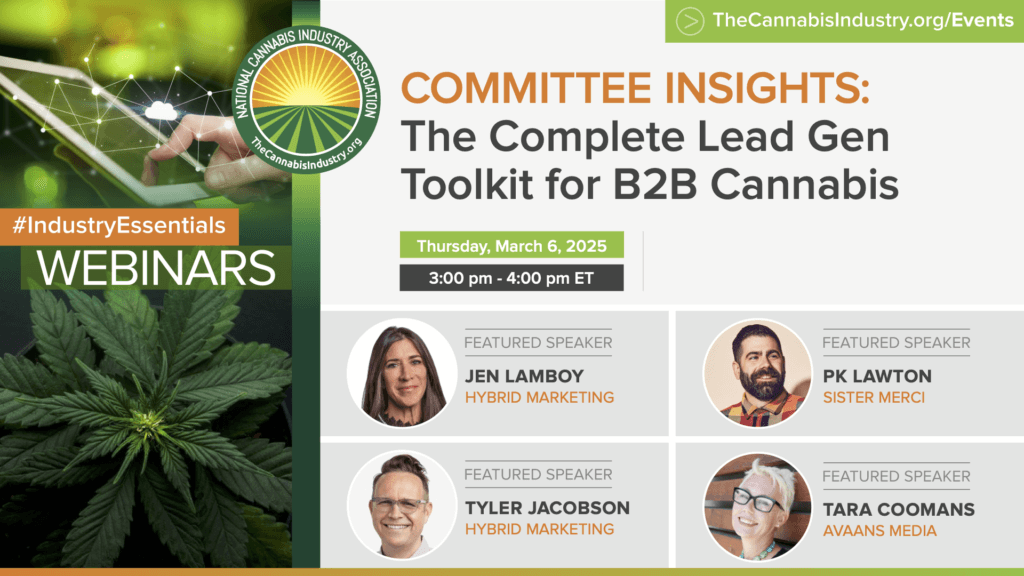
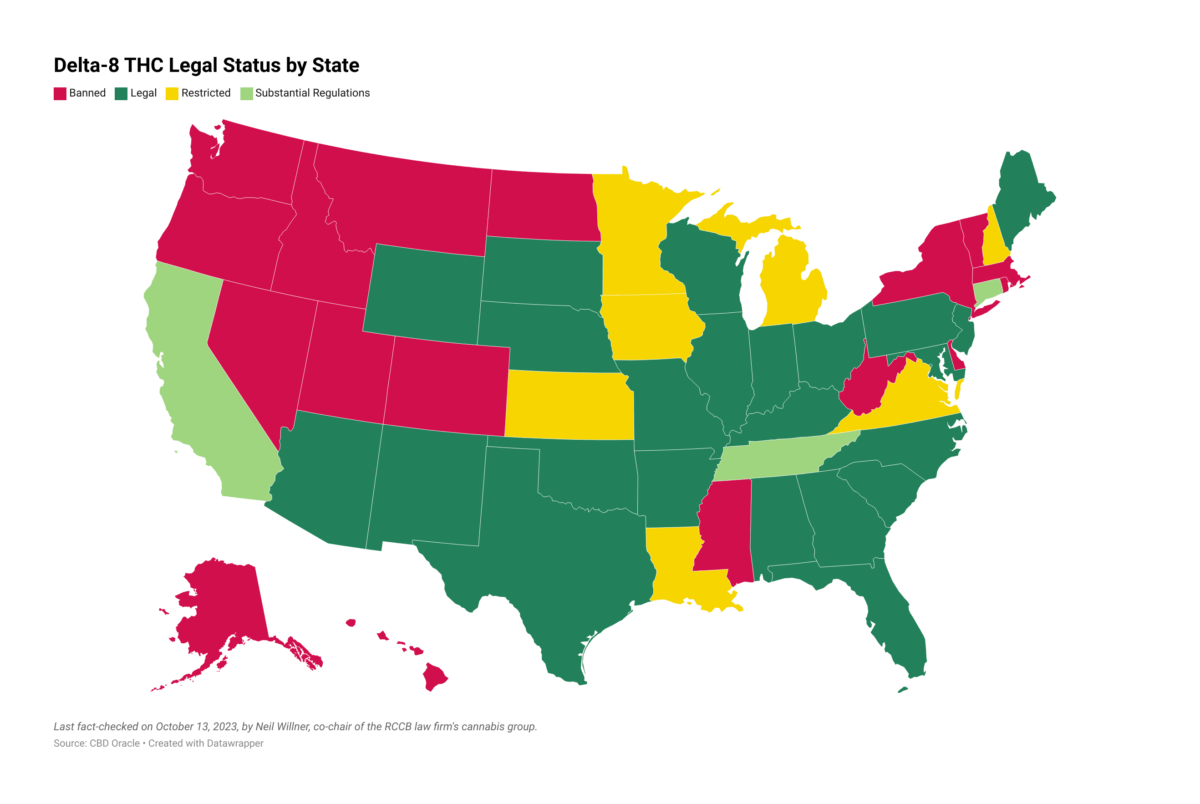
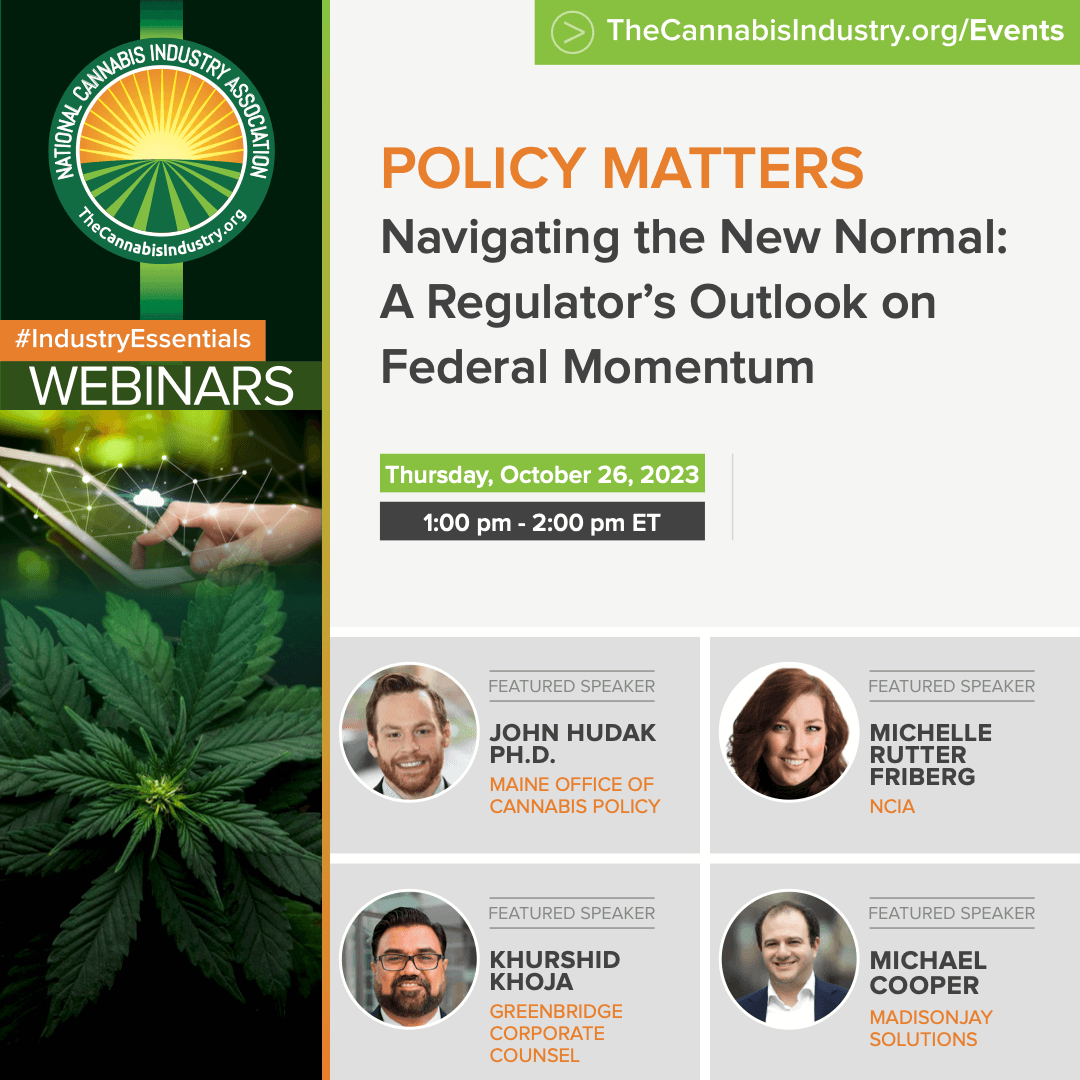
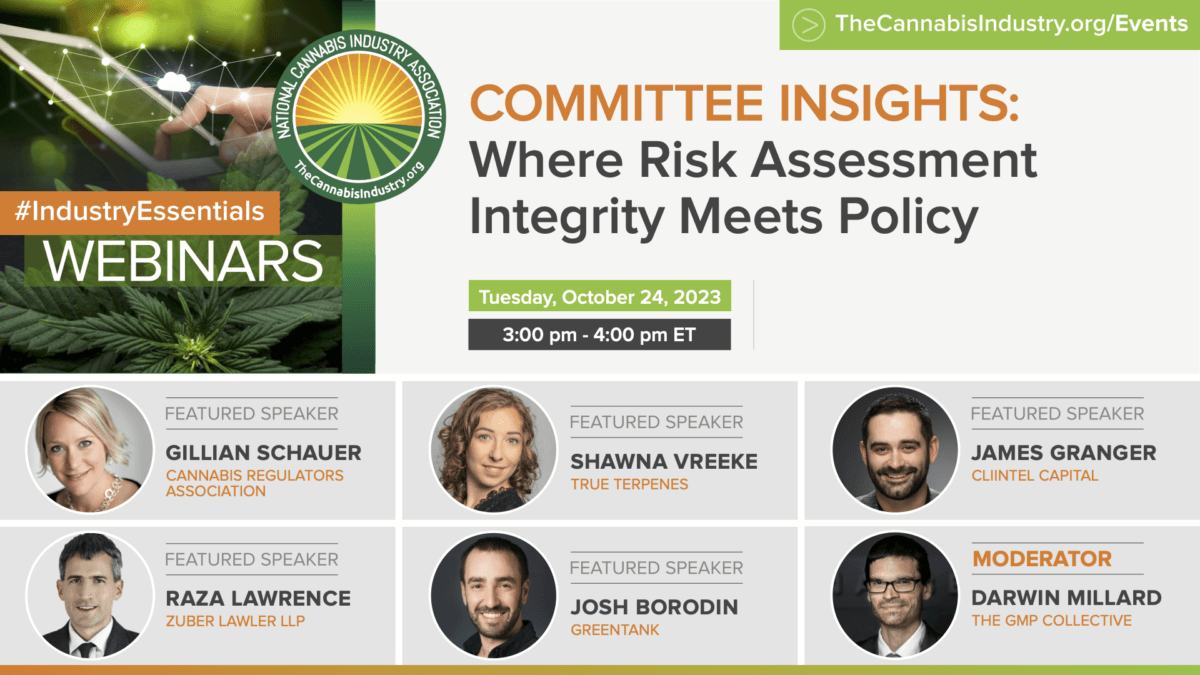
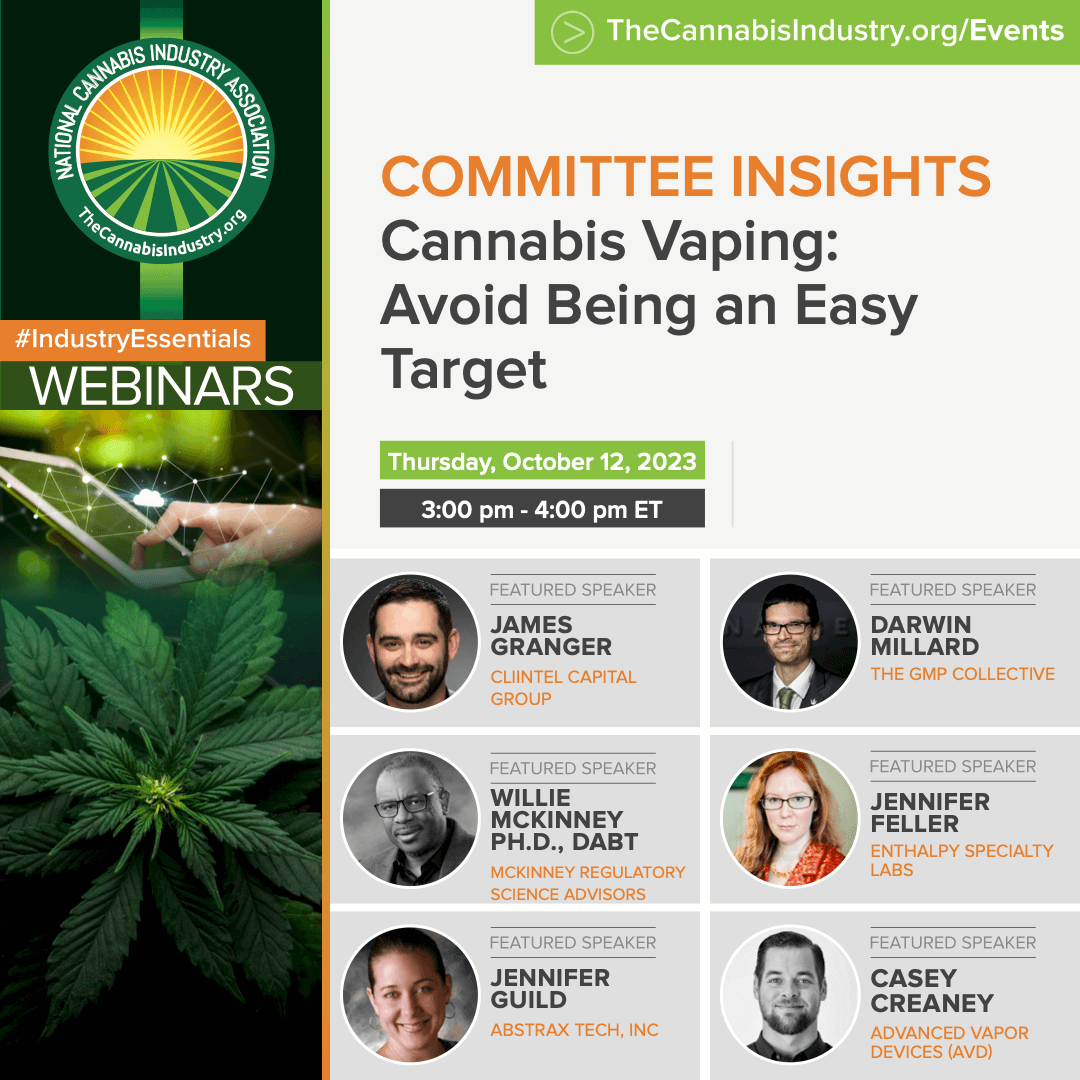
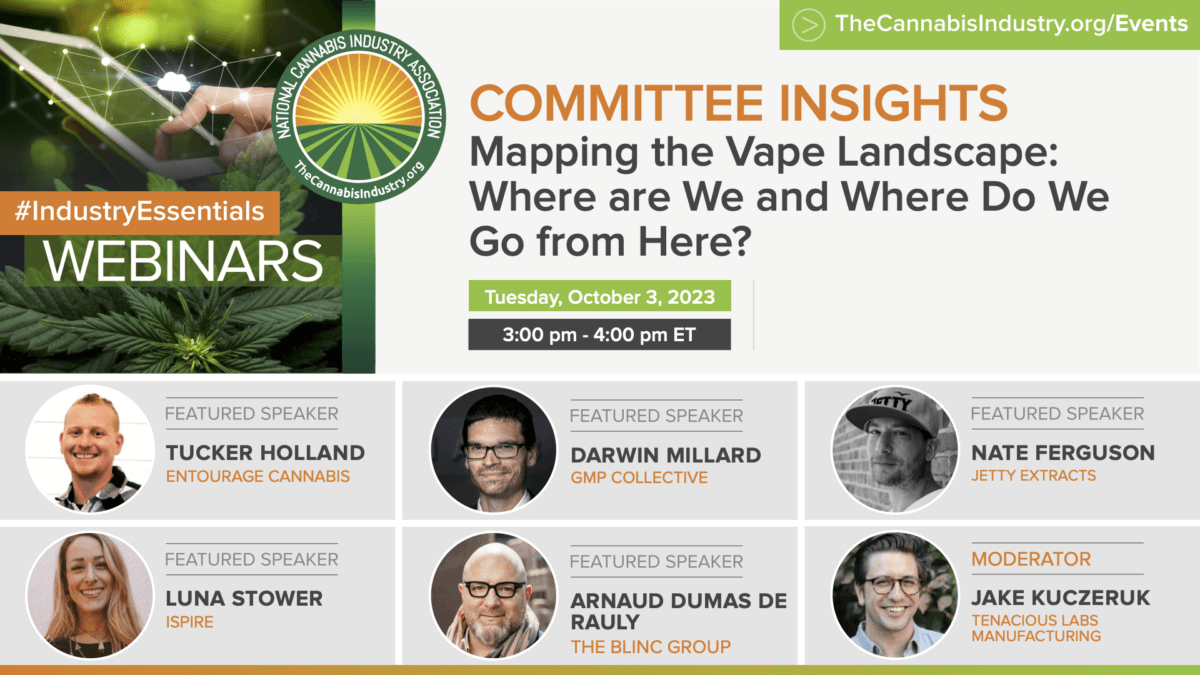
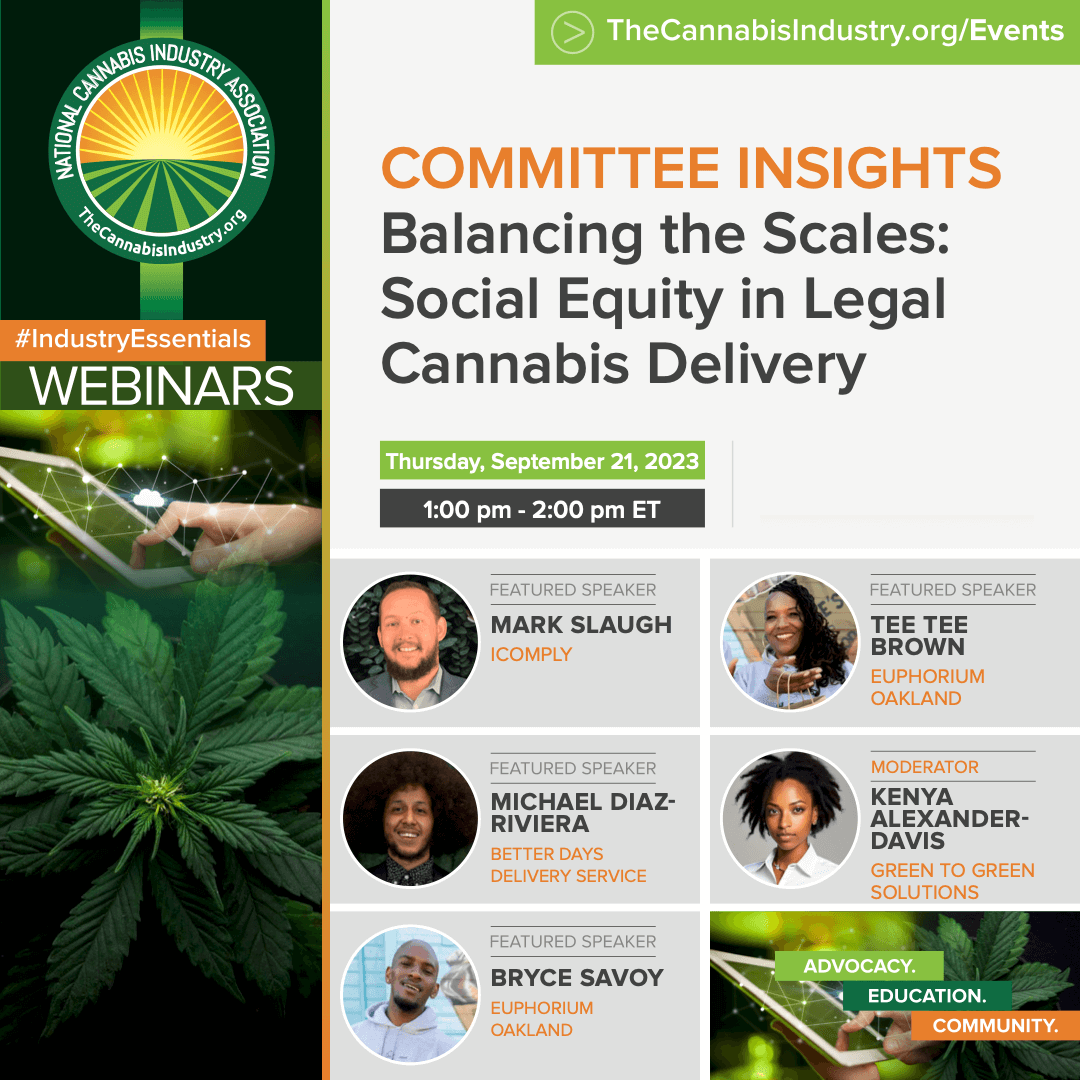

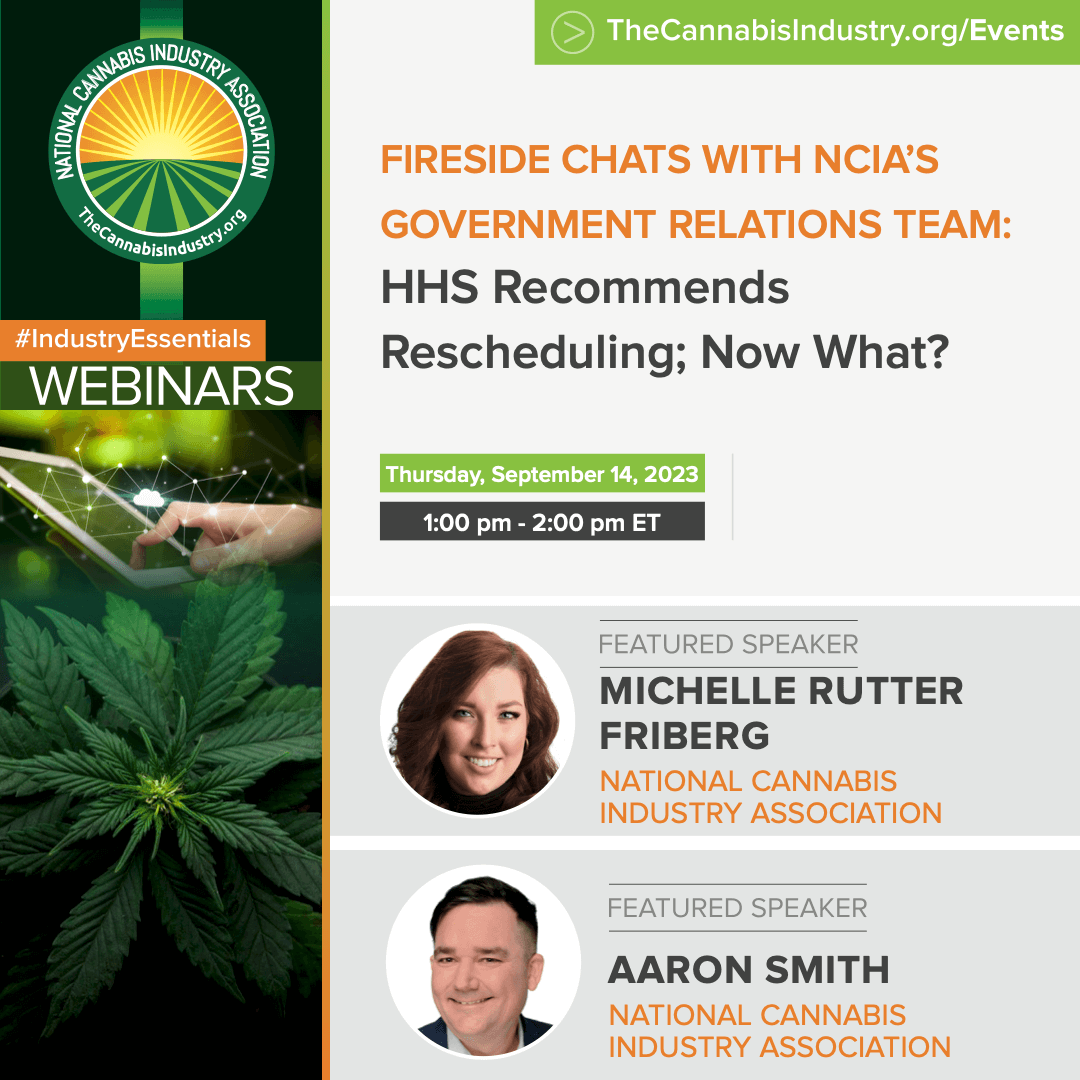
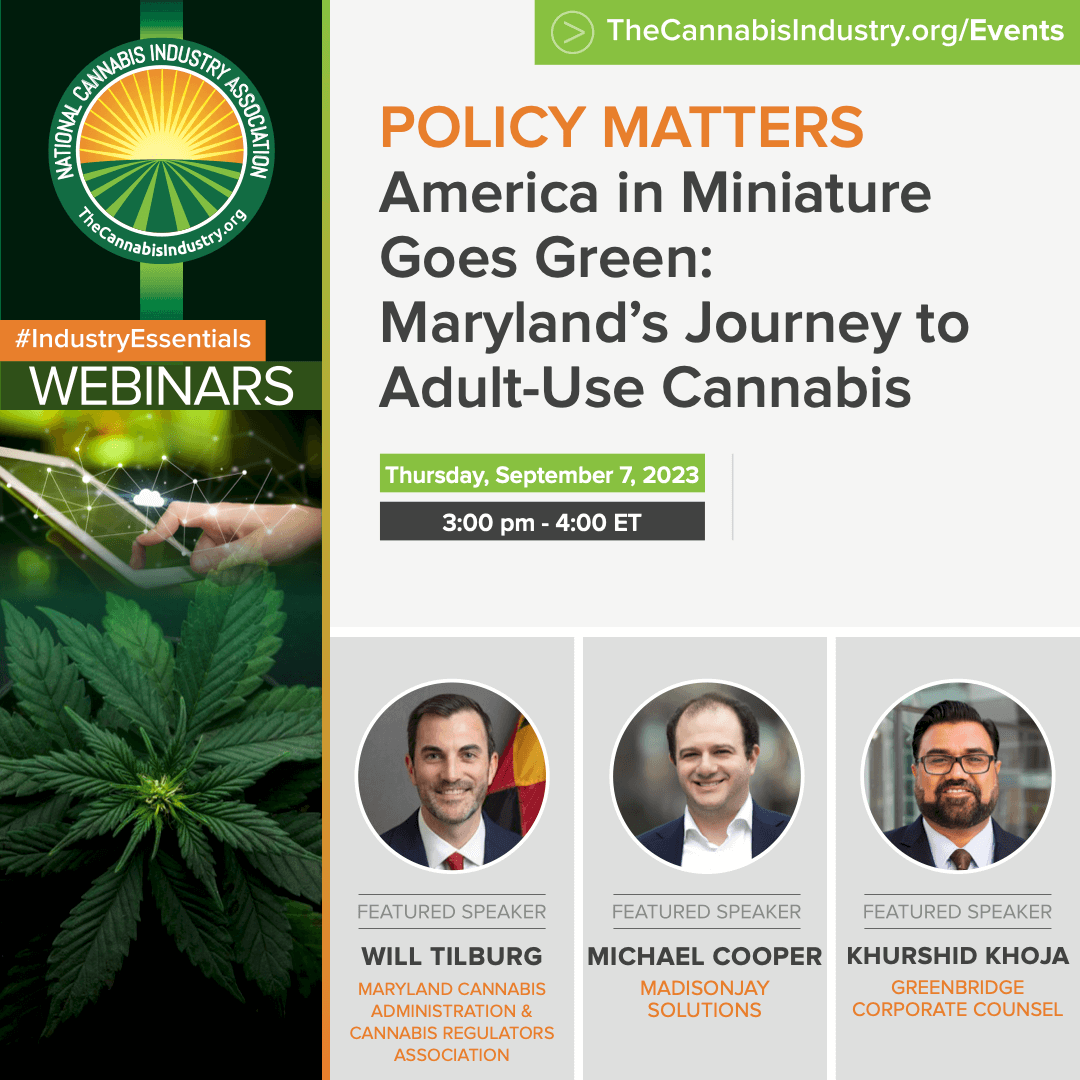

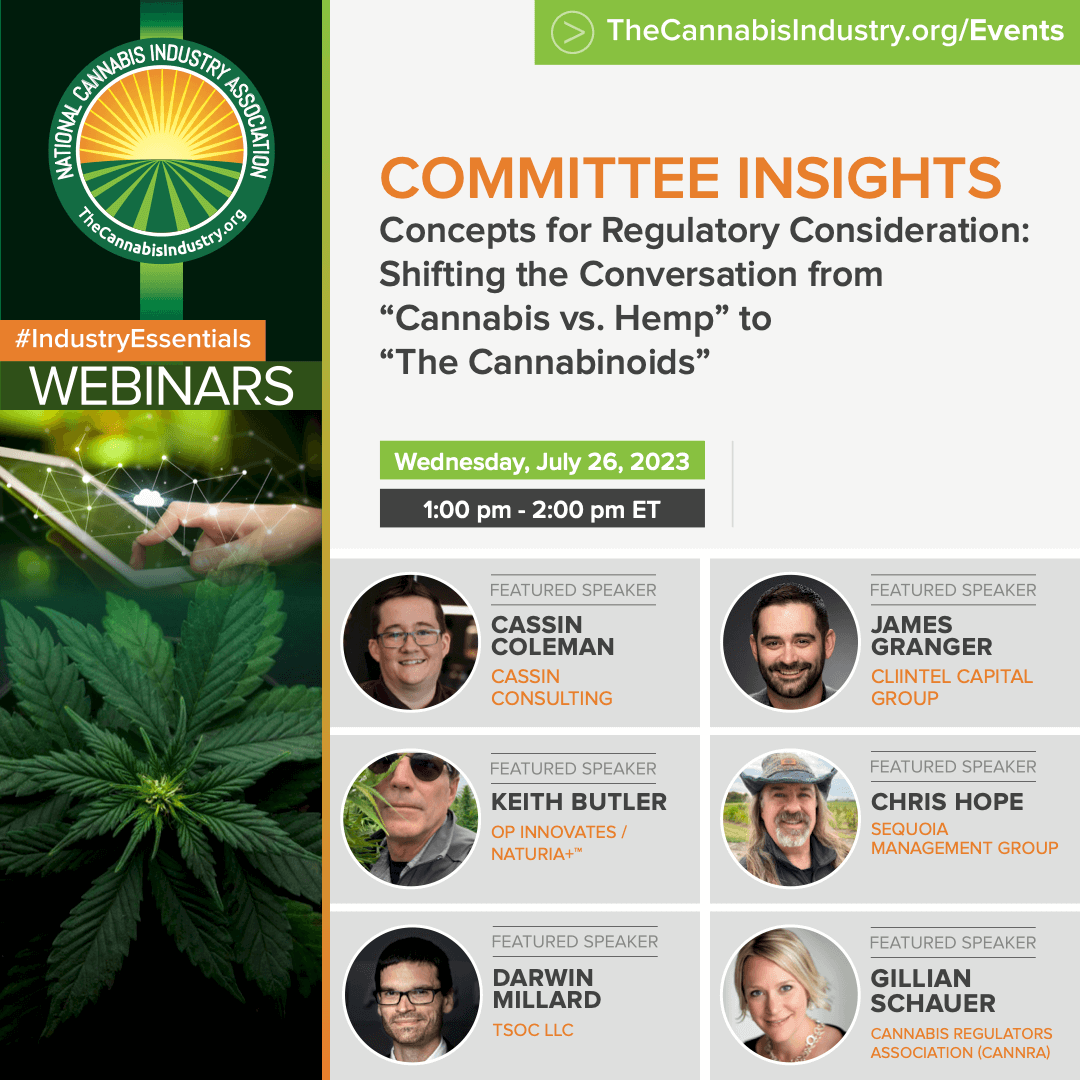
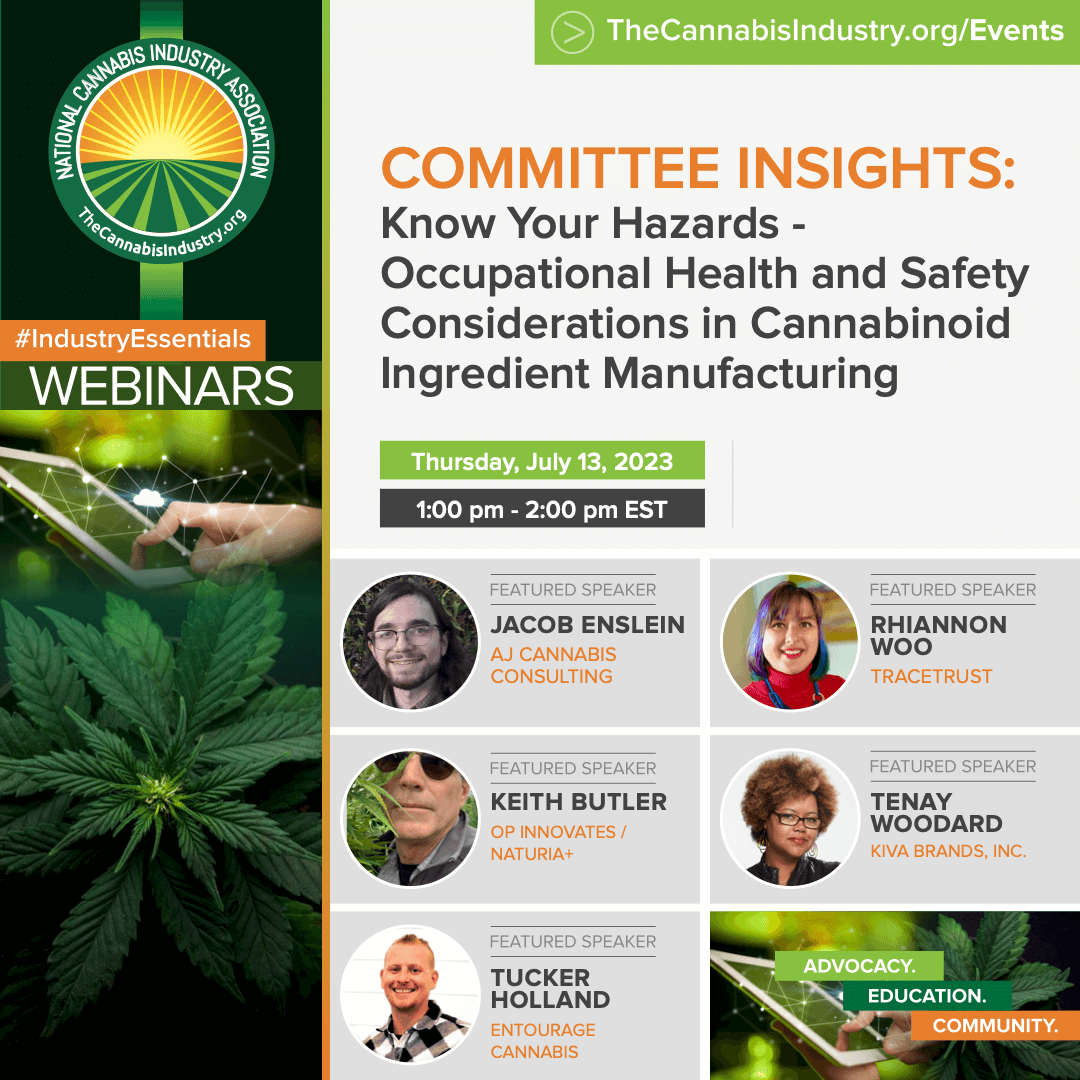







 Joshua Gilstrap
 As the largest national trade association of the cannabis industry, NCIA works to advocate for and advance the interests of hundreds of member businesses. The recent publication of the Whitney Economics

 Whether you’re looking for cash flow management, business planning, or internal controls, our team is dedicated to helping you achieve peace of mind when it comes to your company’s finances and compliance. We understand that the financial side of your business can be daunting, complicated, time-consuming, and most of all: stressful. You don’t need to go through it alone. Our team is prepared to help you achieve your financial goals. Whether you’re looking to earn more revenue, scale your business or achieve a little peace of mind, you can trust
 Vice President of ERP Sales, Frank Nisenboum,
 John Shearman is Vice President of Marketing and Cannabis Business Lead at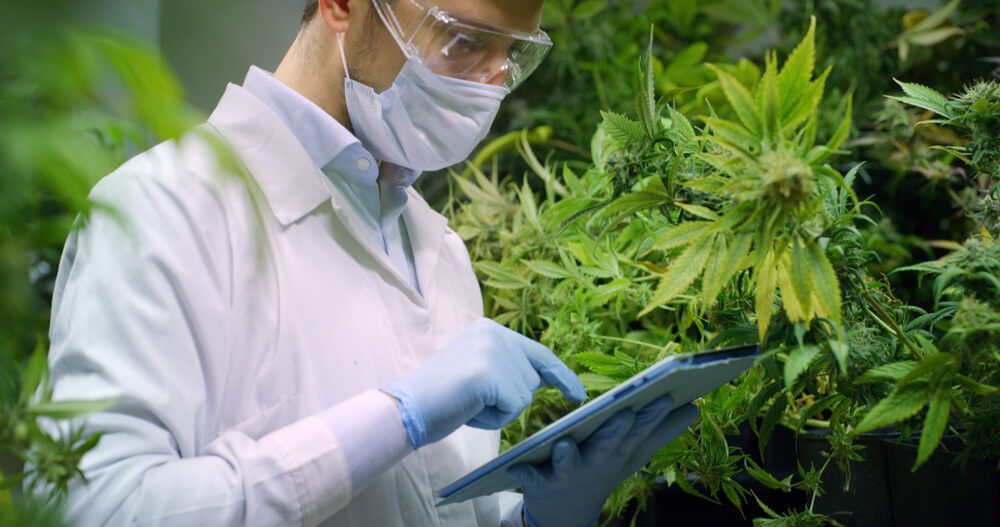






Follow NCIA
Newsletter
Facebook
Twitter
LinkedIn
Instagram
News & Resource Topics
–
This Just In
DOJ Reschedules Medical Cannabis to Schedule III & Announces June 2026 Hearing on Broader Rescheduling
National Cannabis Industry Association (NCIA) to Convene Industry Leaders in Washington for Annual Lobby Days, Bringing Together a Unified Voice for Federal Cannabis Reform