Committee Blog: What’s Up With Cannabis Standards?

by David Vaillencourt, The GMP Collective, NCIA Facility Design Committee
and Alena Rodriguez, Rm3 Labs, NCIA Scientific Advisory Committee
The cat is out of the bag despite the continued federal illegality of cannabis in the United States. A few years ago, the United States Pharmacopeial Convention (USP) recognized the need for standardization to address the safety and quality of cannabis used for medical purposes for the now estimated 3 million+ patients across the country. While the National Cannabis Industry Association (NCIA) does not develop standards and does not operate as a self-regulatory organization, it strongly supports the work being done by experienced standards-setting bodies. While NCIA lobbies for federal descheduling, the involvement of the USP and other organizations is another strong indicator of progress with respect to consumer and patient safety.
The USP is a nonprofit that humbly began with a small group of physicians on a brisk New Year’s Day in January of 1820. At the time, people would turn to their local apothecary for medications, where a druggist would mix together custom preparations from hand-collected plants and minerals. The types and quantities of these ingredients varied widely, with multiple names for the same medicine. Though sometimes not the fault of the physicians, it was not uncommon for the treatment to be worse than the disease. The USP rapidly evolved from a resource to an authority, when the importation of poor-quality medicines from Europe led to the Drug Importation Act of 1848. Tragic incidents of impurities and toxins in drugs over the years ultimately led to the 1938 Food, Drug and Cosmetic Act, in which Congress declared that certain medicines sold in the US must meet applicable USP quality standards. It should be noted that the USP included standards for cannabis preparations in the Pharmacopeia from 1851 until 1942.
Nearly 80 years later, the USP and several other internationally recognized groups are responding to the need to support the cannabis industry despite the quagmire of cannabis legality. Recently, the USP formed an expert panel of clinicians, scientists, and industry representatives from around the world resulting in a peer-reviewed article recently published in the Journal of Natural Products. The recommendations offered in this article (available here) provide a valuable foundation for the alignment of testing and quality attributes for cannabis flower. It is important to note that the USP published this information in a peer-reviewed article rather than a formal compendial monograph because of cannabis’ Schedule I status. Regardless, this article is another critical milestone towards standardization of the widely used plant, and it is only possible with support from individuals with knowledge of cannabis. Fortunately, there are established platforms that we as an industry can participate in and align with, known as Standards Development Organizations, or SDOs, that work closely with the USP to continue the advancement of our industry. In fact, many SDO efforts are referenced in the USP article.
ASTM International is one SDO that has responded favorably to industry and regulatory requests for assistance in standardizing cannabis. Founded in 1898 as the American Society for Testing and Materials, the group pioneered the standardization for the steel used to fabricate rails as frequent rail breaks across the fast-growing railroad industry plagued efficient transport of goods across the country between previously disconnected cities. Of the over 12,800 global standards published through ASTM’s rigorous consensus process, nearly one-third of them are codified within our federal regulations. ASTM Standards help ensure that the products in our lives can be depended on for safety, quality, and reliability.
The next time you wear a snowsport helmet, buy a crib for your child, use surgical gloves, pump gasoline, or get a new roof for your house, thank ASTM for creating the standards that help ensure that these items are safe. And lucky for us, now ASTM is focusing on cannabis standards.
In 2017, Committee D37 on Cannabis was formed, with subcommittees focused on developing test methods, cultivation best practices, quality assurance, processing and handling, security, and electronic devices. Today, over 800 members from 26 countries are actively contributing to the development of voluntary consensus standards. To date, more than a dozen voluntary consensus standards have been passed through the highly respected balloting process, providing specifications on water activity for cannabis flower, guidance on security plans, and many more. You can learn more about Committee D37 here and become a member here.
Another SDO is AOAC International, formerly known as the Association of Official Analytical Chemists. AOAC is a third-party, international association that establishes standard analytical methods and has been around since 1884. With the help of expert volunteers, AOAC ensures all Official Methods of Analysis (OMA) are highly scrutinized, scientifically sound, and defensible. OMA methods are recognized in the U.S. Code of Federal Regulations and are legally defensible in court globally.
AOAC created the Cannabis Analytical Science Program (CASP) to convene experts to discuss, develop, and validate cannabis testing standards. CASP is made up of five working groups: Microbiological Contaminants, Chemical Contaminants, Cannabinoids in Consumables, Training and Education, and Proficiency Testing. So far, CASP has published two First Action Official Methods for Cannabinoids in Cannabis sativa Dried Flowers and Oils (2018.10) and the Quantitation of Cannabinoids in Cannabis Dried Plant Materials, Concentrates and Oils (2018.11) and which are the first internationally recognized methods for potency in cannabis. They have also released several Standard Method Performance Requirements (SMPRs) that are developed through a voluntary consensus process, and prescribe the minimum analytical performance requirements for analytical methods during validation of the method. You can learn more about CASP here and register to join here.
The work of USP, ASTM, AOAC, and others supports effective quality control of consumable products to promote public safety. These organizations create standards that are recognized by federal and state regulations across applicable consumable industries. Standards allow consumers to trust the products they buy have been subjected to thorough safety and quality controls that are the same no matter which state you buy the product in. Each organization has created an expert panel specifically for cannabis in order to help prevent uneven approaches to safety and quality. The efforts of USP, ASTM, AOAC, and AHPA directly relate to NCIA’s mission to promote the growth of a responsible and legitimate cannabis industry. With several thought leaders active both in NCIA and these organizations, it is imperative that moving forward we liaison with each other to ensure cannabis quality efforts are in alignment.
As NCIA says, “our industry is stronger, smarter, and more prosperous when we work together.”
Committee Blog: NCIA’s Infused Products Committee Stirs The Testing Batch (Interview)
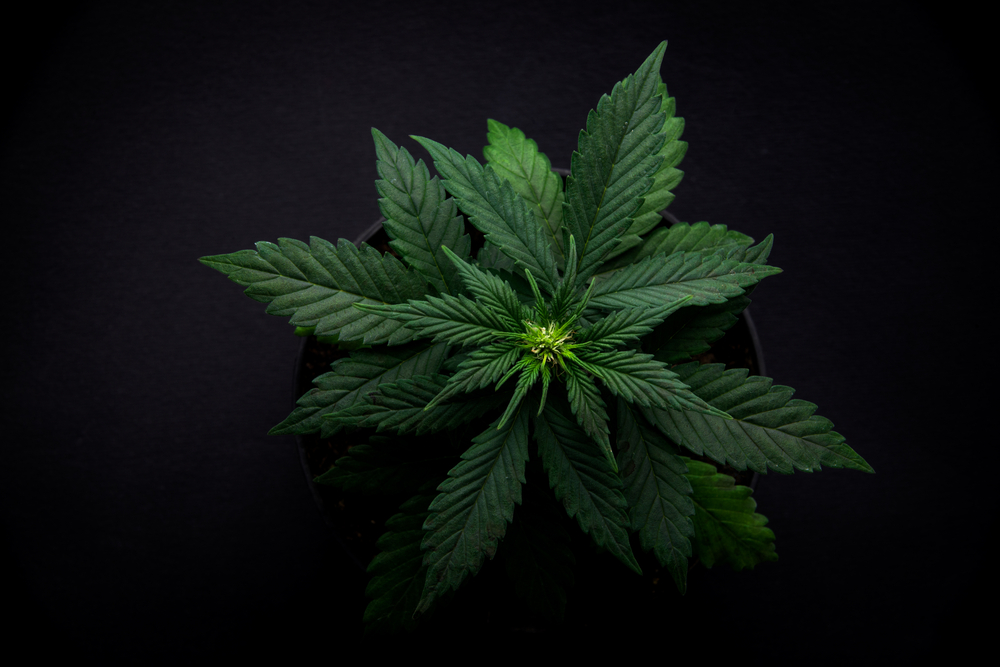
A year ago, NCIA’s Infused Products Committee (IPC) made the decision to tackle the issue of cannabis testing. It is an issue we feel is at the heart of cannabis legalization and is negatively impacting cannabis businesses across the nation. Although it has been a struggle to get comparable lab results across different labs, IPC believes there is a future where cannabis testing will reach consistency.
We began our process by asking several questions and with the assistance of the NCIA, we crafted a survey that was sent to experts in the field. During our preliminary research, we discovered that most cannabis testing labs view their protocols and procedures as proprietary information.
To gain better insight about the testing sector, we asked Alena Rodriguez, a member of NCIA’s Scientific Advisory Committee (SAC) to participate in an interview. Alena represents Rm3 Labs, a cannabis testing laboratory in Colorado.
IPC: Are you concerned about the inconsistent and varying test results and the impact it has on consumer safety?
Alena: Yes, I’m concerned. I do not take my job lightly; I know that contaminated cannabis can be harmful and sometimes life threatening. That is why I am involved with state regulators and groups like NCIA’s SAC and Testing Policy Working Group. We aim to educate regulators and stakeholders on the importance of practices such as independent audits, proficiency testing and ISO/IEC 17025 accreditation for cannabis testing labs.
IPC: Do you think we are close to having consistent cannabis test results from different laboratories?
Alena: We are well on our way. In Colorado, licensed labs must undergo Proficiency Testing (PT) twice per year. PT is done through an inter-laboratory comparison where participating labs receive the same sample and analyze it using their methodology. Even though our procedures are not standardized to one method, most of the labs arrive at the same result. Unfortunately, not all states require PT yet, but I feel more and more states will adopt these programs.
Along with PT, consistent testing across labs requires the use of high-quality reference materials that are used to validate analytical methods and calibrate instruments. Cannabis testing labs in the United States have limited access to reference standards. Like cannabis, most industries started with limited resources, but over time the science will progress as federal barriers are lifted to make more research and better standards possible. It took decades to develop standardized, consistent methods in other industries, such as in pharmaceuticals and food testing. I don’t see the cannabis industry being any different.
IPC: Should there by penalties if a testing lab consistently provides drastically different results from prior tests of the same product?
Alena: It depends on the situation. If the lab is knowingly breaking the rules or trying to cheat the system, then absolutely. But, most of the time inconsistent results have causes other than fraud or negligence. This industry produces new products every day and some manufacturers and laboratories don’t “get it right” on the first try. There is a lot of research and development that is involved. Three of the biggest hurdles for consistent testing of cannabis products are 1) the variety of sample types 2) the lack of certified reference materials for uncommon cannabinoids and terpenoids and difficulties in obtaining concentrated standards and 3) inhomogeneity in some infused products or concentrates. Product uniformity is critical and should be confirmed by analytical testing for consumer safety. Variable results across multiple labs may suggest a product lacks uniformity.
IPC: Do you believe testing procedures and protocols are proprietary?
Alena: Yes, third-party cannabis laboratory protocols are just as proprietary as the protocols developed by cultivators, concentrate extractors and infused product makers. Testing labs having proprietary methods is not novel to this industry. If a lab in any other industry (e.g. food, medical, agriculture, environment) develops an alternative method to the standard method, they can use it if they can validate against the reference method.
IPC: Should labs be required to prove their analytical methods are accurate by submitting their practices confidentially to a regulatory body?
Alena: Absolutely! Colorado labs are currently required to send all new Standard Operating Procedures (SOPs) and method validations to the CDPHE prior to implementation. I hope more states adopt this practice, if they aren’t doing so already. As of January 1, 2019, all cannabis testing labs in Colorado will be required to be ISO/IEC 17025 accredited. ISO/IEC 17025 accreditation is the international gold standard for assessing the competence and quality management systems of testing labs across all industries to ensure consistent, accurate test results. More than a dozen cannabis labs have achieved this accreditation across the country.
IPC: Are you aware that the ASTM Committee D37 reportedly drafted testing procedures? If published, will cannabis testing labs follow published procedures that are not their own?
Alena: Yes, I’m excited! This is a great step for our industry. I imagine the committee will develop similar protocols to those being used by third-party labs. But as I mentioned before, labs will have the choice to use the published standard methods or their own alternative method, granted it is validated against the reference method. I expect some labs will attempt to validate their methods against the standard methods and some will adopt ASTM’s methods.
IPC: Are you aware of testing labs that allow for “tipping” on their order forms? Does this concern you, and why?
Alena: It concerns me that there are bad actors in the testing sector of the cannabis industry but I’m afraid there are bad actors in every segment of every industry. At Rm3 Labs, we do not participate in or condone unethical behavior such as paying for the results you want. We would never risk falsifying test results because we are aware immunocompromised individuals and children are possibly taking the products we are testing. I would not risk my entire scientific career to give you 5% higher THC potency results or lie about your contaminant testing results. I advise all cannabis testing labs to always act ethically because you are in the business of public safety and your lab is subject to investigation by regulatory agencies at any time.
IPC conducted the above enlightened interview with SAC. While we were inspired by some of the answers, much like our survey attempt this past year, many of our questions remain unanswered. For example, we don’t agree that cannabis cultivators or manufacturers are to blame for receiving inaccurate “clean/approved” test results from labs due to products being inhomogeneous.
That said, it is clear by a couple of the responses that some states, like Colorado, are making substantial progress in oversite and legal requirements for testing laboratories, while other states, like California, are still leaving significant and dangerous gaps.
In our opinion, the industry’s need for consistent and accurate testing results remains at the forefront of the issues facing commercial cannabis today. The ability to send the same sample, from the same batch, under the same conditions, and have it tested by multiple labs, achieving the same results, is paramount to our industry’s future and success. State laws should require it. The industry should demand it. And the consumers most certainly deserve it.
As such, the IPC will continue its mission to drive this conversation forward with both testing labs and operators alike. Only together, can we really solve this crucial issue facing our amazing industry.
Follow NCIA
Newsletter
Facebook
Twitter
LinkedIn
Instagram
News & Resource Topics
–
This Just In
DOJ Reschedules Medical Cannabis to Schedule III & Announces June 2026 Hearing on Broader Rescheduling
National Cannabis Industry Association (NCIA) to Convene Industry Leaders in Washington for Annual Lobby Days, Bringing Together a Unified Voice for Federal Cannabis Reform