Equity Member Spotlight: YS Cannabis Delivery Services
NCIA’s editorial department continues the Member Spotlight series by highlighting our Social Equity Scholarship Recipients as part of our Diversity, Equity, and Inclusion Program. Participants are gaining first-hand access to regulators in key markets to get insight on the industry, tips for raising capital, and advice on how to access and utilize data to ensure success in their businesses, along with all the other benefits available to NCIA members.
Tell us a bit about you, your background, and why you launched your company.
Originally from Ecuador, Yadira Elizabeth Silva Leon, I came to the United States when I was only 16 years of age. I graduated with honors from Sheridan High School and Arapahoe Community College in Colorado. Then I graduated from the American Intercontinental University online, with a BA in Business Administration. I own my construction clean-up company, officially named YS Construction Clean Up Services.
As a single mother of two and minority business owner, I started to become more involved in the world of cannabis after two separate accidents, leaving me with a damaged spine. Doctors prescribed medications and pills that began to damage my nervous system and I started to lose sensation in my legs, inhibiting me from taking care of my children. It was around this time that Colorado legalized cannabis, and after becoming legally accessible, I decided to take advantage of the medicinal benefits of cannabis to calm my pain. Cannabis inspired me to begin a new career in the cannabis industry. Serving people who are in pain by bringing their medicine in the comfort of their home in a timely fashion became an interest and passion of mine.
What unique value does your company offer to the cannabis industry?
The health and safety of our patients, customers, and employees is our top priority. We see the future where our company impacts the wellbeing of our drivers and the life of our planet. That is why YS Cannabis Delivery Services was created.
We specialize in transporting cannabis products business to business and business to customer. We also collect empty containers from customers to recycle properly, and return clean, disinfect, and sterile containers for businesses.
What is your goal for the greater good of cannabis?
Securing the life of carriers, and our environment. We are working on a new security system where we use AI (Artificial Intelligence) and VR (Virtual Reality) to deliver cannabis from business to business with efficiency and security. While we are expanding security to protect cannabis shippers and vehicles against prohibited intrusions, we are also making sure plastic containers get to the right place and be recycled properly.
What kind of challenges does the industry face, and what solutions would you like to see?
COVID-19 created many challenges for most industries, but the cannabis industry faced more threatening challenges such as violence and robbery. What we would like to see is the safety of cannabis employees become a priority. That is why we are looking into virtual reality as a security measure.
Why did you join NCIA? What’s the best or most important part about being a member through the Social Equity Scholarship Program?
I joined the National Cannabis Industry Association to collaborate in the development of my company at a national and international level. Because of NCIA, I was able to receive access to the resources my business needed to grow and thrive. I was able to speak with leaders, consultants, and other like-minded professionals.
Member Blog: Stickier Products Need Thicker Gloves, Right?
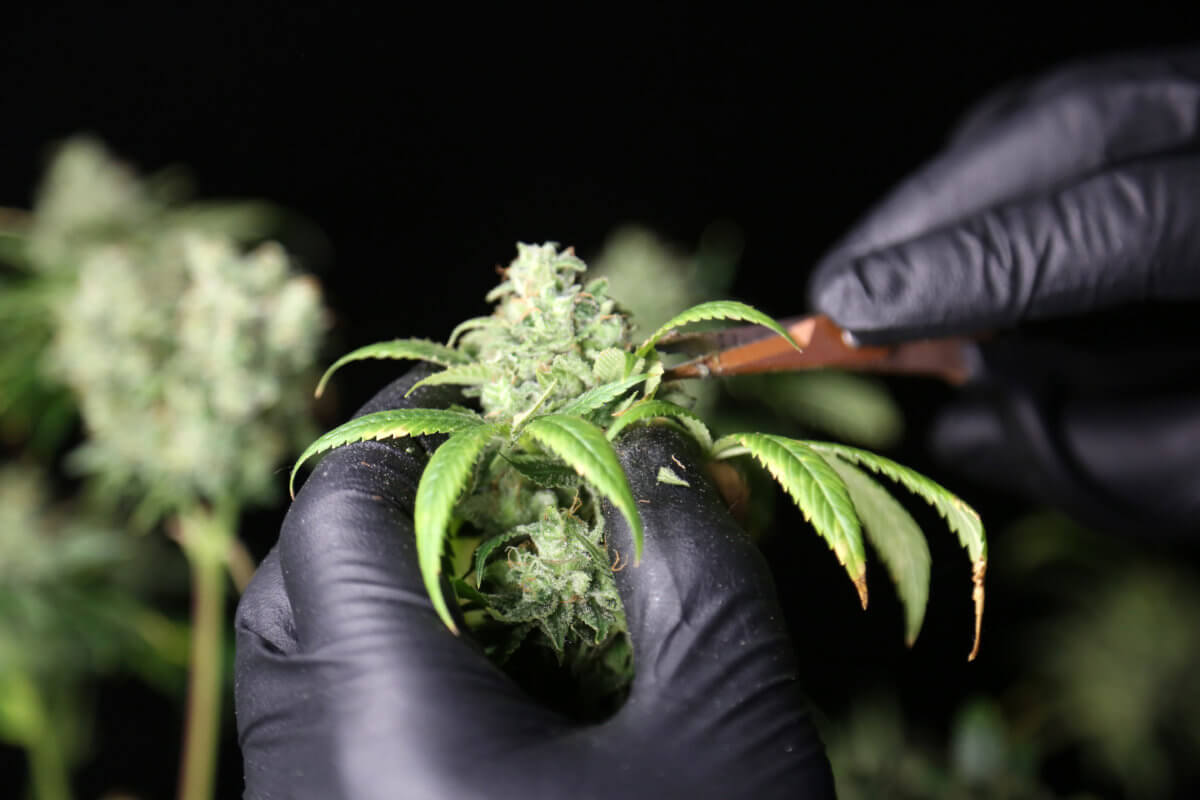
“My gloves keep ripping” is a common frustration we hear from cannabis businesses, especially growers and processors. If your gloves are ripping just buy thicker gloves, right? Maybe. It is a common misperception that thicker gloves are stronger, but this is not always the case. Here are four factors about glove thickness to understand that will help solve this chronic glove problem.
4 Things to consider before buying a thicker glove
Thicker does not mean stronger – A glove’s strength is directly related to the quality of materials used to make it. Period. A glove’s raw material ingredients account for 45% of the production cost. Gloves can have fillers, like carbon black, silica and chalk, added to manufacture them cheaper. Chalk doesn’t stretch. When fillers are added to reduce production costs, the glove’s durability and elasticity will reduce as well.
In one minute, this video shows how to estimate the quality of your nitrile gloves. When buying disposable gloves, always remember, a gloves’ strength is directly proportional to the quality of ingredients used to make it.
Musculoskeletal issues – Low-quality, thicker gloves have less elasticity which in turn makes workers’ hands use stronger muscle force, increasing the chance of injury. For example, a worker’s hand could have unnecessary force put on it with every hand movement they make while bucking or trimming the plant. A disposable glove needs to be of a high enough quality to perform the task and protect the product and the wearer, but excessive thickness can create additional issues. A better-made glove can be thinner while outperforming cheaper, thicker gloves.
Worker efficiency – Despite its thickness, a glove made with lower quality ingredients will rip more frequently. When your staff is constantly having to stop working to change failed gloves, productivity decreases. When workers are busy changing failed gloves they are no longer planting, growing, harvesting, trimming, or curing. Gloves that perform will increase overall productivity and efficiency, not to mention worker satisfaction.
Increased waste – Another possibly less considered consequence of buying thicker gloves is the environmental impact. Glove thickness directly correlates with the amount of waste, disposal costs, and environmental impact generated. A thicker glove equates to more material per glove being disposed of. A glove made of cheap ingredients that fails more frequently will also negatively affect a businesses’ sustainability efforts by increasing the overall quantity of gloves used. Generating more waste will in turn increase disposal costs and the amount of waste that ultimately is put into landfills.
Cannabis plants can be prickly, sticky, and sometimes relatively tough on disposable gloves. A better glove is needed. A better glove, not necessarily a thicker glove. Additionally, different stages in producing cannabis products, from growing to harvesting to processing to tinctures to edibles, can require different gloves. A single glove most likely will not live up to the performance and safety requirements at the various stages. The best way to know you’re buying a quality glove is to purchase from reputable suppliers with specific and ongoing quality control procedures in place. This ensures glove quality, performance and protection, all of which directly mitigate risk to your product and business.
Trustworthy and knowledgeable glove suppliers will be able to help arrange glove trials through which you will be able to determine the best glove to use for every task. Purchasing too heavy of a glove for a task increases costs unnecessarily. Investing the time into ensuring you are sourcing the correct gloves will protect your product, workers and budget.
Disposable gloves are not indestructible. Some tasks, like harvesting and trimming, do require a thicker glove even when they are made of the highest quality. But simply put, a thicker glove spec is not always the answer to a sticky situation.
Eagle Protect, the world’s only glove and PPE supplier to be a Certified B Corporation®. Eagle Protect supplies disposable gloves and protective clothing to the food processing, food service, cannabis, medical and dentistry sectors in both the U.S. and New Zealand.
Eagle is implementing Delta Zero, a proprietary third-party glove analysis program to ensure a range of their gloves are of consistent high-quality, and free from harmful contaminants, toxins and pathogens. The Delta Zero program mitigates the risk of product contamination and recall due to the unknown use of dirty gloves.
After establishing Eagle Protect as an industry leader in New Zealand, where the company supplies approximately 80% of the primary food processing industry, Steve Ardagh relocated with his family to the U.S. in January 2016 and launched Eagle Protect PBC. Steve brought with him Eagle’s values of providing products that are certified food safe, ethically sourced and environmentally better. Steve is driven to keep consumers safe, one high-quality disposable glove at a time, and has been instrumental in developing Eagle’s proprietary third-party Delta Zero program glove testing program.
Member Blog: “Food Safe” Gloves Cause Cannabis Recall
A pesticide-free cannabis producer and processor from Washington was recently forced to issue a recall after the chemical o-Phenylphenol (OPP), traced back to their “food safe” gloves, was found on its products. OPP, listed under California Proposition 65 as a chemical known to cause cancer, was found in the food-safe gloves they were using to handle their crop.
In a statement announcing the recall, the company said, “Nothing ruins your day like testing your product, confident it will be clean, only to find it contaminated with some crazy, toxic chemical. The gloves were the last thing we tested, we just never imagined something sold as food safe could transfer such nastiness. The discovery was just the beginning… recalls are costly in more ways than one.”
Why “food safe” gloves can cause a recall
After initial approval, non-sterile FDA compliant food grade gloves are not subject to ongoing controls to ensure the reliability and consistency of raw material ingredients or quality processes during manufacturing. Opportunity exists for glove manufacturers to use cheap raw materials which lower glove durability and can introduce toxic compounds, which can transfer not only to products handled but also to glove users.
Demand for lower costs from the end-user pressures glove manufacturers to sacrifice quality, and substitute other compounds to meet these demands. This can include increased levels of cyanide, fungicides, inexpensive phthalate plasticizers, or others on the Prop. 65 list of chemicals known to cause cancer.
Steve Ardagh, CEO of Eagle Protect, a specialist glove supplier explains, “People assume ‘food grade’ gloves are clean and toxin free, but that’s not necessarily the case. The actual FDA Compliance does not even require gloves to be tested clean or sanitary which surprises most people. Having tested 25 different brands of gloves, we’ve found everything from feces, fungicides, Staphylococcus, yeast, and mold,” says Ardagh, “due to putrid water sources and unhygienic manufacturing conditions.”
Recalls & brand reputational damage
Single-use gloves, even those FDA compliant, can be a risk to product recalls and brand reputation. Peer-reviewed scientific studies have identified harmful toxins and contaminants in and on single-use gloves. These “food handling” gloves pose risks for companies producing consumer products, especially in industries such as organics and cannabis whose products must be clean if tested.
Staff & consumer risks
In addition, staff wearing contaminated gloves are at risk of absorbing toxins, as are the consumers of products contaminated by gloves. The contaminants have often been identified as causing cancer, and reproductive and hormonal damage.
Mitigating glove contamination risks
Gloves are often purchased with little thought or foresight into their risks. Cost is commonly the determining factor in their procurement decision-making. However, sourcing gloves from established companies who partner directly with glove manufacturers to ensure consistent quality is essential for all cannabis companies. Gloves may seem trivial, but can cause fines up to $200,000, put consumers and staff at risk, and damage brand reputation.
This is especially important currently in the post-COVID world as the glove market is being flooded with counterfeit and reject quality gloves. The new glove suppliers, traders, and brokers who came into the COVID PPE space with little or no experience, with an intention to simply trade and make quick money, are now bailing out of their poor quality junk gloves and dumping them into the U.S. market. Consider the following before purchasing gloves:
Is your glove supplier reputable, with a long history of glove sourcing direct from the manufacturer and proven quality control processes in place?
Can your glove supplier ensure your glove quality is consistently high through documented factory audits, HACCP compliance certifications and quality processes?
Have you undergone a commercial trial of products prior to committing to purchasing to ensure glove quality is consistently high?
After establishing Eagle Protect as an industry leader in New Zealand, where the company supplies approximately 80% of the primary food processing industry, Steve Ardagh relocated with his family to the U.S. in January 2016 and launched Eagle Protect PBC. Steve brought with him Eagle’s values of providing products that are certified food safe, ethically sourced and environmentally better. Steve is driven to keep consumers safe, one high-quality disposable glove at a time, and has been instrumental in developing Eagle’s proprietary third-party Fingerprint Glove Analysis glove testing program.
Eagle Protect, the world’s only glove and PPE supplier to be a Certified B Corporation®. Eagle Protect supplies disposable gloves and protective clothing to the food processing, food service, cannabis, medical and dentistry sectors in both the U.S. and New Zealand.
Eagle is implementing a proprietary third-party glove analysis to ensure a range of their gloves are of consistent high-quality, and free from harmful contaminants, toxins, and pathogens.
Committee Blog: Future-Proofing Your Business – How Adopting Industry Standards Improves Your Bottom Line and Reduces Your Risks
By developing and adopting standards now, operators in the cannabis space can avoid unnecessary future expenses they might incur when needing to rework established facilities to meet upcoming federal standards or third-party compliance
Upton Sinclair’s The Jungle in 1905led to the Pure Food and Drug Act in 1906. The food sector has matured through additional governmental regulations, industry-led initiatives, consumer and trade guidelines and standards, and more recently, the Food Safety Modernization Act. Over one hundred years of progress helped to ensure what is arguably the safest food supply in the world. By comparison California, in 1996, 24 years ago, legalized Medical Cannabis. Since then, 36 states have legalized cannabis for medical or adult use. Confusingly, that is 36 different sets of regulations, none harmonized. And no consensus on how FDA will regulate cannabis when it is descheduled.
But investors and producers in the cannabis sector are seeking direction on how to future proof their businesses so they can manage the transition from fragmented state-level regulations to rigorous federal oversight. Developing and adopting cannabis industry best practices may be the greatest insurance available.
NCIA’s Facility Design Committee is one of the few groups beginning this effort. The group has representatives from operations, regulatory compliance, quality, equipment vendors, design and construction, and allied industries.
Standards can focus on several areas. Because the cannabis industry deals with substances that are ingested into the human body, standards that support consumer health and safety are paramount. Much of the current practice in the food sector, organized under the topic of current Good Manufacturing Practices (GMPs), can port over to Cannabis with some adjustments. These practices protect consumers and your brand. GMPs have, as a foundation, many aspects of facility and process design, but standards for these don’t yet exist. However, by developing and adopting standards now, operators in the cannabis space can avoid unnecessary future expenses they might incur when needing to rework established facilities to meet upcoming federal standards or third-party compliance. They also can control their own destiny, in effect, by establishing approaches that later can be considered as regulators write the rules in the future.
As operators themselves, a number of our committee members have felt the direct impact of product recalls due to a lack of clear delineation at the intersection of cannabis and food safety regulations. Depending on the scope of the recall, a company can be crippled by not properly understanding and adhering to a common set of standards across the industry, especially when concerning safe food handling practices and similar regulations that control consumable product manufacturing. For example, one of our committee members had to recall a batch of infused gummies because public health regulators used safe food handling regulations to determine that the gummies were exposed for too long in a potentially contaminated environment during the setting process. Had the operator adhered to standards commonly used in food production, they would have avoided the costly impact of the product recall. With nearly 15% of flower failing tests for yeast and mold in Colorado, the cannabis industry has become no stranger to costly recalls.
Standards not only minimize risk to the consumer and the business, but also improve quality and consistency. Improve employee NPS (Net Promoter Scores). Reduce cost and production downtime. Increase the inherent value of the business. And offer a brand message that increases sales.
Nearly all related industries follow best practices, known as cGMPS (current Good Manufacturing Practices), which can be adopted for our industry. If we look to examples from the food sector, you find mature and professional regulations at the federal level and experienced inspectors from USDA, FDA and state departments of Health or Agriculture, as well as global standards from the International Organization for Standardization (ISO) and the World Health Organization (WHO), initiatives from trade customers such as Global Food Safety Initiative (GFSI), equipment certifications from European Hygienic Equipment Design Group (EHEDG), NSF International, and 3-A Sanitary Standards. This constellation of resources is not yet published for the cannabis sector.
Join us in this exciting journey. Become involved, and stay aware of and ahead of the pending regulations. We don’t have 114 years to get this right!
The Facilities Design Committee (FDC) focuses on providing NCIA members and regulators a framework and information about facilities design options through which legal producers can plan for GMP level production as the market transitions from a state to a federally regulated industry.
Committee Blog: What’s Up With Cannabis Standards?
by David Vaillencourt, The GMP Collective, NCIA Facility Design Committee
and Alena Rodriguez, Rm3 Labs, NCIA Scientific Advisory Committee
The cat is out of the bag despite the continued federal illegality of cannabis in the United States. A few years ago, the United States Pharmacopeial Convention (USP) recognized the need for standardization to address the safety and quality of cannabis used for medical purposes for the now estimated 3 million+ patients across the country. While the National Cannabis Industry Association (NCIA) does not develop standards and does not operate as a self-regulatory organization, it strongly supports the work being done by experienced standards-setting bodies. While NCIA lobbies for federal descheduling, the involvement of the USP and other organizations is another strong indicator of progress with respect to consumer and patient safety.
The USP is a nonprofit that humbly began with a small group of physicians on a brisk New Year’s Day in January of 1820. At the time, people would turn to their local apothecary for medications, where a druggist would mix together custom preparations from hand-collected plants and minerals. The types and quantities of these ingredients varied widely, with multiple names for the same medicine. Though sometimes not the fault of the physicians, it was not uncommon for the treatment to be worse than the disease. The USP rapidly evolved from a resource to an authority, when the importation of poor-quality medicines from Europe led to the Drug Importation Act of 1848. Tragic incidents of impurities and toxins in drugs over the years ultimately led to the 1938 Food, Drug and Cosmetic Act, in which Congress declared that certain medicines sold in the US must meet applicable USP quality standards. It should be noted that the USP included standards for cannabis preparations in the Pharmacopeia from 1851 until 1942.
Nearly 80 years later, the USP and several other internationally recognized groups are responding to the need to support the cannabis industry despite the quagmire of cannabis legality. Recently, the USP formed an expert panel of clinicians, scientists, and industry representatives from around the world resulting in a peer-reviewed article recently published in the Journal of Natural Products. The recommendations offered in this article (available here) provide a valuable foundation for the alignment of testing and quality attributes for cannabis flower. It is important to note that the USP published this information in a peer-reviewed article rather than a formal compendial monograph because of cannabis’ Schedule I status. Regardless, this article is another critical milestone towards standardization of the widely used plant, and it is only possible with support from individuals with knowledge of cannabis. Fortunately, there are established platforms that we as an industry can participate in and align with, known as Standards Development Organizations, or SDOs, that work closely with the USP to continue the advancement of our industry. In fact, many SDO efforts are referenced in the USP article.
ASTM International is one SDO that has responded favorably to industry and regulatory requests for assistance in standardizing cannabis. Founded in 1898 as the American Society for Testing and Materials, the group pioneered the standardization for the steel used to fabricate rails as frequent rail breaks across the fast-growing railroad industry plagued efficient transport of goods across the country between previously disconnected cities. Of the over 12,800 global standards published through ASTM’s rigorous consensus process, nearly one-third of them are codified within our federal regulations. ASTM Standards help ensure that the products in our lives can be depended on for safety, quality, and reliability.
The next time you wear a snowsport helmet, buy a crib for your child, use surgical gloves, pump gasoline, or get a new roof for your house, thank ASTM for creating the standards that help ensure that these items are safe. And lucky for us, now ASTM is focusing on cannabis standards.
In 2017, Committee D37 on Cannabis was formed, with subcommittees focused on developing test methods, cultivation best practices, quality assurance, processing and handling, security, and electronic devices. Today, over 800 members from 26 countries are actively contributing to the development of voluntary consensus standards. To date, more than a dozen voluntary consensus standards have been passed through the highly respected balloting process, providing specifications on water activity for cannabis flower, guidance on security plans, and many more. You can learn more about Committee D37 here and become a member here.
Another SDO is AOAC International, formerly known as the Association of Official Analytical Chemists. AOAC is a third-party, international association that establishes standard analytical methods and has been around since 1884. With the help of expert volunteers, AOAC ensures allOfficial Methods of Analysis (OMA) are highly scrutinized, scientifically sound, and defensible. OMA methods are recognized in the U.S. Code of Federal Regulations and are legally defensible in court globally.
AOAC created the Cannabis Analytical Science Program (CASP) to convene experts to discuss, develop, and validate cannabis testing standards. CASP is made up of five working groups: Microbiological Contaminants, Chemical Contaminants, Cannabinoids in Consumables, Training and Education, and Proficiency Testing. So far, CASP has published two First Action Official Methods for Cannabinoids in Cannabis sativa Dried Flowers and Oils (2018.10) and the Quantitation of Cannabinoids in Cannabis Dried Plant Materials, Concentrates and Oils (2018.11) and which are the first internationally recognized methods for potency in cannabis. They have also released several Standard Method Performance Requirements (SMPRs) that are developed through a voluntary consensus process, and prescribe the minimum analytical performance requirements for analytical methods during validation of the method. You can learn more about CASPhere and register to joinhere.
The work of USP, ASTM, AOAC, and others supports effective quality control of consumable products to promote public safety. These organizations create standards that are recognized by federal and state regulations across applicable consumable industries. Standards allow consumers to trust the products they buy have been subjected to thorough safety and quality controls that are the same no matter which state you buy the product in. Each organization has created an expert panel specifically for cannabis in order to help prevent uneven approaches to safety and quality. The efforts of USP, ASTM, AOAC, and AHPA directly relate toNCIA’s mission to promote the growth of a responsible and legitimate cannabis industry. With several thought leaders active both in NCIA and these organizations, it is imperative that moving forward we liaison with each other to ensure cannabis quality efforts are in alignment.
As NCIA says, “our industry is stronger, smarter, and more prosperous when we work together.”
Member Blog: How Third-Party Safety And Quality Audits Can Help The Cannabis Industry Self-Regulate And Avoid Mandatory Regulations
The disadvantages of receiving a third-party audit are apparent – it takes a lot of time to build a cannabis safety and quality program that meets audit requirements, and the costs of an audit can be relatively expensive. Additionally, if your company decides to use an external consultant to help develop your cannabis safety and quality program, it can add even more costs to the equation. So why bother getting a third-party audit at all if it is not mandatory? If the ethical response of “it’s the right thing to do” does not resonate, consider these more practical responses.
Legal Protection
Note that the lack of legal requirements for cannabis cultivators and manufacturers does not offer protection from legal action, and defending against litigation can be expensive even if a company prevails.
Brand Protection
If a consumer becomes ill (or worse) from ingesting or inhaling one of your company’s products, the negative public backlash and decline in consumer confidence can damage both your company’s bottom line and the industry as a whole.
Insurance Benefits
Insurance companies evaluate cannabis businesses based on their history and their current safety programs they have in place (e.g. GMPs, Recall Programs, Supplier Approval Programs, etc.). Whether or not a company has programs like these in place can influence the costs of their insurance. Additionally, third-party audits give cannabis businesses a verification record that their safety and quality programs are operating as intended. This verification record could help that company when dealing with insurance claims made from recalls or other adverse events.
Marketing Benefits
Enhance your company’s marketability by becoming certified to a third-party audit standard. For example, the new CSQ Standard lists all their certified locations on their website. This database creates a network of cannabis businesses who all meet industry requirements. Cannabis retailers will be able to search this public database and determine to do business with a cultivator or manufacturer based on their compliance with the CSQ Standards.
Self-Regulation
By proactively self-regulating, the cannabis industry can mitigate the possibility for high-profile recalls or outbreaks that might prompt regulators, such as the FDA, to establish mandatory and imposing regulations for the industry. Mandatory regulations could have a more burdensome effect and even be more costly than self-regulation with third-party audits.
Self-regulation is always preferable to mandatory regulation, and evidence of this is found in the alcohol industry’s self-regulation of marketing and advertising, as well as the video gaming industry’s self-regulation of video game ratings by the Entertainment Software Rating Board (ESRB). While third-party audits are not mandatory in every region, a voluntary and proactive approach that includes third-party auditing of cannabis cultivators and manufacturers will keep consumers safe and protect your company’s bottom line. All while avoiding adverse incidents that would initiate further scrutiny of the cannabis industry or prompt mandatory regulations.
To ensure that the industry is self-regulating properly, there are five proposed principles for self-regulation through third-party auditing.
A set of transparent and specific standards created by industry stakeholders that includes a public comment period.
External oversight through accreditation bodies, benchmarking organizations, and other external committees to ensure no disproportionate power or voting authority.
A public database in which individuals can search what companies are compliant with the requirements.
Transparent procedures for stakeholders to file complaints and provide feedback on the standards and their enforcement.
Periodic assessments and reviews to determine if the goals of the standards are being met.
In addition to setting sound principles for industry self-regulation, it is also important to highlight things that could potentially go wrong with self-regulation. The following three practices are often associated with the failure of a self-regulating system.
Weak standards that do not apply globally and permit unsafe practices.
The absence of transparency or weak oversight can undermine the objectives of the self-regulating system.
Industry leaders neglect to be part of the movement towards self-regulation.
For this reason, I urge industry leaders to sign a commitment to provide the safest and highest quality products possible and volunteer to be part of the movement of self-regulation of the cannabis industry through independent third-party audits.
Tyler Williams is the founder and Chief Technical Officer of Cannabis Safety & Quality (CSQ). Over the years, Tyler has diligently worked with various industry stakeholders and conducted sample audits on several cannabis cultivators and manufacturers to ensure the CSQ audit requirements meet the needs of this new and booming industry. Tyler currently sits on the Policy Council and the Cannabis Manufacturing Committee for the NCIA.
Before founding CSQ, Tyler was the Vice President of Operations for ASI, one of the leading food safety auditing, training, and consulting companies in the U.S. In this position Tyler was responsible for the certification process of over 3000+ audits annually and managed ASI’s employees and contracted auditors around the world. In addition to managing the day-to-day operations of ASI, Tyler also trained and consulted several different major food and beverage companies around the world to help improve their food safety practices.
In 2019, Tyler started a non-profit organization called Show Me Food Safety. This organization provides resources to small food manufacturers and growers in Missouri to help improve their food safety practices and get on the shelves of local grocery stores.
Webinar Recording: NCIA Committee Insights – Managing Novel Risks During the COVID-19 Crisis
In case you missed it, watch the recording of this webinar from April 27, 2020. NCIA’s Risk Management and Insurance Committee presents a conversation regarding how cannabis operators can mitigate the risks that the coronavirus presents to their customers, their employees, and their businesses. Get actionable advice and expert insights regarding how to manage your risk and avoid potential liability while keeping your essential business open.
Topics addressed include:
Identifying all novel risks presented by COVID-19
Addressing the availability for insurance coverage for COVID-related losses
Creating SOPs around employee and customer safety
Increased delivery exposure and SOPs around fleet management, driver safety/protection
Managing increased cyber security risks through insurance and strong SOPs
What coronavirus teaches us about the import of proactive risk management
Speakers include:
Jason Horst, Principal
Horst Legal Counsel
Stephanie Bozzuto, Co-Founder & President
Marketing Cannabis Connect Insurance Services
Summer Jenkins, CLCS, Senior Product Development Manager
Cannasure Insurance Services
Eric Rahn, Managing Partner
S2S Insurance Specialists
Wes Gilbreath, CFO
Continental Heritage Insurance Company
Eduardo Provencio, General Council
Mary’s Medicinals

 NCIA’s editorial department continues the Member Spotlight series by highlighting our Social Equity Scholarship Recipients as part of our Diversity, Equity, and Inclusion Program. Participants are gaining first-hand access to regulators in key markets to get insight on the industry, tips for raising capital, and advice on how to access and utilize data to ensure success in their businesses, along with all the other benefits available to NCIA members.
  The health and safety of our patients, customers, and employees is our top priority. We see the future where our company impacts the wellbeing of our drivers and the life of our planet. That is why YS Cannabis Delivery Services was created.

 After establishing Eagle Protect as an industry leader in New Zealand, where the company supplies approximately 80% of the primary food processing industry, Steve Ardagh relocated with his family to the U.S. in January 2016 and launched Eagle Protect PBC. Steve brought with him Eagle’s values of providing products that are certified food safe, ethically sourced and environmentally better. Steve is driven to keep consumers safe, one high-quality disposable glove at a time, and has been instrumental in developing Eagle’s proprietary third-party



Follow NCIA
Newsletter
Facebook
Twitter
LinkedIn
Instagram
News & Resource Topics
–
This Just In
How THCa Vapes Are Changing Consumer
Announcing NCIA’s 2026-2028 Board of Directors