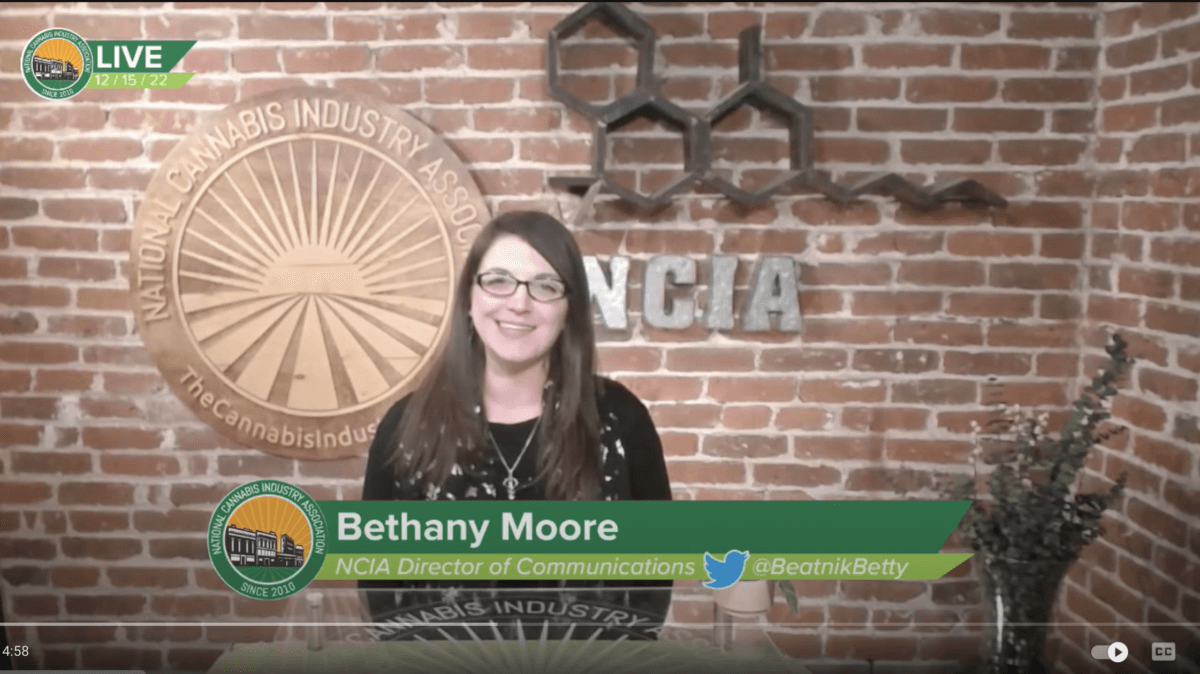
It’s the final episode of NCIA Today for the year 2022! NCIA Director of Communications Bethany Moore checks in with what’s going on across the country with the National Cannabis Industry Association’s membership, board, allies, and staff. Join us every other Thursday on Facebook for NCIA Today Live.
Reform Whiplash in Washington
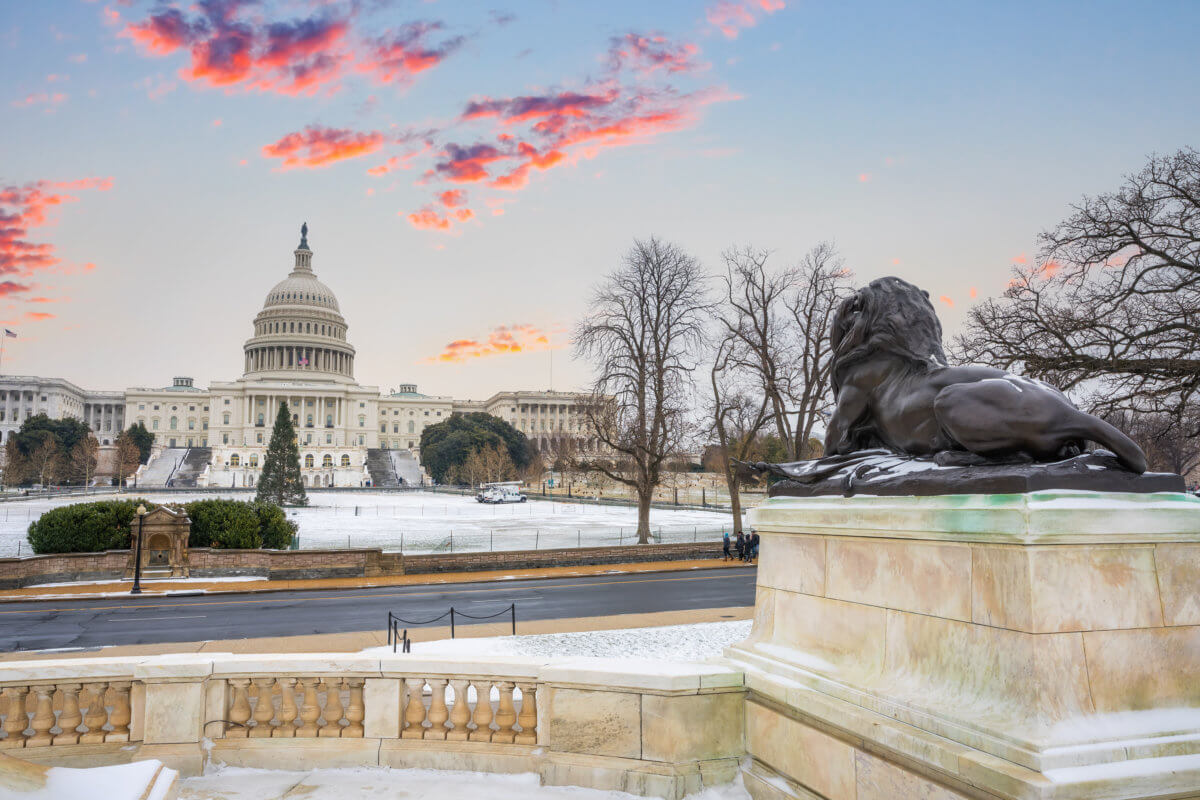
Photo By CannabisCamera.com
By Michelle Rutter Friberg, NCIA’s Deputy Director of Government Relations
Last week, cannabis advocates were dealt another blow with the exclusion of the SAFE Banking Act (SAFE+) in the National Defense Authorization Act (NDAA). That being said, all hope is not lost—the government runs out of funding this Friday, 12/16, and members of Congress are working hard to craft an omnibus bill that may present another opportunity for SAFE+.
Earlier this year, the House of Representatives passed their version of the NDAA — which did include the language of the SAFE Banking Act. Since then, all eyes have been on the Senate, where negotiations over the inclusion of “SAFE+” to the NDAA have been the focus. There was much discussion over what exactly the “plus” in SAFE+ would include, but there was no doubt that theHOPE Act would be a part of that, and potentially theGRAM Act. As of a few weeks ago, NCIA and other advocates were feeling cautiously optimistic about the possibility of SAFE+ being passed via the NDAA.
That was until Senate Minority Leader Mitch McConnell (R-KY) took to the Senate floor last Tuesday to specifically call out SAFE+. He said:
“House and Senate Democrats are still obstructing efforts to close out the NDAA by trying to jam in unrelated items with no relationship whatsoever to defense. We’re talking about a grab bag of miscellaneous pet priorities — making our financial system more sympathetic to illegal drugs or the phony, partisan permitting reform and name-only language that’s already failed to pass the Senate earlier this year. If Democrats wanted these controversial items so badly, they had two years to move them across the floor. Heck, they could have scheduled those matters for votes this week. But no, we’re doing more mid-level nominations, while Democrats keep threatening to take our Armed Forces hostage over those extraneous matters.
Leader McConnell even gloated about the exclusion of SAFE+ later in the week, saying, “just as Republicans insisted, just as our service members deserve, this NDAA is not getting dragged down by unrelated liberal nonsense. Good smart policies were kept in and unrelated nonsense like easier financing for illegal drugs was kept out.”
While the NDAA is slated to pass the Senate and be signed into law over the coming days, NCIA is continuing to pursue all options for passing SAFE+, including the omnibus bill that Congress is negotiating (currently) behind closed doors.
In other political news, the runoff election between Sen. Raphael Warnock (D) and Hershel Walker (R) was held in Georgia last week, with Sen. Warnock winning. This meant that Democrats held a 51-49 majority over Republicans; that is until Sen. Kyrsten Sinema decided late last week to change her party affiliation from Democrat to Independent. Like the other two Independent Senators (Angus King [ME] and Bernie Sanders [VT]), she plans to caucus with the Democrats. Regardless, the announcement came as a surprise to many.
While the clock may be running out, NCIA won’t stop advocating for SAFE+ and other cannabis issues to be passed into law.
Hemp: One of the Nation’s Oldest, and Now Newest, Agricultural Commodities
by Michelle Rutter, NCIA’s Government Relations Manager
HISTORY
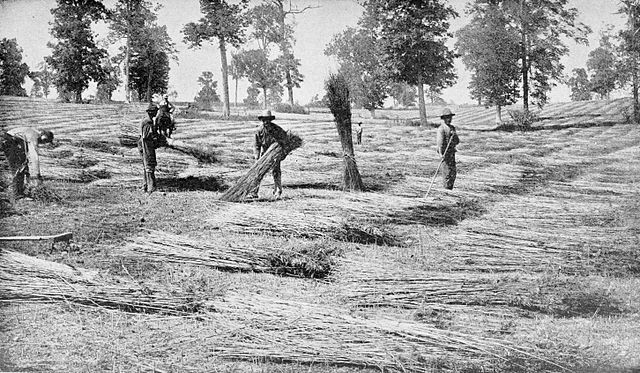
Farming and agriculture has long been a part of North American history. When the Great Depression hit in the 1930’s, both President Franklin Delano Roosevelt and Congress knew that the United States would struggle until the agriculture industry became prosperous again. As a result, many New Deal programs dealt with farming, but arguably the most notable agriculture related legislation was the Agricultural Adjustment Act of 1938, which was the first version of what we know today as simply the “Farm Bill” that is updated roughly every five years.
TODAY
In 2018, a new Farm Bill was introduced with a price tag upwards of $800 billion. One of the most notable provisions in this year’s bill was led by Senate Majority Leader Mitch McConnell (R-KY): hemp legalization. Industrial hemp refers to the cannabis plant with less than 0.3 percent THC content and would include CBD medicinal products — so long as it contains less than 0.3 percent THC and is derived from industrial hemp.
While leadership in the House of Representatives blocked the hemp provision in its version of the bill, the Senate’s version of the bill that passed overwhelmingly in June does include it. That means that when the bill goes to conference in early September, that hemp legalization will be debated. Considering that the Senate Majority Leader is championing this provision, it stands a good chance at being included, though nothing is guaranteed.
Marijuana’s “cousin,” hemp, is generally barred because it is part of the cannabis plant, despite the fact that it contains little of that drug’s key psychoactive ingredient, THC. In 2014, Sen. McConnell secured a hemp pilot program in that year’s farm bill. Since then, at least 35 states have taken up the offer and developed industrial hemp programs, and those states will be eligible to pursue a legal, regulated market if the 2018 Farm Bill is passed with the hemp provision included.
If passed, the Farm Bill would legalize hemp as an agricultural commodity by removing it from the federal list of controlled substances and giving states the opportunity to be the primary regulators of hemp production. In addition to removing hemp from the federal controlled substance list, the Senate farm bill would allow industrial hemp to be eligible for crop insurance, a perk already enjoyed by other, more traditional crops. The bill would also reauthorize commodity, trade, agricultural research, rural development, and food and nutrition programs. Under current law, authorizations will expire September 30 or the end of the applicable crop year.
The first farm bill conference committee meeting has been set for September 5, 2018. The conferees from the House and Senate will try to iron out differences between their two bills in the panel. Included in the discussions will be 47 members of the House of Representatives and nine Senators. The results of this could mean a new era for the agricultural industry if hemp returns to American farmlands.

Follow NCIA
Newsletter
Facebook
Twitter
LinkedIn
Instagram
News & Resource Topics
–
This Just In
Member Blog: The Evolving Cannabis Legal & Regulatory Landscape in 2026
How THCa Vapes Are Changing Consumer