Cannabis Reform – Legislative Victory and What Is To Come
by Madeline Grant, Government Relations Manager
After months of focused attention on the long-anticipated midterm elections, the U.S. Senate has finally approved the House-passed bipartisan cannabis research bill under unanimous consent. It marks the first time a standalone piece of cannabis legislation has ever been sent to the president’s desk. H.R. 8454, the Medical Marijuana and Cannabidiol Research Expansion Act, was filed in July and quickly moved through the House before being taken up by the Senate.
When signed by President Biden, H.R. 8454 will open the door for new innovative treatments derived from cannabis. Leader Schumer stated ahead of the vote, “If you’re one of the millions of Americans who deal with conditions like Parkinson’s or epilepsy or post-traumatic stress, or any number of other conditions, cannabis might hold promising new options for managing these diseases,” according to Marijuana Moment.
Under the legislation, the U.S. attorney general would be given a 60-day deadline to either approve a given application or request supplemental information from the marijuana research applicant. It would create a more efficient pathway for researchers who request larger quantities of cannabis. Additionally, the bill would encourage the Food and Drug Administration (FDA) to develop cannabis-derived medicines. To do this, the bill would allow accredited medical and osteopathic schools, practitioners, research institutions, and manufacturers with a Schedule 1 registration to cultivate their own cannabis for research purposes. Another section would require the Department of Health and Human Services (HHS) to look at the health benefits and risk of cannabis as well as policies that are inhibiting research into cannabis that’s grown in legal states and provide recommendations on overcoming those barriers.
The point – the passage of this legislation finally sets the agencies in motion to allow the needed cannabis research we’ve been waiting for in the United States. The Senate passage of H.R. 8454 comes at the heels of when President Joe Biden issued a mass marijuana pardon and directed a review of the drug’s scheduling status. Just before the vote, Senate Majority Leader Chuck Schumer (D-NY) said on the floor that is continuing to have “productive talks” about a broader package of cannabis reforms he hopes to pass before the end of the lame-duck session.
As the legislative days grow shorter and we near the end of the 117th Congress, the NCIA Government Relations team will continue to be a resource for congressional offices on both sides of the aisle during the lame-duck session. Bipartisan and bicameral offices have been in negotiations about the so-called SAFE Plus package for months and we will continue to monitor any action as it moves forward.
If you are a Blooming or Evergreen NCIA member please make sure you attend our Government Relations update on December 6 at 3:30 pm EST.
We want to hear from you! A portion will be dedicated to answering your specific questions you submit through registration. This will be very interactive and a great way to get to know the Government Relations team. If you are a Blooming or Evergreen member, please go ahead and register HERE. Please be sure to submit questions so we can make sure to include time to answer all of them.
Please stay tuned for updates and more information to come. If you have any questions or want to learn more about how you can get involved with NCIA please contact madeline@thecannabisindustry.org
Making History In Congress, Thanks To NCIA Members!
by Aaron Smith, NCIA’s CEO and Co-founder
History was made today as Senate Majority Leader Chuck Schumer (D-NY) along with Senators Ron Wyden (D-OR) and Cory Booker (D-NJ) introduced the Cannabis Administration and Opportunity Act which would finally remove cannabis from the federal Controlled Substances Act and begin the process of federal regulation.
For the last year, NCIA has been working behind the scenes to ensure this landmark legislation not only ends prohibition but also creates an environment where small and medium-sized businesses can thrive under national legalization. These businesses – who we now call “Main Street Cannabis” – are the heart of our industry and we’re proud to have been giving them a seat at the table in our nation’s halls of power for over 12 years.
We will continue working with our allies in the Senate to advance this bill and advocate for some necessary amendments to better ensure that small, equity, and women-owned businesses (in particular) are well-positioned to thrive after the end of federal prohibition.
We would not be where we are today if not for your support which has allowed us to effectively represent the interests of small businesses like yours in the halls of Congress and in the court of national public opinion.
I hope you’ll join us in making national legalization a reality by making your voice heard at our upcoming 10th Annual Cannabis Industry Lobby Days in Washington, D.C. September 13 & 14!
Thanks to your membership, NCIA’s government relations staff represents Main Street Cannabis in D.C. every day but Lobby Days is your chance to show up and tell your unique story to our nation’s lawmakers, firsthand.
Lobby Days is also the best opportunity to connect with your fellow industry leaders who are truly invested in the future of cannabis and sensible national policy. Please register today so you don’t miss out on making history with us! Reach out to my colleague Madeline Grant to learn more about how you can be as impactful as possible at this year’s Lobby Days.
Thanks, as always, to all NCIA members for their support of the cannabis industry. If your company is not yet a member of NCIA, now’s the time to join and have your voice heard in the halls of Congress.
Watch this video update with Aaron Smith and Michelle Rutter Friberg:
An Optimistic Congress Aims to Legislate a Bipartisan Cannabis Omnibus Package
By Sadaf Naushad, NCIA Intern
As the cannabis industry progresses nationwide, the public demands Congress to pass major cannabis reforms. After months of opposition met among Congress members, a breath of fresh air awaits cannabis advocates, lobbyists, and consumers.
Last Thursday, two crucial congressmen revealed objectives to establish an extensive package of incremental cannabis proposals.
While Senate Majority Leader Chuck Schumer (D-NY) expects to file the final version of the Cannabis Administration and Opportunity Act (CAOA) sometime this summer, lawmakers are using the draft language as a guide to propose an alternative backup bill in creating a cannabis “omnibus” package.
With the wide-ranging package garnering support across Democratic and Republican lawmakers, industry insiders have high hopes that both chambers could come together to endorse an effective, bipartisan bill by the end of this year.
Let’s discuss the potential inclusions within the bipartisan cannabis package.
Recently, a number of Congress members have discussed the possibility of creating a new cannabis bill that would comprise several incremental measures, including provisions focusing on banking, access to medical cannabis for veterans, research expansion, access to SBA programs, drug sentencing reformations, and more.
Lead sponsor of the Secure and Fair Enforcement (SAFE) Banking Act, Rep. Ed Perlmutter (D-CO) is hoping to incorporate protection for financial institutions operating with state-legal cannabis businesses in a potential package. According to Rep. Perlmutter, members also have interest in including Rep. Dave Joyce’s (R-OH) Harnessing Opportunities by Pursuing Expungement (HOPE) Act, a bill designed to expunge prior marijuana convictions. Additionally, lawmakers are deliberating over granting cannabis businesses access to SBA loans and services that are obtainable to every other industry, a reform initially advocated by Sen. Jacky Rosen (D-NV).
These four concerns –- veterans, research, expungements, and banking – constitute a small portion of the package’s considerations.
Congress will also potentially consider including a non-cannabis item as part of the wider deal, known as the EQUAL Act, which looks to alleviate racial disparities within the criminal justice system by eliminating the federal sentencing disparity between crack and powder cocaine.
Leader Schumer, however, faces the requirement of having a 60-vote threshold to pass legislation. Although the chamber comprises a slim majority of Democrats with the vast majority of GOP members opposing numerous past bills, the 60-vote requirement may be attainable. In contrast to Schumer’s CAOA, indications are that the incremental package has more broad bipartisan support.
Though members have not reached an official deal as these major reforms remain under deliberation, Congress members are not abandoning their efforts to push for a broader-based CAOA bill.
Currently in the bicameral conference committee remains the large-scale manufacturing bill, known as the America COMPETES Act. Leader Schumer has rejected attempts to integrate the SAFE Banking Act as currently written into the COMPETES Act, alleging that it may weaken the ability to approve a slightly larger cannabis reform package. Having passed the House six times, industry insiders feel certain that the Senate will authorize the SAFE Banking Act later this year.
Altogether, the above-mentioned legislation would come up short in federally descheduling cannabis; however, these provisions may acquire the support necessary to reach U.S. President Biden’s desk.

 by Madeline Grant, Government Relations Manager
 by Aaron Smith, NCIA’s CEO and Co-founder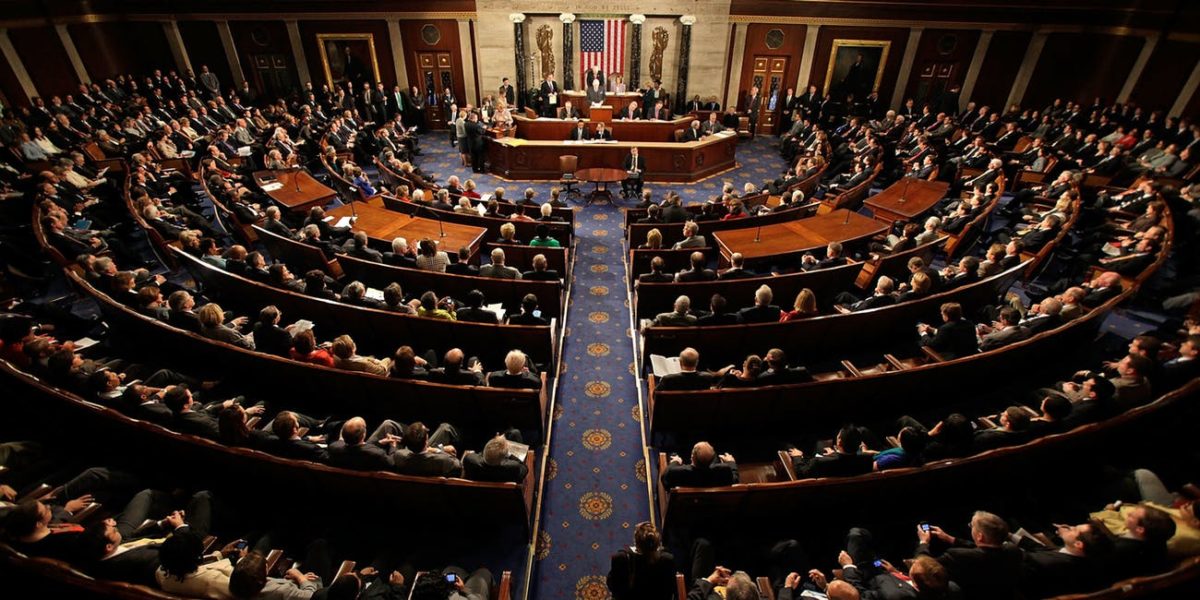
 By Sadaf Naushad
Follow NCIA
Newsletter
Facebook
Twitter
LinkedIn
Instagram
News & Resource Topics
–
This Just In
DOJ Reschedules Medical Cannabis to Schedule III & Announces June 2026 Hearing on Broader Rescheduling
National Cannabis Industry Association (NCIA) to Convene Industry Leaders in Washington for Annual Lobby Days, Bringing Together a Unified Voice for Federal Cannabis Reform