When the COVID-19 pandemic started to ramp up in the U.S. last March and stay at home orders were being put in place, medical cannabis patients took notice.
I saw it firsthand with my wife who stocked up for three months, not knowing what she was in for and wanted to make sure she had her treatments, just in case dispensaries were closed down. She was not alone, it has been well documented that this stocking upsurge took place and sales increased dramatically over a few months.
But many of these businesses did not close during the shutdown and it was a big milestone that several state governments declared medical dispensaries essential. This was a big statement to make for an emerging new industry that has been saddled with controversy over the years.
Prior to COVID-19, the industry was already going through a reset in late 2019. The large players overextended themselves globally with huge capital investments in facilities and then oversupply hit the market, prices started to decline and the anticipated demand to pull CBD products did not materialize. Add COVID-19, and you have the perfect storm to amplify the reset button.
Consolidation is in the works — restructuring of management teams, companies closing doors because they were not strong enough to start with other factors too. This pushed these businesses over the edge.
As we have been slowly reopening the country, the cannabis industry has the potential to emerge stronger than ever. There might be fewer players, but the ones that have survived will be set for the next push of maturity of the marketplace.
States that do not currently have adult-use programs will most likely look at cannabis as a way to drive new tax revenue into the state to help offset the heavy losses during these several months of lockdown.
When these states do pull the trigger on adult-use, regulation and compliance will be a key issue. The current companies who have been using all the latest tracking platforms, ERP systems, and implementing cGMP standards will be in very good shape to meet the requirements and deliver authentic products that are high quality and safe to consume.
Consumers will want to know the origin of the materials being used to manufacture these products and demand transparency from the brands. New innovative technologies using unique molecular-based tags to apply to the flower, oils, isolates and edible products will help take the industry to a new level of scientific proof of authenticity offering forensic transparency across global supply chains.
Even in the face of a pandemic, cannabis is here to stay! Over 60% of the population is in favor of it for both medical and adult use. The science that has taken place over the last 20 years globally has articulated how the human body can take advantage of the cannabis plant in many ways. And for folks who want to use it as a recreational alternative, they should have the right to do so, of course with responsibility.
There is clear global demand, it still needs to be sorted out and that will happen over the course of the next couple of years as this emerging industry matures into a profitable market segment in the world’s economy.
It is an exciting time for cannabis and as we begin to focus on reopening business across the nation, we are eager to take advantage and to be a part of the opportunities that are ahead.
John Shearman, Vice President of Marketing and Cannabis Business Lead at Applied DNA Sciences, has over 30 years of deep enterprise and advertising agency experience across all marketing, sales and IT disciplines. John’s experience allows him to advise on structuring sound strategies that address business goals and objectives. His extensive technology background stems from working with several leading technology companies throughout his career. John spearheads Applied DNA Sciences Cannabis vertical leading the vision, strategy, and product development for this emerging market. John also oversees the marketing for the entire company driving the marketing strategy for its other core verticals.
Guest Post: 2015 Cannabis Industry Market Analysis
2015 was a very exciting time in the cannabis industry. According to public opinion polls conducted in the U.S., between 51% and 58% of respondents were in support of legalization. The highest level of support comes from the age range of 18-34, showing a staggering 71% supporting full legalization.
In 2015, several states voted for some form of cannabis proliferation, and many more have taken decriminalization measures. With a year of adult-use retail cannabis now completed in Colorado and Washington, and the start of full legalization in Oregon, the tide seems to be slowly but steadily shifting.
Reflecting back on 2015, here were a few of the notable developments that resonated throughout the cannabis industry.
Emerging Markets
Currently there are twenty-three states and the District of Columbia that have laws legalizing cannabis usage in some form. Four states have completely legalized cannabis use for adults 21 and older.
On the medical side, several states opened their first cannabis dispensaries to the public in 2015. Nevada, Massachusetts, Minnesota, Delaware, and Illinois were among these states. Though sales have been slow going for various reasons, 2016 should be a landmark year for legalization in many of these newly developing cannabis markets.
Adult-Use Cannabis Boom
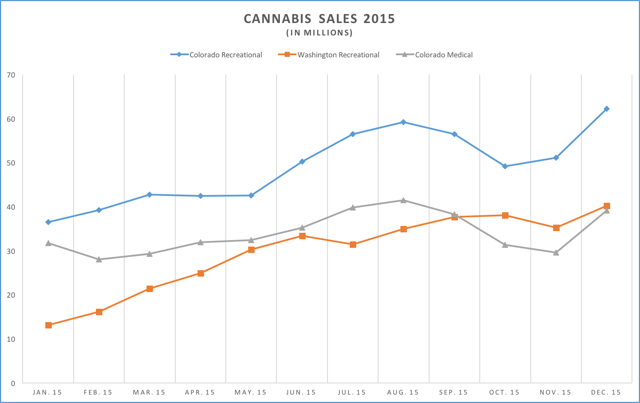
Colorado, Washington, Oregon, and Alaska have all completely legalized the possession of cannabis. On January 1, 2014, Colorado opened its first adult-use cannabis stores, which effectively combined their medical and retail markets. Their combined medical and adult-use system generated more than $699 million in gross revenue in 2014, with approximately $76 million in tax revenue collected. Washington, by comparison, opened its adult-use market in July of 2014 and finished the year with $64 million in total sales and $16 million in tax revenue collected.
The revenue figures for 2015 have eclipsed the previous year’s marks substantially. Colorado gross sales came in just over $996 million for 2015, with $135 million in tax revenue collected from close to 800 stores, servicing about 5.5 million residents.
Washington, by comparison, generated more than $357 million in retail sales, with more than $115 million going to the state as an excise tax. This revenue was generated at approximately 205 licensed stores, servicing 7 million residents.
Meanwhile, Oregon started a partial foray into adult-use cannabis sales by utilizing the existing network of medical dispensaries selectively approved for retail sales of cannabis flowers to anyone 21 and older. In July of 2016, Oregon will completely open its adult-use market. Alaska, with no medical dispensaries or infrastructure, will likely take much longer to develop as a viable market.
This chart references data from the Washington Liquor Control Board as well as The Cannabist website.
2016: Legalization Abounds
With the level of success, both fiscally and socially, that was achieved in relatively small states, it should be expected that 2016 will be a big year for ballot measures legalizing cannabis. There are several states that are gearing up for potential 2016 ballot initiatives. Massachusetts, Maine, Missouri, Ohio, Nevada, California, and Hawaii are the states that seem likely to make it to a vote.
Northeast
In the Northeast, there have been several developments causing optimism throughout the region. New England has taken a very progressive path to legalization. Every state has a medical cannabis market and has decriminalized possession of small amounts of cannabis with the exception of New Hampshire. New Hampshire has made at least six attempts to get decriminalization measures passed, but so far these initiatives have been unsuccessful getting past the State Senate. Ironically, four dispensaries are set to open in 2016 for medical patients that meet the qualifying conditions.
Midwest
Ohio had a ballot measure to legalize cannabis late in 2015. The legislation featured a basic monopoly on production being designated to 10 predetermined groups comprising wealthy residents. Unsurprisingly, there was overwhelming opposition, with the proposed legislation getting shot down by a margin of almost 2:1 against. We’ll likely see a second attempt to pass a legalization measure in 2016.
West Coast
With Washington and Oregon taking legalization measures, California is the next in line. At the end of the session in 2015, Californians passed the Medical Marijuana Regulation and Safety Act. This piece of legislation sets up the regulatory framework for a state-recognized medical marijuana industry. California, being one of the largest states, with a population of over 38 million residents, has had a vibrant quasi-grey market with an estimated 2,000 stores operating within the state. Despite the lack of reported sales figures, estimates of the California market are conservatively $3 billion to $5 billion annually. Should this market be legalized and regulated at some level, this could generate an estimated $450 million to $750 million in tax revenue, should the state impose a 15% tax rate.
2016 should be another historic year for the cannabis industry. With public opinion steadily growing in support of legalization, and the hysteria of an election year, it would not be surprising to see cannabis proliferation take the forefront in the national conversation.
Jim Makoso, Vice President of Lucid Oils
Jim Makoso is an entrepreneur in the cannabis industry. He joined Vuber Technologies as one of the original investors in February 2014. He is currently an Advisory Board Member and shareholder responsible for guiding strategic development. January 2015, Mr. Makoso founded Lucid Labs and Lucid Oils. He currently holds the position of Vice President and is responsible for strategic partnerships and business development.


 John Shearman, Vice President of Marketing and Cannabis Business Lead at Applied DNA Sciences, has over 30 years of deep enterprise and advertising agency experience across all marketing, sales and IT disciplines. John’s experience allows him to advise on structuring sound strategies that address business goals and objectives. His extensive technology background stems from working with several leading technology companies throughout his career. John spearheads Applied DNA Sciences Cannabis vertical leading the vision, strategy, and product development for this emerging market. John also oversees the marketing for the entire company driving the marketing strategy for its other core verticals.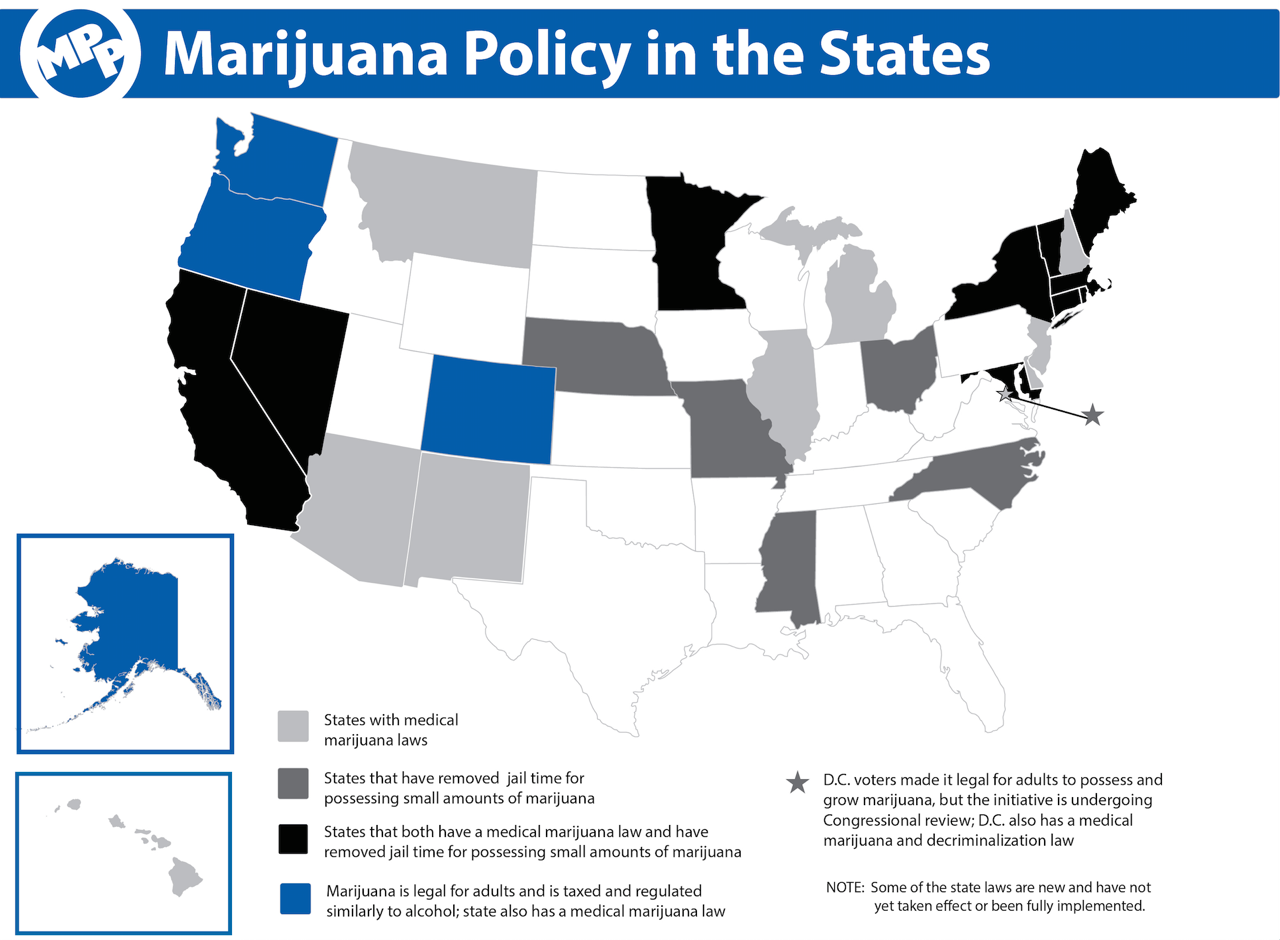

Follow NCIA
Newsletter
Facebook
Twitter
LinkedIn
Instagram
News & Resource Topics
–
This Just In
Committee Blog: Budtenders Make or Break Your Business – A No-Nonsense Guide to Cannabis Retail Staffing
Member Blog: Guaranteeing the First Loan