by Michelle Rutter Friberg, NCIA’s Deputy Director of Government Relations
As NCIA continues into our tenth year advancing the interests of the cannabis industry, all but three U.S. states have some kind of cannabis law on the books, 10 have regulated the commercial production and sale of cannabis for adults, two-thirds of Americans support national legalization, and Congress is closer than ever to making that a reality.
I started with NCIA nearly six years ago, so I’ve witnessed much of the progress we’ve made firsthand — especially the strides forward we’ve made in policy and in the halls of Congress! Let’s take a look back to the early years of NCIA (2010-2013) to see just how far we’ve come in the last decade.
October 2009
The Ogden Memo is released by the Justice Department, directing prosecutors not to prioritize the use of federal resources to prosecute patients with serious illnesses or their caregivers who are complying with state laws on medical marijuana, laying the groundwork for a new national industry. Personally, I consider the Ogden Memo to be the mother of the now-rescinded Cole Memo.
November 2010
NCIA is formed as the cannabis industry’s only national trade association by long-time marijuana policy reform leaders Aaron Smith and Steve Fox.
March 2011
Six association members join Smith and Fox for NCIA’s 1st Annual Cannabis Industry Lobby Days in Washington, D.C. Now, Lobby Days brings hundreds of cannabis industry professionals to D.C. and includes VIP Day, receptions, and opportunities to mingle with over a dozen members of Congress and their staff.
May 2011
The Small Business Banking Improvement Act of 2011 (H.R. 1984), which would exempt state-legal cannabis businesses from Suspicious Activity Report requirements, is introduced in the U.S. House of Representatives by then-Rep. Jared Polis. This bill was the precursor to the Marijuana Businesses Access to Banking Act, which was the precursor to the SAFE Banking Act.
May 2011
The Small Business Tax Equity Act of 2011 (H.R. 1985), which would correct the unfair tax burden of Section 280E, is introduced in the U.S. House of Representatives by Rep. Pete Stark (D-CA). That bill has been re-introduced in every congressional session since 2011. Today, the Small Business Tax Equity Act (H.R. 1118) has 11 cosponsors (compared to over 40 last session), but don’t think it’s because 280E isn’t important– advocates and congressional staff have simply been focused this session on passing SAFE Banking.
June 2011
Rep. Barney Frank (D-MA) and Rep. Ron Paul (R-TX) introduced the Ending Federal Marijuana Prohibition Act of 2011 (H.R. 2306) with NCIA’s support. The bill would have ended prohibition and legalized cannabis at the federal level by amending the Controlled Substances Act. It would then transfer the authority to regulate cannabis from the Drug Enforcement Administration to the Bureau of Alcohol, Tobacco, Firearms, and Explosives.
November 2012
Colorado and Washington become the first two states to legalize marijuana for adult use and sales via voter initiative. NCIA, while an infant of an organization, proudly supported both of these initiatives even as some in the industry didn’t support full legalization at that time. In fact, our co-founder Steve Fox was one of the primary authors of Colorado’s Amendment 64 and our former Deputy Director, Betty Aldworth, was a campaign spokesperson just before joining NCIA.
April 2013
NCIA hosts conservative tax reform champion, Grover Norquist, at its third annual Cannabis Industry Lobby Days in Washington, D.C. While there, Norquist discussed Americans for Tax Reform’s (ATR) release of a white paper titled Legal Cannabis Dispensary Taxation: A Textbook Case of Punishing Law-Abiding Businesses Through the Tax Code. The paper discussed Section 280E of the tax code, which is still misapplied to legal cannabis businesses and creates an effective tax rate two to four times that of other small businesses. Norquist also announced ATR’s endorsement of the Small Business Tax Equity Act.
July 2013
Congressional cannabis champion Rep. Ed Perlmutter (D-CO) introduces the Marijuana Businesses Access to Banking Act of 2013 (H.R. 2652) in the House of Representatives. This bill was the precursor to the SAFE Banking Act which has been approved (twice) by the House of Representatives in the last year.
August 2013
James M. Cole, the Deputy Attorney General, issues new guidance regarding marijuana enforcement and banking, referred to as the “Cole Memo.” The memo indicated that prosecutors and law enforcement should focus only on the following priorities related to state-legal cannabis operations:
Preventing the distribution of marijuana to minors;
Preventing revenue from the sale of marijuana from going to criminal enterprises, gangs, and cartels;
Preventing the diversion of marijuana from states where it is legal under state law in some form to other states;
Preventing state-authorized marijuana activity from being used as a cover or pretext for the trafficking of other illegal drugs or other illegal activity;
Preventing violence and the use of firearms in the cultivation and distribution of marijuana;
Preventing drugged driving and the exacerbation of other adverse public health consequences associated with marijuana use;
Preventing the growing of marijuana on public lands and the attendant public safety and environmental dangers posed by marijuana production on public lands; and
Preventing marijuana possession or use on federal property.
September 2013
Sen. Leahy (D-VT), Chairman of the Senate Judiciary Committee holds an oversight hearing on federal marijuana policy. Both Attorney General Eric Holder and Deputy Attorney General James Cole testified. The hearing, titled “Conflicts between State and Federal Marijuana Laws” came just months after two states, Washington and Colorado, legalized small amounts of cannabis for personal use by adults over 21. At the time, twenty states and the District of Columbia had legalized medicinal cannabis.
November 2013
NCIA hires a Director of Government Relations in Washington, D.C., the first-ever full-time lobbyist on behalf of cannabis businesses at the federal level. That was the man, the myth, the legend: Michael Correia, who is still here nearly seven years later! The Washington Posteven profiled the nation’s first full-time cannabis lobbyist.
Looking back, those early years of NCIA were without a doubt integral to where we are now in cannabis policy. Make sure you read next week’s edition to learn more about 2014-2016 and all the progress we made during those years!
Top 5 Reasons You Should Attend Lobby Days This Year
Will you join us as a united front in Washington, D.C. this year?
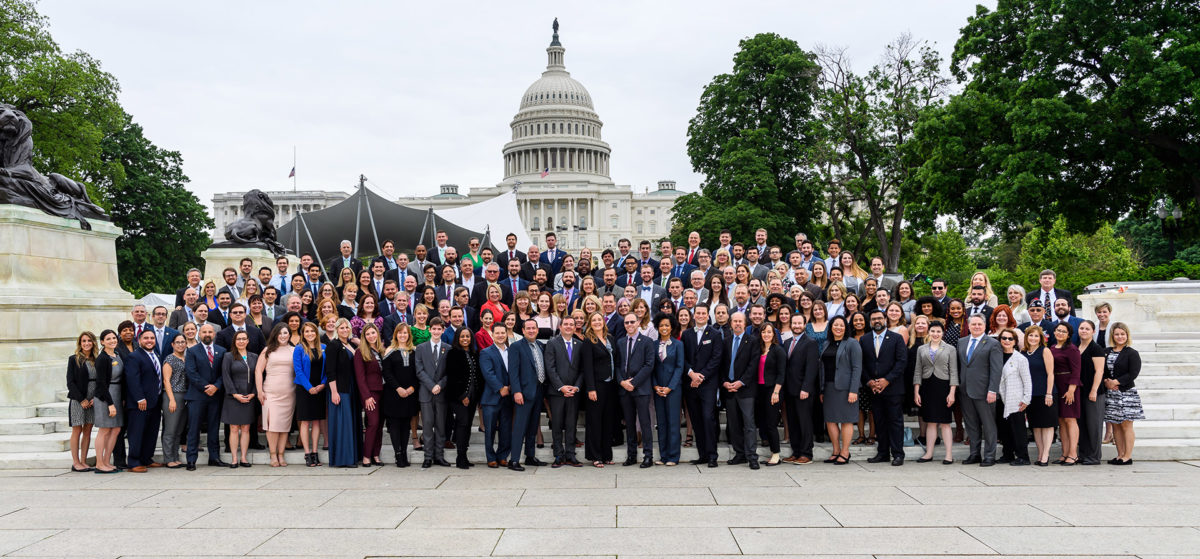
Hundreds of cannabis industry professionals from all over the country will descend on Capitol Hill this month for the 9th year in a row for NCIA’s Annual Lobby Days. It’s more important than ever before to make your voice heard and advocate for the federal reforms our industry needs to truly thrive.
Whether it’s access to banking for your business, much-needed federal tax reforms, or some of the many other struggles faced by our industry that could be remedied by congressional action, we need you to tell your stories on Capitol Hill with us on May 21-23.
Here’s our top five reasons for you to register today to join us for this exciting and impactful event this year:
Progress made on SAFE Banking Act
Earlier this spring, we saw historic movement on one of our key pieces of legislation: banking. The SAFE Banking Act of 2019 was introduced in the House of Representatives by some of our champions in Congress – Reps. Ed Perlmutter (D-CO), Denny Heck (D-WA). Following an historic hearing, the bill received a markup by the House Financial Services Committee and passed out of the House Financial Services Committee in a vote of 45-15. This is important because it is the first time in history that a cannabis banking bill has made its way this far through the legislative process. NCIA vigilantly jumped in to collect and submit the testimonies of dozens of cannabis industry leaders for the hearing.
The momentum continues to grow as the bill now has more than 160 co-sponsors and will likely be debated again in the House soon. Now is the time to strike while the iron is hot. Join us at Lobby Days to educate and inform even more members of Congress about the struggles our industry faces to get and keep access to financial institutions!
New Attorney General is receptive to state’s rights issues
As the saying goes: out with the old and in with the new! Attorney General Jeff Sessions, who is known for his anti-cannabis stance, resigned from the Department of Justice earlier this year, and was replaced by William Bar. During his Senate confirmation hearing in January, Barr expressed his respect for the policies laid out in the Cole Memorandum, issued in 2014, which cannabis companies have relied on to continue doing business in a state-legal, regulated environment. Additionally, he wrote to the committee, “I still believe that the legislative process, rather than administrative guidance, is ultimately the right way to resolve whether and how to legalize marijuana.”
These statements hint at a more reasonable approach to cannabis reform, and the need for NCIA members to make their voices heard in the halls of Congress, particularly those in Congress with influence on the Senate Judiciary Committee and at the Department of Justice.
New members of Congress
Last November, we saw midterm elections bring in a new class of freshman members of Congress. Many of these new faces replaced the old guard of those with long-standing prohibitionist views toward cannabis. Many of them lean more progressive, which means they are more likely to be friendly toward our issues. This infusion of new blood, new minds, and new perspectives in the halls of Congress can work in our favor.
NCIA’s Lobby Days is the best way to get direct access to some of these offices so we can get off on the right foot with them on our issues. Joining us in D.C. means you will inform and educate these new members of Congress on the struggles we face like tax reform, veteran’s medical access, social equity, and of course, the SAFE Banking Act specifically. How many new co-signers can we get on this bill? Let’s find out together.
Meeting 200+ other politically active industry professionals
It’s not a conference — It’s different. There’s no expo floor or panel discussions, just people. And it happens to be some of the most politically engaged leaders of our industry who attend Lobby Days. You’ll rub shoulders and team up with cannabis industry pioneers who have been in the game for years. You’ll learn the “ins and outs” of the Beltway from lobby day veterans who join us every year to advocate for our industry. Hear about it for yourself by watching this re-cap video from last year’s 8th Annual Lobby Days:
Learn how to lobby and take those lessons home
This isn’t our first rodeo, but it might be yours, and that’s okay. Even if you’ve never done citizen lobbying before, NCIA’s government relations team makes it easy by offering trainings before the event, as well as on-site. We’ll give you materials to help you tell your stories including descriptions of our priority legislation, and background information on the offices you’ll be speaking with. And you won’t have to go it alone! We will team you up with a small group of your fellow cannabis industry peers to navigate the halls of Congress together.
Lobby Days with NCIA will empower you to go back to your home state to advocate on the industry’s behalf. You’ll know what to say, how to say it, and what to expect.
Together, we can make a real difference and push our industry past the tipping point. Hundreds of NCIA members have already registered for this event, so what are you waiting for? Register today, schedule your flight, and book your hotel. We can’t wait to see you there.
by Michelle Rutter, NCIA’s Government Relations Manager
Last month, the Senate Judiciary Committee began the confirmation hearing for William Barr, President Trump’s nominee for Attorney General. Barr served as Attorney General under President George H.W. Bush from 1991-1993 — a time when the War on Drugs was arguably at its peak. There was much concern that Barr’s position on cannabis would be reminiscent of the last Attorney General, Jeff Sessions, however, January’s hearings proved otherwise.
During the Senate confirmation hearing, Barr stated that he would respect state cannabis laws and legal businesses when it comes to enforcing federal marijuana statutes. In response to questioning from Sen. Cory Booker (D-NJ) and Sen. Kamala Harris (D-CA), Barr stated that if confirmed, his “approach to this would be not to upset settled expectations and the reliant interests that have arisen as a result of the Cole Memorandum.” Upon further questioning, he stated that he “is not going to go after companies that have relied on the Cole Memorandum.” (It’s also important to note that the two Senators who asked Barr about cannabis policy are both running for president).
Barr even put it in writing. In response to written questions, Barr wrote, “As discussed at my hearing, I do not intend to go after parties who have complied with state law in reliance on the Cole Memorandum… I have not closely considered or determined whether further administrative guidance would be appropriate following the Cole Memorandum and the January 2018 memorandum from Attorney General Sessions, or what such guidance might look like. If confirmed, I will give the matter careful consideration.” He also wrote to the committee, “I still believe that the legislative process, rather than administrative guidance, is ultimately the right way to resolve whether and how to legalize marijuana.”
The Cole Memo, issued in 2014, directed federal prosecutors not to use resources to target businesses or individuals that were in compliance with state cannabis laws and met a set of public safety criteria. That guidance, which gave many businesses and state governments the confidence to move forward with implementing regulated cannabis markets, was rescinded in January 2018 by then-Attorney General Jeff Sessions.
Several comprehensive cannabis policy reform bills that would allow states to determine their own laws without federal interference are expected to be considered this year. NCIA will continue to work with the Senate Judiciary Committee, Barr (should he be confirmed), and the Department of Justice on these critical issues.

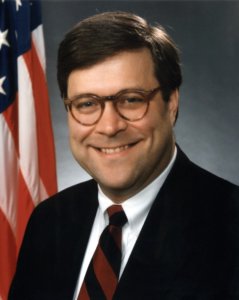 During the Senate confirmation hearing, Barr stated that he would respect state cannabis laws and legal businesses when it comes to enforcing federal marijuana statutes. In response to questioning from Sen. Cory Booker (D-NJ) and Sen. Kamala Harris (D-CA), Barr stated that if confirmed, his “approach to this would be not to upset settled expectations and the reliant interests that have arisen as a result of the Cole Memorandum.” Upon further questioning, he stated that he “is not going to go after companies that have relied on the Cole Memorandum.” (It’s also important to note that the two Senators who asked Barr about cannabis policy are both running for president).
Follow NCIA
Newsletter
Facebook
Twitter
LinkedIn
Instagram
News & Resource Topics
–
This Just In
Member Blog: What Consumers Really Want in a Pre-Roll
Member Blog: The Evolving Cannabis Legal & Regulatory Landscape in 2026