The road to opening a licensed cannabis business is a long one. You have managed to navigate through a competitive and complex licensing process. You have convinced your local community to give your company a shot. You have beautified the area surrounding your business. You have secured your supply chain, and you even opened a special account at a cannabis bank to deposit all that cash. You have hired armed security, and even though you are paying the company 3X what you’re making, it’s okay because you and your staff are safe. You even survived the facility build-out, and hopefully, you have about six months of capital. What an accomplishment. Bravo! You did it! Wait… you need a team to help you operate this beast. Time to hire!
I heard someone say, ‘Great things in business are never done by one person. They’re done by a team of people.’ I would guess that if you have made it to the finish line, you’re likely to already have a team. Now it’s time to expand that team. As if the odds aren’t already stacked, in the fast-paced world of cannabis retail, turnover rates are hitting a staggering 55% within a year, per headset.io as of November 2023. I learned about this very early on when I began my research. I needed to know why and what I could do to avoid more than half my staff quitting within the first year. There were some common factors that led to employee attrition. I was a bit surprised to hear that pay wasn’t a top factor. What I learned was budtenders, in particular, didn’t feel the company provided any kind of staff development. Many instances described a poor management staff, and many felt unappreciated and overworked.
When we started this thing, it was important to make sure we could create opportunities for others. I’ve worked for both big and small businesses, some corporate and some non-corporate. I have had some good managers and some bad ones. I learned something from each job I’ve held. I vowed to make sure my staff never looked at our managers and our company and put us in the bad category. Trust is earned, and leadership can never be forced. I opened doors on April 22nd, and we hired 21 part-time employees. I will follow up in 12 months to see if I beat the odds. I’ve done it before.
It was through the NCIA network I met Carlo, and he had me go through a workshop. What I learned was, first, we needed to ask ourselves: What are our principles at Banyan Tree? My team is amazing, and we have been together so long we trust in each other’s expertise to maintain a harmonious environment. We want to make sure the staff feels the same way. So collectively, we created a list of principles. Next, we posted the job position. The response was overwhelming. Within 24 hours, we had close to 500 applications. We narrowed that down to 50. We scored the candidates based on their work experience and the video response they provided, aligning with our principles. Next, we scheduled the interviews. We called each candidate to share what they could expect during the interview. We sent them the list of our principles. We would be conducting the interview using the S.T.A.R. method: Specific, Task, Action, Result. That means the questions we ask will all be related to their work experience. We expect the answers you give to describe an experience that uses the S.T.A.R method response. It really helps us get to know the candidates during the interview, and you can tell someone is being genuine when they can recall an experience they had while working at previous jobs. There were about 21 of those interviews that went on for a full hour. We hired 21 amazing people. They all feel like they are part of something special. It’s my job to keep my promise.
It’s important to continue developing and educating the staff to help them get better at their skill. It is necessary to provide them with the tools they need to perform their job. Stuff like scanners and POS systems and card readers need to work. Technical issues disrupt the flow, but that’s controllable. Communication and trust are key. Without it, you’re doomed. Appreciation and praise go a long way. We need customers to stay in business, but we can’t do business without staff. My philosophy is that my employees are everything. As long as they love their job, our guests are going to reap the benefits.
Navigating the Cannabis Industry: Leveraging Data and News for Success
In the ever-evolving landscape of the cannabis industry, staying ahead of the curve is essential for businesses looking to thrive. With the National Cannabis Industry Association (NCIA) providing exclusive access to valuable resources and partner discounts, entrepreneurs have a powerful toolkit at their disposal. In this blog, we’ll delve into the insights shared by industry experts during a recent NCIA #IndustryEssenitals webinar, focusing on the importance of leveraging data analytics and news aggregation to drive growth and navigate industry challenges.
Understanding Market Trends with New Frontier Data:
Amanda Reiman, an expert in data-driven decision-making, emphasized the critical role of market insights provided by New Frontier Data. She highlighted the significance of identifying trends, opportunities, and challenges within the cannabis industry. By leveraging data analytics, businesses can make strategic decisions to optimize marketing efforts, enhance product offerings, and improve overall performance. Exclusive member benefits offered by New Frontier Data provide NCIA members with access to invaluable resources, empowering them to stay ahead of the competition.
Driving Growth with Data-Backed Strategies and BDSA:
Lexie Barton expanded on Amanda’s insights by focusing on the practical applications of data analytics, particularly through BDSA. She discussed the importance of optimizing sales strategies and harnessing the power of data to inform product innovation, pricing strategies, and market expansion. By maximizing sales with BDSA’s insights, NCIA members can gain a competitive edge and drive business growth in a rapidly evolving market.
Meeting Information Needs with Cannabis NewsHub:
Samantha Hobbs shed light on the role of Cannabis NewsHub in meeting the information needs of cannabis businesses. By centralizing industry news and delivering tailored updates directly to businesses, Cannabis NewsHub streamlines the process of staying informed and ahead of industry developments. With access to the latest news and updates, businesses can anticipate challenges, identify opportunities, and adjust their strategies accordingly.
Optimizing Business Decision-Making with NCIA:
Aaron Smith, Co-Founder & CEO of NCIA, underscored the importance of leveraging professional resources and strategic partnerships to optimize business decision-making processes. He emphasized the value of NCIA membership in driving sustainable growth and success within the cannabis industry. By accessing exclusive partner discounts and resources, NCIA members can make informed decisions, mitigate risks, and capitalize on emerging opportunities.
Conclusion:
In conclusion, the insights shared by industry experts during the most recent NCIA #IndustryEssentials webinar highlight the critical role of data analytics and news aggregation in navigating the complexities of the cannabis industry. By leveraging tools provided by partners like New Frontier Data, BDSA, and Cannabis NewsHub, businesses can make informed decisions, identify growth opportunities, and stay ahead of the competition. Additionally, NCIA membership offers exclusive benefits and resources that further empower businesses to succeed in the dynamic cannabis market. Stay informed, stay ahead, and maximize your business potential with NCIA and its esteemed partners.
Ready to dive deeper into the world of cannabis industry insights? Be sure to watch the full recording of our webinar for a comprehensive look at leveraging data and news for success in this ever-evolving market. Click the link below to access the complete program and gain access to exclusive tips, strategies, and resources tailored specifically for cannabis businesses.
Call to Action:
Ready to leverage data and news for success in the cannabis industry? Join NCIA and gain access to exclusive partner discounts and resources. Strengthen your position in the industry and unlock the tools you need to thrive in the ever-evolving cannabis market. Don’t miss out on this exclusive opportunity to maximize your business potential with NCIA and its esteemed partners.
Overcoming Information Barriers: Data Silos in the Cannabis World
As the cannabis industry rides the waves of rapid globalization and acceptance, it is evolving into a multi-billion-dollar sector. And with this sudden influx of money, has also come an influx of data.
Unfortunately, the industry is evolving and growing faster than many businesses can keep up with, leading to roadblocks and obstacles that many businesses don’t have the infrastructure in place to adapt around. One such pressing issue is the compartmentalization of data within businesses, or “data silos”
When these silos occur, information is isolated from other systems, limiting accessibility and collaboration, and making it nearly impossible for data-driven decision-making.
The implications of siloed data
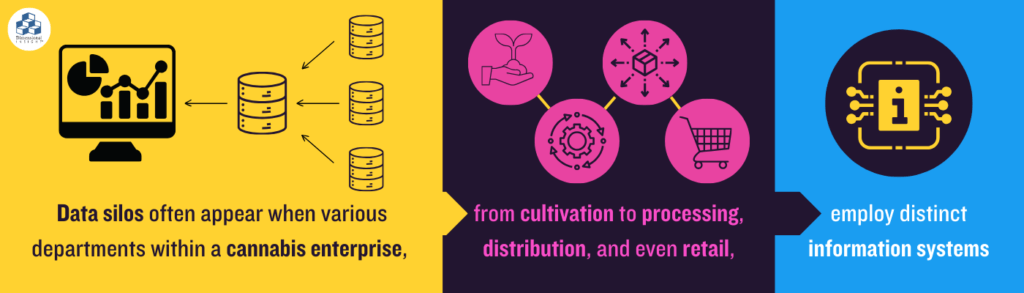
Data silos often appear when various departments within a cannabis enterprise, from cultivation to processing, distribution, and even retail, employ distinct information systems. Different facets of a business often utilize different tools and solutions, each with their own data infrastructure and programming. Although taking on multiple solutions can ease the initial burden for businesses trying to build their tech stack, this approach can lead to major processing hurdles later down the road.
The biggest drawback of this isolated data environment is limiting cross-departmental collaboration. Let’s paint a scenario: without a unified data system, cultivators might not be able to synchronize their production schedules with the sales trends identified by their retail and distributor outlets. This misalignment can lead to stock shortages, resulting in lost sales and disappointed customers. Conversely, it might also lead to overproduction, and in turn expired products and heavy storage expenditures over time.
Root Causes of Data Silos in Cannabis
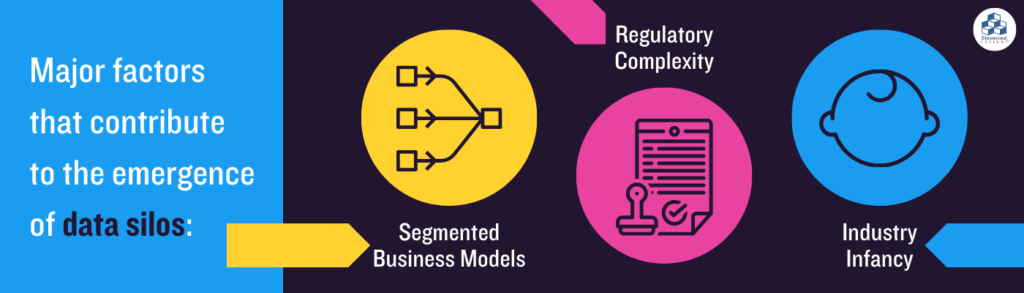
To tackle this challenge head-on, it’s essential to first understand where it comes from. There are several major factors that contribute to the emergence of data silos:
Segmented Business Models: As cannabis businesses expand, they often segment into specialized units. Each of these units, with their unique operational needs, can inadvertently craft their own data management methods, leading to isolated data pools. Dispensaries may be employing different systems for their point-of-sale (POS), inventory management, ordering, and digital marketing. Without integrating the above systems, managers and C-suite individuals can’t properly align their supply-chain with sales strategies. Likewise, suppliers and distributors often lack transparency between the products they’re pushing out and what’s actually selling on retail shelves.
Regulatory Complexity: The cannabis industry is heavily regulated, and these regulations can vary widely from one jurisdiction to another. A lack of central federal guidelines means each state is left up to its own devices to determine how businesses remain compliant, and this problem is only compounded as we delve down into individual counties and territories. Different stages of the supply chain also have different data they must report, making it extremely difficult for vertically integrated businesses to ensure they’re covered on all fronts. With these varying regulatory demands, different departments may adopt distinct data tracking systems, further deepening the data divide.
Industry Infancy: The relative newness of the cannabis industry means there’s a continual influx of specialized technological solutions. Very little in the industry is standardized at this point, meaning each solution has its own approach to both data governance as well as data definitions. While these tools might be tailored to address specific needs, they can sometimes exacerbate data isolation if not chosen with integration in mind.
Challenges presented by data silos
Persisting with data silos introduces several operational hurdles. On a macro scale, isolated data complicates streamlining processes across the business chain. It introduces inconsistencies, creating a ripple effect that might not only compromise the quality of end products, but the efficiency in getting them into consumer hands.
Additionally, the overhead of managing multiple data systems can strain resources, both in terms of manpower and finances. Within the tightly regulated framework of the cannabis industry, these inconsistencies can magnify into compliance violations. This can lead to hefty fines, reputational damage, or in extreme cases, business closures. It takes just one failed audit to incur devastating losses, especially for smaller businesses that lack the capital to cushion heavier blows.
Strategies to overcome data silos
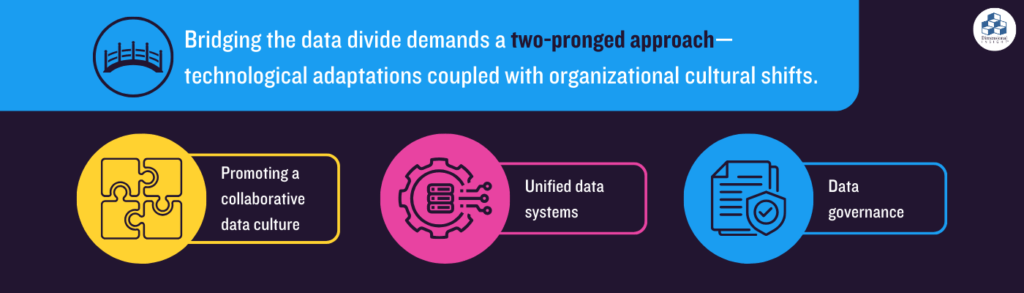
Bridging the data divide demands a two-pronged approach—technological adaptations coupled with organizational cultural shifts.
Promoting a collaborative data culture: The first step is to build an organizational ethos that places immense value on data-driven decision-making. Staff and management alike need to prioritize the value of data and adopt the mindset that “data is key.”
Such a culture should incentivize cross-departmental collaborations, fostering an environment where data sharing becomes the norm rather than the exception.
Unified data systems: Technological investments play a pivotal role. By adopting systems like industry-specific ERPs or advanced data integration tools, businesses can usher in a centralized data management paradigm. Such platforms not only facilitate data integration but also enhance analytics capabilities.
Data governance: Instituting a robust data governance framework ensures there are clear policies regarding data access and manipulation. This promotes data integrity and accuracy, striking a balance between facilitating data accessibility as well as maintaining regulatory compliance.
The role of data analytics
In today’s digital age, analytics may just be the cannabis industry’s biggest ally. Contemporary analytics solutions, especially those leveraging cloud technology, offer robust platforms to centralize, integrate, and analyze data. This allows businesses to harness insights from seed-to-sale and empower their overarching business strategies. By breaking down data silos, the cannabis industry can ensure operational agility and enhance customer satisfaction, positioning itself for sustained growth in a rapidly evolving landscape.
Member Blog: The Drawbacks of Doing Your Own Payroll
The cannabis industry is unique in that there are many issues to consider when it comes to payroll. Doing payroll in-house can prove to be a complex endeavor and can have many drawbacks along the way. For instance, it can be difficult to keep up with ever-changing laws and regulations relating to payroll taxes, safety net contributions, and labor law compliance. Additionally, in-house payroll requires comprehensive knowledge to compute withholdings and deductions from employee wages, which can prove to be challenging.
Using a third-party payroll provider can help to improve accuracy and ease the burden of managing employee payroll. Third-party payroll providers can handle all the complexities involved in payroll, such as withholdings, benefit deductions, and payroll tax filings, freeing up valuable time and resources. Furthermore, a third-party payroll provider will be securely monitoring and tracking payroll changes, ensuring compliance with the latest payroll regulations.
In general, doing payroll in-house can be a complex endeavor that requires specialized knowledge and can be a resource-consuming task, but in a heavily regulated industry like cannabis this is especially true. For these reasons, cannabis businesses who switch to a third-party payroll provider often find the benefits far outweigh any obstacles.
Business owners have their minds set on ensuring the growth and stability of their businesses, figuring out modes to cut down costs along the line. Particularly, budding businesses in a bid to satisfy this widespread phenomenon, decide on DIY payroll – choosing to oversee the bookkeeping and accounting arm of their businesses. The common misconception is that payroll outsourcing options constitute a financial burden, contrariwise, the costs incurred from consistent errors (as is always the case) sum up to impact much more extensive financial repercussions on the company.
It is noteworthy that the convincing nature of DIY payroll also bears characteristic flaws which could pose serious threats to your business enterprise. Details on the drawbacks of doing your payroll are highlighted in this article.
Extreme Dependency
Seeing that you and/or another member of your workforce is solely charged with the responsibility in addition to other work-related assignments, chances are that your company finances will take a nosedive if you or the designated other is unavailable for any reason. This isn’t the same if you outsource, as payroll software and service providers are unfazed by such challenges.
Reduced Productivity
Settling financial statements and record keeping are time-consuming processes. Therefore, taking this up yourself would suggest that precious time and labor that could be spent on other vital aspects of the business will be diverted, influencing the work rate and eventual results.
In addition, payroll requires rapt attention to detail, precision, and patience. There is increased stress and the resultant frustration that could result could negatively impact productivity.
Heightened Susceptibility to Errors
Payroll is a complex system of procedures, requiring well-trained and skillful personnel. Experienced service providers are prone to errors and sometimes make mistakes, the chances, therefore, are that if you handle it yourself, you will make grave errors.
Miscalculating Profits
Inaccurate bookkeeping can lead to miscalculation of profit. Unpaid invoices would remain unnoticed, and the establishment suffers losses.
Missing Important Deadlines
The workload makes missing deadlines a high possibility. Poor handling of documents and vital information can result in missing payment dates, ignoring tax information and forgetting payment bonuses and overtime, to mention a few. This could result in noncompliance with government rules and your business might spend a large chunk satisfying fees and fines.
Cash Flow Problems
With inaccurate bookkeeping, there is no adequate knowledge of cash inflow and outflow. This common DIY payroll challenge could lead to payroll issues in the long run and set your business up for a downturn.
Apprehension by Regulatory Agencies
With DIY payroll, you may have inaccurate books, payment issues, consistent complaints, and noncompliance with state and federal laws. This would ignite the swift actions of government agencies like the Internal Revenue Service (IRS) and your business may suffer grave repercussions.
Indeed, the complications accompanying DIY payroll may outweigh the advantages proposed, hence the need to consider helpful payroll services to ease the burden and help your business focus.
Having an effective payroll system is crucial for Human Capital Management, an important ingredient for business growth and advancement.





Follow NCIA
Newsletter
Facebook
Twitter
LinkedIn
Instagram
News & Resource Topics
–
This Just In
Committee Blog: Access to Capital in the U.S. Cannabis Market Outlook
Member Blog: The Risks of Removing a Regulated Cannabis Market