Member Blog: Where Is Delta-8 THC Legal and Where Is It Banned? CBD Oracle’s Map Has the Answers
Delta-8 THC is probably the most controversial cannabinoid on the planet right now. With the 2018 Farm Bill being widely considered to have removed the THC isomer from the federal list of controlled substances, hemp and CBD companies quickly found a use for their excess CBD isolate. But if you’re considering selling delta-8 THC,federal law is only a part of the picture, and at state level, you have a patchwork of different laws and regulatory schemes to contend with.
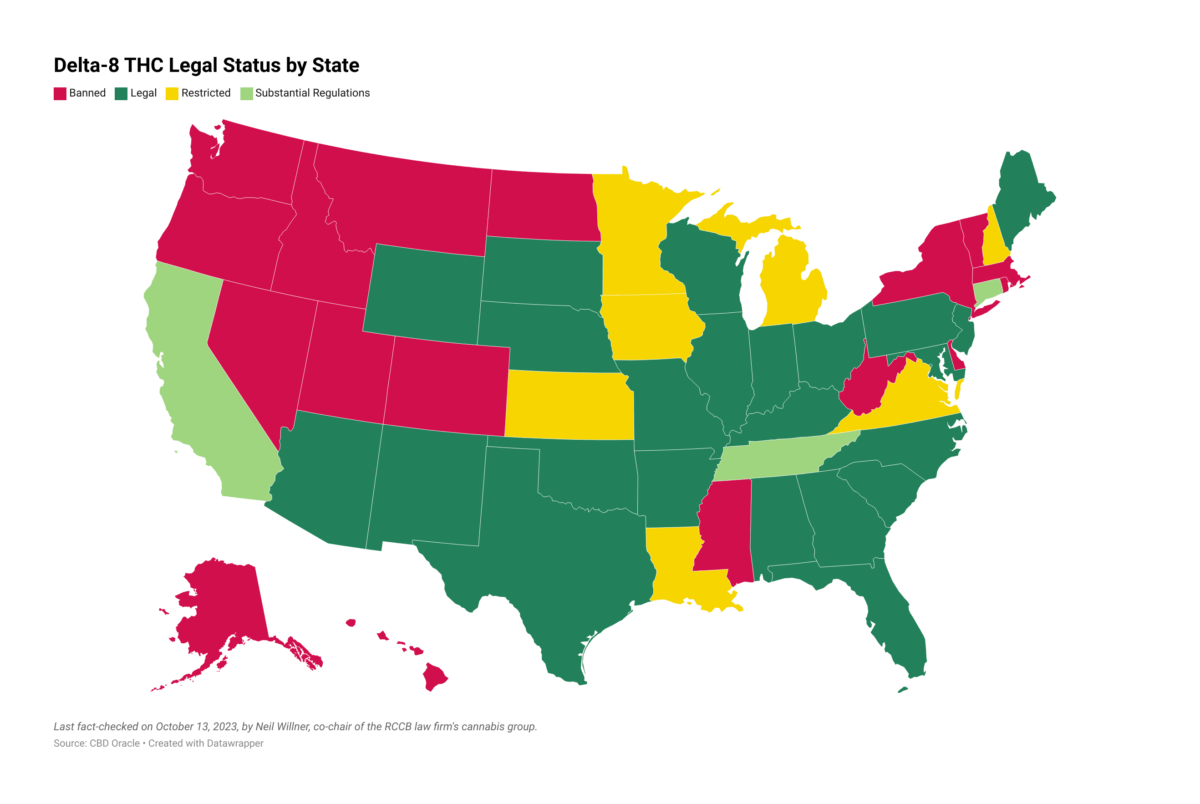
This is why CBD Oracle, working alongsideNeil Willner co-chair of the Cannabis Group at Royer Cooper Cohen Braunfeld, has produced astate-by-state map of delta-8 THC’s legality based on extensive reviews of state law. If you want to know what’s going on with delta-8 THC in a specific state, this is one of the best resources around to get the answer you’re looking for.
Delta-8 THC Is Legal in 22 States and 1 District With Limited Regulation
Despite the controversy surrounding delta-8 THC, it remains legal in 22 states and 1 district, with only limited regulation. This covers the following states:
Alabama*
Arizona
Arkansas
Florida*
Georgia (?)
Illinois
Indiana (?)
Kentucky*
Maine
Maryland* (?)
Missouri
Nebraska
New Jersey
New Mexico
North Carolina
Ohio
Oklahoma
Pennsylvania (?)
South Carolina (?)
Texas (?)
Washington D.C.
Wisconsin
Wyoming*
Here, a * beside the state’s name means they’ve instituted age restrictions, preventing anybody aged 21 or under from buying delta-8 THC. States marked with (?) are currently involved in legal action about the status of delta-8 THC.
In the majority of these cases, state law basically follows the blueprint laid down by the 2018 Farm Bill with few or no additional rules. In fact, only a handful of states (Alabama, Florida, Kentucky, Maryland and Wyoming) have even passed laws preventing youth from buying delta-8 THC.
Legal actions are ongoing in several states, with the situation being slightly different in each. For instance, in Maryland, thehemp industry won a temporary injunction against the state, preventing the state from enforcing the provisions of House Bill (HB) 556 which relate to hemp until the action is resolved. The bill originally made it so that delta-8 THC products (and most CBD) could only be sold in licensed marijuana dispensaries, but this was deemed by the court to create a monopoly.
Delta-8 THC Is Banned in 17 States and Severely Restricted in 7 More
For every state where delta-8 THC is de facto legal, there is another state which has either banned or severely restricted the cannabinoid. In total, CBD Oracle’s analysis shows that delta-8 THC is banned in 17 states and severely restricted in 7 more. The states with bans are:
Alaska
Colorado
Delaware
Hawaii
Idaho
Massachusetts
Mississippi
Montana
Nevada (technically could be approved for marijuana industry)
New York (isomerization banned, could theoretically be sold in adult use)
North Dakota
Oregon
Rhode Island
Utah (possible in medical industry)
Vermont
Washington
West Virginia
And there are severe restrictions – limiting all THCs to be under 0.3% for hemp products, unless otherwise noted – in the following seven states:
Iowa
Kansas
Louisiana (all THCs must be under 8 mg per serving and 1% by dry weight)
Michigan (all THCs under 0.3% and only marijuana-derived delta-8 allowed)
Minnesota (all THCs under 0.3% and less than 5 mg per serving)
New Hampshire
Virginia (2 mg serving limit or >25:1 CBD:THC ratio)
Exactly how delta-8 THC is banned or restricted varies by state. For instance, while Coloradobans the “isomerization” process used to make delta-8 from CBD, Idahobasically bansanything that contains THC at all, even if it’s just CBD with trace, federally-acceptable levels of delta-9 THC. For the restricted states, most require that all THCs total to under 0.3% by dry weight, which is technically possible for a delta-8 THC product to meet, but essentially none do.
The analysis also revealed that – just like with marijuana – making delta-8 THC illegal doesn’t automatically remove it from a community. In Hawaii and Mississippi, for instance, despite state law banning delta-8 THC, it is still openly sold.
Only Three States Have Substantial Regulations on Delta-8 THC
In California, Connecticut and Tennessee, delta-8 THC is legal but has substantial regulations in place. In California and Connecticut, delta-8 THC is treated as marijuana and is sold as part of the adult use industry. This automatically institutes a wide range of requirements on the cannabinoid, including rules on testing and labeling to ensure safety and transparency for consumers.
Tennessee is the unique case here, where delta-8 THC is regulated as a “hemp-derived cannabinoid” and is legal to sell to adults aged 21 and over.Senate Bill (SB) 378 includes requirements for testing for contaminants, informative labeling and marketing which does not target youths, as well as a 25 mg serving size limit.
The Patchwork of Laws and the Future of Delta-8 THC
The key take-away for sellers of delta-8 THC is that current state regulations are a patchwork, making it very difficult to navigate for even the most responsible of companies. The product you can sell in Arizona without issues is probably not legal in Kansas, and would require batch testing and more to be sold in Tennessee.
This uncertainty may be resolved by the upcoming 2023 Farm Bill, but even this isn’t a sure thing. While the 2018 Farm Bill opened the door to a whole host of products and simply assumed (incorrectly) that the FDA would step up to regulate finished products, the new version might offer the clarity that was lacking. However, it’s just as likely that the bill will redefine “hemp” in a way that excludes delta-8 THC by default.
Pretty much the only thing you can depend on is that you’ll need to keep a close eye on state laws in the coming year. CBD Oracle’s map will be continuously revised to reflect the current legal reality and help responsible hemp companies remain compliant. ______________________________________________________________________________________
Lee Johnson is the senior editor at CBD Oracle, and has been covering science, vaping and cannabis for over a decade. He focuses on research-driven deep dives into topics ranging from medical uses for CBD to industry and user statistics, as well as general guides and explainers for consumers.
CBD Oracle is a cannabis consumer research company working to improve the safety and transparency of cannabis and hemp products, which publishes in-depth scientific, legal and consumer analyses on cannabis and cannabinoids.
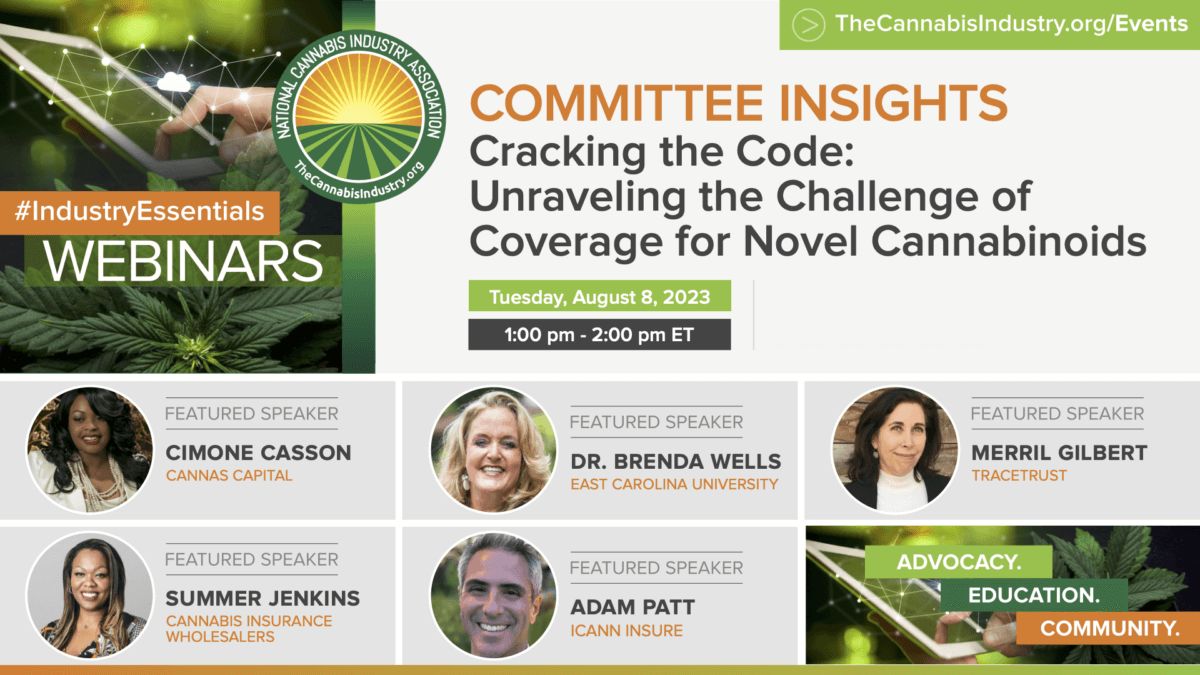
Cracking the Code – Unraveling the Challenge of Coverage for Novel Cannabinoids | 8.8.23 | Committee Insights
NCIA’s #IndustryEssentials webinar series is our premier digital educational platform featuring a variety of interactive programs allowing us to provide you timely, engaging and essential education when you need it most.
In this edition of our Committee Insights series, originally aired on August 8, NCIA’s Risk Management & Insurance Committee explored why insurance for novel cannabinoids can be such a challenging code to crack. Our discussion will help you navigate through liability and legislative loopholes, offering a clearer understanding of your exposure, while considering the patchwork of federal and state requirements.
In case you missed it, in conjunction with this session they’ve also released the third edition of their “Risk Management and Insurance Manual” specifically exploring this subject, which is available for download on NCIA’s website here: https://bit.ly/3OvGtag
You’ll leave with a better understanding of how unravel the complexities of insuring novel cannabinoids and equipped with the knowledge needed to make informed decisions regarding your insurance coverage. Whether you’re a cannabis business owner, a risk manager, an insurance professional, or anyone with an interest in this topic, this webinar will provide you with practical takeaways to safeguard your products, operations, and workforce.
Tune in as we crack the code to safeguard your products, operations and workforce!
Committee Blog: Accurate Pasteur Pipette or Grandma’s Turkey Baster – Cannabis Dosing
by NCIA’s Infused Products Committee; contributors Todd Winter, Ashley Hansen, Danielle Maybach, Lee Hilbert, Trevor Morones, and Greg Scher
Where is cannabis in the journey of dosing edibles?
Edibles are growing as a market share only behind concentrates. It is essential to have accuracy across the industry to protect human health and stabilize the consumer market. Potency, homogeneity, absorption rate, interpretation of dose (by State, County, International), percentage error/variance, labeling, and source of raw materials are just some of the items always questioned.
While we are discussing this issue, there will be no right answer for everybody. What is the dose? What is a serving? A check of an operator’s shelves will show chocolate bars with 800 mg of THC and a similar sized bar with 80 mg of THC. If you walked off the street and bought the 800 mg bar with only experiencing the 80 mg bar; you are in for a trip, and not a good one.
BDS Analytics’ GreenEdge Retail Tracking Platform as presented by Tamar Maritz in February had shown that when California consumers purchased cannabinoid products in 2018, they often want to know the CBD and THC content.
Label requirements vary state by state on the THC side and are often inaccurate both in the reporting of potency and the way they are displayed on CBD products. Extracts used as raw ingredients in product formulation come in various forms, it is important for the manufacturers to know the percent of actual CBD or THC when making purchase decisions. CBD extracts can be in the form of isolates with low bioavailability, or full spectrum which means the cannabinoid retains more of the plant’s original components.
Additionally, there are infused products, where the flower is extracted by an infusion into an oil, retaining even more of the original cannabinoid profile. All these extracts have specific formulation and labeling nuances that need standardization. The medical community wants even more specific terpene profile information as individual levels of Limonene, Myrcene, and other terpenes gain recognition for properties that have some additional benefit.
Do the terpenes solely earn the credit for their benefits or is it in combination with the other chemical compositions?
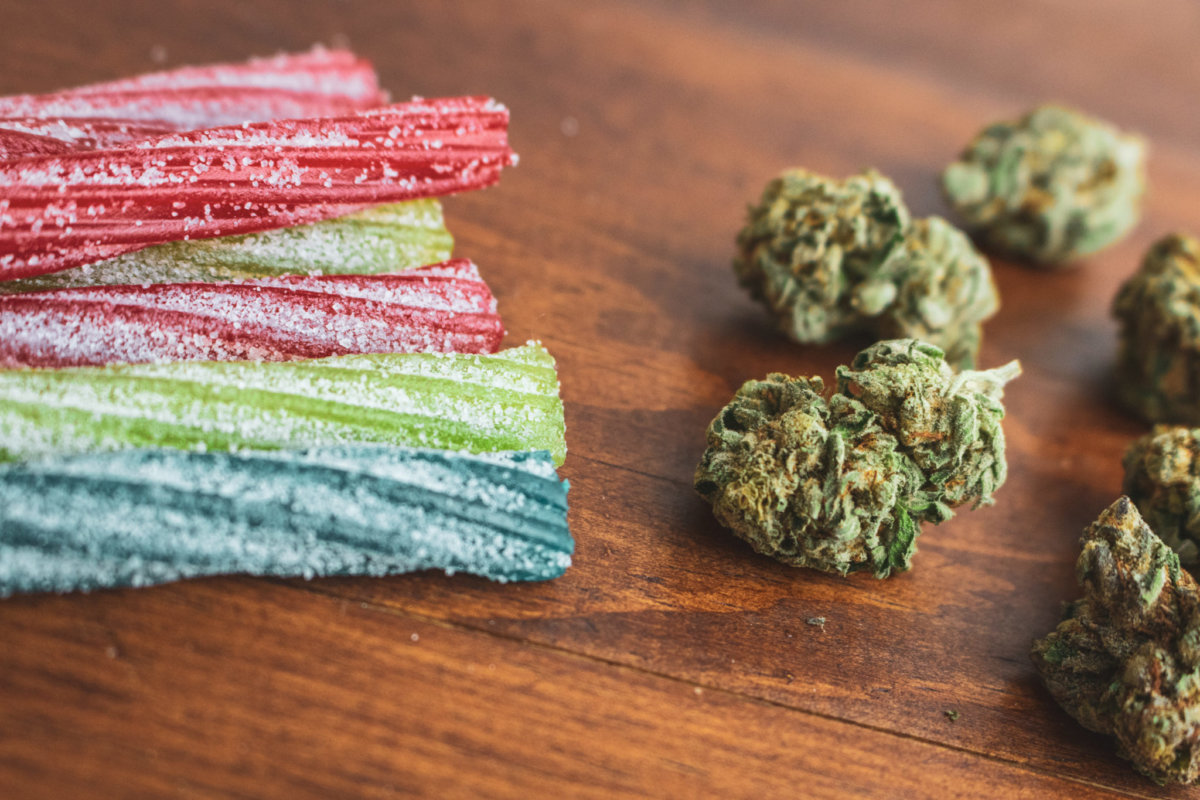
There are many ways to add cannabinoids into edibles; for example, when developing cannabis-infused products, are the manufactures using the “sprinkle” method to add the raw material/additive by literally sprinkling isolate? Are they using a pipette for exact measurement from a reputable supplier that is approved for food contact having been third-party audited, or a turkey baster from grandma’s kitchen utensil drawer which has seen some years? Methods abound!
Perhaps the most accurate method to create a homogenous product is to incorporate the raw material during the mixing step; before cooking, gassing (CO2), or pasteurization. Not everybody that starts an edible factory comes from the food or pharmaceutical industry. A standard serving size or dosage, whichever you prefer, could make life easier for all stakeholders with a few exceptions. As yield models mature for extraction, markets will adjust, and prices can stabilize based on real data.
In Iowa, they have just legalized for medical use, but the flower is not legal. It is 100% treated as a drug. Any product needs to have no more than 3% THC to be permitted. We can’t forget our colleagues dealing with burdensome regulation. I doubt they can measure with turkey baster there, and if we saw a manufacturer in Iowa, we would probably see a pipette. Consensus on a dose can help elected officials know more and lift heavy restrictions.
Caffeine, like cannabis, is a naturally occurring alkaloid in 60+ plants. Cannabis produces THC and CBD, which are cannabinoids. The next step for the industry in supporting cannabinoid dosing of THC and CBD or any other cannabinoid is to increase general public recognition, routine toxicology studies, and develop appropriate data and work methods to obtain public recognition or certification for food safety, public safety, and documentation.
In the United States caffeine, when in soda, is limited to 65 mg per 12 liquid ounces of beverage. In pill form, the FDA allows 200 mg of caffeine. While this is about THC/CBD, the parallels are plain. While the Cannabis industry addresses dosing challenges are many. Stakeholders composed of consumers, operators, manufacturers, laboratories, distributors, and regulators would like to see the order in the industry.
The Federal Government does not yet consider cannabis as a food additive that is “Generally Recognized as Safe (GRAS).” Caffeine, a GRAS substance under current regulation, attained status under industry practices over 60 years ago. Within our industry, GRAS is not a deeply-rooted measurement for quality or safety standards. Cannabis has no history of being hazardous when infused in products and defining a serving, or a dose should not impact the operations of notable brands that provide excellent food safety and quality.
Each consumer (patient or recreational user) has their personal approach to cannabis dosing based upon their due diligence. Manufacturers are producing THC and CBD products that range from “micro-dose” to “mega-dose” because they understand that no one standard dose is the right for every individual.
Consumers look at labels to determine which product to buy. Manufacturers rely on testing to confirm THC and CBD content. CBD and micro-dose product categories are trending; unfortunately, many laboratories are not equipped to test CBD products accurately and consistently. THC Micro-dose products have similar problems. Not all laboratories have equipment that can report trace amounts accurately. Homogeneity, labeling, and raw ingredient sourcing are opportunities for manufacturers to set themselves apart to the retail operators in a wide-open market. Let us collectively work together towards clarifying the issue and work with all the stakeholders to define for the public some language that can be understood by all, encourage federalization, and develop a standard of excellence.
NCIA’s Infused Products Committee (IPC) focuses on edible and topical products, reviewing existing business practices and state regulations. Regulation of these products is the IPC’s initial key focus, but the committee’s purpose is to ensure the infused product sector is helping shape its destiny, rather than being driven by differing jurisdictional regulations. The IPC is also working with the Policy Council and Council on Responsible Cannabis Regulation (CRCR) to develop standardized regulations for legislators and regulators to adopt as their states legalize the industry.
Follow NCIA
Newsletter
Facebook
Twitter
LinkedIn
Instagram
News & Resource Topics
–
This Just In
Beyond Rescheduling: Inside NCIA’s 14th Annual National Cannabis Industry Lobby Days
DOJ Reschedules Medical Cannabis to Schedule III & Announces June 2026 Hearing on Broader Rescheduling