Equity Member Spotlight – Back to D.C. for Lobby Days
by Mike Lomuto, DEI Manager
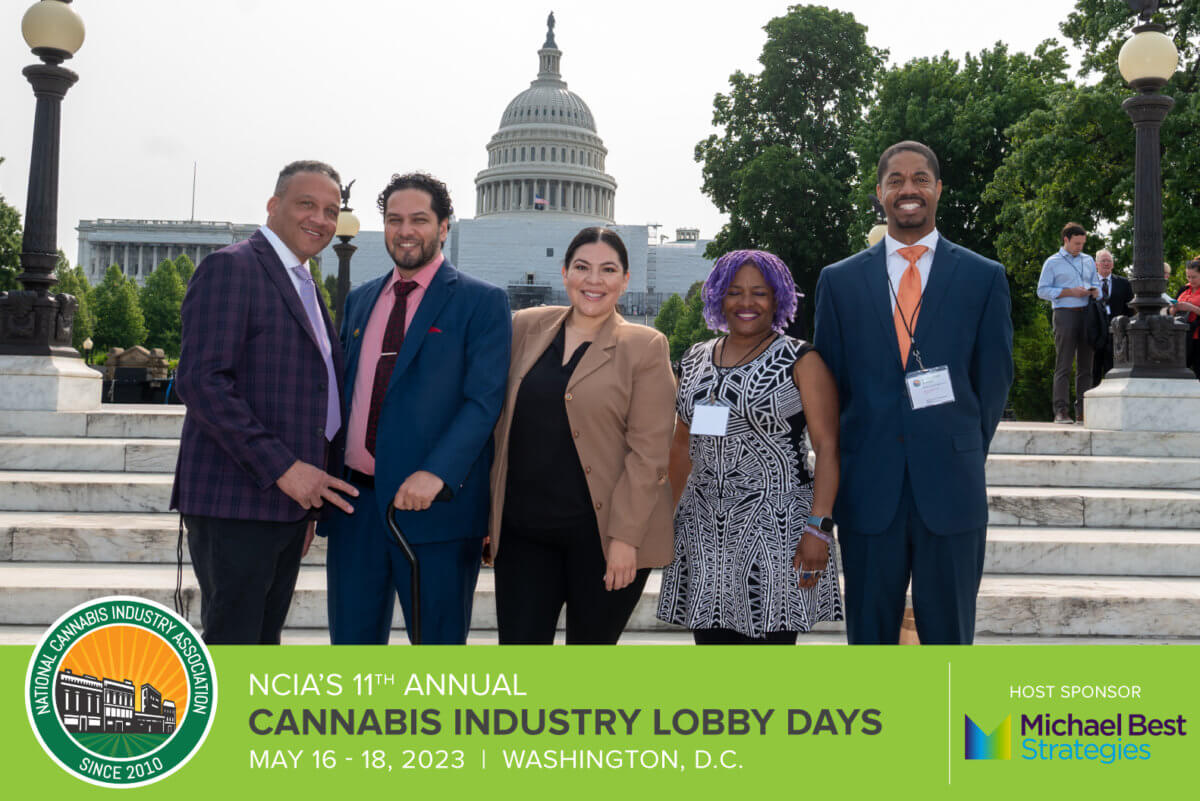
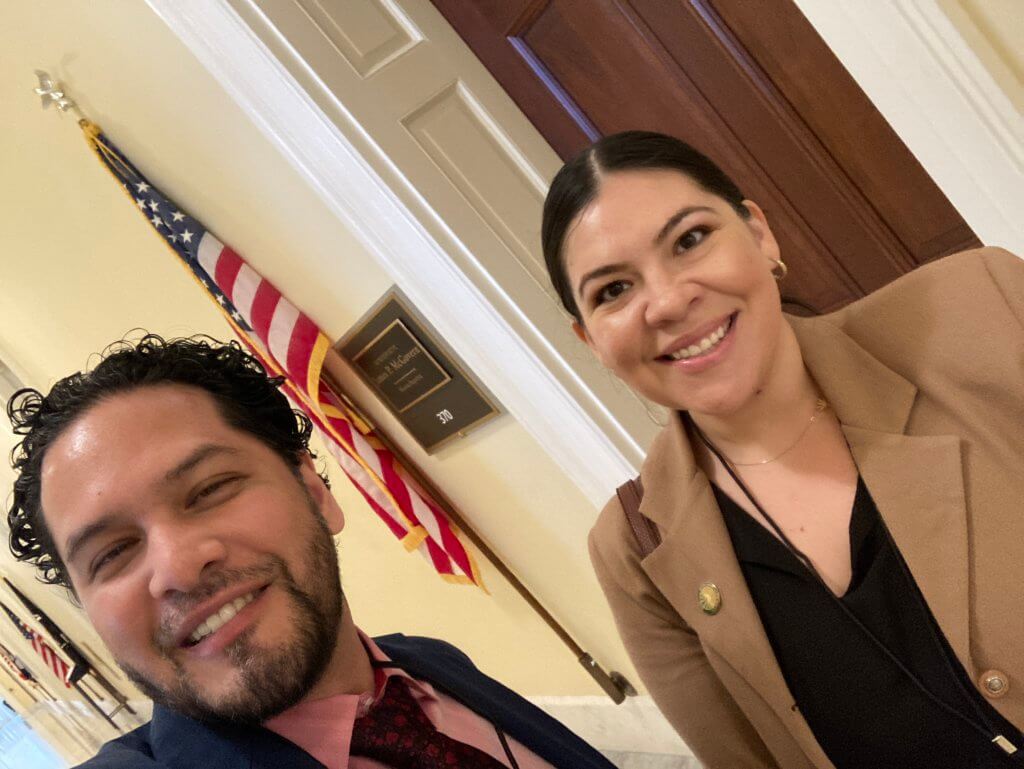
For the second time in nine months, NCIA’s DEI Program organized a DEI Delegation as part of our annual Lobby Days on Capitol Hill.
The DEI Delegation consists of some of the foremost advocates for Social Equity from across the country. Their leadership within their state and local communities, as well as within NCIA’s Committee structure, greatly bolsters the lobbying efforts of our organization as a whole, all year round.
Our Delegates weighed in on the organization’s talking points ahead of the event, and then provided an important perspective on the Hill. As part of NCIA’s lobbying on behalf of the industry, our members focused on SAFE Banking, 280E Reform, Comprehensive Legalization, Veterans Affairs, and more.
Thanks to TILT Holdings and Evergreen Market for sponsoring this very important initiative.
As stakeholders in the cannabis industry, it is important that we learn how to also properly advocate for ourselves and for others from diverse communities around the country.
We’ve already begun raising funds for next year’s DEI Delegation. If you want to ensure the return of this initiative, while also receiving year-round recognition, reach out to mikelomuto@thecannabisindustry.org
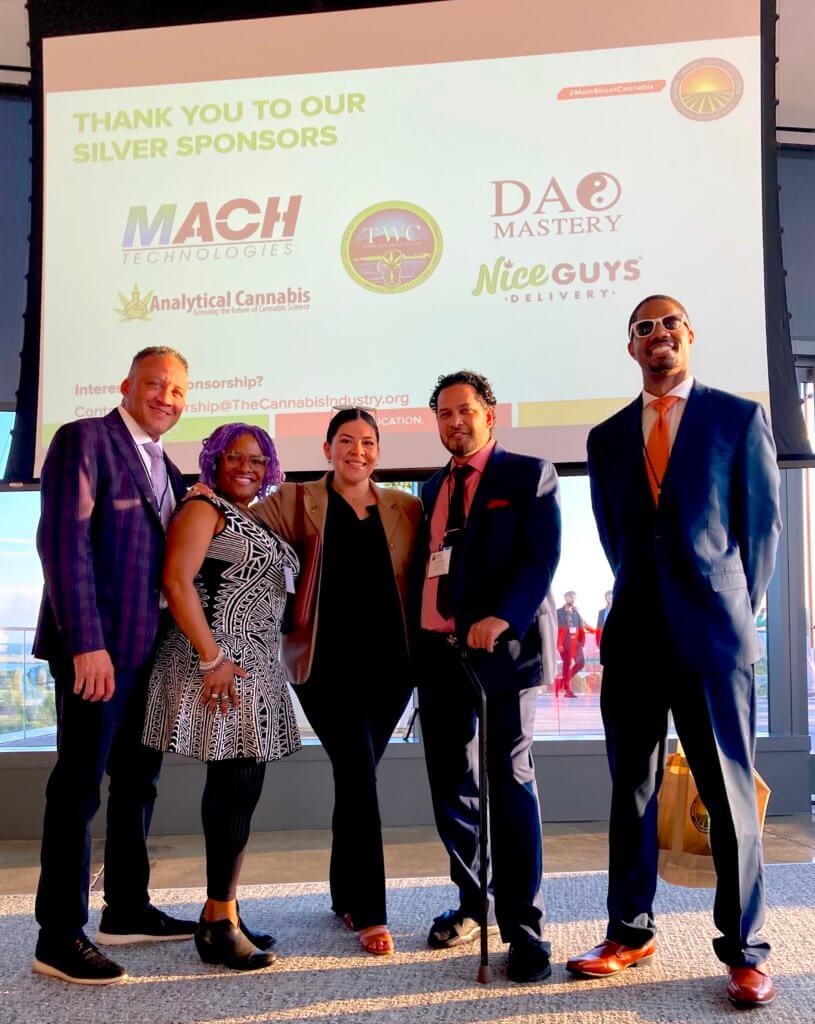
2023’s Lobby Days DEI Delegation:
Raina Jackson, Purple Raina; DEI Committee Organizer and Policy & Regs Subcommittee Chair Dr. Adrian Adams, CGO at Northeast Extracts; NCIA’s DEI Committee; M4MM’s NY State Director Vanessa Valdovinos, HUSH; NCIA’s Marketing & Advertising Committee Organizer Anthony Jenkins, Next Level Edibles; NCIA’s Cannabis Manufacturing Committee
This is your first year as a Delegate. Why was it important to you to participate?
Vanessa:
Participating in Lobby Days allowed me to contribute my personal experiences, expertise, and insights as someone running a small business in a highly regulated market. I wanted to have a voice in shaping legislation related to crucial topics that are important to me like providing an equitable pathway in the cannabis space. By being present at Lobby Days, I could truly contribute to the development of policies that would essentially help shape policies that promote a safe, inclusive, and thriving cannabis industry for the benefit of all.
You were a member of last year’s Delegation. Tell us why you chose to return this year, and how your experience last year influenced your game plan for this year.
Dr. Adrian:
Last year was more about figuring out who in each office was the one driving the cannabis policy car, if you will, meeting them where they were, and schooling them up. This year we did a better job as a small group in each office using each of our bios to tell an impactful story regarding the impact of SAFE Banking and 280E, and tying it to what some offices have done in their home district.
Raina:
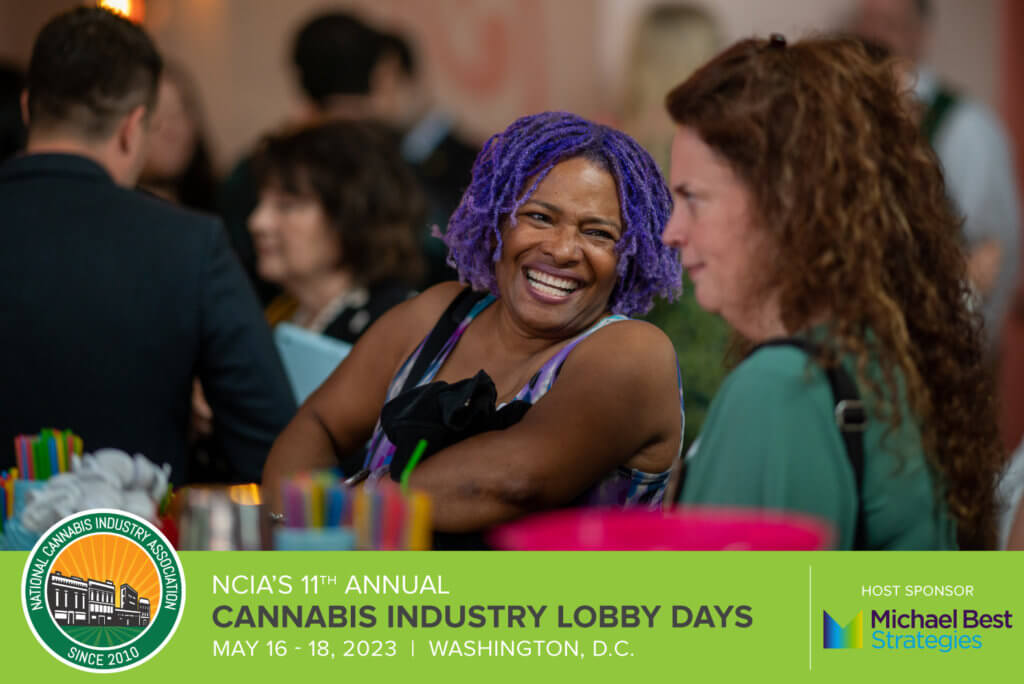
It was a wonderful experience to participate in Lobby Days 2023, especially after attending last September for the first time and learning so much. I appreciate that this year’s meetings were extended over two days, following in-person training at the glorious Michael Best Strategies office penthouse.
Like last year, I found that most Congressional staffers are quite open-minded and seek to understand our points of view to correctly convey them to the lawmakers they serve. I learned that we don’t have to agree on every single detail to come to a compromise, especially since the People have spoken and demand some form of safe cannabis access and decriminalization nationwide. Bipartisan efforts must match public opinion.
What were the main takeaways from your experience on Capitol Hill?
Raina:
Most staffers were not familiar with 280E and how it disproportionately burdens cannabis businesses with paying upwards of 50 to 70% of revenue towards federal, state, and local taxes without the tax write-offs other industries enjoy at a 30% standard rate.The new proposed Small Business Tax Equity Act eliminating 280E for cannabis businesses would greatly improve the economic landscape, while still representing a net gain for the national economy. This credit would allow more businesses to stay afloat and continue to pay taxes at a more equitable rate over a longer period. Everybody wins!
Dr. Adrian:
SAFE Banking could potentially happen sooner than I thought if it originates from the Senate side.
Anthony:
My main experience in Capitol Hill taught me that with planning and footwork, it is possible to reach elected officials, even highly ranked officials like US Senators. And from the feedback we received from both Democrats and Republicans, most representatives are on board with all 3 (hemp updates, 280e reform, SAFE Banking).
Vanessa:
One of my main takeaways from this experience was the immense value of hearing personal stories that shed light on the diverse perspectives within a highly regulated market. By listening to the struggles and triumphs shared by individuals, I gained a deeper understanding of the challenges we all face on a day-to-day basis. I also realized that by sharing our own truths and insights, we can provide invaluable perspectives that others can learn from. Personal stories have the ability to bridge gaps in understanding and create empathy, which are crucial for the progress of any industry.
Mike:
An important component of Lobby Days is the in-person training session. This year, Reggie Babin provided some great insights. As the former Chief Counsel to Senator Charles Schumer, who worked directly on the Cannabis Administration and Opportunity Act, his words resonated throughout the room and our lobbying efforts over the ensuing two days. One thing that stuck with me is when Reggie compared the ten years it had just taken to get reform through on a non-cannabis issue. That bill had strong sentimental support and near-unanimous public opinion on its side. Given that context, it made it clear that we’re on schedule for SAFE Banking. It also means we need to be pushing on other legislation that may likewise take many years to push through.
He also pointed out how any one conversation that we have could be the one that flips the vote that is the final domino on passing legislation. That’s why our stories are so important.
What did you learn from your experience that you’d like others to know?
Raina:
As NCIA DEI Delegates we must control our own narratives and help illuminate the state of our industry by putting names and faces to our stories and sharing our triumphs and pain points. I’m glad we are revisiting the SAFE Banking Bill, which is vital to public safety and economic growth along the supply chain. It is paramount that the bill is passed in any version initially, with room for amendments to weave PLUS equity initiatives into the fabric.
Dr. Adrian:
The circle of leaders at the top of the cannabis industry is relatively small and many of those folks attend the lobby days of groups like M4MM and NCIA. Your attendance is good for business as well as for the creation of informed public policy.
Vanessa:
Another important lesson I learned was the significance of building relationships. Engaging with lawmakers directly and sharing my own personal experiences and insights was a driving force for me. It was inspiring to witness their genuine interest in hearing directly from industry professionals. Establishing meaningful connections with policymakers is key so that our industry is properly understood and represented.
Anthony:
I learned that an impassioned personal message goes a lot further than you think. Which is why we need you next year. Because we need our officials to hear your story, and how these issues affect you, your business, and your family daily.
What’s something you loved about visiting D.C. outside of the Lobby Days activities?
Vanessa:
It was the opportunity to connect with my fellow members on a deeper level that truly resonated with me. During our time together, I had the privilege of hearing their unique personal stories and gaining a deeper understanding of what had motivated them to participate in Lobby Days. These stories were inspiring and just reminded me of the incredible passion and dedication within our community.
The personal stories, the camaraderie, and the bonds we formed have created a network of support and friendship that extends far beyond the event itself. It was a truly special aspect of the trip that I will cherish for years to come.
Dr. Adrian:
Just seeing the unique D.C. cannabis market in action with entrepreneurs like Barry Doyle/Embers and others holding unique events. As Anthony Jenkins from San Francisco put it, “it was like seeing the future of cannabis in the U.S.”
Raina:
I appreciated that this year my group had time between and after meetings to visit D.C. landmarks like the Botanical Garden, the Dr. Martin Luther King Memorial, and the Washington Monument. I even extended my stay to experience the phenomenal National Museum of African American History and Culture.
Anthony:
The botanical garden was dope!
P.S. Something else I’d like to note is that in the weeks leading up to Lobby Days, I embarked on the Equity Workshop Tour, a series of workshops held in four cities, bringing together industry stakeholders, leaders, advocates, and regulators. This experience was highly informative for me to hear all these stories prior to our lobbying work in D.C. It was also great to see some of the same faces that I had seen across the Tour again in D.C!
Making History In Congress, Thanks To NCIA Members!
by Aaron Smith, NCIA’s CEO and Co-founder
History was made today as Senate Majority Leader Chuck Schumer (D-NY) along with Senators Ron Wyden (D-OR) and Cory Booker (D-NJ) introduced the Cannabis Administration and Opportunity Act which would finally remove cannabis from the federal Controlled Substances Act and begin the process of federal regulation.
For the last year, NCIA has been working behind the scenes to ensure this landmark legislation not only ends prohibition but also creates an environment where small and medium-sized businesses can thrive under national legalization. These businesses – who we now call “Main Street Cannabis” – are the heart of our industry and we’re proud to have been giving them a seat at the table in our nation’s halls of power for over 12 years.
We will continue working with our allies in the Senate to advance this bill and advocate for some necessary amendments to better ensure that small, equity, and women-owned businesses (in particular) are well-positioned to thrive after the end of federal prohibition.
We would not be where we are today if not for your support which has allowed us to effectively represent the interests of small businesses like yours in the halls of Congress and in the court of national public opinion.
I hope you’ll join us in making national legalization a reality by making your voice heard at our upcoming 10th Annual Cannabis Industry Lobby Days in Washington, D.C. September 13 & 14!
Thanks to your membership, NCIA’s government relations staff represents Main Street Cannabis in D.C. every day but Lobby Days is your chance to show up and tell your unique story to our nation’s lawmakers, firsthand.
Lobby Days is also the best opportunity to connect with your fellow industry leaders who are truly invested in the future of cannabis and sensible national policy. Please register today so you don’t miss out on making history with us! Reach out to my colleague Madeline Grant to learn more about how you can be as impactful as possible at this year’s Lobby Days.
Thanks, as always, to all NCIA members for their support of the cannabis industry. If your company is not yet a member of NCIA, now’s the time to join and have your voice heard in the halls of Congress.
Watch this video update with Aaron Smith and Michelle Rutter Friberg:
Video: NCIA Today – September 10, 2021
NCIA Deputy Director of Communications Bethany Moore checks in with what’s going on across the country with the National Cannabis Industry Association’s membership, board, allies, and staff. Join us every Friday on Facebook for NCIA Today Live.
Video: NCIA Today – September 3, 2021
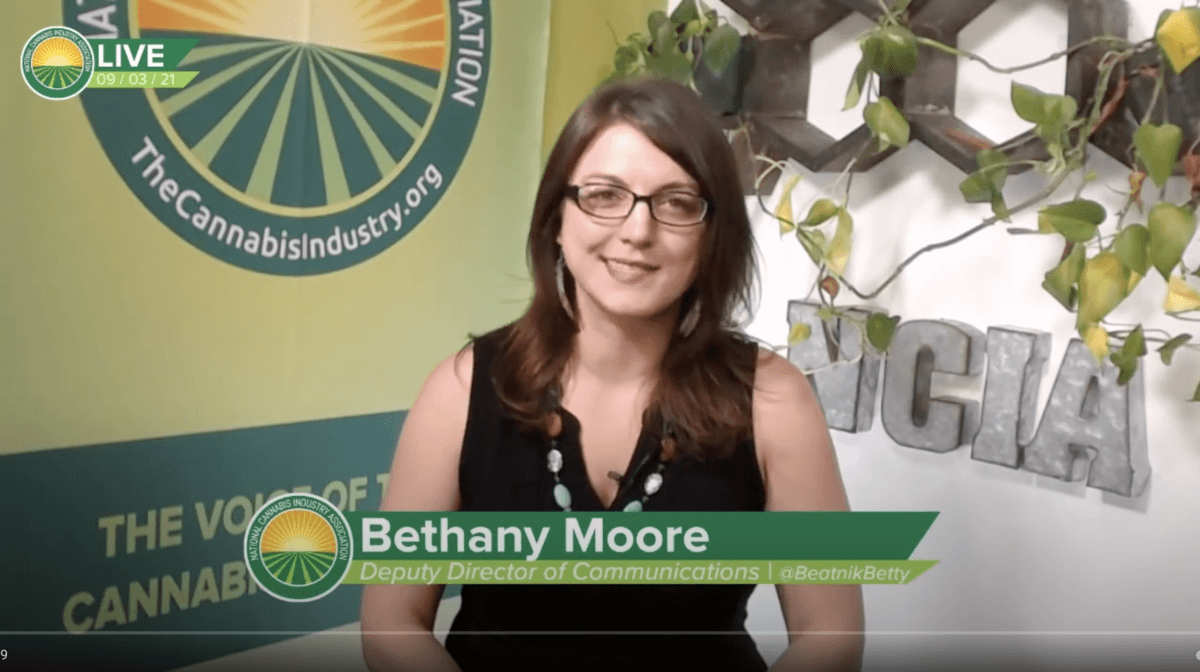
NCIA Deputy Director of Communications Bethany Moore checks in with what’s going on across the country with the National Cannabis Industry Association’s membership, board, allies, and staff. Join us every Friday here on Facebook for NCIA Today Live.
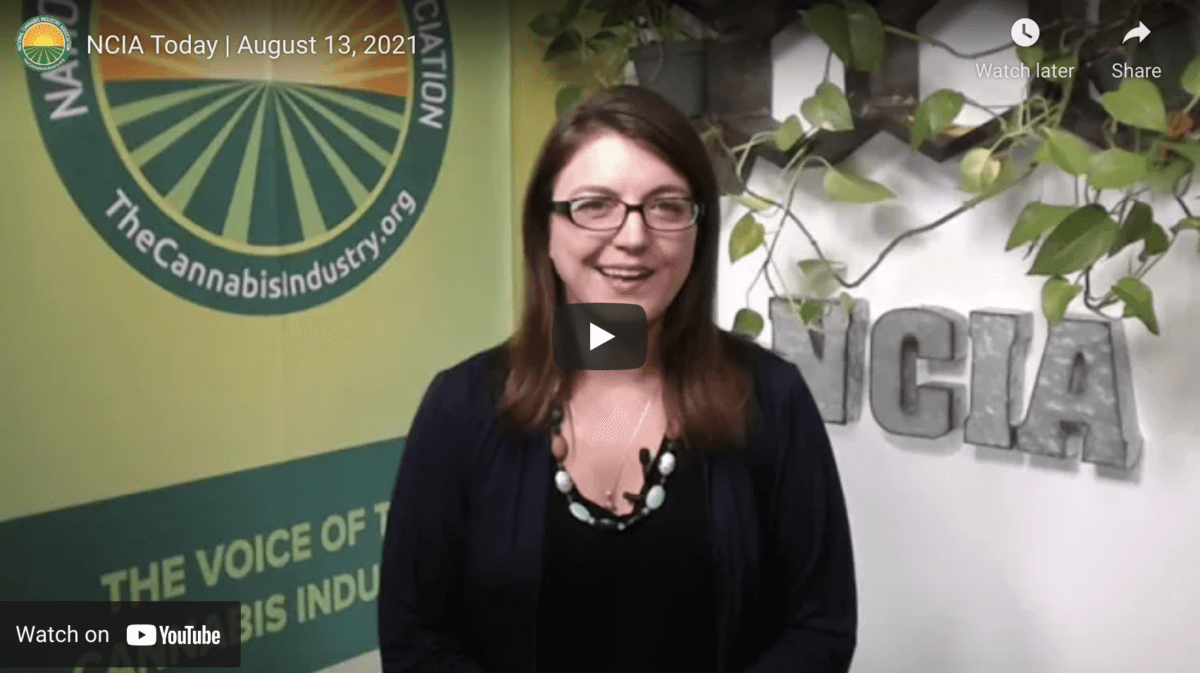
Video: NCIA Today – August 13, 2021
Deputy Director of Communications Bethany Moore checks in with what’s going on across the country with the National Cannabis Industry Association’s membership, board, allies, and staff. Join us every Friday on Facebook for NCIA Today Live.
M
August Action Alerts for NCIA Members: CAOA and SMS
by Rachel Kurtz-McAlaine, NCIA’s Deputy Director of Public Policy
STOP what you’re doing and ask yourself 2 questions:
Have I read the discussion draft or summary of the Senate bill to legalize cannabis at the federal level and now have an opinion on how NCIA should approach the bill? (Tell NCIA.)
Has my SMS/text messaging service gotten more expensive, become unwieldy with rules, or been taken away altogether? (Tell NCIA.)
If you answered yes to one or both of these questions, please take a quick moment to let us know! Click on the unique link next to the relevant question. If you want to learn more about either issue, keep reading.
Senate Legalization Bill Discussion Draft: Your Thoughts?
We are at the precipice of federal legalization, but as you know, in such a highly regulated industry, how legalization gets implemented can have a significant impact on your business. So it’s important that your voice is heard when these laws and regulations are being discussed. We’ve created this simple form for NCIA members to easily give us feedback on the CAOA. If you’re a committee member, you can provide feedback through your committee as well.
Text Messaging Service Disruptions: the Cannabis Industry Can Fight Back
You may remember reading my article, Text Messaging (SMS) Crackdown Impacting the Cannabis Industry, published back in May, written when we were first learning the scope of the issue. Although many companies seemed to be able to move on with workarounds, we’re hearing even workarounds are disappearing. And even when businesses are still able to operate, they get charged high fees or are severely hampered in what they can do with the messages.
Because this issue has been affecting so many of our members in one way or another, we want to help, but we need to hear from you. This isn’t a law that we can lobby to change, it is a convoluted policy that telecommunications giants are enforcing on their customers, ostensibly to cut down on customers complaining about spam, but in some cases, they are applying blanket bans on cannabis companies.
As an industry, we can fight back. We are organizing a working group to take on the telecommunications giants, including a potential class-action lawsuit. If you want to be part of this or learn more, please email me.
Those workarounds going away, or extremely expensive and cumbersome. It can seem overwhelming to fight back.
At this point, time to organize and use strength in numbers against giant telecommunications companies.
Video: NCIA Today – July 23, 2021
NCIA Deputy Director of Communications Bethany Moore checks in with what’s going on across the country with the National Cannabis Industry Association’s membership, board, allies, and staff. Join us every Friday here on Facebook for NCIA Today Live.
Crazy for Cannabis Administration and Opportunity Act (CAOA)
Photo By CannabisCamera.com
By Michelle Rutter Friberg, NCIA’s Deputy Director of Government Relations
Last week was undoubtedly one of the most exciting weeks in federal cannabis policy ever! On July 14, Senate Majority Leader Chuck Schumer (D-NY), along with Sen. Cory Booker (D-NJ) and Senate Finance Committee Chair Ron Wyden (D-OR), unveiled long-awaited draft legislation that would remove cannabis from the schedule of controlled substances while allowing states to determine their own cannabis policies. Let’s take a look at what we know:
What is it?
You’ll recall that back in February, the trio of Senators announced that they were working on a comprehensive cannabis bill. Since then, NCIA and other advocates have (im)patiently been waiting to see what shape that would take – I was calling it the best-kept secret in Washington! However, at long last, the discussion draft of the Cannabis Administration and Opportunity Act (CAOA) was released.
A discussion draft is exactly what it sounds like – prior to introducing this language as formal legislation, the Senators have shared it in this form, allowing stakeholders, the public, and others the opportunity to weigh in and provide their expertise and feedback.
What’s in it?
As I mentioned above, the CAOA removes cannabis from the list of controlled substances, effectively legalizing it at the federal level while still allowing states to set their own policies. According to the bill’s detailed summary, it has a few goals:
“… [it will] Ensure that Americans – especially Black and Brown Americans – no longer have to fear arrest or be barred from public housing or federal financial aid for higher education for using cannabis in states where it’s legal. State-compliant cannabis businesses will finally be treated like other businesses and allowed access to essential financial services, like bank accounts and loans. Medical research will no longer be stifled.”
The bill also includes:
Restorative measures for people and communities who were unfairly targeted in the war on drugs.
Automatic expungements for federal non-violent marijuana crimes and allows an individual currently serving time in federal prison for nonviolent marijuana crimes to petition a court for resentencing.
An “Opportunity Trust Fund” funded by federal cannabis tax revenue to reinvest in the communities most impacted by the failed war on drugs, as well as helping to level the playing field for entrepreneurs of color who continue to face barriers of access to the industry.
An end to discrimination in federal public benefits for medical marijuana patients and adult-use consumers.
Respect for state cannabis laws and a path for responsible federal regulation of the cannabis industry. Like with federal regulations on alcohol, under CAOA, states can determine their own cannabis laws, but federal prohibition will no longer be an obstacle. Regulatory responsibility will be moved from the U.S. Drug Enforcement Agency (DEA) to the Alcohol and Tobacco Tax and Trade Bureau (TTB), the Bureau of Alcohol Tobacco Firearms and Explosives (ATF), as well as the Food and Drug Administration (FDA) to protect public health.
A federal tax structure – CAOA would impose an excise tax on cannabis products in a manner similar to the tax imposed on alcohol and tobacco. The general rate of tax would be 10 percent for the year of enactment and the first full calendar year after enactment. The tax rate would increase annually to 15 percent, 20 percent, and 25 percent in the following years.
What’s next?
The discussion draft comment and feedback process will be ongoing until September 1. Until then, NCIA will be working with our board, Policy Council, committees, and our members (particularly our Evergreen members!) to solicit their expert input on some of the areas the Senators have expressed interest in. After that deadline, the Senators will take their time to review submissions and subsequently formally introduce the revised language later this year. Stay tuned via our newsletter, blog, and upcoming events to learn the latest on this and how you can actually submit your thoughts to us!
 by Mike Lomuto, DEI Manager
 2023’s Lobby Days DEI Delegation:
 Raina: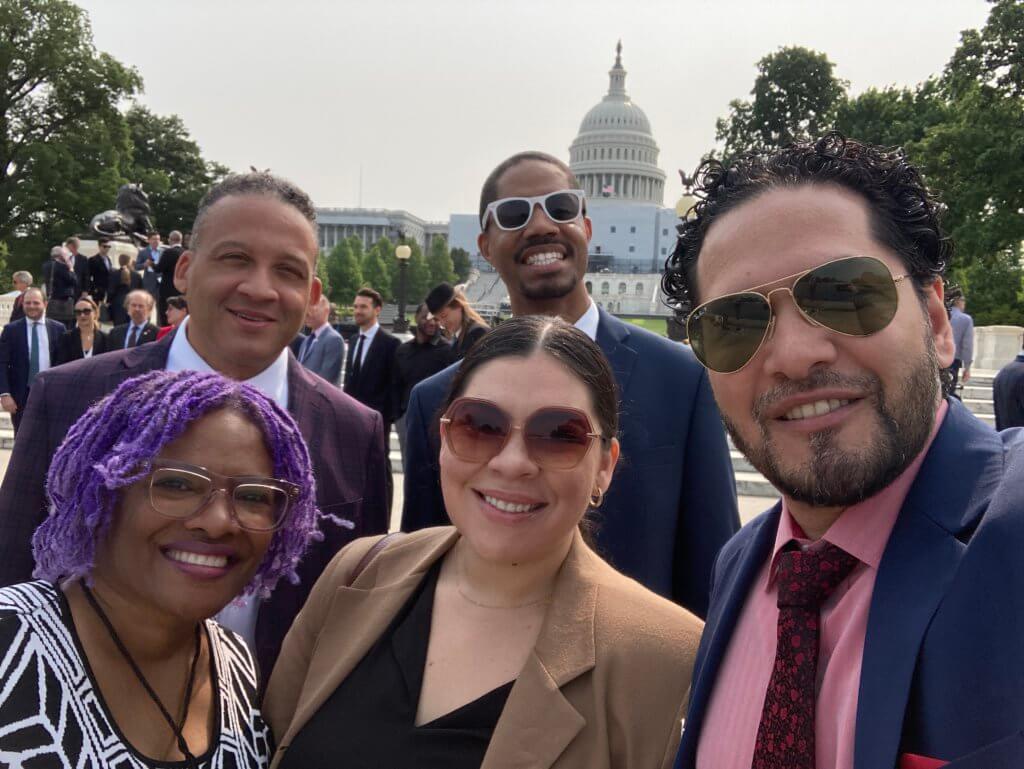
 by Aaron Smith, NCIA’s CEO and Co-founder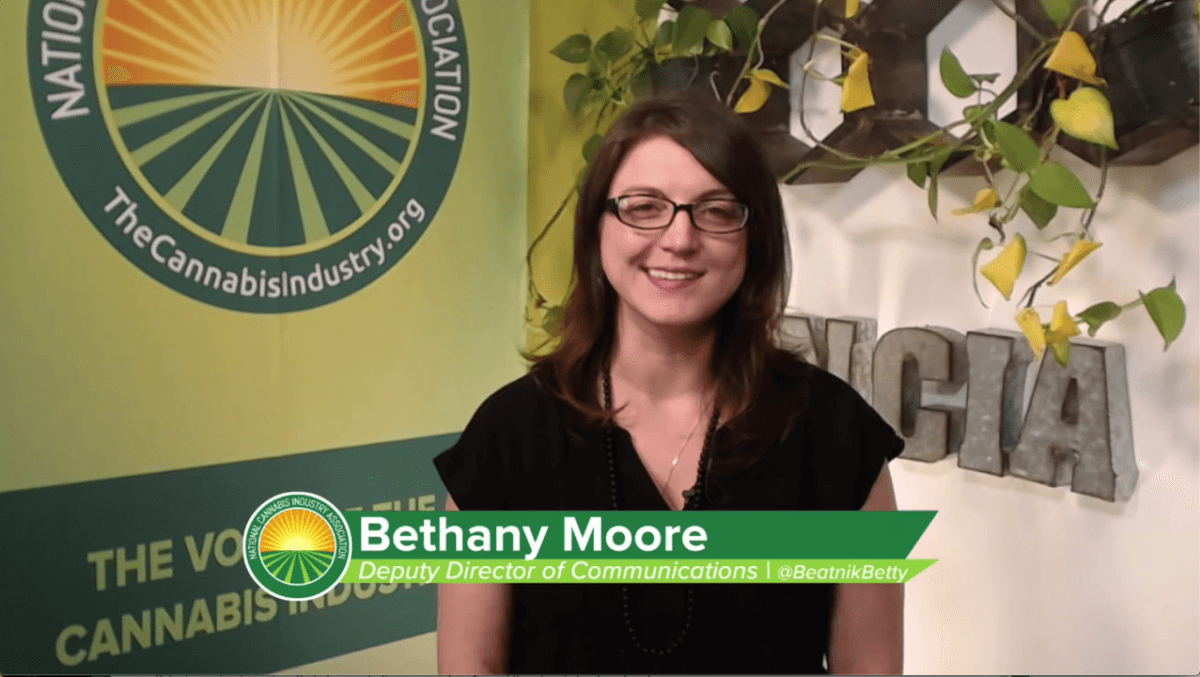
 by Rachel Kurtz-McAlaine, NCIA’s Deputy Director of Public Policy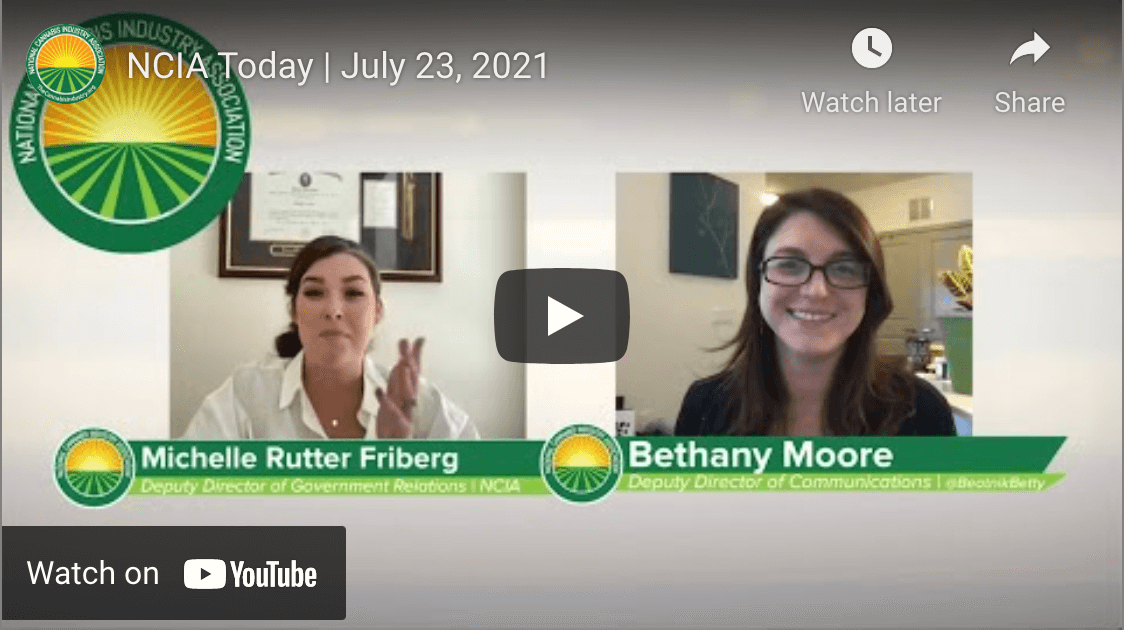

Follow NCIA
Newsletter
Facebook
Twitter
LinkedIn
Instagram
News & Resource Topics
–
This Just In
NCIA Applauds Reintroduction of SAFE Banking Following Lobby Days
Beyond Rescheduling: Inside NCIA’s 14th Annual National Cannabis Industry Lobby Days