Unlock Data-Driven Success: Watch the Full Recording of Our Latest NCIA Webinar
The cannabis industry is evolving rapidly, and data is the key to staying ahead. If you missed our latest Service Solutions webinar, now’s your chance to catch up on everything shared by leading experts in the field. During this NCIA Industry Essentials session, we explored how cannabis and ancillary businesses can harness data to drive growth, adapt to shifting regulations, and remain competitive in a dynamic market.
The session featured Adam Hutchinson, Co-Founder of CannaSpyglass, a leading provider of market intelligence and cannabis data solutions. Adam shared valuable insights into how businesses can use data to anticipate trends, identify emerging market opportunities, and optimize decision-making. CannaSpyglass specializes in providing cannabis businesses with access to comprehensive data analytics, helping them remain agile in a competitive environment. Their expertise in leveraging real-time market data has helped numerous cannabis operators scale their businesses and stay ahead of industry changes.
Along with Adam, John Manlove, CEO of Apex Trading, and Vib Gupta, Co-Founder & CEO of CannMenus, discussed the importance of utilizing market data for B2B and B2C insights, and how companies are embedding data-driven decision-making into their operations for better performance and growth.
This session was packed with actionable takeaways on how to leverage cannabis market data, anticipate challenges, and make more informed strategic decisions.
Exclusive Offers for NCIA Members & Webinar Viewers
As part of this special session, we’re offering exclusive discounts to NCIA members and webinar viewers:
Essentials Plan: Get started with CannaSpyglass for just $1/month using code NCIA1DOLLAR. This plan gives you access to a wide range of cannabis data insights, allowing you to explore the latest industry trends and consumer behavior on a budget.
Pro Plan: Save 25% on an annual subscription to CannaSpyglass with code NCIA4ANNUAL. This plan provides full access to CannaSpyglass’s advanced market analytics, real-time data, and custom reporting tools—perfect for businesses looking to gain a deeper understanding of cannabis market dynamics and make data-driven decisions.
CannMenus Offer: CannMenus is offering 60% off your first month of the Pro Suite to all webinar attendees and NCIA members. Use code NCIA60 at checkout to unlock full access to CannMenus’ suite of market analytics, sales enablement tools, unlimited real-time alerts, and custom reporting, with aggressive bundle pricing for additional markets.
These exclusive discounts give you access to the tools and resources you need to drive success in the cannabis industry. From market analytics to real-time alerts, these offerings will help you stay ahead of the competition and ensure compliance as market dynamics continue to shift.
NCIA’s Member-to-Member Discount Program: More Ways to Save
By becoming a member of NCIA, you gain access to our Member-to-Member Discount Program, which connects you with exclusive deals and services from trusted industry providers. From software solutions to legal services, our program offers discounts on products and services that can help your cannabis business stay compliant, scale, and succeed.
Exclusive educational content, including webinars, reports, and industry insights
Member-only discounts on a wide variety of business tools and services
Advocacy that ensures your voice is heard in important regulatory matters
Networking opportunities with key players in the cannabis space
Joining NCIA is more than just about savings; it’s about investing in the future of your business. Whether you’re navigating regulations or looking for new ways to grow, NCIA provides the resources, education, and connections you need to succeed.
Why Join NCIA?
By joining the National Cannabis Industry Association (NCIA), you gain access to a powerful network of cannabis professionals and resources. Our members benefit from:
Cutting-edge webinars and educational content that keep you informed and prepared for the future
Exclusive discounts that save you money on essential tools and services for your business
Advocacy efforts that protect your business and the cannabis industry at large
Networking opportunities with thought leaders, service providers, and industry professionals
Joining NCIA gives you the support and resources necessary to scale and succeed in a rapidly evolving industry.
???? Join NCIA Today and unlock a wealth of discounts, resources, and support to grow your cannabis business! Become a Member
Watch the Full Webinar Recording
Don’t miss the opportunity to catch up on this essential session. Watch the full Service Solutions: Mastering Data-Driven Success webinar recording now, and discover how you can leverage market data to drive smarter, more informed decisions for your cannabis business.
Stay ahead in the cannabis industry with NCIA—your partner in success!
Committee Blog: Time to Hire
The road to opening a licensed cannabis business is a long one. You have managed to navigate through a competitive and complex licensing process. You have convinced your local community to give your company a shot. You have beautified the area surrounding your business. You have secured your supply chain, and you even opened a special account at a cannabis bank to deposit all that cash. You have hired armed security, and even though you are paying the company 3X what you’re making, it’s okay because you and your staff are safe. You even survived the facility build-out, and hopefully, you have about six months of capital. What an accomplishment. Bravo! You did it! Wait… you need a team to help you operate this beast. Time to hire!
I heard someone say, ‘Great things in business are never done by one person. They’re done by a team of people.’ I would guess that if you have made it to the finish line, you’re likely to already have a team. Now it’s time to expand that team. As if the odds aren’t already stacked, in the fast-paced world of cannabis retail, turnover rates are hitting a staggering 55% within a year, per headset.io as of November 2023. I learned about this very early on when I began my research. I needed to know why and what I could do to avoid more than half my staff quitting within the first year. There were some common factors that led to employee attrition. I was a bit surprised to hear that pay wasn’t a top factor. What I learned was budtenders, in particular, didn’t feel the company provided any kind of staff development. Many instances described a poor management staff, and many felt unappreciated and overworked.
When we started this thing, it was important to make sure we could create opportunities for others. I’ve worked for both big and small businesses, some corporate and some non-corporate. I have had some good managers and some bad ones. I learned something from each job I’ve held. I vowed to make sure my staff never looked at our managers and our company and put us in the bad category. Trust is earned, and leadership can never be forced. I opened doors on April 22nd, and we hired 21 part-time employees. I will follow up in 12 months to see if I beat the odds. I’ve done it before.
It was through the NCIA network I met Carlo, and he had me go through a workshop. What I learned was, first, we needed to ask ourselves: What are our principles at Banyan Tree? My team is amazing, and we have been together so long we trust in each other’s expertise to maintain a harmonious environment. We want to make sure the staff feels the same way. So collectively, we created a list of principles. Next, we posted the job position. The response was overwhelming. Within 24 hours, we had close to 500 applications. We narrowed that down to 50. We scored the candidates based on their work experience and the video response they provided, aligning with our principles. Next, we scheduled the interviews. We called each candidate to share what they could expect during the interview. We sent them the list of our principles. We would be conducting the interview using the S.T.A.R. method: Specific, Task, Action, Result. That means the questions we ask will all be related to their work experience. We expect the answers you give to describe an experience that uses the S.T.A.R method response. It really helps us get to know the candidates during the interview, and you can tell someone is being genuine when they can recall an experience they had while working at previous jobs. There were about 21 of those interviews that went on for a full hour. We hired 21 amazing people. They all feel like they are part of something special. It’s my job to keep my promise.
It’s important to continue developing and educating the staff to help them get better at their skill. It is necessary to provide them with the tools they need to perform their job. Stuff like scanners and POS systems and card readers need to work. Technical issues disrupt the flow, but that’s controllable. Communication and trust are key. Without it, you’re doomed. Appreciation and praise go a long way. We need customers to stay in business, but we can’t do business without staff. My philosophy is that my employees are everything. As long as they love their job, our guests are going to reap the benefits.
Start Making Sense: What Does Schedule III & Section 280E Mean for Me?
Rescheduling cannabis signifies a monumental shift for our industry, specifically presenting a potential pathway to alleviate the burdens imposed by Section 280E. In a new multi-part #IndustryEssentials webinar series, led by experts from our 14 member-led Committees, NCIA will provide a comprehensive analysis of the immediate and long-term impacts on different sectors within the cannabis industry.
In our debut session, led by the Banking & Financial Services Committee, we provided invaluable insights into the transformative implications of rescheduling cannabis to a Schedule III drug and its consequent impact on Section 280E of the Internal Revenue Code. In “Schedule III & Section 280E: What Does It Mean for Me?” broadcast LIVE on Thursday, May 30th, we explored the game-changing potential of this shift, offering actionable insights for businesses navigating the evolving regulatory environment.
Neil Rosenfield, CPA:Provided insights into the significance of comprehending and championing advocacy organizations to address regulatory hurdles.
Steven Gotsdiner, CPA: Illuminated accounting requirements tailored to cannabis businesses, drawing attention to the nuances across various states.
Eric Kaufman, COO: Shed light on the hurdles encountered by cannabis enterprises, while also elucidating the potential benefits stemming from regulatory changes.
Aaron Smith, NCIA: Emphasized the pivotal role of industry participation in policy reform endeavors, highlighting NCIA’s instrumental role.
Among the topics explored during the webinar was the profound impact of rescheduling cannabis on federal legality, state and local tax obligations, and the broader regulatory landscape. With cannabis poised to transition to Schedule III, businesses are poised to embrace newfound opportunities while confronting challenges inherent in navigating this regulatory terrain.
Neil Rosenfield of BakerTilly USA underscored the significance of contributing to and championing advocacy organizations to effectively address regulatory hurdles. Aaron Smith echoed this sentiment, emphasizing the pivotal role of industry participation in policy reform endeavors, highlighting NCIA’s instrumental role in spearheading these changes.
Another focal point of discussion revolved around the ramifications of rescheduling on tax obligations and deductions governed by Section 280E. The panelists provided invaluable insights into the implications for tax planning, including adjustments to tax bills, cash flows, and essential updates to accounting records and charts of accounts.
Steven Gotsdiner of HBK CPAs illuminated accounting requirements tailored to cannabis businesses, drawing attention to the nuances across various states. Eric Kaufman, COO of FundCanna, shed light on the hurdles encountered by cannabis enterprises, while also elucidating the potential benefits stemming from regulatory changes, such as managing surplus cash flows and preparing for shifts in interstate commerce.
Eric Kaufman explored whether rescheduling cannabis to Schedule III would reduce the cost of capital for operators and recommended strategies for deploying increased cash flows to scale and grow businesses effectively.
The webinar also delved into the anticipated timeline for these regulatory shifts, offering insights into potential implementation trajectories spanning from 2023 to 2025. Strategies for navigating diverse timelines and regulatory fluxes were discussed, equipping businesses with the tools needed to adapt and flourish in an ever-evolving landscape.
Thanks to the informed engagement of our audience members, a cornerstone of what makes our webinar series so valuable for members, the discussion touched on the definition of “Good Accounting Practices” and whether this includes Generally Accepted Accounting Principles (GAAP). The panelists also speculated on the possibility of new excise taxes replacing 280E and the potential impacts on federal protections like bankruptcy and IPOs.
As the program was extended in order to answer all of our audience questions, the session concluded with insights into how these regulatory changes might affect the CBD and hemp industries. The panelists emphasized the importance of staying informed and adapting to varying state-level requirements.
As the cannabis industry continues its evolution, proactive engagement with regulatory changes remains paramount for business success. The insights shared during NCIA’s #IndustryEssentials webinar series offer a compass to navigate the labyrinth of regulatory complexities and position businesses for enduring prosperity. By fostering active engagement and advocacy, cannabis enterprises can shape a regulatory landscape conducive to industry growth and development.
To continue facilitating these crucial dialogues amongst operators, regulators, and stakeholders, NCIA relies on the support of dedicated members like you. Join NCIA today to access exclusive resources, stay informed about the latest industry developments, and be part of a community committed to driving positive change in the cannabis industry.
Supporting advocacy efforts is integral to driving meaningful change in the cannabis industry. By becoming an NCIA member, you’re not just investing in your business’s success; you’re also supporting initiatives that shape the future of the industry. Together, we can amplify our collective voice and effect tangible change.
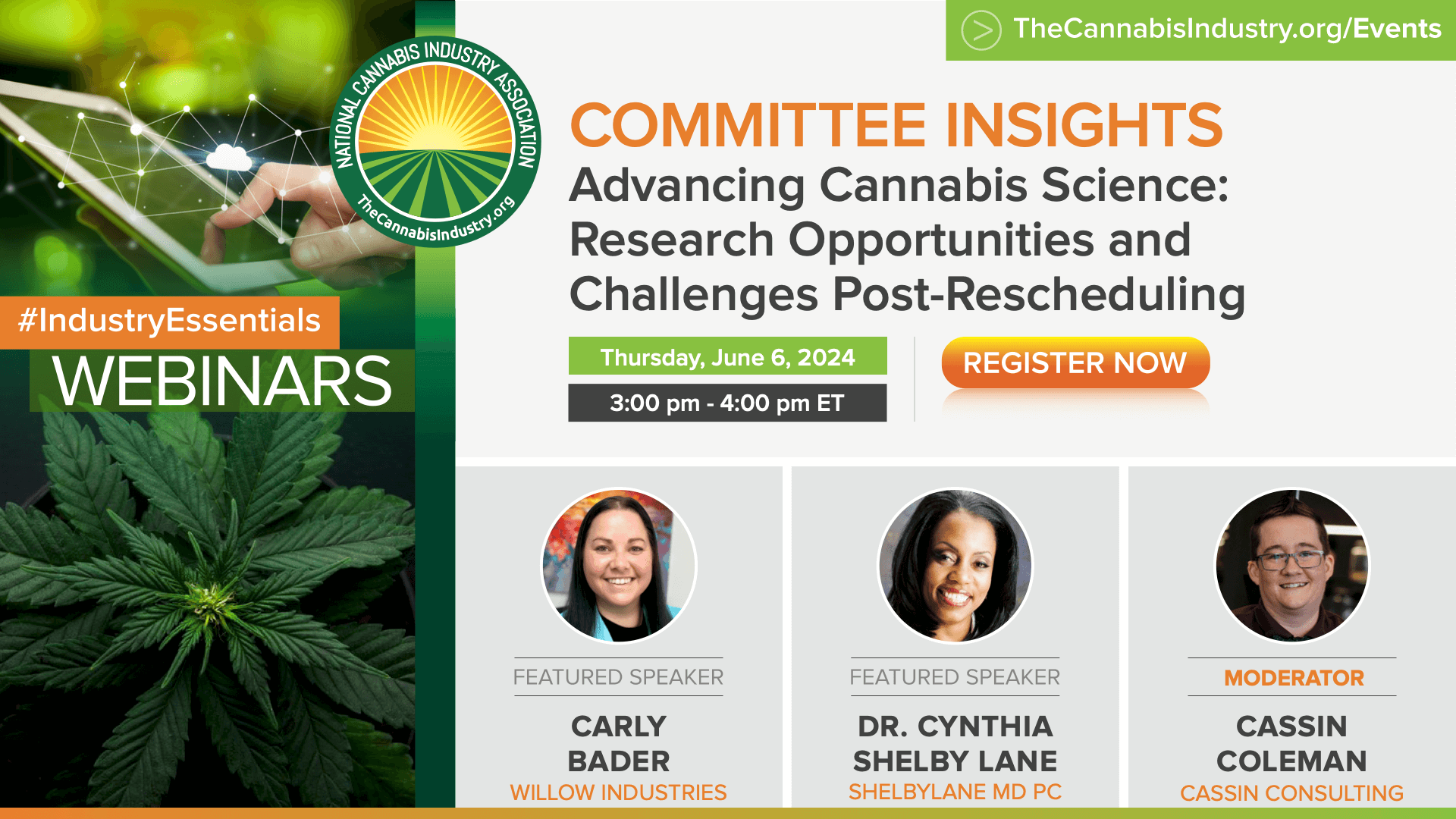
As we conclude this recap of our insightful session on Schedule III and Section 280E, we’re thrilled to announce the next episode in NCIA’s #IndustryEssentials multi-part webinar series: “Committee Insights: Advancing Cannabis Science: Research Opportunities and Challenges Post-Rescheduling.” Led by our esteemed Scientific Advisory Committee, this episode promises to explore the exciting realm of scientific research and consumer safety in the wake of cannabis rescheduling.
Join us for an engaging discussion with industry experts, gain valuable insights, and shape the future of cannabis science and consumer safety. Register now to reserve your spot and be part of the conversation!
Member Blog: Wellness at Work – Preventative Healthcare for Cannabis Business Owners
Navigating Challenges in the Cannabis Industry
The cannabis industry finds itself constantly grappling with challenges imposed by federal regulations and government scrutiny. Despite these obstacles, there are numerous strategies available to businesses within this sector that can mitigate fixed costs, save money, and preserve valuable staff positions.
Delivering Tangible Value
Our seasoned team, boasting a track record of saving well over $2 billion for our clients, specializes in pioneering solutions that deliver tangible value. We recognize the unique demands faced by cannabis business owners and have tailored our approach to offer seamless evaluation and implementation of our tools, ensuring minimal disruption and maximum efficiency. This commitment to excellence has earned us the trust and loyalty of nearly half of our clients, who consistently refer us to their peers and associates.
Game-Changing Healthcare Solution
For cannabis operations employing W2 staff, we offer a game-changing solution: a preventative healthcare plan meticulously designed to address the specific needs of the cannabis industry.
Zero-Cost Structure with Significant Savings
What sets our plan apart is its zero-cost structure for employers, coupled with its ability to instantly lower payroll taxes without necessitating any modifications to existing benefits packages. This makes it an ideal solution for businesses looking to enhance employee retention while simultaneously bolstering their bottom line.
Comprehensive Benefits for Employee Well-Being
The benefits offered through our plan are not only financially advantageous but also genuinely impactful. From round-the-clock telemedicine visits to access to hundreds of free generic drugs and preventative screenings, employees gain access to a comprehensive suite of resources aimed at promoting their health and well-being. This not only enhances job satisfaction but also contributes to a healthier, more productive workforce.
Efficient Implementation and Support
Implementing our program is straightforward and efficient, with many businesses up and running in just a matter of minutes. Whether you’re a small-scale operation or a large enterprise, our team is dedicated to providing the support and guidance you need to maximize the benefits of our innovative healthcare solution.
Empower Your Business Today
Take the first step toward transforming your business and empowering your employees by scheduling a brief call with us to learn more. Together, we can pave the way to a brighter, more prosperous future for your cannabis business.
Empower Your Cannabis Business: Join Our Service Solutions Webinar!
Don’t miss out on the opportunity to learn more about how to optimize your cannabis business with our innovative healthcare solution and other service solutions. Join us for our upcoming Service Solutions webinar being broadcast LIVE on Tuesday, May 28th at 3:00PM ET / 12:00PM PT featuring the LG Resources team as they unveil their latest offerings in Preventative Health Care and AI Tax Planning.
Register now to secure your spot and gain exclusive insights from industry leaders. Click here to register for this essential webinar.
Take the next step in elevating your cannabis business to new heights. We look forward to seeing you there!
Member Blog: Unlocking Financial Potential – AI Tax Strategies for Cannabis Business Owners
The cannabis industry finds itself constantly grappling with challenges imposed by federal regulations and government scrutiny. Despite these obstacles, there are numerous strategies available to businesses within this sector that can mitigate fixed costs, save money, and preserve valuable staff positions.
In today’s rapidly evolving landscape, the integration of AI has ushered in a new era of efficiency and optimization across various domains, including finance and taxation. At LG Resources, we’ve embraced this technological advancement to revolutionize tax planning, transforming what was once considered a daunting task into a streamlined and rewarding opportunity for our clients.
Unparalleled Precision: Our AI-Powered Program
Our commitment to excellence is exemplified by our proprietary AI-powered tax planning program, which stands at the forefront of innovation in the industry. This sophisticated software boasts the capability to analyze over 1,500 Federal, state, and local tax programs with unparalleled precision. By leveraging machine learning algorithms, it identifies bespoke strategies tailored to each client’s unique financial profile, thereby unlocking substantial opportunities for tax savings.
Seamless Integration: Merging AI with Expertise
The cornerstone of our approach lies in the seamless integration of AI technology with over a decade of private wealth management expertise. This synergistic combination allows us to offer clients a comprehensive suite of services that not only optimize tax outcomes but also align with their broader financial goals and aspirations. Whether navigating complex tax regulations or maximizing wealth accumulation, our seasoned team of professionals is dedicated to delivering results that exceed expectations.
Adaptive Strategies: Staying Ahead of the Curve
One of the key advantages of our AI-powered tax planning program is its ability to adapt and evolve in response to changing tax laws and economic conditions. Through continuous monitoring and analysis, we ensure that our clients remain ahead of the curve, capitalizing on new opportunities for tax optimization as they arise. This proactive approach not only minimizes tax liabilities but also positions our clients for long-term financial success and security.
Personalized Service: Tailored Strategies for Every Client
Central to our philosophy is the principle of personalized service. We recognize that every client is unique, with their own set of financial circumstances and objectives. As such, we take a tailored approach to tax planning, crafting customized strategies specifically designed to meet the needs and objectives of each individual client. Whether you’re a high-net-worth individual, a small business owner, or a corporate executive, our team is committed to developing a tax plan that works for you.
Proven Results: Empowering Financial Well-being
Our AI-powered analysis has yielded impressive results for our clients, consistently delivering substantial tax savings across a wide range of scenarios. From helping clients save millions of dollars in taxes to securing substantial refunds and credits, we’ve consistently demonstrated our ability to deliver results that make a difference.
Join Our Service Solutions Webinar: Empower Your Business
Don’t miss out on the opportunity to delve deeper into these cutting-edge services! Join us for our upcoming Service Solutions webinar on Tuesday, May 28th featuring the LG Resources team as they unveil their latest offerings in Preventative Health Care and AI Tax Planning.
Discover how these innovative solutions can transform your business operations and financial outcomes.
Register now to secure your spot and gain exclusive insights from industry leaders. Empower your business with the tools you need to thrive in the cannabis industry. We look forward to seeing you there!
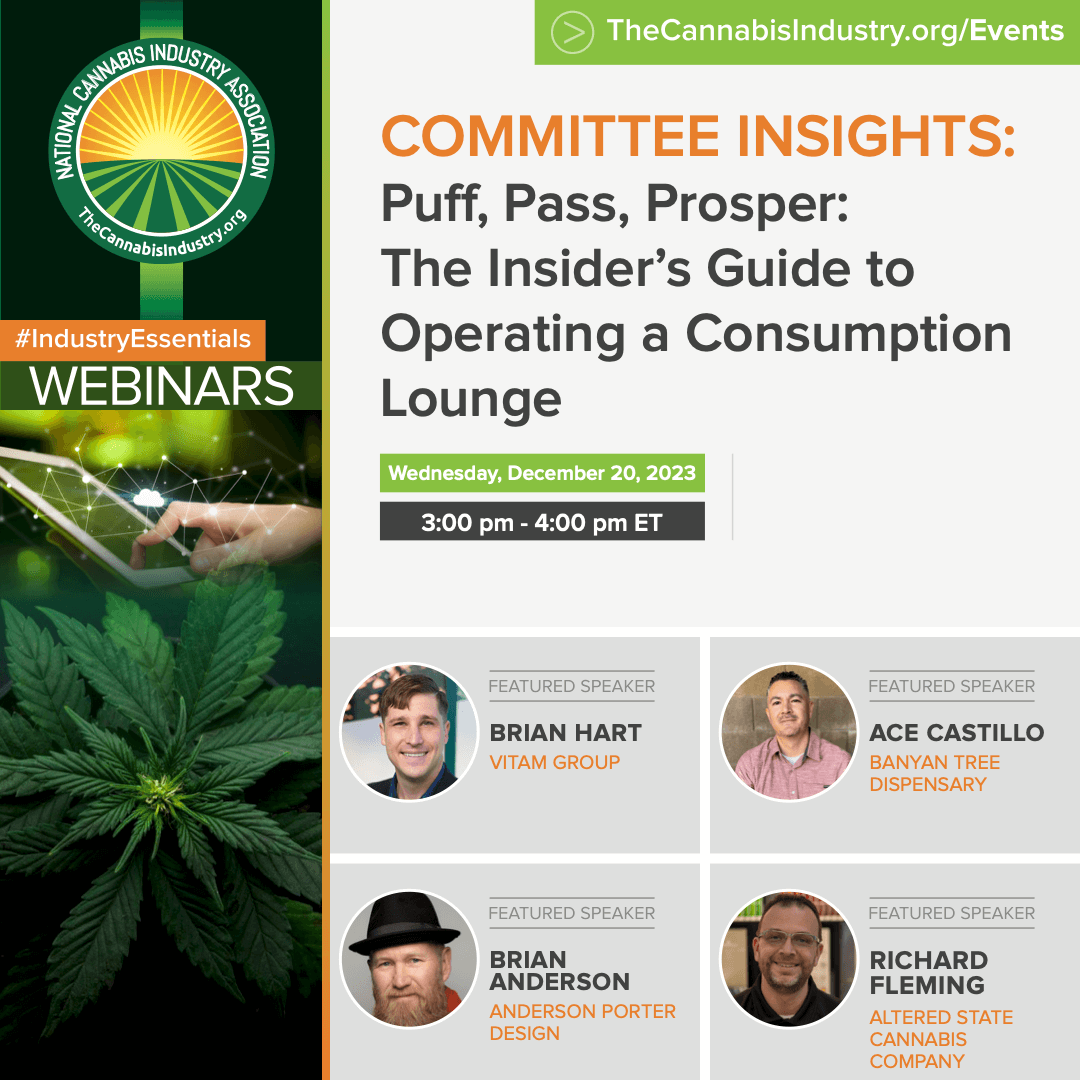
Puff, Pass, Prosper: The Insider’s Guide to Operating a Consumption Lounge | 12.20.23 | Committee Insights
The cannabis landscape is experiencing a swift evolution, with one particularly captivating facet garnering considerable attention—cannabis consumption lounges. In a recent webinar titled “Puff Past, Prosper: The Insider’s Guide to Operating a Cannabis Consumption Lounge,” (or Designated Consumption Establishment) hosted by the National Cannabis Industry Association (NCIA), industry luminaries and entrepreneurs convened to exchange experiences, insights, and forward-looking perspectives on the future of cannabis consumption spaces.
NCIA Voices: Insights from Industry Leaders
Brian Hart, a panelist and member of NCIA’s Retail Committee, serving as moderator kicked off the conversation by introducing himself, shedding light on his background in the cannabis industry. Notably, Hart is venturing into the world of hemp beverages with his latest project, Vitam Group. His insights into the challenges of starting a cannabis-related business added a valuable entrepreneurial perspective to the discussion. Another panelist, Brian Anderson, an architect with 29 years of experience and Founding Partner of Anderson Porter Design, shared his extensive involvement in various facets of the cannabis space, including cultivation, manufacturing, and retail. Anderson’s emphasis on the design and architecture of consumption lounges brought a unique angle to the conversation. Richard Fleming, the founder and CEO of Altered State Cannabis Company, provided a glimpse into his journey from the legacy caregiver market to plans for a designated consumption establishment. Fleming’s personal story exemplified the transformative power of the cannabis industry. Ace Castillo, the founder and CEO of Banyan Tree Dispensary in Fresno, California, brought a regional perspective to the discussion. His journey from operating a dispensary under Prop 215 to his current ventures highlighted the evolution of the industry and the importance of enhancing customer experiences in consumption establishments.
Legal Considerations and Operational Challenges
The webinar delved into the intricate legal considerations and operational challenges associated with consumption lounges. The panelists emphasized the diverse landscape of rules and regulations across states and localities, with licensing requirements varying significantly. Federal challenges, including 280E taxes, posed additional hurdles for cannabis businesses.
State-Specific Insights
The discussion took a deep dive into the Californian market, where the Department of Cannabis Control does not directly regulate consumption lounges. Instead, local jurisdictions play a crucial role in granting licenses. The complexity of navigating both local and state regulations was highlighted, shedding light on the intricacies of the Californian cannabis landscape.
Insights into Cannabis Consumption Lounges
The panelists provided valuable insights into the definition and various forms of consumption lounges, ranging from health and wellness spaces to venues hosting diverse events. The panel stressed the importance of defining the underlying business model, reflecting the diverse approaches to operating such establishments.
Customer Experience and Community Building
Creating a positive customer experience emerged as a central theme, with an emphasis on dynamic and engaging environments. Brian Anderson suggested incorporating community spaces and rooms for rent, contributing to the overall positive atmosphere. The concept of consumption lounges as community spaces was explored, highlighting the potential for meaningful social connections.
Urban Environments and Cultural Shifts
Brian Anderson, leveraging his architectural background, provided insights into the demand for community spaces in urban environments. The discussion touched on the cultural shift in the perception of cannabis, emphasizing the role of consumption lounges in normalizing cannabis use. The positive social activity aspect of cannabis was underscored as a key contributor to changing societal perceptions.
Advocacy for Equal Treatment and Responsible Consumption
Advocacy for equal rights and privileges for cannabis consumers compared to alcohol consumers was a recurring theme. The panelists emphasized the responsibility of stakeholders in promoting responsible cannabis consumption. The importance of destigmatizing cannabis through collective efforts was highlighted, with designated consumption establishments playing a pivotal role in this cultural shift.
Community Engagement and Benefits
Engaging with the local community emerged as a critical factor for the success of cannabis-related businesses. Dispelling stereotypes and contributing positively to local economies were emphasized as essential components. The concept of community rooms and public benefits was discussed, showcasing the potential positive impact of cannabis businesses on the broader community.
Funding Challenges and Insurance Considerations
The challenges faced by social equity applicants in securing funding for their businesses were acknowledged. Richard Fleming shared insights into the difficulties of obtaining insurance coverage for consumption lounges, stressing the need for comprehensive coverage and collaboration with underwriters.
Conclusion
In conclusion, the NCIA webinar provided a comprehensive exploration of the complexities, challenges, and opportunities associated with cannabis consumption lounges. The webinar illuminated the legal intricacies, operational considerations, and cultural impacts of consumption lounges. It underscored the importance of responsible consumption, community engagement, and advocacy for equal treatment. As the cannabis industry continues to evolve, the webinar served as a compass, guiding stakeholders toward a positive and inclusive future.
In the spirit of collaboration and collective responsibility, the webinar left participants with a renewed sense of purpose. The journey toward destigmatizing cannabis and integrating consumption lounges into mainstream culture requires ongoing dialogue, engagement, and a commitment to positive change. As we bid farewell to the NCIA’s final #IndustryEssentials educational webinar of 2023, the stage is set for the industry to continue prospering, adapting, and shaping a future where cannabis consumption lounges are not just spaces of leisure but catalysts for positive societal transformation.
Unlock the Full Story: Watch the Full Webinar on NCIA’s YouTube Channel Today
To experience the complete coverage and immerse yourself in the nuances of operating a cannabis consumption lounge, we encourage you to watch the full webinar video on our official NCIA YouTube channel. Whether you’re an industry professional, an aspiring entrepreneur, or simply curious about the evolving cannabis landscape, this webinar offers a comprehensive guide to the challenges, opportunities, and cultural impacts associated with designated consumption establishments.
Unlocking Opportunities: Join NCIA for the 2024 Stakeholder Summit Series
As we wrap up our exploration of cannabis consumption lounges, we invite you to become an active participant in shaping the future of the cannabis industry. Joining the National Cannabis Industry Association (NCIA) offers an array of benefits, including exclusive access to invaluable networking opportunities, educational resources, and a vibrant community of industry professionals.
Networking Opportunities: NCIA provides a platform for you to connect with like-minded individuals, industry leaders, and experts in the cannabis space. Networking is a powerful tool for staying informed, discovering new opportunities, and fostering collaborations.
Educational Resources: Stay ahead of industry trends, legal developments, and best practices with access to exclusive educational resources. NCIA’s commitment to industry education ensures that you are well-equipped to navigate the evolving landscape of the cannabis market.
Advocacy and Representation: By joining NCIA, you contribute to a unified voice advocating for the cannabis industry. NCIA actively engages in policy discussions, lobbies for favorable regulations, and works towards creating a conducive environment for cannabis businesses to thrive.
NCIA’s 2024 Stakeholder Summit Series
Looking forward, NCIA is thrilled to announce the 2024 Stakeholder Summit Series, a collection of events taking place across four different markets throughout the first quarter of 2024 leading up to the 12th annual Cannabis Industry Lobby Days. These summits are designed to provide deep insights, foster meaningful connections, and address the critical issues facing the cannabis industry.
Membership Perks: NCIA members enjoy complementary access to all events based on their membership level.
Exclusive Pricing: Take advantage of discounted pricing on all sponsorship opportunities through the end of the year.
Registration Deadline: Prices for sponsorship opportunities are set to increase on January 1, 2024. Act now to secure your spot at the 2024 Stakeholder Summit Series.
Choose the membership level that aligns with your needs and aspirations.
Complete the online application to kickstart your journey as an NCIA member.
Act Now to Secure Your Spot
If you are passionate about the cannabis industry, committed to fostering positive change, and eager to stay at the forefront of industry developments, now is the perfect time to join NCIA. By becoming a member, you not only invest in your professional growth but also contribute to the collective strength of the cannabis community.
Don’t miss out on the opportunity to attend the 2024 Stakeholder Summit Series, connect with industry leaders, and gain insights that will propel your cannabis-related ventures. Act before the sponsorship pricing deadline on January 1, 2024, to lock in exclusive rates and maximize your visibility at these transformative events.
Join NCIA today and embark on a journey of knowledge, connection, and advocacy within the dynamic landscape of the cannabis industry. Your participation matters, and together, we can shape a future where the cannabis community thrives and prospers.
Navigating the Confusing, Crowded World of Cannabis Payments
When you’re a cannabis retail operator looking for electronic cannabis payment solutions you’re faced with a baffling array of options and it’s hard to pick out the ones you can trust and the ones that you should avoid at all costs. Every potential vendor is going to tell you that their solution is the best (trust me!) so you need to understand the basic landscape of cannabis payment solutions in order to know what questions to ask. There’s a lot of solid vendors out there that only want to help the industry but there are, sadly, those out there that prey upon a lack of familiarity with the crowded, confusing payments landscape to push solutions that are at best unsustainable and at worst fraudulent.
ACH transactions are a way for a person or a business to do direct bank money transfers.
These transactions are conducted on a computer network run by NACHA, the National Clearinghouse Association. Since these don’t run over the networks run by the credit card companies like Visa or Mastercard – known as “payment rails” – these transactions don’t violate their rules. While NACHA hasn’t officially made a statement either way about cannabis, their actions suggest they don’t have an issue processing these transactions over their network.
The downside with many ACH solutions is that they aren’t necessarily convenient for the buyer. Because a customer or patient can’t just pull out a bank card they are often required to download an app and provide banking details like account and routing numbers. This isn’t necessarily an issue from the second purchase forward, but this can be a bit of a pain for a customer or patient trying to use an app for the first time if they’re not expecting to have to go through an account onboarding process that might take several minutes. The upside to this is that there are platforms that allow the buyer to upload funds via ACH to an eWallet, which, after the initial transaction, will enable them to make instant purchases. Platforms also allow the buyer to automatically replenish their eWallet via ACH, allowing them to always have funds to make purchases. These purchases can also be combined with a store’s loyalty points program.
Questions to ask about ACH solutions:
What does a customer or patient need to do to use the solution?
How long does it normally take for the funds to transfer, allowing a user to make purchases?
Are there any contactless platforms that allow a buyer to purchase the product for delivery or curbside pickup?
Do you need additional hardware to display a single-use QR code specific to the transaction?
Cashless ATMs and PIN Debit solutions are among the most common electronic payment methods that allow customers to directly use cards.
To discuss the issues that go along with any card-based solution we need to take a step back and talk about how payments are processed. As previously mentioned, every credit card company has a set of rails used by merchants to process a sale over their network. Each transaction is sent as a packet of information that broadly contains the following information: name of business, location of business, any additional merchant information, and merchant category code (MCC).
Every transaction has to be associated with a four digit MCC used by the merchants to indicate the nature of the business and the transaction. The code that’s traditionally been used by cashless ATMs and PIN Debit solutions is 5912, reserved for pharmacies and “cannabis (where legal to do so)”. This is what’s used in Canada where credit cards are an option but it’s not an acceptable option in the US because the major credit card networks have clarified that their rails cannot be used for the purchase of marijuana. They do so by prohibiting activities associated with “controlled substances, or recreational/street drugs” (VISA) or even more broadly “any Transaction that is illegal” (Mastercard) in their operating agreements.
It’s important to note that you can’t just randomly choose an alternative MCC because miscoding constitutes fraud. You may remember a few years ago that California-based delivery company Eaze was prosecuted in 2019 for using MCC codes associated with things like “carbonated drinks, green tea, face creams and other products” in an attempt to obscure the fact that the network was being used for the direct purchase of marijuana.
It should be noted however that there are a few ATM networks out there that aren’t directly owned by the big credit card companies like NYCE, Allpoint, Star, and Moneypass. These companies have been relatively quiet regarding the use of their networks for the purchase of marijuana products, so there is an argument to be made that if card transactions are sent over those rails they’re not violating any operating rules, but anecdotally we’ve heard that some of these networks aren’t necessarily cannabis friendly and, as private companies, they’re able to change their mind (for or against) whenever they wish.
Questions to ask about Cashless ATMs and PIN Debit solutions:
What MCC code is the payment processor using?
What network is being used to process the transaction?
Credit cards are notoriously off-limits to cannabis because of the very public positions taken by the major card networks but that doesn’t stop companies from popping up offering credit card processing for cannabis purchases. Let’s clarify here at the outset – there is no way to directly purchase marijuana with a credit card in the United States with a credit card from American Express, Visa, Mastercard, or Discover.
So, with necessity being the mother of invention, some companies are trying out a new strategy to get credit card processing into dispensaries legally. Among them are solutions that take advantage of another MCC code: 6051. This code is associated with the purchase of “liquid and cryptocurrency assets” and some enterprising payment providers are using it to set up a structure where a customer isn’t “technically” buying marijuana. Instead they are “buying” what’s called a “stablecoin”, a form of cryptocurrency whose value is pegged 1:1 to the US dollar.
Questions to ask about cryptocurrency or stablecoin solutions:
What MCC code is the payment processor using?
What stablecoin is being leveraged?
How is the stablecoin preserving its value?
What will the offramping of funds from a crypto wallet to my DDA account look like to my bank?
Cannabis retail operators are faced with serious business and legal considerations when determining the payment processing solution provided to patients and customers. What solution will be the easiest for the customer? Is the solution compliant?
The cannabis industry’s evolving legal and regulatory landscape is challenging, especially with bad actors seeking to implement non compliant make-shift payment solutions intended to capitalize off of cannabis businesses seeking efficient and effective cannabis payment solutions. It is essential that you do your due diligence on cannabis payment solutions presented to your business to confirm that it will not cause an issue for you, the business and its patterns and customers. We hope that this article outlines considerations that will allow you to protect your business and its patients and customers.
Member Blog: Effective Ways to Build a Buzz Around Your Cannabis Business
The cannabis industry is more than just sprouting; it’s flourishing at an incredible pace.
According to the U.S. Cannabis Report: 2020-2021 Industry Outlook, annual legal sales (covering both medical and adult use) are projected to increase at a CAGR of 21%. By the year 2025, the market is expected to be worth a staggering $50 billion, up from $13.2 billion in 2019.
As a matter of fact, these numbers are not just statistics on a page; they present a golden opportunity for entrepreneurs in the cannabis sector.
But let’s be clear: tapping into this booming market is no walk in the park. The competition now is fierce (more than ever). That’s why, as a cannabis business owner, you need to focus on marketing or, more specifically, buzz-building.
Now the question is: How can you ignite interest and keep the conversation going around your cannabis business? Continue reading this article to get the answer!
Optimize Your Website and SEO
Your website is like your online storefront; it’s often the first place people go to learn about your business. When you have a well-designed and easy-to-navigate website, it can turn curious visitors into loyal customers.
But what’s the use of a great website if no one can find it? That’s where SEO, or Search Engine Optimization, comes in. When your target audience looks for products or services related to yours, SEO will help your website show up in search engine results.
Two Simple SEO Strategies to Implement:
Keyword Research: Find out what words or phrases people use to search for cannabis products like yours. Once you’ve identified these keywords, include them naturally in your website’s content, titles, and meta descriptions.
Local SEO: If you have a physical store or primarily serve a specific area, make sure to include location-based keywords. For example, if you’re based in Denver, use phrases like “Denver cannabis store” or “best cannabis in Denver” in your website content and meta tags.
These strategies will give you a kick-start by improving your website’s visibility and attracting more customers.
Play with Coupon and Promo Codes
Everyone loves a good deal, and your target customers are no different. Offering discounts, coupons, and promo codes is a quick and simple way to get them talking about your business. It ideally has two benefits:
It makes your products more appealing.
It encourages first-time buyers to give your brand a shot.
To make this strategy even more effective, you can consider submitting your coupon to websites like 420CouponCodes.com and tap into their existing audience. It gives a direct channel to potential customers (who are already interested in products like yours) to connect with your brand. It’s like fishing where the fish are already biting!
Moreover, once your customers start using these codes, they will likely share them with friends and family, naturally building buzz around your business.
Leverage Customer Reviews
There’s no denying that in the cannabis industry, word-of-mouth can make or break any business. So, you must encourage your customers to leave reviews about your products and their experience with your brand. If there’s an issue you’re unaware of, a customer review can bring it to your attention so you can fix it.
But that’s not all. Most people check online reviews before making a buying decision; they want to know what others think before they take the plunge. Platforms like 420 Friendly™ are emerging as valuable resources for this purpose. It allows users to leave comments, rankings, ratings, and recommendations about various businesses in the cannabis sector.
By encouraging such reviews, you show your customers you care about their feedback. This, in turn, builds trust among them and boosts the brand’s goodwill.
Develop a Strong Brand Identity
Brand identity is like the face and personality of your business; it’s what customers see and feel when they interact with you. But do you know that it goes beyond just having a catchy name and a cool logo? It should represent the value you hold, the quality of your products, and the kind of experience you want your customers to have. Let’s take an example to understand this better.
Suppose your cannabis business specializes in organic, locally sourced products. In that case, your branding could include earthy colors and natural images to convey a sense of wellness and sustainability. A catchy slogan like “Grown Local, Felt Global” could further emphasize your business’s focus on quality and community.
This way, when people come across your product, they instantly know what you stand for and why they should choose you over competitors.
Tip: Conduct a brand audit before you even start the branding process. It will help you answer key questions like:
What are the strengths and weaknesses of your current branding?
What do your potential customers value most in a cannabis brand?
What do your competitors do well, and where do they fall short?
Don’t Neglect Geotargetting
Finally, if you’re keen on making a splash in the cannabis industry, you can’t afford to overlook geotargeting. This simply means focusing your marketing efforts on a specific local area or community. But why does it matter?
Well, laws and regulations for cannabis differ from place to place. What works in one location might not be applicable in another. Plus, local customers love supporting businesses in their community.
There’s another reason you should focus on geotargeting. According to a study conducted by Localiq, approximately 40% of baby boomers go to a dispensary because it’s near their home or work. So, if you focus on geotargeting, you attract the locals and increase your sales.
Moreover, it’ll allow you to tailor your promotions, advertisements, and even your products to better suit the needs and tastes of the local crowd. And that’s definitely the wise step to becoming the go-to spot for the community.
Summing It All Up
These are a few ways in which you can build a buzz for your cannabis business. But it’s worth stating that it’s an ongoing process. So, you must create the right mix of branding, social media engagement, influencer collaborations, community outreach, and a robust online presence. This way, you can stand out from the crowd and make your brand a household name.
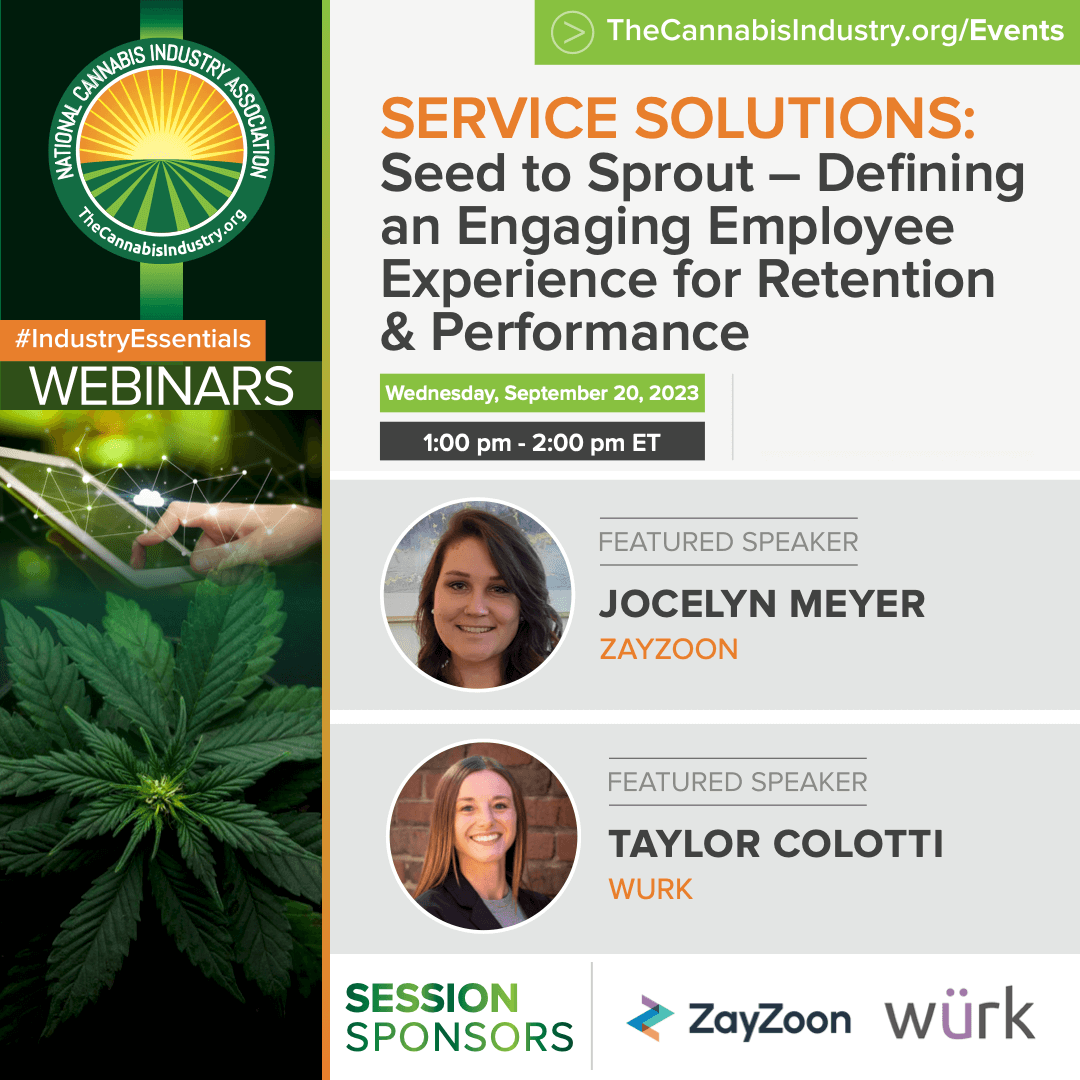
Service Solutions | 9.20.23 | Seed to Sprout – Defining an Engaging Employee Experience for Retention & Performance
In this thought-provoking #IndustryEssentials webinar, we delve into a crucial topic for cannabis businesses: “Defining an Engaging Employee Experience for Retention & Performance”
In the ever-evolving landscape of the cannabis industry, businesses face unique challenges, including high turnover rates and low employee engagement. These issues can have a significant impact on a company’s bottom line. Did you know that replacing an entry-level worker can cost up to 50% of their salary, while for high-level workers, this figure can skyrocket to 400%?
In this webinar, we explore how prioritizing the employee experience is not only a strategy to maintain your workforce but also a means to provide a quality work-life balance for your staff. Our expert speakers discuss the value of the employee experience, immediate strategies for improvement, top trends to incorporate into your strategy, and how to develop a framework for success.
Whether you’re a seasoned cannabis industry professional or just beginning your journey, this webinar provides valuable insights that can transform your approach to employee engagement. NCIA’s #IndustryEssentials webinar series is your premier source for timely, engaging, and essential education when you need it most.
Stay connected with NCIA for more insightful webinars and industry updates. Subscribe, like, and hit the notification bell to never miss our valuable content. Join us in redefining the employee experience and boosting your business’s success. Watch the full webinar now and take the first step towards a more engaged and productive workforce.
Member Blog: Transforming Your Cannabis Business with Modern Experiences
The cannabis market is growing globally at a considerably good pace. According to studies, did you know that increasing legalization, favorable cultivation norms, and the use of technology are some of the factors promoting the development of the cannabis industry?
Due to this, many researchers are projecting the growth of this market from $43.2 in 2022 to $72 billion in annual sales by 2030. While the industry as a whole is growing, however, some businesses are looking for ways to bring something new to customers.
But the question is, when change is the only constant in this market, how can you do it right? Well, don’t worry because we’re here to help.
This article mentions a few tips and suggestions on transforming your business with modern experiences and growing your profits. Let’s dig in!
Install Kiosks for a Better In-Store Experience
One of the best modern ways to elevate your cannabis store is to introduce user-friendly kiosks. These will help your customers find everything easily in the store.
Moreover, you can also increase the product range with these kiosks. For example, if you sell dry herbs, you can also place a station for pre-roll cones to transform into a one-stop store. You can buy pre-roll cones in bulk and make an addition to your business.
It will increase your customers’ convenience and boost your sales for better profits. So, invest in kiosks to transform the in-store experience and align with today’s shopping trends.
Embrace Technology
Another key player in providing a modernized experience to your customer is leveraging technology for your business. You should invest in user-friendly apps and convenient online delivery services to elevate customer experiences.
It is a great way to tap into the target group that seeks convenience and accessibility. Busy schedules often keep people busy, and they may not get the time to visit stores. Thus, providing an app to place orders makes it easier for them.
Likewise, you can consider further offering 24/7 delivery services to accommodate varying schedules and situations. It will not only increase your customer base but also help you stand out among your competitors.
Workshops and Events
Embrace a fresh approach to your cannabis business transformation by hosting workshops and events. It greatly enhances modern experiences. These gatherings help establish strong customer relationships and bring mutual benefits.
For customers, it’s a chance to learn, explore, and connect with fellow enthusiasts. They gain valuable insights into your products and their uses. Your business, in turn, gains loyalty and trust by offering educational and interactive opportunities.
You can conduct these events online and offline according to the demand. You can also introduce games, outings, and more for the community. Moreover, to enhance it further, you can also offer special discounts to the ones who attend your events. This positive connection leads to repeat visits and word-of-mouth recommendations.
Bottom Line
We hope the above information helps you modernize your cannabis business for success. You can use kiosks for easy shopping, embrace technology for convenience, and host engaging workshops. This builds happy customers and loyalty. These steps cater to changing preferences and show you’re a leader.
Member Blog: Safeguarding Cannabis Businesses – Managing Product Liability and Ensuring Consumer Safety
The rapidly expanding cannabis industry presents unique challenges when it comes to managing product liability. As the sector continues to grow, businesses must prioritize quality control, labeling requirements, and consumer safety to protect their reputation and financial well-being. In this article, I will explore the various risks associated with product liability in the cannabis industry and discuss risk transfer strategies to safeguard businesses from claims related to cannabis products. One of the largest misconceptions I hear is that if a client is not making the product, they do not need product liability. Unfortunately, the reality in the industry is that in a product allegation, everyone through the entire supply chain could be named in a suit.
Quality Control and Labeling Requirements:
One of the key challenges in the cannabis industry is maintaining consistent product quality and ensuring accurate labeling. Product liability claims can arise if a consumer experiences adverse effects due to contaminated or mislabeled products. To mitigate these risks, cannabis businesses must implement robust quality control measures specific to what part of the supply chain.
From cultivation to manufacturing and distribution, every stakeholder should prioritize quality assurance practices. This includes regular testing for potency, contaminants, and pesticides. By adhering to rigorous standards, businesses can minimize the chances of their products causing harm to consumers and reduce the likelihood of product liability claims.
Accurate and compliant labeling plays a critical role in managing product liability risks. It’s vital for cannabis businesses to stay informed about the specific labeling requirements in their market, as laws and regulations vary across jurisdictions. Take California, for instance, where non-manufactured products have their own set of requirements, distinct from those for manufactured products. Whether it’s raw flower or gummies, each product category has its own labeling specifications.
Sadly, there have been instances where products were packaged to attract children or imitate popular snack brands. These cases highlight the deceptive packaging that misleads consumers and targets underage individuals. By ensuring proper labeling, businesses can offer transparency to consumers, building trust in their brand. Furthermore, accurate labeling of THC content is crucial to avoid potential product liability and advertising claims. By providing clear and precise information about THC levels, businesses can protect themselves while also meeting consumer expectations.
Consumer Safety and Education:
Cannabis businesses must prioritize consumer safety by providing clear instructions for product usage and appropriate warnings, especially for edibles and other products with specific dosage instructions. Consumers should be informed about potential risks, possible side effects, and any known allergens present in the product. Accessible information to consumers can help reduce the likelihood of product misuse and associated liability claims.
Insurance Strategies for Product Liability:
Product liability insurance is a critical component of risk management for cannabis businesses. The cost of insurance premiums is typically based on gross sales, meaning that the more products a company sells, the higher the associated risk. However, it is important to note that not all insurance policies cover product liability in the cannabis industry. Therefore, businesses should work with specialized brokers who understand the unique risks and challenges in this sector.
In addition to product liability insurance, implementing further risk transfer processes can play a significant role in reducing the likelihood of being involved in a lawsuit. Businesses should establish clear contracts and agreements between cultivators, manufacturers, and distributors, outlining each party’s responsibilities and liabilities. These agreements help allocate risks appropriately and provide a legal framework for dispute resolution.
Overall, managing product liability in the cannabis industry requires a proactive and comprehensive approach. By prioritizing quality control, adhering to labeling requirements, and ensuring consumer safety, businesses can minimize the risks associated with all aspects of the supply chain when it comes to product liability. Additionally, securing appropriate insurance coverage and implementing additional risk transfer processes can provide further protection and peace of mind. As the industry evolves, staying informed and proactive in risk management will be key to long-term success and sustainability in the cannabis market.
For more information, please reach out toValerie Taylor, Vice President, Liberty Company Insurance Brokers.













Follow NCIA
Newsletter
Facebook
Twitter
LinkedIn
Instagram
News & Resource Topics
–
This Just In
NCIA Applauds Reintroduction of SAFE Banking Following Lobby Days
Beyond Rescheduling: Inside NCIA’s 14th Annual National Cannabis Industry Lobby Days