Committee Insights | Meet the Minors (Novel, Minor, Synthetic Cannabinoids – Part II)
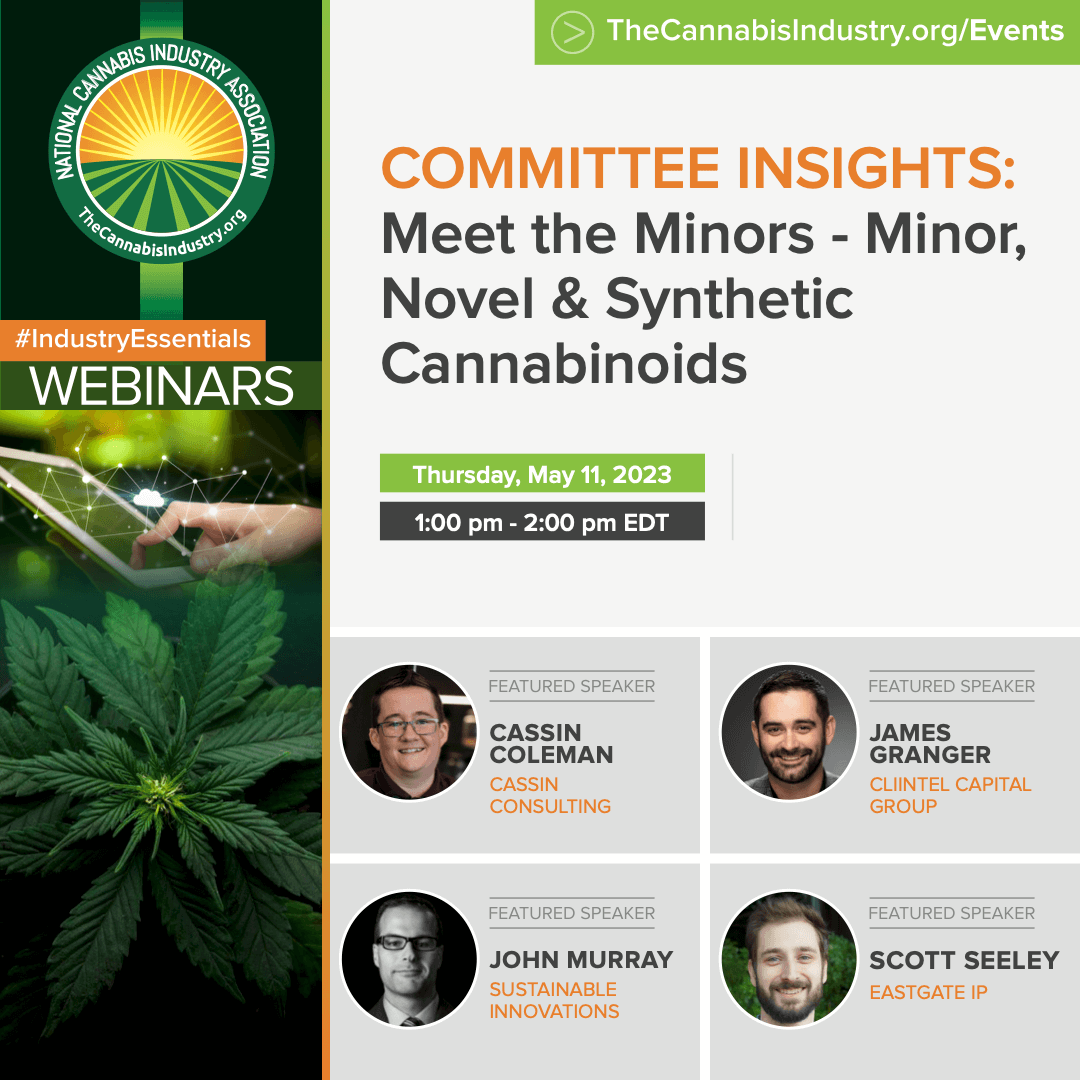
In this edition of our NCIA Committee Insights series, originally aired on May 11, 2023, we were joined by members of NCIA’s Cannabis Manufacturing, Scientific Advisory and Hemp Committees for an in-depth discussion of the most talked about minor, novel, and synthetic cannabinoids.
What scientific publications exist for each compound? What do we know about each molecule’s physiological, psychoactive, and therapeutic effects?
You’ll find out during this informative session featuring leading chemical experts, manufacturers and product development specialists. Along with audience members they explored these compounds from various perspectives to examine their implications for consumers, medical practitioners, patients, producers and regulators.
Learning Objectives:
• Molecular Structures and Identification of novel, minor, and synthetic compounds
• Published Physiological and Psychoactive effects of these compounds
• Perceived therapeutic effects
• Opportunity to ask about other new compounds not in presentation.
NCIA’s #IndustryEssentials webinar series is our premier digital educational series featuring a variety of interactive programs allowing us to provide you timely, engaging and essential education when you need it most.
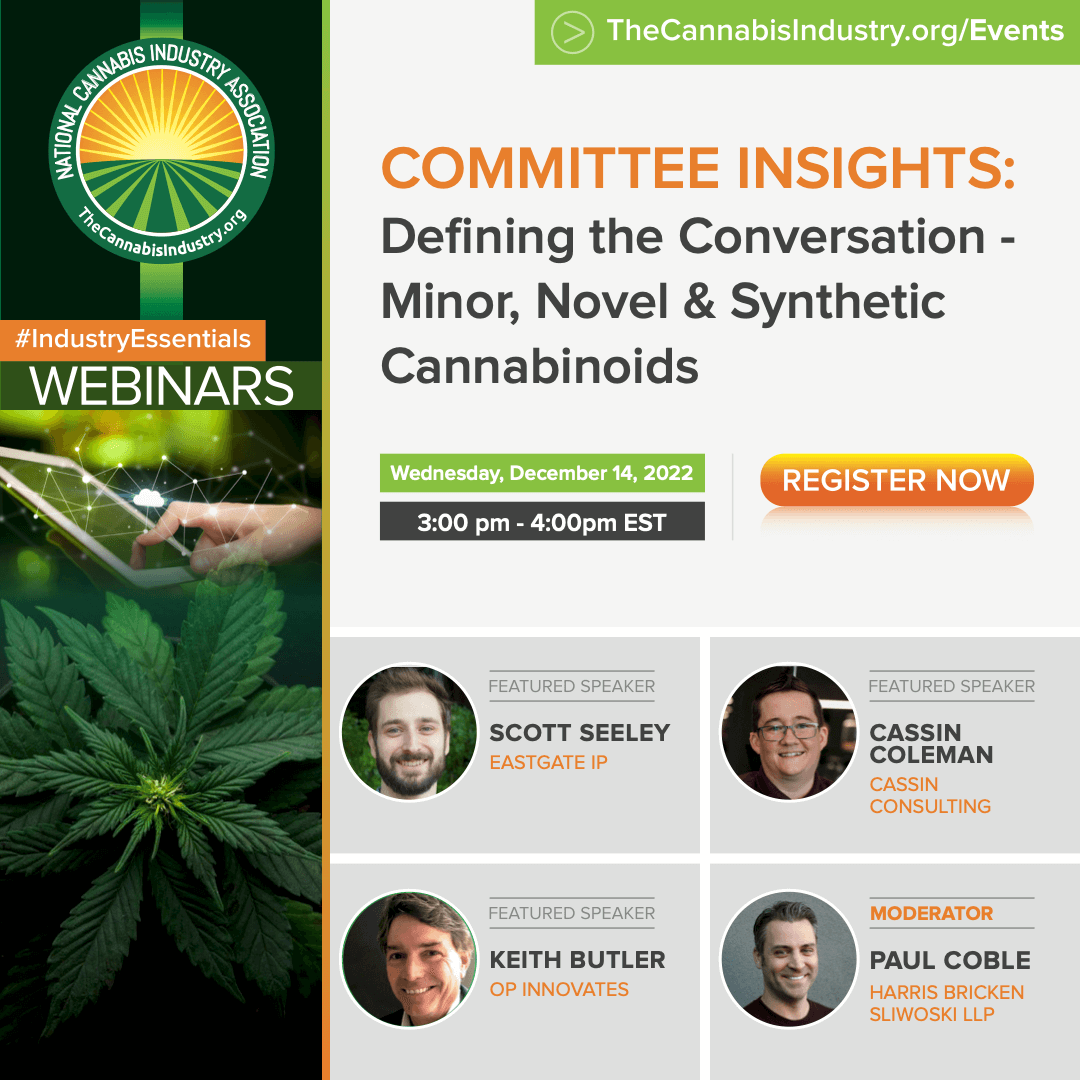
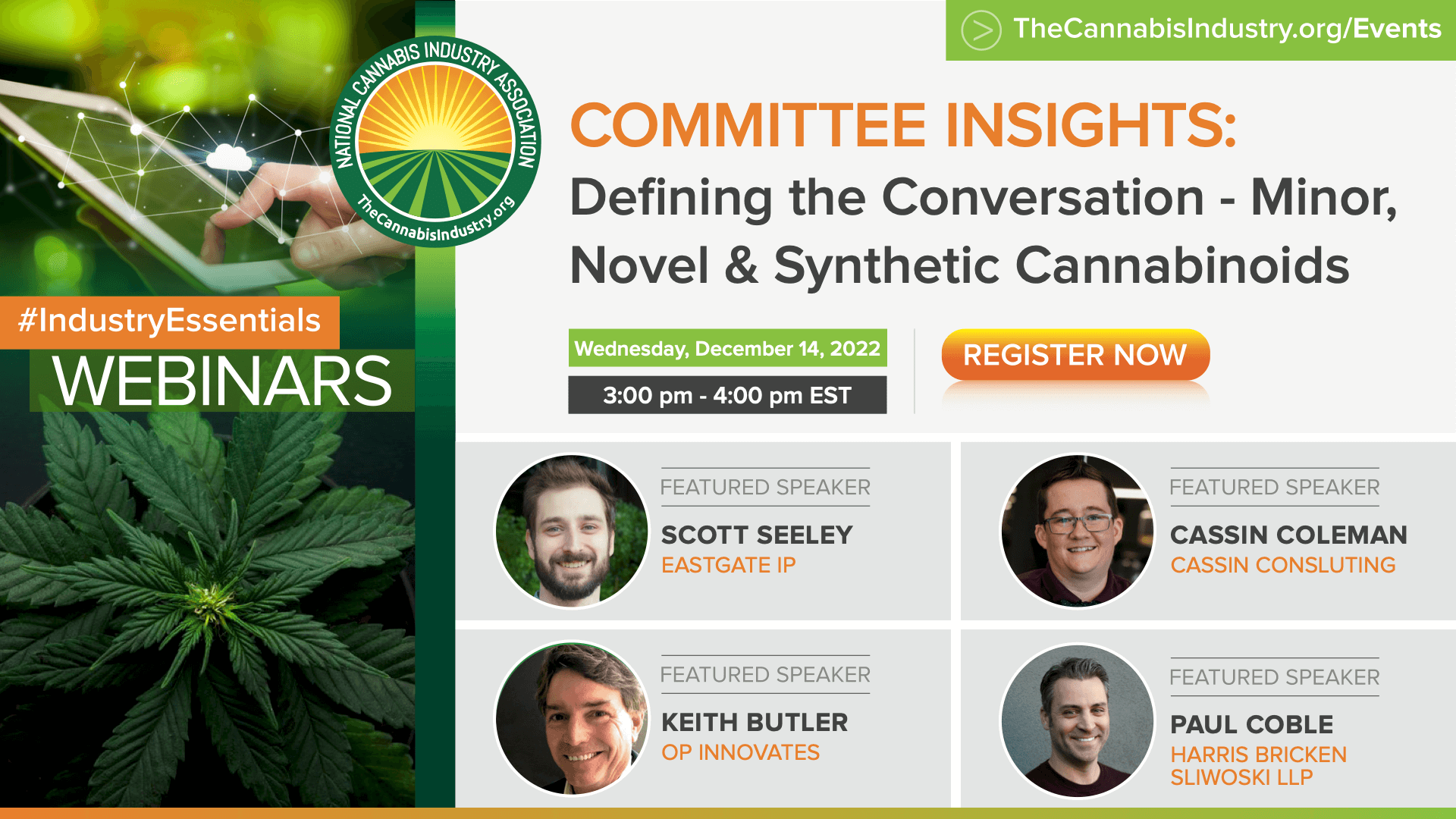
In this edition of our NCIA Committee Insights series, originally aired on December 14 and produced in collaboration by NCIA’s Cannabis Manufacturing Committee, Scientific Advisory Committee and Hemp Committee we introduced and framed the myriad regulatory, scientific, linguistic, and ethical issues that come with the rise of minor, novel, and synthetic cannabinoids.
Learning Objectives:
• Understand the role of minor, novel, and synthetic cannabinoids in the cannabis industry and the unique issues relating to their current status.
At the conclusion of the discussion our panel hosted a lengthy moderated Q&A session so our network could get all their burning questions answered by these leading manufacturing, biochemical, and legal professionals from the hemp and cannabis industries.
Panelists:
Scott Seeley
Biochemist and Patent/TM Attorney @Eastgate IP
Cassin Coleman
Founder
Cassin Consulting
Keith Butler
CEO
OP Innovates / Hemp Mellow
Paul Coble
Intellectual Property Attorney
Harris Bricken Sliwoski LLP
There is more to cannabis than THC and CBD. As our understanding (and commercialization) of cannabis evolves, new compounds like CBG, delta-8-THC, THCv, and others are coming onto the scene. These various “minor” cannabinoids, however, bring with them a host of new issues.
Over the next few months this collaboration will continue to explore these issues with various subjects ranging from basic and advanced overviews of these molecules, regulatory recommendations, risk management and compliance concerns all the way to consumer and manufacturer safety. Stay up to date and be the first to know when additional follow-up sessions are scheduled by signing up via the form below.
From Lab to Label: Safeguarding Consumers in the Cannabinoid Product Landscape (Part III): https://bit.ly/3Xc9Lx6
Know Your Hazards – Occupational Health and Safety Considerations in Cannabinoid Ingredient Manufacturing (Part IV): https://bit.ly/3rEUeKP
Concepts for Regulatory Consideration – Shifting the Conversation from “Cannabis vs. Hemp” to “The Cannabinoids” (Part V): https://bit.ly/3P3r5AW
Committee Insights | Setting the Stage: Minor, Novel, and Synthetic Cannabinoids
There is more to cannabis than THC and CBD. As our understanding (and commercialization) of cannabis evolves, new compounds like CBG, delta-8-THC, THCv, and others are coming onto the scene. These various “minor” cannabinoids, however, bring with them a host of new issues.
NCIA’s Cannabis Manufacturing Committee, Scientific Advisory Committee and Hemp Committee are all collaborating on a series of #IndustryEssentials webinars over the next few months which will explore these issues with various subjects ranging from basic and advanced overviews of these molecules, regulatory recommendations, risk management and compliance concerns all the way to consumer and manufacturer safety.
To kick off this series we’re showcasing an initial session taking place on Wednesday, December, 14th at 3PM ET / 12PM PT introducing and framing the myriad regulatory, scientific, linguistic, and ethical issues that come with the rise of minor, novel, and synthetic cannabinoids.
But before we get started … Acquire the foundational knowledge needed to dive deep into this session by watching this introductory video on Minor, Novel and Synthetic Cannabinoids.
During this brief 15-minute presentation our panelists Scott Seeley of Eastgate IP and James Granger of Clear Cannabis Inc, both members of NCIA’s Cannabis Manufacturing Committee, will walk you through the categories of compounds, outside of the commonly known big two – THC and CBD, and explain what is known about these compounds along with what the industry can do to move forward to provide safe products to consumers.
Committee Blog: Protect Against Corporate Identity Theft with Trademark Rights
A company’s brand is its identity. Branding elements – names, logos, colors, graphics, slogans – are how customers recognize a product or service as coming from a particular source. Done properly, brands can be as recognizable to consumers as a person’s face, name, and voice. In some cases, brands may be some of the most valuable assets a company may own. Protecting physical assets is common in the cannabis industry, but how do companies protect intangible assets, like their identity? Fortunately, there are bodies of intellectual property law designed to provide legal protections against others from using brand elements that are too close to your own. To take advantage of these protections, however, cannabis companies must understand how each one works and develop a branding strategy that leverages intellectual property laws.
This is the second article in a 3-part series about cannabis IP. The first article focused on patent law and can be found here. The series will culminate with a Q&A-based webinar on April 19th at 1:00 Eastern. Advance questions can be sent to paul@thalo.io.
Mechanisms of Brand Protection
Brands are protected most prominently by legal domains known as trademark and trade dress. Trademarks include a company’s name, logos, and slogans, as well as those of any individual products. In some instances, trademarks may also include recognizable elements like colors (UPS’s brown) and sounds (NBC’s chimes). Trade dress is a similar concept to trademarks, but applies to the distinct appearance of a product or its packaging. Trade dress can even be used to protect the unique look and feel of a retail establishment, such as a restaurant or dispensary.
Both trademark and trade dress is intended to reduce confusion in the marketplace as to the origin of a product or service. The idea is that the public is best served when they can reliably determine which company to associate with each product. Reliable product-company association increases quality accountability, facilitates safety controls, allows consumers to form powerful brand loyalty.
Companies that avail themselves of trademark and trade dress laws gain access to a set of tools to legally fence off others from using branding that is likely to confuse customers about the source of a product. And, unlike other forms of intellectual property, trademark rights can last indefinitely and even strengthen over time. Some of these rights arise automatically just by using a mark, others must be sought out through registration.
Principles to Consider When Selecting a Brand
Every company should consider trademark principles from day zero, when first selecting a name. U.S. trademark rights only apply to marks that are “distinctive,” meaning they are capable of distinguishing things bearing the mark from goods and services offered by others. The more distinctive a mark is, the stronger protections provided by trademark law. Names that merely describe the goods or services are non-distinctive and are typically not eligible for trademark protection.
There are five general categories along the spectrum of distinctiveness – fanciful, arbitrary, suggestive, descriptive, and generic – arranged from strongest to weakest.
Fanciful marks words that were invented specifically to serve as a trademark, such as Xerox or Nvidia. Because these words have no other meaning than to identify the source of goods or services, they are the most distinctive category of trademark and receive the greatest protections.
Arbitrary marks are the second most distinctive category of mark and include words that have alternative meanings, but only meanings in contexts unrelated to the goods or services being sold. These include Apple computers, Lotus cars, and Bicycle playing cards.
Suggestive marks are less distinctive than Fanciful and Arbitrary marks, but still considered sufficiently distinctive to receive trademark protection, though registration may be more difficult. Suggestive marks imply a quality or characteristic of the good or service the mark is used in connection with. Some examples of suggestive marks would include: Microsoft, a portmanteau of microprocessors and software; ChapStick, for a stick-shaped balm used on chapped lips; and Netflix, which is suggestive of an internet-based video service.
Descriptive marks simply describe the goods or services being offered and are, therefore, not distinctive. In some cases, however, descriptive marks can acquire distinctiveness and achieve a “secondary meaning” as a source-identifier through long-term use (usually +5 years), heavy advertising, or pervasive adoption. Examples of Descriptive Marks would include: International Business Machines (IBM Computers); Best Buy retail stores; and Sports Illustrated magazine.
Generic marks are terms that broadly identify the product or service being offered. Generic marks are so non-distinctive that they are not eligible for trademark registration, even if secondary meaning can be shown. The idea is that these marks are so fundamental to the product that it would be detrimental to consumers and the marketplace to allow a brand to have exclusive use of the term in connection with the goods. “Escalator” and “Dumpster” were once brand names but, because they were used widely to refer to all mechanized stairways and trash receptacles regardless of manufacturer, they lost all trademark distinctiveness.
Parody Does Not Apply – Avoid Famous Brands
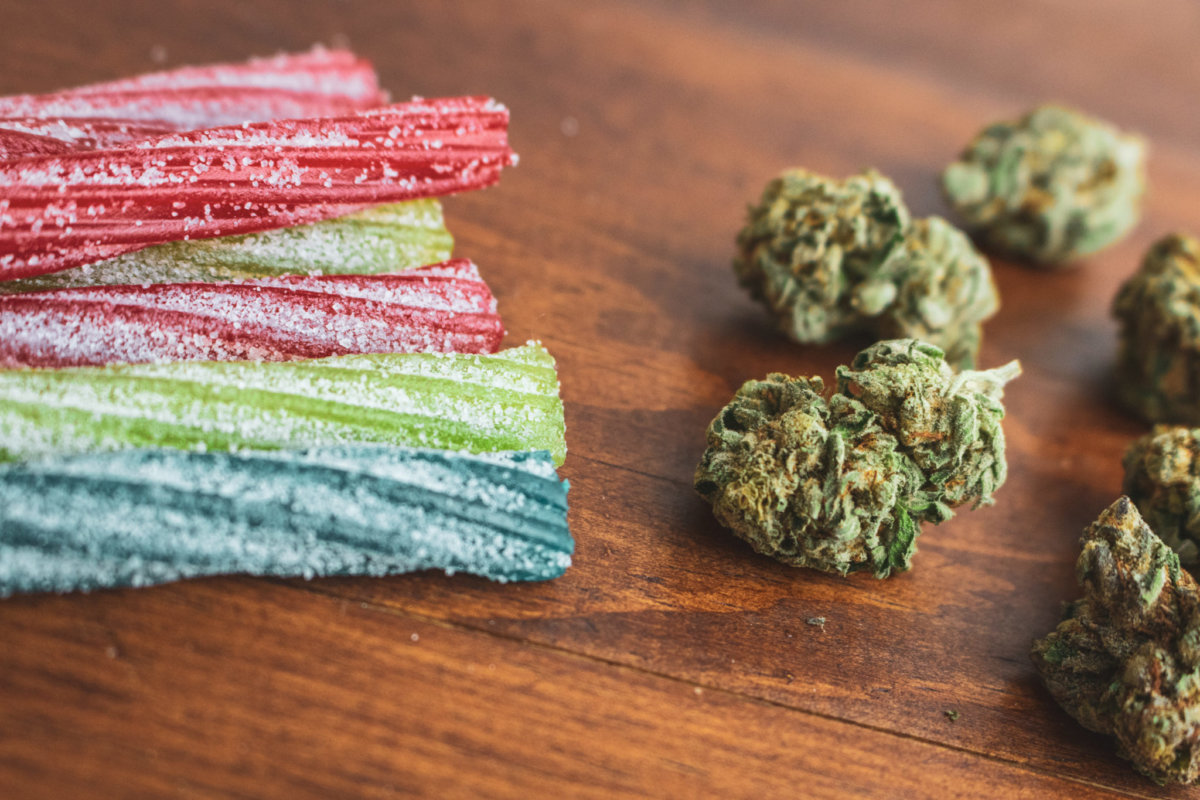
A surprising number of cannabis companies have used trademarks that reference or parody famous brands. Gorilla Glue, Girl Scout Cookies, and many others have been used as names for cannabis products. Companies have used packaging that resembles well-known products such as Life Savers and Sour Patch Kids. This is a bad idea. While this practice seems to be increasingly limited to unregulated markets, a recently published (and ill-advised) application for the mark and logo MCWEED for apparel shows that not everyone has received the message:
Registration and Scope of Protection
Some trademark rights are established as soon as a trademark is used in commerce. But to obtain the full scope of legal protections available, trademark owners must register their marks, preferably federally. Federal registration stakes a claim to a nationwide priority date, increases protections available, increases potential damages, and embodies a definities property that can accrue value.
All trademark registrations begin as applications. Trademark applications must, among other things, identify the mark, the applicable dates of use. Applicants must also describe the goods and/or services the mark is (or will be) used with and select one or more classes from an international menu of product classifications. The classes selected and the description of the products can greatly affect the scope and validity of a registration, so it is important to consult with an experienced trademark attorney.
These applications are examined by the U.S. Patent & Trademark Office to ensure they meet the statutory requirements. Typically, the USPTO completes examination within about 6 months, but currently the office is experiencing some delays and it is commonly taking 7-10 months for an application to be evaluated. If the examining attorney identifies any problems, they may issue rejections, to which the applicant will have an opportunity to respond.
If the USPTO approves the application, it will be published for 30 days (expandable to 180 days) to allow other trademark owners to oppose registration of the mark. Sophisticated trademark owners can set up alerts to be notified when any similar applications are published that may be concerning. At the close of that period the mark is recorded in the federal register and the trademark registration is complete.
A qualified trademark attorney can help guide you through the process and provide counseling concerning how to maximize your chances of registering your trademark without prejudicing your rights. Trademark application fees run $250-$350 per class of goods or services and a trademark attorney will typically charge a few hundred to a few thousand dollars, depending on their experience and the level of pre-application clearance. While trademark mills and self-guided applications are available, there are many pitfalls to avoid while preparing and prosecuting a trademark application, and applicants should be wary of attempting to navigate the process without legal guidance.
Applicants should also be aware that many companies mine the USPTO database to send unsolicited offers to trademark applicants. While these offers can look official and typically include some deadline to respond, they are usually scams. Nevertheless, it can be helpful to have an attorney review any correspondence relating to the trademark application to ensure that no important correspondence from the USPTO is missed.
Embrace the Zone of Expansion
There are a lot of benefits to registering trademarks, but registration is not available in all instances. Under federal law, registrations cannot be issued that cover goods or services that are federally illegal. But the same mark can be registered for other, legal products, and the trademark rights will extend to a reasonable “zone of expansion,” covering products that the trademark owner could reasonably branch out to in the future. This allows a brand owner to obtain the benefits of federal trademark registration and use it to provide some umbrella protection for their cannabis brands.
One option is to sell branded accessory products, such as apparel or smoking accessories, for which a trademark registration will pass muster. It is debatable, however, whether cannabis products are within the zone of expansion of t-shirts.
Another option is to develop one or more low-THC hemp products under the same brand as high-THC cannabis products. At least one case is already working its way through the courts where a trademark owner is claiming that cannabis edibles are within the zone of expansion of a line of hemp-infused, low-THC edibles. Edible IP, LLC and Edible Arrangements, LLC v. MC Brands, LLC and Green Thumb Industries, Inc., (Case No. 20-cv-05840). Though that approach is also not without its pitfalls, as discussed below.
A final option that every cannabis company should consider is state trademark registration. State registration requirements are typically governed by state law and, therefore, state trademark registrations can often be obtained for cannabis products. State registrations are more limited than federal registrations, but can be a powerful tool in the current landscape of cannabis IP.
Products with CBD Can Be Trademarked, But You Can’t Trademark “CBD” Products
Companies that produce hemp products do not have the same problem with federal illegality as companies with high-THC products. Federal registration is available for trademarks that are used on hemp and hemp products. However, as most hemp companies should know, the advertising of cannabidiol or “CBD” is regulated by the Federal Drug and Cosmetic Act (“FDCA”), 21 U.S.C. §§ 321(g)(1), 331(d) and 355(a). Because CBD is the active ingredient in an FDA-approved drug (Epidiolex®), the FDCA prohibits marketing CBD products (absent a New Drug Application or Abbreviated New Drug Application). Though that may change. As of now, however, the USPTO will refuse to register marks that identify the goods as “CBD.” In re AgrotecHemp Corp., Serial No. 88979905 (issued Feb. 10, 2022) (finding that PUREXXXCBD for plant extracts should be refused registration).
Notably, the AgrotechHemp decision went further than previous USPTO decisions in that it also criticized the issuance of registrations for marks used on products “derived from hemp.” This may signal a crackdown on all hemp-related registrations, or it may be limited to registrations that explicitly identify the goods as containing “CBD.”
Where’s the Value in Trademarks?
It may come as no surprise that brands can be incredibly valuable assets. In some cases, a company’s brand can make up a significant portion of its balance sheet and brand-centric companies can fetch a premium when they are acquired, known as “goodwill.” Increasingly, specialized lenders are even willing to use secured IP as financing collateral. Nonetheless, the real value for many trademark owners is non-monetary.
When many people think about intellectual property, they recall headlines of jury verdicts with huge damages that can reach into the billions of dollars. The reality is that, absent intentional copying, trademark cases rarely result in large-dollar awards. More often, successful trademark suits result in an injunction preventing further infringement and some relatively minimal damages. The primary value of trademark rights is the ability to control your brand and how consumers perceive your brand in the marketplace. Trademark rights give you the tools to define your brand as a unique identity and preserve that identity in an increasingly crowded industry.
Video: NCIA TODAY – Thursday, March 10, 2022
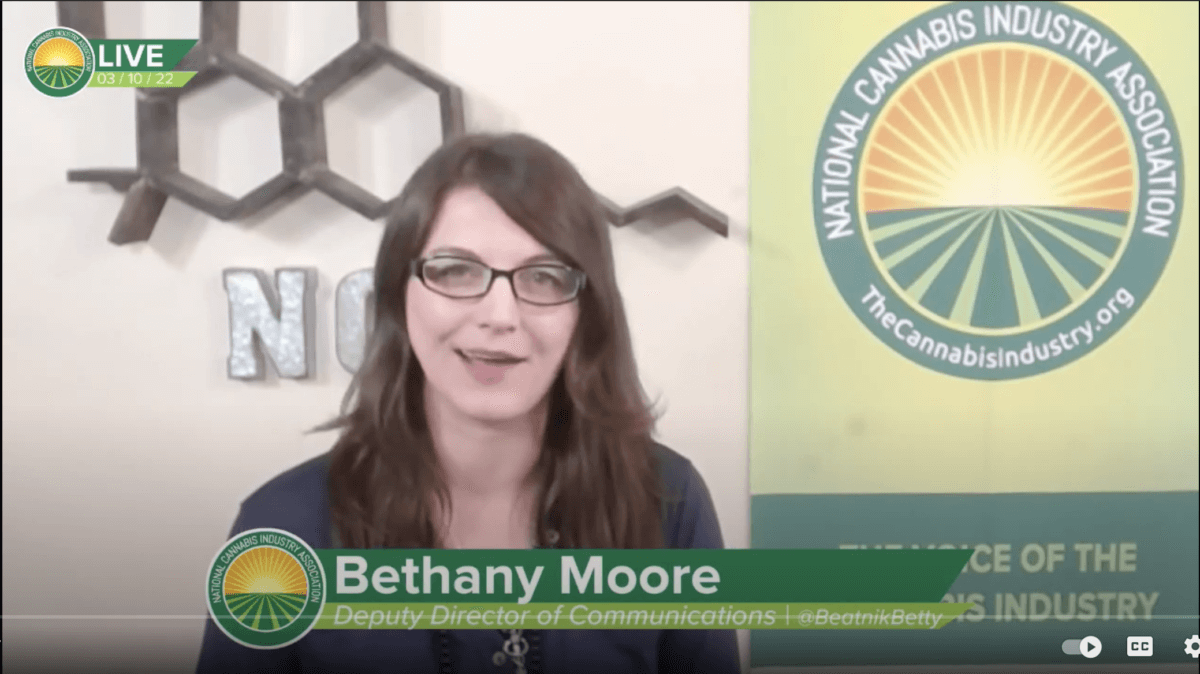
NCIA Deputy Director of Communications Bethany Moore checks in with what’s going on across the country with the National Cannabis Industry Association’s membership, board, allies, and staff. Join us every other Thursday on Facebook for NCIA Today Live.
Committee Blog: An Introduction to Minor/Novel Cannabinoids
In our rapid advance in cannabis science through recent years with the easing of restrictions of handling and experimenting on cannabis and cannabinoids via legalization and regulation efforts across the country, we have discovered and re-discovered cannabinoids that hold potential for great advancement in cannabis chemistry and potential for many beneficial health and wellness benefits along with identifying via production methodology, the safe and cost-effective means of producing these cannabinoids themselves.
We define these new cannabinoids, different from the standard ones identified and required to be noted on regulated cannabis products (i.e. THC-A, THC, and CBD) in a number of ways, all being used in this article to define Minor/Novel cannabinoids. Minor cannabinoids are simply defined as every other cannabinoid that is found in cannabis besides THC and CBD. Science has identified over 100 outside the two standards, and more are discovered each year. Defining “Novel” cannabinoids; we look at five major classifications; Classical, Non-Classical, Hybrids, Aminoalkindoles, and Eicosanoids. Finally, we use the term “Synthetic” cannabinoids to define compounds related to cannabinoids, but not naturally found in any concentration in the cannabis plant or related plants themselves. Realistically, the term Synthetic could be replaced by Novel, Classical Synthetics, and Non-Classic Synthetic compounds. For the sake of this article, we will be defining and discussing the basics of the generalized “Minor” cannabinoid family along with touching briefly on possible “Synthetic” compounds of interest in the future.
It would be easy to dismiss all these compounds outside THC and CBD as so rarely found in the natural cannabis plant, that they would not impact the industry or growth/focus on regulatory affairs in the space for discussion. However, one thing that these compounds have been found to cause is not only true intoxication in individuals, but also potential workarounds between State and Federal law regarding restrictions around classic cannabinoids THC and CBD, which have been the main focus of lawmakers and regulators in the past. One of the most prevalent and important that has made its way into many small gas stations and head shops across the country would be a compound such as Delta-8-THC. Often described as “THC light” Delta-8 has been produced through semi-synthetic means to achieve intoxicating effects while still skirting around the laws regarding Delta-9 THC. Delta-8 is not a new compound, having been known for years in the organic chemistry field and now being produced via widely available and federally legal CBD isolate. Compounds such as “Delta-10” and others are now becoming available to market in a large way and generalized knowledge of the substance and its effects are becoming widely discussed.
Overall, the compounds themselves have years of real research behind them, showing that when produced correctly and tested for efficacy, there are real potential benefits to use in the human body for a variety of reasons or conditions. Many more years of research are to be done to learn proper testing methodology based on production methods, but overall, we are seeing many potential benefits of these compounds for human use.
The human body internally operates and relies on what is called the endocannabinoid system. The system affects the human body’s ability to heal/regenerate, regulate body temperature, and many other positive background systems in the body. Humans are built to process and use cannabinoids and the deficiencies of those can lead to imbalance in the body’s systems. One effect of cannabinoids in the human body is also that of intoxication. Scientists rely on various interacting chemistries in the body and brain to determine the concept of intoxication. There is no doubt in the argument against any intoxication, however, we tend to view intoxication through a negative light while simultaneously ingesting a cup of coffee in the morning for the intoxicating effects of caffeine. Looking at intoxication through this light, down to the way in which a cup of tea can calm, soothe, rejuvenate, or stimulate; we seek to define and examine the potential benefits of these minor cannabinoids in the human experience while studying and researching their potential uses in the future.
Taking a brief look at overall results from studies around minor cannabinoids, we find a variety of effects and use in minor cannabinoids that far outstrips the standard belief of what THC or CBD can do for the body. THC-V, for instance, that is found in higher concentrations of strains from specific parts of the world, including the south part of the continent of Africa, has been shown to work towards appetite suppression and could potentially be a lesser harmful compound in the quest for weight loss in individuals. Looking at the compound CBG, it has been shown in studies to improve focus and cognition, a very different outcome than its relative THC. THC-O has even been shown to have a greater intoxicating effect than Delta-8 or 9 due to the ability of the human body to uptake the compound more efficiently. Finally, one compound that is making waves in the field of sleep science is CBN, an oxidized molecule of CBD that could help people find non-habit-forming relief in the quest for better rest. While all of these compounds are and can be created from various forms of THC and CBD, much more research is needed (and thankfully finally becoming allowed in this country) to judge their effectiveness and side effects.
All these modifications via organic chemistry with existing cannabinoids, while yielding beneficial results in the lab and clinical research; should be examined and tested like any other regulated product being consumed by humans. One very real potential danger is not only the continued prohibition and extreme regulation of research into cannabinoids leading to clandestine production methods in markets that do not require testing (i.e., “Bathtub” Delta-8 production using strong and dirty acid compounds) but the continued chasing of new compounds outside the current regulatory structure that exists with the DEA here in America. Cannabis has been through this struggle before; with THC highly regulated and tested for in individuals in the military, probation, transportation, or heavy equipment operation; there was a desire to still feel the effects while “complying” with the strict THC ban. These compounds were developed at a rapid rate, leading to “Synthetic THC” or “Spice”-type compounds. While the legislation was aware of the issue, the methodology of banning a single compound led underground chemists here and around the world to tweak the molecular structure to have a similar effect while essentially testing their new blends on the unsuspecting masses, resulting in many injuries and developing long-lasting negative effects in individuals.
One of our biggest tools to combat another “Spice” development cycle that outpaces the research done on these compounds is to deregulate and lessen the difficulties in studying these compounds in highly regulated scientific settings (i.e., universities and scientific institutions). Following that initial change, there needs to be significant development through those institutions regarding establishing long-term studies and testing methods to examine the effects on the human body. Regarding final product testing; in the regulated market, all cannabis products sold through licensed dispensaries from licensed producers need to undergo stringent testing for potency/solvents/heavy metals contamination/microbial contamination, and other potential hazards before the product are deemed safe to sell to customers. Allowing other minor compounds, such as Delta-8-THC, to be sold to consumers via untested pathways and through unregulated channels opens the possibility of harm either through incorrect dosing or contamination via shoddy production methods or less-than-clean packaging standards. Labs need to continue to modify and develop their means to accurately test these compounds and regulators need to hold manufacturers accountable in following the health and safety testing requirements as are currently being done in the regulated cannabis markets across the country.
Not only do these compounds have a significant potential for health and human wellness but could even assist in the development of significantly cleaner production methodology for the main cannabinoids like THC, allowing for lower costs of production and for much more market competitiveness and development by lowering hurdles like highly regulated cannabis agriculture. If you do not need to spend valuable resources to grow the plant itself and the compounds can be safely produced with higher consistency, it will be a boon to manufactured products that require them for their formulations.
In no way should we shut the door on the potential future of these compounds but embrace the study and research to re-invigorate the development and growth of the use of a plant that has been part of the human consciousness for over 3,000 years. While the names sound scary and different, we are just cracking the code on the depth of this plant and what it can do after so many years in the shadows.
The Cannabis Manufacturing Committee focuses on reviewing existing business practices and state regulations of concentrates, topicals, vaporizers, and edibles, ensuring the manufacturing sector is helping shape its destiny.
Committee Blog: The Asset We Wish We Knew Before 2020 – HACCP
Read on for insight and guidance for the vitally important topic of preventing, eliminating, or reducing microbial growth in cannabis edibles and packaging.
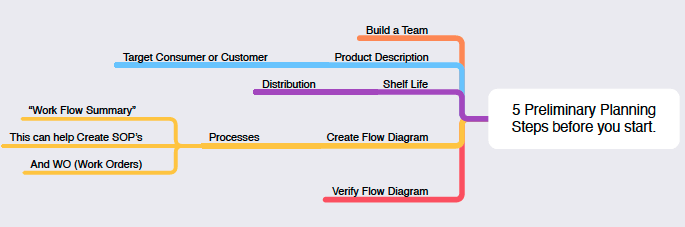
It all starts with the HACCP (Hazard Analysis Critical Control Point) Principles. Gather your team to share the five preliminary steps of HACCP and develop a plan (figure 1). This management system was launched by Pillsbury along with NASA and the U.S. Army for food safety in space exploration in the 1960’s. Quality, safety and efficacy is obtainable and sustainable with the HACCP discipline.
The objective is to PREVENT packaging from being a failure point and inhibit microbial growth in edible products. We know moisture (water activity), temperature, pH, and oxygen levels are primary microbial growth drivers.
HACCP is an asset, not an expense. Food is medicine for some, and cannabis products are medicine for many. Resin cannabis products (RCP) must be safe, consistent, and reliable products continuously. To generate those results, learn the HACCP mindset. Practice being an advocate with HACCP discipline displaying the actions written in the programs. It’s a system for cannabis safety that encourages operations to have Emergency and Business Continuity plans before disruptive events occur, e.g., natural disasters, pandemics, etc.
Resin cannabis product – Any product, whether finished or a work in progress, containing or comprised of cannabis flowers or resins or both and includes, but is not limited to, the cannabis flowers and resins themselves, extracts/concentrates/derivatives thereof, and preparations therefrom.
And can be further classified as Adult-Use or Medicinal-Use and subclassified as Topical-Use.
Creating such a plan is important because exposure to microbes may result in allergic symptoms such as sneezing, coughing, wheezing, nasal congestion, and watery or itchy eyes. Consumers using cannabis products as medicine, such as cancer patients on chemotherapy, are even more susceptible to harm caused by microbes. Thus, it is critical to ensure your products do not have microbial growth.
Effective HACCP management system ensures control. Empower your team through education and training on discipline of HACCP. Take the infused gummy recall from February 2021 as an example where cross-contamination, improper employee hygiene, and package permeability were failure points that led to loss of control. Lack of control during transport of the initially sterile packaging also contributes to contamination. Personal clothing worn by team members or visitors are also known sources of pathogenic fungus.
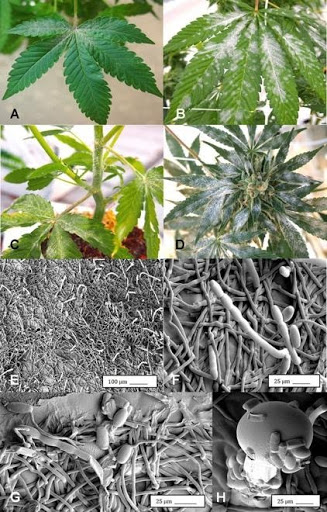
Best practice is to address preventive controls and reducing/mitigating risks. For example, consider installing two-way humidistatic control devices in packaging, such as desiccant packs, to maintain water activity (Aw) in acceptable ranges to mitigate microbial growth. Reducing moisture prevents powdery mildew caused by Golovinomyces Cichoracearum (figure 2).
A great resource to mitigate risks can be found in the ASTM D37; Standard Guide for Cleaning and Disinfection at a Cannabis Cultivation Center; Aw ASTM Standards for Cannabis Flower: D8196 – Standard Practice for Determining Water Activity in Cannabis Flower; and D8197 – Standard Specification for Maintaining Acceptable Water Activity Range for Dry Cannabis Flower.
Sanitary environments are critical from seed to sale.
Figure 2, Right. Powdery mildew development on leaves, stems, and flower buds of Cannabis sativa, caused by Golovinomyces cichoracearum. 2
Use the principles of HACCP to guide and maintain the integrity of your work. Each principle builds on the next to create a solid foundation to build and operate a safe and consistent management system. Establish storage conditions in your control and transport; determine the temperature and humidity for each product type (gummies do not tolerate heat, and certain ingredients are sensitive to humidity which could change the potency). This includes evaluating the stability of each of the ingredients when in final product form (how long do they remain potent).
Depending on the ingredients used, i.e., the formulation, gummies can take on or reject water. Most typically let out the water, then that water has nowhere to go (trapped in the packaging), and the product molds. This is why commercially produced gummies are coated in wax, literally to trap the water inside the product. Inadequate gummy formulations lead to water permeability; change in cannabinoid content is the least of the concerns.
General chapter 659 on Packaging and Storage requirements published by the USP (United States Pharmacopeia and the National Formulary, USP–NF)is a great resource. Though not all cannabis products may be for the medical market, using the standards of excellence from the USP is the best way to minimize product failure and help ensure consumer safety. Packaging 659 states that packaging materials must not interact physically or chemically with a packaged article in a manner that causes its safety, identity, strength, quality, or purity to fail to conform to established requirements.
Empower your cross-functional team to apply and implement HACCP through your organization. In doing so, you will have the discipline and tools to mitigate risks and prevent costly downtime. Your consumers benefit by having safer, consistent, and quality products. Finally, collect the data and share the story. We all need to drive improvement and produce safe consistent products for our consumers. HACCP systems are a tried-and-true tool to achieve this.
Please note that prerequisite programs such as current Good Manufacturing Practices (cGMPs) are an essential foundation for the development and implementation of successful HACCP plans. This article is intended to level up your current manufacturing processes and mitigate your exposure to potential recall or unsafe products in the marketplace.
Committee Blog: Future-Proofing Cannabis Manufacturing Processes – Part 2
by NCIA’s Cannabis Manufacturing Committee
Despite prohibition, the cannabis industry is not behind the curve of sustainability progress. While other industries were inventing modern Cloud-based quality control/distribution systems and making stuff out of plastic, cannabis producers were maximizing yields per watt and creating stronger concentrates in attempts to get the most out of their value streams while staying under the radar. Now all industries are racing towards a more sustainable future and the cannabis industry has the opportunity to show that it can be a good example, even a leader in sustainability. Regardless if it is in preparation for competition or regulation, now is the time to start building more sustainable, energy-efficient, and overall lower footprint businesses.
As the manufacturing branch of the cannabis industry paves its way into the future, the processes involved need to be made environmentally sustainable and best practices need to be shared and standardized to ensure product safety and industry longevity. Collecting and sharing data from manufacturing facilities is the ideal way to achieve these sector goals.
Environmental sustainability is a multi-discipline effort. Experts in engineering, emissions, air quality, worker health and legal matters should be relied on for educating and guiding businesses into a more sustainable future.
The Data Vacuum Is Holding Back Environmental Sustainability Advancements
While cultivation is one of the main focuses of the cannabis sustainability effort, manufacturing procedures are also prime targets for sustainable advancements. Due to the nature of the organic chemical processes used to produce consumables, some of the materials and practices could have a negative impact on both worker and environmental health if not addressed and handled properly. As a best management practice, regulated cannabis manufacturers typically operate closed-loop systems, which greatly reduce certain dangers, but this can require other more energy-intensive systems. As these relatively new processing techniques are being pioneered, we need more data to understand how they can be made more efficient and sustainable. For various reasons — such as intellectual property concerns — advancements in sustainable practices are often not shared and therefore not visible to potentially become a standard process that ensures product and consumer safety.
Cannabis Science Outpacing Regulations
The scientific improvements for manufacturing cannabis into consumer products in high demand have outpaced regulations. From process design and equipment to processing material sourcing, the manufacturing branch of the cannabis industry has much to offer the future of sustainable cannabis products. In many jurisdictions today, regulators have hastily opted for vertical, prescriptive regulations which have left many manufacturing operations without the leeway required to innovate more sustainable process strategies. Even more businesses with the legal leeway simply do not want to push the envelope in today’s regulatory climate. More forward-thinking, regulation-savvy equipment manufacturers have begun focusing on lower energy-use in their newer products as a selling point. The industry as a whole could be making progress much faster if regulators focused on performance standards for manufacturing facilities.
Strategies inspired by building and process heat recovery offer dozens of basic possibilities when it comes to implementation in a cannabis manufacturing facility. Using the energy released during solvent condensation for solvent evaporation is a prime example. Connecting liquid-cooled equipment with the building’s central plant system is another. These are big ideas that could be implemented in different ways with different efficiencies. Intelligent use of insulation, exhaust recirculation, odor mitigation, ventilation minimization, demand-control ventilation for providing makeup air, etc. could also make significant differences. Data collected from actual operating facilities experimenting with different strategies will be the best guide going forward in determining what the best energy saving strategies are.
Cannabis Extraction Processes and Air Quality
In an effort to prevent unnecessary Volatile Organic Compounds (VOC) emissions it is important to maintain proper solvent transfer and storage, perform extraction equipment inspections, and ensure a maintained inventory and handling of solvents on site are a part of a facility’s standard operating procedures. Best practice for extraction and post-processing dictates the use of butane, propane, CO2, ethanol, isopropanol, acetone, heptane, and pentane as solvents to encourage safe consumer products.
Carbon filtration is also the best management practice for controlling cannabis terpenes (VOCs) and odor emissions. It is important to install properly engineered molecular filtration systems (aka carbon scrubbers) that are sized appropriately for a facility’s ‘emission load’ and don’t exceed the maximum cfm rating for air circulation through the filter. To prevent VOC and odor breakthrough, it is imperative to inspect and conduct regular maintenance of HVAC systems and carbon filters. A standardized method for measuring the lifespan of carbon is by using a Butane Life Test, which equips manufacturers with the data to know how to manage their carbon replacement schedule effectively, minimizing unnecessary carbon waste. Additionally, processors can conduct air sampling to detect and measure VOC and odor levels in their facilities and the data can be used to validate the impact of control technologies further protecting worker and environmental health.
Proper VOC and cannabis odor control from manufacturing processes helps reduce community odor complaints and improve neighborhood relations. It also improves public and environmental health by reducing local ozone concentrations. Proper emissions control when running cannabis manufacturing processes and handling chemicals helps to shift the industry at large toward sustainable and environmentally conscious business practices.
Preparing Your Business for the Next Stage
Cannabis manufacturers are seeing big changes on the horizon. Increased legalization brings increased competition and inevitable M&A activity. Whether a business aspires to compete on the world stage or to be acquired in one of the coming green waves, there are actions that can be taken today to help cannabis manufacturers maximize their value to both customers and potential acquirers.
One of the most important assets a company can have — both to compete effectively and to attract purchasers — is intellectual property. Intellectual property, or IP for short, is the term for an intangible asset that has been afforded certain legal protections to solidify the asset into a commodity that can be bought, sold, and licensed. IP can have a negative connotation in some circles, mostly resulting from misconceptions in the law but also rooted in IP abuses by unscrupulous “trolls.” In reality, IP is an important tool to help companies protect their hard work and, when properly deployed, intellectual property can increase transparency into cannabis manufacturing processes and open new avenues of scientific advancement.
Intellectual property broadly covers a number of different types of rights. Patents protect new inventions like processes, machines, compositions of matter, ornamental designs, and plant genetics. Patents can grant relatively broad rights to these ideas, but with substantial additional costs and scrutiny.
Similarly, copyright can protect creative works, like writings, drawings, and sculptures. But many do not recognize that copyright can also protect compilations of data that have been creatively selected or arranged. Data and algorithm copyrights are relatively nascent, but they promise to play a large role in the intellectual property landscape of the future cannabis industry.
Another sect of intellectual property, trademarks, is all about protecting a brand: the names, logos, slogans, and overall look that tells customers that a good or service is from a particular company. Federal trademark registration is unavailable for federally illegal goods and services, but that does not mean that federal trademark protection is unavailable to cannabis brands. Many companies are using the zone-of-expansion doctrine baked into federal trademark law to set up registrations on related legal products (smoking/vaping devices, clothing, and even CBD edibles) that can be expanded to cover THC products when federally legal.
The nuances and requirements of these property rights — along with other IP rights like trade secrets and trade dress — are highly fact-specific, so involve a good IP attorney to guide your strategy from the start.
Towards A More Sustainable Future
Now is the time to start building more sustainable, energy-efficient, and overall lower carbon footprint businesses and the emerging legal cannabis industry is well-positioned to be the leader. If manufacturers are incentivized to safely share processing data directly or through emerging data collection and tracking platforms, the industry will make major advancements towards more environmentally sustainable practices. Environmental impact areas, such as air quality, energy, water, soil waste, and community all need to be considered by the manufacturing arm of the cannabis industry. Regulators can help push the industry forward by reducing negative impacts in these areas though focusing on performance standards for manufacturing facilities and their processes. Lastly, understanding that IP, including trademarks, can in fact increase transparency into cannabis manufacturing processes and open new avenues of scientific advancement will help position operators for M&A activity coupled with proper legal representation. These factors work together to protect the environment and communities, as well as future-proof manufacturing operations setting up the rest of the cannabis industry for longevity and federal legalization.
Committee Blog: Manufactured Product Safety – 2021 Series Premier
by NCIA’s Cannabis Manufacturing Committee
Product safety isn’t an endpoint, it’s a journey. And let’s face it, there is years-worth of research left to do on the safety of cannabis products. That’s why it’s important to stay up to speed on the latest thinking from leaders in the industry. In 2021, the National Cannabis Industry Association’s Cannabis Manufacturing Committee intends to help you do just that by providing information and approaches aimed to help you continue to improve the safety of your manufactured cannabis (marijuana and hemp) products while providing your customers with increasingly trusted experiences. This Manufactured Product Safety Series will consist of blogs, podcasts, and expert panel discussions focused on providing insight into topics relevant to a wide range of manufacturers.
Over the course of the next several months, we’ll bring you content with the following working titles.
Vapor Liquid Formulations
The Importance of Testing Vapor Products as a System
Edibles Stability – Microbial Growth Due to Insufficient Packaging
Terpene Limits Across Multiple Product Formats
But while we’re busy crafting these new pieces, we want to take advantage of our past publications to keep important safety topics front and center. Back in January of 2020, in response to the then-emergent EVALI outbreak, NCIA’s Policy Council created a whitepaper to provide guidance to the industry and regulators. We’re republishing portions of this whitepaper starting with the Vaporizer Liquid Formulations section below. We’ve learned more about EVALI since its original publication, and while some of the specifics may be a little dated, the principles remain relevant to helping you understand product safety.
Disseminating our knowledge of this topic also helps promote better regulation. Examples of what can go wrong are the Oregon Liquor Control Commission’s (OLCC) recently adopted regulations that effectively ban the use of propylene glycol (PG). Granted, they were addressing a difficult issue and made some good decisions, but had they read this piece, they might have better understood that PG “degradation has been shown only with temperatures in excess of what is typically produced by well-controlled hardware.” Even in studies where the temperature was not well controlled, thermal degradants were detected in amounts that are lower in the vapor stream when compared to combustion and inhalation of plant products, such as cannabis flower. And given that PG has been “used at up to 90% concentration in e-cigarette products for the past decade without reports to date of significant health issues,” it is unwise to ban an ingredient option that may turn out to have a better safety profile than even certain native terpenes, some of which may have to be added at abnormally high concentrations in order to achieve the desired viscosity, without further research.
So with that in mind, stay tuned for the next piece in the series and enjoy the excerpt below!
Excerpted from THE KEY TO CONSUMER SAFETY: DISPLACING THE ILLICIT CANNABIS MARKET RECOMMENDATIONS FOR SAFE VAPING
The cannabis-derived ingredient in cannabis oil vaporizers is a concentrate that is produced by extracting the cannabinoids and other compounds from the plant. With the exception of supercritical CO2 extraction, most other common extraction methods use butane, alcohol, or hexane as solvents for the extraction of cannabis oils used in vape pens. Extraction processes using these solvents may result in a small presence of the solvent in the extracted oil. Any residual solvent must ultimately be removed prior to any product being sold to consumers. States that have legalized and regulated cannabis typically have specific requirements regarding allowable concentration levels of these solvents. These states also require full analytical testing by licensed independent labs, including reporting of residual solvents, to ensure that only safe levels of any solvents are present in the final formulation of cannabis vape products.
The type of cannabis concentrate used in a vaporizer is important to consider. Some require diluents or other additives to be effectively vaporized while other types of concentrates (eg: live resin) have the appropriate viscosity to be used in vaporizers without adding any diluting non-cannabis ingredients.
Similar to what we are seeing in the commercial e-cigarette industry, some manufacturers of cannabis extract-containing vape pens choose to add ingredients that help adjust the viscosity of the cannabis oil. This allows the oil to flow evenly through the atomizer when heated. Some of these additives may also contribute to a vapor “cloud” when exhaled. PG, VG, and PEG are the most commonly used cosolvents or diluents. PG and VG are on the FDA’s Inactive Ingredient List for inhalable drug products and are allowable only at fairly low concentrations in drug products, but have been used at up to 90% concentration in e-cigarette products for the past decade without reports to date of significant health issues. PEG is not on the FDA’s list and less is known about its inhalation toxicity. Therefore, PEG should be viewed with more caution, even at lower concentrations.
The state of Colorado has paved the way for the industry on forward-thinking cannabis regulations and remains an industry leader. Governor Polis, his cannabis advisor, and the Marijuana Enforcement Division should be commended for creating an environment in the state that fosters business development while simultaneously protecting consumers. After discussions between Colorado regulators and stakeholders about additives, and given the lack of sufficient safety reviews of these ingredients, the state of Colorado prohibited Polyethylene glycol (PEG); Vitamin E Acetate; and Medium Chain Triglycerides (MCT Oil) in inhalable concentrates and products effective January 1, 2020. Colorado further banned non-botanical terpenes, any additive that is toxic, and any additive that makes the product more addictive, appealing to children, or misleading to patients or consumers. Other states should consider following Colorado’s lead.
The creation of degradants through overheating is also an important consideration. For example, overheating PG and VG may result in their degradation into molecules with established toxicity profiles such as glyceraldehyde, lactaldehyde, dihydroxyacetone, hydroxyacetone, glycidol, acrolein, propanal, acetone, allyl alcohol, acetic acid, acetaldehyde, formic acid, or formaldehyde. However, this degradation has been shown only with temperatures in excess of what is typically produced by well-controlled hardware. Because PEG is a polymer of glycerin, its degradation upon heating is similar to that of VG and it forms the same unwanted toxic molecules.
Vitamin E Acetate and Tocopherols Inhalable Safety Profile Has Not Been Evaluated
Investigators at the FDA and CDC recently found that some cannabis-containing vape products from the illicit market contain a molecule called vitamin E acetate (VEA), also known as Tocopheryl acetate. Vitamin E is a common name for several similar types of chemicals called “tocopherols.” Vitamin E occurs naturally in certain foods, such as canola oil, olive oil and almonds, but also can be made synthetically. Tocopherols are used as nutritional supplements, and manufacturers put tocopherols in food and cosmetics. VEA is the acetic acid ester derived from vitamin E and is also not known to cause harm when ingested as a supplement or applied to the skin.
VEA’s safety when inhaled has not been evaluated. Numerous published studies indicate that the inhalation of vaporized oils, including certain tocopherols, are harmful to the lungs and numerous cases of lung injury after their inhalation have been documented since 2000. Tocopherols such as VEA adhere to an important fluid in the lungs called lung surfactant. Lung surfactant enables oxygen to transfer from air into your body. Studies have shown that tocopherols impair gas transfer in the lungs. Currently, it is believed that inhalation of significant amounts of certain tocopherols can lead to the death of lung cells and initiate a massive inflammatory reaction that can further contribute to lung damage and functional impairment. Accordingly, VEA should not be used as an additive in any inhaled product. Following the FDA and CDC’s investigation, Colorado added VEA to their list of prohibited ingredients in inhalables to their regulations effective January 1, 2020.
Artificial Flavorings Have Not Been Fully and Scientifically Evaluated.
Some manufactures of cannabis extract-containing vape pens choose to add flavoring agents to the cannabis oil to give them a distinctive flavor, similar to products in the electronic cigarette industry. These additives tend to produce flavorings that are appealing to some consumers. While a number of flavorings have been used for many years without incident, the safety of the majority of flavorings when added to vaporized products – alone or in combination with cannabis extracts – have not been fully and scientifically evaluated.
In one study, certain chemicals that are used in flavorings for vanilla, cherry, citrus, and cinnamon can create compounds called acetals when they are mixed with solvents such as PG and VG. Acetals are known to cause irritation when inhaled and can lead to chronic inflammation in the lung. The long-term
effects of these flavoring agents on lung function are unknown. A separate study showed that some popular flavorings may increase the risk of cardiovascular disease when inhaled, although several other studies show no negative effects.
As approximately 17 million Americans use vape products, many of which contain flavors, and only around 2,000 cases of e-cigarette, or vaping, product-use associated lung injury (EVALI) are currently being reported, it appears unlikely that all flavoring agents in all hardware devices are linked to EVALI. However, until more detailed safety studies have been completed on these product lines, manufacturers should proceed with caution.
Some Terpenes are Safe (GRAS); Some Can be Harmful When Heated
Terpenes are a class of molecules found in many plants, including cannabis, that are responsible for the aroma of the plant. Plants evolved to make terpenes to attract pollinators and to deter herbivores and unwanted pests. Terpenes are biologically active and help contribute to many of the physiological effects of inhaled cannabis. Isolated terpenes have been widely used as fragrances in perfumes in the cosmetic industry and in medicine, such as aromatherapy. Although many terpenes are considered “Generally Regarded As Safe” (GRAS) by the FDA, some terpenes are toxic when inhaled/ingested at high concentrations. While most cannabis goods on the market contain levels of terpenes similar to those that occur naturally in the cannabis plant (~1-5%), some products contain terpenes at much higher concentrations (upwards of 25%). High levels of terpenes and other molecules can also occur if chemical procedures such as distillation are used to concentrate cannabis or hemp oil.
In general, terpenes are benign at low concentrations; however, overexposure to concentrated terpenes has the potential to lead to negative effects, including hypersensitive (allergic) reactions in chemically sensitive people. Additionally, some vape pens do not have the means to adequately control the temperature and can heat the cannabis oil to a very high temperature. In certain instances, this has been shown to lead to thermal decomposition of some molecules in cannabis extracts, such as terpenes, resulting in the formation of new molecules with established toxicities. It is also worth noting that even when these new molecules have been shown to form, they have beendetected in amounts that are lower in the vapor stream when compared to combustion and inhalation of plant products, such as cannabis flower, or tobacco leaf.
Cannabis-derived Terpenes
Cannabis contains terpenes, such that cannabis oil extracts used in vape products typically also contain these molecules, depending on the extraction method. Typically, the distillation process causes a loss of terpenes. Some vape manufacturers now recover cannabis-derived terpenes during the distillation process and then re-introduce them back into the final formulated product. Because of poor process control, one potential safety concern from this procedure is that these cannabis-derived terpenes have an undefined molecular composition and the specific concentration of any terpene in the crude mixture likely varies from batch-to-batch due to numerous experimental variables. For example, many manufacturers that are producing large volumes of vape products by necessity must make the oil extracts from a mixture of cannabis strains. Since every cannabis strain contains different terpene profiles, this means that formulated products made from these strains will also vary in their terpene profiles from batch-to-batch.
The potential for terpene profiles changing during the manufacturing process could pose a potential safety concern. Additionally, new isomers, oxidative by-products, or degradative terpenes may be present in these captured terpenes, which could possibly present hazards never presented by merely combusting and smoking the cannabis plant. Some states that have regulations on cannabis require analytical testing of formulated products, including the reporting of terpene concentrations, but this is not yet the universal standard. Vape manufacturers must exercise caution and be required to analyze terpene profiles of products they make in order to begin to develop a better understanding of this subject. Adhering closely to terpene concentrations known to be present in cannabis flower is a good practice.
Non-Cannabis Derived Terpenes Can Contain Residual Solvents and Pose Dangers
One widespread misconception in the cannabis vape industry is that cannabis-derived terpenes are somehow safer or better for you than non-cannabis-derived terpenes. There are few cannabis-specific terpenes because most terpenes are also present in other plants. Most cannabis vape manufacturersthat operate at a large scale, therefore, prefer to use terpenes isolated from non-cannabis sources to introduce into their formulated products. There are several reasons why this is popular in the industry. High purity terpenes (e.g. >99% pure) are sold by numerous retailers, which allows these terpenes to be re-introduced into cannabis vape products at defined and safe concentrations. Also, the cost of using non-cannabis-derived terpenes is far lower than the cost of isolating and using cannabis-derived terpenes.
For example, the terpene D-Limonene is present at extremely high levels in citrus fruits, and therefore can be isolated to high purity easily and inexpensively from them. In contrast, in most cannabis strains D-Limonene is only found at relatively low concentrations, and therefore one would have to use massive amounts of cannabis material to isolate significant quantities of this terpene required for companies that are operating at scale.
The origin and concentration of non-cannabis-derived terpenes that manufacturers use in their formulations is nevertheless important. Non-cannabis-derived terpenes from overseas often have several residual solvents in them, including ethanol, hexane, xylenes, benzene, butane, and toluene. Moreover, some retailers of non-cannabis-derived terpenes do not list the actual concentration or purity of terpenes in their products. It is imperative that cannabis vape manufacturers purchase and use non-cannabis derived terpenes that are accompanied by a COA that reports the purity of the terpene, any solvent(s) that may carry the terpene, and be required to adhere to the same purity standards and mandatory analytical testing requirements as cannabinoids. Reputable companies will also supply a safety data sheet (SDS) that describes the known toxicities of that terpene by different routes of ingestion, including inhalation.
Cannabis manufacturers that make formulated vape products should be aware of any toxic liabilities of non-cannabis-derived molecules introduced into these products. Vape products should also undergo analytical testing for cannabinoids, terpenes, and contaminants. Finally, analytical tests for aerosolized cannabis, similar to those used in the e-cigarette industry, should be developed, implemented, and mandated to address safety concerns. The industry needs to build the volume of inhalation safety data required for all of these ingredients, hardware, and end product combinations.
Committee Blog: The Language Of the Cannabis Industry – Developing A Commercial Manufacturing Glossary
The language of the cannabis industry is crude. It’s not that the cannabis industry relies on vulgar or offensive words, but rather that modern cannabis vernacular remains raw, unrefined, incomplete, and sometimes contradictory, even in mature markets. Perhaps most generously described as “imprecise” or “fluid,” the current lexicon is changing as quickly as the industry, but not always for the better. Consistent and universal terminology are hallmarks of strong industries. As the cannabis industry (including both high-THC “marijuana” and low-THC “hemp”) continues to grow and prove its legitimacy, it is critical that everyone is speaking the same vocabulary.
Defining the issue
Out of necessity, the language of the cannabis industry took root in the dark. Decades of prohibition followed by state-led regulation has resulted in a fractured vocabulary where terms-of-commerce have fuzzy boundaries. The current landscape of murky terminology can inject ambiguity into everyday transactions and, in the worst of circumstances, mislead consumers. As some industry terms coalesce in particular regions, for example, other terms take on different meanings around the country. It is not a problem unique to the cannabis industry, but with its regulatory history, rapid product advancements, and diverse consumer base, the NCIA’s Cannabis Manufacturing Committee (“CMC”) felt it time to start a conversation about the words that define the industry.
With legalization comes a mass-consumer base and new forums to joust for consumer attention. Retail shelves, product packaging, and commercial advertising are the new arenas where cannabis companies try to describe their product to consumers and differentiate their brands from others. Out of this scrum comes a new marketing jargon that can be difficult to decipher. Shatter, crumble, butter, wax, sauce, diamonds, distillate, isolate, broad-spectrum, full-spectrum, partial-spectrum… and that is just in one section of the dispensary. Indeed, a huge swath of cannabis consumers fall into the infrequent or casual consumer demographics for which these terms mean next to nothing.
What’s the problem?
This linguistic haze is felt acutely in the manufacturing link of the supply chain. Manufacturing is the relatively nascent segment of the industry that converts raw cannabis plants into various medical, adult-use, and industrial products. In just the past two decades, new technologies have produced a glut of new products, each of which needs to be called something. But those new terms have ambiguous definitions that are easy vehicles for confusion. And where confusion is prevalent, both consumers and companies suffer.
For many cannabis customers, trying to decode a dispensary menu is like reading in an alien language. They frequently must rely on budtenders and marketing materials to understand some products’ basic characteristics. And even if they manage to become fluent in one dispensary’s menu, they may still find it difficult to predict how that menu will translate to other retailers across the country. The lack of vocabulary standardization would be untenable in the food or beverage industries. In the cannabis industry, where patients may rely on specific products for medical treatment, consumers should have a uniform vocabulary to describe products.
That challenge is not limited to retail consumers. Language is critical to the smooth functioning of intra-industry business relationships. As in any other industry, cannabis business relationships are far more successful when the parties’ expectations are aligned. When a dispensary orders tens of thousands of dollars in shatter, crumble, distillate, and tincture, they have certain expectations about the products they will receive. Even experienced extractors, operators, and executives have different understandings of where some products end and others begin.
Ambiguity in the commercial arena can lead to big problems. Among the best-case scenarios, a miscommunication results in a dissatisfied customer. More serious disagreements may require costly replacement shipments or refused deliveries. Of course, if the stakes are high enough and both parties are adamant in their positions, a linguistic quarrel may become a courtroom duel. Some advertising litigation, such as for “Refined Live Resin” vape cartridges, is already working its way through the court system. When it comes to cannabis terminology, fuzzy boundaries are not a standard the industry should embrace. But leaving cannabis industry terminology to the mercy of courts and regulators also holds little appeal.
And so…
…the CMC set out to create a working glossary. The goal of this document is to get the industry on the same page with published terminology standards as best understood by the NCIA’s Cannabis Manufacturing Committee. These standards are intended to facilitate commerce within the cannabis industry by increasing consistency and decreasing confusion.
The CMC developed a list of the most common terms that are currently utilized in the manufacturing segment. While the committee included some broad terms applicable to the industry at large, the focus was on those terms that most directly relate to cannabis extraction and refinement. From that list of industry terms, the committee drafted definitions that attempt to capture how those terms are currently being used throughout the legal cannabis industries. The CMC then shared those draft definitions with as many practitioners as it could to get a broad selection of perspectives. Wherever possible, the CMC sought to be inclusive of regional variations and note instances where terms are exceptions to a generally understood meaning. But the CMC understands that neither this process nor any other is guaranteed to represent all corners of an increasingly complex industry.
The document is not meant to be the ultimate word on cannabis terminology, but rather a snapshot in time and the starting page for a discussion about what the words of the cannabis industry should mean. Importantly, these definitions are the CMC’s attempt to capture how the terms are currently used, not how they should be used. Indeed, there are several well-qualified bodies debating the future of cannabis nomenclature, including ASTM’s D37 committee and the Emerald Conference.
Along with publication of this glossary, the NCIA’s Cannabis Manufacturing Committee is inviting comments from the entire cannabis community. Your constructive comments are a crucial part of forming the vocabulary of an industry. The CMC’s intent is to revisit these definitions approximately every calendar quarter, adding, revising, and annotating as new terms are invented and meanings inevitably shift.
Paul Coble is the founder and CEO of Thalo Technologies, a veteran intellectual property attorney, Vice-chair of the NCIA’s Cannabis Manufacturing Committee, and Chair of the Nomenclature Subcommittee.
The CMC focuses on reviewing existing business practices and state regulations of concentrates, topicals, vaporizers, and edibles, ensuring the manufacturing sector is helping shape its destiny.
Committee Blog: Future-Proofing Your Business – 2021 Series Premier
The future is coming and the cannabis (marijuana and hemp) industry is uniquely positioned to offer innovative approaches to best management practices in its manufacturing sector. In 2021, the National Cannabis Industry Association’s Cannabis Manufacturing Committee formed a new group focused on addressing sustainable practices, legal protections, and policy considerations to future-proof your cannabis manufacturing business. The series, Future-Proofing Your Business, will consist of blogs, podcasts, and expert panel discussions focused on providing insight into the coming regulations, processes, facilities, and consumable products.
Extracts
With the coming vaping emissions and vape product potency regulations, the Future Proofing subcommittee will offer their expertise on what to expect and what manufacturers can do to support compliance and help protect the environment and public health. The outbreak of vaping-related respiratory illness in late 2019 demonstrated the damage a few bad actors can do in a marketplace where regulated and unregulated producers compete for consumer dollars. The committee will discuss these issues and more as manufacturers and regulators work together proactively to protect consumer health.
Processes
Manufacturing processes are evolving as the scientific understanding of cannabis consumables and their various effects and treatments deepens. In their efforts to protect environmental and worker health both inside and outside of the processing area, manufacturing best practices are changing. Regulators are also beginning to determine the standardization of these various processes in an effort to retain product quality without jeopardizing human and environmental health and safety. And new forms of competition will demand an increased focus on protecting intellectual assets. This second part of the Future-Proofing Your Business series will unpack sustainable manufacturing process design including software, equipment, and materials offering recommendations for regulatory approaches.
Facilities
Building on the processes deployed in the future of manufacturing cannabis (marijuana and hemp) products, facilities will also need to consider more efficient design strategies to reduce the use of energy & waste, increase product safety, and safeguard worker and community health. The rapid pace of energy efficiency technologies development for all utilities means most industries, not just cannabis, are playing catch up. Automation is redefining the best practices surrounding product and employee safety. Increasingly stringent testing standards are demanding greater care for waste and community health. The committee will offer their insights into the technologies and practices that are becoming popular in this multi-industry-wide push for sustainability.
Biosynthetic Manufacturing
The final topic to be addressed by the new Future-Proofing subcommittee in their 2021 series, will take a detailed look into the future of manufacturing techniques, specifically the use of biosynthetic manufacturing and how this will impact the industry. Tune in to learn more about bioreactors and their application for the concentrate market and genetic modification to cannabis (marijuana and hemp) consumable products.
Prepare to check out the first part of this integral Future-Proofing Your Business series brought to you by the Cannabis Manufacturing Committee.


 by NCIA’s Cannabis Manufacturing Committee

 The future is coming and the cannabis (marijuana and hemp) industry is uniquely positioned to offer innovative approaches to best management practices in its manufacturing sector. In 2021, the National Cannabis Industry Association’s Cannabis Manufacturing Committee formed a new group focused on addressing sustainable practices, legal protections, and policy considerations to future-proof your cannabis manufacturing business. The series,
Follow NCIA
Newsletter
Facebook
Twitter
LinkedIn
Instagram
News & Resource Topics
–
This Just In
NCIA Applauds Reintroduction of SAFE Banking Following Lobby Days
Beyond Rescheduling: Inside NCIA’s 14th Annual National Cannabis Industry Lobby Days