Taking the Long View – Strategic Facility Design Considerations for the Schedule III Era
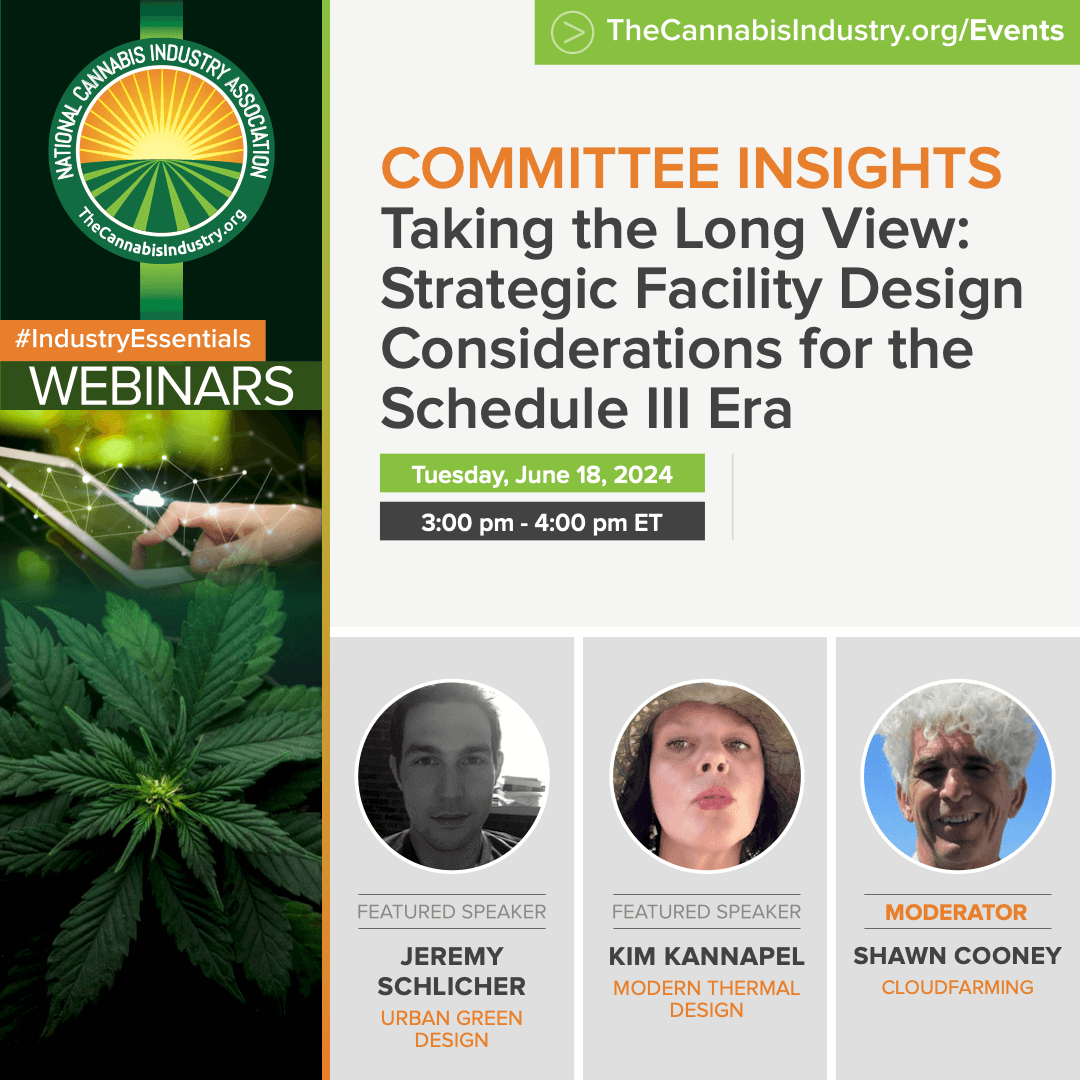
In the dynamic landscape of the cannabis industry, regulatory changes can significantly impact how businesses operate and plan for growth. The recent proposal to reschedule cannabis from Schedule I to Schedule III has sparked discussions across the industry, particularly regarding facility design and operational strategies. This blog dives into key insights from the National Cannabis Industry Association’s webinar on “Taking the Long View – Strategic Facility Design Considerations for the Schedule III Era,” highlighting expert advice and practical recommendations for stakeholders navigating these changes.
The webinar, hosted by Brian Gilbert of the NCIA, served as a crucial platform for industry professionals to explore the implications of cannabis rescheduling on facility design and operations. The session focused on four main pillars: understanding tax changes, enhancing operational efficiency, promoting sustainable growth, and implementing practical strategies to navigate regulatory shifts.
Key Takeaways
1. Policy and Tax Implications
The discussion, led by Shawn Cooney of Cloud Farming, Chair of NCIA’s Facilities Design Committee, underscored the potential financial benefits for businesses following cannabis rescheduling (00:03:41). A highlight was the exploration of Section 280E, which could offer substantial tax savings once regulatory changes are implemented. Jeremy Schlicher of Urban Green Design expanded on these insights, offering strategic financial planning advice aimed at leveraging tax incentives to reinvest in facility improvements (00:07:21).
2. Operational Efficiency and Sustainability
Efficiency in energy management emerged as a critical theme throughout the webinar. Experts emphasized the importance of conducting energy audits and adopting efficient lighting and HVAC systems (00:10:18). These measures not only reduce operational costs but also align with sustainability goals crucial for long-term viability in the industry. Practical recommendations tailored to cultivation, manufacturing, and retail sectors were discussed to optimize workflow efficiencies and regulatory compliance (00:15:10).
3. Cultivation Methods and Environmental Considerations
Kim Kannapel of Modern Thermal Design provided invaluable insights into cultivation methods and environmental sustainability. The webinar highlighted the viability of various methods—indoor, greenhouse, and outdoor—each catering to different market segments and regulatory landscapes. The discussion underscored the role of climate and local regulations in shaping cultivation decisions (00:37:28), emphasizing the need for adaptable strategies that prioritize energy efficiency and environmental stewardship.
As Chair of NCIA’s Facility Design Committee, Shawn Cooney brought deep regulatory expertise to the discussion. He emphasized the importance of holistic sustainability practices and compliance with evolving regulatory frameworks. His insights into tax implications and strategic planning resonated with participants seeking clarity on financial strategies post-rescheduling (00:25:32).
Kim Kannapel’s contributions focused on environmental sustainability within cannabis cultivation. Her expertise in optimizing cultivation methods highlighted the interconnectedness of environmental stewardship and operational efficiency. By advocating for adaptive strategies, Kim encouraged businesses to consider long-term environmental impacts when designing and expanding their facilities (00:37:28).
A staunch advocate for the innovative triple bottom line approach, Jeremy Schlicher brings a wealth of knowledge to the discussion on strategic facility design in the cannabis industry. He emphasizes the integration of economic prosperity, environmental stewardship, and social responsibility in every aspect of facility planning and operations. Jeremy’s insights into maximizing operational efficiency through sustainable practices, such as energy audits and efficient HVAC systems, underscore his commitment to reducing environmental impact while enhancing business profitability.
Importance of Participating in the Public Comment Period
Participating in the public comment period is crucial for shaping the future regulatory landscape of the cannabis industry. The Department of Justice’s proposal to reschedule cannabis presents a unique opportunity for stakeholders to voice their perspectives and influence policy decisions. NCIA has launched a dedicated tool to streamline this process, making it easier for industry professionals to submit informed comments.Submit your comment here.
Recap of Episode I & II
Episode I: Understanding Section 280E and its Impact on Cannabis Businesses
In Episode I, the focus was on the financial and tax implications of rescheduling cannabis. Section 280E was a major topic, with discussions centered on how the rescheduling could lead to significant tax savings and the importance of strategic financial planning for businesses to maximize these benefits.
Episode II: Cannabis Rescheduling’s Impact on Research and Safety
Episode II delved into the implications of cannabis rescheduling on research and safety protocols. This session emphasized the potential for increased research opportunities and the necessity for businesses to stay ahead of regulatory changes to maintain compliance and ensure product safety.
Looking Ahead: Preview of Episodes 4 & 5
Episode IV: Navigating Insurance and Risk Management in the Schedule III Era
Join us for the fourth episode of NCIA’s multi-part #IndustryEssentials webinar series, “Navigating Insurance and Risk Management in the Schedule III Era,” led by our Risk Management & Insurance Committee. This session delves into the evolving landscape of cannabis insurance and risk management, highlighting the opportunities and challenges presented by the rescheduling of cannabis to Schedule III.
Date: Tuesday, July 9th, 2024 Time: 3:00 PM EST – 4:00 PM ET
Episode V: Cannabis Manufacturing in the Schedule III Era
Building on the insights from our first four episodes, join us for the fifth installment of NCIA’s #IndustryEssentials multi-part webinar series. This session, led by our expert Cannabis Manufacturing Committee, will focus on the profound impacts and implications of rescheduling cannabis on the manufacturing sector. As we navigate these unprecedented changes, our panel of industry leaders will provide critical insights and practical guidance to help your business adapt and thrive in this new landscape.
Advancing the Industry Together: NCIA’s Mission in Action
The overarching theme of this series is to equip cannabis industry stakeholders with the knowledge and strategies needed to navigate the complex landscape of regulatory changes. By understanding the financial, operational, and research implications of cannabis rescheduling, businesses can better position themselves for sustainable growth and success. Each episode builds on the previous one, creating a comprehensive resource for industry professionals to stay informed and proactive in their planning and operations.
The webinar “Taking the Long View – Strategic Facility Design Considerations for the Schedule III Era,” offered a comprehensive roadmap for stakeholders navigating regulatory changes in the cannabis industry. By addressing tax implications, promoting operational efficiency, and advocating for sustainable growth practices, the session equipped participants with actionable strategies to thrive amidst evolving regulatory landscapes.
Call to Action
As the industry continues to evolve, staying informed and proactive is crucial for cannabis businesses. Explore NCIA’s resources, including upcoming webinars and educational materials, to deepen your understanding of regulatory changes and strategic facility design considerations. Engage with industry peers and experts to share insights and best practices that drive sustainable growth and operational excellence.
For those not yet members, consider joining the National Cannabis Industry Association (NCIA) to unlock unmatched benefits, resources, and access. Membership provides exclusive opportunities to influence industry standards, gain regulatory insights, and network with industry leaders. Join NCIA today to leverage these benefits and stay ahead in the competitive cannabis market.
Committee Blog: Production of Cannabis Infused Products – A Guide to Optimal Facility Design and Workflow
The burgeoning cannabis industry continues to grow and diversify. One sector that’s seen significant expansion is cannabis-infused food production. In this industry, meticulous facility design is crucial to ensure product quality, worker safety, and regulatory compliance.
This article discusses key design considerations for creating an efficient, safe, and regulation-compliant cannabis food production facility.
Begin with the End in Mind
This may seem more philosophical than operational but adopting this mindset early in your design process can help you avoid common pitfalls that seem to plague even experienced cannabis professionals. So, what does it mean to “begin with the end in mind?” It simply means that you need to define a lot of aspects of your business before you begin design. A very simple example of this is: What product(s) do you want to produce in this facility?
This might seem like a simple question, but there is tremendous complexity lurking just below the surface. While a commercial kitchen in a facility such as a restaurant might be a very flexible space allowing for the production of multiple products using the same space and equipment, food manufacturing of shelf-stable products requires a bit more specificity. Let’s pick a single product as an example: Gummies. Here are a few questions and decision points that need to be addressed before diving into design specifics:
Do you have a recipe for your gummies?
Does your recipe require specific equipment for production? Does that equipment require ventilation (i.e., a hood)?
Have you set throughput and volume targets for production (i.e., how many gummies do you want to produce per hour/day/month, etc.?)
How will your product be packaged?
Will more than one type of product be produced in this same room/area?
If so, how do you plan to mitigate cross-contamination risks?
Have you defined a facility workflow that maps a product’s process from component parts (ingredients) to processing to packaging to storage and delivery?
This is a very incomplete list but demonstrates the fact that a simple product decision comes with a multitude of related decisions that must be made to successfully implement the production process. For example, your decision on your facilities throughput goals directly impacts your equipment choices. Are you doing artisanal, hand-crafted gummies in small batches or are you producing gummies at scale for maximum throughput?
Do you plan to start with one product and eventually expand to other products? Knowing this in advance allows you to strategically plan for those potential line-extensions. The design of an area in your facility to produce one kind of product does not necessarily effectively translate to the production of a different product. The equipment, space-planning, and process-planning for the production of gummy products is very different from the production of baked edibles or chocolate edibles for example. Knowing what you ultimately want to do can help you strategically design for the future and avoid potentially costly retrofits. There is no “one-size-fits-all” cannabis kitchen design.
Another important consideration is the development of Standard Operating Procedures (SOPs). SOPs are a key component of developing Good Manufacturing Processes (GMP) which is becoming increasingly critical to manufacturing in the cannabis industry. Understanding and documenting how things should be done will give you key insights into what is needed in your overall facility design.
This mindset of working backwards from your goal can be applied to almost every aspect of your operation. This includes things such as labor schedules, purchasing guides, order scheduling, storage, packaging, delivery and more. Define your goals and outputs and then work backward from there.
Space Planning
The first crucial consideration is space planning. It is imperative to account for all operational aspects of the facility, from storage and production to packing and shipping. Ensuring there is adequate space for these activities contributes to the workflow efficiency and helps maintain a safe work environment.
Storage areas should be designed to accommodate raw materials, finished products, and waste materials separately. Temperature-controlled areas may be necessary for perishable ingredients or to maintain product stability.
Production areas need sufficient space to house specialized equipment for cannabis food production. These can include extraction machines, distillation other laboratory equipment, infusion systems, and commercial kitchen appliances for food preparation. The areas should also facilitate the movement of employees and materials.
Packing and shipping areas need to accommodate packing materials, finished product cases, and space for shipping operations. Depending on your scale, this may include room for pallets, forklifts, or other necessary equipment.
Workflow Design
An optimized workflow is critical for efficiency and safety. The design of the facility should facilitate a streamlined flow of materials from receiving to shipping. This ‘one-way’ flow can help prevent cross-contamination and reduce movement of personnel and materials.
Special consideration should be given to the workflow around extraction and infusion processes. These are complex and sensitive steps that involve precise control over temperature and pressure. The facilities should be designed to allow for these activities to be conducted safely and efficiently.
Equipment Planning
When planning for equipment, several considerations come into play. Firstly, understanding the power requirements for the extraction, infusion, and food production equipment is paramount. Adequate electrical infrastructure needs to be installed to meet these demands.
Drainage is another critical consideration. Extraction processes can produce significant waste that needs to be safely disposed of. Furthermore, commercial kitchen operations require a professional-grade drainage system.
Lastly, space must be set aside for regular equipment maintenance and potential upgrades. The rapid pace of innovation in the cannabis industry means equipment can quickly become outdated and need replacement.
Food Safety Best Practices
As a food production facility, following best practices for food safety is a must. This includes implementing Hazard Analysis and Critical Control Points (HACCP) plans to identify potential hazards and establish procedures to mitigate them.
Facilities must ensure appropriate hygiene measures, including handwashing stations and employee changing areas. Special attention should be given to allergen management, considering the diversity of ingredients that could be used in cannabis-infused foods.
Proper ventilation is a key factor in maintaining air quality and controlling odors, which can be a significant issue in cannabis production facilities. An effective ventilation system will also help control humidity, which can impact both the quality of the product and the longevity of the equipment.
Putting It All Together
The design of a cannabis food production facility is a complex task requiring a clear understanding of the production process, equipment requirements, safety considerations, and regulatory compliance. Through thoughtful planning and design, producers can build a facility that not only meets these demands but is also flexible enough to adapt to the ever-changing landscape of the cannabis industry.
Committee Blog: International GxP Considerations When Cultivating Cannabis – Part 1
As the global cannabis industry continues to expand, the importance of international GxP standards becomes increasingly vital. GxP is an umbrella term used to describe the various forms of compliance/standards available: GMP, GACP, GMCCP (Bedrocan), etc. While GMP is typically associated with the manufacturing of pharmaceuticals and other consumer products, it can also be applied to plant cultivation (GACP). These guidelines were developed by the World Health Organization (WHO) in 2003; they help ensure the quality, safety, and consistency of products, fostering consumer trust and facilitating international trade. In this blog post, we will explore the key considerations and requirements for cultivating cannabis in accordance with international GxP standards, allowing cultivators to meet the stringent regulatory expectations across borders.
GMP vs. GACP: What’s the difference?
First, it is important to explain the difference between GMP and GACP: GMP (Good Manufacturing Practice) is a set of quality management and manufacturing guidelines and regulations that ensure pharmaceutical, food, and medical device products are consistently produced and controlled according to quality standards. It aims to minimize risks involved in production and ensures the safety, efficacy, and quality of the final product. GACP (Good Agricultural and Collection Practices) is a set of guidelines and principles used in the cultivation and harvesting of medicinal and aromatic plants. It ensures that the plants are grown, collected, and processed in a manner that maintains their quality and prevents contamination, ultimately ensuring the safety and effectiveness of herbal products derived from these plants.
GxP Best Practices for Cannabis Facilities
Generally speaking, GACP applies to the “cultivation zone” and is less expensive to implement; GMP standards should be used in all “post-harvest zones” and is considered pharmaceutical grade. Below you will find a set of considerations and best practices used in most compliant cannabis facilities.
Compliance with Regional Regulations: Before embarking on cannabis cultivation, it is essential to understand and comply with the specific regulations governing cannabis production in a specific region. Different countries have varying laws and requirements surrounding cannabis cultivation/export, including licensing, permitted cultivation methods, quality control, and product labeling. Familiarize yourself with the applicable regulations (in the country you intend to cultivate in and the country you intend to supply) to ensure full compliance with international GxP standards. Then organize a meeting (pre-audit) with your local audit provider (e.g. ASTM) to develop a proper gameplan.
Facility Design and Maintenance: A crucial aspect of GxP compliance is having a well-designed cultivation facility that prioritizes cleanliness, efficiency, and product integrity. Considerations include proper airflow and cannabis specific HVACD systems (e.g. InSpire.ag or Ceres GH Solutions), dedicated cultivation and processing areas, appropriate lighting, appropriate drying space, automation and adequate pest control measures. Maintaining a clean and organized facility with strict hygiene protocols is essential for preventing contamination and ensuring the quality of the final cannabis products. Water quality, flexible cultivation integration, and sustainability should be top priority when in the design phase of your project.
Crop Management System (CMS): Incorporating an all-inclusive CMS into your agricultural practices brings numerous benefits to crop monitoring and management. Real-time data collection, remote monitoring, disease detection, true seed-to-sale tracking, employee workflow tracking, certificate of growth analysis, predictive analytics, automated irrigation (based on real time plant weight), and historical data analysis collectively enhance a cultivator’s ability to monitor crop progress effectively. By making informed decisions based on accurate data and insights, cultivators can optimize crop growth, increase productivity, and promote sustainable farming practices. Embracing a good CMS (e.g. WeightSense Adapt), while leveraging the power of a Building Management System (BMS) is undoubtedly the best step forward towards advanced compliance, safer product and higher consistency/quality.
Seed and Genetics: Selecting high-quality seeds or clones with desirable traits is vital for successful cannabis cultivation. When sourcing genetics internationally, it is crucial to consider the origin and reputation of the supplier. Ensure that the genetics comply with regional regulations and are free from pests, diseases, and genetic abnormalities. Match phenotypes with your specific environment to naturally defend against some of these risks. Proper documentation and traceability of seed sources are essential for GxP compliance and product consistency. In-house tissue culture labs bring a host of complexity to your propagation department although provide true consistency and reduced disease if carried out properly.
Cultivation Practices: GxP-compliant cultivation practices focus on ensuring consistency, purity, and traceability (e.g. CMS) throughout the cultivation process. Considerations include standardized cultivation techniques, such as appropriate nutrient management, integrated pest management (IPM), water quality control, and sanitation procedures. Documentation of cultivation activities, such as crop inputs, environmental conditions, and pest management interventions, is essential for traceability and quality control purposes. As an example, under-canopy lighting (e.g. Thrive Agritech) can help reduce pests, disease, and labor input, all while increasing your yield and product quality.
Post Harvest Practices: GxP in post-harvest forms the cornerstone of ensuring the quality and safety of agricultural products after harvesting. These practices use a range of vital considerations, including stringent hygiene and sanitation protocols to prevent contamination, comprehensive worker training to uphold proper handling techniques, implementation of effective traceability systems for accountability, meticulous quality control measures for sorting and grading, and the maintenance of optimal storage conditions encompassing temperature and humidity control. The integration of pest and disease management strategies, robust packaging selection, documentation upkeep, and cross-contamination prevention further validate the post-harvest GMP framework. By focusing on these key principles, producers safeguard product integrity, enhance shelf life, and contribute to the overall safety of cannabis in the supply chain.
Quality Control and Testing: International GxP standards emphasize robust quality control measures throughout the cultivation process. Implementing comprehensive testing protocols for cannabinoid potency, microbial contaminants, heavy metals, residual solvents, and pesticide residues is crucial. Regularly analyze samples from each batch to ensure compliance with international quality standards and regulatory requirements. Establishing relationships with accredited testing laboratories can aid in obtaining accurate and reliable test results. Consider SAP analysis and run-off testing if you would like to maximize your situational awareness and plant health.
Documentation and Record Keeping: Accurate documentation and record-keeping are essential components of GxP compliance. Maintain detailed records of cultivation activities, including seed sourcing, cultivation inputs, environmental conditions, pest management, testing results, and batch-specific information via proper SOP (standard operating procedures) development. These records serve as evidence of adherence to GxP standards and facilitate regulatory inspections, product recalls, and traceability in the event of any issues. Most importantly, they help cultivators maintain a safe and stable facility.
In part two of this GxP blog, we explain the matrix between these interlocking subject matters and how/where they relate to GxP based on department (so keep a look out for part two).
GxP Standards: Bringing It All Together
Cultivating cannabis in accordance with international GxP standards is crucial for ensuring the quality, safety, and consistency of cannabis products across borders. Adhering to regional regulations, designing and maintaining a GxP-compliant facility, selecting high-quality genetics, implementing standardized cultivation practices, conducting rigorous testing, and maintaining comprehensive documentation are all integral to achieving international GxP compliance. And of course, engage a local GxP specialist with experience in the cannabis field to help navigate your team to success. By prioritizing these considerations, cultivators can position themselves for success in the global cannabis market while meeting the requirements of regulatory authorities and ensuring consumer confidence in their products. It’s time to be a part of the solution, and help break the stigma that comes with cannabis cultivation and manufacturing.
Service Solutions | 9.21.22 | Does Your Video Surveillance Monitoring Method Put Your Business at Risk?
NCIA’s Service Solutions series is our sponsored content webinar program which allows business owners the opportunity to learn more about premier products, services and industry solutions directly from our network of established suppliers, providers and thought leaders.
In this edition originally aired on Wednesday, September 21, 2022 we were joined by the experts from Netwatch North America and Sapphire Risk Advisory Group to discuss the stark differences between the most common methods businesses choose for video monitoring to clear up the confusion about the best method for your type of business.
Every business needs a video surveillance system to guarantee the security of its premises and improve business operations. As a high-risk industry, cannabis businesses have an even greater need for these systems. Cultivation facilities, processing labs, and dispensaries are high-value targets for potential criminals due to the large amounts of currency and cannabis products stored on-site.
In addition, these systems are necessary to remain compliant with local or state law. However, while regulations require cannabis businesses to equip their facilities with a functioning video surveillance system, regulations can be less restrictive about how these systems are monitored. Yet, the method of video monitoring chosen can determine how effective the business can be at reducing and preventing criminal activity.
You’ll leave the program with a roadmap for next steps to take to evaluate the methods currently in place, how best to conduct an assessment and implement new systems to ensure the security of your business AND the safety of your employees.
In this session, you will learn:
• What are the most common video monitoring methods for cannabis businesses?
• How does each method monitor, detect unauthorized activity, and comply with canna regulations?
• What is the best option for your type of business?
41:30 – Audience Q&A (When should I reach out to a PVM company during the cannabis business planning process?)
43:29 – Audience Q&A (What VMS systems does Netwatch currently integrate with?)
44:45 – Audience Q&A (Do insurance companies reward operators for proactive video? Is activity reporting for proactive surveillance a regulatory requirement in MA or other jurisdictions?)
46:42 – Audience Q&A (How does working with a security company like Sapphire help to save my company money?)
48:26 – Audience Q&A (How important and common are camera analytics in the industry?)
52:09 – Audience Q&A (Should I choose the security integrator/manufacturer to work with first or my video monitoring method?)
54:39 – Audience Q&A (How do you get in touch with a risk consultant?)
55:50 – Final Thoughts & Upcoming Events w/ Netwatch & Sapphire Risk Advisory Group
As the cannabis industry scales and more states legalize for adult-use, the demand for consumable cannabis products increases. To keep up with the demand, manufacturing facilities have to not only scale, but stay ahead of the curve as far as conserving resources, constantly innovating facility design to meet regulations and third-party compliance, e.g., ASTM Cannabis Certification Program and Good Manufacturing Practices (GMP).
Here are a few areas of environmental, product quality, and worker impacts to consider when planning for the future of your manufacturing facility.
Energy
As with any manufacturing facility, cannabis manufacturers pull power from shared electrical grids, meaning there is increasing pressure to reduce energy usage as they scale their operations. There are many design strategies for facilities to consider, whether they retrofit or build new, to reduce environmental impacts and position their operation for a sustainable future. One example for the cannabis industry is to recapture and repurpose heat generated from the processing equipment used for manufacturing products. Another example is incorporating climate control technologies to reduce the amount of energy required in extreme environments. More and more energy companies are starting to incentivize cannabis operations to reduce their energy usage and offer guidance on how to do so. Furthermore, regulators are beginning to enforce energy usage requirements for manufacturing facilities.
There are many ways to reduce your facility’s energy usage from efficient lighting to control system maintenance and making sure your odor and emissions control systems are designed to your facility’s specific emission load and mechanical design. Whenever possible, installing cloud-based smart systems with the ability to capture energy usage and system maintenance data will help to improve your facility’s energy efficiency. More areas of impact and best management practice guidance can be found in the NCIA’s Environmental Sustainability Report, released in October 2020.
Air Quality
Manufacturers of Infused Products, or MIPs, are Colorado’s manufacturing facilities, which is one example of a market segment facing regulatory enforcements for air quality control. The large-volume use of solvents for extraction leads regulators to monitor the volatile organic compounds (VOCs) emitted from the use of these solvents, as VOCs are contributors to low-level ozone formation, poor air quality, and public health issues. These solvents are also potential contributors to water contamination if wastewater is not discharged properly from the facility and are consequently on the radar for regulators to tightly monitor. The EPA states “the main concern indoors is the potential for VOCs to adversely impact the health of people that are exposed. While VOCs can also be a health concern outdoors, EPA regulates VOCs outdoors mainly because of their ability to create photochemical smog (or low-level ozone) under certain conditions.”
Luckily, smart technology such as cloud-based platforms using the Industrial Internet of Things (IIoT) for control equipment is increasingly being installed in manufacturing facilities, allowing for the collection and monitoring of facility data, such as emissions. Furthermore, the same technologies that are used for odor mitigation, such as molecular filtration systems (aka carbon scrubbers) also remove VOCs in the facilities’ air space from both the products and the solvents in the facility. The ability to prove this removal to regulators with real-time data will help reduce facilities’ contributions to VOC emissions when regulators require reporting.
Worker Health & Safety
In addition to environmental impacts from VOCs, along with other emissions inside of a cannabis manufacturing facility, there is also the issue of indoor air quality and worker health. There is not a lot known about the potential impacts of the processing of cannabis on indoor air quality. What is known is that terpenoids that are emitted in the cultivation and processing of cannabis can contribute, through a series of atmospheric reactions, to the production of known air pollutants. Terpenoids, such as monoterpenes (C10H16) and sesquiterpenes (C15 H24), are highly reactive compounds with atmospheric lifetimes ranging from seconds to hours. These compounds on their own are non-toxic. However, the atmospheric reactions they participate in can result in a range of low volatility products that create aerosols or ozone. These two compounds have clear implications for indoor air quality and thus occupational health.
Uncertainty remains as to the extent of the formation of these pollutants since previous studies have been hampered by a lack of reliable data and are predicated on conditions and practices prevalent in illicit operations. Given that the methods employed in these illegal operations are driven by different needs, the methods currently used in legalized facilities may produce vastly different conditions. This speaks to the urgent need for rigorous new scientific research and evaluation to aid this new industry and relevant regulatory bodies in assessing the current occupational environmental threats of marijuana processing and provide solutions to mitigate those impacts.
Quality by Design
The competitive licensing process, regulatory requirements, and lack of knowledge on scaled cannabis production has contributed to facilities that were not designed to properly ensure control of environments, the process flow that minimizes risks of cross-contamination and the adequate storage for the many types of raw materials, work in process, and final products. The result is an inefficient operation that may have been spared significant Capital Expenses (CapEx), but requires significant Operational Expenses (OpEx) to maintain.
The concept of Quality by Design (QbD) was first developed by the quality pioneer Dr. Joseph Juran.It posits that quality should be designed into a product and recognizes that most quality issues are a result of poor initial design. It is supported by long-standing evidence that increased testing does not necessarily improve product quality.
Currently, there is an overarching emphasis on final product testing as the determinant of whether cannabis products are safe for release into the marketplace. This has pitted labs, regulators, and producers against each other, leading to accounts of lab shopping, exclusive contracts, and other nefarious activities. This approach does not serve anyone, and is in stark contrast with the concept of Quality by Design.
Transitioning from a Quality Control Approach to Quality by Design
Transitioning from our current processes into a proactive Quality by Design approach requires an understanding of Good Manufacturing Practices or GMPs.The first set of GMPs for finished pharmaceuticals were established for enforcement by the United States FDA in the Federal Register in 1963. Since then, GMPs have been created for and adopted globally for nearly all products that can be consumed or applied for human and veterinary use –- categorized under dietary supplements, food, cosmetics, and of course, pharmaceuticals. GMPs represent the minimum sanitary and processing requirements to ensure safe and consistent products. Consider the road map and cross-over between major FDA cGMP (current Good Manufacturing Practices) by industry sector.
GMP regulations are written by the FDA and adopted in the code of federal regulations under the authority given to the FDA by various laws. Almost all of these regulations are performance standards. There are dozens to potentially thousands of substantially different products regulated under each category of GMP standards. It is up to each manufacturer to ensure their unique processes meet the GMP standards. In this way the regulations are flexible yet force all manufacturers to operate with a minimum level of rigor that includes programs that proactively mitigate risks that can lead to product failures and cannot be controlled simply through final product testing. They take a holistic approach to facility operations, starting with the facility culture, design, layout, placement, and selection of equipment, along with ongoing training, supplier qualification, environmental monitoring, and executive commitment.
The current status quo of manufacturing facility design has been built on a quality control approach. Most facility owners believe cannabis will be assigned a cGMP category based on the final product type and have been trying to build compliant facilities under this assumption. Some States have incorporated by reference the federal GMP regulations. However the competitive application process and focus on final product safety via testing has created an environment in which facility owners feel compelled to do as much if not more than the other facilities in order to meet regulator expectations and all focus is on the final product, not the process. In order to win the application, businesses want to look ‘better’ than the other applicants so they tack on as many hazard controls as they can think of. This has given regulators unrealistic expectations as to the best practices required to operate responsibly. Instead of quantifying hazards by collecting data and making informed decisions as to how to best eliminate risks, facilities are simply copying hazard controls they have seen used in other industries with hopes they meet the regulators’ expectations of what a GMP facility looks like. This culture of adding as many hazard controls as possible is a quality control approach focused on the final product, not a Quality by Design approach focused on the process. As a result, envelope in an envelope style facilities in which the manufacturing process is entombed in layers of energy and resource consuming hazard controls are commonplace.
There are other ways of designing compliant facilities; ways that could be more efficient and use less energy and resources. With a Quality by Design approach, these options become explorable. With quantified hazards the process can be approached holistically and significant design questions asked, e.g.. how much energy goes into the outer envelope and how much product quality/safety is gained from that?
In the Southwest deserts, there is consideration given to opening canopy/atrium style extraction spaces that would use less energy while providing the safety of unconstrained open atmosphere ventilation. The important question to ask when considering alternative facility designs is – How much energy/resources goes into containing human contamination versus the likelihood and the actual consequences? Perhaps manufacturing facility workers can wear long sleeves, pants, and hair restraints and that will be sufficient versus wearing a full body gown?
Quantification of Risks
Quantifying the processes and proven hazards of the cannabis manufacturing industry will allow for more informed design and operational choices versus prescriptive solutions that may potentially over-mitigate the risks and possibly introduce additional risks. Moreover, this data would provide validation that the design and operational choices made are in fact the best practices. Instead of scrambling to follow each standard in a quality control approach, Quality by Design considers the whole process, how the 10 principles of GMP standards apply and focuses on finding the most efficient strategies to eliminate risks.
A Way Forward
Training is vital for the manufacturers to know the next steps and why they are critical for the future of cannabis extraction and post-processing. Knowledge is required to put valuable technology, tools, and equipment in place with the least operational downtime. Further, it is necessary to accept guidance from verified knowledgeable support, such as from a vetted supplier. Lastly, risk mitigation education is necessary to highlight the reality of long-term savings and sustainability versus the common short-sighted tendency for immediate cost savings, which can result in significant consequences for a business such as TerrAscend Canada’s 2021 recall of infused gummies due to mold contamination.



 by NCIA’s
Follow NCIA
Newsletter
Facebook
Twitter
LinkedIn
Instagram
News & Resource Topics
–
This Just In
Beyond Rescheduling: Inside NCIA’s 14th Annual National Cannabis Industry Lobby Days
DOJ Reschedules Medical Cannabis to Schedule III & Announces June 2026 Hearing on Broader Rescheduling