Condensate capture for reuse is an intriguing new application within the controlled environment horticulture space. Addressing both environmental impacts and regulatory requirements, capturing and reusing condensate has many attractive benefits. However, several key questions have appeared surrounding the topic of condensate water capture and reuse applications that have slowed its adaptation in many facilities. In this article, we discuss common questions and concerns associated with condensate reuse and how each may be addressed with adequate, customized treatment processes.
Condensate water is generated by a number of processes within a controlled environment agriculture facility. Most commonly, dehumidification and HVAC systems are the primary sources of condensate water. The source of water and collection system plays a significant role in condensate water quality and associated concerns when considering reuse.
Why is collecting and reusing condensate water a good option?
Recycling available water streams reduces the amount of fresh water required and offsets associated costs.
Recycling minimizes discharges and waste. Coming regulations will require extensive discharge limits.
With adequate monitoring and treatment, risks may be greatly reduced, maximizing benefit.
Contamination – Don’t Let One Bad Apple Ruin the Bunch
In general, condensate water is low in Total Dissolved Solids (TDS)/Conductivity and is generally very clean. pH is typically low as carbon dioxide readily absorbs into solution (pH 5.5-6.5 range). Contaminates are easily introduced based on what the water contacts during collection and distribution. Volatile Organic Compounds (VOCs) and other organics can be absorbed and provide “food” for microbial proliferation – especially if the condensate is pooled and stored for extended periods. Metals leaching from dehumidification equipment and/or from dust/air pollutants also may accumulate. Identifying and managing emerging contaminates is crucial to successfully mitigate risk and maximize value when reusing condensate water.
Microbes and Organics
By themselves, most organics potentially found in condensate water pose little threat. However, organic (carbon-based) pesticides, foliar sprays, etc. have the potential to accumulate in exposed condensate water and could lead to downstream issues. Organics also provide a potential carbon source for various microbial populations to proliferate. This can create biosecurity challenges, plant disease and challenge existing water treatment processes. Microbes are ubiquitous in nature and although pathogens are presumed to make up less than 1% of the known microbial kingdom, contamination remains a threat. Airborne bacteria, viruses and fungal spores can be introduced to a condensate water system through its condenser plates. Microbial proliferation and the formation of biofilms on wetted surfaces downstream of dehumidification equipment can result in elevated levels of total and pathogenic microbes.
Heavy Metals
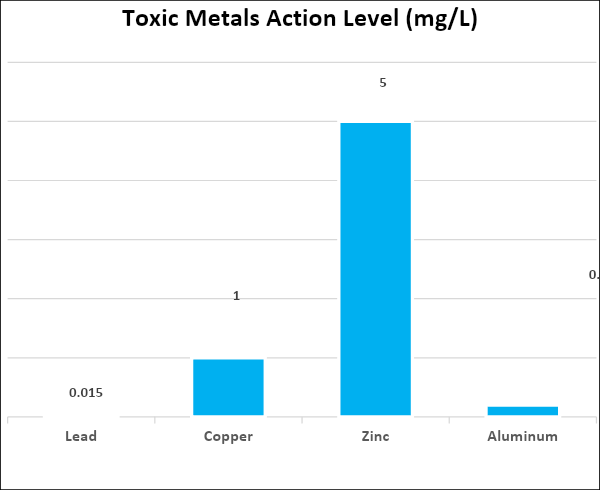
Heavy metals including lead, zinc, aluminum, and copper may be a concern if leaching from dehumidification equipment occurs. Soldered joints in copper tubing, for example, may introduce lead to condensate water. In that case, mechanical joints/brazed joints would be preferred. Aluminum, copper, and zinc may be stripped directly from metal surfaces as part of generalized corrosion. Even at relatively low levels, some metals, dissolved contaminates and other corrosion byproducts can bioaccumulate in plants resulting in compounded issues, including phytotoxic effects.
Water Treatment & Management
In many situations, the use of recaptured condensate water is a viable option to supplement make-up water demand and reduce waste discharge. Treatment prior to reuse is recommended to condition the condensate water to ensure water system stability over time and to prevent potential treatment and operational challenges that could otherwise arise.
Available treatment processes include Advanced Oxidation Process (AOP) gas and UV for disinfection, adsorptive media for dissolved organics and various other filtration processes for metals and other contaminate removal. The extent and type of treatment varies based on specific water challenges and end goals.
Baseline and routine subsequent water testing and monitoring is key to maintain a proactive approach to water management. Integrating smart water management programs limits waste, improves logistics, saves money, protects the environment and allows for current and emerging regulatory compliance. Equally important is choosing the right technical partner to help develop and implement your smart water management program.
Taylor Robinson is the Research & Development Manager and Chief Chemist for Silver Bullet Water Treatment with expertise in molecular and cell biology, general water chemistry, microbiology, and industrial (oil and gas) water treatment and reuse processes/chemistries. For the past 4 years, Taylor has led, conceptualized, organized, and completed numerous Silver Bullet research and development projects related to water treatment for the livestock, cooling water, horticulture, aquaculture and data center industries. Taylor joined Silver Bullet in 2016 and has been a key contributor to the advancements in the company’s technology and research base.
With over 15 years’ experience, Kyle Lisabeth has been focused on improving water management programs across multiple industries, with a central focus of treating water for reuse applications. Kyle attended the University of Texas – Austin, and upon graduation with a BS in Biology and Environmental Sciences, gained years of international water management experience in both North and South America. Since establishing Silver Bullet’s Horticulture Division, Kyle has exponentially grown the business unit’s install base and cultivated a nationally known water treatment brand for many controlled environment agriculture applications, including cannabis.
Member Blog: Pathogens And Public Health – The Dire Need To Detect Microbes
As a new industry, cannabis has the opportunity to do business the right way. From day one. Many industries have come before ours, making missteps as well as setting best practices. In fact, we have the Harvard Business Review articles to prove it.
That’s why it frustrates me to no end to see industry players short-cut the right path forward. One of those areas is testing. In every consumer product area, testing is vital to ensuring consumer health and safety, but it is even more dire for products that are consumed or inhaled.
The Dire Need to Detect Microbes
Microbial contaminant testing is a critical step in the supply chain for all food and agricultural products, but it becomes ever more important to ensure cannabis products are verified as free of hazardous contaminants as cannabis-derived products become accepted treatments for various medical conditions.
Currently, the regulatory framework for evaluating the safety of cannabis products differs from state to state, with an abundance of clinical cases to back up the reason for testing, and the availability of technology to meet the safety standards to protect immuno-compromised patients and consumers. Conventional methods such as Petri-dish culturing and qPCR methods are not nearly as accurate or sensitive as commercially available, next-generation technology such as DNA microarray testing. Yet, the continued use of these outdated methods opens up the possibility that dangerous and deadly contaminants can enter the supply chain, and get consumed by millions of consumers.
In a recent study released to regulators and labs across the country, it was presented that plate culturing and qPCR testing was unable to detect the presence of a deadly fungal species, Aspergillus, that is presently common in both recreational and medical marijuana. A different technology, the DNA-Microarray tests not only detected Aspergillus, it also identified the exact species of the fungus, a nuance that requires longer testing times and additional testing steps when using petri dishes or qPCR methods.
Technologies such as sequencing and DNA microarrays can test for dozens of different deadly pathogens multiple times simultaneously from the same sample, whereas plate and qPCR methods test for a single or limited number of microbes. What this means is definitive confirmation when using the Microarray technology. This is where the technology is different and better, and also saves on costs, streamlines the entire testing process and reduces any opportunity for operator error.
In addition to being more accurate, DNA microarray testing is also faster. Plate methods require microbials to be cultured before being tested, which takes a minimum of 24 hours and often closer to a week for slower-growing organisms, such as many fungi including Aspergillus. In contrast, DNA Microarray testing yields results in six hours, and reduces harm to lab technicians by not subjecting them to large amounts of live cultures.
The point here is when technology is available that protects consumers and patients to an even greater level, is faster and more economical to process, and better in terms of performance, then why should the cannabis industry walk down the same path other industries have traversed, and one which they have tripped over multiple times? Why not learn from the lessons of these other industries and set a path that ensures greater safety and quality to the product?
History Not Worth Repeating
We’ve seen what happens when industries and governments turn a blind eye to deadly matters. In the pharmaceutical industry, the FDA came under scrutiny after a study found that excess dosages of the Merck drug Vioxx tripled a patient’s risk of cardiac arrest. In front of a Senate Finance Committee, the FDA was asked why danger signals of Vioxx went ignored. Questioning specifically focused on its relationship with the drugmaker, its expedited review process and the timeliness in conducting and stopping clinical trials when potentially adverse information was found that put the public at risk.
And yet, a similarly concerning matter remains ongoing with asbestos makers. The U.S. began regulating asbestos in the 1970s but has yet to ban the mineral, despite it being the number one cause of work-related deaths in the world. In fact, evidence suggests there is no safe level of asbestos exposure.
Similarly, science shows that there are no safe levels of Aspergillus. All it takes is one spore to kill. Sub-par and outdated testing methods not only risk the health of immunocompromised patients, it also puts consumers exposed over a period of time into the line of fire – as well as the credibility of the industry as a whole. Regulators need to demand cannabis is 100 percent contaminant-free by using testing methods that deliver absolutely proven and reliable results.
A number of stakeholders in the industry and beyond have reason to take up the call. In the recent e-vape crisis over 2,000 people have been hospitalized and 50 people have died due to lung infections. The pathogenic strains of the Aspergillus family would exacerbate this crisis further, and so gives the industry reason to ‘tighten’ the regulatory framework even more so not only with trusted testing methods, but ones that definitively protect public health. Even today in certain states that have not mandated testing of Aspergillus, but only mandating testing of Yeast & Mold, those states are allowing their consumers and patients to inhale Aspergillus ultimately fueling a national pandemic in lung infections. Just reference a peer-reviewed scientific paper by Kagan MD et al in the Journal of Allergy Clinical Immunology published in 1983, where the authors concluded that “[t]he use of MJ thus assumes the risks of both fungal exposure and infection, as well as the possible induction of a variety of immune and infectious lung disorders. Given the extraordinary number of individuals estimated to be MJ smokers, the occurrence of these illnesses may well become more commonplace”.
Sometimes the way things have always been done just isn’t good enough anymore. Technology has changed the way we take pictures, listen to music and even hail a ride. Can you do those things the old way? Sure, but they won’t have as much definition or clarity. It won’t be as convenient or cheap. When there is truly a better way, why wouldn’t you change?
And that’s what we ask when it comes to protecting the supply chain, a place where quality and accuracy cannot be compromised. When it comes to which testing method is the best, there is a clear choice – a choice that literally comes down to life and death. In order to safeguard both consumers and the legitimacy of the industry, cannabis stakeholders should demand labs use rigorous testing methods that pinpoint pathogens and protect public health.
Photos by Michael Chansley Photography, www.michaelchansley.com
Mr. Patel leads the strategic vision, financial health and global growth of PathogenDx, a Scottsdale, AZ based company which provides disruptive DNA-based pathogen testing technology and solutions for the cannabis, botanical, food and agricultural industries.
Previously, Mr. Patel spent over 25 years working with large public, small private and entrepreneurial companies in numerous fields from the life sciences, to biotechnology, to government services and the automotive industry. Milan served as COO/CFO of GMSbiotech. He also was CFO of 2020 Company, LLC, a leading premier professional services firm that delivered business and technology solutions to the government, in the areas of health, education and science.
Mr. Patel also worked at Intel Corporation in Sales & Marketing, Finance and Manufacturing. He has extensive experience in corporate finance, mergers and acquisitions, business strategy and planning, infrastructure and organizational development, and controls, compliance and audit and has led several company exits.
Milan earned his BS in Electrical and Electronics Engineering from the University of Detroit Mercy; a MS in Biomedical/Medical Engineering, University of Michigan; and a MBA in Finance and Marketing, University of Detroit Mercy.

 Taylor Robinson is the Research & Development Manager and Chief Chemist for Silver Bullet Water Treatment with expertise in molecular and cell biology, general water chemistry, microbiology, and industrial (oil and gas) water treatment and reuse processes/chemistries. For the past 4 years, Taylor has led, conceptualized, organized, and completed numerous Silver Bullet research and development projects related to water treatment for the livestock, cooling water, horticulture, aquaculture and data center industries. Taylor joined Silver Bullet in 2016 and has been a key contributor to the advancements in the company’s technology and research base.
 With over 15 years’ experience, Kyle Lisabeth has been focused on improving water management programs across multiple industries, with a central focus of treating water for reuse applications. Kyle attended the University of Texas – Austin, and upon graduation with a BS in Biology and Environmental Sciences, gained years of international water management experience in both North and South America. Since establishing Silver Bullet’s Horticulture Division, Kyle has exponentially grown the business unit’s install base and cultivated a nationally known water treatment brand for many controlled environment agriculture applications, including cannabis.

Follow NCIA
Newsletter
Facebook
Twitter
LinkedIn
Instagram
News & Resource Topics
–
This Just In
Beyond Rescheduling: Inside NCIA’s 14th Annual National Cannabis Industry Lobby Days
DOJ Reschedules Medical Cannabis to Schedule III & Announces June 2026 Hearing on Broader Rescheduling