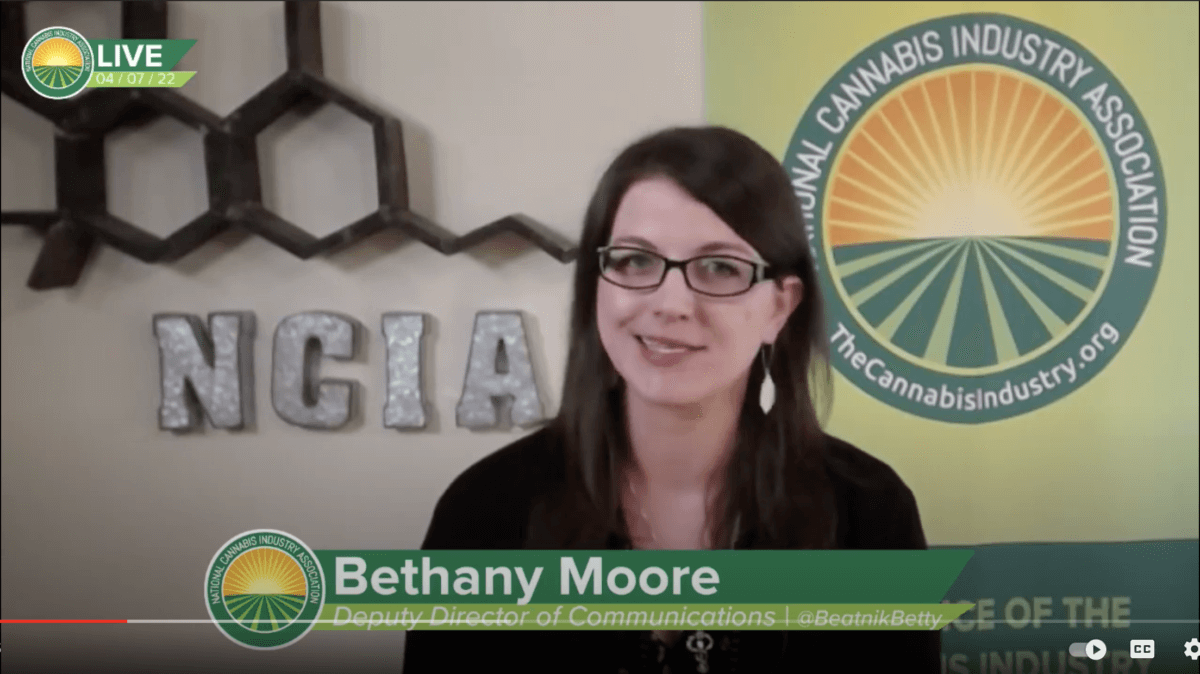
NCIA Deputy Director of Communications Bethany Moore checks in with what’s going on across the country with the National Cannabis Industry Association’s membership, board, allies, and staff. Join us every other Thursday on Facebook for NCIA Today Live.
This episode of NCIA Today is brought to you by Senseon Secure Access, offering concealed protection, monitoring, and workflow management for dispensaries. Senseon is ready to provide you with an exceptional customer experience, plus improved efficiency and compliance, not to mention slim and modular aesthetics. Learn more about their security solutions and cost benefits at Senseon.com.
(Another) Historic Week In Congress for Cannabis Reform
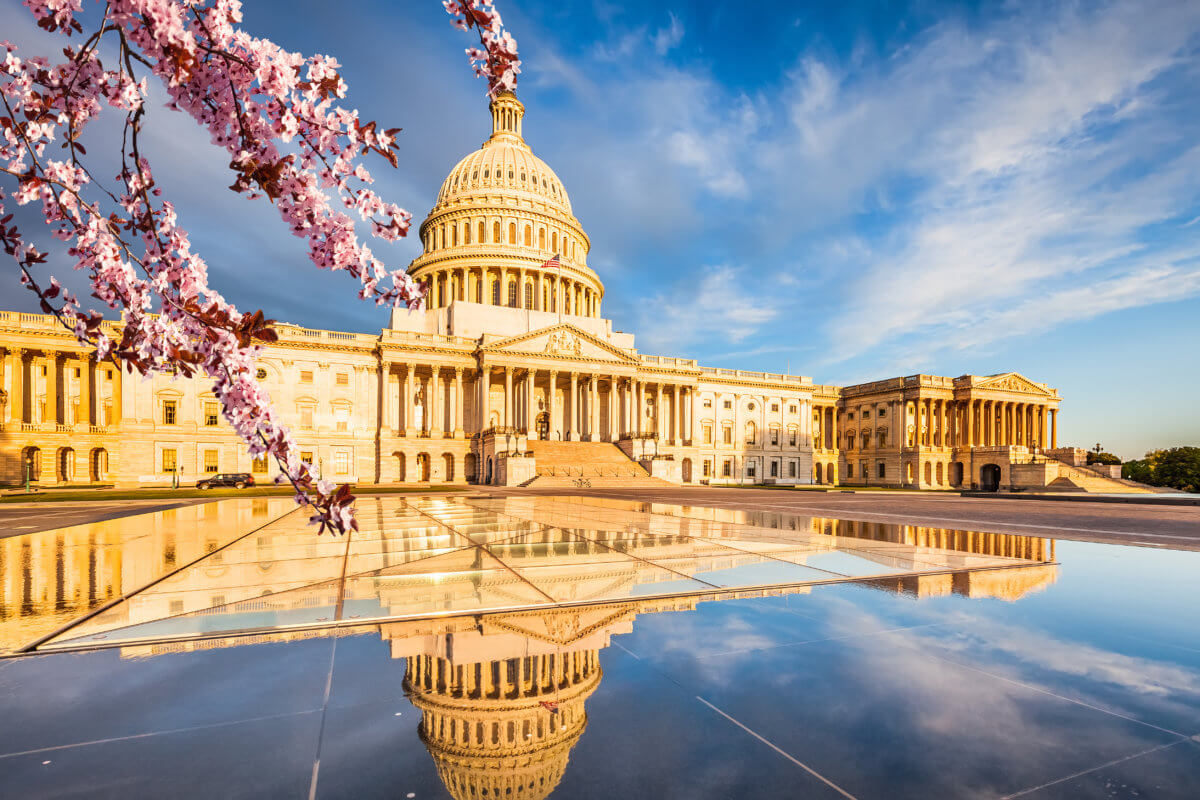
Photo By CannabisCamera.com
By Michelle Rutter Friberg, NCIA’s Deputy Director of Government Relations
Usually, progress is slow in Washington, D.C. However, that has not been the case lately! Within the last week, the U.S. House of Representatives has passed both the Marijuana Opportunity, Reinvestment and Expungement (MORE) Act and the Marijuana Research Act! They passed by a vote of 220-204 and 343-75, respectively. Let’s take a look at the bills and what’s next for them:
The MORE Act
Last week, the MORE Act came to the House floor for the second time in history. It was first voted on in December 2020, when it passed by a margin of 228-164.
Revisions from the last session include the removal of a provision that would have allowed federal regulators to deny cannabis business licenses to applicants who have prior felony convictions. Other changes from the introduced text this session include revisions to property requirements, allowing operators to secure those locations after receiving a federal license.
A number of amendments were offered at a Rules Committee hearing to advance the bill, however, only three were ruled in order. The first passed on a roll call vote and was introduced by Rep. Josh Gottheimer (D-NJ), authorizing $10M for the National Highway Traffic Safety Administration to conduct a study on technologies and methods that law enforcement may use to determine whether a driver is impaired by marijuana.
Another amendment, introduced by Rep. Conor Lamb (D-PA) directs the National Institute for Occupational Safety and Health (NIOSH) to conduct a study on the impact of legalization to the workplace, using states that have legalized recreational use of cannabis as a guide, and requires NIOSH to develop best practices for employers as companies transition their policies related to cannabis, prioritizing employers engaged in federal infrastructure projects, transportation, public safety, and national security. Additionally, it directs the Department of Education to conduct a study on the impact of legalization on schools and school-aged children, using states that have legalized recreational use of cannabis as a guide, and requires the Department of Education to develop best practices for educators and administrators to protect children from any negative impacts.” It passed on a roll call vote.
Another amendment, which failed on a roll call vote was offered by Rep. Jamie Raskin (D-MD) would have required federal agencies to review security clearance denials going back to 1971 and retroactively make it so cannabis could not be used “as a reason to deny or rescind a security clearance.”
While there is currently no companion bill in the Senate, Majority Leader Schumer (D-NY) along with Senators Booker (D-NJ) and Wyden (D-OR) is expected to introduce a comprehensive cannabis reform bill over the next month.
Marijuana Research Act
More recently, the House also passed the Marijuana Research Act sponsored by Reps. Earl Blumenauer (D-OR) and Andy Harris (R-MD). This bill would remove barriers for researchers seeking to apply and get approved to study cannabis, set clear deadlines for federal agencies to act on their applications, and also make it easier for scientists to modify their research protocols without having to seek federal approval.
Last month, the Senate also unanimously passed a research bill: the Cannabidiol Marihuana Research Expansion Act, sponsored by Sens. Feinstein (D-CA), Grassley (R-IA), and Schatz (D-HI). It remains to be seen whether the two chambers will be able to negotiate a deal on these research provisions to send to President Joe Biden.
Whether it’s cannabis research or descheduling, the NCIA D.C. team continues to increase momentum for reform. Interested in learning more about our efforts in D.C.? Consider becoming an Evergreen member today!
Video: NCIA Today – Thursday, March 24, 2022
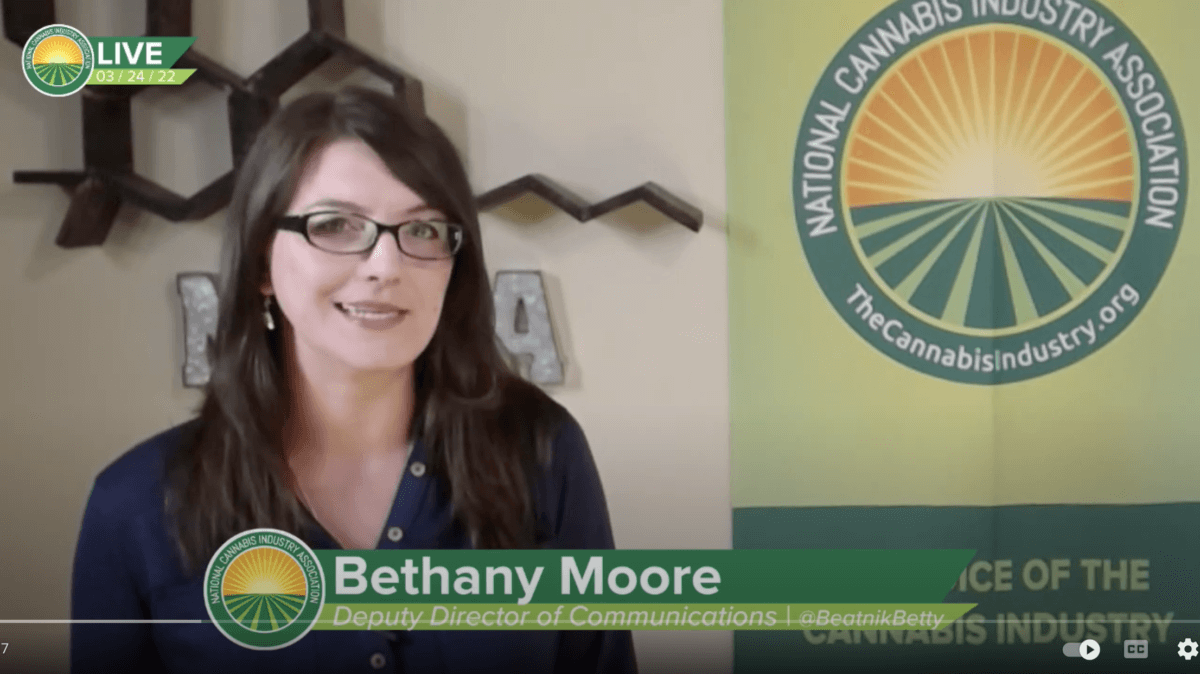
NCIA Deputy Director of Communications Bethany Moore checks in with what’s going on across the country with the National Cannabis Industry Association’s membership, board, allies, and staff. Join us every other Thursday on Facebook for NCIA Today Live.
Video: NCIA Today – October 1, 2021
NCIA Deputy Director of Communications Bethany Moore checks in with what’s going on across the country with the National Cannabis Industry Association’s membership, board, allies, and staff. Join us every Friday here on Facebook for NCIA Today Live.
House Floor Debates, Markups, and Beyond for SAFE Banking and MORE Act
Photo By CannabisCamera.com
By Michelle Rutter Friberg, NCIA’s Deputy Director of Government Relations
Usually, things are somewhat slow when it comes to cannabis policy reform in Washington, D.C., but the last week has been quite the whirlwind! In the span of one week, the SAFE Banking Act was included in (and passed via) the must-pass National Defense Authorization Act (NDAA) and the House Judiciary Committee marked up and subsequently passed the Marijuana Opportunity, Reinvestment, and Expungement (MORE) Act!
Last week, the House passed the language of the SAFE Banking Act for the fifth time via the must-pass NDAA. NCIA and our allies on Capitol Hill are always trying to be creative and come up with new, different avenues to advance our policy priorities, and the NDAA was a great opportunity that we were able to take advantage of! At first, there were some concerns that the language (proposed as an amendment to the larger package) would not be ruled germane, however, we were able to clear that hurdle in the House Rules Committee, allowing the provision to move forward for Floor debate and a vote.
The amendment was then debated for a short period of time on the House floor and for the first time ever, passed via voice vote! This is incredibly exciting and reinforces the strong, bipartisan support that this legislation has.
SAFE’s inclusion in the Senate’s version of the bill is a bit more uncertain. Currently, the Chair and Ranking Member of the Senate Armed Services Committee (which has jurisdiction over the NDAA) have circulated their draft of the package that differs in many ways from the House’s bill. Here at NCIA, we will be working with Senate allies to determine what’s next for the NDAA in that chamber and collaborating with other stakeholders to ensure that the SAFE Banking language is included and passed into law. I’ll be the first to admit that I am not (nor have I ever been) a defense lobbyist, however, I’m definitely getting a crash course now!
Then, less than 24 hours later, the House Judiciary Committee announced that they would be holding a markup on the Marijuana Opportunity, Reinvestment, and Expungement (MORE) Act. You’ll recall that the MORE Act was marked up in that committee in November 2019 (during the last Congress), and passed by a vote of 24-10. Then, after all of the other relevant committees waived their jurisdiction, the MORE Act was brought to the House Floor in December 2020 and passed 228-164.
While the MORE Act passed out of the Judiciary Committee this session by a vote of 26-15, the bill still has a long journey ahead of it. It’s unlikely that committees like Ways and Means and Energy and Commerce will waive their jurisdiction again, and it’s critical to remember that the chamber actually became slightly more conservative following the 2020 election. Additionally, there is no companion legislation in the Senate as of publication.
As always, NCIA will continue to work with our allies and stakeholders on and off Capitol Hill to get these policies enacted into law. Have questions? Find me on NCIA Connect. Want to become more involved with policy at NCIA? Learn more about our new Evergreen Roundtable here.
Video: NCIA Today – June 4, 2021
NCIA Deputy Director of Communications Bethany Moore checks in with what’s going on across the country with the National Cannabis Industry Association’s membership, board, allies, and staff. Join us every Friday here on Facebook for NCIA Today Live.
Give Us MORE
Photo By CannabisCamera.com
by Michelle Rutter Friberg, NCIA’s Deputy Director of Government Relations
Last week, a long-awaited and much-anticipated piece of cannabis legislation was finally unveiled. On Friday, H.R. 3617, known as the Marijuana Opportunity, Reinvestment, and Expungement Act, or the MORE Act, was reintroduced by House Judiciary Committee Chairman Jerry Nadler (D-NY). You’ll remember that back in December 2020, the House of Representatives made history when they passed the MORE Act by a vote of 228-164. Let’s take a look at the bill and break it down:
What:
H.R. 3617, the Marijuana Opportunity, Reinvestment, and Expungement (MORE) Act
Who:
House Judiciary Committee Chairman Jerry Nadler (D-NY) is the lead sponsor, along with Reps. Lee (D-CA), Blumenauer (D-OR), Jackson Lee (D-TX), Jeffries (D-NY), and Velazquez (D-NY).
Status:
Just like the last session, the bill has been referred to a number of committees: In addition to Judiciary, it was also passed on to the Committees on Energy and Commerce, Agriculture, Education and Labor, Ways and Means, Small Business, Natural Resources, Oversight and Reform, and Transportation and Infrastructure.
Summary:
The MORE Act would remove cannabis from the federal Controlled Substances Act and attempt to undo the damage caused by racially and economically disproportionate enforcement of prohibition. It would also eliminate the conflict between federal law and states with regulated cannabis systems, and would require the expungement of past federal cannabis convictions. The bill would establish a Cannabis Justice Office to administer a program to reinvest resources in the communities that have been most heavily impacted by prohibition, funded by a graduated tax on state-legal cannabis commerce. It would also prevent discrimination based on cannabis consumption during immigration proceedings, and permit doctors within the Veterans Affairs system to recommend medical cannabis to patients in accordance with applicable state laws.
Background:
As I mentioned previously, during the 116th Congress, the MORE Act passed the House but was not taken up by the Senate. Now, during the 117th Congress, the calculus has changed a bit – on both the House and Senate sides. On the House side, the chamber is more Republican than the last time the bill was passed – meaning that advocates will have to work hard to ensure no more votes are lost and that support increases. On the Senate side, Democrats now maintain the majority by the skin of their teeth, but all legislation effectively needs 60 votes to pass – a difficult threshold. It’s also important to note that the MORE Act has not been introduced in the upper chamber as all eyes focus on Leader Schumer (D-NY) and Sens. Booker (D-NJ) and Wyden’s (D-OR) upcoming comprehensive bill.
Notable Changes & Provisions:
When the MORE Act passed out of the House back in December 2020, it contained a small but impactful section that was included at the last minute. This contentious provision related to discrimination against victims of cannabis prohibition in the permitting process. A section that pertained to applications for a federal cannabis permit stated that an application may be rejected and a permit denied if the Secretary of Treasury finds that the legal person (including in the case of a corporation, any officer, director, or principal shareholder) is “by reason of previous or current legal proceedings involving a felony violation of any other provision of Federal or State criminal law relating to cannabis or cannabis products, not likely to maintain operations in compliance with this chapter,” which would be a major blow to the intent of the legislation to undo the harms caused by prohibition. NCIA brought this provision and our concerns to the bill sponsors’ attention, resulting in them publicly committing on the House Floor to revisit and improve this section. That language was not included in the 117th Congress’ recently reintroduced version.
Also of note, the MORE Act includes tax language. When the bill was first introduced in 2019, it contained a tax section that set up a flat 5% sales tax on cannabis products at the federal level. That was later amended to be a graduated tax, beginning at 5% and increasing up to 8% in subsequent years post-legalization. The soon-to-be-reintroduced MORE Act has the same graduated tax levels.
What’s Next:
The bill has a long path ahead: as I pointed out, there are multiple committees of jurisdiction that will want to weigh in on this important legislation – I’d venture to say that both the Ways and Means (tax writing) and the Energy and Commerce Committees will have substantive edits. Another consideration is one I’ve mentioned in passing, and that’s the impending introduction of new, comprehensive cannabis reform legislation that will (hopefully) soon be unveiled in the Senate. It’s also important to note that the MORE Act is missing one critical thing: regulations, and we at NCIA believe that those can make all the difference when looking at what’s next for this legislation.
We applaud Chairman Nadler and the other cosponsors of this legislation for tackling this topic, and congratulate them on the bill’s reintroduction! We look forward to continuing to work with their offices to improve and build support for this critical piece of legislation. Stay tuned on our blog, our NCIA weekly newsletter, and NCIA Connect to find out the latest on MORE!
Victories and Challenges For Cannabis Policy Reform
By Morgan Fox, NCIA’s Director of Media Relations
On April 19, the House of Representatives approved legislation once again that would provide legal protections for financial service providers to work with cannabis businesses that are in compliance with state laws. The Secure and Fair Enforcement (SAFE) Banking Act, or H.R. 1996, was reintroduced in March by a bipartisan group of sponsors and had 177 total cosponsors by the time of the vote.
The legislation was approved by a vote of 321-101 and included 106 Republicans voting in favor of the measure, a small majority that represents a growing trend of increasing conservative support since the last time this bill was approved in the House in 2019. No Democrats voted against the bill. This is the fourth time that the House has approved the language of the SAFE Banking Act, initially as the first standalone cannabis policy reform bill ever passed by either chamber of Congress two years ago and two more times last year as part of pandemic relief packages that were not approved in the Senate.
In the time that elapsed between the last vote on the SAFE Banking Act and this one, a number of factors have added momentum and boosted the pressure on federal lawmakers to more seriously consider cannabis policy reform generally and bills like the SAFE Banking Act.
First, cannabis businesses were nearly unanimously declared essential in states with regulated markets during the pandemic, adding to the legitimacy of the industry in the eyes of many while providing uninterrupted healthcare, jobs, and tax revenue in a very challenging economic and public health environment. However, despite increased sales over the last year, the operational costs required to keep employees and customers safe have taken their toll, compounded by the added costs and other challenges associated with limited access to banking services or traditional loans.
These obstacles were felt even more keenly by cannabis businesses because they could not avail themselves of the federal stimulus packages approved by Congress, such as PPP or funds available through the Small Business Administration. Helping to ease the worsening financial burdens facing the cannabis industry during such a difficult time was a major reason for the inclusion of SAFE Banking language in the House-approved aid bills. Recently, standalone legislation has also been reintroduced by Small Business Committee Chair Nydia Velazquez to allow direct and indirect cannabis businesses to be able to access SBA-backed loans and other assistance programs.
Unfortunately, the inclusion of cannabis language in House stimulus packages was used as a political attack tool in the leadup to the election by some lawmakers, likely leading to a postponement of a House vote on the MORE Act, which would remove cannabis from the schedule of controlled substances and help repair the damage done by prohibition. Those attacks significantly died down in November, however, when five states approved adult-use or medical cannabis ballot initiatives by heavy margins, including the red states of Mississippi, Montana, and South Dakota. These victories paved the way for the historic passage of the MORE Act in the lower chamber in December. Three additional state legislatures have passed adult-use laws since then, including the first Southern state of Virginia.
This combination of political will, the feasibility of passing cannabis policy reform measures both comprehensive and incremental, and the introduction of eight new regulated cannabis markets in just a few short months has lawmakers of all stripes taking a much closer look at this issue than ever before. Even staunchly opposed legislators are being forced to reexamine their positions on bills that would directly benefit their constituents and businesses in their states, particularly in light of the urgent need for jobs and taxes as the pandemic response begins to pivot toward economic recovery. This is on top of record public support nationally for legalization. It is becoming increasingly clear to lawmakers that standing in the way of reform is a losing proposition.
With the passage of the SAFE Banking Act, it is likely that the House will move its attention to amending and approving the MORE Act for a second time, as well as considering several other pieces of cannabis-related legislation. The fate of the SAFE Banking Act now lies with the Senate. Senate Majority Leader Chuck Schumer said recently that he would prefer to wait for further consideration of that or other incremental reforms until after the introduction of his much-anticipated comprehensive descheduling bill in the coming weeks. We are confident that debate and progress on these bills is not mutually exclusive, and moving both pieces of legislation through the upper chamber simultaneously is both possible and likely, especially given the broad bipartisan support that the SAFE Banking Act enjoys.
Spring Update from Capitol Hill – SAFE Banking, the MORE Act, and Appropriations
Photo By CannabisCamera.com
by Michelle Rutter Friberg, NCIA’s Deputy Director of Government Relations
It’s hard to believe that somehow it’s March again, but all the while, the NCIA team in D.C. has been hard at work lobbying and advocating on behalf of you and your business. Things are really beginning to warm up and spring into action, so keep reading below for a quick update on where things are at with SAFE Banking, comprehensive reform, appropriations, and more!
SAFE Banking
Bill reintroductions in both chambers have been off to a slow start. Between a new session, most people still working remotely, a delayed organizing resolution in the Senate, and a somewhat contentious COVID relief package that’s finallypassed, members of Congress and their staff have been incrediblybusy. But, now that that’s all behind us, I’d suggest preparing for many cannabis bills to be introduced soon.
Specifically, you can expect the reintroduction of the SAFE Banking Act to happen in both the House of Representatives and the Senate within the next couple of weeks. When the bill was introduced in the House during the 116th Congress, it had over 100 cosponsors. In the Senate, it was introduced with more than 20 — that’s more than a fifth of the entire chamber! The bill later went on to be passed by the entire House of Representatives in September 2019 by a vote of 321-103.
You’ll remember that the SAFE Banking Act addresses urgent public safety concerns by allowing tightly regulated marijuana businesses the ability to access the banking system and make our communities safer. The bill also provides protections from money laundering laws for any proceeds derived from these state-legal marijuana businesses. The bill also includes the Financial Institution Customer Protection Act and protections for hemp and hemp-derived CBD-related businesses, which sometimes still struggle in accessing financial services despite the legalization of hemp in the 2018 Farm Bill.
Don’t expect any big changes, however — the bill this Congress includes minor technical changes to the safe harbor language, strengthened hemp provisions, and other technical updates.
Comprehensive Reform
While SAFE Banking’s timeline is clear, the same can’t completely be said for more comprehensive reform. When I say comprehensive reform, I’m talking specifically about bills that would remove marijuana from the Controlled Substances Act like the MORE Act and the upcoming Schumer-Booker-Wyden bill.
In the House, we are continuing to work with various committees and members to determine the best path forward for the MORE Act and what changes should be made. I wouldn’t be surprised if that bill gets reintroduced sometime this spring, but the process is truly still in flux, so I also wouldn’t be surprised if it was postponed awhile. This will be determined by the lead sponsors’ offices and also by the congressional calendar and how various bills/issues move through the legislative process.
In the Senate, we’re excited to be working with Leader Schumer (D-NY) and Sens. Booker (D-NJ) and Wyden (D-OR) on their new cannabis bill. That bill will draw heavily on provisions from the MORE Act, but will also include expanded language on taxation and smart regulations. Now that the COVID relief bill has passed into law, I think we can expect to see their bill be introduced sometime in the near future.
You’ll also remember that NCIA was one of two industry trade associations invited to the initial meeting with those Senators to discuss this new bill. We’re looking forward to their discussion draft and offering our thoughts.
Appropriations
It’s spring, which means it’s appropriations season here in D.C.! These bills are legislation that “appropriates,” or sets aside, federal funds to be divided between specific federal government departments, agencies, and programs. For a refresh on the history of appropriations, click here, or, if you’re interested in how these provisions relate to cannabis, click here.
While the appropriations amendment that protects medical cannabis businesses, patients, and programs has been in law since 2014, we’ve had difficulty expanding those provisions and passing new cannabis-related amendments due to the formerly-Republican controlled Senate. However, now that Democrats control both houses of Congress, we’re excited to go back to the drawing board and get creative with the appropriations process to help provide some certainty and relief to the cannabis industry.
We’ll be looking at amendments pertaining to adult-use cannabis programs, banking, veterans access, allowing Washington, D.C. to finally implement a functioning 21+ cannabis program — and that’s just scratching the surface!
All of this is to say: things are really springing into action in D.C.! Prepare for many cannabis bills to begin getting reintroduced, and remember that the appropriations process takes months, so stay tuned via our blog, newsletter, NCIA Connect, and the new NCIA Mobile App to remain in the loop and get involved!
Video: NCIA Today – 117th Congress, New Scorecard, DEIC Update, and more!
Host Bethany Moore, NCIA’s Deputy Director of Communications and host of NCIA’s weekly Podcast ‘NCIA’s Cannabis Industry Voice‘ brings you an in-depth look at what is happening across the country in federal cannabis policy reform and with NCIA.
From the top, Bethany discusses the “cautious optimism” bouncing around the D.C. Government Relations office, as the 117th Congress begins to get to work with GR Director, Mike Correia.
We check in with Mike Lumoto, Committee Organizer for NCIA’s Diversity, Equity, Inclusion Committee on the incredible growth they saw in 2020 and the plans taking off in the new year.
Don’t forget to download the new NCIA Mobile App and never miss the latest cannabis news.
The 117th Congress – What To Watch
Before we dive into what to watch this Congress, we’d like to acknowledge the totally unacceptable and disgusting violence that besieged the Capitol recently. You can read NCIA’s statement on the insurrectionhere.
by Michelle Rutter Friberg, NCIA’s Deputy Director of Government Relations
Photo By CannabisCamera.com
We’re barely halfway through January, and it already feels like so much has happened in 2021! We at NCIA anxiously watched along with the rest of the country to see who would be victorious in the Georgia Senate races and, subsequently, which party would control the U.S. Senate. Both of the Democrats, Rev. Raphael Warnock and Jon Ossoff defeated their Republican opponents and won their races —- ensuring that the Senate will be split 50-50 with Vice President-elect Harris being the tiebreaker.
The 117th Congress has barely begun, but after Inauguration Day on January 20th, things will really take off here in the nation’s capital. Keep reading to see my answers to FAQ’s for the new Congress:
Whatever happened to the SAFE Banking Act?
During the 116th Congress, the SAFE Banking Act (H.R. 1595/S. 1200) became the first cannabis-related bill to be passed by a chamber of Congress. In September of 2019, SAFE came to the House Floor under a suspension of the rules and passed by a whopping 321-103. While the bill had a hearing in the Senate Banking Committee back in the summer of 2019, it never received a markup or moved further than that. In addition to the bill itself, the SAFE Banking Act was also included in not one, but two COVID-19 relief packages passed by the House, colloquially known as HEROES I & II.
This session, the SAFE Banking Act will be back, and with even better chances to pass! The bill will be reintroduced in both the House and Senate in the next 1-2 months and we expect little to no changes to the text. Additionally, we’re also continuing to work with our Hill champions on this issue to see if we can get the language included in the next COVID-19 relief package — something that both President-elect Biden and Democratic leadership has said is pretty much priority number one.
In the meantime, keep an eye out for reintroduction and for how many cosponsors the bill has when it’s dropped — when the 116th Congress ended, SAFE had already passed the House as but also had 33 Senate cosponsors — that’s one-third of the entire chamber!
What’s next for the MORE Act and comprehensive cannabis reform? Is legalization on the horizon?
Cannabis policy ended the year on a high note (no pun intended!) when the Marijuana Opportunity, Reinvestment, and Expungement Act (H.R. 3884), commonly known as the MORE Act, passed out of the House of Representatives by a vote of 228-164.
As I mentioned earlier, all eyes were on the Georgia Senate races as we strategized over what could be possible for the 117th Congress depending on the outcome. With the results in, we now have a better idea about what’s possible with comprehensive reform, but there’s still a lot of unknowns. We know that the MORE Act will be reintroduced sometime in the coming months in both the House and Senate. In the Senate, the lead sponsor was Kamala Harris, who is now Vice President-elect, which means another Senator will have to pick up the torch. I can’t share with you who it’s going to be just yet, but trust me when I say they will be a wonderful lead and are a true champion for cannabis reform!
A reintroduced MORE Act will likely have a good number of edits and changes, but the underlying intent of the bill will be the same: to remove cannabis from the Controlled Substances Act and help repair the harms the war on drugs has done — specifically to communities of color.
We also know that comprehensive reform, in general, has a better chance of advancing given that Democrats now control the Senate. Sen. Schumer (D-NY) was quoted in October as saying if he’s reinstalled as Majority Leader he “will put this bill in play,” and “I think we’ll have a good chance to pass it”, talking about his own bill, the Marijuana Freedom and Opportunity Act (S. 1552).
All of that being said, legalization, or the passage of comprehensive reform is far from a done deal. Legislation requires 60 votes for passage in the Senate, and we have a lot of hard work to do to get to that level of support in the upper chamber. In the House, Democrats have an even slimmer majority now than during the 116th Congress, so we also have to make sure we don’t lose support there.
What about appropriations?
You’ve been involved in cannabis for a long time if you remember when the appropriations process was the only way to get Congress to talk about this issue. But now, with Democrats controlling both chambers, you may be hearing more about these amendments again.
Appropriations bills are legislation in Congress that “appropriates,” or sets aside, federal funds to be divided between specific federal government departments, agencies, and programs. Read more about this process and why it matters for cannabishere.
Over the last few years, the House has continued to pass marijuana-related amendments but were unable to get through the Senate due to Republican control and a “gentleman’s agreement” between the Chair and Ranking Member of the Senate Appropriations Committee. But now, all of that will change.
In the past, appropriations amendments have been introduced that touch on a multitude of issues: research, veterans, medical and adult-use cannabis, hemp, banking… the list goes on! In this session, expect to see cannabis-related amendments included in the final budget. Just remember that budget bills must be passed annually, so anything that comes into law this way must be renewed again next year!
What’s going to happen at the committee level?
If you’re following cannabis policy at the federal level, definitely keep your eyes on what’s happening in various congressional committees. Given who controls both chambers, all of the committees will now be chaired by Democrats, which means you’re going to see a lot of cannabis-related bills come up for hearings and markups. Some I’ll be keeping my eye on, including both chambers’ appropriations, financial services, tax, and judiciary committees.
The opportunities for reforming our outdated cannabis laws have never been brighter than they are right now as we begin the 117th Congress. Bills are going to begin dropping left and right — and that’s because there’s a ton of excitement, enthusiasm, and optimism about what we can accomplish over the next two years.
Want to learn more about what’s possible? Make sure your company is an active member of NCIA and register for our next members-only webinar with our government relations team on Wednesday, January 27, or, if you can’t make it, hop on over to NCIA Connect to chat with us and learn more about what we’re working on in D.C.!
Looking Back On Ten Years Of Cannabis Reform – The Road Behind, The Struggle Ahead
By Morgan Fox, NCIA Media Relations Director
NCIA’s Media Relations Director, Morgan Fox
August in Washington D.C. means heat, which is probably a big reason why lawmakers take the month off and return to their home states before coming back to confront the issues of the day. With this Congress – which has been more supportive of cannabis policy reform than any in history – out on recess, it seems like a good time to reflect on how far we’ve come as a movement and as an industry, we well as to recognize how much farther we still need to go.
I’ve been working exclusively on cannabis issues for more than a decade, and when I started my first job in the field at the Marijuana Policy Project all those years ago, the landscape looked much different. At the time, there were only a handful of states with effective medical cannabis laws, and no states where it was legal for adults. Opponents would consistently claim that cannabis has no medical value with a straight face, and people would believe them. The nonsensical argument that providing medicine to sick people would somehow lead all teenagers to become addicted to hard drugs often ruled the day and frequently delayed reform efforts. Access to cannabis, even in states with good laws, was limited and hard fought. Cannabis consumption by anyone except the most seriously, visibly ill people was largely portrayed as criminal and immoral.
Now, cannabis is legal for adults in 11 states, D.C., and two territories; 33 states and several territories have comprehensive medical cannabis laws; and nearly every state allows cannabis in some form. Tens of millions of people can now safely access cannabis without fear of arrest. Dozens of states are looking at cannabis policy reform legislation every year, and we can expect to see several ballot initiative campaigns taking place next year.
As more and more states have regulated cannabis in some way, new legal markets have emerged, allowing the industry to grow and thrive in many ways. At the start of my involvement, there were a shockingly small number of cannabis businesses, and the problems they faced were quite different than what we tend to deal with today. Non-existent access to banking was of trivial concern when the threat of raids by armed federal agents was a daily concern. Videos of jack-booted thugs pointing rifles at disabled patients and dragging dozens of plants out of smashed windows were commonplace. Long prison sentences for cultivators and providers were the norm.
New state laws and increasing public acceptance helped to ease the crackdown on the cannabis industry, but the real game changer came in the form of an unexpected federal policy directive. In 2013, Deputy Attorney General James Cole issued a directive to federal prosecutors, telling them not to target businesses or individuals who were in compliance with state cannabis laws. Known as the Cole Memo, this directive did not carry the force of law and did not prevent the enforcement of federal prohibition. Some Department of Justice employees took it more seriously than others. However, it did drastically reduce the number of prosecutions of state-legal cannabis businesses, and gave people enough confidence to really pull out all the stops. Since then, the industry has grown and professionalized by leaps and bounds. Huge trade shows, once unheard-of, are now commonplace and attracting people from a wide range of professions. Businesses no longer hide in the shadows, but are actively competing for exposure. There are now more than ten thousand licensed plant-touching businesses in the U.S., and many thousands more ancillary businesses working in the cannabis space. According to a recent report by Leafly, more than 200,000 jobs have been created by the legal cannabis industry.
One of the most important changes to happen over the years is the increased and deeper focus on justice in the cannabis reform movement, including equity in the cannabis industry. Legalization has always been about freedom and justice, but it has largely been talked about in the general sense of the injustice of criminalizing people for consuming a substance that is objectively safer than alcohol. The disproportionate harms inflicted on people of color and the destructive impact that prohibition has had on entire communities for generations were well known to many, but it wasn’t until the ACLU released its groundbreaking report that these facts started gaining more attention in the public sphere. It has still taken far too long for this issue to come to the forefront of the cannabis policy debate, but things are moving in the right direction. Most modern legalization legislation now contains provisions related to expungement, community reinvestment, and equity in the emerging cannabis industry, and indeed these are now required in order to be taken seriously by voters, activists, and policymakers. But it wasn’t always so.
During the ballot initiative campaign for Amendment 64, which would go on to pass in November 2012 and make Colorado the first state in the nation to regulate cannabis for adults, polling showed that including even a limited provision to expunge minor cannabis convictions would have killed the chances of victory. Fast forward to this year, where legislation to make cannabis legal in New Jersey stalled because it did not go far enough to address the disparate harms caused by the war on cannabis. Illinois, the first state to regulate cannabis through its legislature, included language in its legalization bill which passed earlier this year that will expunge the vast majority of marijuana convictions and will help to ensure that people of color can take advantage of the opportunities being created by the legal cannabis market. And even Congress is starting to come around, with multiple active bills containing restorative justice provisions being considered and a House subcommittee holding a groundbreaking hearing on the issue this summer.
Speaking of Congress, the differences between now and then could not be more stark. Until somewhat recently, there was little appetite for addressing cannabis policy reform, and tremendous opposition from both sides of the aisle. While states continued to pass cannabis legislation, most federal lawmakers wouldn’t go near the subject except to shut it down. Even those whose own states had passed good laws were actively undermining their constituents. In 2014, an amendment was added to the annual spending bill that codified the protections outlined in the Cole Memo, but only for medical cannabis programs. Despite this provision being included in all subsequent budgets, it was never extended to adult use programs. Progress on stand-alone bills related to cannabis was generally slow and did not receive serious consideration in either chamber.
This Congress has been extremely different. Dozens of cannabis bills addressing all sorts of issues have been introduced, often with bipartisan support. Hearings have actually been held and taken seriously in the House and Senate, often with mostly supportive testimony. The SAFE Banking Act, which would provide safe harbor for financial institutions to work with cannabis businesses and increase access to capital for small businesses and disenfranchised communities, has seen unprecedented movement and support this year. In the House, it has 206 cosponsors and was approved with a bipartisan vote in the Financial Services Committee. It now waits to be called for a vote, which it will likely win. In the Senate, despite some lingering opposition, key committee heads and Republican leaders are softening their stances and held an informational hearing on the bill last month. More comprehensive bills such as the Marijuana Justice Act, the FAIR Act and the MORE Act are being given more attention than we’ve ever seen for legislation that would deschedule cannabis. It seems that politicians are finally catching up to public opinion and are more comfortable with supporting reform in the open.
Some of the credit for this can be given to the media. When discussing this topic, I always like to relate a story told to me by my first boss in cannabis policy reform. In the late 2000’s, he called CNN’s newsroom to pitch a story about a new positive cannabis study. He identified himself and his organization at the beginning of the call, which prompted the person on the other end to start laughing so hard they had to put my boss on hold. When they finally returned, they greeted him by saying “OK, Mr. Marijuana. How can we help you?” Needless to say, the story did not get picked up.
For years, we’ve had to deal with a media environment where cannabis policy reform was treated as a joke at best, and as a horrible scourge at worst. Stories were riddled with bad puns (I can’t count the number of times I’ve seen the phrases “blunt truth” or “clearing the smoke” or “hazy proposition” in headlines), or only referred to cannabis as “pot” or something equally stigmatizing. Many of them took prohibitionists at their word as they spewed falsehoods and fear, while giving limited or no space to reformers. Most major media outlets were not even interested in looking at the issue to begin with.
All that has changed. Cannabis is finally being taken seriously, and news organizations are devoting massive resources to covering it and even creating cannabis beats for dedicated journalists. Dozens, if not hundreds, of cannabis-specific publications are now available, with advertisers clambering for space in them. The coverage is much more fair, and the puns are (mostly) gone. Changes in the way the media talks about cannabis have certainly had a positive impact on how the public, and by extension lawmakers, thinks about this issue.
It can be tempting to look at all this progress and pat ourselves on the back for a job well done, and in some senses it is deserved. Tens of thousands of otherwise law-abiding individuals around the country will no longer be saddled with the disastrous consequences of having a criminal record every year. Hundreds of thousands are gainfully employed in an industry that is steadily displacing the illicit market while making cannabis safer and less stigmatized. The federal government is getting closer and closer to making real progress on cannabis issues. Support for legalization is a ubiquitous topic in the 2020 presidential field and has become almost a prerequisite for being considered as a serious candidate. Two-thirds of Americans think cannabis should be legal for adults. All of this is a world away from where we were a decade ago, and the benefits being reaped because of the hard work of advocates are significant.
But we have a long way yet to go.
There are still roughly half a million cannabis arrests in the U.S. annually, mostly at the state level. The majority of states have yet to regulate cannabis for adults, and support for doing so in many of them is still very weak. Advocates and industry leaders need to redouble their efforts to reach out to lawmakers, voters, stakeholders and communities, and work with them to pass sensible cannabis legislation. Even states with relatively good laws still need help: home cultivation is still illegal in Washington state, for example, and Vermont and D.C. do not yet have regulated cannabis markets or legal sales.
State and local restorative justice efforts have had limited success, to put it generously. Funds intended for community reinvestment have been diverted or delayed, and equity programs are sometimes being exploited by predatory operators. High application fees, arbitrary license caps, criminal record bans and other unnecessary barriers of entry are preventing marginalized people from becoming a part of this industry. Decreasing arrests, while vitally important, cannot be the only gain made by disproportionately impacted communities as we continue to reform our cannabis laws.
Despite growing support for change in Congress, cannabis is still a relatively low priority for most federal lawmakers. Without constant pressure on them, reform will come slowly or not at all. NCIA’s in-house federal lobbying team, as well as outreach efforts like our annual Cannabis Industry Lobby Days, help keep this conversation going at the Capitol and sway legislators to our side. Federal legalization is far from inevitable, and we are committed to maintaining and increasing our efforts to make sure it happens.
But we need your help. Now is the time to get involved, get active, and help end prohibition once and for all while we build a responsible, competitive, and inclusive cannabis industry. We still have much work to do, but if the accomplishments of the last decade tell us anything, it’s that we can do this together.







 By Morgan Fox, NCIA’s Director of Media Relations
Follow NCIA
Newsletter
Facebook
Twitter
LinkedIn
Instagram
News & Resource Topics
–
This Just In
Committee Blog: Access to Capital in the U.S. Cannabis Market Outlook
Member Blog: The Risks of Removing a Regulated Cannabis Market