Member Blog: The Drawbacks of Doing Your Own Payroll
The cannabis industry is unique in that there are many issues to consider when it comes to payroll. Doing payroll in-house can prove to be a complex endeavor and can have many drawbacks along the way. For instance, it can be difficult to keep up with ever-changing laws and regulations relating to payroll taxes, safety net contributions, and labor law compliance. Additionally, in-house payroll requires comprehensive knowledge to compute withholdings and deductions from employee wages, which can prove to be challenging.
Using a third-party payroll provider can help to improve accuracy and ease the burden of managing employee payroll. Third-party payroll providers can handle all the complexities involved in payroll, such as withholdings, benefit deductions, and payroll tax filings, freeing up valuable time and resources. Furthermore, a third-party payroll provider will be securely monitoring and tracking payroll changes, ensuring compliance with the latest payroll regulations.
In general, doing payroll in-house can be a complex endeavor that requires specialized knowledge and can be a resource-consuming task, but in a heavily regulated industry like cannabis this is especially true. For these reasons, cannabis businesses who switch to a third-party payroll provider often find the benefits far outweigh any obstacles.
Business owners have their minds set on ensuring the growth and stability of their businesses, figuring out modes to cut down costs along the line. Particularly, budding businesses in a bid to satisfy this widespread phenomenon, decide on DIY payroll – choosing to oversee the bookkeeping and accounting arm of their businesses. The common misconception is that payroll outsourcing options constitute a financial burden, contrariwise, the costs incurred from consistent errors (as is always the case) sum up to impact much more extensive financial repercussions on the company.
It is noteworthy that the convincing nature of DIY payroll also bears characteristic flaws which could pose serious threats to your business enterprise. Details on the drawbacks of doing your payroll are highlighted in this article.
Extreme Dependency
Seeing that you and/or another member of your workforce is solely charged with the responsibility in addition to other work-related assignments, chances are that your company finances will take a nosedive if you or the designated other is unavailable for any reason. This isn’t the same if you outsource, as payroll software and service providers are unfazed by such challenges.
Reduced Productivity
Settling financial statements and record keeping are time-consuming processes. Therefore, taking this up yourself would suggest that precious time and labor that could be spent on other vital aspects of the business will be diverted, influencing the work rate and eventual results.
In addition, payroll requires rapt attention to detail, precision, and patience. There is increased stress and the resultant frustration that could result could negatively impact productivity.
Heightened Susceptibility to Errors
Payroll is a complex system of procedures, requiring well-trained and skillful personnel. Experienced service providers are prone to errors and sometimes make mistakes, the chances, therefore, are that if you handle it yourself, you will make grave errors.
Miscalculating Profits
Inaccurate bookkeeping can lead to miscalculation of profit. Unpaid invoices would remain unnoticed, and the establishment suffers losses.
Missing Important Deadlines
The workload makes missing deadlines a high possibility. Poor handling of documents and vital information can result in missing payment dates, ignoring tax information and forgetting payment bonuses and overtime, to mention a few. This could result in noncompliance with government rules and your business might spend a large chunk satisfying fees and fines.
Cash Flow Problems
With inaccurate bookkeeping, there is no adequate knowledge of cash inflow and outflow. This common DIY payroll challenge could lead to payroll issues in the long run and set your business up for a downturn.
Apprehension by Regulatory Agencies
With DIY payroll, you may have inaccurate books, payment issues, consistent complaints, and noncompliance with state and federal laws. This would ignite the swift actions of government agencies like the Internal Revenue Service (IRS) and your business may suffer grave repercussions.
Indeed, the complications accompanying DIY payroll may outweigh the advantages proposed, hence the need to consider helpful payroll services to ease the burden and help your business focus.
Having an effective payroll system is crucial for Human Capital Management, an important ingredient for business growth and advancement.
Member Blog: 2023 Cannabis Compensation Survey Announcement
The 4th annual Cannabis Compensation Survey is open for participation registration until April 2023.
This survey analyses data provided by employers and produces industry-specific benchmarks for 140+ unique positions. It complies with federal guidelines meant to protect anonymity and ensure unbiased results.
Participation in the survey grants your organization exclusive access to the Detailed Report – containing more data, additional percentiles, and demographic breakdowns by state, headcount, and revenue. The Detailed Report is ideal for conducting internal compensation reviews and can be used to attract, engage, and retain key talent.
Per federal guidelines – the survey welcomes organization-wide submissions only (meaning no individual submissions). Typically, data submission is completed by an organization’s HR department, payroll administrator, or a representative from leadership. It is 100% free to participate.
Produced by FutureSense & Marijuana Business Daily, the project is endorsed by National Cannabis Industry Association and supported by Green Leaf Payroll & Business Services and Western Management Group. The survey’s mission is to support cannabis businesses, their operators and their employees by standardizing pay analysis for a dynamic, evolving, and important industry.
Enrollment is open through April 2023.
Data submission kits will be sent out in March 2023 and due back by May 31, 2023.
The final results will be published in August 2023.
Member Blog: Guidance for Navigating an IRS Cannabis Audit
By Nolan Shutler, Director and State and Local Tax Practice Leader, MGO CPA
Operators and investors have long suspected that the IRS targets cannabis businesses for tax audits. And after last year’s disclosures from the agency (requested and published by MJBizDaily) we now know the reason is relatively simple: the IRS gets back 2X or more per hour of audit examination when compared to mainstream industries.
Now, with the Inflation Reduction Act’s infusion of $80 billion in funding over the next 10 years to ramp up enforcement activities, the IRS’ focus on cannabis companies is likely to intensify. Even if Federal legalization and/or descheduling of cannabis occurs, current and prior year’s returns will still be subject to IRC 280E, and the problems causing the high assessments aren’t going to go away overnight. Therefore, cannabis operators and investors are wise to level-up their tax compliance capabilities.
In this article, MGO CPA, lists out the stages of an IRS audit and provides key things to think about.
#1: Prepare for an audit BEFORE you hear from the IRS
There is a lot you can do before you get audited that will ease the process and help you arrive at a desirable conclusion. The good news is that “audit preparation” is really just implementing accounting and documentation best practices that will prove useful to the efficient administration of your business – even if you never get audited.
Retain financial documentation for at least 10 years
Documents to save:
Financial statements
Point-of-sale transaction data
Invoices, receipts, and purchase orders
Credit card statements
Agreements
Cash logs
Payroll and contractor documentation
Rent payments, property tax bills, etc.
Establish proper accounting methods
Your accounting and record-keeping procedures should align with Generally Accepted Accounting Principles (GAAP)
Maintain compliance with Federal tax law
The best way to stay off the IRS’ radar is to pay your taxes on time. Not paying taxes is the BIGGEST IRS red flag that can trigger an audit.
Document Accounting Policies and Tax Positions
When you file taxes, you’ll be doing calculations around IRC 280E, cost-of-goods sold (COGS), and determining “separate trades or business.” Be sure to document the reasoning behind all these decisions as any cannabis business will need to address these positions under audit.
#2: What to do when you get an audit notice
When you get the dreaded letter from the IRS the most important thing is not to panic! You’ll want to respond immediately and get your organization on track to meet the IRS’ requests.
Understand your situation
There are several different types of audits of varying severity. You’ll want to dig into the details of the IRS letter to fully grasp what the IRS is asking.
Call the professionals
It is important to reach out and get your cannabis accountant and/or legal representation involved as soon as possible. They should have previous experience working an IRS audit and will provide guidance to you and act as the primary point of contact.
Prepare documentation
Now is when your hard work saving documentation pays off. Since it is all organized and available, it’ll be easy to meet the IRS’ demands. If you aren’t prepared, you’ll likely waste many hours digging up old receipts and other documents to justify the tax position in question.
#3: Navigating the audit
Once the audit begins in earnest, be as responsive and collaborative as possible. Establishing rapport and demonstrating “good faith” intention are essential to securing an optimal conclusion to the audit.
Let your qualified professional representation lead the way
Let your cannabis accountant or lawyer manage most IRS communications to limit accidental exposure.
Show the IRS you are serious
The IRS will want you to be collaborative. Anything else and you may be perceived as evasive. You want to provide as much of the requested documentation (as is practical) for the first meeting.
Don’t hide anything and bring up potential issues
If you know a mistake has been made, it is best to be upfront about it and work collaboratively with the IRS to address it.
#4: Strategize for a fair outcome
As the audit proceeds your cannabis accountant and/or lawyer will have a good idea about the likely outcome. Stay in regular communication and be collaborative to ensure “good faith” consideration.
Choose a strategy
As the shape of your assessment comes into view, you’ll want to actively cooperate with the IRS to achieve an optimal result.
Don’t “negotiate,” collaborate
Landing on an assessment is not a “negotiation” but there may be some flexibility if you’ve established a strong relationship with the auditor. They are also motivated to close the audit and move on.
#5: Navigating Appeals and Tax Court
If the audit is completed and you feel the outcome is unmanageable or unfair, you may engage the appeals or tax court process.
Navigating appeals
You have the right to appeal your auditor’s decision, but you want to make sure you have a very strong case built on a genuine dispute and/or valid legal argument.
U.S. Tax Court
In the final say, you may choose to take your case to US Tax Court. It is important to note that the cannabis industry does not have a strong history in tax court decisions.
Final thoughts on cannabis tax audits
In the end, both you and the IRS are seeking a quick end to the audit process. By being up-front and collaborative you can save yourself a lot of wasted time (read: fees, penalties, and interest) and heartache. Being adversarial or pursuing frivolous or unsubstantiated arguments will just make your path more difficult.
As the cannabis industry evolves, and compliance functions become more sophisticated, hopefully, the IRS’ assessments and interest will wane. But in the meantime, remember that the IRS can still audit 2019 tax returns for another year (or longer, under certain circumstances). There may be significant risk tied up in an audit of those prior years (especially if you recently acquired the business). We highly recommend working with a dedicated cannabis accountant to proactively implement best practices retroactively and going-forward that will help you avoid getting audited in the first place. But in the unfortunate event of an audit, those same efforts will be helpful in securing an optimal outcome.
Nolan Shutler, JD, is a director in MGO’s tax group focusing on tax controversy representation and general state and local tax (SALT) consulting. He also has experience in indirect tax, tax planning, corporate tax compliance, and real estate transactions for public, private, and closely held businesses. Nolan has the ability to leverage tax and business management acumen to understand and forge paths to optimal outcomes.
MGO has a dedicated cannabis accounting, audit, tax, and business advisory practice built to help cannabis operations survive and thrive in a competitive marketplace.
We help cannabis organizations of all sizes — from multi-state operators to pre-revenue startups — in every vertical and every market, establish optimal accounting processes, manage tax and regulatory compliance, perform audits to raise capital or engage in M&A, and everything else an operator needs to succeed.
Member Blog: How to Avoid Compliance Issues with Your Cannabis Business
All businesses must adhere to tax rules and regulatory compliance, but for cannabis companies, the laws are significantly more challenging to navigate. The cannabis industry has specific tax rules that differ from other sectors, and failing to follow them can result in severe financial and legal implications.
At Green Space Accounting, we know that managing your finances as a cannabis company can be much more complicated than the average start-up. Keeping a compliant financial system in place is not always easy with constantly changing state laws and regulations.
Here are a few tips on how to avoid compliance issues with your budding cannabis business.
Have Your Business Documentation in Order
One of the first steps to staying compliant is to have all the appropriate financial information and licensing for your business on hand.
Always be prepared with copies of your cannabis license, information from your seed-to-sale tracking system, and your point of sale software records. Having this paperwork, along with legal documents like operating agreements, Articles of Incorporation or Organization, and EINs will ensure that you have a fully compliant relationship with your bank, as well as local and state government.
It’s also a good idea to have detailed records on all sales transactions within your business, especially ones dealing with cash. Cash is used more frequently in cannabis dispensaries than in other retail industries. Having proper cash-handling procedures in place can save you from theft and keep you ready for any unexpected auditing.
Stay up to Date with State and Local Regulations
It’s important to remember that regulations surrounding cannabis change over time, so monitoring your state legislature and all applicable state and local agencies is crucial to keeping your business compliant. By making yourself aware of the rules for the cultivation, manufacturing, and distribution of cannabis, you can avoid the risk of fines or legal action and build a better relationship with your local government, law enforcement, and, most importantly, customers.
One way to stay up to date with regulatory compliance laws is to consume state and industry news surrounding cannabis daily. Not only do these publications keep you informed on business and consumer trends, but they also avoid complicated legal jargon, speaking directly to business owners in a way that’s easy for them to understand.
Another great way to stay on top of state and local cannabis laws is to network and build relationships with your local regulators. While maintaining compliance internally is the biggest goal, creating an ongoing relationship with the regulators in your area can help you better understand the changes within the industry and the steps you can make to conduct business more transparently.
Develop SOPs, Training, and Reporting Systems
Think of these SOPs as a set of rules that all employees need to abide by to keep your company’s production, sales, and accounting processes consistent and safe. Having a set of standard operating procedures can help you recognize potential compliance issues and fix them before they occur. These procedures can include an employee handbook on proper handling and storage of cannabis consumables to installing a seed-to-sale tracking system for inventory management purposes.
The best way to stay on top of your SOPs is to create reports, checkbooks, and logs in all aspects of your operations to show regulators that you are a transparent business that has a complete understanding of your state’s compliance laws. Frequent compliance training sessions are also an effective way to educate your entire team on the legal and tax regulations associated with your business.
Cannabis Payroll
To avoid issues concerning payroll, installing time tracking software for employees is also a great way to keep your staff organized and stay on top of the 280E tax code. The 280E law denies cannabis businesses federal income tax deduction for operating business expenses, which means that the wages for some employees may be deductible, and some may not be. By introducing software where employees can specify the tasks they’re doing and track the salaries they’re receiving, you’ll stay compliant with the tax code and better understand the productivity your team is generating.
Frequently Audit your Business
Hiring an outsourced accounting team to audit your cannabis business is a great way to avoid any potential risks regarding compliance. Auditors serve as an additional, unbiased set of eyes that will examine all areas of your organization and identity aspects that might need improvement.
If you are looking to stay on top of the legal and tax regulations for your cannabis business on a tight budget, self-auditing your company is a great way to check whether or not your training, bookkeeping, and SOPs are being appropriately implemented.
Entrepreneurs who belong to the National Cannabis Industry Association can receive discounted access to an acclaimed compliance management platform created by Simplifiya, which gives licensed operators a self-audit checklist that helps them identify, track, and mitigate potential issues before it’s too late. The platform also provides templates for creating SOPs customized for each license type and tied directly to your state regulations.
The Bottom Line
Whether you are a start-up, a growing business, or a multi-state operator, complying with federal and state compliance laws is essential. By following the above tips and staying transparent with your employees, partners, and investors, you’ll be ready for any audit that comes your way.
Whether you’re looking for cash flow management, business planning, or internal controls, our team is dedicated to helping you achieve peace of mind when it comes to your company’s finances and compliance. We understand that the financial side of your business can be daunting, complicated, time-consuming, and most of all: stressful. You don’t need to go through it alone. Our team is prepared to help you achieve your financial goals. Whether you’re looking to earn more revenue, scale your business or achieve a little peace of mind, you can trust Green Space Accounting to guide you.
Member Blog: Want to Open A Dispensary In Oklahoma? Here’s What You Need to Know.
In Oklahoma, the cannabis business is thriving. Yes, the controversial plant that users were prosecuted for using so very recently, is on a roll. You could even say, there is a cannabis rush.
In this article, we will cover how you can go about opening a dispensary, including how to acquire a license, and some laws you should be aware of. And we will also touch on how to set up your dispensary operations and software! Let’s dig in!
What do you need to open a dispensary in Oklahoma?
The process of opening a dispensary should go smoothly if you fill out an application form and follow the Oklahoma Medical Marijuana Authority’s guidelines. Although the costs of opening a cannabis dispensary in Oklahoma are significantly lower than elsewhere, it is critical to have accurate information and to review some of the most relevant regulatory constraints.
Let’s start at the beginning, if you intend to learn how to open a dispensary in Oklahoma for commercial purposes, you must be at least 25 years old before proceeding. You must also make the following items available:
Proof of Oklahoma residency
A tax ID number, as well as a general business license
Valid identification documents
You’ll need to assess your commitment after you’ve got everything in place. Not only must you be informed of current cannabis production and sales regulations, but also of proposed legislation and revisions that may shortly come into force.
Now that you’re certain you’re ready to make this big move, it’s time to proceed to the next step: finding a suitable property.
You should check the following:
Rent cost
Cost of license
Licensing application fee
Employee salary
Transportation and storage of product
Security
How to get a dispensary license In Oklahoma.
Licenses for growers in Oklahoma come in the form of a certificate and are issued through the OMMA website. The charge to producers, processors, and dispensaries for applying for a license is $2,500. You must provide the following to apply:
A business plan
A financial plan
An inventory control plan
Patient education
Record keeping
Security plans
There are distinct rules in every state in the United States about opening dispensaries. Each state sets its own standards. You will need to study the rules that apply in Oklahoma.
The general requirement for opening a dispensary in Oklahoma is that you undergo marijuana dispensing training and acquire a license.
How to keep your dispensary compliant in Oklahoma.
You must abide by all of Oklahoma’s strict marijuana regulations to keep your dispensary compliant. These include:
Marijuana dispensaries in Oklahoma are prohibited from selling more than the following amounts in a single transaction:
Three ounces of cannabis
Concentrate of one ounce
72 ounces of cannabis
Oklahoma dispensary owners, like any other legitimate business, must pay taxes and ensure that they give the following information:
All cannabis-related information with other permitted firms
Details of batch numbers that show the weight of cannabis acquired at wholesale
The number of plants that have been approved for relocation to other locations
Batch numbers showing the weight of cannabis sold
Record of all items that have become obsolete
Substantial fines are imposed for noncompliance. There is a $5,000 punishment for a first infraction while a second offense will result in license revocation. Because of this, you are going to need the assistance of technology to automatically update you if the OMMA cannabis rules change.
Understanding Metrc in Oklahoma.
Metrc is an integrated system for tracking and tracing marijuana products in real-time. Every plant and its wholesale shipment has a unique tag attached by licensees. To uniquely identify each plant, these tags use readable text, barcodes, and radio frequency identification (RFID) chips for easy identification.
Metrc is already being used in Oklahoma following the state’s legalization of marijuana. The OMMA can only see and track inventory once it has been entered into Metrc by a commercial licensee.
To get started with Metrc in Oklahoma you should:
Watching their training videos and schedule training.
Request online access and complete the New Business System Metrc training with your dedicated Metrc Account Manager.
Connect all of your employees with Metrc and make sure they have the permissions they need for their jobs.
Request Metrc plant tags, package tags, and other UID tags and document the physical receipt of requested Metrc UID tags.
Assign UID tags to your cannabis items.
Access the Beginning Inventory Guide in Metrc for proper guidelines and references to other important factors.
What are the dispensary laws in Oklahoma?
Cannabis laws in Oklahoma are the guidelines that every cannabis dispenser must heed while dispensing medical marijuana. Every prospective cannabis retailer will be guided by these same rules, and it is one of the first things you discover when learning how to operate a dispensary in Oklahoma.
Some of these rules include:
To legally sell cannabis, you’ll need a state-issued license, but CBD oil made from industrial hemp is permitted without one.
Patients must first obtain an authorized medical marijuana card to acquire and consume medicinal cannabis.
Possession of paraphernalia is a misdemeanor that carries a maximum sentence of one year in prison and a fine of $1,000.=
Individuals under the age of 18 are only allowed to enter a dispensary with an adult who has a valid medical card.
The sale of fewer than 25 pounds of marijuana is a felony punishable by a two-year prison sentence and a $20,000 fine.
Who can your dispensary sell to in Oklahoma?
Only medical cannabis patients (or their caregivers) with valid patient licenses can shop at an Oklahoma dispensary. Medical cannabis is available to Oklahoma residents over the age of 18 who have a physician’s recommendation.
A physical medical marijuana ID card or the state’s database can be used to verify a patient or caregiver. Out-of-state persons or companies are not permitted to purchase medical marijuana from licensed dispensaries. Licensed processors can sell to other licensed processors and licensed dispensaries.
Oklahoma dispensary market size and opportunity.
Despite its accomplishments, the cannabis industry in Oklahoma is still in its infancy, and the environment is rapidly changing. Marijuana laws in the state are continually changing to make it more accessible.
Another feature that distinguishes Oklahoma from other states is that it allows cannabis smoking and vaping anywhere that tobacco can be lawfully consumed, such as on the sidewalk or in a bar that allows smoking. As a result, Oklahoma has morphed into an industrial cannabis state with a variety of dispensary options.
There are only a few challenges to overcome. Any sort of cannabis — from raw flowers to topical lotions, from oils and gels to vaporization and patches — can be sold by anybody who pays $2,500 for a dispensary license.
Cannabis legalization has resulted in a significant expansion in legal cannabis cultivation and distribution, as well as an explosion of related service providers in many states. Cannabis has become a lucrative business prospect for many inhabitants in the state.
What cannabis software do I need to run a dispensary?
To run a compliant dispensary in Oklahoma, you will need the following business software:
One of the most important technologies in a dispensary is a point-of-sale system. A compliant POS system will make sales transactions easier for your dispensary’s staff and provide the greatest payment options for customers. A POS can help run the following tasks:
Regulate inventory control and legal compliance
Manage customer check-in and ensure that your customers follow the daily sales tracking guidelines
Assists you in automatically rejecting transactions for people who are not authorized to buy.
Integrate with the Metrc system, and keep you compliant.
Integrate with yourscheduling softwareand provide labor forecasts for scheduling.
Produce all sales and customer reports for the approval of cannabis authorities.
Dispensary payroll software.
Integrated dispensary payroll software will assist you in managing your employees’ pay. It manages all expenses and interfaces with other systems such as personnel administration and payroll tax deductions. It makes direct contributions to the IRS and compensates employees via direct deposit. Another benefit of using an integrated payroll system is that you can integrate your company’s payroll with the rest of your workforce management suite; performing tasks like approving clocked hours to payroll, and running payroll in the click of a button. Dispensaries who used this type of system report saving 5 hours per week on running dispensary payroll.
Scheduling and time tracking software.
Also known as workforce management software, integrated scheduling and time tracking software makes creating staff schedules, and managing staff hours very hands off. With this type of software, you are able to create schedules remotely, and staff can request shift swaps or time off. With time tracking, staff can sign into work using facial recognition technology, and staff-approved hours can be streamlined to payroll – so staff who clock into their shifts, get paid with the click of a button.
Dispensary HR software.
Recruiting, hiring, interviewing and onboarding can take up a lot of time. Especially when staff have important documents they need to sign, and criminal record checks that need to be completed. With dispensary HR software you can automate recruiting, and onboarding, by having staff onboard themselves and sign digitized documents.
A Security system.
A good security software system with cameras to monitor what goes on inside and outside your dispensary should be paramount to ensure your dispensary remains compliant. You will need a system where you can monitor all the affairs of your dispensaries at one glance without being in different places at the same time.
Inventory management software.
You require some software to help you manage your inventory, and the process of placing orders and confirming inventory counts from your vendors. You’ll also need a system that will remind you when new orders are needed when it detects product shortages.
Website.
If you are in a state that allows e-commerce for dispensaries, a website should be a top priority for competing for top rankings in today’s market. Because of technological advancements, you may now open an e-store where customers can buy cannabis online and have it delivered to their doorsteps.
Your website should be able to collect KYC information from your consumers to verify their identities and eligibility to acquire cannabis products, so you can be confident you’re following the cannabis serving guidelines. If you deliver a cannabis product to someone who isn’t eligible for it, you’ll be breaking the rules guiding cannabis consumption, and this might be a huge risk for your new business.
Metrc.
Metrc, also known as Marijuana Enforcement Tracking Reporting Compliance is a regulatory compliance system and was built to keep track of cannabis cultivation, preparation, and packaging. Basically, Metrc is a database for tracking cannabis from seed to sale, and identifying it using RFID tags. In Oklahoma, you must submit data to Metrc to run a compliant dispensary. Reporting to Metrc can be done manually, however cannabis-specific POS systems are offering a Metrc integration, meaning it is done automatically for you as you sell your product.
What else do I need to know?
Now that we have covered all the technical and operational bases, the rest is up to you.
Other key parts of opening a dispensary include considering where your store might be located, what your brand value and vibe will be, and how your product and store will look.
Marketing should also be a consideration, as well as staff training, and company culture.
Many new cannabis entrepreneurs hire consultants to help them navigate these areas.
For now, we hope this has been a helpful way to get you started.
Tommy Truong is the Director of Partnerships at KayaPush; the cannabis software helping dispensary owners manage their HR, scheduling and payroll all from one easy to use platform. KayaPush also integrates with leading dispensary POS systems, giving you an end-to-end solution. Tommy loves hot sauce, fried chicken, and running with his Boston terriers.
Committee Blog: Four Elements of Compensation Strategy in High-Growth (Cannabis) Companies
by Fred Whittlesey, Founder and President, Cannabis Compensation Consultants Member, NCIA Human Resources Committee
with assistance from
Kara Bradford, Co-Founder & CEO, Viridian Staffing Chair Emeritus, NCIA Human Resources Committee
All high growth companies face the same challenge: Hiring high-quality people at a feverish pace, while dealing with all of the issues that come with that including recruiting, onboarding, training, and of course, compensation.
The cannabis sector (more than just an “industry”) has another layer of challenges rarely seen when finding and hiring the employees needed for the explosive growth underway:
Diverse segments (to use a financial reporting term) often under a common entity, or
Multiple entities housing those distinct businesses, and
Diverse occupational categories either within a common entity or spread across multiple entities.
The cannabis product lifecycle, like any consumable product, spans agriculture, processing, packaging, branding, distribution, and direct sales. A fully vertically-integrated company might employ, within a single corporate entity, agricultural workers, lab workers and extraction specialists, manufacturing workers, distribution teams, and dispensary employees. That is a challenging environment for compensation plan design.
For example, agricultural workers, including agricultural managers, virtually never receive equity compensation as an element of their pay package. Biochemists, particularly when coming from a biopharma company, expect significant equity compensation. Retail dispensary managers, no equity. VP of sales, equity.
Now, imagine those jobs and people are spread across multiple entities. Maybe the overall corporate structure is a C Corp over some LLCs. Or, like in Arizona, a nonprofit corporation with a Management Services Agreement with a C Corp which directs money through an LLC.
Or in British Columbia which, like the U.S., prohibits alcohol and cannabis sales in the same stores or from the same company, but has owners that operate in both businesses. And the stores are next door to each other. Budtender vs. sommelier? Employees talk.
But perhaps the most compelling reason to consider a broad spectrum of compensation alternatives is unique to cannabis: The non-deductibility of compensation expenses that cannot be characterized as cost of goods sold — Tax Code Section 280E. More than in any other industry, using forms of compensation that avoid incurring a nondeductible compensation expense can have a direct and immediate impact on business financial performance.
Compensation Strategy
Complex cannabis companies have to mold their pay programs to fit this broad array of entities, lines of business, and types of jobs, under an unfavorable tax environment.
There are four, and really only four, types of compensation for employees (and independent contractors, and members of the Board of Directors, and consultants). Each of the four has many forms, but there are four types of things a company can do to pay — and hopefully continue to pay — an employee. This is a useful framework for thinking about compensation.
Cash
Wage, salary, performance incentives or bonuses, commission, 401(k) contribution (yes, a cannabis company can have a 401(k)), profit sharing, retention bonuses. Every employee will receive one or more of these forms cash payments. All require cash changing hands from the company to or on behalf of the employee.
The most common cash compensation arrangement is a base salary plus bonus as a percentage of salary that is typically dependent upon the performance of the individual, team, and/or company. Many companies have a 10% of base salary target. In the cases of budtenders and delivery drivers, tips (essentially a customer-paid commission) are common as compensation as well. Companies in some locations, such as California, continue to pay trimmers at piece rates (pay by unit production).
Goods and Services
I casually call this category “stuff” — a company gives people stuff as part of their compensation. Healthcare coverage, life insurance, job training, a laptop and a phone in the traditional model. But this category includes much more than traditional “employee benefits” — from free food to use of the company vacation home to sabbaticals, these meet employees’ needs while keeping them focused on, and sometimes physically at, work. Sometimes this free stuff is not taxable income to the employee (healthcare coverage, free food at work) and sometimes it is taxable (free gym membership). Be informed in your creativity here. Local regulations in many jurisdictions are dictating benefits coverage above the federally-mandated level.
Securities
This is by far the most complex form of compensation, and more so for cannabis companies. Whether it’s stock options, restricted stock, restricted stock units, or member interests (in an LLC) — the question is which entity is granting the compensation, and whether they are allowed to grant it to an employee in a different entity. We are beginning to see companies that compensate employees with cryptocurrency which is viewed as a “security” by both the IRS and SEC. Given the increasing social justice emphasis in the cannabis sector, equity compensation is the form of pay that truly levels the playing field across all income levels.
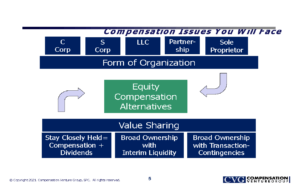
The choice of equity compensation will be driven by the form of organization and ownership philosophy.
Time and Place
Before COVID-19, companies in all industries were increasingly emphasizing this form of compensation. In the 1980’s, there was no “casual dress” and “working from home” was unheard of. An employee reported to the workplace at the assigned time, and there was no “flextime.” Over the past few years, companies were already experimenting with paid parental leave, unlimited vacation time, and employee-choice work location. Now, for many companies and many jobs, WFH is the model. Not for growers and not for budtenders (yet). But time and place can be highly valuable cash-free (sort of) equity-free forms of compensation.
And then…
Hiring is only half the battle. Retention of employees in the cannabis sector is as challenging as hiring. Companies need to be creative with the same four tools to retain employees. But you can’t wait until they give notice of resignation, because then it’s too late.
Your employee retention compensation program starts at the employee’s date of hire, because it is the same program.
Member Blog: What’s new in Cannabis Compensation – CannaComp Update for 2020
By Matt Finkelstein, BlueFire Cannabis by FutureSense
Opening up the new year, NCIA and FutureSense LLC released results for the inaugural Cannabis Compensation Study. The collaborative effort sought to uncover trends in compensation and establish benchmark data, creating a singular industry-wide resource for all to use. With the initial report released, we have some exciting updates to share for the coming year’s development.
Culture Shift
The cannabis industry at-large has been transitioning from the black/traditional/legacy market to a legal one and understandably still maintains tinges of a culture of secrecy. Emerging markets also tend to be initially trepidatious about sharing critical business info, so this is especially prevalent in this line of work.
As the market expands and evolves, the need to understand trends and have accurate data supporting it is becoming more and more important. Cannabis companies can spend between 65-70% of their expenses on payroll. Being even 5% on- or off-the-mark can mean make-or-break in this highly volatile industry.
More and more cannabis companies are realizing the value of this type of market data. It is useful for establishing competitive compensation packages, setting growth trajectories, and managing tight budgets. To establish this data and reap the benefits of its findings, companies are becoming more comfortable with some transparency via an independent 3rd party service provider.
Expertise, Confidentiality, and Anonymity
FutureSense LLC brings over 30 years of compensation expertise across multiple industries. We worked with NCIA to establish a confidential and compliant salary survey that follows all Department of Justice and Department of Labor regulations to protect and ensure anonymity.
Our efforts producing the Cannabis Compensation Survey in 2019 laid out a solid foundation to continue to grow and expand the project. A couple of the key takeaways from the survey include:
Nearly 50 participating companies
Reportable data for 80+ positions in 12 job families
More than 100 additional job title benchmarks established
Growth and Development in 2020 and Beyond
In 2020, we are expanding the project by opening enrollment for submissions throughout the year, and by bringing in supporting partners such as recruiting firms and cannabis payroll applications.
Expanding participation will allow us to present data via demographic breakouts such as:
Industry sector
Location/region
Size (employee count, revenue, etc.)
We will also collect and report on benefits, incentives, sales, and equity compensation. We believe this will provide participating companies with an even deeper perspective into their own business practices and needs.
New Names
FutureSense LLC has recently established a cannabis-specific brand to support our on-going work and dedication to this industry. We brought on BlueFireHR – a human resources services firm with years of experience serving cannabis clients and other industries – and formed BlueFire Cannabis by FutureSense. BlueFire Cannabis will now be the main project partner alongside NCIA for the Cannabis Compensation Study. We’re excited to announce our other supporting partners in the very near future.
Sign-Up!
All cannabis companies with 10 or more individuals are encouraged to participate. We also welcome inquiries from other professional service firms or ancillary services about opportunities for supporting partnership.




 Nolan Shutler, JD, is a director in MGO’s tax group focusing on tax controversy representation and general state and local tax (SALT) consulting. He also has experience in indirect tax, tax planning, corporate tax compliance, and real estate transactions for public, private, and closely held businesses. Nolan has the ability to leverage tax and business management acumen to understand and forge paths to optimal outcomes.

 Whether you’re looking for cash flow management, business planning, or internal controls, our team is dedicated to helping you achieve peace of mind when it comes to your company’s finances and compliance. We understand that the financial side of your business can be daunting, complicated, time-consuming, and most of all: stressful. You don’t need to go through it alone. Our team is prepared to help you achieve your financial goals. Whether you’re looking to earn more revenue, scale your business or achieve a little peace of mind, you can trust
 Tommy Truong is the Director of Partnerships at
 by Fred Whittlesey, Founder and President, Cannabis Compensation Consultants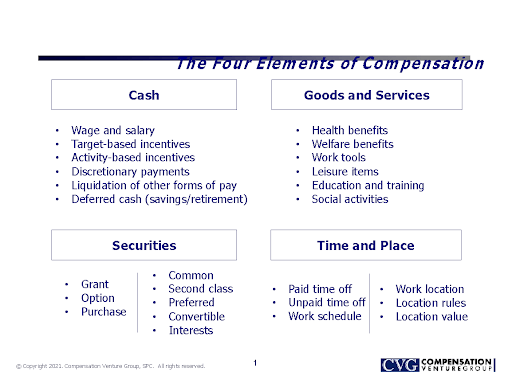


Follow NCIA
Newsletter
Facebook
Twitter
LinkedIn
Instagram
News & Resource Topics
–
This Just In
NCIA Applauds Reintroduction of SAFE Banking Following Lobby Days
Beyond Rescheduling: Inside NCIA’s 14th Annual National Cannabis Industry Lobby Days