Keeping the Spotlight on Cannabis Banking Reform
 by Sadaf Naushad, NCIA Intern
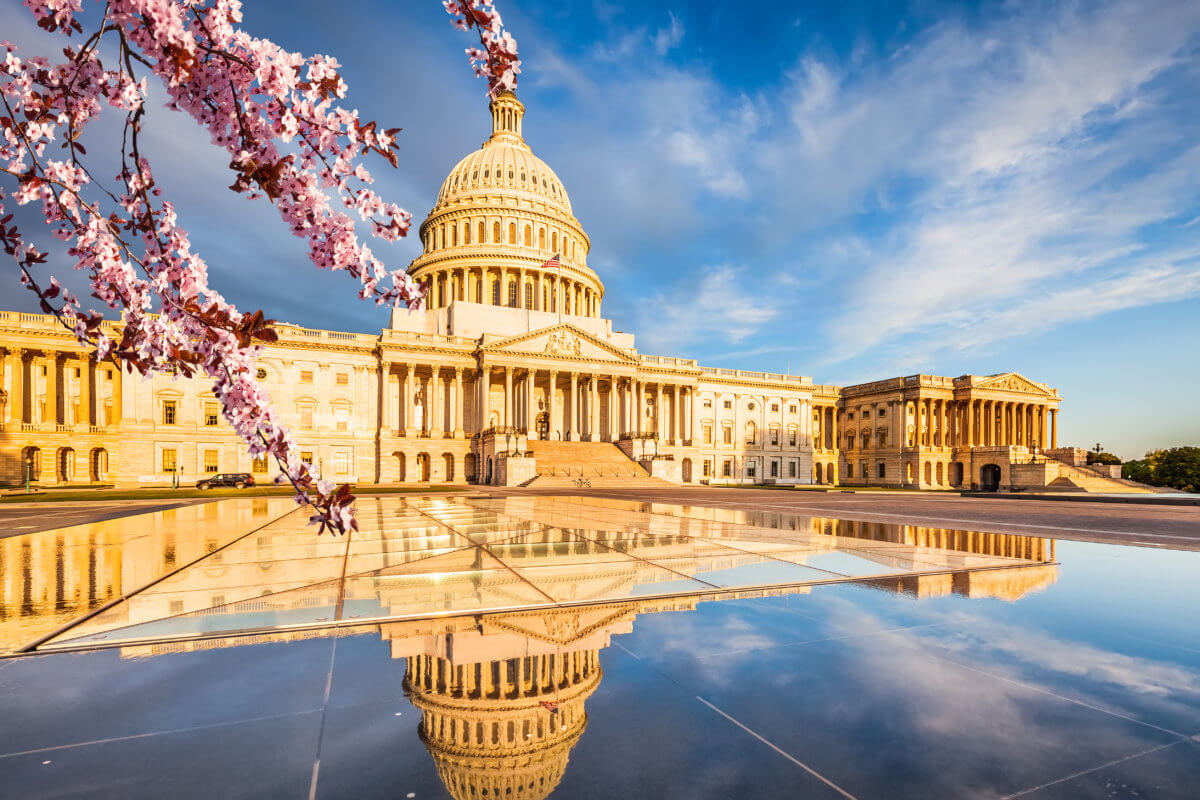
As the middle of May approaches, cannabis advocates, lobbyists, associations, and many more continue to educate congressional offices on the importance of cannabis policy reform.
So far, 37 states have legalized medical marijuana, and 18 states – including the District of Columbia – permit adult recreational cannabis use. With more businesses operating within the industry, one major issue remains: enacting cannabis banking legislation.
The Secure and Fair Enforcement (SAFE) Banking Act addresses the ongoing hurdles between financial institutions transacting with cannabis-related businesses. Congressional lawmakers have been working to include the SAFE Banking Act as a provision to the House’s U.S. Innovation and Competition (COMPETES) Act.
Let’s take a look at where Congress currently stands with the SAFE Banking Act.
This week, 24 U.S. Senators focused their attention on pressuring congressional leaders in ensuring that cannabis banking provisions are enacted into law as part of the broader-scale, House-passed America COMPETES Act.
Led by U.S. Senators Jeff Merkley (D-OR) and Jacky Rosen (D-NV), the 19 Democrats and five Republicans wrote a letter to the leaders, outlining the significance of the SAFE Banking Act, along with its potential impacts on the emerging industry.
The rapidly developing field has led to remarkable job growth, generating significant tax revenue as a result. Thus, if implemented, the SAFE Banking Act would authorize banks, credit unions, and other financial institutions to provide banking services to legally-operating cannabis businesses without facing punishment by federal regulators. Additionally, the banking provision attached to the America COMPETES Act “fosters innovation, supports small businesses, and raises revenue in states that have chosen to legalize cannabis, while reducing safety risks to industry employees and the public alike.”
As of now, financial institutions remain unwilling to transact with cannabis businesses. Due to the indistinct federal and state laws, banks and credit unions fear the regulatory risks associated with the inconsistent policies. Allowing legal cannabis businesses to operate in compliance with state law in obtaining financial services without federal penalties would confront public safety matters, ultimately assisting communities to lessen cash-motivated crimes.
According to the 24 senators, law enforcement administrations have previously addressed the risks accompanying an unbanked cannabis system, many of which include theft, robbery, and violence perpetrated against employees. They emphasize the need to transfer the substantial amount of cash within the industry into the banking system to ensure safe monitoring of accounts pursuant to present federal anti-money laundering regulations and the Bank Secrecy Act.
The National Cannabis Industry Association’s (NCIA) Government Relations team in Washington, D.C. continues to educate Senate offices this week through our Virtual VIP Lobby Days. As we continue to speak with Senate offices on the inclusion of cannabis banking provisions in the America COMPETES Act, our VIP participants are relaying their day-to-day struggles of operating in the cannabis industry. Additionally, participants are pressing for federal de-scheduling, and making sure our nation’s leaders understand the challenges that small and medium-sized cannabis businesses face every day.
Stay tuned for more details about our next Lobby Days coming this September. For more information on NCIA’s Government Relations works or how to get involved please reach out to madeline@thecannabisindustry.org.
Committee Blog: Interstate Cannabis Commerce Will Benefit Public Safety, Consumer Choice, and Patient Access (Part 2)

By Sean Donahoe, Founder and CEO, Sungrown Developments Inc.
Member of NCIA’s State Regulations Committee
In Northern California’s legendary cannabis growing region of Mendocino, the elected county sheriff was recently a competitor at a homebrew festival, jovially pouring samples of his “Pretty Sour Powerful Sider” (jokingly referring to the “Public Safety Power Shutoffs” recently implemented by the electricity utility PG&E to prevent wildfires.) While this relaxed scene of neighbors bonding in the wake of shared inconveniences was not exceptional in itself, here, Sheriff Allman was posing for selfies with licensed (but possibly a few unlicensed) cannabis cultivators sharing the liquid bounties of harvest for the benefit of a local nonprofit.
For nearly a decade, the elected officials and staff of Mendocino county have worked together to normalize the local cannabis farmers by providing a pathway for medical cannabis cultivation permits, long before the state established a licensing system. This public policy process brought once-outlaw cannabis growers into conformance with every regulation of modern life: from building code standards to streambed alteration regulations to the quantification of gross receipts for tax collection. Bringing regulators onto these farms has curtailed previous practices that may have threatened consumer safety: pesticide and other chemicals are now tracked and regulated, while every gram can now be tracked back to its very plot of origin (in case of a safety recall or other concerns post-harvest.) This has been unquestionably difficult for and disruptive to many heritage and small farmers, but it has also allowed in these regions for simple scenes of social bonding and neighbors trusting neighbors again, as participants in the illicit sector were normalized into first their local county’s community then into a system of state license and next (hopefully soon) into a web of regulated interstate commerce. The process of bringing every farm into the regulated supply chain is far from complete, of course, and there are still illicit operators producing for consumers in urban areas in the state and beyond.
Rather than dwell on the incomplete success of California’s ongoing efforts to bring order to the world’s largest cannabis marketplace, it is essential to focus on the quality of life benefits from every cannabis operation successfully brought over from the traditional market to the regulated sector. Each licensed operation makes for one more safe workplace, one more source for lab-tested products for consumers and patients, and one more farm abiding by environmental regulations while providing stable employment and economic sustainability in rural communities. Under the previous medical cannabis paradigm, while there was certainly an abundance of responsible operators, there was virtually zero guidance from the state on matters of workplace safety, manufacturing standards, or environmental compliance. We are now several years into a robust legislative and administrative rulemaking process that has established a (mostly) clear set of rules of the road for commercial cannabis activities. It has unquestionably been a bumpy road for many of the legacy farmers to comply with new regulatory standards, but we are nonetheless able to say that there are now thousands of well-regulated cannabis farms in California (and southern Oregon) eager to sell their clean and craft quality products in a hopeful system of interstate commerce.
Has every cannabis farm in California transitioned? Of course not, but neither have the illicit cannabis economies been entirely supplanted by adult-use cannabis retailers in Colorado and Washington. Sensible and sustainable cannabis policy reform is a process, not a simple flipping of a switch from “illegal” to “legal,” and Americans should be realistic about the progressive and iterative nature of this process. This process, like most evolutionary processes, has already experienced several inflection points, transformative moments that noticeably shifted public opinion or opened up new frontiers in policy reform. While the earlier era of medical cannabis state laws certainly created a base of public opinion and laws, it was questionably the passage of adult-use ballot measures in Colorado and Washington which brought onto the global stage and accelerated the awareness that adult consumers could buy cannabis in clean, responsible retail locations rather than furtive or even dangerous transactions in the illicit marketplace
Throughout this policy process, we have established that licensed retail options can be scaled without negatively affecting public safety and are highly efficient competitive enterprises, offering consumers ample product selection and low prices. In both Colorado and Washington states (but also in later states) we have seen imbalances for some time as market forces, regulatory factors and new cultivation capacity coming online have all helped to create price fluctuations, product shortages, and other supply disruptions. These disruptions were not unique to these early states and will likely continue in every market as new in-state regulated options come online in fits and starts (but when interstate commerce becomes possible we should expect significant price fluctuations unlike any seen to date.) During these fiscally trying periods, we have often seen cannabis operators attempt to cut corners on compliance to make ends meet, which can lead to compromised consumer safety and public safety. The goals of consumer availability and cost competitiveness should be foremost in the minds of policymakers crafting cannabis policy reform nationwide, most notably in the anticipated markets of the Northeast. As these next anticipated adult-use states are designing the framework of their retail and distribution systems, strong consideration should be taken on the potential benefits of quickly and effectively scaling their programs by incorporating interstate commerce as soon as (politically) possible.
The Interstate Commerce Conversation
As the serious policy conversations about compliant interstate cannabis commerce begin, it is helpful to study how in our proverbial laboratories of democracy we can see that decreasing retail friction and shifting consumers from the illicit marketplace benefits crime reduction efforts and improves overall public safety. We should also note that retail cannabis sales have continued to grow in Colorado and Washington, even after the initial novelty and the surge of tourism waned, while legal sales have supplanted illicit sales. These early-adopting states have created models that are addressing consumer demand as national interest in cannabis for wellness and adult-use purposes are soaring and the cultural normalizing continues to occur on a global scale. Interest is high, consumer demand is real, and evidence shows that our drug reform policies should be crafted to bring every cannabis consumer transaction into the regulated supply chain in order to fulfill the demand while benefiting from increases in public safety. Interstate commerce could provide not only safer products but also a greater variety of quality and highly competitive offerings. For medical patients and wellness-oriented consumers, interstate commerce may be the only viable means of access for certain formulated cannabis products or cultivars, especially in smaller state markets.
In addition to the above benefits, regulated interstate cannabis commerce system could provide a more robust and differentiated production and distribution network combined with the ability to rapidly scale retail sales and address insufficient cultivation capacity in new adult-use markets. Cannabis consumers are price sensitive and illicit market retail options continue to entice consumers in states with functional adult-use programs such as California (or Canada), where there is an insufficient amount of licensed retail options to address total consumer demand. With the beginning of adult-use sales in Illinois and larger adult-use states yet to come, it is frankly a bit difficult to envision how total consumer demand will be able to be fulfilled in any near term by relying on licensed cannabis cultivated in-state alone.
The Safe Vaping Discussion
While moving to allow interstate commerce will best position licensed operators to compete with the prices available to consumers in the illicit sector, moving towards a borderless system of production and distribution will also increase safety and access for patients and consumers. Most prominent is the recent nationwide discussion on vaping and vaping-related issues, where tainted products and resultant injuries have been found in the unregulated, illicit sector (or in a very few instances from licensed but arguably under-regulated sources.) Notably, NCIA’s Policy Council established a Safe Vaping Task Force to work on these issues and has released a more comprehensive document advocating for the expansion of a regulatory approach for the safe manufacturing and distribution of cannabis products, whether vape cartridges or otherwise.
The issue of vaping extends to broader issues of product safety including educational campaigns, quality assurance, and testing programs, supply chain integrity, track and trace, and other reporting systems, and (when all else fails) a capable and sophisticated product safety recall system and these are all necessary components of a well-regulated marketplace. These consumer safety programs have already been carefully designed and stress-tested in Colorado and California and the insights from these systems and those in other states should be incorporated into the crafting of interstate cannabis policy (which will require significant harmonization of Certificates of Analysis and testing standards, packaging and labeling standards, etc., again all of which will benefit patients and consumers by offering greater predictability and reliability of their preferred products.)
Multi-State Coordination
In various forums, we have begun to see state regulators liaise with each other and we hope to see more coordination in the future and potentially an earnestness in harmonizing standards where statutorily possible. This multi-state coordination on product safety standards would be accelerated as part of the regulatory coordination efforts that are likely necessary for interstate commerce and, again, consumers and patients will benefit from safer cannabis and cannabis products, and we see NCIA as the critical player in this coming national conversation. In conclusion, moving to a system of regulated interstate cannabis commerce will have tangible benefits for the general public, for consumers and patients and I encourage forward-thinking members of the industry to participate and help manifest a system of interstate cannabis commerce with NCIA, its Allied Associations and other industry groups.
 After studying Russian affairs and working as a political consultant, Sean Donahoe co-founded the California Cannabis Industry Association. He served as its Deputy Director through 2014 when he transitioned to consulting for investors and operators, communicating with public stakeholders, serving on local government committees, and advising industry trade groups. He holds an MSc in Government from the London School of Economics and is CEO of Sungrown Developments Inc., an advisory firm and holding company in Oakland, California.
Committee Blog: Working With Your Local Government as a Cannabis Cultivator

by NCIA’s State Regulations Committee
The regulated cannabis industry is inextricably linked to politics, and all politics is local — so when trying to open and operate a cannabis business, you’re almost sure to need to work with local government in some way.
To help our members understand how to start these relationships right, the NCIA State Regulations Committee hosted a webinar on how to approach local government earlier this year. That focused on identifying your relevant local authorities, how to introduce yourself, and how to properly navigate those relationships.
Once you’ve figured out who to talk to and have gotten in touch with them, they’ll often have questions about the cannabis industry, and there is plenty of good information you can proactively share as well. To help NCIA members inform their local governments about the wide range of issues surrounding our industry, we’ll be diving even deeper with a series of blog posts.
We’ll be starting this series where the whole cannabis supply chain begins: cultivation. Future posts will touch on processing, retail, and more. Even though states categorize their licenses differently, with some issuing stand-alone cultivation licenses and others combining cultivation with processing (or sometimes issuing vertically integrated licenses, with retail too), we’ll be focusing in on the various operations individually.
ECONOMIC IMPACT
When elected officials hear about a new business wanting to open in their town or city, their first question is usually, “how many jobs will it bring?” Mayors, city and town councils, departments of economic development, and other government entities are often laser-focused on building up the local economy, so explaining how your business will help them towards that goal is integral to moving your project forward.
Lucky for them, cannabis cultivation is a very labor-intensive endeavor, and you’ll likely be hiring dozens of people to staff your facility. If you’re an experienced operator who knows exactly how many people you need to hire and in what roles, let your local government know! They’ll be interested to see the range of responsibilities and necessary experience, from entry-level trimmers to mid-career managers to botanists with a Ph.D. If you’re still figuring out your exact staffing plan, providing a range of possibilities will help them understand the scale of your project. Be sure to avoid pie-in-the-sky estimates that you’ll never be able to reach — in the long run, it’s always better to under-promise and over-deliver than to make it seem like you were pulling a bait-and-switch. Also do not forget to include all the contract jobs created by constructing or retrofitting your facility.
Beyond the sheer number of hires you’ll be making, it’s important to talk about the compensation and benefits that you’ll be providing to your employees. If you’re starting everyone above the state’s minimum wage — or better yet, starting everyone at a living wage (generally thought to be at least $15/hour) — highlight that! If you’re providing health insurance or other benefits to your hourly employees, let them know! Elected officials like to see companies doing better than the bare minimum, and love to see companies that do even more.
Your physical facility will also have an economic impact on the community that’s worth talking about. If you’re buying your building, you’ll be paying property taxes, and you can let your elected officials know just how much you’ll be contributing to the tax base. Mayors and councilors always love to see unused space being occupied, so if you’re making use of a vacant or neglected building, be sure to let them know. This goes double if you’ll be making improvements to the building that increase its value (and triple if you’re using a local construction company to make those improvements).
Finally, consider whether you will be providing any additional revenue to the local government. While some state cannabis laws do allow for local taxes, these typically apply to retail rather than cultivation. Massachusetts and some other states also make heavy use of “community host agreements,” or CHAs, where a business commits a percentage of its revenues to the local government for a limited period of time. If either of these applies to you, be sure to provide elected officials with the relevant parts of state law, and the specifics you’re willing to offer. If you plan to financially support any charities, provide details — and if you’d like some guidance on what local charities are doing the most good, just ask, since most officials would be happy to tell you some of their favorites.
PUBLIC SAFETY
Elected officials also care about public safety, but usually follow the lead of their police chief and fire chief, for whom safety is their one and only priority. It’s good to proactively highlight the ways your facility will improve public safety — if you’re installing outdoor security cameras or floodlights, those can protect your neighbors as well as yourself, and there have been multiple cases where cameras on a cannabis business have helped solve an unrelated crime.
It’s important to remember that police and fire chiefs are spread thin and need to know a little about a wide variety of topics. Unless there are already cannabis businesses in their town, they probably haven’t read the state security requirements to open a facility, so providing an overview of the state law can help demonstrate how tightly regulated you will be. Knowing that the state already has rules for waste disposal, product storage, and controlled access areas can alleviate many of their initial concerns.
Once you’ve explained the security features of your building and run through the state requirements for cannabis businesses, you should address any lingering fears or questions that they may have. Two of the most common concerns are the safety of employees while transporting product or cash, and the risk of your building being targeted by burglars looking to steal product.
Regarding employee safety, explain how you will be shipping product to processors or dispensaries. Are you delivering it, are they picking it up, or are you using a third-party transporter? If you are transporting product yourself, explain both the state requirements and your own operating procedures, from GPS tracking to using two employees for each delivery.
You should also go into detail about your banking relationships. Many people outside the industry assume that it’s 100% cash, but if you’re part of the large majority of cannabis businesses with bank accounts, let your local officials know, especially the police chief. They will be much more comfortable if they know your customers will be wiring payments directly to your bank, rather than dropping off duffle bags full of cash at your facility.
Regarding burglary, be sure to re-emphasize your security measures, from cameras and fencing to access control and alarms. Explaining the cannabis life cycle may also be helpful — since plants are not useable products for most of their life, they’re poor targets for theft. This means that cultivation facilities are not prime targets for burglars, but in the rare cases that they are targeted, you can point to examples where cameras have led to burglars’ arrests.
COMMUNITY IMPACT
While economics and public safety are almost always the top two concerns of local governments, they may also be worried about other impacts on the community and how your business will affect residents’ quality of life. Common questions include whether your facility will emit any odor, and if it will increase traffic in the area.
Cannabis is famous for its strong odor, so it’s understandable that people would ask about it. Whether your state requires it or not, it’s advisable to use charcoal scrubbers or other odor mitigation technology to prevent your plants’ odor from escaping the building. Knowing that you’re taking steps to address this concern will help elected officials feel comfortable welcoming you into their community, especially if it’s in a densely populated area.
Traffic concerns may arise, especially if there are recent news stories about mile-long lines at dispensary grand openings. You can address this easily by explaining how cannabis cultivation facilities are not accessible to the public, and the main people coming to your building will be employees and inspectors, not customers.
When built and operated properly, cannabis cultivation facilities should be virtually indistinguishable from any other commercial warehouse. Unless you have very explicit signage (which we do not recommend), most people driving or walking by will not even know that you’re a cannabis business.
GOING FURTHER
Even after you have addressed all of your local government’s concerns, there will probably be even more questions — and that’s okay! This is a great opportunity to keep the dialogue open. Be sure to stay up to date on state laws and regulations so that you can serve as a resource for local officials. Because they’re spread so thin, they will appreciate having someone like you as a go-to when they have questions about cannabis politics or the industry.
If you’re able to offer tours of your facility, that’s a great way to build relationships with your local officials while educating them about your business and the cannabis industry as a whole. They may also appreciate invitations to events hosted by state cannabis regulators, or local industry conferences where they can get broader exposure to the cannabis world.
And of course, it’s important to be a good member of your community. Whether it’s participating in local projects, supporting local organizations, or organizing your own trash clean-ups or other events, staying active and visible will help the community know that they can count on you being a good neighbor.
Be sure to stay tuned for future installments in this series, where we will be addressing other cannabis license types. Our next blog will focus on processors.
Follow NCIA
Newsletter
Facebook
Twitter
LinkedIn
Instagram
News & Resource Topics
–
This Just In
Beyond Rescheduling: Inside NCIA’s 14th Annual National Cannabis Industry Lobby Days
DOJ Reschedules Medical Cannabis to Schedule III & Announces June 2026 Hearing on Broader Rescheduling