Member Blog: Cannabis Industry Predictions for 2024
Presented by the Cannabis Team with BGM, a Seedling Member of NCIA
As we usher in the transformative year of 2024, the cannabis industry stands at the threshold of unprecedented growth and evolution. The Cannabis Team at BGM, a dedicated Seedling Member of the National Cannabis Industry Association (NCIA), invites you to explore the latest insights and predictions for the cannabis sector in their comprehensive blog post. This overview provides a glimpse into the changing landscape, legislative shifts, emerging market dynamics, and the multitude of opportunities and challenges that lie ahead.
Let’s look at the latest insights and 2024 predictions for the cannabis industry. This blog addresses the changing landscape, including regulatory shifts and market opportunities. Continue reading to explore the future of the cannabis industry and learn how your cannabis business can stay ahead in the coming year.
Growth and Expansion
In 2024, the global cannabis market is expected to experience substantial growth, fueled by emerging legal markets, innovative product offerings, and technological advancements. This growth presents opportunities and challenges, especially in navigating complex legal and regulatory landscapes.
Market Dynamics
Projected Market Growth: The U.S. cannabis market is projected to grow significantly. Retail cannabis sales could reach $53.5 billion by 2027, with adult-use sales growing more rapidly. States like New York are working on finalizing details to launch approved programs, contributing to this growth.
Technological Advancements: Blockchain and AI will likely revolutionize supply chain management and compliance tracking.
Product Innovation: The trend toward personalized cannabis products is expected to gain traction as consumers become more educated and discerning. Cannabis companies will likely continue tailoring their products to meet a wide range of individual needs and preferences. However, pre-rolls are projected to continue to be a top product sale item in 2024. As people progress in their exploration and knowledge of cannabis, we believe they will gravitate towards craft cannabis products, and artisanal flower, despite the enduring demand for low-cost and convenient options.
Legislative Predictions
Legalization: We foresee several additional states legalizing recreational cannabis in 2024. Federal legalization of medical or recreational cannabis appears to be a long way off, as demonstrated by the inability of the SAFE Banking Act to pass in Congress.
SAFE Banking Act: This continues to be a pivotal issue, with potential movement expected in 2024.
Federal Rescheduling: Anticipated action by President Biden could reshape the industry’s regulatory framework, impacting financial reporting and taxation.
State-Level Changes: States like Maryland, possibly followed by Pennsylvania and Ohio, may influence regional market dynamics and tax structures.
Industry Trends
Ancillary Services: As the industry grows, so does the demand for financial and ancillary services, highlighting the need for specialized accounting solutions and advisory services.
Canadian Market Resurgence: Canadian cannabis stocks may witness a revival, affecting cross-border financial transactions and investment strategies.
Global Influence: Germany’s role as a market catalyst emphasizes the importance of understanding international financial regulations in the cannabis sector.
State Trends
Maryland and Neighboring States: Maryland’s recent move to full legalization is expected to influence neighboring states. Analysts predict that Pennsylvania might follow Maryland’s lead. There’s also pressure on Virginia to get its program operational in 2024.
Vermont and Mississippi: Farmers in states such as Vermont and Mississippi, which have legalized cannabis, face challenges with federal regulations around hemp cultivation. The U.S. Department of Agriculture (USDA) has rescinded hemp licenses for some farmers who grow marijuana, reflecting the ongoing conflict between federal and state laws regarding cannabis.
New York: The New York Cannabis Control Board anticipates approving additional licenses in early 2024. We will wait to see the progress.
Continued Legalization Trends: More states are likely to embrace broader cannabis legalization, including CBD and Delta 8 THC, enhancing consumer accessibility across the U.S. This trend is driven by legal advancements, ongoing research, and shifting societal views.
To continue reading the full article and explore the remaining sections on Financial Implications, Technology and Data Management, Ethical and Social Considerations, Global Market Integration, and Risk Management, click here to visit BGM’s website. Your journey into the future of cannabis begins now.
Join the Cannabis Movement: Become an NCIA Member Today
As we delve into the transformative year of 2024 in the cannabis industry, it’s crucial to be part of a community that champions growth, innovation, and advocacy. The National Cannabis Industry Association (NCIA) stands at the forefront, shaping the future of the cannabis sector.
Why Join NCIA?
Network with Industry Leaders: Connect with like-minded professionals, industry leaders, and visionaries who are driving the cannabis industry forward. NCIA offers a platform for networking and collaboration that is unparalleled.
Stay Informed: Stay ahead of the curve with the latest insights, trends, and legislative updates. NCIA provides valuable resources and information, ensuring that you are well-informed about the dynamic landscape of the cannabis market.
Advocacy and Influence:Be part of a collective voice that advocates for sensible cannabis policies at the national level. As a member of NCIA, you contribute to shaping the regulatory environment and fostering a thriving, responsible cannabis industry.
Who Should Join?
If you are a cannabis business owner, entrepreneur, investor, or industry enthusiast, NCIA is your gateway to a community that understands the unique challenges and opportunities within the cannabis sector. Whether you’re navigating legislative changes, seeking business connections, or staying informed about market dynamics, NCIA is the ultimate resource.
How to Join:
Becoming an NCIA member is simple. Visit our membership page to explore the benefits and choose the membership level that aligns with your goals. Join the community that is actively shaping the future of the cannabis industry.
Committee Blog: Cannabis Cultivation Facilities vs. Cannabis Retail Facilities – Disparities and Economic Impact
The cannabis industry has experienced a significant transformation in recent years, with the legalization and decriminalization of cannabis in many regions around the world. This shift has led to the emergence of two distinct yet interconnected sectors within the cannabis market: cultivation facilities and retail facilities. While both play a vital role in the cannabis supply chain, they exhibit notable disparities that have a substantial impact on the economy.
Cultivation Facilities: Nurturing the Green
Cannabis cultivation facilities are the backbone of the industry, responsible for the growth and cultivation of the cannabis plant. These facilities are typically large-scale operations that require advanced horticultural techniques, specialized equipment, and a controlled environment to ensure the optimal growth of cannabis plants. Cultivators must navigate various factors such as lighting, temperature, humidity, and nutrient levels to produce high-quality yields.
One of the most significant disparities between cultivation and retail facilities lies in their resource requirements. Cultivation facilities demand substantial capital investment for equipment, real estate, utilities, and staffing. High-quality lighting systems, advanced climate control mechanisms, and nutrient delivery systems contribute to the significant start-up costs associated with these facilities.
Beyond the financial aspect, cultivation facilities often face regulatory challenges. Licensing requirements, zoning restrictions, and compliance with state and local regulations add another layer of complexity to their operations. However, despite these challenges, cultivation facilities have a direct impact on job creation, local economies, and tax revenues. They provide employment opportunities in rural and urban areas alike, stimulating economic growth and revitalization.
Retail Facilities: The Consumer Experience
On the other end of the cannabis supply chain are retail facilities, where consumers can purchase various cannabis products, including flowers, edibles, concentrates, and topicals. Retail facilities offer a diverse range of products to cater to the preferences and needs of consumers, enhancing the overall cannabis experience. These establishments range from dispensaries to specialized stores and require a different set of considerations compared to cultivation facilities.
Unlike cultivation facilities, retail establishments tend to have lower start-up costs. However, they face their own unique challenges. Navigating a complex web of regulations regarding product labeling, packaging, and sales is crucial for compliance and consumer safety. Retail facilities must also provide a safe and welcoming environment for customers while ensuring age restrictions are strictly enforced.
Retail facilities play a pivotal role in shaping public perception and acceptance of cannabis. As these establishments become more mainstream, they contribute to the normalization of cannabis use and promote responsible consumption practices. This normalization, in turn, has implications for the broader economy.
Economic Impact: Cultivation vs. Retail
The economic impact of cannabis cultivation facilities and retail facilities extends far beyond the cannabis industry itself. Both sectors contribute to job creation, tax revenues, and local economic development. cultivation facilities often require a larger workforce due to the labor-intensive nature of plant cultivation and processing. These jobs span across various skill levels, from horticulturists and technicians to administrators and security personnel.
Retail facilities, while generally employing fewer people per establishment, create job opportunities in customer service, retail management, and education about cannabis products. Moreover, both cultivation and retail facilities contribute to the local economy through real estate demand, leasing agreements, and utilities consumption.
From a taxation perspective, both sectors generate significant revenue for local and state governments. Cultivation facilities are subject to cultivation taxes and other regulatory fees, contributing to state coffers. Retail facilities, in addition to sales taxes, often face excise taxes on cannabis products. These revenues can then be channeled towards public services, education, infrastructure, and social programs.
It’s All Economics
Having more cultivation facilities and fewer retail facilities can have detrimental effects on economic stability. The balance between suppliers and retailers plays a crucial role in maintaining a healthy economy, and an excessive skew towards either end can lead to negative consequences as we are realizing in the current economic state.
A robust economy thrives on competition, which drives innovation, efficiency, and lower prices for consumers. When there are an excessive number of suppliers combined with fewer retailers, this can create challenges in distribution and logistics. Retailers act as intermediaries between suppliers and consumers, helping to streamline the flow of products and information. When there are fewer retailers, distribution networks can become strained, causing delays, inefficiencies, and potential shortages.
Economic stability relies on a balanced employment landscape. An overabundance of suppliers with limited retailers may lead to job losses in the retail sector, affecting consumer spending and the overall labor market. This can create ripple effects across various industries and reduce the purchasing power of consumers, ultimately slowing down economic growth.
Moreover, concentration of power among a few suppliers can lead to monopolistic tendencies, stifling competition and limiting consumer choice. Monopolies can dictate prices, control supply, and hinder market dynamics, negatively impacting economic stability.
Closing Thoughts
The disparities between cannabis cultivation facilities and retail facilities highlight the intricacies of the evolving cannabis landscape. While cultivation facilities require substantial investments in equipment and compliance, retail establishments focus on creating a positive consumer experience and normalizing cannabis use. Together, they form a symbiotic relationship that drives economic growth, job creation, and tax revenues.
As the cannabis industry continues to mature, it is crucial for stakeholders, policymakers, and entrepreneurs to recognize the importance of both cultivation and retail facilities. Striking a balance between these sectors will be vital for achieving a sustainable and prosperous cannabis market that benefits not only those directly involved in the industry but also the broader economy and society at large.
Member Blog: 2022 Cannabis Supply Chain Concerns Demand Creative Solutions
If there was ever a year that we all learned the importance of the supply chain and its impact on our daily lives, 2021 was it. For anyone who somehow hasn’t realized the effect, take a look at grocery prices the next time you shop. The cost of dairy, produce, and countless other items all highlight a fragment of the ongoing concern across the supply chain.
Heading into 2022, just about every company is pondering a similar question: How do we mitigate current and potential challenges for the next decade?
How did we get here?
The pandemic shined a light on numerous glaring issues and failures in the current supply chain.
COVID-19 spotlighted an aging infrastructure in a way it had never been before. Life moved us all into the 21st century years ago. Yet, U.S. ports remained stuck behind using software better suited in a museum as a relic rather than a relied upon, integral component. Instead of being put out to pasture, we continue to rely on this tech to handle shipping volumes that fail to align with today’s demand. With outdated, turn-of-the-century software, ports could not address the volume of daily imports.
Compounding the issue are manufacturing and inventory programs with zero flexibility or ready-to-implement fail-safes in case of dire situations like the one we’re in today. Companies with non-redundant sites like single-sourced manufacturing for an entire global production perfectly highlight this problem.
Infrastructure is far from the only significant factor. The pandemic upended just about every forecast possible. Furniture and appliance demand surged as people stayed home. Hard goods and eCommerce helped fuel a packaging demand spike, further impacting aged tech at ports. Meanwhile, the auto sector is expected to plummet. But, demand surged while companies slashed manufacturing orders. Meanwhile, tech development is months behind as it attempts to update critical tech infrastructure and other supply chain components.
Over the past two decades, a race to the bottom on production prices led many to offshore manufacturing. Once considered a viable option is now a significant pain point as stability wanes and tariffs increase. Then there are material shortages that halt production. This predicament is well on display for any goods made using materials like paperboard, resin-based materials, dyes, and adhesives.
The pandemic certainly did much of the damage, but domestic factors worsened matters, like the South Texas winter storms in the United States. Adding to the goods strains is the consolidation of manufacturers, limiting supply options during crucial times. This underlying industry concern kneecapped numerous sectors operating with just a few producers.
However, the most significant impact is the shortage of people. The tragic loss of lives, mandatory isolation orders, and full-site shutdowns limited the people power needed to sustain the marketplace. From ports to factories to transportation, every facet of the chain continues to struggle with a lack of people.
What is the current state?
The current state of affairs presents critical concerns. Like the year before, companies must contend with concerns that are substantial enough on their own. When coupled together, they create historical challenges.
Labor shortages continue to affect production. The Omicron variant has been the latest problem, just as optimism returned to many workplaces and organizations. The workforce dearth has once again slowed or stopped progress. Expect delays even when labor returns to full force.
The circumstances leave us in a dire time. Inflation has run rampant, impacting labor, transportation, substrate, and countless other costs. While the times are tough, we can remedy the problems with the right frame of mind and proper implementation.
A World Not Without Hope
The ample amount of adversity offers its slivers of silver linings. One of the brightest bits of optimism is the versatility of options available. Just about anything could be viable.
Think dynamically. Listen, consider, forecast, and plan for the days and years ahead. Success lies within your team and customers. Consider all opinions when planning your next steps. Knowledge is vital to ensuring that these issues never happen again. With insights gathered, find the software, suppliers, and other needed components to make your supply chain thrive.
Now may be a good time to consider production closer to home. If impossible, make sure that your partners match timelines and production plan milestones before beginning any relationship. Sustainability is another concern that can’t be overlooked, even if it often comes at an additional cost. Its importance often clashes with sourcing consumers and other critical points mentioned here. That said, packaging can and must do what it can to reduce its carbon footprint—source from eco-conscious companies with options for recycled and/or recycled materials, alternative substrates, and other sustainable options whenever possible.
We should expect inflation to continue growing for some time despite substrate cost stabilization expected to help to a degree. As such, ask how prepared your company is for the challenges ahead. Evaluate every process component, from production to packaging to branding. Taking time to account for every possible hurdle ahead should best position your company to keep costs at a minimum while creating sustainable, consumer-friendly products that won’t get held up in ports and additional shipping lanes.
While times are tough, we can progress in the right direction. Now is the time to streamline the production process to develop customer-friendly products that puts sustainability into action. It’s a tall task, but creative thinking and proper implementation will work, benefitting us all in the process.
Elizabeth Corbett, VP of Sales for AE Global, is on a mission to build sustainable packaging & supply chain programs for cannabis and CBD companies which honor their brand identity, drive revenue growth, protect the product and do so cost effectively. “CannaBeth”, as she is fondly known, entered the cannabis industry more than eight years ago after spending the first part of her career developing packaging solutions for significant players in the retail and health & beauty markets such as Starbucks, Tiffany and Estee Lauder. Based in Seattle and Miami, Beth is passionate about finding environmentally responsible and sustainable solutions no matter what the form or substrate.
Video: NCIA Today – Friday, December 10, 2021
NCIA Deputy Director of Communications Bethany Moore checks in with what’s going on across the country with the National Cannabis Industry Association’s membership, board, allies, and staff. Join us every Friday here on Facebook for NCIA Today Live.
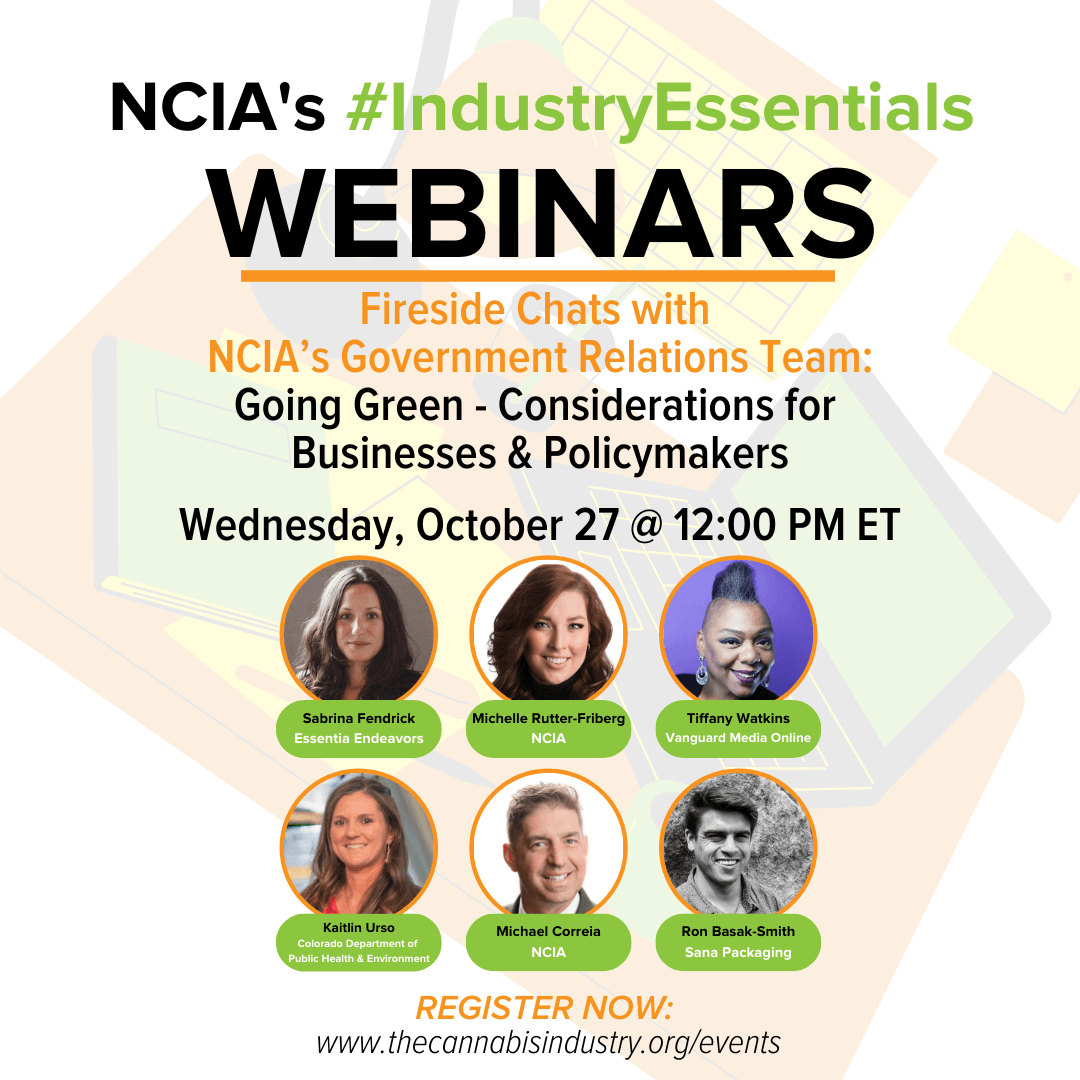
Fireside Chats w/ NCIA’s GR Team | 10.27.21 | Going Green: Considerations for Businesses & Policymakers
Mike and Michelle carry on their monthly conversations with regulators, policy makers and cannabis industry thought leaders to discuss the latest developments in federal policy LIVE. In this edition of our Fireside Chats w/ NCIA’s Government Relations Team series originally aired on Wednesday, October 27, 2021 the panel dove deep into the current landscape and future outlook for sustainability in the cannabis industry.
As the cannabis industry continues to grow, so does its environmental impact. This fast-growing and highly regulated industry (at the state level) is poised to lead on evolving business challenges, including the adoption of environmentally sound business practices that demonstrate to the broader agriculture sector that comprehensive environmental sustainability is achievable. But, challenges remain and the stakes are ever-increasing.
We’ll look at the intersection of the current environmental footprint of the cannabis industry, existing sustainability solutions (packaging, regenerative farming, renewable energy), political and economic issues limiting adoption of these practices by operators, and lay out strategies to remove those barriers. We’ll also be talking extensively about NCIA’s 2020 white paper (Read Now: https://bit.ly/3uDogfa) on environmental sustainability, so be sure to take a look!
Speakers:
Sabrina Fendrick, Essentia Endeavors
Ron Basak-Smith, Sana Packaging
Tiffany Watkins, Vanguard Media
Kaitlin Urso, Environmental Protection Specialist, Colorado Department of Public Health and Environment
Moderating:
Michael Correia, Director of Government Relations (NCIA)
Michelle Rutter Friberg, Deputy Director of Government Relations (NCIA)
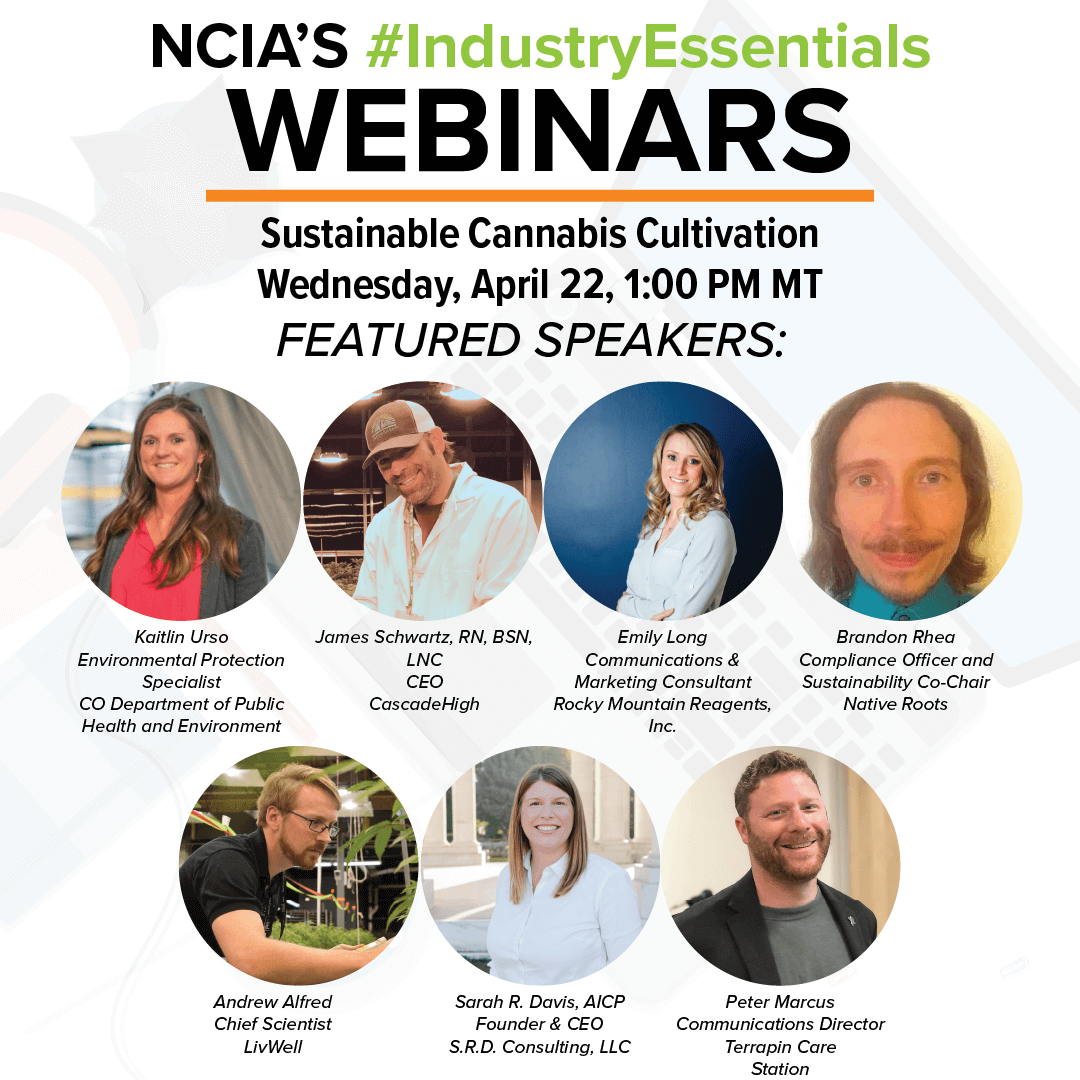
Webinar Recording: Policy Council Conversations – Sustainable Cannabis Cultivation
In case you missed it, watch this webinar recording from Wednesday, April 22 to Celebrate Earth Day with NCIA. Learn about the environmental impacts of the cannabis industry and the sustainable best management practices that can be implemented for green operations.
You’ll get a sneak peek into NCIA’s upcoming white paper focused on sustainability in the cannabis industry, and learn from your peers by hearing from four sustainable cannabis cultivators: Terrapin Care Station, Native Roots, LivWell, and Cascade High.
Panelists:
Kaitlin Urso
Environmental Protection Specialist Colorado Department of Public Health and Environment
Emily Long
Communications & Marketing Consultant Rocky Mountain Reagents, Inc.
Sarah Davis
CEO S.R.D. Consulting, LLC
Peter Marcus
Communications Director Terrapin Care Station
Brandon Rhea
Compliance Officer and Sustainability Co-Chair Native Roots
James Schwartz
CEO Cascade High Organics
NCIA’s #IndustryEssentials webinar series are crafted for cannabis business owners highlighting the insight and expertise of NCIA members, NCIA staff, as well as regulatory and legal experts.
To us, webinars arenʻt just about getting some big-name talking heads on a Zoom call. Itʻs about giving you insights you canʻt find anywhere else, from experts who will surprise and delight you with their in-depth knowledge on relevant industry topics. Thatʻs why we have created our NCIA #IndustryEssentials webinar series. Over the coming weeks, we’ll be rolling out a variety of programs under this umbrella which will allow us to provide you timely, engaging, and essential education when you need it most.
VIDEO: Member Spotlight on Solstice
In this video newsletter, we share the story of Solstice, a commercial cannabis producer founded in 2011 and based in the state of Washington. Vice president and co-founder Alex Cooley has infused his business model and practices with values that elevate the conversation around environmental sustainability and corporate responsibility in the cannabis industry.
Want to learn more about best practices and innovation for your cannabis business?
Register early for the best deals to attend NCIA’s Seed To Sale Show in Denver, January 31 – February 1, 2017. Sponsorship opportunities are also available!
GUEST POST: The Real Environmental Impact – Sustainable Practices For Cannabis Companies
One widely circulated quote equates the carbon footprint of producing a gram of hydroponically grown cannabis to that of “driving seventeen miles in a Honda Civic.” And while that beats seventeen miles in a Hummer, it’s a number we have the power to greatly reduce. Part of what excites me about this freshly-legal industry is that we have the opportunity to shape it in a way that big business has thus far failed to do by not putting a higher profit margin above the health of the planet.
In August I was asked to speak about this very topic in Las Vegas at the 2nd annual NCIA Southwest CannaBusiness Symposium. It gave me a chance to reflect on something I’m passionate about – the real environmental impact of what we do, what isn’t working, and how we can create positive change for this and future generations of growers and patients.
Get Under The Sun
It takes vast resources to power a warehouse grow that relies on High Intensity Discharge (HID) or High Pressure Sodium (HPS) lights. Automated light deprivation greenhouses can produce cannabis of equal or greater value as that produced indoors at half the cost and one quarter the environmental impact.
Cannabis used for extracts can all be grown outdoors. Provided you live in a climate that allows for outdoor cultivation, sun-grown cannabis is excellent starting material for extractions. The finished form will be far from the flower, so why not take advantage of one of our most powerful (and free!) resources?
Solstice growhouse
Keep It Lean Indoors
I know that not every method of cultivation can rely exclusively on solar power. However, in indoor grows, we can focus on efficiency.
For most indoor grows, Heating, Ventilation, and Air Conditioning (HVAC) systems are a huge resource suck. I’ve discovered that the best method is to utilize a centralized Variable Air Volume (VAV) system.
Make sure the envelope is sealed. Keep your buildings well insulated to prevent energy leaks. Without a higher energy code and tighter insulation, many industrial-scale grows hemorrhage energy and resources.
Lay Down the Law
Frankly, some of the cities and states currently passing laws to regulate cannabis cultivation have the least enviable power infrastructures. Las Vegas, which relies heavily on coal and natural gas, is ahead of the curve in terms of legislation, whereas clean n’ green hydro-electrically-powered Washington State has yet to create stringent and sustainable regulations. Legislators have been more concerned with issues of security and diversion than environmental impact. The “pot is dangerous” paradigm needs to shift to “unregulated grow practices are dangerous for the planet.”
Nice Package…
We can effectively undo all the good of a smart grow with wasteful packaging.
Glass jars with cork & wood tops
Think cradle-to-grave for your packaging: Where did it come from? What is it made of? Where will it go after it has been used? That plastic container might be a good fix in a pinch, but think about the impact it has as you scale.
We’ve got to reduce plastics and push glass, wood, or paper wherever possible. Almost every gram of cannabis that goes out into the world from a processing facility is wrapped in plastic – and we all know that it can’t be properly disposed of or recycled. However, the plastic used for business-to-business bulk orders could be saved and reused.
At Solstice we’ve been designing glass containers with cork and wood tops for our flower. They can be collected, reused, or returned for a deposit. Our pre-rolls are made from 60% post-consumer recycled paper and printed with vegetable ink. Every little bit counts.
Have Multiple Bottom Lines
The “Triple P bottom line: People, Planet, Profits” is the newest, sexiest take on commerce with a conscience. The Triple P works primarily because it’s a flexible paradigm; it gives business owners a framework in which they can question and evaluate the human and environmental cost of every move they make.
Across industries, innovative leaders are finding more generous, humane, and ultimately more sustainable ways to do big business. Some of these are easy and inexpensive: utilizing proper waste disposal, bike-to-work incentive programs (a Solstice favorite), Plant-A-Tree days, or making sure your pesticide program is safe for employees and the planet.
Sometimes however, there is an unavoidable immediate cost to doing what’s right. Google uses a fancy fuel cell with 2-3 bloom boxes for their building infrastructure. They’re getting loads of good PR for this – in part because very few people can afford to use them.
But it is my belief that the more you grow, the more capital you’re bringing in, the more you have to give to impeccable resource management.
Everyone knows that cannabis makes money; we’re looking at a multi-billion dollar industry over the next 5 years. Hobby systems and garage standards are not scalable for the cannabis boom. Whatever the laws might ‘allow’ us to do, we have to stay ahead of the curve and firmly within our own conscience.
Alex Cooley is the owner of Solstice, a member of NCIA since April 2013. Solstice founded their Seattle-based flagship in 2011 as the first-ever permitted cannabis production facility in Washington State. Solstice has taken an environmentally conscious approach to high quality cannabis production and has cultivated over 350 different types of cannabis, creating one of the most robust genetic libraries anywhere in the world.


 Elizabeth Corbett, VP of Sales for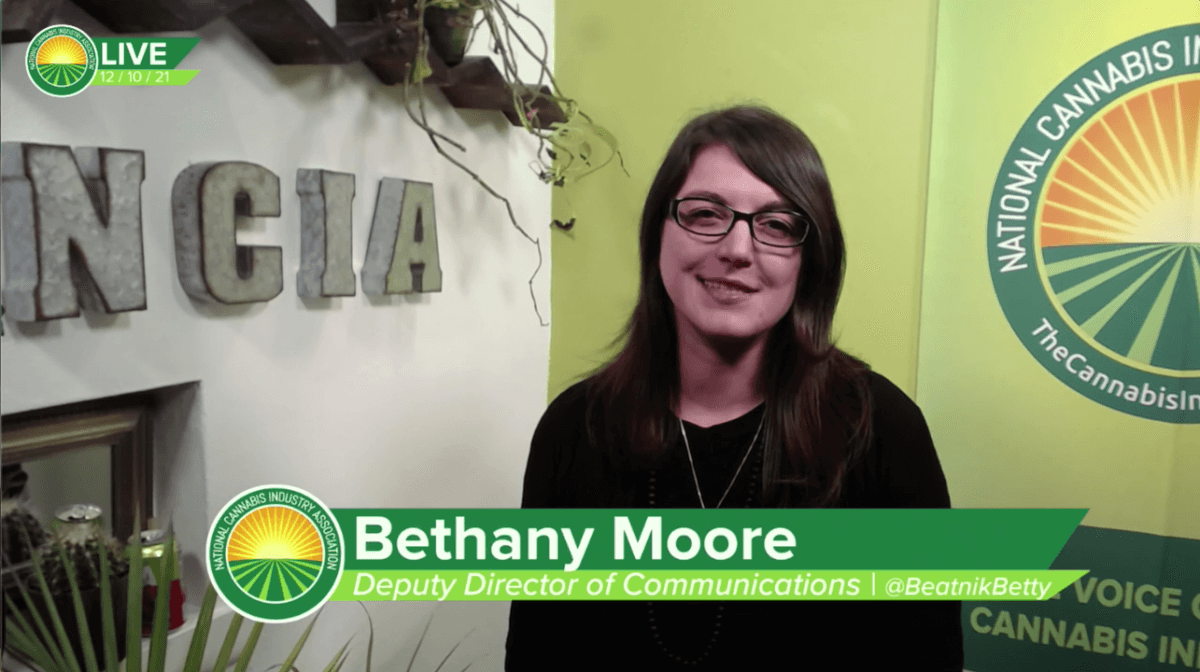


Follow NCIA
Newsletter
Facebook
Twitter
LinkedIn
Instagram
News & Resource Topics
–
This Just In
Beyond Rescheduling: Inside NCIA’s 14th Annual National Cannabis Industry Lobby Days
DOJ Reschedules Medical Cannabis to Schedule III & Announces June 2026 Hearing on Broader Rescheduling