Member Blog: INSIGHTS Matter – Women in Cannabis Weigh In
Earlier this year, Cannabis NewsHub reached out to successful female leaders in the cannabis community. We asked them to share insights and advice for aspiring industry professionals.
Overwhelming Success of the Social Media Campaign
Participation in this social media campaign was an overwhelming success, with more than 50 women in cannabis leadership sharing their “words of advice,” all of which were posted and shared through social media channels. See all posts on the Cannabis NewsHub website here.
Celebrating Diversity in Cannabis Leadership
The diversity of organizations was an affirmation that these women are truly “Thought Leaders” who represent cannabis in the following verticals: Advertising, Associations, Conference Development, Delivery Platforms, Dispensaries, Growers, Human Resources, Educators, Legal, Manufacturing, Marketing, Publishers, Software, and Tourism. This cross-section of verticals within the cannabis space validates the diversity of women and their roles in the industry. Their powerful advice serves as an education on how to succeed and find your path in this dynamic, ever-changing industry.
Shout-Out to Participating NCIA Members
We are proud to highlight some of the NCIA members who participated in the “Cannabis NewsHub – 2024 INSIGHTS Matter: Women in Cannabis Weigh In” campaign. These leaders are making significant contributions to the cannabis industry:
As a valued member of the National Cannabis Industry Association (NCIA), you can enjoy exclusive discounts on various industry services, including special offers from Cannabis NewsHub. This member benefit is designed to help you save while staying informed and connected in the cannabis industry.
Join NCIA Today to Access Member-Exclusive Benefits
Not yet a member? Now is the perfect time to join NCIA and unlock these incredible savings! As an NCIA member, you’ll gain access to a wide range of benefits, including:
Discounts on industry services and products
Networking opportunities with industry leaders and peers
Educational resources to keep you updated on industry trends and best practices
Advocacy support to help shape the future of the cannabis industry
Join NCIA today and take advantage of these member-exclusive discounts and many other benefits. Become a member now and start saving!
NCIA Today – Thursday, April 6, 2023
Join NCIA Director of Communication Bethany Moore for an update on what’s going on with NCIA and our members. This week we discuss 13 women scientists you NEED to know, our recent podcast check-ins with members of the New York State Office of Cannabis Management, discuss a recent letter NCIA sent to the Congressional Banking and Finance Committees, and look forward to the remainder of our city events coast-to-coast leading up to Lobby Days in May.
Committee Blog: 13 Women Cannabis Scientists to Follow and Support
by Russ Hudson, Canna Advisors Member of NCIA’s Scientific Advisory Committee
Introduction
These 13 women cannabis scientists and researchers deserve to be recognized for their significant scientific and academic merit alone, irrespective of their gender. For now, we are identifying these stellar individuals as women solely because of the cannabis industry’s longstanding domination by males. Supporting these professionals in their scientific work with cannabis is critical to advancing the global cannabis agenda, which seeks to make cannabis medicine and other products readily available to people globally. Sharing the work and efforts of these exceptional humans is precisely what is needed to inspire the next generation of cannabis scientists, where gender will no longer be a defining feature.
*Ph.D. in Organic Chemistry from Portland State University *Cannabis Toxicology and Risk Assessment
Dr. Vreeke works with Ethan Russo and the team at True Terpenes, where she is Head of Research, performing risk assessments and managing the company’s toxicology program that she developed. With nearly a decade of experience already in laboratory research, Dr. Vreeke is expected to have a long and storied career in the science of cannabis.
PUBLICATIONS BY SHAWNA VREEKE, Ph.D.:
A First-Tier Framework for Assessing Toxicological Risk from Vaporized Cannabis Concentrates
A Simple Predictive Model for Estimating Relative E-cigarette Toxic Carbonyl Levels
Dihydroxyacetone levels in electronic cigarettes: Wick temperature and toxin formation.
E-cigarettes can emit formaldehyde at high levels under conditions that have been reported to be non-averse to users
Triacetin Enhances Levels of Acrolein, Formaldehyde Hemiacetals, and Acetaldehyde in Electronic Cigarette Aerosols
*Ph.D. in Biochemistry from the University of Maryland *Cannabis terpene researcher
Dr. Trapp is one of the world’s leading terpene experts, and she also happens to be an expert in cannabis, particularly where related to the plant’s chemical constituents. Dr. Trapp is the Senior Research Scientist for the Southwest College of Naturopathic Medicine & Health Sciences, she is the co-founder and chief scientist of a terpene company she founded called Terpedia, and she is an adjunct biology professor at Red Rocks Community College in Lakewood, Colorado. Dr. Trapp contributed commentary to The Big Book of Terps, and has authored the publications listed below:
PUBLICATIONS BY SUSAN TRAPP, Ph.D.:
Genomic Organization of Plant Terpene Synthases and Molecular Evolutionary Implications
Defensive Resin Biosynthesis in Conifers
Draft genome sequence of Mentha longifolia and development of resources for mint cultivar improvement
Gene expression profiling identifies inflammation and angiogenesis as distinguishing features of canine hemangiosarcoma
Molecular signatures of neoadjuvant endocrine therapies for breast cancer: characteristics of response or intrinsic resistance, Breast Cancer Research and Treatment
*Ph.D. in Pharmaceutical Sciences from University of Rhode Island *Cannabis educator and research scientist
Dr. Kirk is a natural product chemist working as a Cannabis Research Scientist for Real Isolates, LLC. She is also a cannabis science educator for Cannabichem, LLC, and has spent years donating her time to various worthy charitable causes and programs.
PUBLICATIONS BY RILEY KIRK, Ph.D.:
Screening the PRISM Library against Staphylococcus aureus Reveals a Sesquiterpene Lactone from Liriodendron tulipifera with Inhibitory Activity
New Micropeptins with Anti-Neuroinflammatory Activity Isolated from a Cyanobacterial Bloom
Polyphenol Microbial Metabolites Exhibit Gut and Blood–Brain Barrier Permeability and Protect Murine Microglia against LPS-Induced Inflammation
*Ph.D. in Evolutionary Biology from Indiana University Bloomington *Cannabis researcher: genomics, breeding
A long-time dedicated researcher in the higher education industry, Dr. Vergara is currently an emerging crop specialist for Cornell University, a research associate with the University of Colorado Boulder, and the director and founder of the Agricultural Genomics Foundation based in Colorado.
PUBLICATIONS BY DANIELA VERGARA, Ph.D.:
Widely assumed phenotypic associations in Cannabis sativa lack a shared genetic basis
*Ph.D. in Biological Education from University of Northern Colorado *Cannabis educator and R&D specialist *Cannabis genetics
Dr. Schwabe is a cannabis geneticist with a passion for studying inconsistencies in commercially available cannabis flower. Extremely active in the cannabis space and beyond, Dr. Schwabe is the Director of Cannabis Education for 420 Organics, the Director of Research and Development for Shore Organics, and an Associate Lecture Professor for the University of Colorado Boulder.
PUBLICATIONS BY ANNA SCHWABE, Ph.D.:
Comparative Genetic Structure of Cannabis sativa Including Federally Produced, Wild Collected, and Cultivated Samples
Genomic Evidence That Governmentally Produced Cannabis sativa Poorly Represents Genetic Variation Available in State Markets
Research grade marijuana supplied by the National Institute on Drug Abuse is genetically divergent from commercially available Cannabis
Genetic tools weed out misconceptions of strain reliability in Cannabis sativa: Implications for a budding industry
Weeding out the truth behind Cannabis strain names: Genetic analyses confirm strain names are inconsistent and need regulation
*Master of Science in Medical Cannabis Therapeutics from Pacific College *Cannabis Nurse – CHPN, RN
Megan Mbengue, BSN, RN, CHPN is the founder of Trusted Cannabis Nurse, and has earned her reputation as a frank and passionate consumer educator in the cannabis industry. A longtime RN specializing in hospice and palliative care, Megan brings her passion for cannabis science education to the public, supported by a line of her own high quality hemp extract products.
*BS, Bioengineering, Arizona State University *Cannabis analytical testing expert
Jill specializes in cannabis analytical chemistry, working as Vice President of Sales for Orange Photonics, a company that produces analytical testing equipment for the cannabis industry – most notably handheld and portable testing units. Jill has a strong scientific background in analytical instrumentation, supported by her education in bioengineering.
*Ph.D. in Pharmaceutical Biology and Phytochemistry from University of Munster *Cannabis phytochemical researcher
Dr. Sarshar is passionate about cannabis for women’s health, having founded Laia’s FemBalance, a company that advocates for and encourages women’s health and other rights in Germany and worldwide. With an MBA in addition to a Ph.D., Dr. Sarshar is also a proficient and well-known business expert.
PUBLICATIONS BY SHABNAM SARSHAR, Ph.D.:
Plants of the Gods and Their Recently Discovered Therapeutic Applications.
Traditionally used medicinal plants against uncomplicated urinary tract infections: Hexadecyl coumaric acid ester from the rhizomes of Agropyron repens (L.) P. Beauv. with antiadhesive activity against uropathogenic E. coli.
*Ph.D. in Biochemical Neuropharmacology from Rutgers University *Professor at Wake Forest University Baptist Medical Center *Discoverer of CB1 receptor for cannabinoid agonists
Dr. Howlett is one of the most-published cannabis-specific scientists in the world, and comes highly recommended to this list by numerous well-respected cannabis scientists and researchers. Dr. Howlett is also a Professor of Physiology and Pharmacology at Wake Forest University Baptist Medical Center, where her expertise as a biochemical neuropharmacologist working with cannabinoid receptor signal transduction is highly valued by the current and next generation of cannabis and other professionals.
PUBLICATIONS BY ALLYN HOWLETT, Ph.D.:
Increased Angiotensin II Contraction of the Uterine Artery at Early Gestation in a Transgenic Model of Hypertensive Pregnancy Is Reduced by Inhibition of Endocannabinoid Hydrolysis
Alterations in the Medullary Endocannabinoid System Contribute to Age-related Impairment of Baroreflex Sensitivity
Is there a role for anandamide in cardiovascular regulation? Insights from studies of endocannabinoid metabolism
Steric Trigger as a Mechanism for CB1 Cannabinoid Receptor Activation
Early phytocannabinoid chemistry to endocannabinoids and beyond
WIN55212-2 Docking to the CB1 Cannabinoid Receptor and Multiple Pathways for Conformational Induction
Endocannabinoid System in Pregnancy Maintenance and Labor: A Mini-Review
Endocannabinoids and Reactive Nitrogen and Oxygen Species in Neuropathologies
Cannabinoid Receptor Interacting Protein 1a (CRIP1a) in Health and Disease
Acute Depletion of D2 Receptors from the Rat Substantia Nigra Alters Dopamine Kinetics in the Dorsal Striatum and Drug Responsivity
The Spicy Story of Cannabimimetic Indoles
The Endocannabinoid System and Oligodendrocytes in Health and Disease
Cannabinoid Receptor Interacting Protein 1a (CRIP1a): Function and Structure
WIN55212-2 Modulates Intracellular Calcium via CB1 Receptor-Dependent and Independent Mechanisms in Neuroblastoma Cells
Cannabinoid receptor interacting protein 1a interacts with myristoylated Gαi N terminus via a unique gapped β-barrel structure
CB1 Cannabinoid Receptors Stimulate Gβγ-GRK2-Mediated FAK Phosphorylation at Tyrosine 925 to Regulate ERK Activation Involving Neuronal Focal Adhesions
Thyroid Effects on Adenosine 3′,5′-Monophosphate Levels and Adenylate Cyclase in Cultured Neuroblastoma Cells
Medullary Endocannabinoids Contribute to the Differential Resting Baroreflex Sensitivity in Rats with Altered Brain Renin-Angiotensin System Expression
*Ph.D. in Biopsychology from the University of Michigan *Director of the UCLA Center for Cannabis and Cannabinoids
Dr. Cooper is the Director of the UCLA Center for Cannabis and Cannabinoids, and Associate Professor in the Department of Psychiatry and Biobehavioral Sciences. A longtime health care professional specializing in neurobiology, Dr. Cooper has been working in the cannabis industry for many years, including a former appointment on the Committee on the Health Effects of Marijuana by The National Academies of Sciences, Engineering, and Medicine. Dr. Cooper has published numerous studies on various aspects of cannabis and cannabinoids.
PUBLICATIONS BY ZIVA COOPER, Ph.D.:
Impact of co-administration of oxycodone and smoked cannabis on analgesia and abuse liability
Methodology for controlled administration of smoked synthetic cannabinoids JWH-018 and JWH-073
Sex-Dependent Effects of Cannabis and Cannabinoids: A Translational Perspective
Effects of ibudilast on oxycodone-induced analgesia and subjective effects in opioid-dependent volunteers
The Health Effects of Cannabis and Cannabinoids: The Current State of Evidence and Recommendations for Research
Effects of zolpidem alone and in combination with nabilone on cannabis withdrawal and a laboratory model of relapse in cannabis users.
Oral Cannabidiol does not Alter the Subjective, Reinforcing or Cardiovascular Effects of Smoked Cannabis.
Adverse Effects of Synthetic Cannabinoids: Management of Acute Toxicity and Withdrawal
Novel Pharmacologic Approaches to Treating Cannabis Use Disorder
Investigation of sex-dependent effects of cannabis in daily cannabis smokers
A human laboratory study investigating the effects of quetiapine on marijuana withdrawal and relapse in daily marijuana smokers
Effects of acute oral naltrexone on the subjective and physiological effects of oral D-amphetamine and smoked cocaine in cocaine abusers.
Comparison of a drug versus money and drug versus drug self-administration choice procedure with oxycodone and morphine in opioid addicts.
Comparison of the analgesic effects of dronabinol and smoked marijuana in daily marijuana smokers
Subjective, cognitive and cardiovascular dose-effect profile of nabilone and dronabinol in marijuana smokers.
Buprenorphine/naloxone as a promising therapeutic option for opioid abusing patients with chronic pain: reduction of pain, opioid withdrawal symptoms, and abuse liability of oral oxycodone.
Marijuana’s dose-dependent effects in daily marijuana smokers.
Nabilone decreases marijuana withdrawal and a laboratory measure of marijuana relapse.
Predictors of marijuana relapse in the human laboratory: robust impact of tobacco cigarette smoking status.
Effects of menstrual cycle phase on cocaine self-administration in rhesus macaques.
Glial modulators: a novel pharmacological approach to altering the behavioral effects of abused substances
Effects of baclofen and mirtazapine on a laboratory model of marijuana withdrawal and relapse.
Opioid antagonism enhances marijuana’s effects in heavy marijuana smokers.
Comparison of subjective, pharmacokinetic, and physiological effects of marijuana smoked as joints and blunts
Actions of delta-9-tetrahydrocannabinol in cannabis: relation to use, abuse, dependence.
Cannabis reinforcement and dependence: role of the cannabinoid CB1 receptor.
Naltrexone Maintenance Decreases Cannabis Self-Administration and Subjective Effects in Daily Cannabis Smokers.
Sex-dependent effects of cannabis-induced analgesia
*Ph.D. in Cognitive Science from the University of British Columbia
Dr. Cuttler has published many valuable, relevant studies on cannabis and its constituents, especially in the field of obsessive use and addictive consumption, where her extensive education in psychiatry serves her and the public well. Dr. Cuttler is also an Assistant Professor with Concordia University.
PUBLICATIONS BY CARRIE CUTTLER, Ph.D.:
Blunted stress reactivity in chronic cannabis users
Psychometric properties of the Daily Sessions, Frequency, Age of Onset, and Quantity of Cannabis Use Inventory (DFAQ-CU)
Symptoms of obsessive-compulsive disorder predict cannabis misuse
A cross-sectional survey of medical cannabis users: Patterns of use and perceived efficacy
Sex differences in cannabis use and effects: A cross-sectional survey of cannabis users
Mechanisms underlying the link between cannabis use and prospective memory
*Head of the Department of Pharmacology & Toxicology at the University of Otago
Dr. Glass has specialized in cannabis, researching, among other subjects, cannabinoids, neurodegenerative diseases, Huntington’s disease, and G-protein coupled receptors. According to her profile on The University of Octago, “Professor Glass’ research focuses on the expression, function and molecular pharmacology of the cannabinoid receptors and their potential role in treatment of neurodegenerative diseases. Her recent research interests have extended to identifying the mechanism by which synthetic cannabinoids are resulting in high levels of toxicity in the community and advising on the development of clinical trials for medicinal cannabis products.”
PUBLICATIONS BY MICHELLE GLASS, Ph.D.:
Cannabinoid receptors in the human brain: a detailed anatomical and quantitative autoradiographic study in the fetal, neonatal and adult human brain
Concurrent stimulation of cannabinoid CB1 and dopamine D2 receptors augments cAMP accumulation in striatal neurons: evidence for a Gs linkage to the CB1 receptor
Immunomodulation by cannabinoids is absent in mice deficient for the cannabinoid CB2 receptor.
The pattern of neurodegeneration in Huntington’s disease: a comparative study of cannabinoid, dopamine, adenosine and GABAA receptor alterations in the human basal ganglia in Huntington’s diseas
Cannabinoid receptors and their endogenous agonists
Concurrent stimulation of cannabinoid CB1 and dopamine D2 receptors enhances heterodimer formation: a mechanism for receptor crosstalk?
Synthetic cannabis: adverse events reported to the New Zealand Pharmacovigilance Centre
Receptor alterations in human neuro-degenerative diseases
*Ph.D. in Chemistry from the University of California at Berkeley *Cannabis compliance and analytical testing expert
Dr. Wise is an analytical chemist and laboratory manager with extensive experience at multiple universities. The current Scientific Director for Medicine Creek Analytics as well as the Programming Chair for the Cannabis Chemistry Subdivision of ACS, Dr. Wise has published several studies on the aerosols of cannabis products and byproducts of cannabis extractions, as well as studies in other fields.
PUBLICATIONS BY AMBER WISE, Ph.D.
Metals in Cannabis Vaporizer Aerosols: Sources, Possible Mechanisms, and Exposure Profiles
Strategies for Nonpolar Aerosol Collection and Heavy Metals Analysis of Inhaled Cannabis Products
Deeper Dive into Extractions: Multiphase CO2 Extractions for Full Spectrum Native Chemical Profiles
Understanding the Science of Cannabis Produce DevelopmentExtraction Basics, Scientifically Speaking
Upstream adverse effects in risk assessment: A model of polychlorinated biphenyls, thyroid hormone disruption and neurological outcomes in humans.
Are Oral Contraceptives Significant Contributors to Estrogenicity of Drinking Water?
Discrete Arrays of Liquid Crystal-Supported Proteolipid Monolayers as Phantom Cell Surfaces
Policy Recommendations for Addressing Potential Health Risks from Nanomaterials in Californi
Are there other cannabis scientists that should be included in this list? Let us know using the CONTACT FORM HERE, or connect with the author via LinkedIn: https://www.linkedin.com/in/russhudson/
Committee Insights | 8.23.22 | Changing the Game for Women in Cannabis
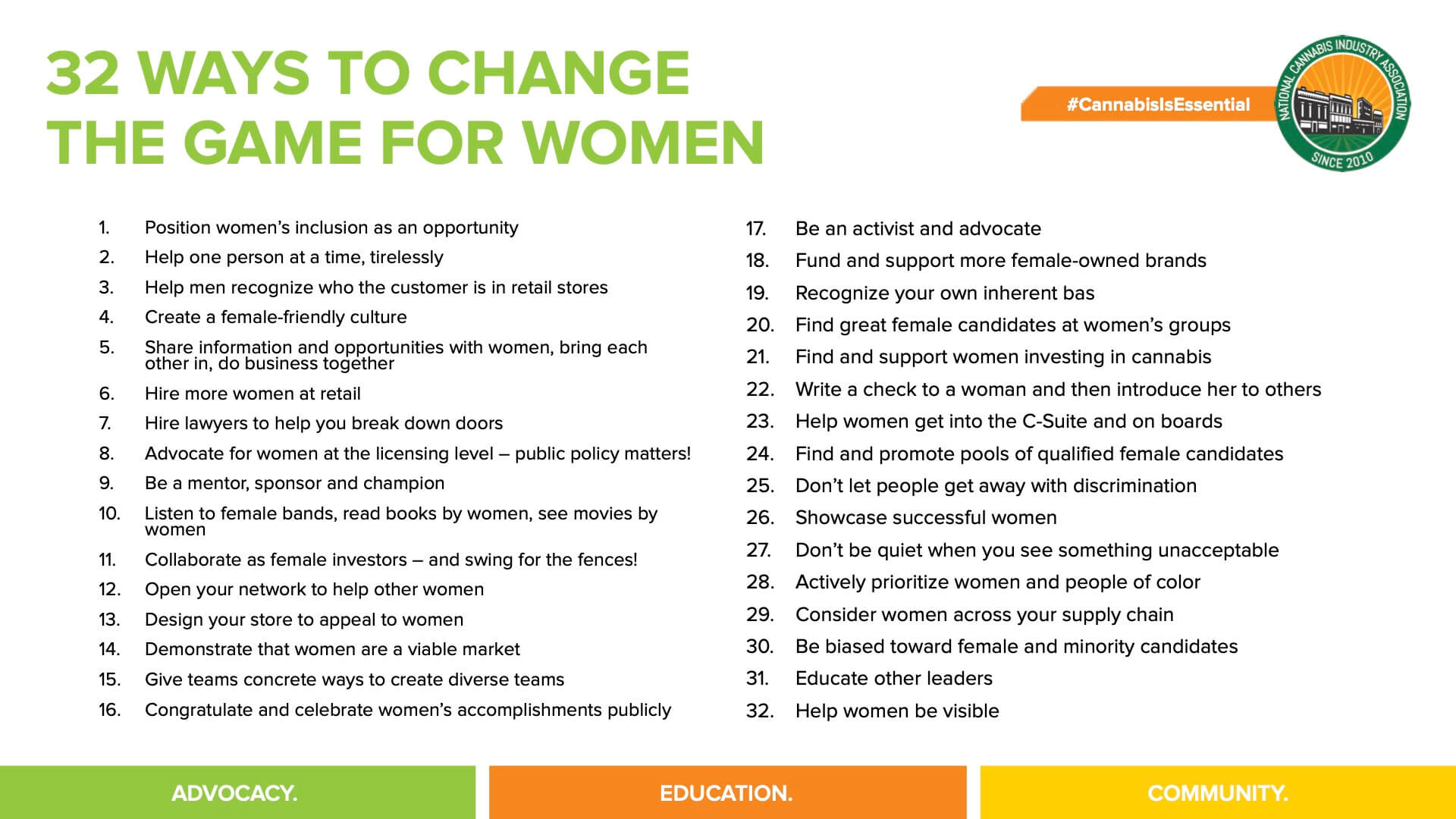
In this edition of our NCIA Committee Insights series originally aired on Tuesday, August 23, 2022 members of NCIA’s Retail Committee convened an all-star panel of leading investors, entrepreneurs and C-Suite executives alongside retail and marketing experts to discuss how the time to “move the needle” for women in cannabis is gone… It’s time to change the game.
Female executive representation in cannabis has shrunk to 22% in 2021 from 36% in 2019 (below the average 30% in mainstream businesses). Learn how to advance women and tap into the single greatest market opportunity for legalization and sales. Tune in now to get actionable solutions to implement today and get your business and our industry back on track.
Learning Objectives:
• Discover the definition of a female-friendly cannabis retail experience
• Get a suite of actionable solutions to increase success and profitability
• Learn the best career paths in cannabis for female candidates
• Learn where male dispensary buyers are missing the mark
• Identify opportunities across the supply chain to attract women
It can be easy to forget the beginnings of the cannabis industry. The stigma we had to fight. The laws we had to change. The pounding anxiety stemming from societal pressure and legal threats. But here we are in 2020, leading a nearly $10 billion industry in the U.S. with a promising future.
Being at the beginnings of a new industry is a powerful experience; seeing the fruits of our labor and the positive effects of legalization have been galvanizing and heartening. We’ve built something unique. But it’s still subject to the pressures and pitfalls of any other industry.
We’ve worked on legalization, supply chains, and policy, but what about equity? What about ensuring that the industry was diverse? And most importantly, how do we even know where we’re starting from?
The only way to move forward was deceptively clear: gather the data. I founded the Women In Cannabis Study after hearing stories of real women and recognizing the need for our undivided attention to shift to diversity and inclusion in the cannabis industry.
Much like a lot of the research in the cannabis industry, anecdotal data has ruled. In some ways, the lack of clinical research in cannabis has gotten us away from valuing qualitative data when looking for insights into particular issues in the cannabis industry. Ultimately, we need substantial numbers and stories to understand our industry and ultimately, form a game plan for equity.
So let’s start with the numbers. So far, data from our survey shows that 68% of women identify as heterosexual compared with 2010 U.S. census data showing 95% heterosexual. It’s a heartening sign that on its face, this is a welcoming environment for people of various sexual orientations.
Unfortunately, our findings also show the industry isn’t immune to sexist behavior.
By asking hard questions through the study, we’ve pinpointed that 33% of our sample as of February 5 have been sexually harassed while working in the cannabis industry. 1 in 3 is a huge number. It’s also worth noting that in our survey, 52.6% of women reported being sexually harassed in another industry—a sign that there might be a substantial difference in the cannabis industry to build on so that we can get that number to 0.
Additionally, only 23% of our study sample say they are paid the same salary as male coworkers in similar positions and 52% feel they have lost opportunities because they are a woman. Fifty-nine percent of women have experienced bullying or lack of support from other women in the industry, showing that even new industries are not free of toxic professional dynamics in the wider business world.
So we have work to do. Or as I like to think of it, we have an opportunity.
That means not going down the same rabbit hole many industries have. It means data points sourced from an academically rigorous study. It means stories about bud-tenders, growers, scientists, extraction and edibles manufacturers, lawyers, doctors, and activists that emerge as a direct result of an academically rigorous study. It means industry-wide alliances.
Alliances come from a shared desire to make big changes. And that only happens when we decide that our goals are worth sharing.
The reality is, we need everyone’s help to tell the full story. While we have enough responses to tell the story of women as a collective group, we are lacking diversity and representation in our sample. We need at least 50 of each of the following populations of women in order to compare communities of women and we aren’t there yet.
If you believe our goal is worth sharing — if you believe that doing the work of creating equity is worth it — tell your story. Encourage your employees to tell theirs. This industry doesn’t belong to one person. Let’s find a way to show that to the world.
The Women In Cannabis Study (WICS) is an academically rigorous, global, comprehensive quantitative study to explore, document and ultimately support women’s participation in the cannabis industry. This groundbreaking study supports the development of actionable recommendations and strategies to make the cannabis industry equitable and inclusive for everyone. The WICS mission is to tell the story of women, as well as individual women’s stories—with data. The study was developed by Jennifer Whetzel, founder of Ladyjane Branding, joined by U.S. research lead Dr. Nicole Wolfe of Wolfe Research & Consulting.
Ladyjane Branding empowers entrepreneurs to build a smart, strategic and consistent brand identity. Founded by veteran marketing executive, Jennifer Whetzel, Ladyjane has simplified the branding techniques used by Fortune 500 companies. Her signature creations include the Two-Hour Brand Makeover, Ladyjane’s Brand Archetype Quiz, and an Archetypal Segmentation Model – all designed to provide inspiration and guidance to help brands create deep emotional connections with consumers, multiply the effects of marketing and advertising and increase their company’s value.
Member Blog: Are Women In Cannabis Facing Some Headwinds?
So far, the cannabis industry is willing to elevate female executives more than other industries. And it’s been this way since adult-use legalization started to spread among states in 2014. That’s when a huge opportunity opened up for people with some leadership experience and a cool idea. Women who had hit a glass ceiling in more traditional industries saw a chance to make a rewarding career shift. Long-term success isn’t a given for anyone making this move, but it’s easier to get in and get noticed if you have a niche product, a specialized service, or fill a particular wellness need.
I fear the inroads women have made for higher ranks at canna companies are getting needlessly tougher. As our industry continues to mature and expand, larger amounts of funds are needed to get a business off the ground or scale a business, but securing funds could become harder if you’re female.
From the moment I first started helping cannabis companies, I was riveted by its diversity and inclusion. In my years of working with some of the most innovative companies in Silicon Valley, I was used to male-dominated cultures. It didn’t matter what I role I held — I started as an engineer in aerospace and later became involved in operations, marketing and sales, and professional services — a lopsided imbalance was often in play.
But with cannabis, this industry has seen a higher proportion of women rise to great heights. More than one-third of executives at cannabis companies are female. That’s remarkable when you also take into account that females hold only 21 percent of senior-level roles at other types of companies, according to Marijuana Business Daily survey figures. On a more anecdotal level, however, I suspect from what I’m hearing that the gains women have made could waver. With industry maturity, even at this early stage, comes the zealous interest of deeply pocketed investors (most of them men).
Why the Shift?
Female leaders in cannabis have made great strides, but history threatens to repeat itself. For instance, this statistic would make anyone wince: Female founders across all industries acquired only 2.2 percent of venture capital in 2018, according to PitchBook. And those who are able to get the funding they need don’t get as much as men in the same position.
We’re in the midst of rapid growth, and big-name investors are noticing. While I don’t want to generalize, it’s widely known that investors are more likely to be white males. This puts the more equitable playing field created by cannabis at risk.
In some ways, it’s natural that as more money comes in, there would be a shift. That’s the tradition, as more men have traditionally beendominantin business. I don’t buy into this tradition and it’s what attracted me to the industry — the cannabis industry is known for being non-traditional. We’ve been cracking glass ceilings and we’ve been shedding corporate conventions. The result has been fast growth, satisfied customers, and innovative products. I think we can attribute some of that to the diversity at work.
How can we ensure that women get their fair share? There are loads of opportunities here for entrepreneurs and seasoned executives, across genders, to make their mark. What matters less than someone’s gender is the ideas they have, their plan for making their business thrive, and whether they have a solid foundation for truly understanding the company as they make big decisions. When you encounter women entrepreneurs, I encourage everyone to give them a shot, hear out the business plan, and assess the opportunity they’re presenting with an open mind.
There is still time to build upon the momentum women have made. Let’s all, especially men and investors, make a concerted effort to fully support women-led businesses and recognize the need for diverse talents and skillsets. I made a similar call in a blog post for my firm, and I was pleased with the reaction — it really hit a nerve. Women in our industry clearly want to talk about this. The consensus is that when different perspectives are voiced, smart ideas and decisions rise to the top.
As vice president, Maureen Ryan leads the business development functions at Kukuza Associates, a finance and accounting firm dedicated to the needs of cannabis companies. She spearheaded Kukuza’s parent company’s (RoseRyan) 2014 entrance into the cannabis marketplace and developed Kukuza’s finance solution to address the common pain points across cannabis companies. Check out the Kukuza Rapid Diagnostic to find out if you have the right finance pieces in place to scale your business.









Follow NCIA
Newsletter
Facebook
Twitter
LinkedIn
Instagram
News & Resource Topics
–
This Just In
NCIA Applauds Reintroduction of SAFE Banking Following Lobby Days
Beyond Rescheduling: Inside NCIA’s 14th Annual National Cannabis Industry Lobby Days