Member Blog: 5 Types of Business Insurance You Should Consider
As the cannabis industry continues to rapidly expand and evolve, entrepreneurs need to be proactive in safeguarding their businesses from potential risks. Insurance is crucial for any business, and the cannabis sector is no exception. In this article, we will explore five important types of business insurance specifically tailored to the needs of cannabis entrepreneurs. By understanding these essential policies, cannabis industry professionals can make informed decisions to protect their investments and future-proof their ventures.
General Liability Insurance
General liability insurance covers the cost of any injury or damage caused by your business. This includes injuries on your premises and injuries to someone while using your products or services. It also covers you if someone is injured while on your property, even if they’re not part of an organized event or program (like a birthday party). General liability insurance will also cover the cost of any lawsuits filed against you for negligence or breach of contract arising out of the above scenarios.
Professional Liability Insurance (Also Known As Errors And Omissions)
Professional liability insurance, also known as errors and omissions insurance, protects you from lawsuits if a client feels you have made an error in your work. This can be anything from a client claiming that you didn’t perform according to the contract terms or did not fulfill their expectations.
This coverage differs from general liability protection in that it only covers claims against professional services like accounting or legal services. If you own a business where your products or services could physically injure customers, you also need general liability coverage (more on this later).
The good news is that most businesses need both types of policies: professional liability for the expertise required for running their business and general liability for protecting themselves against bodily injury incurred by customers using their products/services.
Business Interruption Insurance
A business interruption policy provides coverage for losses that result from the sudden, unforeseen loss of use or operation of your business. For example, if you’re forced to close your doors because a fire destroyed your building, this policy will pay back some of the revenue you lost during that period. Business interruption insurance can be purchased as part of a multi-line or a stand-alone policy.
Workers’ Compensation
The next type of insurance to consider is workers’ compensation insurance. This form of insurance covers the cost of medical expenses and lost wages for an employee who has been injured on the job. In all states, workers’ compensation policies are required by law, but you may want to add additional coverage for your business if there is a high risk of injury among your employees. Your premiums will be higher if you have a larger number of workers or more dangerous jobs than others in your area, so it makes sense to review this kind of coverage before purchasing it.
Employment Practices Liability (EPL) Insurance
Employment Practices Liability (EPL) insurance can be a lifesaver for small businesses, especially when there are multiple employees.
EPL insurance protects your business from sexual harassment, discrimination, and wrongful termination claims. It also provides coverage for defending these types of claims against you.
If you’re doing business in certain industries, EPL policies are often required by law or rely on government contracts to run your business. A few examples include healthcare providers, educational institutions, restaurants, and hotels—though it varies by state, so check with your insurance agent before purchasing a policy.
Conclusion
The bottom line is that you should consider your business insurance needs carefully and ensure adequate coverage. If you’re unsure about what type of insurance to get or how much coverage is enough for your business, please speak with an agent or broker who can help guide you through these decisions.
Member Blog: PPE and Staff Efficiencies – How Much Do the Quality of Your Disposable Gloves Matter?
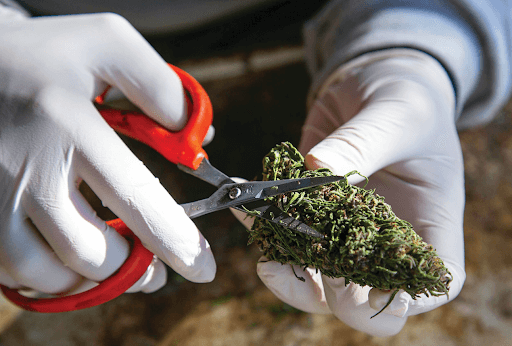
Single-use nitrile gloves are a required necessity of personal PPE in the cannabis industry. But cheap, ill-fitting gloves can lead to workplace injuries, the most common of which include restricted hand mobility, occupational skin disease, and even reduced dexterity. Aside from promoting hygienic practices, quality gloves can reduce, limit, and even prevent repetitive motion stress injuries that can lead to further disorders and damage to the hands and fingers.
In the cannabis industry, problems such as cuts, pinches, and sprains occur during the intricate trimming actions undertaken during the harvesting and processing stages. These hand-related cultivation stages typically include wet trimming, dry trimming, and pre-harvest trimming. While it’s true that machine-based automated trimming is a faster option, some cannabis cultivation operations prefer hand trimming, which they believe produces more attractive-looking buds and flowers for the final presentation. Speaking strictly from a hygienic perspective, gloves offer and provide two-way protection – helping to prevent cross-contamination from user to product. But quality gloves also protect the wearer from dermal exposure to THC, fertilizing chemicals, and pesticides used in the growing process.
Below is a list of common disorders that the use of cheap disposable gloves can cause.
Occupational Skin Diseases (OSDs)
Occupational skin disease, such as dermatitis, is one of the most common non-trauma related occupational illnesses in the U.S. Just how common are these concerns? Each year, among all industries, approximately 1.8 million American workers suffer from OSD at a total annual cost of up to $2 billion. The hand is the most common site affected by OSD, and protective gloves were found to be the most common primary cause.
Work-Related Musculoskeletal Disorders (WMSDs)
As noted, the cannabis cultivation process includes worker safety considerations to prevent injury from awkward posturing, as well as the excessive, repetitive effort necessary during the trimming process. These repetitive motions can lead to strains of the muscles, tendons, ligaments, and even damage to blood vessels. These undesirable outcomes are all classified as work-related musculoskeletal disorders, or WMSDs. According to industry studies of on-the-job cannabis injuries, occurrences involving the fingers and hands happen with the most frequency. But these maladies aren’t just common in the cannabis industry. In the food industry, the median time away from work for repetitive-motion WMSDs associated with grasping, holding, carrying, or turning objects was 17 days. Considering all industries combined, $90 million in indirect costs (hiring, training, overtime, and administrative costs) are incurred annually in the U.S.
Other Common Hazards of Poor Quality Gloves
When cannabis cultivation operations select cheap disposable gloves over a more quality product, there are six primary hazards of concern. These include glove failures and inconsistencies such as ripping and tearing (a common complaint), glove contamination risk, glove waste/disposal costs, hand injuries, WMSDs, and even reduced productivity. At the heart of the issue is the inclusion of poor quality raw materials and cost-cutting in the manufacturing processes, both reducing the quality of products available to customers.
The primary cause of OSDs, WMSDs, and other common hazards related to the use of poor quality gloves is directly attributable to the raw materials used in the glove manufacturing processes. Simply put, cheap toxins and chemicals in gloves can leave users more susceptible to skin irritations and dermatitis. In many cases, because these raw materials are so poor, the manufacturer must produce thicker gloves to prevent ripping and tearing. But in the majority of cases, the increased thickness won’t make much of a difference, and leads to glove bulkiness and reduced flexibility, causing unnecessary muscle stress and strain among users.
What are the consequences of OSD and WMSD-related injuries? While the specific data isn’t as commonplace within the cannabis industry, workers in the food-handling industry with OSD take much longer periods to return to work than in other glove-wearing professions. It’s estimated that 40% of all worker’s compensation claims involve problems related to exposed skin. As much as 65% of those claims involve hands or upper extremities, with 25% of these workers affected missing up to 10-12 days of work annually. WMSDs account for one-third to one-half of all occupational injuries and illnesses and $15-20 billion in workers’ compensation costs each year.
Cannabis cultivation operations must put more thought and consideration into the gloves they purchase for their workforce. Rather than purchasing decisions based solely on pricing, disposable glove providers should be thoroughly vetted and reviewed. To reduce the risk of skin irritation, good quality gloves that meet the improved standards for low chemical and toxic exposure should be used. Due to the high quality of materials found in the new tech lightweight gloves, the wearer will find that they can be more durable than their thicker counterparts. In the end, the quality of glove you choose to purchase may end up saving you up-front costs but could wind up costing your product budget and staffing needs dearly on the back end.
Justine Charneau is the head of cannabis industry sales at Eagle Protect, a disposable glove supplier dedicated to the responsible sourcing of quality products that ensure customer safety and impact reduction, ultimately mitigating customers’ risk. Eagle Protect is the only global PPE supplier that is a Certified B Corporation, a designation that a business has met the highest standards of verified performance, accountability, and transparency. She can be reached at justine@eagleprotect.com.
SAFE Banking, Hemp, and SCOTUS Update
Photo By CannabisCamera.com
by Michelle Rutter Friberg, NCIA’s Deputy Director of Government Relations
Since I last provided an update from Washington, D.C., not much has changed in terms of cannabis reform. That being said, there are still a few short developments that we’ve been keeping an eye on that we want to bring to your attention! Keep reading to learn the latest:
SAFE Banking
SAFE Banking passed the House for the sixth time in February as part of the America COMPETES Act. More recently, a stakeholder meeting was held with lead champion Congressman Perlmutter that NCIA was proud to have participated in.
During this stakeholder meeting, Rep. Perlmutter reviewed where the bill is at, the hurdles it must clear in order to pass, and reiterated his commitment to passing the bill before this session is over. Congressman Perlmutter also talked extensively about a recent hearing that the House Financial Services Subcommittee on Consumer Protection and Financial Institutions held titled “Small Businesses, Big Impact: Ensuring Small and Minority-Owned Businesses Share in the Economic Recovery.” Chaired by Rep. Perlmutter himself, the subcommittee heard testimony from the Minority Cannabis Business Association’s (MCBA) Executive Director, Amber Litteljohn, on the economic barriers federal policy has created within the burgeoning cannabis market.
Hemp
A few weeks ago, the United States Department of Agriculture’s (USDA) National Agricultural Statistics Service (NASS) released the results of the 2021 Hemp Acreage and Production Survey in its National Hemp Report. This is a massive, first-ever survey of its kind to be done at the national level, and is set to provide a “benchmark” analysis of the economic impact of the burgeoning newly legal market.
The survey collected data for hemp grown in the open and hemp under protection. Planted area for industrial hemp grown in the open for all utilizations in the United States totaled 54,152 acres. Area harvested for all utilizations totaled 33,480 acres. The value of U.S. hemp production in the open totaled $712 million. The value of production for hemp that was grown under protection in the United States totaled $112 million. Area under protection totaled 15.6 million square feet.
SCOTUS
The Supreme Court has officially asked the highest lawyer in the land, the solicitor general, to weigh in on cannabis.
Justices were asked whether or not employees seeking workers’ compensation for medical cannabis after being hurt on the job should receive the assistance, but before they do, they want the broader government to comment. They have requested that the solicitor general submit a brief on the topic. For more details, check out this great piece our friends at Marijuana Moment published.
While this week’s update was another “hodge-podge”, NCIA’s government relations team continues to work hard at passing reform this Congress. We continue to meet with offices to elevate the need for SAFE Banking – primarily for small and minority-owned businesses, discuss the decimation that 280E is wreaking, and highlight opportunities for restorative justice. Interested in becoming more involved with lobbying and our government relations efforts? Contact Stefan at stefan@thecannabisindustry.org to talk about becoming an Evergreen Member today!
Allied Association Blog: Repetitive Motion Injuries and the Importance of Ergonomics in the Cannabis Industry
Repetitive motion injuries, also known as musculoskeletal disorders (MSD) are temporary or permanent injuries to muscles, nerves, ligaments, and tendons caused by performing the same motion over and over again. Common repetitive motion injuries are carpal tunnel syndrome and tendonitis. According to the Bureau of Labor Statistics in 2013, repetitive motion injuries cases accounted for 33% of all worker injury and illness cases.
These injuries can be mitigated or controlled through ergonomics. Ergonomics is defined as: “The scientific discipline concerned with the understanding of the interactions among humans and other elements of a system, and the profession that applies theory, principles, data, and methods to design in order to optimize human well-being and overall system performance.” Or more simply put: ‘Fitting the job to the person.’ The goal is to eliminate discomfort and risk of injury due to work. Ergonomics can prevent or reduce work-related MSDs and increase work efficiency.
Every industry and business has tasks that require repetitive motion, the cannabis industry and businesses are no exception. Cannabis operations have some motions and tasks that are similar to many industries, like lifting heavy objects, computer work, and standing for long periods of time. Cannabis operations also have some motions and tasks that are similar to other agricultural operations like pruning and harvesting.
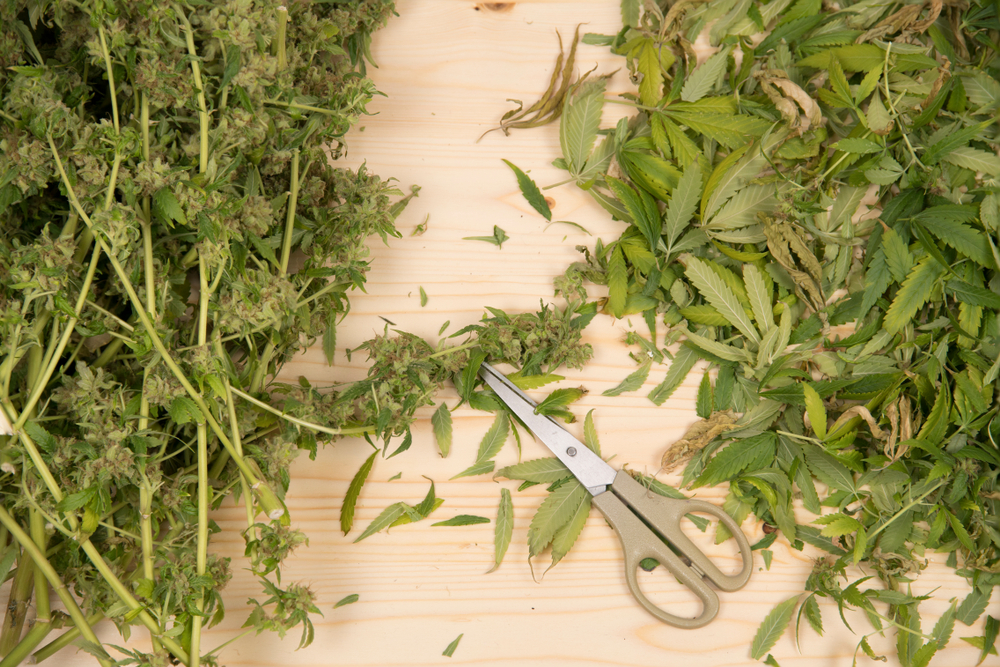
But there is a task and motion in the cannabis industry that is uniquely its own: trimming. There are many different methods to marijuana trimming, including: pre-harvest trimming and pruning, wet trimming, dry trimming, and machine trimming. All trimming methods have the same goal: to manicure the flower (or bud) to its final product ready for the customer or patient. The process is a tedious one where the trimmer removes the leaves of the marijuana flower with scissors while leaving the calyx and resin (the good parts of the bud). The quality of smoke, vapor, and ultimately the consumer’s experience is affected by the quality of the trim job.
Traditionally, most marijuana trimming has been done seasonally around the harvest season. Most cannabis grown outdoors is harvested around October and it is common for cannabis farms to have ‘trim crews’ help them for a couple of months. As medical and adult-use laws expand, so do indoor and greenhouse operations. These operations are capable of ‘perpetual harvests’ meaning they can harvest more often; this has to do with the ability to control light and dark cycles. This means many operations can plan to harvest plants monthly, weekly, or daily if they choose. This has changed the demand for trimmers from largely seasonal you year-round demand, increasing the trimmers’ likelihood of repetitive motion injuries.
There is still a lot of confusion with workers in the industry about their rights. While many states have legalized marijuana, it is still federally illegal. Many workers do not know while it is federally illegal, they still have the same federal worker rights and protections every other U.S. worker has including the rights under the Occupation Safety and Health Act of 1972. Under this law, employers must provide a safe workplace, train employees in the hazards of the workplace, and inform the employees of the rights to report work-related injuries. Cannabis industry workers must also be covered by workers’ compensation if they become injured at work.
The lack of awareness about worker rights has likely led to the under-reporting of these injuries. As awareness of worker rights grows, the reporting workers’ compensation claims of these work-related MSD injuries will likely grow too. Pinnacol, Colorado’s largest workers compensation provider, reported that strains were the most common injury reported by cannabis workers in 2018. This should concern everyone in the industry. Cannabis businesses should heed the warning signs and keep their workers safe by developing their own internal ergonomic processes and practices for their operations.
California is in a unique position as when it comes to cannabis and ergonomics. California is the largest producer of cannabis and has more stringent ergonomic standards. If a California company has more than one employee report a repetitive motion injury, they are required to establish an ergonomic program to reduce repetitive motion injuries. These ergonomic programs require:
A worksite evaluation
Control of exposures which have caused the repetitive motion injury
Training of employees
Additionally employers in California are required to have an effective written Injury and Illness Prevention Program (IIPP), to comply with the California Code of Regulations, title 8, section 3203. The IIPP must include procedures to identify and correct health and safety hazards in the workplace and provide effective training to all employees so they can perform work safely.
The cannabis industry is still immature and searching for best practices of operations. While many workers and operators in the industry understand the need for ergonomic standards the reality is that ergonomic standards still need to be defined. This has been the goal of the National Cannabis Risk Management Association (NCRMA) and Dr. Chris Hughes with Atlas Performance Technologies, LLC. They have developed four courses to educate the industry on ergonomics, including: Introduction to Cannabis Ergonomics, Lift Like a Pro, Prune Like a Pro, and Trim Like a Pro. These courses are available through the NCRM Academy and can be found online here: https://ncrma.net/ncrmacademy/ These courses are designed for entry level cannabis workers to inform them of their rights, the ergonomic hazards, proper hazard controls, and best practices to stay safe and increase productivity.
Alex Hearding has an educational and professional background as a water and soil scientist and safety professional. He has legally cultivated marijuana as a medical caregiver and as a facility manager in a licensed greenhouse. He has experience starting marijuana businesses including license application, facility design, construction, operational development, and management. He currently provides services including occupational safety & health services and training and risk management for the cannabis industry.


 Justine Charneau is the head of cannabis industry sales at

 Alex Hearding
Follow NCIA
Newsletter
Facebook
Twitter
LinkedIn
Instagram
News & Resource Topics
–
This Just In
Beyond Rescheduling: Inside NCIA’s 14th Annual National Cannabis Industry Lobby Days
DOJ Reschedules Medical Cannabis to Schedule III & Announces June 2026 Hearing on Broader Rescheduling